Women's jeans size chart and how to find your size
In this guide
One shop labels jeans 27, the next calls the same fit a 6, and a third uses small, medium and large, and none of them agree on what those numbers mean. A women's jeans size chart that translates between the systems is the first step, but the numbers that settle it are two you can measure at home: your waist and your hips.
This guide explains how the two main sizing systems work, a conversion you can use as a starting point, how to measure yourself and a pair you already own, what inseam and rise mean for length, and what to do when you fall between sizes. Every body is different, and no size is better than another.
How women's jeans sizes work
Most women's jeans in the United States and Canada use one of two systems. Waist sizes, the numbers from about 23 to 34, come from denim tradition and loosely track the waist in inches. US numeric sizes, 00 to 18 in standard ranges and 14W upward in plus ranges, are the same sizes used for dresses and trousers. Some brands also print both, such as 28/6, or add a length, such as 28 x 30, where the second number is the inseam.
The catch is that the waist number is rarely the exact waist measurement. In Levi's women's chart, a size 28 fits a 28 to 29 inch waist. In Madewell's chart, a 28 fits a 29 inch waist and a 30 fits 31.5 inches. Modern jeans are also cut to sit lower than the natural waist and usually include some stretch, so the number describes a fit, not a tape reading. That is why the same person can wear a 27 in one brand and a 29 in another.
Women's jeans size chart: waist size to US size
Use this conversion as a starting point, then check the brand's chart. Where two US sizes are shown, brands split roughly evenly between them: 23 is a 00; 24 is a 00 or 0; 25 is a 0 or 2; 26 is a 2 or 4; 27 is a 4 or 6; 28 is a 6 or 8; 29 is an 8 or 10; 30 is a 10 or 12; 31 is a 12 or 14; 32 is a 14 or 16; 33 is a 16; and 34 is a 16 or 18. In letter sizes, 24 to 25 is usually extra small, 26 to 27 small, 28 to 29 medium, 30 to 31 large and 32 to 33 extra large.
Body measurements give you something steadier to compare. Levi's lists a size 24 for a 24 to 25 inch waist and 34 to 35 inch hips, a 26 for 26 to 27 inch waist and 36 to 37 inch hips, a 28 for 28 to 29 and 38 to 39, a 30 for 30 to 31 and 40 to 41, a 32 for 32 to 33 and 42 to 43, and a 34 for 34 to 35 and 44 to 45. Veronica Beard grades its jeans about an inch per size in both waist and hip and maps its 27 to a US 6. In centimeters, multiply inches by 2.54: a 28 inch waist is about 71 cm and a 38 inch hip about 97 cm.
| Waist size | US size | Letter size |
|---|---|---|
| 24 | 00 or 0 | Extra small |
| 25 | 0 or 2 | Extra small |
| 26 | 2 or 4 | Small |
| 27 | 4 or 6 | Small |
| 28 | 6 or 8 | Medium |
| 29 | 8 or 10 | Medium |
| 30 | 10 or 12 | Large |
| 32 | 14 or 16 | Extra large |
A starting point only: 31 is a 12 or 14, 33 a 16 and 34 a 16 or 18, so check each brand's chart.
Measure your waist, hips and inseam
Measure over thin underwear with a soft tape, standing relaxed and breathing normally. Your natural waist is the narrowest point of your torso, usually a little above the navel, but for jeans the more useful number is where the waistband of your favorite pair actually sits, since mid and low rise jeans fall below the natural waist. Measure your hips around the fullest part of your seat with your feet together. Keep the tape level and snug but not tight.
For inseam, measure from the crotch down the inside of the leg to where you want the hem to fall, wearing the shoes you usually wear with jeans. Our guides to measuring yourself for clothes and measuring your inseam walk through each step.
Use a pair that already fits
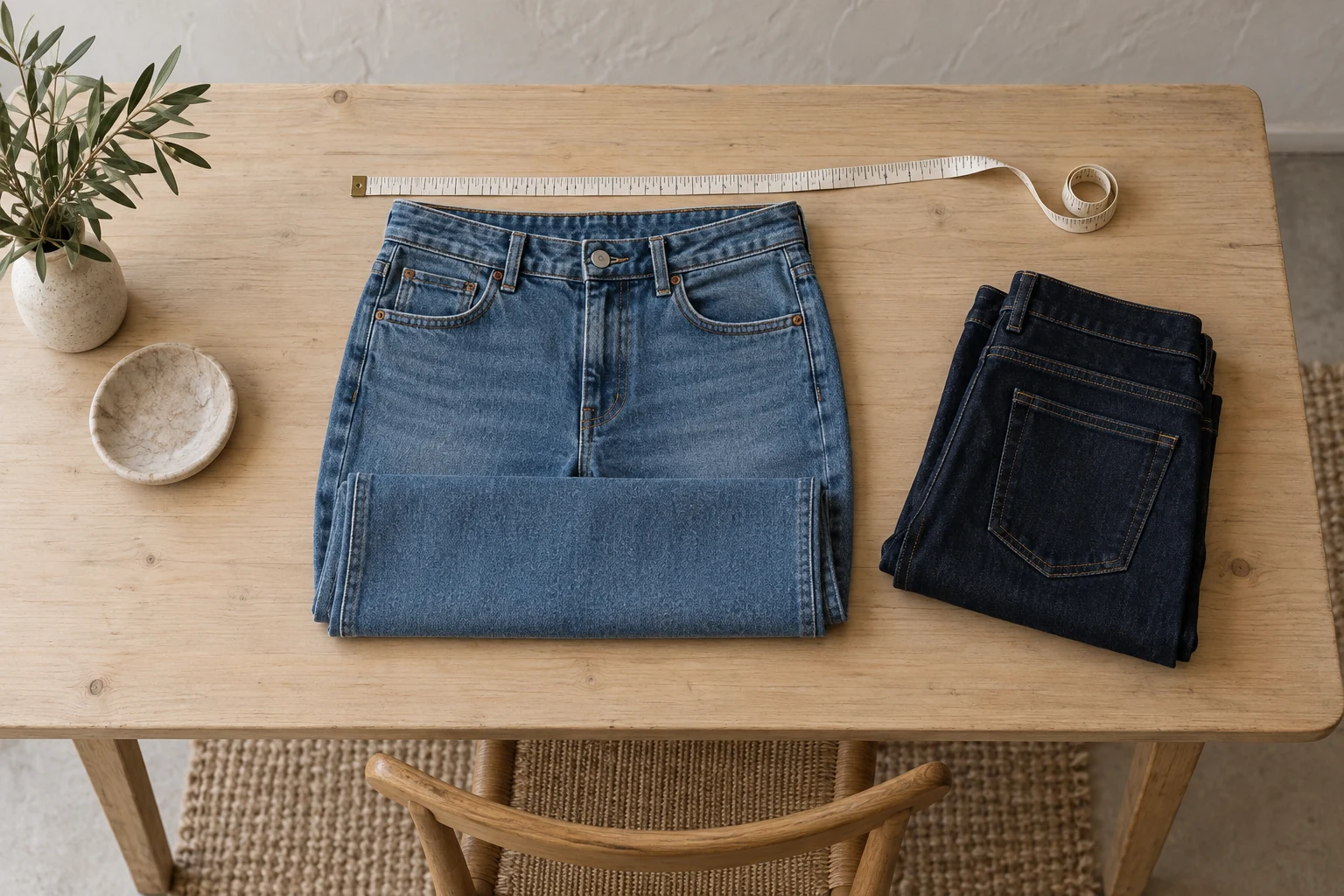
The most reliable jeans size converter is a pair you already love. Lay them flat and buttoned, and measure straight across the top of the waistband from edge to edge, then double it for the waist. Measure the front rise from the crotch seam up to the top of the waistband, and the inseam from the crotch seam down the inside leg to the hem. Many brands now publish these garment measurements for each style.
Comparing garment to garment removes most of the guesswork, because it includes the rise and the cut you like, not just your body. If a new pair matches your favorite on waist and rise but is an inch longer, you know a simple hem will fix it, and our guide to hemming pants explains how.
Inseam, rise and petite or tall lengths
Length is sold separately from size. Levi's women's chart offers inseams of 28, 30 and 32 inches, and many brands label similar lengths as short, regular and long, or as petite, regular and tall. Petite lines also shorten the rise and sometimes the knee position, not only the hem, which is why simply cutting down a regular pair does not always work for a shorter frame. Ankle and cropped styles have shorter inseams by design.
Rise decides where the waistband sits: high rise at or above the navel, mid rise just below it and low rise on the hips. A high rise pair in your usual number can feel tighter at the waist because it sits at a narrower point of your body, so size up if you are between sizes in high rise styles. Our guide on how jeans should fit covers the waist gap, seat and thigh checks in the mirror.
Plus sizes and international sizes
Plus size jeans usually use W sizes, from 14W upward, cut with more room through the hip, thigh and rise than the same number in a standard range. Madewell's chart, for example, starts its plus range at 14W for a 37 inch waist and runs to 28W at a 51 inch waist. Some brands use a single continuous range instead, so read the chart rather than assuming.
European and British labels differ again. A common rule of thumb is that UK sizes run about four higher than US sizes, so a US 6 is roughly a UK 10. Continental sizes depend on the country: French sizes run about 32 higher (a US 6 is a French 38) and German sizes about 30 higher (a German 36). Many European brands also use the W and L system (W28 L32) in inches. Our women's size chart has the full conversion for dresses and tops.
When you are between sizes
Stretch changes the answer. Jeans with elastane or other stretch fibers loosen noticeably with wear, often half a size or so through the day, so if they are only slightly snug in the fitting room, keep the smaller size. Rigid 100% cotton denim barely stretches but can shrink in a hot wash or dryer, so choose the size that fits comfortably from the start and wash it cool.
If your hips fall one size up from your waist, choose the size that fits your hips, since a tailor can take in a waist far more easily than let out a seat. If you are between two waist sizes on a stretch pair, the smaller one usually wins; on rigid denim, the larger. Washing in cold water and air drying helps any pair keep the size you bought, and our guide to washing jeans explains the details.
Questions people ask
What size is 28 in women's jeans?
A 28 is usually a US 6, and in some brands an 8. It is generally sold as a small to medium and fits roughly a 28 to 29 inch waist and 38 to 39 inch hips, depending on the brand.
Is a 32 a size 12 or 14?
Most brands treat a 32 as a 14, and a few as a 16. It rarely corresponds to a 12, which is usually a 31. Check the waist and hip measurements on the brand's own chart to be sure.
Is size 30 jeans a 10 or 12?
Either, depending on the brand. Brands that map 27 to a 4 usually call a 30 a 10, while brands that map 27 to a 6 call it a 12. The measurements behind the label, around a 30 to 31.5 inch waist and 40 to 41.5 inch hips, are more consistent than the number.
Is a 28 a size 4 or 6?
Usually a 6. A 4 is more often a 27 in jeans. If you normally wear a 4 in trousers, try both the 27 and 28 in a new brand.
Is a size 8 in jeans considered big?
No. A size 8 sits in the middle of standard US size ranges, which run from 00 to 18 before plus sizes begin. Sizes are labels for cut, not judgments, and they vary so much between brands that the same body can wear three different numbers.
Sources and further reading
References used for this guide. Each opens the original page in a new tab.
Keep reading

Sizing
How should jeans fit? Waist, seat, thigh and length
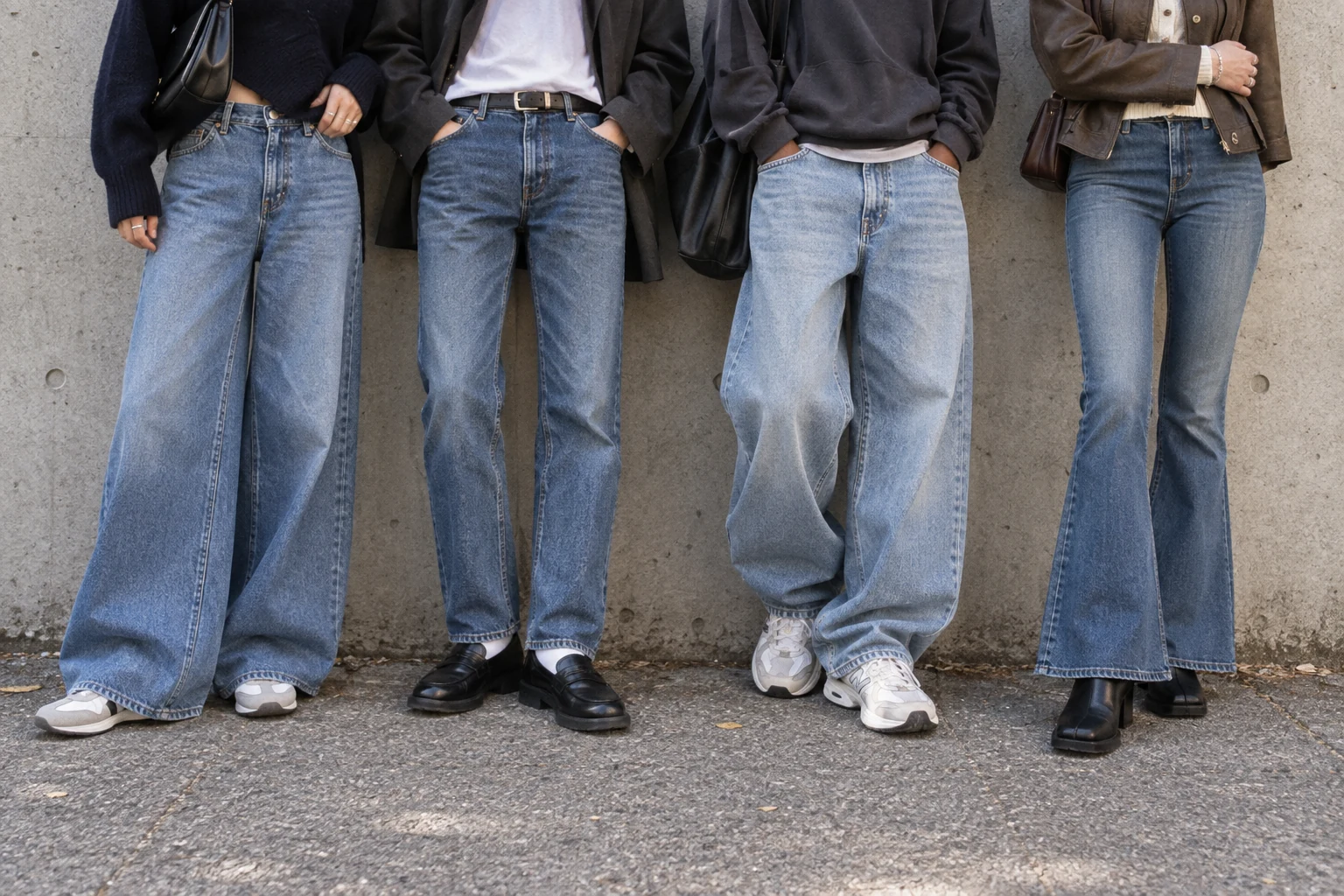
How should jeans fit at the waist, seat, thigh and ankle? Clear checks for men and women, how rigid and stretch denim change, and where the hem should land.
Everyday style
Types of jeans: fits and cuts explained
The main types of jeans explained: rise, skinny to baggy leg shapes, bootcut, flare, wide leg, mom and boyfriend jeans, with what each suits and how to wear it.
Sizing
Women's dress size chart: US sizes and measurements
A women's dress size chart with US sizes 00 to 20 in inches and cm, how to measure yourself, letter and international sizes, and why brands never quite agree.
Sizing
How to measure inseam for pants, jeans and shorts
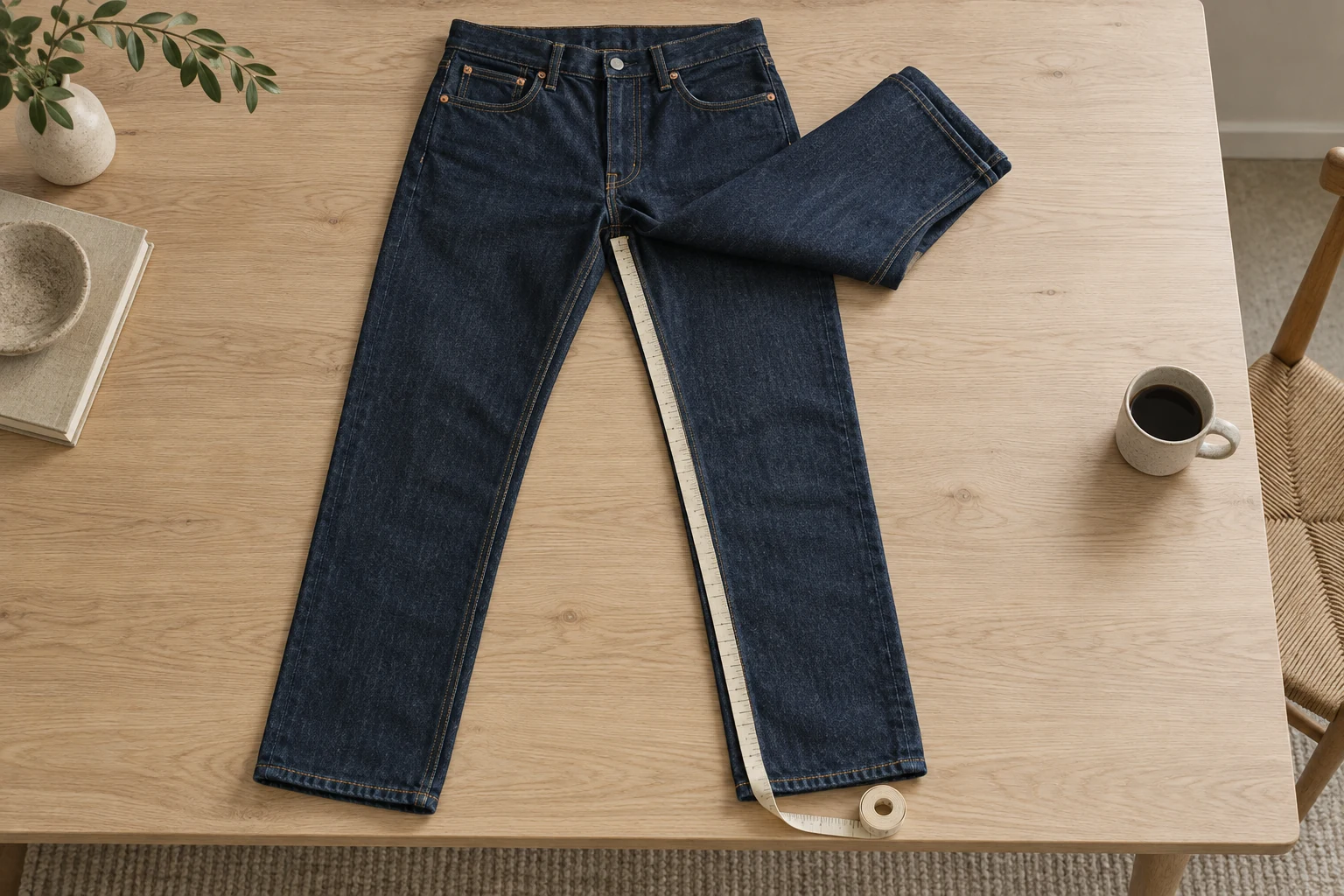
Measure your inseam from pants that fit or on your body, see how inseam differs from outseam, and choose the right length for jeans, dress pants, shorts and bikes.
Sizing
How long should women's pants be? Lengths by style
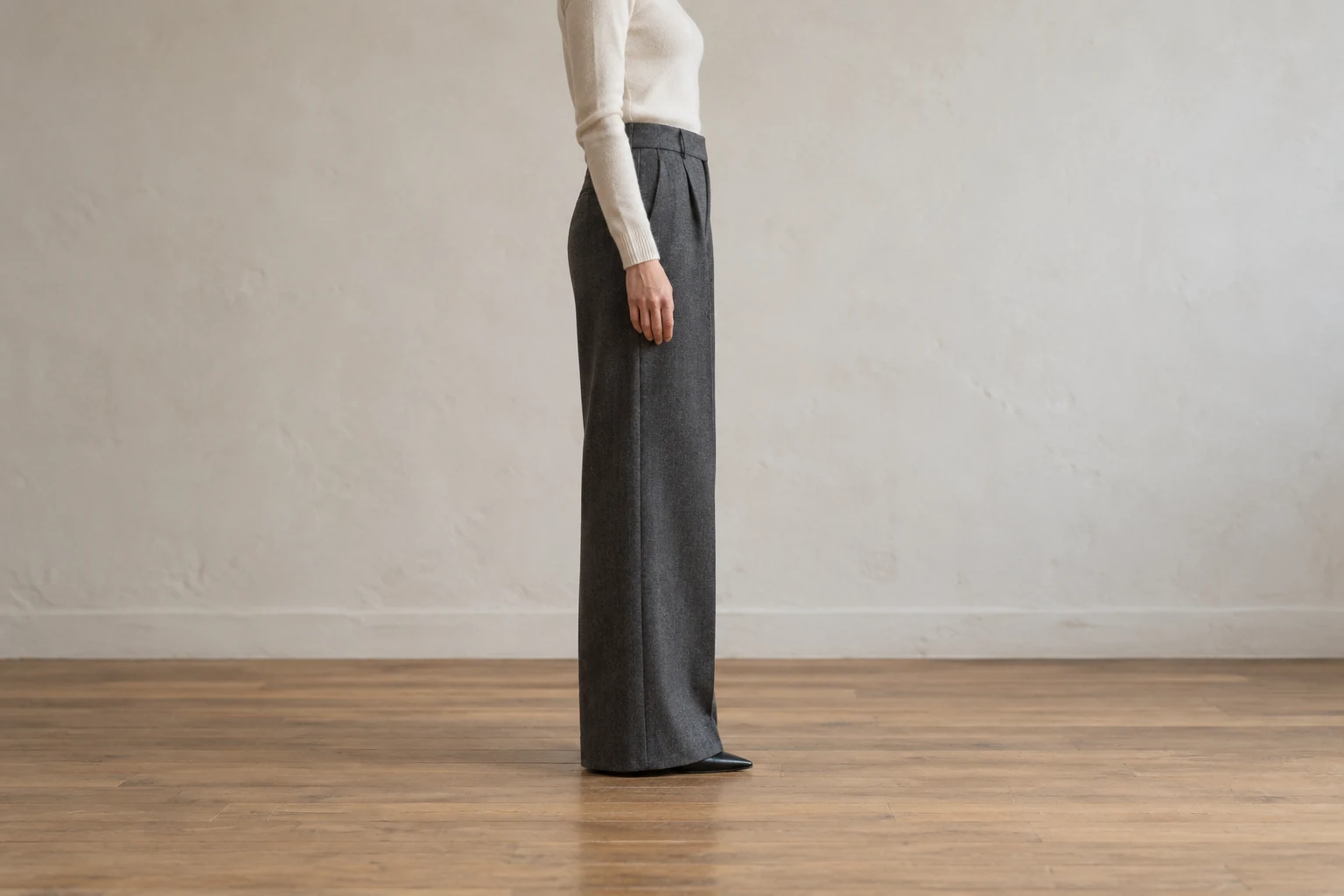
How long should women's pants be? Where the hem should land for trousers, wide leg, straight, ankle and cropped pants, in flats or heels, and finding your inseam.