How to clean silver jewelry at home, gently
In this guide
A favorite sterling chain comes out of the drawer yellowish and dull just when you want to layer it with a pendant, or a ring you have not worn in months has turned nearly black in the grooves. Knowing how to clean silver jewelry is mostly about choosing the mildest method that works, because every way of removing tarnish also takes away a very thin layer of the metal, and some popular shortcuts are much harsher than they look.
This guide starts with the gentlest options, explains why dips and the aluminum foil trick can spoil certain pieces, and covers the materials that need extra care: pearls, soft or treated stones and plated jewelry. There is a short section on gold, and a longer one on keeping tarnish away, which saves more cleaning than any product.
Why silver tarnishes
Tarnish is a thin film of black silver sulfide that forms when silver reacts with sulfur compounds in the air, according to the Canadian Conservation Institute. It starts as a faint yellow or golden cast, deepens to brown and ends almost black. Sterling silver, which is mostly silver alloyed with a little copper for strength, tarnishes readily, and humidity, some foods, rubber, wool and many cosmetics speed it up. Tarnish is not dirt and does not mean the piece is poor quality; it is simply what silver does.
The same institute notes that every tarnish removal method, whether polishing, dipping or electrochemical, removes some of the underlying silver along with the tarnish. So clean gently, and not too often. A piece worn regularly and wiped now and then often stays brighter than one polished hard once a year.
Check what you are cleaning first
Look for a stamp such as 925 or sterling inside a ring or on a clasp; it tells you the piece is solid silver. Silver plated jewelry has only a thin silver skin over another metal, and fashion pieces may be coated rather than plated, so treat anything unmarked as delicate. Check for stones, pearls, enamel and glued settings, and for hollow beads or lockets that could trap liquid.
Look closely at the recesses too. Many designers deliberately darken the background of engraving, filigree or hammered texture to make the pattern stand out. This oxidized finish is created chemically and is, in effect, controlled tarnish. It is part of the design, and any method that reaches into the recesses can remove it, which is why the method matters as much as the product.
How to clean silver jewelry at home, gentlest first
Work through these in order and stop as soon as the piece looks the way you want. Most everyday tarnish never needs more than the first two.
Use a silver polishing cloth
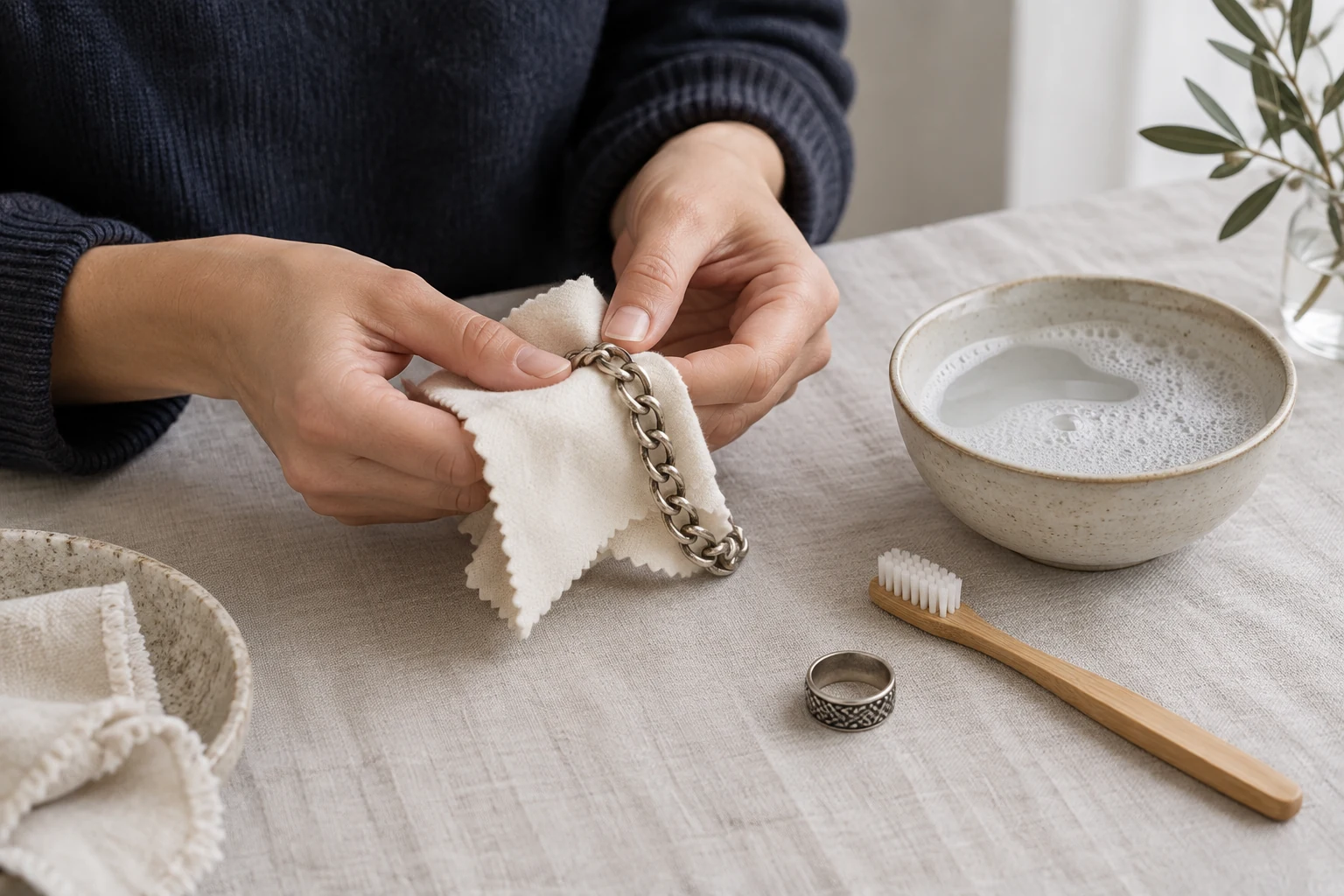
A silver cloth is treated with a very mild polishing agent and is the gentlest way to remove light tarnish. Rub the piece with light pressure, moving to a clean part of the cloth as it blackens. The cloth reaches the raised surfaces and mostly misses the recesses, which is why it brightens an oxidized design without flattening its contrast.
Wash away oils and grime
If the piece looks cloudy rather than tarnished, it may just be coated in skin oil, lotion or soap. Swish it in warm, not hot, water with a few drops of mild dish soap, clean crevices with a very soft toothbrush, rinse well and dry completely with a lint free cloth. Water left in links and settings leaves spots and encourages new tarnish. Skip the soak for anything set with pearls, opals, turquoise or other porous stones, and for glued settings or hollow beads; wipe the metal with a soft, barely damp cloth instead.
Use silver polish for heavier tarnish
For tarnish the cloth cannot shift, use a cream or foam polish made for silver, not a general metal polish, which the Canadian Conservation Institute warns is more abrasive. Apply a small amount with a soft cloth or cotton swab, working on the areas you want bright, then rinse thoroughly so no white residue stays in crevices, and dry.
Why dips and aluminum foil can be harsh
The most popular DIY jewelry cleaner for silver, hot water with baking soda in a dish lined with aluminum foil, is real chemistry. The aluminum and the silver form a small electrical cell that turns silver sulfide back into silver. The Canadian Conservation Institute explains that it can leave a dull, rough surface that needs polishing afterward and that treated silver may retarnish faster. More importantly for jewelry, it cannot tell tarnish from the deliberate oxidized finish in the recesses of a design, so it strips that contrast along with the tarnish. A silversmith's care page describes both foil methods and commercial dips leaving a frosty, etched look on sterling and eating through silver plating.
Liquid silver dips dissolve tarnish in seconds, which is exactly the problem: they are hard to control. They can over clean fine detail, may leave a residue, and the institute warns never to use them on hollow pieces, because the liquid gets inside and cannot be washed out. Keep both methods away from pearls, opals, turquoise and other porous or treated stones. If you do use either, limit it to plain solid sterling with no stones or oxidized detail, keep the time short, rinse well and finish with a polishing cloth.
Pearls, gemstones and plated jewelry
Pearls are among the softest gems, and GIA's advice is to wipe them with a very soft cloth after each wearing and to use warm, soapy water only occasionally. They should never go in an ultrasonic or steam cleaner, and hair spray, perfume, cosmetics and perspiration all harm their surface. If pearls are strung, let the string dry completely before you wear them. On a silver piece set with pearls, use a polishing cloth on the metal only and keep it well away from the pearl.
Many colored stones need similar caution. GIA says the only safe way to clean opal is warm, soapy water, and that heat or sudden temperature changes can crack it. Many opals are sold as doublets or triplets, thin slices glued to a backing, and jewelers generally advise wiping these rather than soaking them, since water can work into the glue line. Stones that have been dyed, coated or fracture filled can be damaged by chemicals, heat or harsh cleaning, according to GIA, and you often cannot tell by looking whether a stone has been treated. Ultrasonic jewelry cleaners are popular, but GIA advises against using one at home even for diamond jewelry, because vibration can loosen stones in their settings. Porous stones such as turquoise, lapis, coral and amber can absorb water, soap and skin oils, so wipe them with a soft, barely damp cloth rather than soaking them. When in doubt, clean only the metal and ask a jeweler about the stone.
Plated jewelry, silver or gold, gets the lightest touch: a quick wash in mild soapy water, a thorough dry and a few gentle strokes with a soft cloth. Silver polish and dips wear through the thin layer quickly, and even the polishing agent in a treated cloth takes some off with every use. Once the base metal shows, only replating will fix it.
How to clean gold jewelry
Gold does not tarnish the way silver does, so it usually needs cleaning rather than polishing. If it has no pearls, opals or porous stones, soak it for a few minutes in warm water with a little mild dish soap, brush gently around settings with a soft toothbrush, rinse and dry with a lint free cloth. GIA lists household detergents and lint free cloths as safe for diamond set jewelry and warns against powdered abrasive household cleansers. Avoid silver dips on gold, and treat gold plated and vermeil pieces, which are gold over another metal, as plated jewelry.
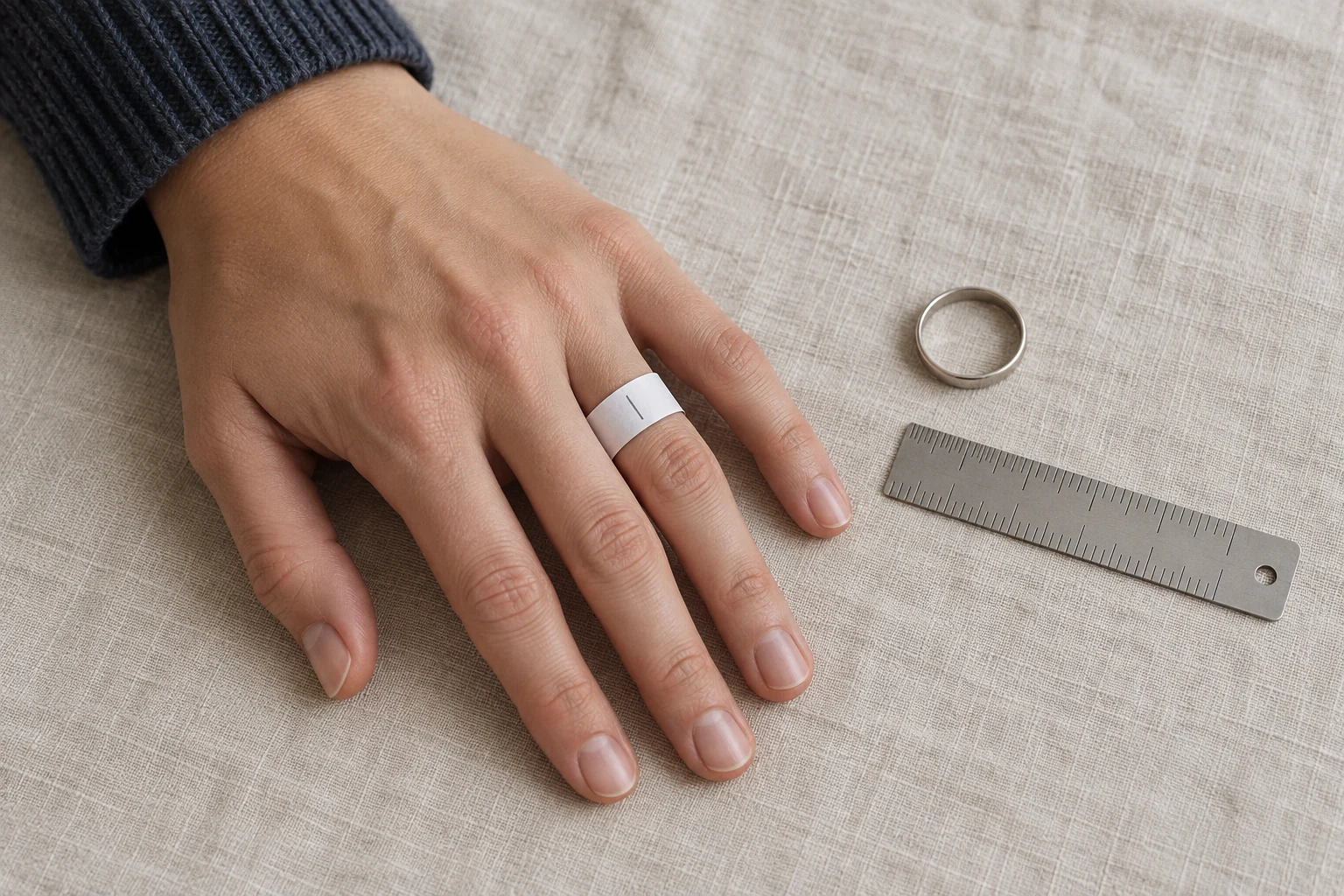
Take gold rings and bracelets off before swimming in chlorinated pools or hot tubs and before cleaning with bleach. Chlorine can attack the other metals in gold alloys over time and weaken them, especially at stressed points such as ring shanks and clasps. While you are cleaning, check that stones do not move in their prongs; a loose stone is a job for a jeweler, and so is a ring that no longer fits, which our guide to measuring ring size helps you check before you go.
| Piece | Safe approach | Avoid |
|---|---|---|
| Solid sterling | Polishing cloth, mild soapy wash, silver polish for heavy tarnish | Toothpaste and general metal polish |
| Oxidized designs | Cloth on the raised surfaces only | Dips and the foil bath, which strip the dark background |
| Silver or gold plated | Quick soapy wash, dry, gentle soft cloth | Silver polish and dips, which wear through the layer |
| Pearls | Wipe with a very soft cloth after wearing | Ultrasonic or steam cleaners, dips, cosmetics |
| Opals and porous stones | Wipe with a soft, barely damp cloth | Soaking, heat and chemical dips |
| Gold without delicate stones | Short soak in warm soapy water, soft brush | Silver dips, abrasive cleansers, chlorine |
How to keep silver from tarnishing
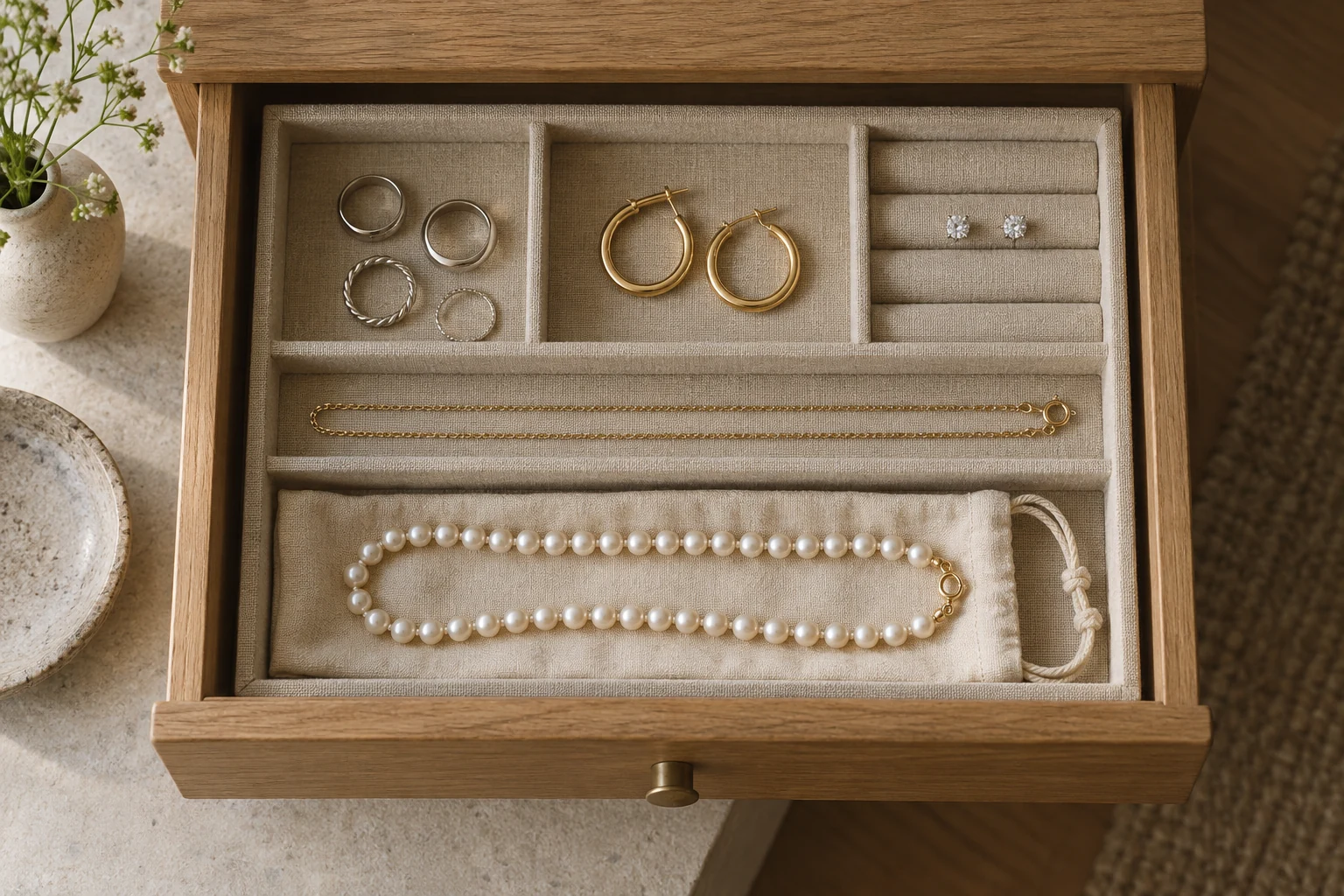
Tarnish needs air, so the most effective prevention is to limit it. Store each piece dry in its own small zip bag with the air pressed out, or in anti tarnish bags for jewelry and cloth lined boxes. The Canadian Conservation Institute recommends sealed bags for silver and notes that tarnish resistant fabric containing fine silver particles, often used to line drawers and bags, protects well because tarnishing gases react with the fabric first. Anti tarnish strips for silver work on a similar principle, absorbing sulfur compounds from the air in a closed space; replace them as the packaging directs. For boxes, trays and travel rolls that keep chains apart, see our guide to storing jewelry.
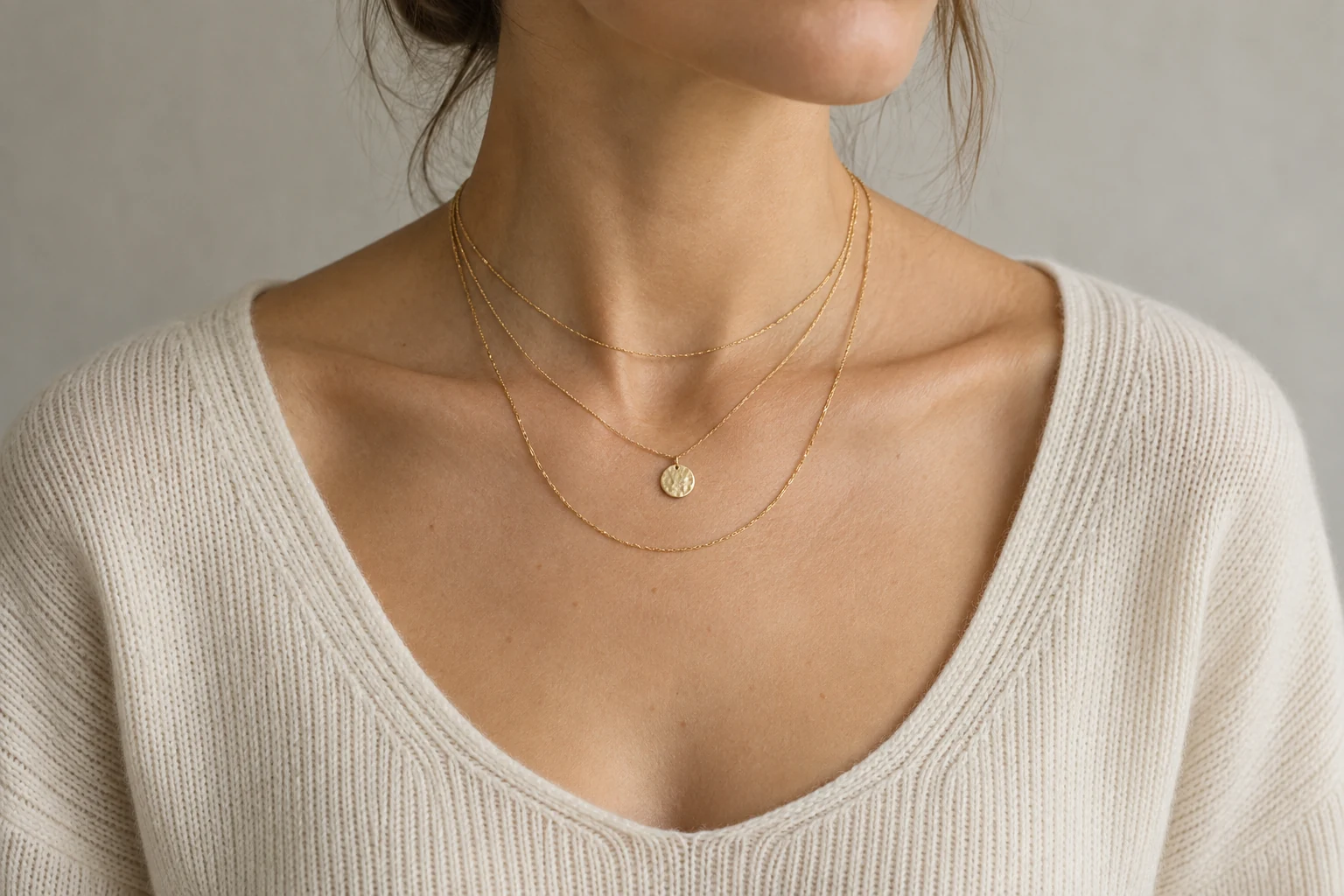
Keep silver away from rubber bands, wool felt and some papers and cardboard, which can release sulfur, and dry pieces completely before putting them away. Put jewelry on after lotion, perfume and hair spray, not before, and take it off to swim, clean or exercise. Storing chains separately stops tangles, which matters if you wear several together; our guide to layering necklaces covers lengths and weights, and a small tray or divided box in your closet, as described in our guide to organizing your closet, keeps pieces visible so you actually wear them.
Common mistakes
Using toothpaste
Most toothpastes contain abrasives that scratch polished silver and dull fine detail. A silver cloth or a proper silver polish removes tarnish with far less wear.
Dipping pieces with stones or pearls
Chemical dips and hot foil baths can dull, crack or discolor pearls, opals and treated stones, and loosen glued settings. Clean the metal around them by hand instead.
Polishing away an oxidized finish
Dark recesses in a design are often deliberate. Use a cloth on the raised surfaces and leave the background alone.
Putting jewelry away damp
Moisture trapped in chains and settings speeds tarnish and can mark the metal. Dry each piece thoroughly before storing it.
Questions people ask
What is the best jewelry cleaner for silver?
For most pieces, a silver polishing cloth and warm soapy water are all you need. For heavier tarnish, choose a polish made specifically for silver rather than a general metal cleaner. Dips are fast but hard to control, so keep them for plain solid pieces.
Does vinegar or baking soda clean silver?
A paste of baking soda and water is a mild abrasive. It can rub off tarnish, but it also leaves fine scratches on polished silver, which is why a polish made for silver is the better choice. Vinegar is an acid and is not part of the conservation methods for silver; keep it away from pearls, opals and porous stones, which acid can etch. Neither beats a polishing cloth for everyday tarnish.
How do you make silver shiny again?
Wash off skin oils and lotion first, since a cloudy film often looks like tarnish. Then rub the piece with a silver polishing cloth, turning to a clean section as it blackens, and finish by buffing with a soft dry cloth. For stubborn tarnish on plain sterling, a small amount of silver polish, rinsed and dried thoroughly, brings back the shine.
Can I use an ultrasonic jewelry cleaner at home?
GIA advises against home ultrasonic cleaning even for diamond jewelry, because vibration can loosen stones. It is never safe for pearls, opals or many treated stones. A jeweler can inspect settings and clean pieces that tolerate it.
Why does my silver ring turn my finger green or black?
Sterling contains copper, and sweat, lotions and some skin chemistry react with it to leave a dark or greenish mark. It is harmless and washes off. Cleaning the ring and keeping it dry usually helps.
Sources and further reading
References used for this guide. Each opens the original page in a new tab.
- Canadian Conservation Institute: silver, care and tarnish removal (CCI Note 9/7) Opens in a new tab
- Berman Silverwork: silver care Opens in a new tab
- GIA: pearl care and cleaning guide Opens in a new tab
- GIA: gemstone treatments and how they affect care Opens in a new tab
- GIA: opal care and cleaning guide Opens in a new tab
- GIA: diamond care and cleaning guide Opens in a new tab
Keep reading
Closet and packing
How to store jewelry without tangles or tarnish
How to store jewelry at home and on the road: keep silver from tarnishing, pearls from drying out, chains from tangling and diamonds from scratching everything else.
Everyday style
How to layer necklaces without tangling
How to layer necklaces so they sit apart and stay untangled: choosing lengths, spacing them 2 inches apart, mixing gold and silver, and using layering clasps.
Sizing
How to measure ring size at home
Find your ring size at home with paper, string or a ring you already own, read a ring size chart in millimeters, and allow for knuckles, wide bands and warm hands.

Closet and packing
How to organize your closet so you can see everything
How to organize your closet by what you wear most: what to hang and fold, zones and shelves, small closet ideas and a simple seasonal rotation.
Dress codes
Wedding guest attire: every dress code decoded
Wedding guest attire explained from black tie to casual, with what men and women can wear for each dress code, plus color, venue and religious considerations.