What is denim? Raw, selvedge and stretch explained
In this guide
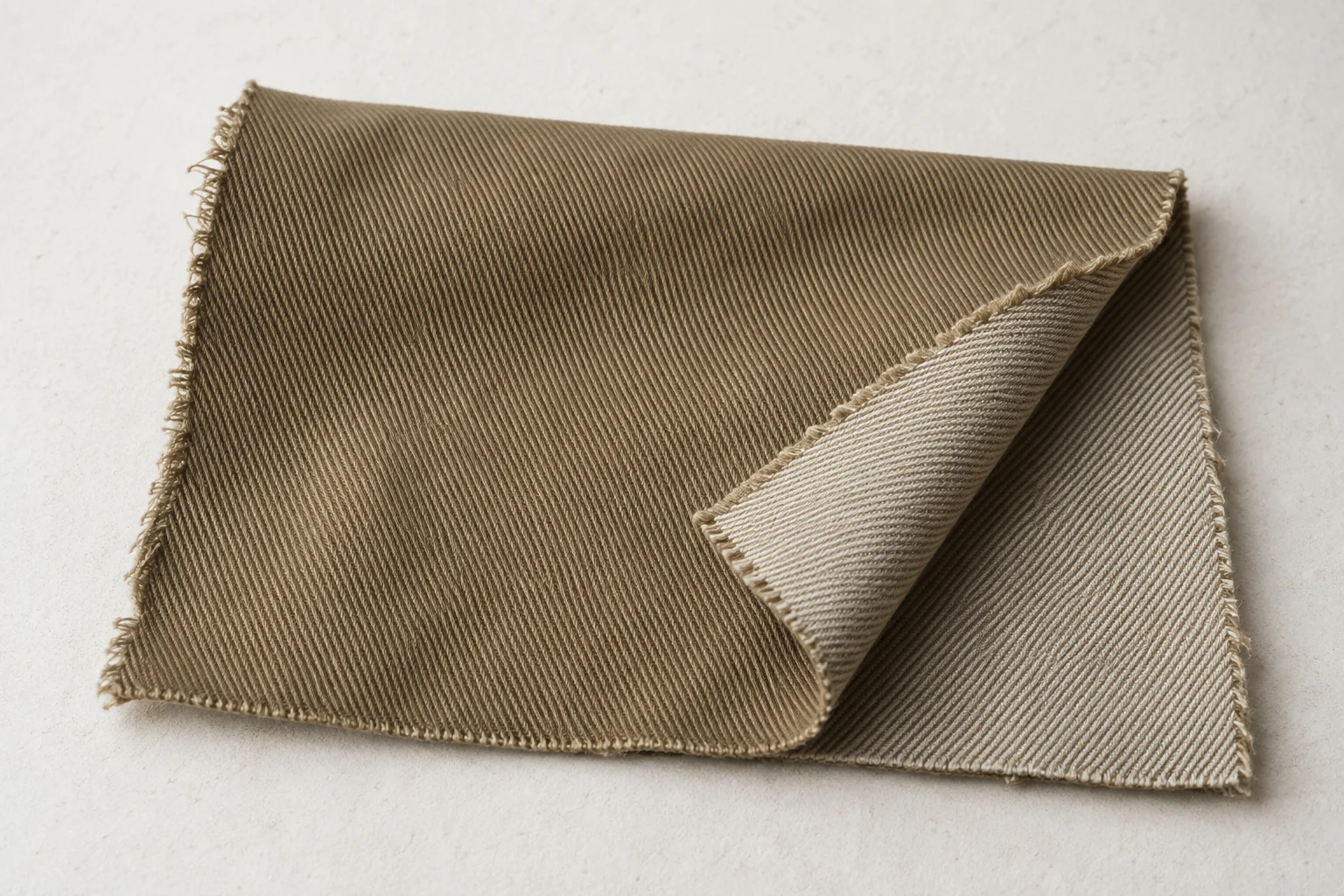
Turn up the hem of your jeans and look at the inside. The outside is deep blue with a fine diagonal line; the inside is almost white. That contrast is most of the answer to what denim is: a cotton fabric woven in a twill, where blue threads run the length of the cloth and white threads cross them, so one face shows mostly blue and the other mostly white.
Knowing how denim is made also makes the words on a jeans label useful rather than mysterious. Raw, selvedge, sanforized and stretch each describe a real choice at the mill, and each changes how a pair of jeans will fit on day one and how it will look after a year.
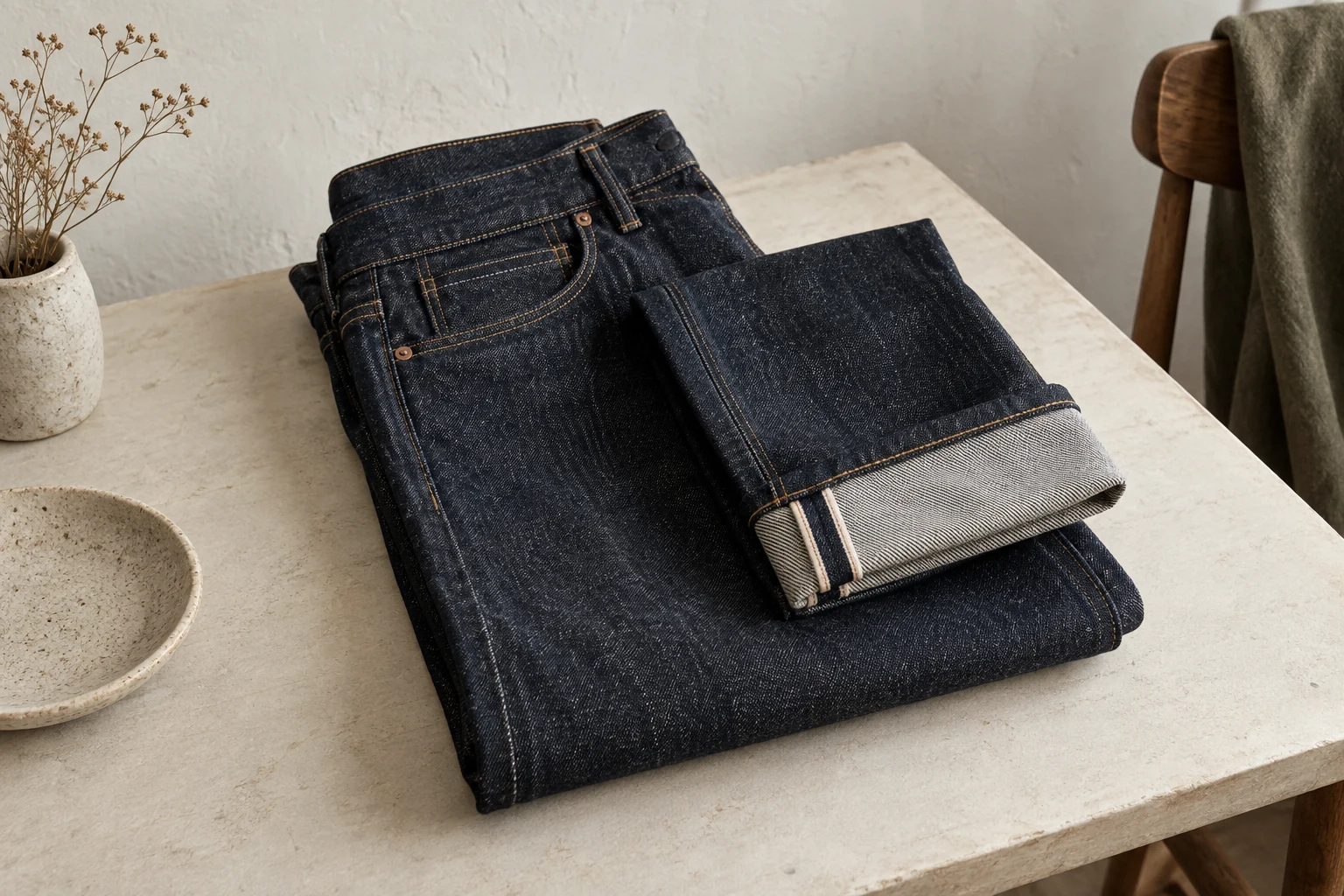
What is denim made of?
Traditional denim is 100% cotton. It is a warp faced twill: the lengthwise warp yarns are dyed with indigo, the crosswise weft yarns are left undyed, and each weft thread passes under two or more warp threads at a time, stepping over by one on each row. That stepping creates the diagonal ridges you can see and feel, and because the warp dominates the face, the outside looks blue while the inside looks white.
Is denim cotton, then? Mostly, yes, but modern denim is often a blend. Many jeans add 1 to 3 percent elastane for stretch, some add polyester for strength and shape retention, and some blend in lyocell or viscose for a softer, drapier feel. The label tells you which. A 98% cotton, 2% elastane jean will feel and age very differently from a 100% cotton one, so read the label before you buy.
Why is denim blue, and why does it fade?
Denim is blue because of indigo, one of the oldest dyes in the world, now mostly made synthetically. Indigo behaves differently from most dyes: it does not soak deep into cotton but builds up in layers on the outside of the yarn, leaving the core pale. This is called ring dyeing. As jeans are worn and washed, the surface of the yarn wears away where the fabric rubs and creases, exposing the white core.
That is where the familiar fades come from: pale knees, lighter seat, whiskers at the hips, honeycombs behind the knees and worn edges at the hem and pockets. The white weft also shows more as the blue surface thins. Not all denim is blue, though. Black, gray and white denim use other dyes or undyed yarn, and they fade differently or hardly at all.
Denim vs jeans, and where jeans came from
Denim is the fabric; jeans are trousers usually made from it. Denim also makes jackets, shirts, skirts, overalls and bags. The name denim is generally traced to serge de Nîmes, a twill cloth from the French town of Nîmes, while jean was a sturdy fabric associated with Genoa in Italy. Over time, denim came to mean the blue and white twill, and jeans the garment.
Modern jeans began as workwear. In 1873 a Nevada tailor named Jacob Davis and the San Francisco merchant Levi Strauss received a patent for reinforcing work trousers with metal rivets at the stress points, and riveted denim trousers became standard for miners, farmers and laborers. In the mid twentieth century, jeans moved from work to youth culture and then to almost every kind of casual dress.
Raw denim, sanforized and selvedge denim
Raw denim, also called rigid or dry denim, is fabric that has not been washed after weaving and dyeing. It feels stiff, looks dark and even, and crocks, meaning some indigo rubs off onto light surfaces and hands at first. If it is also unsanforized, it can shrink considerably in its first soak; Levi's notes that raw denim can shrink roughly two sizes. People choose raw denim because it molds to the body and develops high contrast fades that record how they move.
Sanforized denim has been mechanically preshrunk at the mill, so it will shrink very little. Most raw denim sold today is sanforized, but check the label or the maker's description before buying a snug size. Selvedge denim is woven on traditional narrow shuttle looms, which lay the weft back and forth continuously and produce a clean, self finished edge, often with a colored thread. You can spot it by turning up the leg: the outseam shows a tidy striped edge instead of an overlocked seam. Selvedge says how the fabric was woven, not that it is automatically better, though it is often associated with careful production.
Denim weights and stretch denim
Denim weight is measured in ounces per square yard. Light denim, under about 10 ounces, is used for shirts, dresses and summer jeans. Most jeans fall between roughly 11 and 14 ounces, a balance of durability and comfort. Heavyweight denim above that is stiff at first, takes longer to break in and lasts a long time.
Stretch denim blends cotton with elastane so jeans move with you and fit closer without binding. It is comfortable, particularly for slim and skinny cuts, but it fades less dramatically, can bag at the knees during the day, and the elastane weakens over years and with heat. If you want jeans that hold their shape, look for good recovery: pull the fabric across the width and it should snap back straight away. Our guides to types of jeans and how jeans should fit help you match fabric to cut.
| Term | What it means | Worth knowing |
|---|---|---|
| Raw, rigid or dry | Not washed after weaving and dyeing | Stiff, crocks at first, molds to the body |
| Sanforized | Mechanically preshrunk at the mill | Shrinks very little; most raw denim today is sanforized |
| Selvedge | Woven on narrow shuttle looms with a self finished edge | Describes the weaving, not automatically better quality |
| Light, under about 10 ounces | Thin, drapey denim | Shirts, dresses and summer jeans |
| Mid, about 11 to 14 ounces | The usual jeans weight | A balance of durability and comfort |
| Stretch | Cotton blended with elastane | Comfortable, fades less, can bag at the knees |
How to wear and care for denim
Denim is the most versatile casual fabric most people own. Dark, clean denim reads smarter and can go to many business casual offices with a jacket; lighter and faded washes are more relaxed. A denim jacket works over dresses, knitwear and T shirts, and an oversized denim jacket layers easily over a hoodie. Wearing denim with denim works best when the two washes are clearly different or nearly identical. For hems, our guide to cuffing jeans shows the classic rolls, and chambray explains the lighter plain weave cousin often mistaken for denim.
Wash denim less often than you think and gently when you do: inside out, buttoned, in cold water with a mild detergent, then hung to dry, since the dryer shrinks cotton and breaks down elastane. Wash new dark denim alone for the first few times, because indigo bleeds. Our full guide to washing jeans covers raw denim soaks and stretch jeans in detail.
Questions people ask
Is denim only used for blue jeans?
No. Denim makes jackets, shirts, skirts, dresses, overalls and bags, and it comes in black, gray, white and colored versions as well as indigo blue. Blue jeans are simply the most famous use.
What is the difference between denim and twill?
Denim is a type of twill. All twills have a diagonal rib, but denim is specifically a cotton twill with dyed warp and undyed weft, which gives it the blue face and white back. Our guide to twill fabric covers the wider family, including chino and gabardine.
Does raw denim shrink?
Unsanforized raw denim can shrink a lot in its first soak, sometimes by around two sizes, so it is sold large and shrunk to fit. Sanforized raw denim has been preshrunk and changes much less. Check the label before choosing your size.
What qualifies as denim?
A sturdy warp faced twill, traditionally all cotton, with colored warp and lighter weft is denim. Blends with elastane or polyester still count as denim if they keep that construction.
Sources and further reading
References used for this guide. Each opens the original page in a new tab.
Keep reading
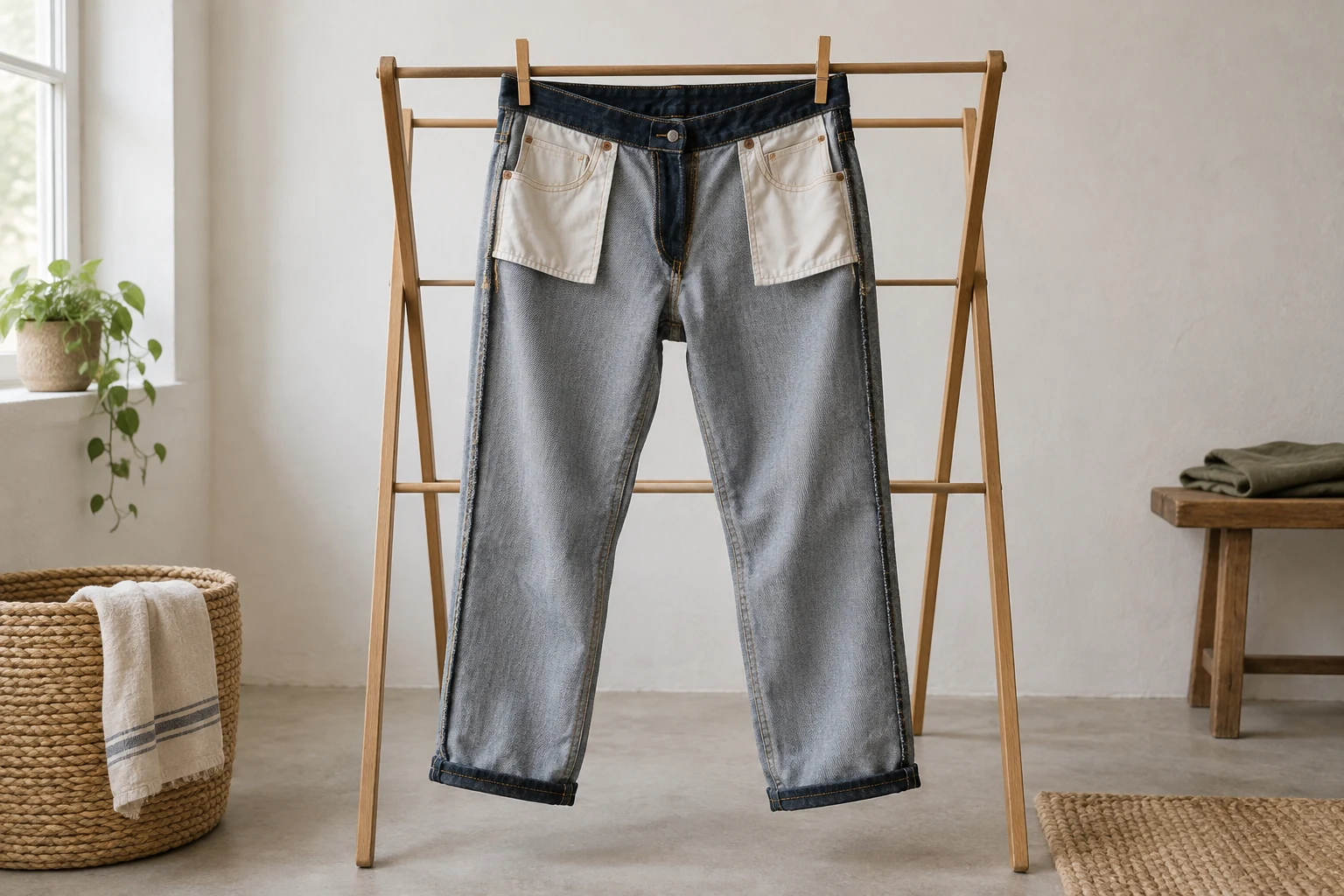
Washing and ironing
How to wash jeans and how often to do it
How to wash jeans so they keep their color and fit: how often to wash, inside out in cold water, air drying, raw denim and what to do if your jeans shrink.
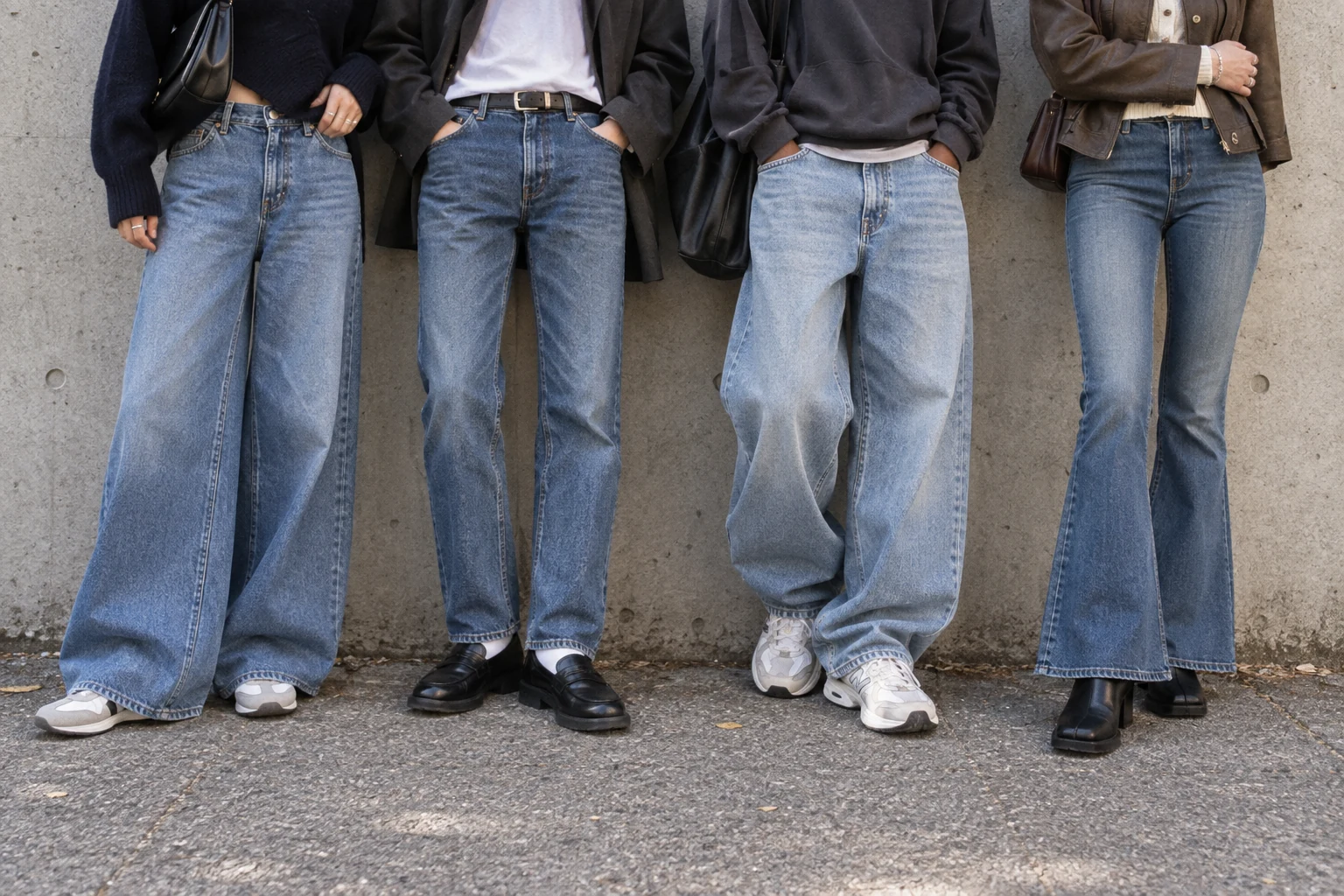
Everyday style
Types of jeans: fits and cuts explained
The main types of jeans explained: rise, skinny to baggy leg shapes, bootcut, flare, wide leg, mom and boyfriend jeans, with what each suits and how to wear it.
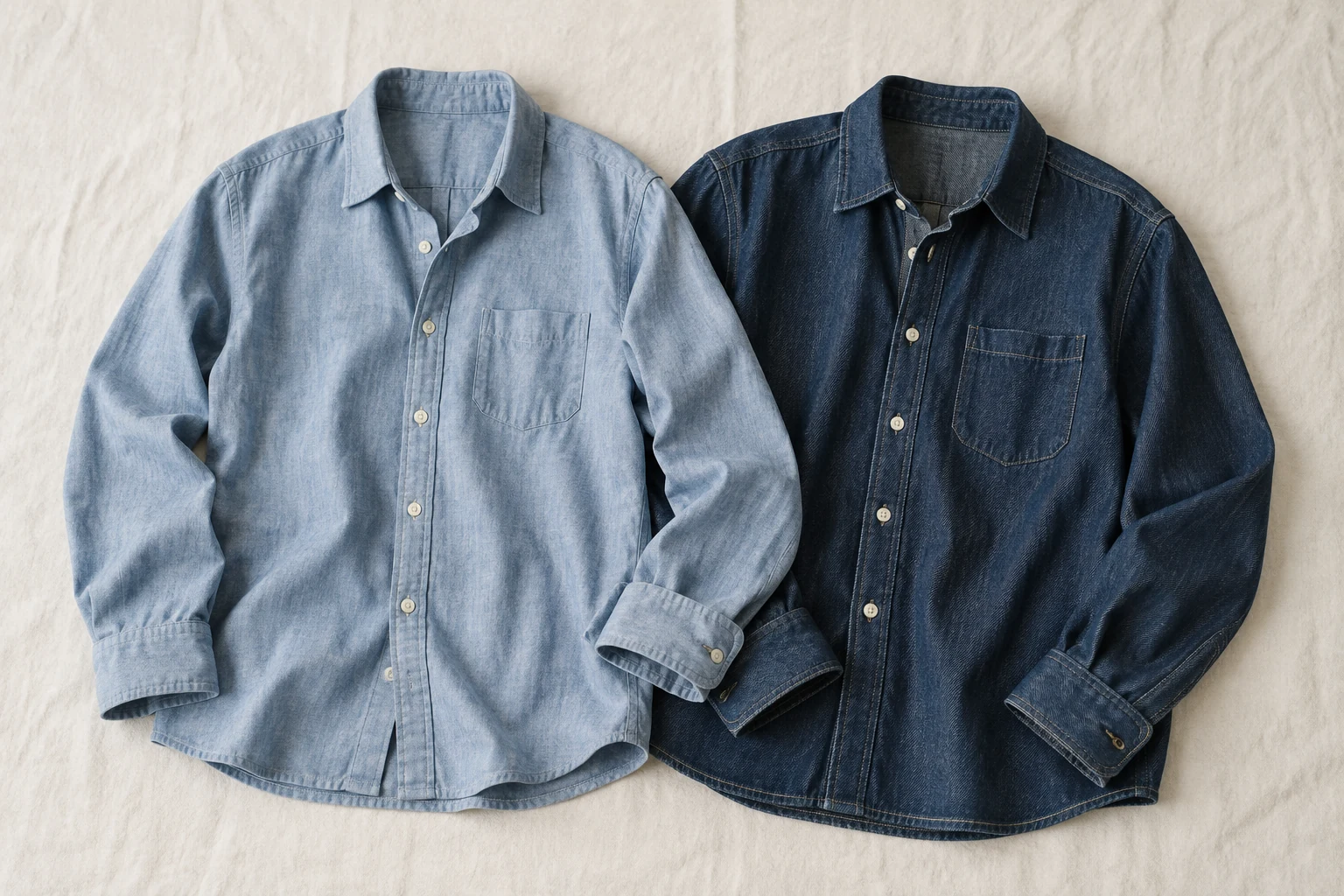
Fabrics
Chambray: what it is and how it differs from denim
Chambray explained: how this light plain weave differs from denim, what the chambray color is, how to wear a chambray shirt or dress, and how to care for it.
Fabrics
What is twill fabric, and what is it good for
What is twill? The weave behind jeans, chinos and gabardine: how to spot the diagonal, what twill is made of, where it works, and how it compares to cotton.

Sizing
How should jeans fit? Waist, seat, thigh and length
How should jeans fit at the waist, seat, thigh and ankle? Clear checks for men and women, how rigid and stretch denim change, and where the hem should land.