Gingham vs plaid: how to tell checks apart
In this guide
The label on a checked dress says gingham, a friend calls it plaid, and an invitation asking for a picnic look leaves you wondering whether a red plaid shirt counts. The question of gingham vs plaid sounds like trivia, but the answer changes how you wear the piece, what you pair it with and what season it suits.
Gingham is one simple, even check, and plaid is a large family of more complex crossed stripe patterns. Once you know what to look for, you can tell them apart from across a room. Below is how to recognize each, where tartan and flannel fit into the picture, and how to wear both, including together.
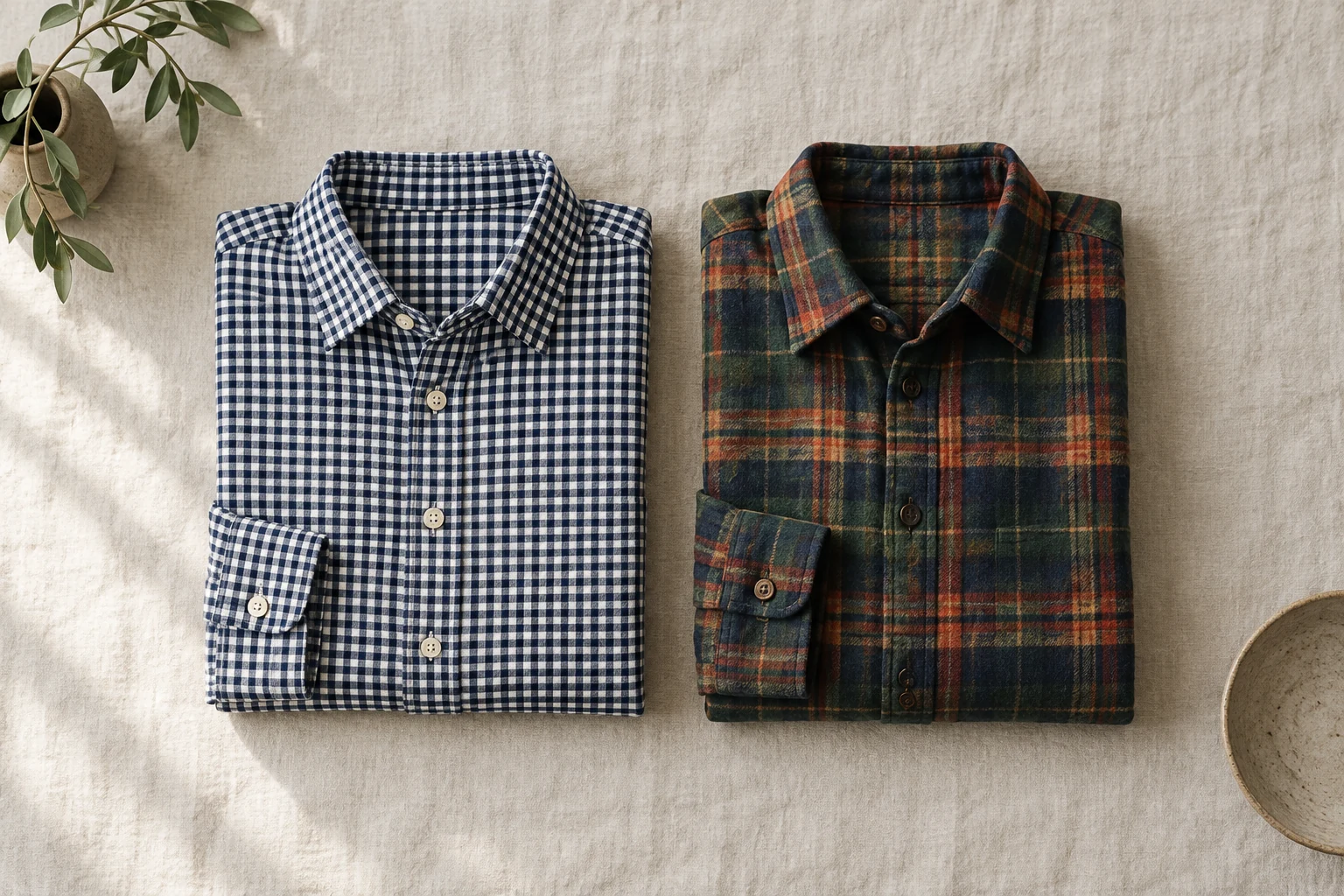
What the gingham pattern is
Gingham is a light to medium weight fabric woven in a plain weave from yarns that are dyed before weaving, most often cotton or a cotton blend. The classic version pairs one color with white. Stripes of the colored yarn and the white yarn run the same width in both directions, so every square is the same size and the pattern looks identical on the front and the back of the cloth. Because the color is in the yarn rather than printed on top, it does not fade away on the reverse side the way a printed check does.
Look closely at a gingham pattern and you will see three tones, not two. Where colored threads cross colored threads you get a solid square, where white crosses white you get a white square, and where the two meet you get a lighter, mixed tint. That checkerboard of dark, light and midtone is the signature of gingham. The name has a debated history: some trace it to a Malay word for striped cloth, others to the Breton town of Guingamp. Mills in Manchester were weaving it as blue and white checks by the eighteenth century, and it has been a staple of tablecloths, aprons, school uniforms and summer shirts ever since.
What plaid is
Plaid, in the North American sense, is any pattern of colored stripes crossing at right angles where the stripes vary in width and color. A typical plaid shirt might combine a navy ground, green bands, a thin red line and a thinner yellow one, repeating in a sequence. The crossings create blocks, lines and small overlapping tints that make the pattern look layered rather than flat. Plaid can be woven in any weave and fiber: cotton flannel, wool twill, silk, polyester.
In Scotland, the word plaid means something else. It originally named a large rectangle of cloth worn wrapped around the body and over the shoulder, and the patterned cloth itself is called tartan. Americans and Canadians use plaid for the pattern, which is why the two words get tangled. Our guide to plaid vs tartan untangles that history in detail; for this comparison, plaid simply means the multicolor, uneven family of checks.
How to tell gingham and plaid apart
Start by counting colors. If you see one color plus white (or one color plus a paler version of itself), you are almost certainly looking at gingham. If you see three or more distinct colors, it is plaid. Next, look at the stripe widths. In gingham every stripe in both directions is the same width, so the squares are all equal. In plaid, wide bands sit next to narrow lines, and the repeat is larger and harder to take in at a glance.
The overall impression helps too. Gingham reads as crisp, graphic and a little playful, like a picnic cloth. Plaid reads as denser and more textured, and it carries associations with autumn, the outdoors and Scottish dress. Scale is not a reliable test on its own: gingham comes in tiny checks under a quarter inch (about 6 mm) and in large checks of an inch (2.5 cm) or more, and plaid comes in both small and large repeats.
Tartan vs plaid vs gingham, plus flannel and buffalo check
Tartan is the most formal member of the plaid family. It is a specific, repeatable color sequence, called a sett, woven the same way in both directions, traditionally in a two over two twill. Many tartans are registered and tied to a Scottish clan, family, district or organization. Every tartan is a plaid in the American sense, but not every plaid is a registered tartan; a mass market shirt may simply use a plaid pattern its designer invented.
Buffalo check sits between the two. It has the even, equal squares of gingham but usually in red and black at a large scale, and it is often woven in heavy wool or cotton flannel. Some people call it buffalo plaid, and both names are used. Flannel, meanwhile, is not a pattern at all. It is a soft fabric with a brushed, fuzzy surface, made in wool or cotton. Plenty of flannel shirts are plaid, which is why the words get swapped, but a solid gray flannel suit is still flannel and a crisp cotton plaid shirt is not.
| Name | What it is | How to spot it |
|---|---|---|
| Gingham | Even check in a plain weave, one color plus white | Equal squares in three tones, same on both sides |
| Plaid | Crossed stripes of varied width and color | Three or more colors, wide bands beside thin lines |
| Tartan | A specific, often registered plaid sett in twill | Same color sequence both ways, often tied to a clan |
| Buffalo check | Large even check, usually red and black | Gingham style equal squares at big scale, often flannel |
| Flannel | A brushed fabric, not a pattern | Soft fuzzy surface, can be plaid or solid |
How to wear a gingham shirt, top or dress
Gingham is at home in warm weather and daylight. A small navy or blue gingham shirt is one of the easiest patterned shirts a man can own: it works with chinos, jeans and a navy blazer, and it sits comfortably within most business casual offices. Keep the rest of the outfit solid so the check has room. Larger checks look more casual, so save them for weekends and picnics.
For a gingham dress or gingham top, the check does the talking, so a simple cut works best: a shirt dress, a fitted bodice with a full skirt, a boxy cropped top with high waisted trousers. Red and pink ginghams lean retro and summery, black and white leans graphic and city, and blue is the most versatile. Pair them with neutrals and one texture, such as straw, canvas or white leather. If the look is heading toward a prairie or cottagecore mood, the gingham is doing it; tone it down with denim and a plain cardigan if you want something more everyday.
How to wear a plaid shirt and other plaids
A plaid shirt already contains several colors, so build the outfit from them. Pick one color that appears in the pattern and repeat it in a solid piece, such as a navy sweater with a navy and green plaid, or brown boots with a plaid that contains rust. That repetition makes the outfit look intentional. Our guide to colors that go together explains the same principle in more depth.
Plaid tends to look heavier than gingham, so it lands naturally in autumn and winter: a flannel shirt open over a T shirt, a wool plaid skirt with tights and loafers, a tartan scarf with a solid camel coat. Light cotton plaids and madras bring the pattern into summer. If you want a softer version for the office, choose a muted plaid with low contrast, such as gray and navy, rather than a bright red and black check.
Can you wear gingham and plaid together
Yes, and it can look very good if you follow two simple rules. First, change the scale: pair a small gingham shirt with a larger plaid jacket or scarf so the two patterns do not compete at the same size. Second, share a color: a blue gingham shirt under a blazer whose plaid includes the same blue will hold together, while two unrelated color stories will look accidental.
Limit yourself to two patterns in one outfit, and keep everything else solid, including shoes and bag. The combination reads relaxed and a bit preppy, so it suits smart casual settings more than formal ones. If you are unsure, try it with the patterns in the same color family first, such as navy gingham with a navy and gray plaid, and grow bolder from there.
Caring for gingham and plaid
Most gingham is cotton and can go in a home wash on the setting the care label gives. Because the pattern is woven from dyed yarns, it holds its color well, but a red or navy gingham can still bleed a little in its first few washes, so wash it with similar colors. Cotton plain weaves wrinkle, so take the piece out of the dryer promptly or hang it to dry; the check hides minor creases, and a quick press will handle the rest. See our guide to ironing a shirt for collar and cuff order.
Plaid care depends entirely on the fabric. Cotton flannel shirts wash easily but can shrink and pill with high heat, so wash cool and dry low. Wool plaids, from skirts to scarves, need the gentle handling in our wool washing guide. When in doubt, the care label symbols tell you what the maker tested.
Questions people ask
Is gingham the same as plaid?
No. Gingham is a specific even check, usually one color plus white, with stripes of the same width in both directions. Plaid is a broader family of patterns with several colors and stripes of varying widths. In casual speech people sometimes call gingham a plaid, but in fabric terms they are different patterns.
What is the difference between tartan and gingham?
Tartan is a complex, multicolored sett that repeats in both directions and is often registered to a Scottish clan, district or organization. Gingham is a simple two tone check with equal squares and no registry or heritage attached. Tartan is traditionally woven in wool twill, gingham in cotton plain weave.
What is the difference between flannel, plaid and gingham?
Flannel is a fabric, a soft brushed cloth made from cotton or wool. Plaid and gingham are patterns that can be woven into many fabrics, including flannel. So a plaid flannel shirt is a plaid pattern on flannel cloth, and a gingham flannel shirt is also possible.
Is buffalo check gingham or plaid?
Buffalo check has the equal squares of gingham but is usually red and black, large in scale and woven in heavy flannel or wool. That is why it is sold under both names. Structurally it behaves like a large gingham; in styling it behaves like a rugged autumn plaid.
Is gingham only for summer?
Gingham is most at home in spring and summer because it is usually light cotton. A small, dark gingham shirt works year round under a sweater or blazer, though. Heavier brushed ginghams and buffalo checks are made specifically for colder months.
Sources and further reading
References used for this guide. Each opens the original page in a new tab.
- Gingham, fabric history and construction (Wikipedia) Opens in a new tab
- Cotton fabrics: gingham, Cotton Incorporated Opens in a new tab
- Tartan, definition, sett and terminology (Wikipedia) Opens in a new tab
- Check pattern types, including buffalo check (Wikipedia) Opens in a new tab
- Flannel, a fabric rather than a pattern (Wikipedia) Opens in a new tab
Keep reading
Fabrics
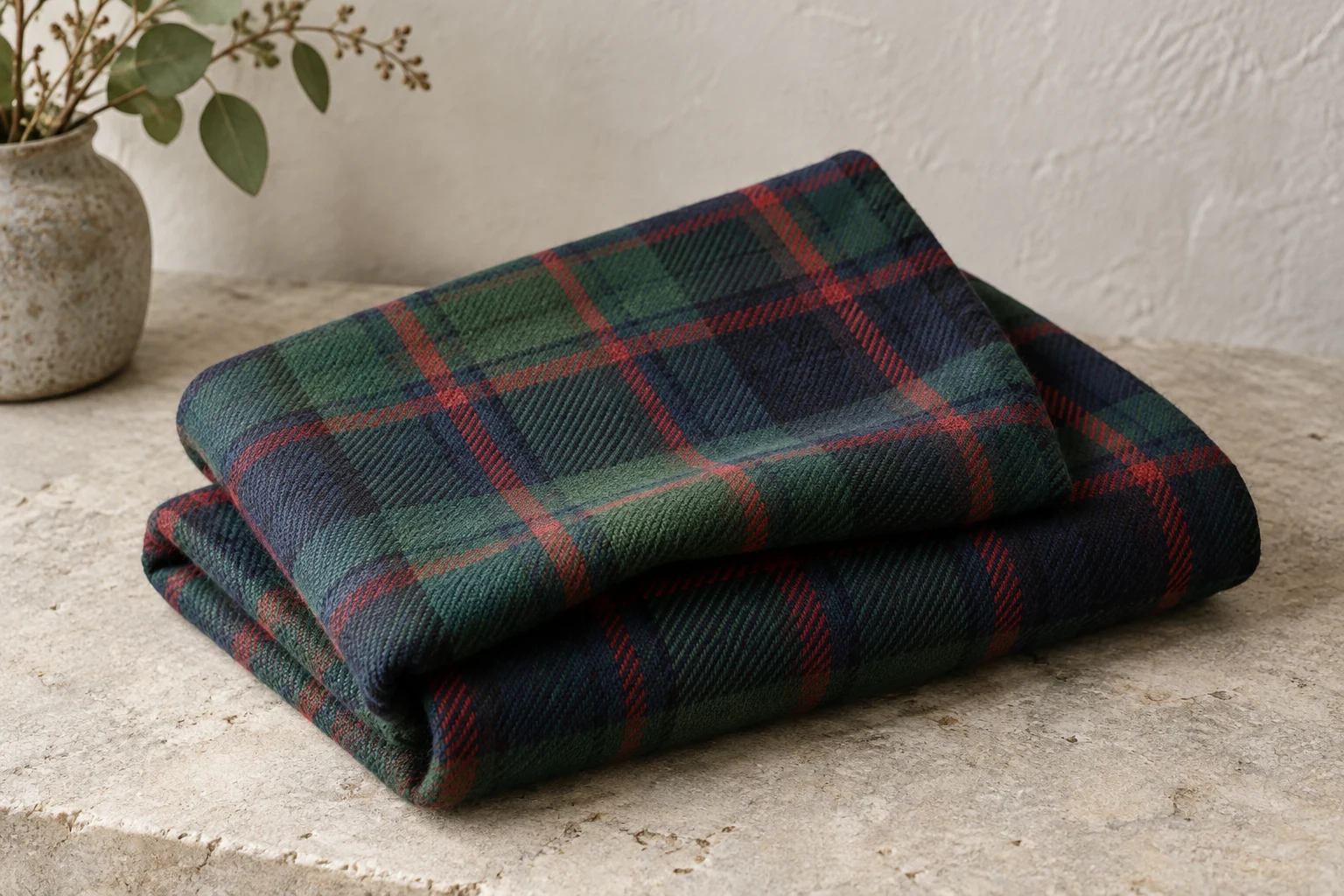
Plaid vs tartan: what is the difference
Plaid vs tartan explained: what each word means in Scotland and North America, how a real tartan is built, who may wear one, and how to wear plaid well.
Fabrics
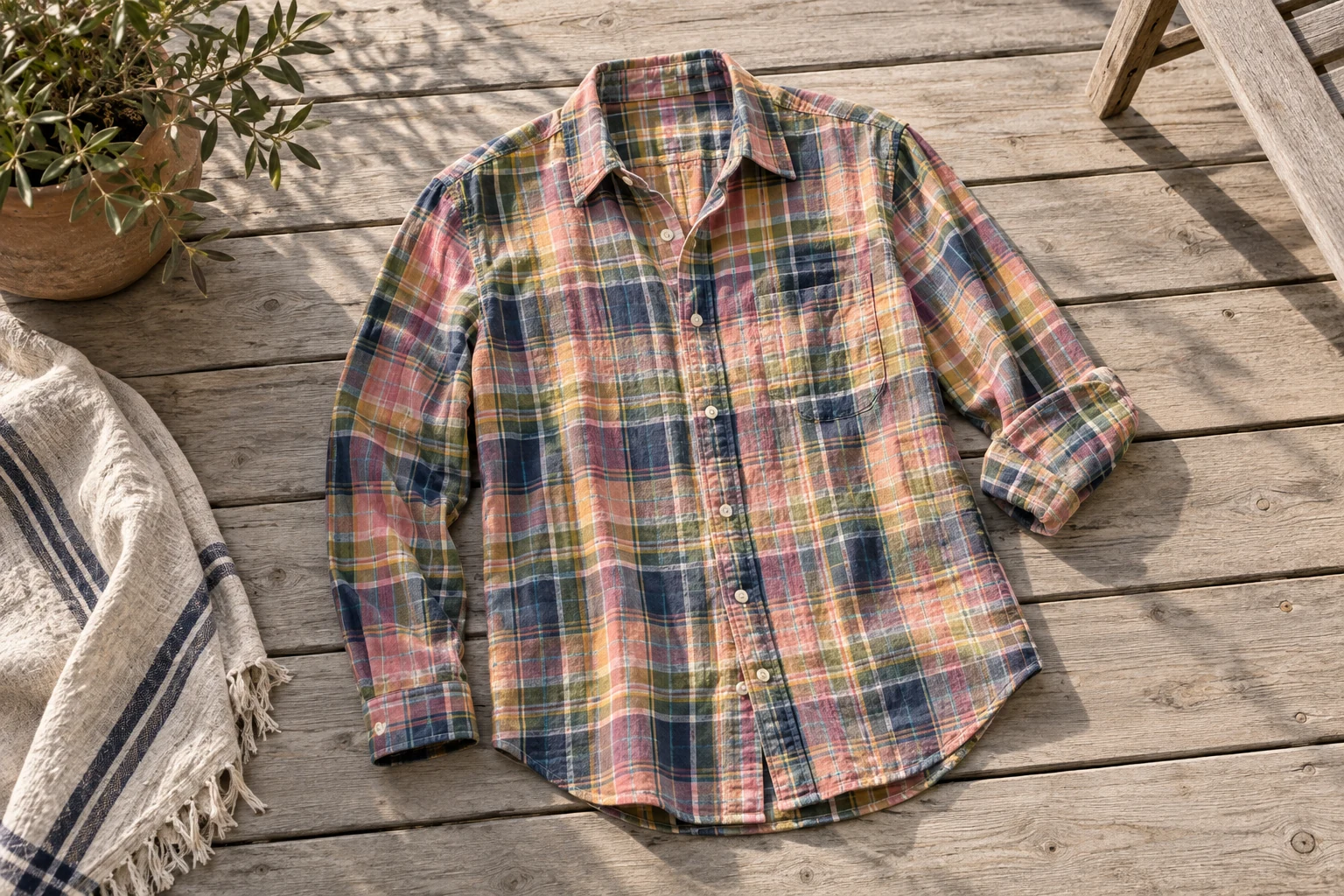
Madras fabric: history, care and how to wear it
What madras fabric is, where it comes from, why bleeding madras runs in the wash, how it differs from other plaids, and how to wear and wash a madras shirt.
Fabrics
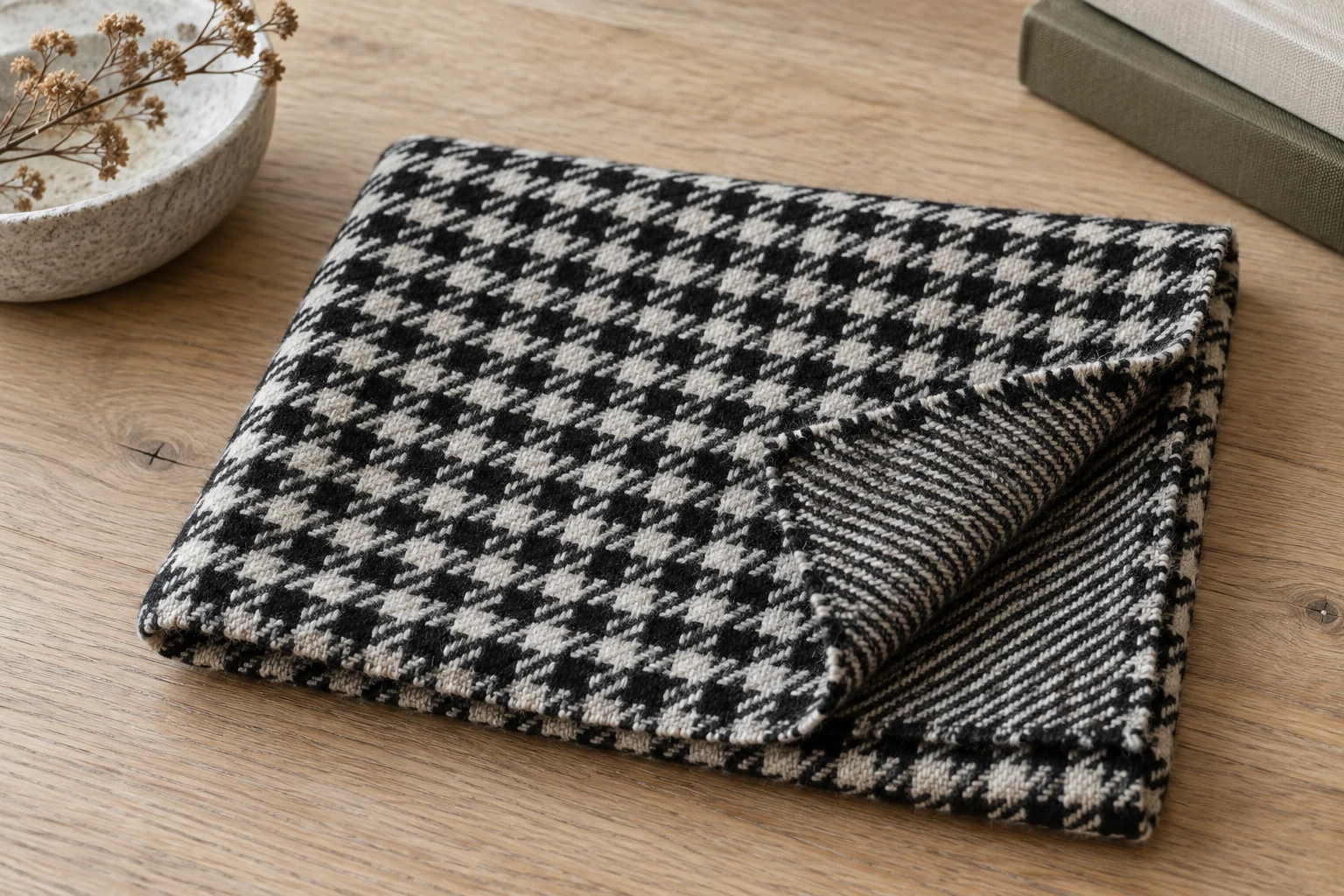
Houndstooth pattern: what it is and how to wear it
What the houndstooth pattern is, how it is woven, where the name comes from, how it differs from herringbone and glen plaid, and how to wear and care for it.
Fabrics
Seersucker: the summer fabric explained
What seersucker is, how its puckered stripes are woven, why it keeps you cool, where it came from, and how to wear a seersucker suit, shirt or dress in summer.
Styles
Preppy style: what it is and how to wear it now
What preppy style means, where it came from, the core pieces for men and women, and how to wear modern preppy outfits without looking like a costume.