What to wear to a job interview
In this guide
The interview is on Thursday, you have prepared your answers, and now you are looking at your closet wondering what to wear to a job interview at a company where, for all you know, everyone wears hoodies. Or suits. Or both, depending on the floor. The uncertainty is normal, and the solution is less about owning the right clothes than about doing a little research first.
The goal of an interview outfit is modest: look like someone who takes the opportunity seriously and fits the place, then get out of the way so the conversation is about you. This guide explains how to read a company's dress code, why one step above daily wear is the useful rule, what men and women typically wear at each level, and how to handle video interviews and the details that trip people up.
Start by researching the company
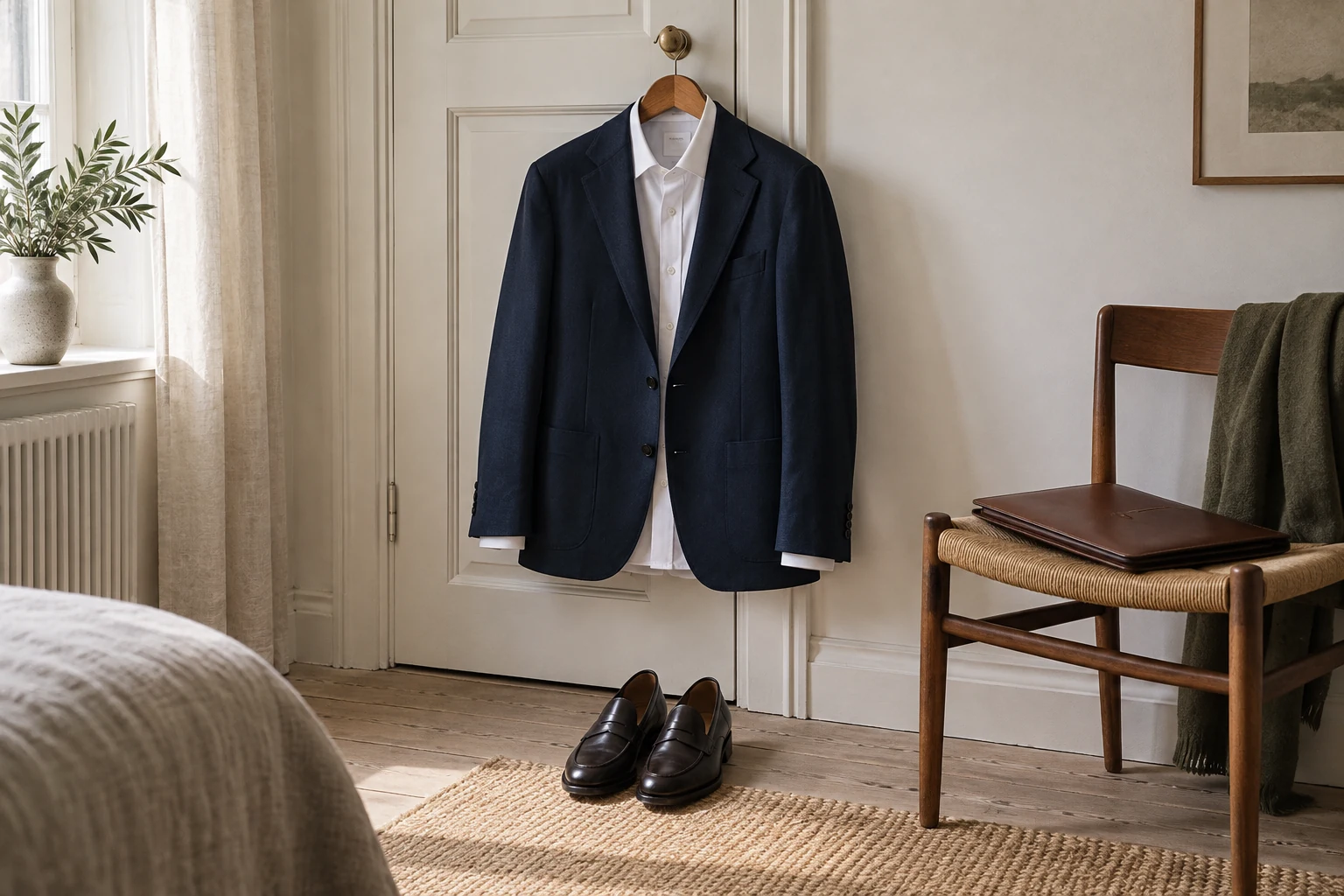
Dress codes vary widely by industry, company and even team, so the first step is to find out what people there actually wear. University career centers, including those at the University of Cincinnati and UNC Chapel Hill, suggest looking at the company's website, its social media and LinkedIn photos of employees at work. Recruiting pages and videos of team events are useful, though photos from holiday parties or conferences can mislead. Look for pictures of ordinary working days.
You can also simply ask. Texas A&M's career center puts it plainly: when in doubt, ask the recruiter or the person scheduling your interview. A short question such as what the typical dress is for the team is a normal part of interview logistics, and the answer removes most of the guesswork. As a rough map, career centers place finance, law, government, consulting and many corporate roles at business professional, and tech, education, nonprofits, startups and creative fields more often at business casual.
Dress one step more formal than the daily dress code
Once you know how people dress day to day, go one level above it. If employees wear T shirts and jeans, arrive in business casual: chinos or smart trousers with a collared shirt or neat knit, perhaps a blazer. If the office is business casual, add a jacket, or wear a suit and treat the tie as optional. If everyone wears suits, wear a suit and make it a good one. This small step signals effort and respect without making you look as if you misunderstood the place.
The reasoning is simple. An interview is a more formal occasion than an ordinary Tuesday for the people who work there, and slight overdressing is rarely held against a candidate, while underdressing can read as not taking the opportunity seriously. Career centers repeat the same default: when you cannot tell, lean professional. The exception is when the company explicitly asks you not to dress up. If a recruiter says to come casual, believe them and choose the neat, pressed version of casual rather than a full suit.
| People there wear | Wear to the interview |
|---|---|
| T shirts and jeans | Business casual: chinos or smart trousers, collared shirt or neat knit |
| Business casual | Add a jacket, or a suit with the tie optional |
| Suits | A good, well fitted suit |
| You were told to come casual | The neat, pressed version of casual, not a suit |
| You cannot find out | Lean professional |
What to wear to an interview: men
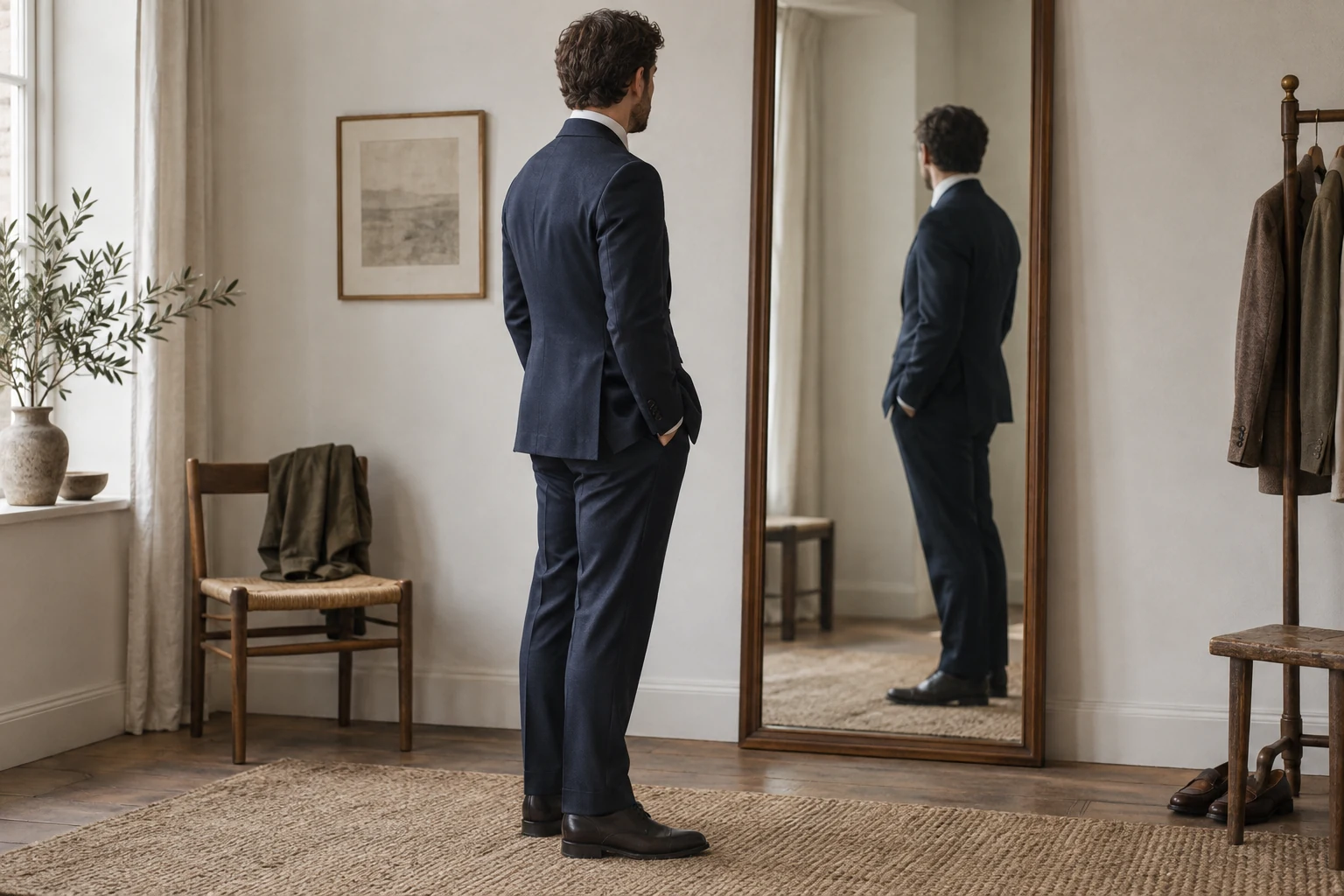
For a business professional interview, wear a well fitted suit in navy or charcoal, a white or light blue dress shirt and a simple tie in a quiet color or small pattern. Add dark leather shoes, a belt that matches them and dark socks. Fit matters more than the price of the suit: check the shoulders, sleeve length and trouser break against our guide to how a suit should fit, and remember to leave the bottom button of the jacket open, one of several suit button rules worth knowing.
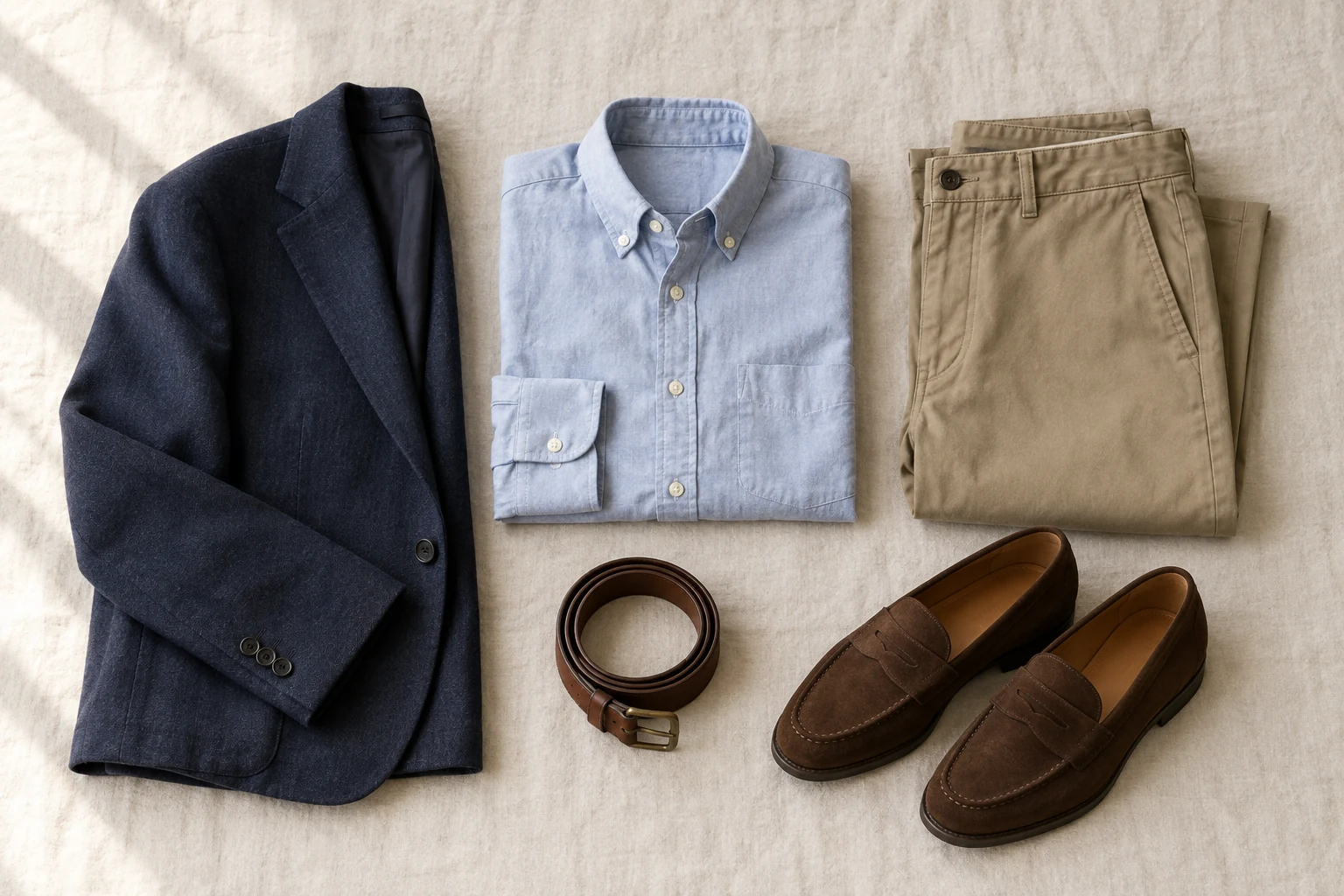
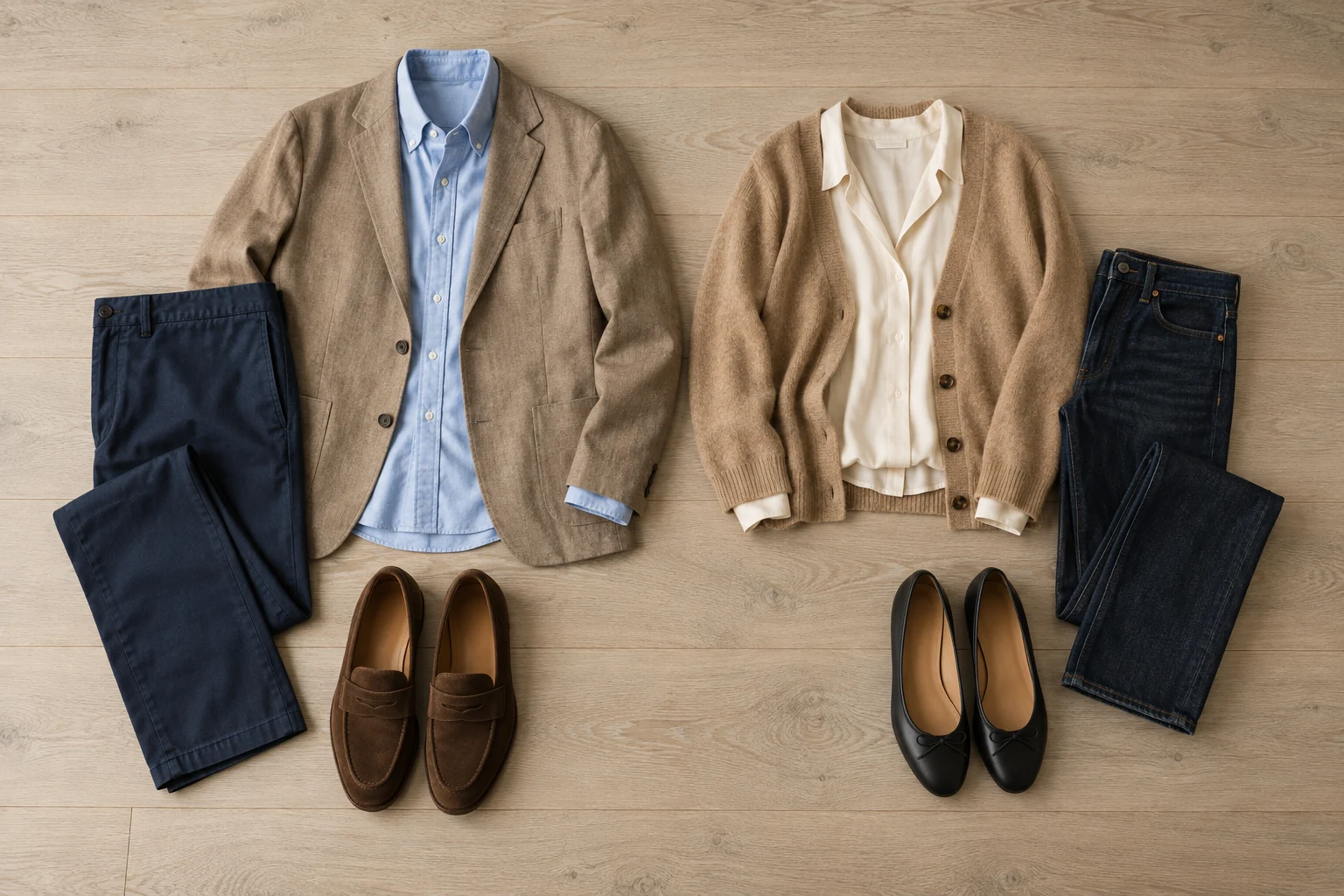
For a business casual or casual interview, the suit becomes a blazer or sport coat with wool trousers or chinos, a collared shirt and leather shoes or clean loafers. A tie is optional; without one, keep the collar crisp and open only the top button. If you are going for a first job, a part time role or an interview at a store or restaurant, pressed chinos with a collared shirt or a fine knit look prepared without feeling like a costume. Our guide to business casual for men goes piece by piece.
What to wear to an interview: women
For a business professional interview, a suit with trousers or a skirt is the clearest choice, as is a structured dress with a matching or coordinating jacket. Tailored trousers with a blouse or fine knit and a blazer also work well. Skirts and dresses are usually best at about knee length, and tops with a modest neckline sit better under a jacket and when you lean forward to shake hands or take notes. Neutral colors such as navy, black, gray, beige and white are a safe base, with a softer color or small pattern in the blouse if you like.
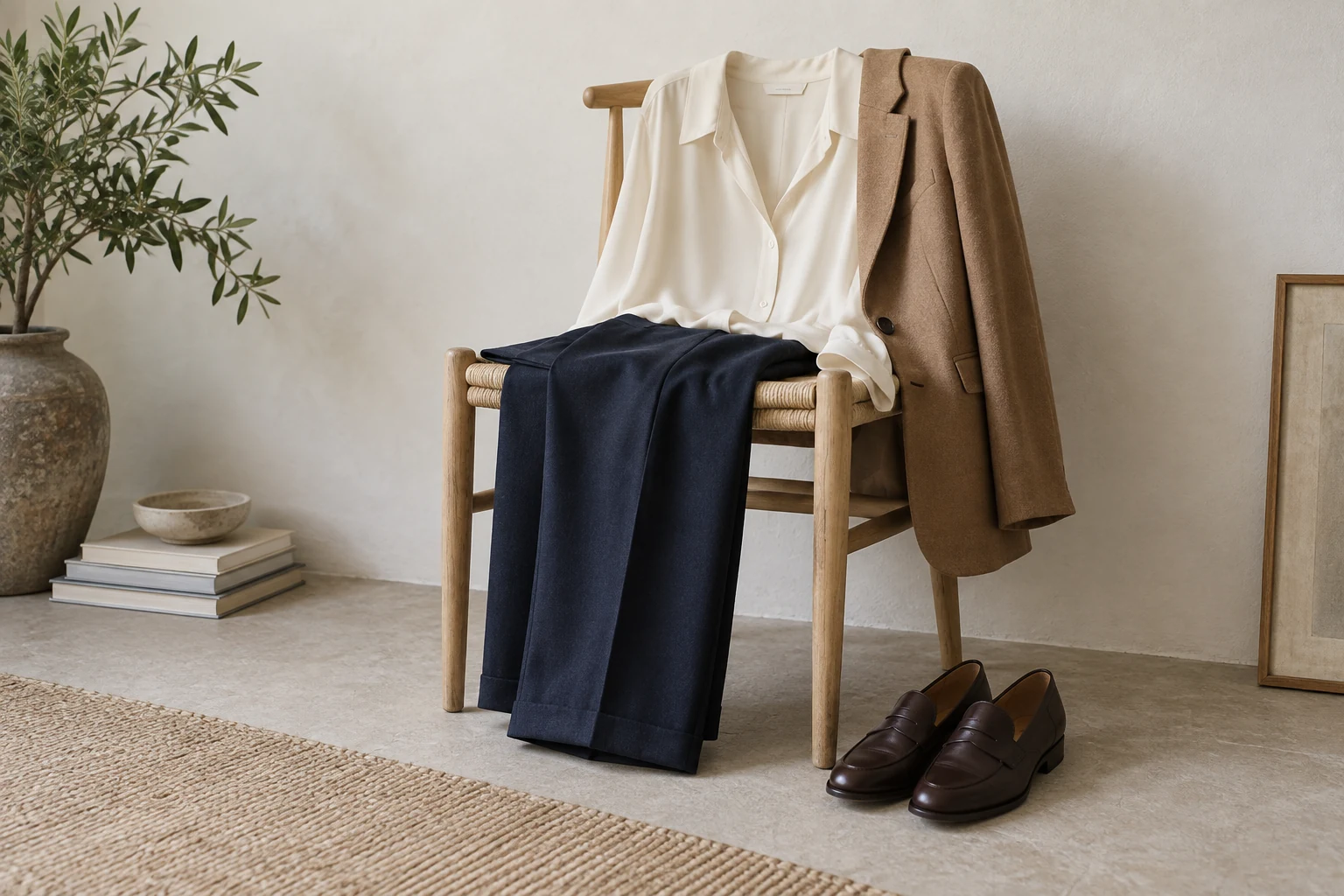
At a business casual interview, the jacket can become a cardigan or an unstructured blazer, and a midi skirt or wide trousers with a neat top fits in easily. Closed toe shoes are the standard advice from career centers: low heels, flats, loafers or simple ankle boots, polished and comfortable enough to walk a building tour. These interview outfits for women work at any age and career stage, and our guide to business casual for women covers more combinations.
Fit, grooming and the details interviewers notice
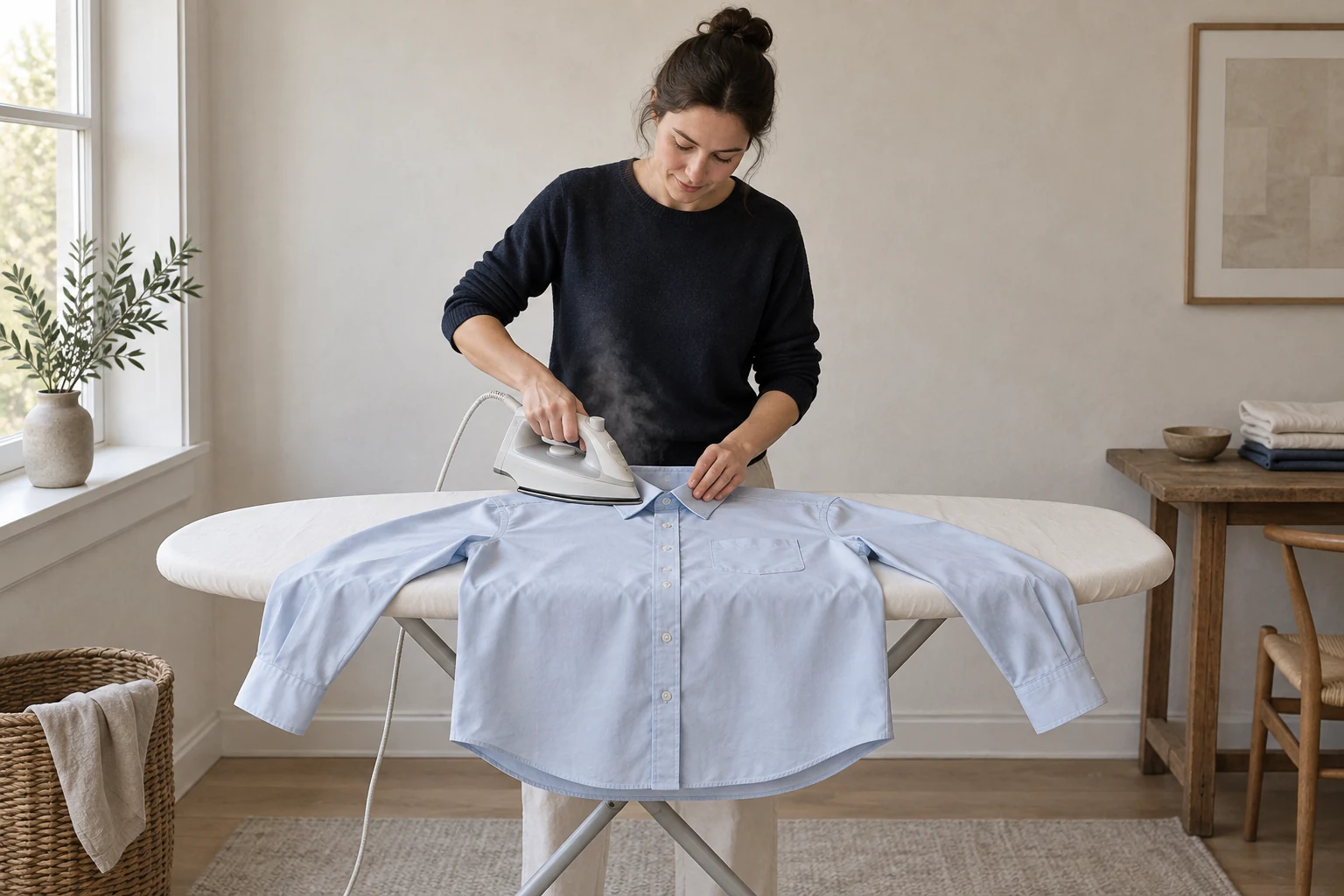
Clothes that are clean, pressed and fit well say more than any particular item. Try the full outfit on at least a day ahead and sit down, reach forward and walk in it. A jacket that pulls across the back or a skirt that rides up when you sit will distract you during the conversation. Press shirts and trousers the night before; our guide to ironing a shirt makes the collar and cuffs quick, and a garment steamer handles knits, dresses and blouses that do not like an iron. Polish scuffed shoes, check hems and look for loose buttons.
Career centers also mention grooming: neat hair, clean nails and very little fragrance, since interview rooms are small and some people react to strong scents. Keep accessories to a few simple pieces, and carry a folder or a structured bag rather than an overstuffed backpack. If the weather is bad, wear a coat and bring an umbrella, and arrive early enough to fix your collar and dry off before you walk in.
What to wear to a video interview
Dress for a video interview as you would in person, including the parts below the camera. Career centers at Texas A&M and the University of Cincinnati both recommend the same professional standard for virtual interviews, and there is a practical reason too: if you need to stand up or reach for something, you do not want the interviewer to see gym shorts.
The camera changes a few details. Very fine stripes, small checks and busy patterns can shimmer or blur on screen, so solid colors and larger, calm patterns are safer. Choose a top that contrasts gently with your background, so a navy sweater does not disappear against a dark wall. Noisy bracelets and earrings can sound loud through a laptop microphone. Test your camera and lighting a day before with the outfit on, since a color that looks fine in a mirror can look very different under a desk lamp.
Common mistakes
Wearing something new for the first time
New shoes pinch and new trousers may need hemming. Wear the outfit around the house beforehand so you find the problems while there is still time to fix them.
Dressing for the job title rather than the company
A software engineer at a bank and a software engineer at a small startup may face very different dress expectations. Research the specific company and team, not just the role.
Letting accessories compete for attention
Loud jewelry, strong fragrance and distracting prints pull attention from what you are saying. Career centers consistently recommend keeping accessories minimal and letting the conversation lead.
Questions people ask
Can I wear jeans to a job interview?
Only when you know the company is casual, and even then choose dark, clean jeans without rips, paired with a collared shirt or neat top and a blazer or sweater. Texas A&M's career center lists dark jeans only for smart casual settings. If you have any doubt, chinos or trousers are safer.
Should I wear a suit to an interview at a casual startup?
Usually not a full suit with tie, since it can feel stiff in a very casual office. Business casual with a blazer is the more common choice. If the recruiter says suits are fine or the role is client facing, a suit is still reasonable.
What should you avoid wearing to an interview?
Career centers generally advise against very short or tight pieces, athletic wear, flip flops, graphic T shirts and heavily distressed clothing, along with anything that needs constant adjusting, such as a strap that slips or a skirt that rides up. Strong fragrance and noisy jewelry distract in the same way. The practical test is whether you can sit, stand and gesture comfortably without thinking about the outfit.
Is black a good color for an interview?
Yes, black is one of the neutral colors career centers recommend, along with navy, gray, beige and white. Navy and charcoal are often chosen for suits because they look a little less severe, but black is entirely appropriate.
Do interviewers look at your shoes?
Some do, and even when nobody looks closely, scuffed, dirty or worn down shoes can undercut an otherwise careful outfit. You do not need expensive shoes, only clean ones that match the level of the outfit, with a fresh polish on leather and no visible wear at the heels. Make sure you can walk comfortably in them, since interviews often include a tour or a walk between rooms.
What should a teenager wear to a first job interview?
For a first job at a restaurant, a store or a fast food counter, aim for neat and clean rather than formal: chinos or dark trousers, a skirt or a simple dress, with a collared shirt, polo, blouse or plain sweater, and clean closed toe shoes. A suit is not needed. Skip ripped jeans, graphic T shirts, hoodies and slides, and make sure everything is ironed and fits.
Sources and further reading
References used for this guide. Each opens the original page in a new tab.
Keep reading
Dress codes
Business casual for men: what to wear to work
What business casual means for men at work, with outfit formulas, the right shoes, when jeans are allowed and how to read your own office's version of the code.
Dress codes
Business casual for women: what to wear to work
What business casual means for women at work: trousers, skirts, dresses, knitwear and shoes, with outfit formulas, what to avoid and how to read your office.
Suits and tailoring
How a suit should fit: shoulders, sleeves and length
How should a suit fit? Check the shoulders, collar, button, jacket length, sleeves and trousers in the mirror, and learn which problems a tailor can and cannot fix.
Dress codes
Smart casual: what it means for men and women
What smart casual really means, how it differs from business casual, and what men and women can wear, including when jeans, sneakers and a blazer are right.
Washing and ironing
How to iron a shirt in the right order
How to iron a shirt the way shirtmakers do: set the heat for the fabric, start slightly damp, then work collar, cuffs, sleeves, yoke, back and front in order.