Punk fashion: where it came from and how to wear it
In this guide
A worn leather jacket, a band shirt with the sleeves cut off, a row of safety pins and boots that have clearly walked a lot: punk fashion is instantly recognizable, and it is also one of the few styles built on the idea that you make it yourself. That is both its appeal and the reason store bought punk so often looks wrong.
This guide covers where punk came from, the pieces that define it, the main substyles, outfits for men and women, and how to start from clothes you already own. It treats punk as what it is, a music scene and a set of attitudes with a real history, rather than a costume.
Punk fashion history: New York and London
Punk style grew up in two cities at once in the mid 1970s. In New York, the musician Richard Hell wore spiked hair and torn T shirts held together with safety pins, a look that became the template. In London, Vivienne Westwood and Malcolm McLaren ran a shop on the King's Road, renamed Sex in 1974 and Seditionaries in 1976, that sold bondage trousers, leather, provocative printed T shirts and mohair sweaters. Westwood dressed the Sex Pistols, whom McLaren managed, and the band carried the look across Britain.
The core scene was small, and much of its style came from necessity. Young people cut up old clothes from charity and thrift shops, ripped them, and put them back together with pins, chains and paint. Hair was spiked or shaved into mohicans and dyed pink, green or blue, and piercings appeared in places that were unusual then. Within a year or two, designers such as Zandra Rhodes were showing slashed dresses fastened with gold safety pins, the first of many times punk would be absorbed by high fashion.
What punk fashion style looks like
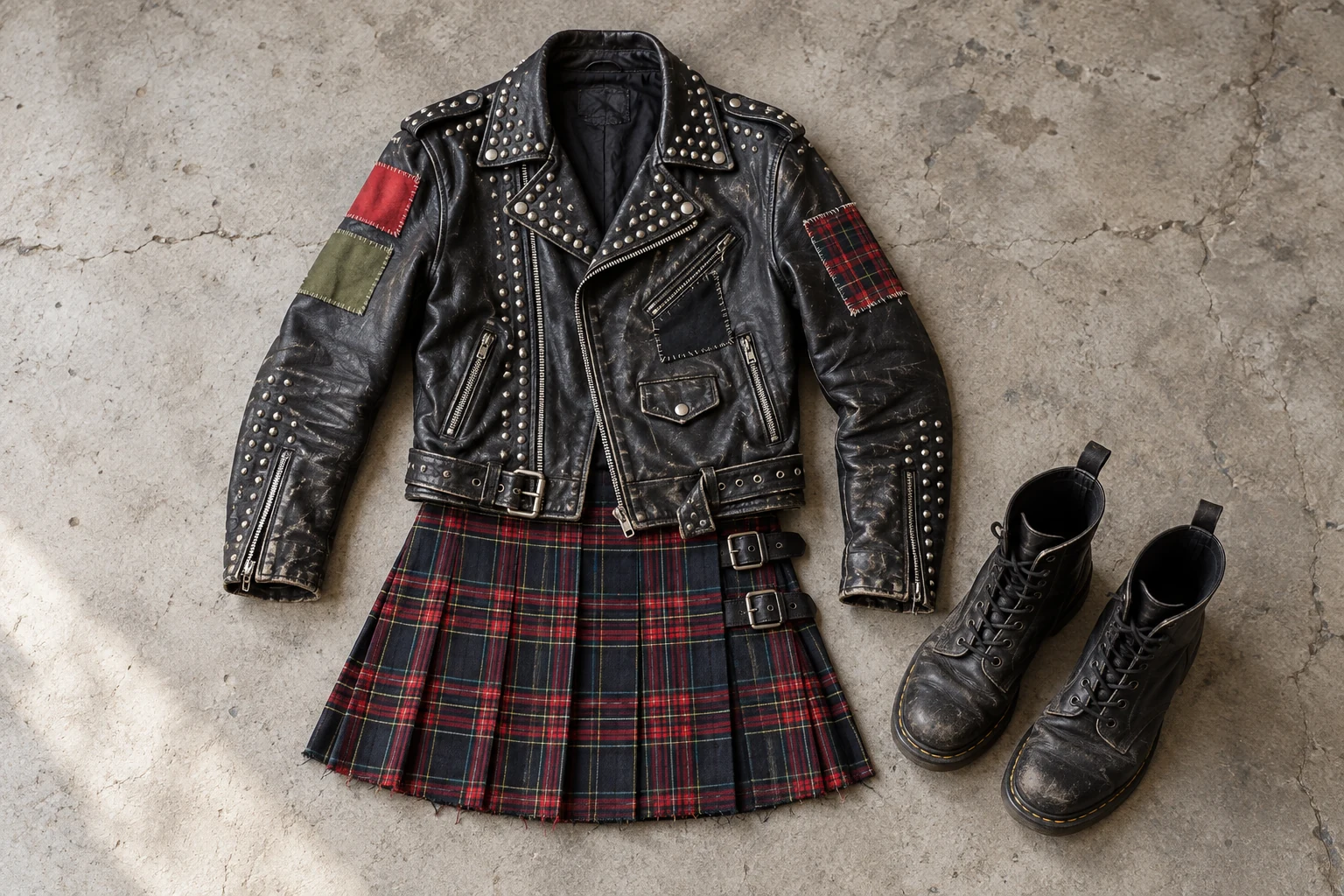
The anchor piece is a black leather motorcycle jacket, often covered in studs, pins, painted band names and patches. Under it go band T shirts, ripped or cut up tees, or plaid shirts. Below, the classic choices are skinny black jeans, ripped jeans, tartan trousers or bondage trousers with straps between the legs, or for women, a tartan or leather miniskirt with ripped fishnets or tights.
Footwear is heavy: Dr. Martens, combat boots, motorcycle boots or creepers. Accessories include studded belts, chains, padlocks worn as pendants, spiked collars and cuffs. Colors are mostly black with red and tartan, and hair is the loudest part: mohawks, liberty spikes (stiffened points all round the head) or rough cuts in unnatural colors. The feeling to aim for is confrontational, handmade and a little battered.
Punk substyles
The 1977 London look described above is what most people picture. Hardcore punk, which grew in American cities in the early 1980s, dressed down instead: plain T shirts, jeans or work pants, shaved heads and sneakers, with the attitude carried by the music. Anarcho punk favored all black, military surplus and political patches. Crust punk takes DIY to its limit, with patched, stitched and deliberately dirty clothes, a battle vest (a denim or leather vest covered in patches and studs) and dreadlocks.
Skate punk is practical: band tees, shorts or loose jeans and skate shoes. Pop punk, from the 1990s and 2000s, is cleaner, with checkered prints, studded belts, hoodies and slip on sneakers. Street punk keeps the leather, spikes and big mohawks. You do not need to pick one; many people mix them, but knowing them helps you understand what a given piece signals.
| Substyle | Key pieces |
|---|---|
| 1977 London | Studded leather jacket, tartan or bondage trousers, spiked dyed hair |
| Hardcore | Plain T shirts, jeans or work pants, shaved heads, sneakers |
| Anarcho punk | All black, military surplus, political patches |
| Crust punk | Patched and stitched clothes, battle vest, dreadlocks |
| Skate punk | Band tees, shorts or loose jeans, skate shoes |
| Pop punk | Checkered prints, studded belts, hoodies, slip on sneakers |
| Street punk | Leather, spikes and big mohawks |
Punk outfits for women and men
For women, a reliable punk outfit is a band T shirt knotted or cut short, a tartan miniskirt, ripped fishnet tights, a studded belt, a leather jacket and Dr. Martens. Swap the skirt for black skinny jeans with ripped knees, or wear a slip dress with a battle vest over it and combat boots. Early punk women such as Siouxsie Sioux and Jordan, who worked at the Westwood shop, made the style as much theirs as the bands'.
For men, the classic version is black skinny jeans or tartan trousers, a band tee or ripped white T shirt, a studded leather jacket and boots, with a chain or a studded belt. A hardcore look is simpler still: plain black tee, dark jeans or work pants and boots or low sneakers. Punk has always had room for men in skirts, kilts and makeup too; the style cares more about intent than about gender.
Building punk style from your own clothes
Punk is the one style where making something yourself is not a compromise but the point. Start with an old denim jacket or vest and sew on patches from bands you actually listen to, or paint a name on the back with fabric paint. Cut the sleeves off a T shirt, slash the back and hold it with safety pins, or distress a pair of old black jeans at the knees; our guide to distressing jeans shows how to do it without ruining them.
Add studs with pronged or screw back studs through leather or heavy denim, and use dental floss or heavy duty thread when sewing patches, since ordinary thread wears through on a jacket that gets used. A secondhand leather jacket is better than a new one, because punk looks lived in. Our guide to sewing a button covers the basic stitches you will need, and cleaning a leather jacket keeps it from cracking, which is a different thing from looking worn.
Wearing punk today
Punk details are now common in ordinary shops, so an everyday version is easy: a leather jacket over a plain black tee, straight black jeans and boots, plus one pin, patch or studded belt. That reads punk influenced without looking like a costume, and it works for concerts, where our guide to what to wear to a concert adds practical tips about shoes and bags.
Symbols matter in punk. Band names, patches and political slogans say something specific, and people in the scene will read them. Wear bands and causes you know and care about, and learn what an unfamiliar symbol means before you sew it on. Punk's strongest political currents have been anti authoritarian and anti racist, and much of the early shock imagery that clashed with those values was dropped as the scene matured.
Questions people ask
Is there a difference between punk and goth?
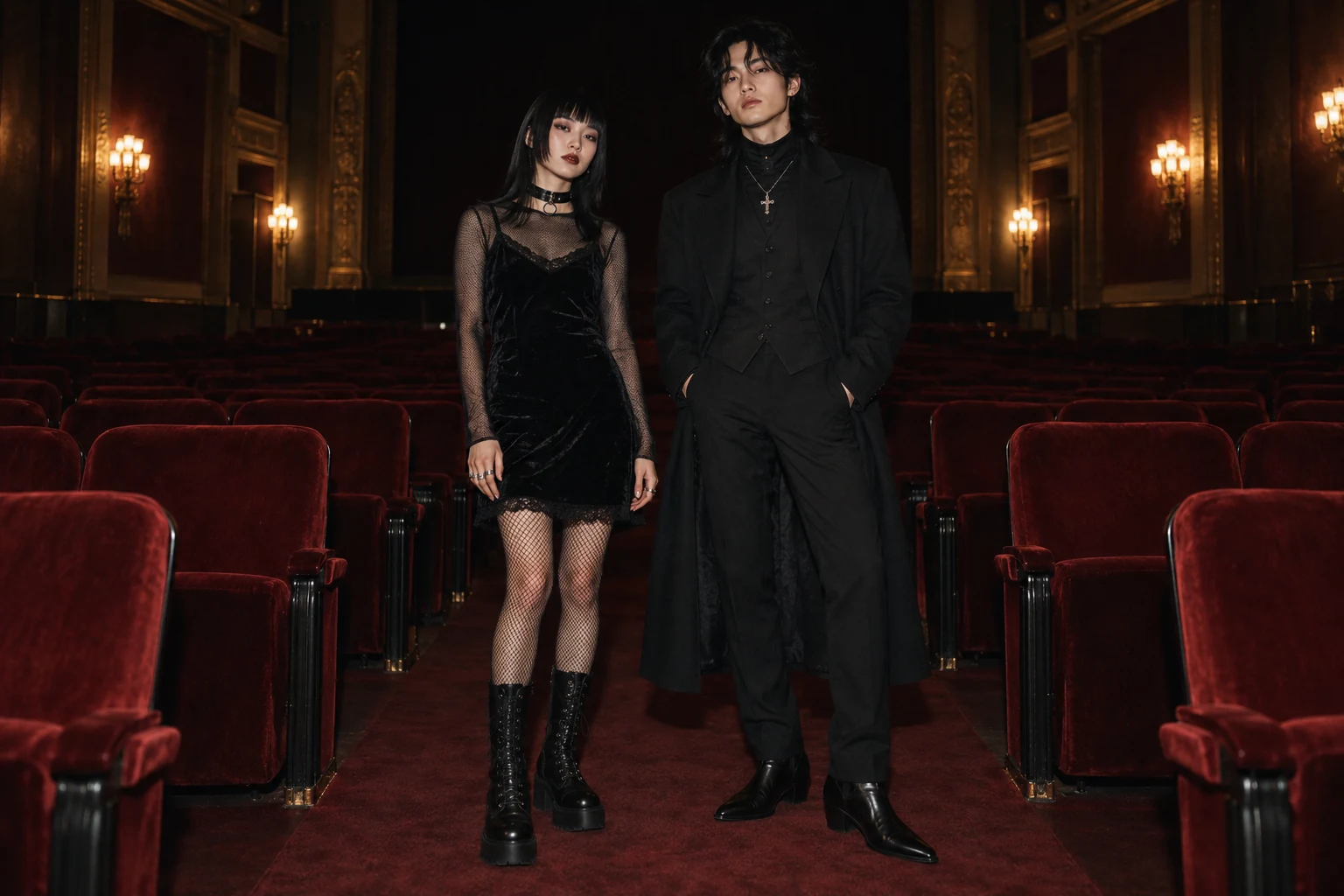
Yes. Both came from the same late 1970s British music scene, and goth borrowed fishnets, pins and boots from punk. Punk is louder and more confrontational, with tartan, studs, spikes and bright hair, while goth is darker and more romantic, built on black velvet, lace and silver. Our guide to goth fashion explains it in detail.
Who was a famous punk designer?
Vivienne Westwood is the designer most associated with punk. With Malcolm McLaren she ran the King's Road shop that dressed the Sex Pistols, and she went on to become one of Britain's best known fashion designers while keeping punk ideas in her work.
Is punk political?
Punk has always had strong political strands, and in the scene's own history the most prominent are anti authoritarian and anti racist, from British campaigns such as Rock Against Racism onward. Individual bands and people vary widely, so read patches and slogans carefully before you wear them.
How is punk different from grunge?
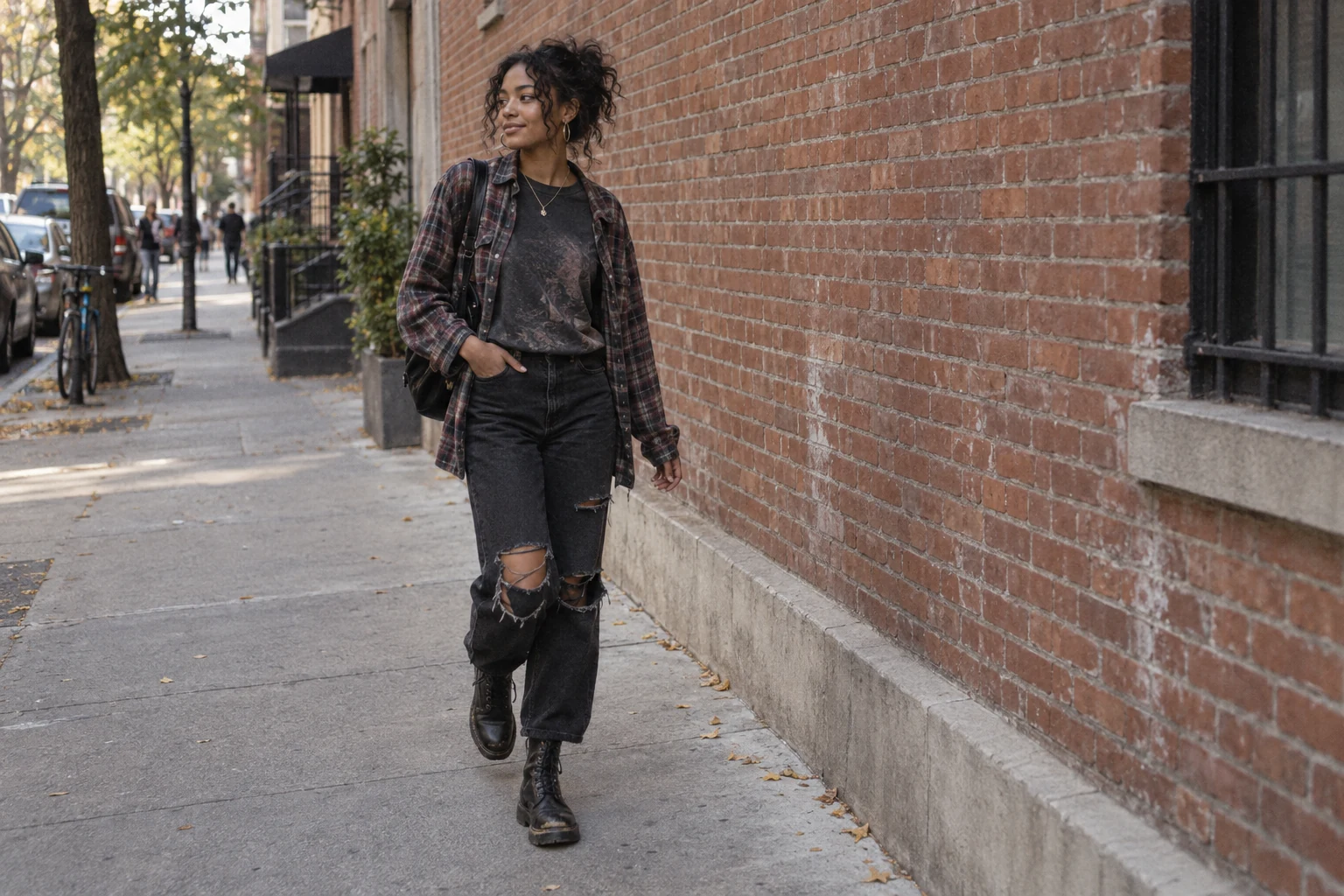
Grunge came later, in the late 1980s and early 1990s, and looks softer and more careless: flannel shirts, thermals, loose jeans and worn sneakers, without the studs and spikes. Our guide to grunge style covers it.
Sources and further reading
References used for this guide. Each opens the original page in a new tab.
Keep reading
Styles
Goth fashion: history, substyles and key pieces
What goth fashion is, where it came from, the main substyles from trad goth to Victorian and cybergoth, and how to build goth outfits for men and women today.
Styles
Grunge style: how to wear it without a costume
Where grunge style came from, the core clothes for men and women, and how to wear 90s grunge fashion today so it looks lived in, not like a costume.
Styles
80s fashion: key looks for men and women
The key looks of 80s fashion for women and men, from power suits and aerobics wear to Miami Vice and hip hop, plus how to make an 80s outfit from normal clothes.
Styles
Streetwear style: the pieces, proportions and outfits
What streetwear style is, where it came from, the core pieces and proportions, and streetwear outfits for men and women that look grown up, not like a costume.
Everyday style
How to distress jeans at home
How to distress jeans by hand: sanded fades, white thread rips at the knee and a frayed hem, with where to place wear and how to keep holes from growing.