How to fix a hole in a sweater
In this guide
Most sweater holes are discovered by a thumb, poking straight through near the cuff as the sleeve goes on. Others appear when a wool pullover comes out of storage with a neat little gap on the front that was not there in spring. The instinct is to put it aside for later, and later is usually when the hole has doubled.
Knitted fabric is made from one long yarn looped through itself, so a broken strand leaves loops that can slip and ladder. So the first job when you fix a hole in a sweater is to stop it spreading, and the second is choosing a repair that suits the size of the hole and the fineness of the knit.
Look at the hole before you touch it
Turn the sweater inside out and look closely in good light. A split seam, where the stitching that joins two pieces has broken, is the easiest fix of all: you simply sew the seam closed again from the inside with a small backstitch, the method Woolmark gives for seam repairs. A snag, where a loop has been pulled out but nothing is broken, is not a hole. Ease the fabric on either side to redistribute the slack, then push the remaining loop to the inside with a blunt needle.
A real hole has broken yarn and open loops around its edge. If there are several small holes, or areas that look thin and grazed rather than torn, suspect clothes moths. The University of California's pest management program notes that moth larvae eat wool and wool blends, prefer fabric with food or sweat on it, and leave silky tubes or mats in hidden places such as under collars. If you find those signs, deal with the moths before you mend, or the repair will not be the last.
Stop the hole from getting bigger
Do this now, even if the proper repair waits for the weekend. Thread a blunt tapestry needle with any spare yarn or strong thread and run it through each open loop around the edge of the hole, like threading beads, then tie the ends loosely on the inside. A small safety pin through the loose loops does the same job in a pinch. Do not cut the broken ends of yarn. They are short, but they can be woven in later and help anchor the repair.
Keep the sweater out of the washing machine until it is mended. Agitation is exactly what makes loose loops unravel, and a pinhole that goes into a wash can come out as a gap you could put a finger through.
How to fix a small hole in a knitted sweater
For a hole smaller than a pea, the neatest repair is to gather the loops closed. Look for matching yarn first: many sweaters come with a spare length tucked into a small bag on the care tag. If not, choose a yarn or embroidery floss of the same fiber and a similar color and thickness; for a fine knit you can separate floss into fewer strands. On fine cotton or synthetic knits, sewing thread in a close color also works.
Work from the inside
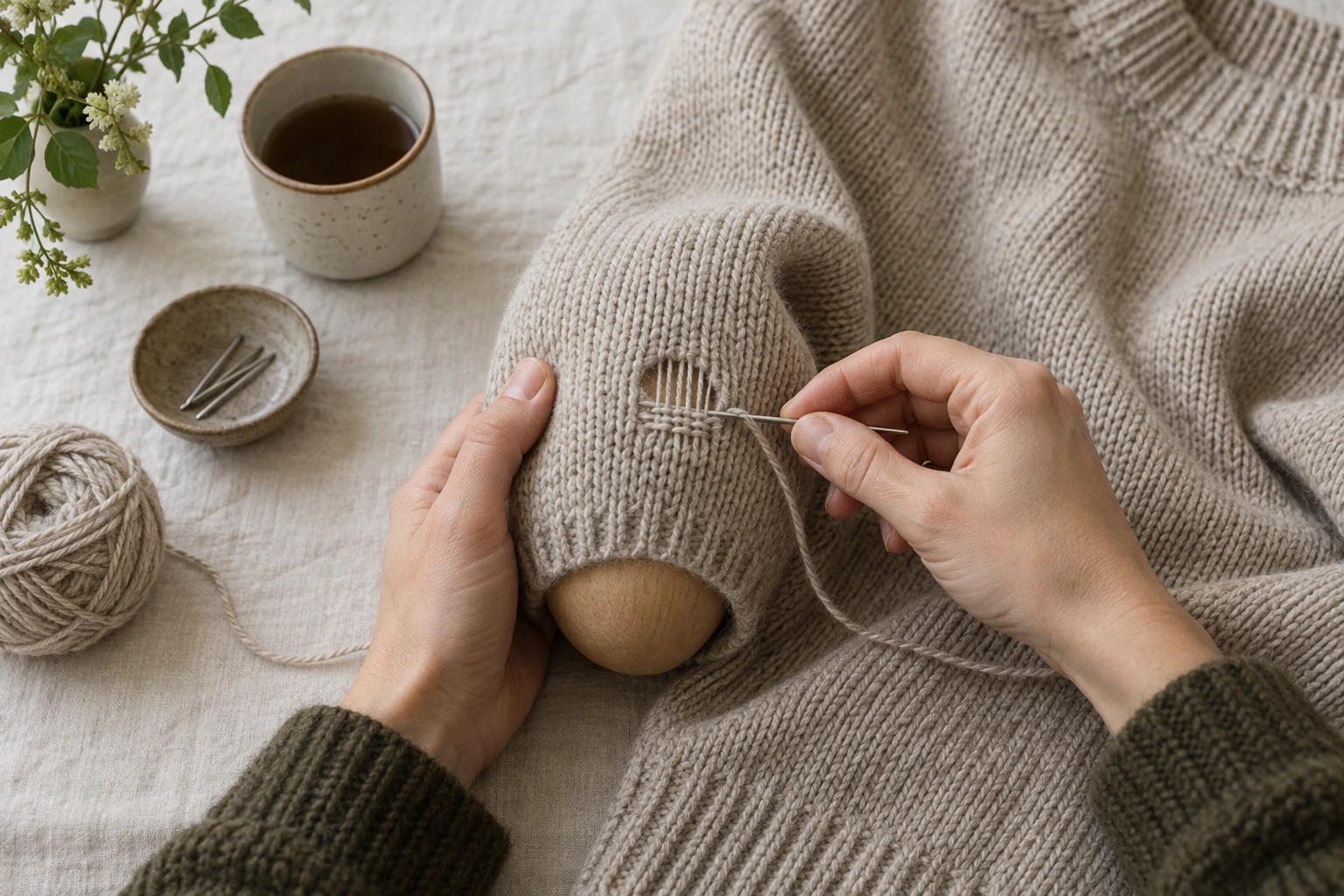
Turn the sweater inside out and slip a round object under the hole, such as a darning egg, a tennis ball or a small jar, so the fabric is supported but not stretched. Stretching it now makes the finished repair pucker when the sweater relaxes.
Catch every open loop
With a blunt needle, pass the yarn through each open loop around the hole, and through one or two firm stitches just beyond it at each side. Blunt needles slide between fibers instead of splitting them, which keeps the knit intact.
Draw the hole closed gently
Pull the yarn until the loops meet and the hole closes, but no further. From the right side, the fabric should lie flat with no pucker. If it gathers, loosen the yarn slightly.
Secure and weave in the ends
Weave both yarn ends, and the broken ends of the original yarn, diagonally through the backs of nearby stitches on the inside for an inch or so, then trim. A few small stitches in different directions hold better than a knot, which can work loose and show through fine knits.
Darn a larger hole in a wool sweater
When the hole is bigger than a pea, or the area around it is thin, darning rebuilds the fabric by weaving new yarn across the gap. Woolmark describes the same basic technique for socks and knitwear. Stretch the area over your darning egg or ball, right side out, and outline a square or circle with small running stitches a few stitches beyond the damage, into fabric that is still firm. That outline anchors everything that follows.
Next, lay parallel threads across the hole in one direction, working back and forth from one side of the outline to the other, spaced about as closely as the knit itself. Then weave across them at a right angle, over one and under the next, alternating the pattern on each row, as the Aran Sweater Market guide describes. Keep the tension relaxed so the patch stays as soft and stretchy as the fabric around it. Weave the ends into the back, then steam lightly or press under a damp cloth to settle the stitches.
A darn in matching yarn is discreet, though never quite invisible, because it is a woven patch in a knitted fabric. Some people choose the opposite and darn in a contrasting color, which turns the repair into a deliberate detail. On an elbow or a cuff, that can look better than a near match that is slightly off. Knitters also use duplicate stitch, which traces new yarn over the existing knit loops, to reinforce areas that have worn thin before they break.
How to fix a hole in a sweater without sewing
For fuzzy, dense wool, needle felting can close small holes without thread. You lay wisps of matching wool fiber over the hole with a foam pad underneath and stab them repeatedly with a barbed felting needle until they lock into the fabric. The needle is very sharp, so keep your fingers well clear. It works less well on smooth yarns, cotton and synthetics, and the patch is stiffer than the knit around it.
Iron on mending patches are better suited to a sweatshirt than to a wool sweater. Cotton fleece and jersey bond well when the patch is applied to the inside with an iron at the temperature the patch maker gives and the fabric allows. On stretchy knitwear the patch does not stretch with the fabric and the adhesive can pull loose, and many wool and cashmere sweaters should not meet a hot iron at all. Fabric glue has the same problem: it leaves a hard spot that cracks as the sweater moves. For anything you care about, a few minutes with a needle is the better repair.
Fine cashmere and when to get help
Fine gauge cashmere and merino have tiny stitches, and home repairs on them show more. You can close a pinhole with the gathering method using a single strand of fine yarn or floss, but a hole on the front of a fine knit is worth taking to a professional knit repair or reweaving service. They rebuild the missing stitches loop by loop, which is slow work, so prices vary widely and it pays to ask for a quote first.
The same goes for heirloom pieces, holes larger than a coin and sweaters with intricate patterns such as cables or colorwork. A specialist can often match both the yarn and the stitch structure, where a home darn would interrupt the pattern.
| Damage | Best repair | Watch out for |
|---|---|---|
| Split seam | Backstitch it closed from the inside | Easiest fix of all |
| Snag with no broken yarn | Ease the slack, push the loop inside | It is not a hole, so do not cut |
| Pinhole | Gather the loops closed with matching yarn | Stretching over the egg causes puckers |
| Larger hole or thin patch | Darn: vertical threads, then weave across | Never fully invisible in a knit |
| Small hole in fuzzy wool | Needle felting with matching fiber | Very sharp needle; stiffer patch |
| Fine cashmere or heirloom | Professional knit repair or reweaving | Ask for a quote first |
Stop the next hole from appearing
Clean sweaters before you store them, since moths go for soiled wool first, and keep them in sealed containers or zipped bags over the warm months. The University of California program notes that cedar kills only small larvae and loses strength after a few years, so a tight seal matters more than the wood. If you suspect moths, sealing an item in a plastic bag and freezing it for several days below 18°F (about minus 8°C) kills all stages. Our guides to storing knitwear and washing wool cover both halves.
Friction causes the other kind of hole. Elbows and cuffs thin first, so check them when you notice pilling, which is a sign the surface fibers are wearing; our guide to removing pilling explains how to tidy it safely. Fold sweaters rather than hanging them, since hanger points stretch the shoulders, and reinforce thin spots before they break.
Common mistakes
Cutting off the loose yarn
Trimming the broken ends makes the hole look tidier for a moment and removes the yarn you need to secure it. Leave the ends and weave them in as part of the repair.
Pulling the repair tight
A tight repair puckers and forms a hard ridge that pulls on the surrounding stitches, which can start a new hole beside the old one. Match the tension of the knit, soft and slightly elastic.
Mending without checking for moths
If larvae are still in the drawer, mended sweaters will be damaged again. Look for silky tubes and more holes, clean and freeze affected pieces, and clean the storage area before anything goes back in.
Questions people ask
How do you fix a hole in a sweatshirt?
A sweatshirt is a cotton or blended knit with a brushed back, so small holes can be closed with sewing thread using the same gathering method. For larger holes or worn cuffs, an iron on patch applied to the inside works well on cotton fleece, following the patch instructions and the care label.
Will a small hole in a sweater get bigger?
Often, yes. Once the yarn breaks, the open loops can slip each time the sweater is stretched or washed. Securing the loops with a thread or safety pin right away keeps the hole the size it is until you can repair it.
Can a hole in a cashmere sweater be repaired?
Yes. Pinholes can be closed at home with a fine matching yarn and a light hand. Larger holes or holes on the front of a fine knit are best repaired by a knit repair specialist, who can rebuild the stitches so the repair is hard to see. Our guide on washing cashmere helps you keep the rest of it in good shape.
What thread should I use to fix a hole in a sweater?
Use yarn of the same fiber and a similar weight whenever you can, because it stretches and ages like the original. Embroidery floss separated into fewer strands suits fine knits, and ordinary sewing thread in a close color is fine for thin cotton or synthetic knits.
Sources and further reading
References used for this guide. Each opens the original page in a new tab.
Keep reading
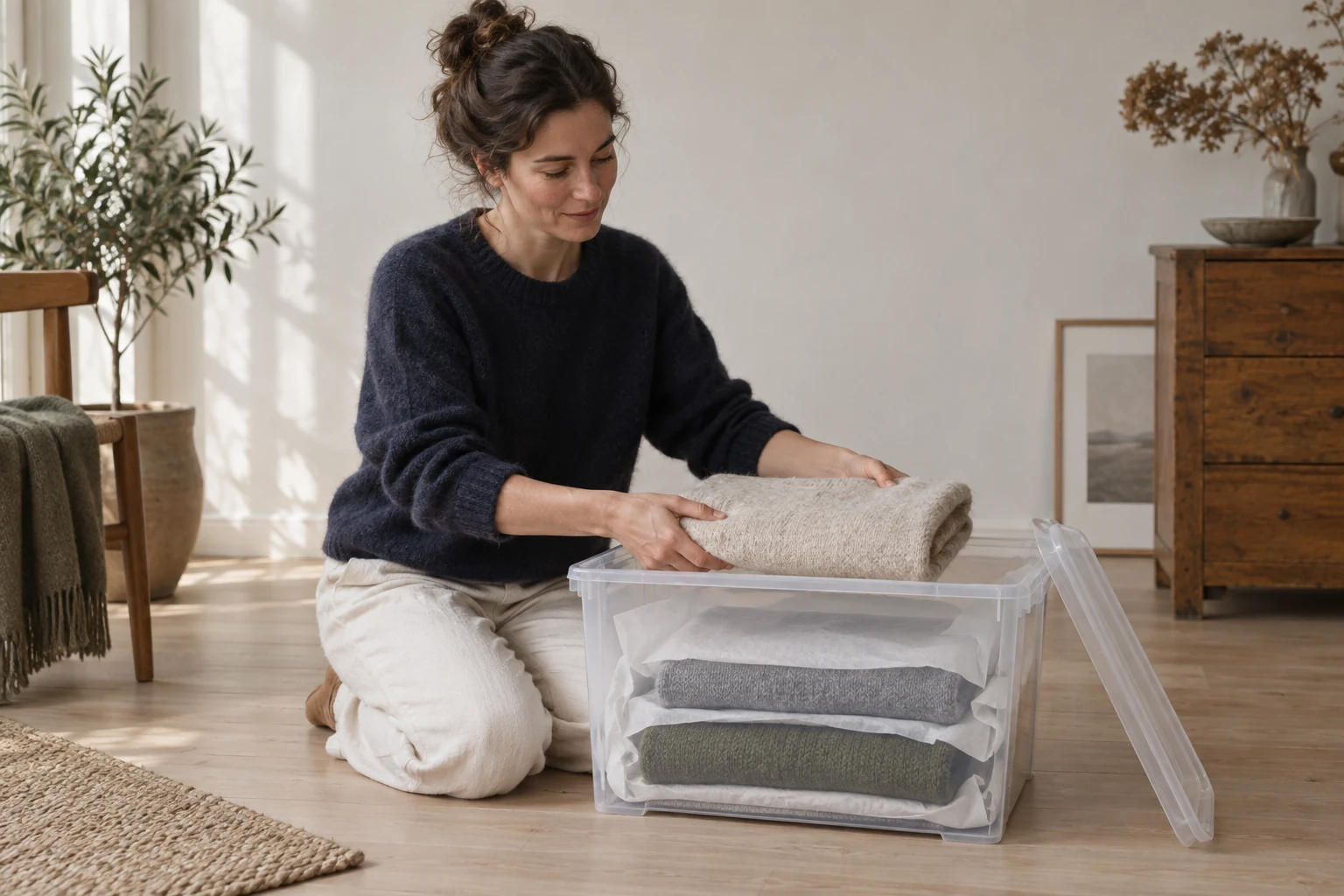
Closet and packing
How to store sweaters: folding, seasons and moths
How to store sweaters day to day and between seasons: fold instead of hang, clean before packing, choose bins or bags with care, and keep clothes moths out.
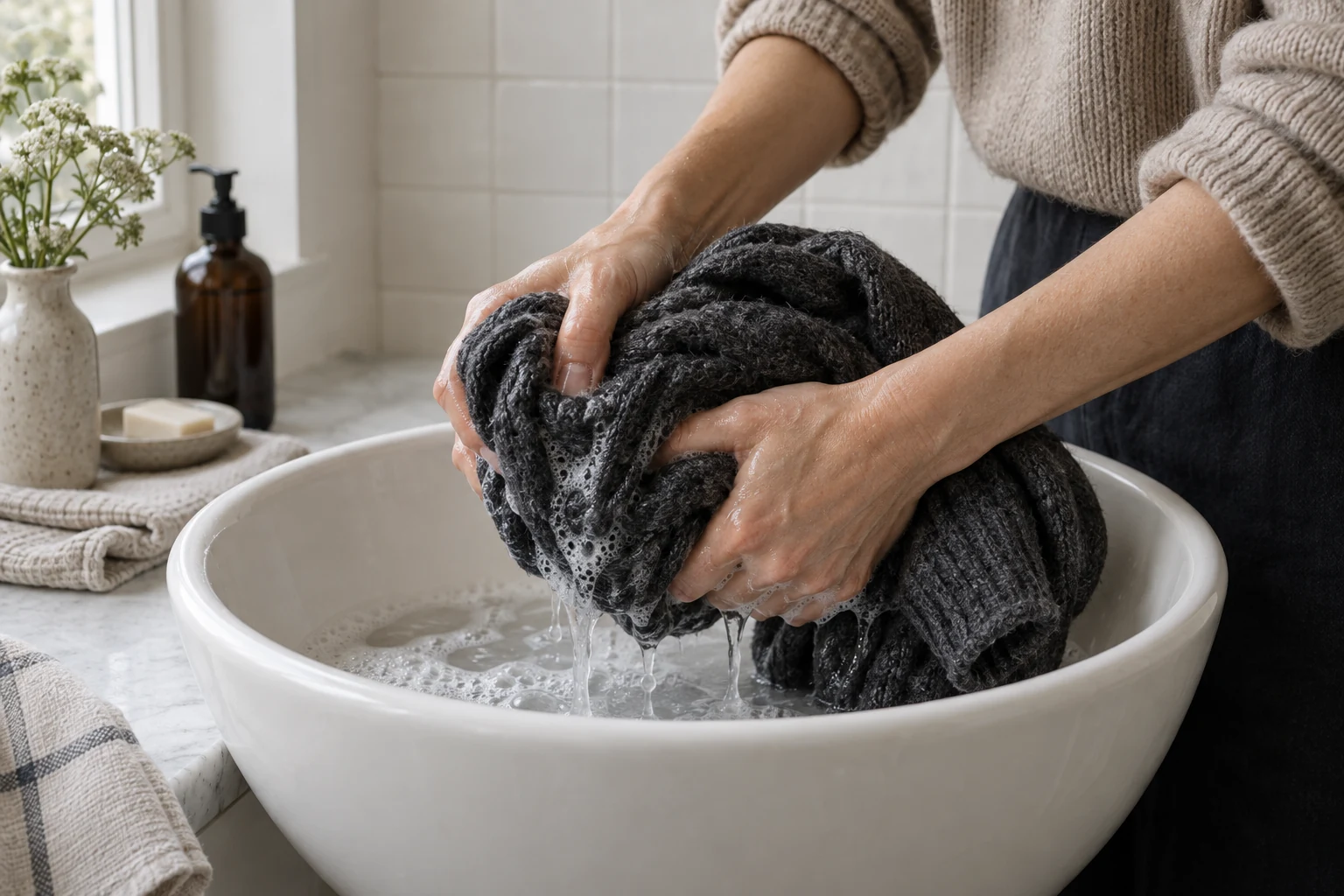
Washing and ironing
How to wash a wool sweater without shrinking it
How to wash a wool sweater by hand or in the machine: read the label, pick a wool detergent, keep water cool and calm, then dry it flat so it keeps its shape.
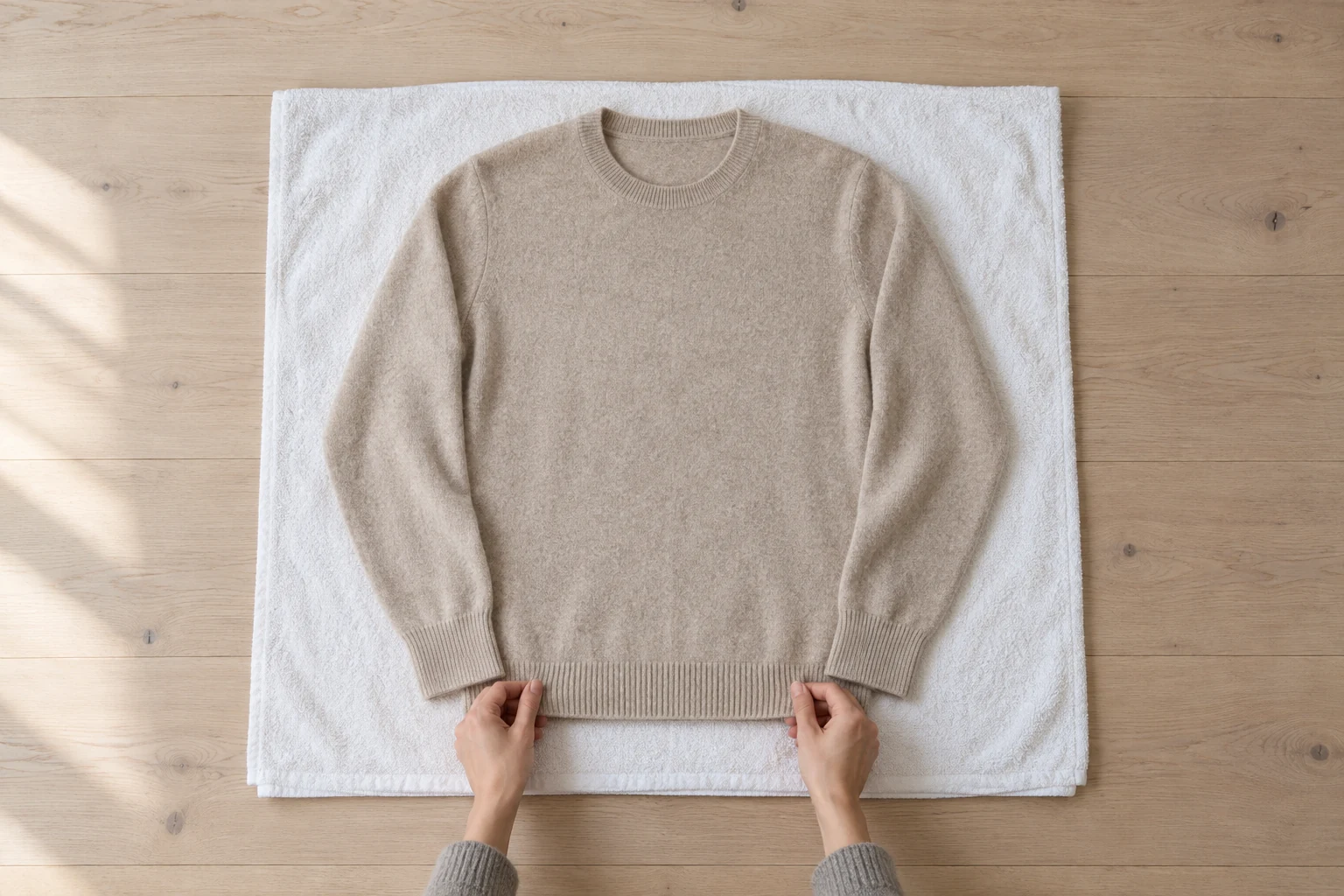
Washing and ironing
How to wash cashmere by hand or machine
How to wash a cashmere sweater or scarf at home: read the label, hand wash in lukewarm water with a wool detergent, press out the water and dry it flat.
Washing and ironing
How to remove pilling from a sweater, and lint too
How to remove pilling from a sweater with a fabric shaver or sweater comb, clear lint with a roller, and wash and wear knits so the pills come back more slowly.
Washing and ironing
How to sew a button back on, by hand
How to sew a button back on by hand: two hole and four hole buttons, shank buttons, making a thread shank and tying a finishing knot that will not work loose.