Types of collars: shirt collars and when to wear each
In this guide
Classic, semi spread, cutaway, button down: the filter on a shirt shop assumes you know the difference, and so does the fitting room mirror that shows a tie knot looking lost between two collar points. Collars are the part of a shirt closest to your face, so small differences in shape and angle change how the whole outfit reads. Knowing the types of collars lets you pick shirts that suit both your ties and the occasion.
Men's dress and casual shirts come first below, then T shirts and polos, then the collar names on women's blouses and dresses. A few terms help along the way. The points are the tips of the collar, the spread is the distance between them, the band is the strip that wraps around your neck, and collar stays are the small removable stiffeners that keep points straight.
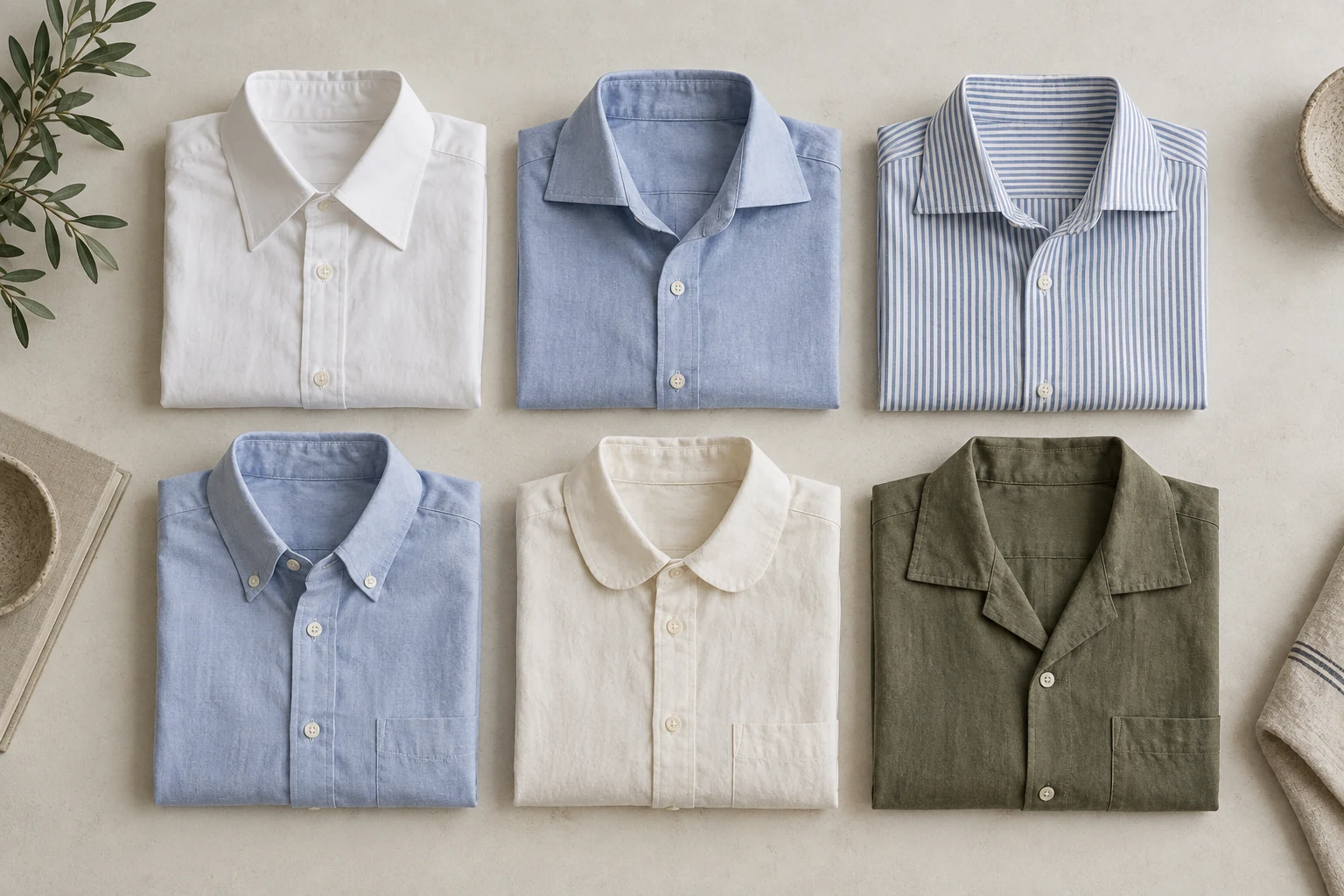
Point, spread and cutaway collars
The point collar, sometimes sold as classic, has points that sit fairly close together and angle downward. It has long been the default American business collar, pairs naturally with a slim four in hand knot, and tends to flatter rounder or wider faces because it draws a vertical line. A long point collar exaggerates the effect and looks more conservative.
The spread collar opens the points outward, leaving more room for the knot. It suits most faces and most occasions, and it is the easiest collar to wear with a slightly larger knot like the half Windsor. A semi spread sits between point and spread and is the most versatile choice if you buy only one kind of dress shirt.
The cutaway, or extreme spread, pushes the points so far apart that they aim toward the shoulders. It looks confident and European, suits narrow faces, and needs a substantial knot, such as a full Windsor, to fill the gap; with a thin knot you see the tie's neckband. It is also the best dress collar for wearing open without a tie, because the points stay flat instead of collapsing.
Club, tab, pin and wing collars
A club collar has rounded points, which is why it is also called a penny collar. It originated at Eton College and has a vintage, early twentieth century feel, lovely with a small knot, a tweed jacket or a tie bar. A tab collar hides a small fastening tab under the tie knot that pulls the points together and lifts the knot. A pin collar does the same job with a metal bar that passes behind the knot through two eyelets. Both suit narrow ties and slim lapels, and both are dressy but slightly distinctive.
The wing collar is a short standing collar with small tips folded outward horizontally, like wings. It is made for evening wear, traditionally with white tie and a bow tie, and sometimes worn with black tie, although a turndown collar is more common there today. Our guide to tying a bow tie explains the knot that sits on it.
Camp, band and other open collars
The camp collar, also called a Cuban or revere collar, is a one piece collar that lies flat and opens into a notch, much like small lapels. It has no band, so it is meant to be worn open and never with a tie. It is the collar of summer shirts in linen, rayon and cotton, worn untucked with shorts, chinos or light trousers.
The band collar, also called a mandarin or grandad collar, is a short standing strip with no folded points, based on traditional Asian garments. It looks clean and minimal under a blazer and suits linen and oxford cloth. The Nehru collar is a similar stand on a jacket, inspired by Indian dress and popular in the 1960s. A stand collar jacket, from bombers to field jackets, borrows the same idea.
Ask for the three main types of collars and a textbook will group them by construction: standing collars that rise around the neck, like the band and the wing; turnover collars that stand and then fold over, like the point, spread and button down; and flat collars that lie on the shoulders, like the Peter Pan and sailor collars. Every collar in this guide belongs to one of those three families, which is a useful way to decode an unfamiliar name on a product page.
T shirt collar types
T shirts technically have necklines rather than collars. The crew neck is a round, close neckline finished with a ribbed band; it is the most versatile and sits well under jackets and overshirts. The V neck dips to a point and can lengthen a short neck, while the scoop neck is wider and lower. The henley adds a short placket with two or three buttons. A mock neck rises partway up the throat, and a polo shirt has a soft knitted collar with a buttoned placket, which makes it the dressiest of the group. For layering under a shirt, a crew or shallow V keeps the T shirt hidden when your collar is open.
Types of collars on dresses and blouses
Women's clothing uses the shirt collars above and a wider set of its own. The Peter Pan collar is flat with rounded ends and gives a sweet, youthful look on dresses and blouses. The sailor collar has a deep V in front and a square flap at the back, from naval uniforms. A shawl collar is a rounded collar that continues down into the lapels, common on cardigans and dinner jackets alike. A bow or pussy bow collar ends in long ties knotted at the throat, and a ruffled collar softens a plain shirt. A Barrymore collar is a turndown with long points, named after the actor John Barrymore; long pointed collars of that kind came back strongly in the 1970s, which is why wide, long pointed shirts are often called seventies collars.
How to choose the right collar
Start with the occasion. For a suit and tie at work or a wedding, choose a point, semi spread or spread collar with stays; for business casual, a button down or a spread worn open; for summer weekends, a camp collar. Then match the knot: narrow collars with small knots, wide collars with fuller knots. Finally consider proportion. A narrow face looks balanced in a wider spread, a round face in points that sit closer together, and a long neck in a slightly taller collar band.
Fit matters as much as style. You should be able to slide one or two flat fingers into a buttoned collar without strain, and the points should touch the shirt front rather than float or curl. Our guide to finding your dress shirt size explains how to measure your neck, and pressing the collar properly, covered in how to iron a shirt, keeps points crisp.
| Collar | With a tie | Best for |
|---|---|---|
| Point | Slim four in hand | Business wear; rounder or wider faces |
| Spread or semi spread | Half Windsor | Most faces and occasions |
| Cutaway | Full Windsor, or open with no tie | Narrow faces, confident looks |
| Button down | Knit or slim four in hand, or none | Business casual and preppy, points always buttoned |
| Club, tab or pin | Small knot or narrow tie | Vintage or slightly distinctive dress |
| Wing | Bow tie | White tie evening wear |
| Camp | Never | Summer shirts worn open and untucked |
Questions people ask
What is a classic collar called?
On a dress shirt, the classic collar is usually a point collar or a semi spread collar, depending on the maker. Both have moderate spread and work with most ties. Retailers use classic loosely, so check the photo for how far apart the points sit.
Can you wear a spread collar without a tie?
Yes, and it often looks better than a point collar open, because the wider points stay flat against a jacket. Unbutton just the top button and make sure the collar has stays so it keeps its shape.
What collar should I wear with a bow tie?
A point or semi spread collar works for most daytime and black tie outfits, while a wing collar is the traditional choice for white tie. Very wide cutaway collars can leave the bow looking small.
What is the difference between a camp collar and a regular collar?
A regular shirt collar is sewn onto a separate band that stands around your neck, so it can be buttoned and worn with a tie. A camp collar has no band and lies flat, opening into a notch, so it is meant to be worn open.
Sources and further reading
References used for this guide. Each opens the original page in a new tab.
Keep reading
Suits and tailoring
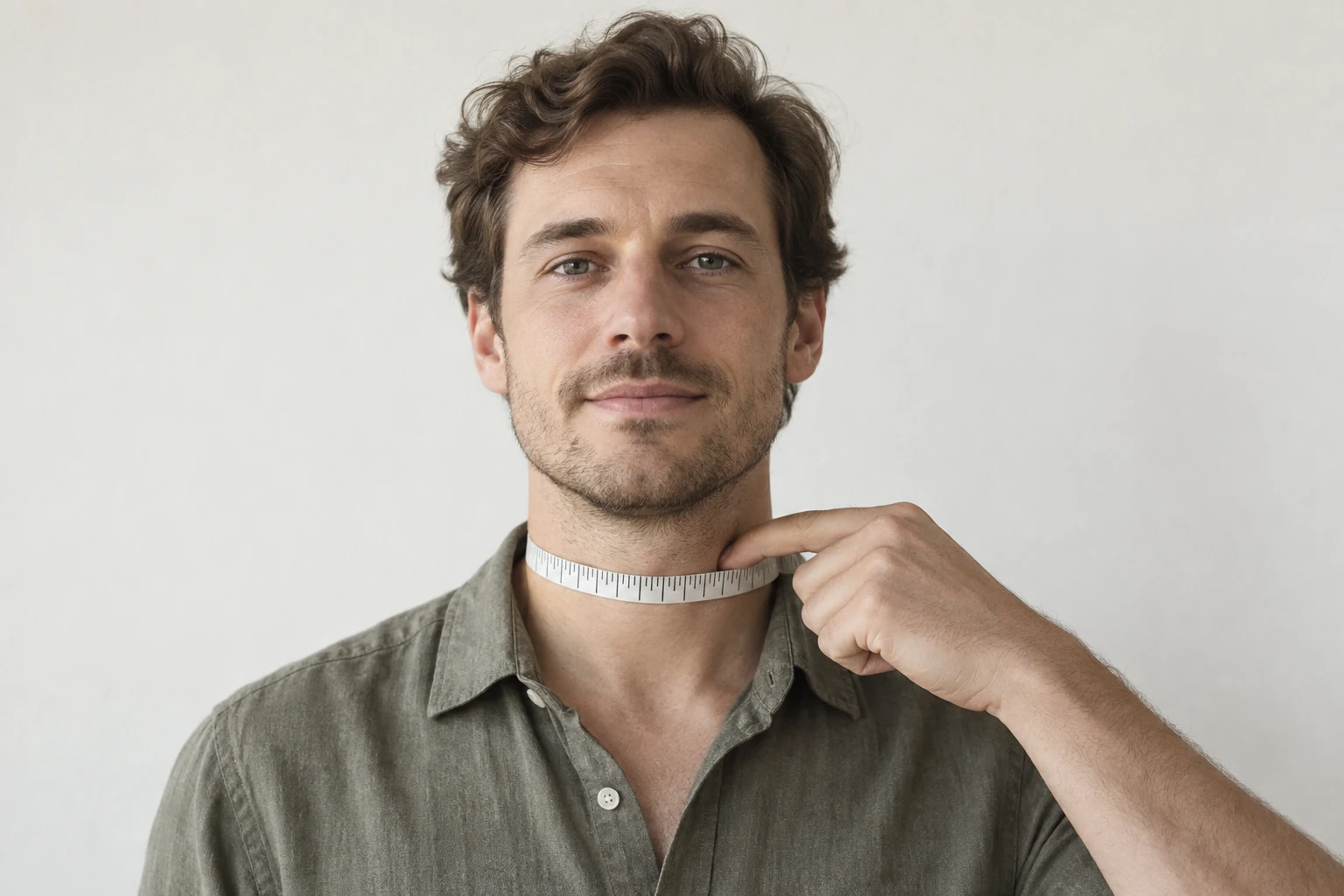
How to find your dress shirt size: neck and sleeve
Read any dress shirt size chart with confidence: how to measure your neck and sleeve, what 15.5 34/35 means, how to check a collar, and slim vs classic fit.

Ties and knots
How to tie a tie: the easiest knot for beginners
Learn how to tie a tie with the four in hand, the easiest dependable knot: six steps from your own point of view, then length, dimple and which knot to try next.
Fabrics
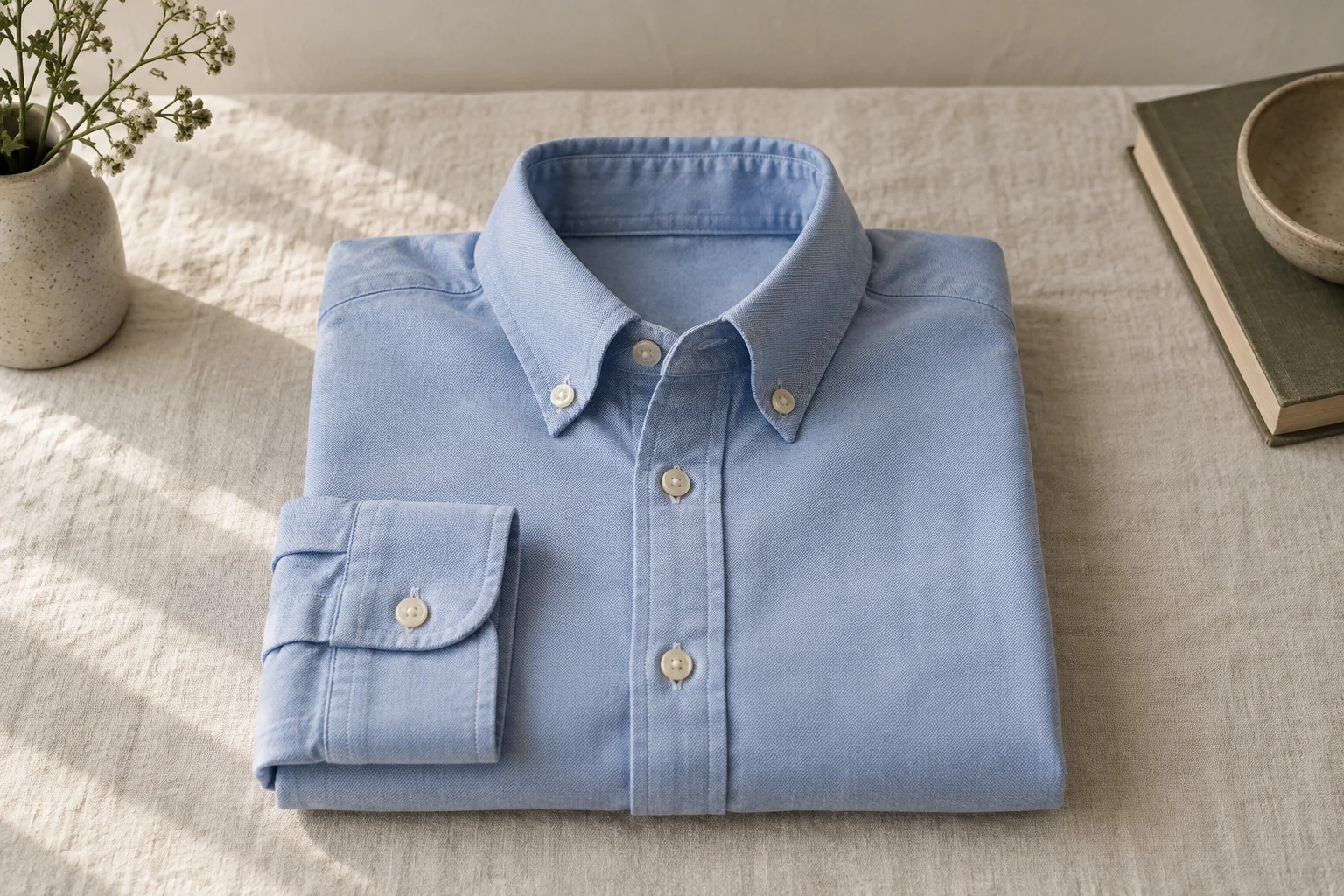
Oxford cloth: why the oxford shirt works everywhere
What an oxford cloth shirt is: the basketweave, oxford vs pinpoint and royal oxford, how it compares to a dress shirt, how to wear it and how to care for it.
Suits and tailoring
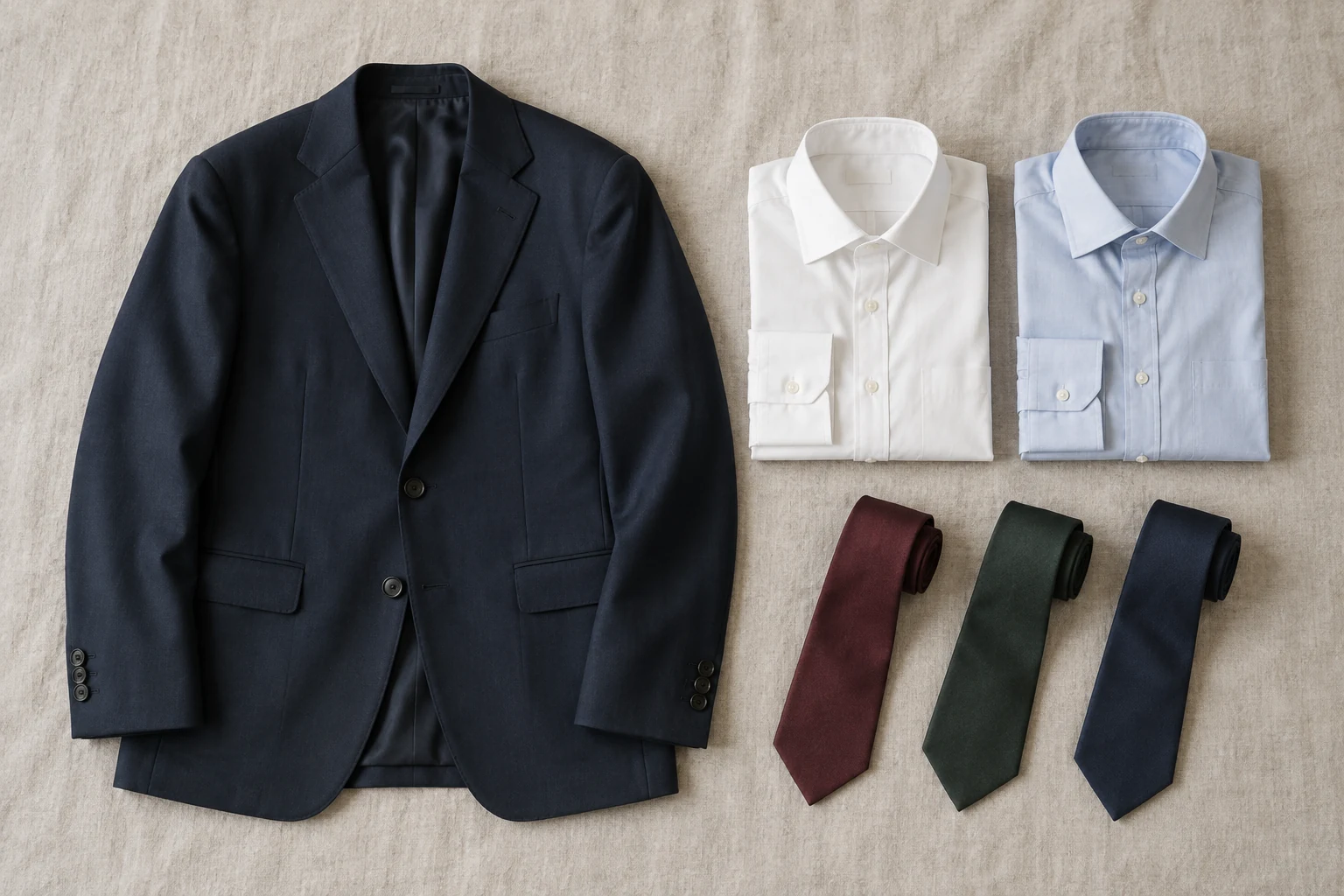
What shirt and tie to wear with a navy suit
What color shirt with a navy suit? Reliable shirt and tie combinations for work, weddings and interviews, how to mix patterns, and the same rules for charcoal gray.
Everyday style
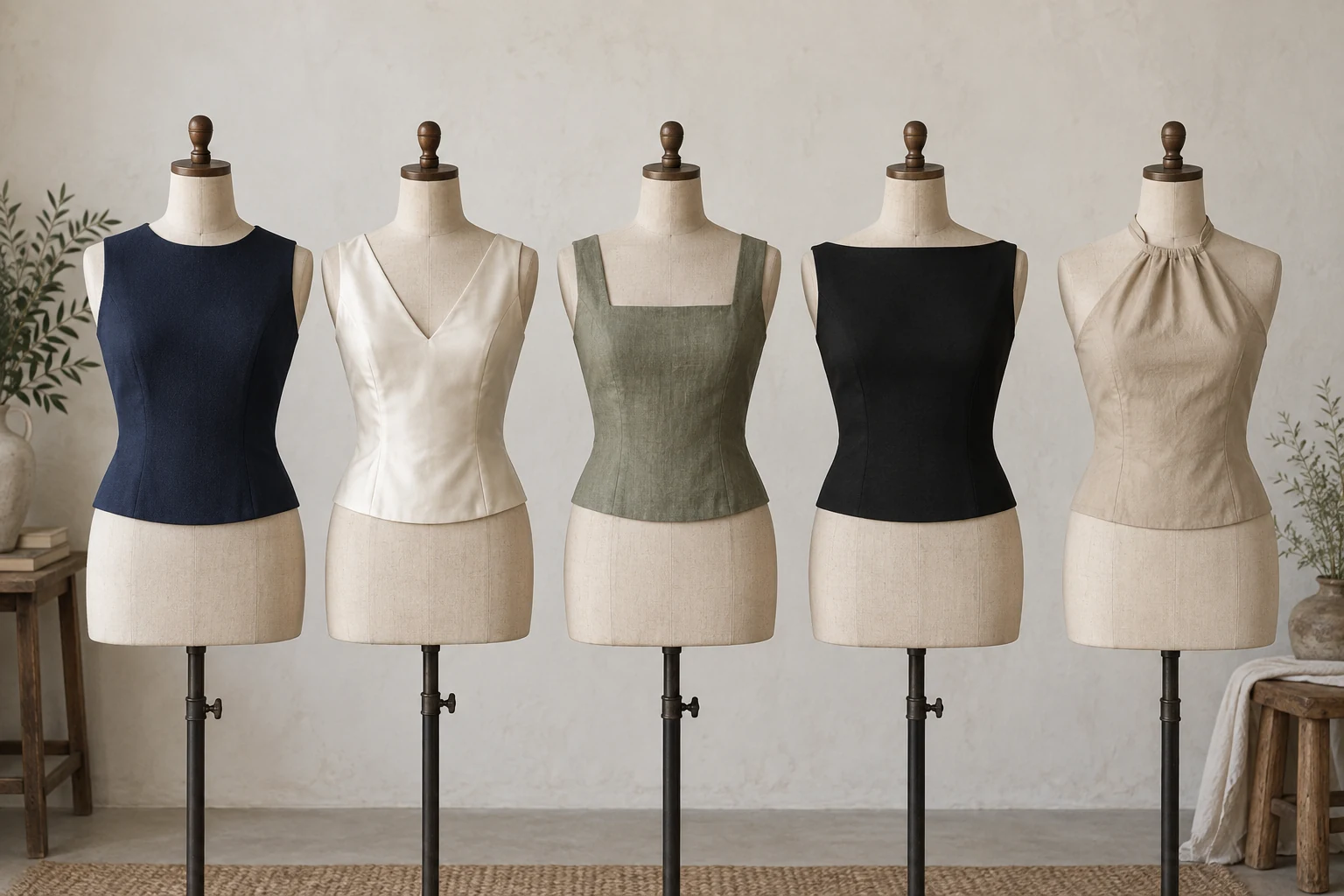
Types of necklines and how they frame you
A clear guide to the types of necklines on dresses, tops and sweaters, from jewel and scoop to halter, Queen Anne and apron, with jewelry and bra tips for each.