Types of dress shoes for men, from formal to relaxed
In this guide
Shoe shops and dress codes use a vocabulary that nobody teaches: balmoral, blucher, wingtip, wholecut, double monk. You may be buying your first real pair for a new job, choosing shoes for a wedding, or trying to understand why the pair you love looks wrong with your suit. Once you know the handful of types of dress shoes and one principle about formality, most of the confusion goes away.
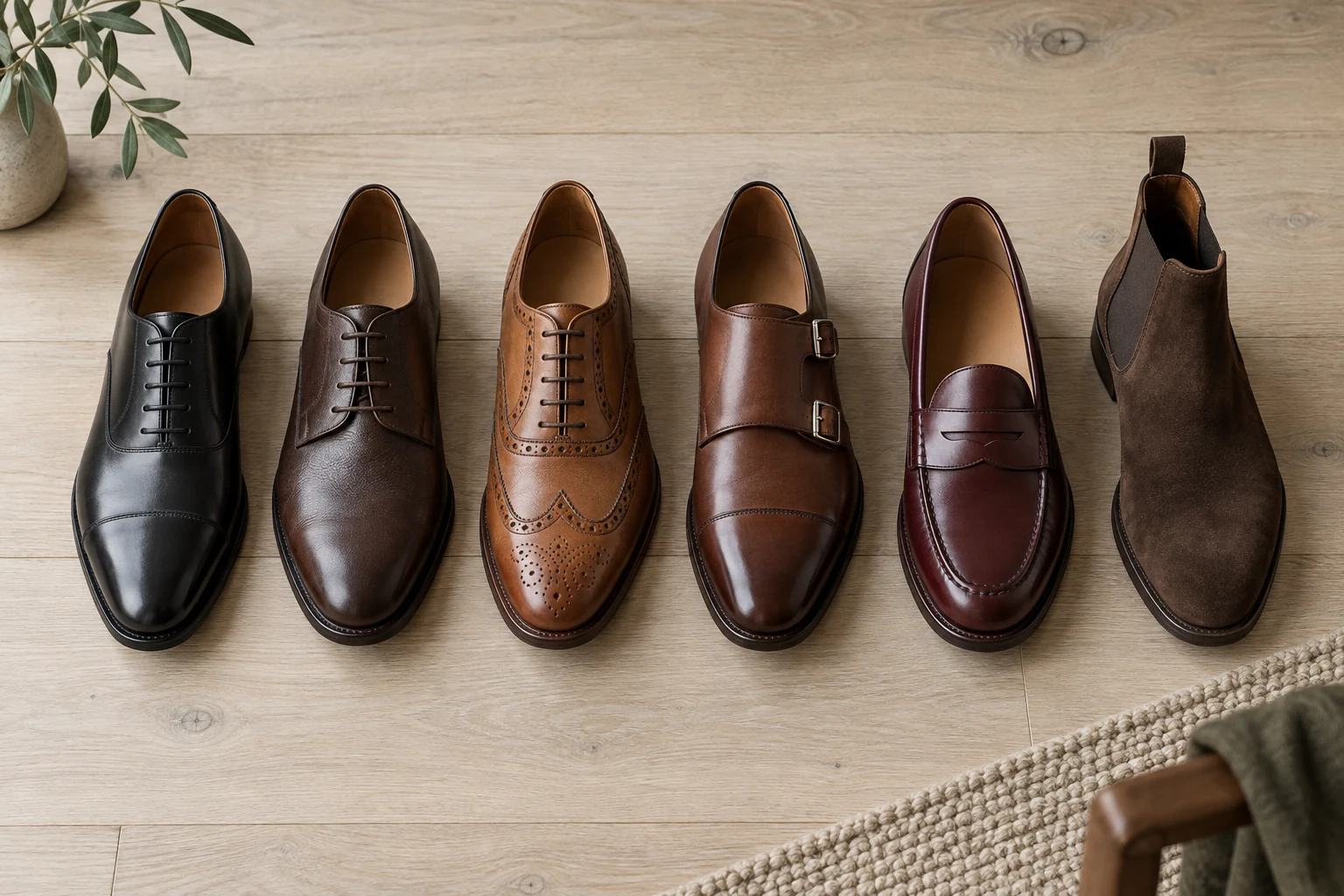
The principle is simple: the less going on, the more formal the shoe. Closed lacing is dressier than open lacing, a smooth toe is dressier than a decorated one, smooth calf is dressier than suede, black is dressier than brown, and a thin leather sole is dressier than a thick rubber one. Each type below slides along that scale depending on how it is made.
Oxfords: the most formal lace up
An oxford has closed lacing. The two panels that carry the eyelets are stitched underneath the front of the shoe, so when you lace it they meet in a neat V with almost no gap. That clean line is why oxfords are the standard for suits, interviews and formal events. American shoemakers sometimes call the same construction a balmoral, while British makers simply say oxford.
Oxfords come in several faces. The cap toe, with a straight seam across the toe, is the classic business shoe and the safest first pair. A plain toe oxford has no seam at all and looks even sleeker. A wholecut is cut from a single piece of leather with only a seam at the heel; it is minimalist and very formal, and in black it works for evening wear. Oxfords also appear with broguing, which makes them less formal, as explained below. If you are unsure whether your shoes are oxfords, our comparison of oxford vs derby shoes shows how to tell at a glance.
Derbies: the versatile lace up
A derby, often called a blucher in the United States, has open lacing: the eyelet panels are sewn on top of the front, so they can spread apart. That makes the shoe easier to fit over a high instep or a wide foot, and many men find a derby the most comfortable dress shoe for long days. It is a step less formal than an oxford.
A plain or cap toe derby in dark brown is one of the most useful shoes a man can own: sharp enough for a suit, relaxed enough for chinos and jeans. The Norwegian or split toe derby, with a raised seam running around the toe, leans more country and casual. On a derby a thicker sole or a pebbled leather pushes it further toward weekend wear.
Brogues and wingtips
Brogue is not a shoe type so much as a decoration: rows of small punched holes and serrated edges along the seams. It began on country shoes and still signals a more relaxed feel. A quarter brogue adds punching only along the toe cap seam and stays quite formal. A semi brogue adds a decorative medallion on the toe. A full brogue, or wingtip, has a toe cap shaped like a W with wings running down the sides, and is the most casual of the three. A longwing extends those wings all the way around to the heel.
Because broguing can go on either an oxford or a derby, you will see names like wingtip oxford or brogue derby. A brown wingtip is a natural partner for tweed, flannel and odd jackets, and it holds up well with jeans. For the most formal settings, choose a smooth toe instead.
Monk straps
Monk straps close with a buckled strap across the instep instead of laces. The single monk has one strap, the double monk two. They sit between derby and oxford in formality: fine with most business suits and sport coats, but rarely right for black tie. The buckle is the eye catcher, so choose restrained hardware and let the shoe be the one metal accent near your feet. Double monks are the more common modern choice, and some men wear the top strap unbuckled for a casual look; it is a style choice rather than a rule, and it can look sloppy with a suit.
Loafers and dress boots
Loafers are slip ons without laces. The penny loafer with its strap across the vamp is the classic American version, the tassel loafer and the horsebit loafer, introduced by Gucci in 1953, are slightly dressier, and the Belgian loafer and driving moccasin sit at the casual end. A sleek black or dark brown loafer can accompany a lighter business suit, although it is still less formal than a lace up. Our guide to how to wear loafers covers socks and trouser length.
Dress boots fill the same role in colder months. The Chelsea boot, with elastic side panels, is the sleekest and pairs well with slim suits; see how to wear Chelsea boots. The jodhpur boot wraps a strap around the ankle, the balmoral boot has closed oxford lacing, and the chukka, with two or three eyelets, sits at the casual end, with the suede desert boot as its relaxed cousin.
Fancy dress shoes for black tie
What are the fanciest dress shoes called? For black tie, the answer is a patent leather oxford, usually a plain toe, or an opera pump: a low slip on in patent leather or velvet, finished with a flat grosgrain bow. Opera pumps are the most traditional and most formal shoe in menswear, while a highly polished black wholecut or plain oxford is an acceptable alternative for most black tie events. Our black tie guide covers the rest of the outfit. Velvet slippers, often embroidered, are a relaxed option for private evening parties rather than formal dinners.
| Shoe | What defines it | Where it fits |
|---|---|---|
| Patent oxford or opera pump | Patent leather; pump has a grosgrain bow | Black tie |
| Oxford | Closed lacing in a neat V | Suits, interviews, formal events |
| Monk strap | Buckled strap instead of laces | Most business suits and sport coats |
| Derby | Open lacing on top of the vamp | Suits to chinos and jeans |
| Brogue or wingtip | Punched holes along the seams | Tweed, flannel, odd jackets, jeans |
| Loafer | Slip on without laces | Lighter suits to casual wear |
| Chelsea or chukka boot | Elastic sides or two to three eyelets | Slim suits to winter weekends |
The less going on, the more formal the shoe: plain, black, smooth and thin soled wins.
Which dress shoes to buy first, and comfort
If you own one pair, make it a black cap toe oxford: it covers interviews, funerals, formal weddings and most business suits. The second pair should be dark brown, either a derby or a loafer, which handles business casual, navy and gray suits and jeans. A pair of suede Chelsea or chukka boots covers winter weekends. That combination handles nearly every dress code short of black tie.
For comfort, fit matters more than type. Leave about a thumb's width of room in front of your longest toe, look for a snug heel that does not slip, and try shoes on in the afternoon when feet are slightly larger. Derbies suit high insteps better than oxfords, and a rubber or rubber inlay sole softens walking on hard floors. Our guide to how shoes should fit goes deeper, and the right belt and socks finish the look.
Dress shoes for women, briefly
Women's dress shoes follow a different vocabulary. Pumps, with a closed toe and a heel, are the most formal everyday choice, and a black pump in leather or suede works with almost any dress code. Slingbacks leave the heel open with a strap behind, mules have no back at all, and pointed or almond toe flats give a dressy look for long days on your feet. For comfortable walking, a block heel of around 2 inches (5 cm), a cushioned insole and a secure strap usually do more than any brand promise. Menswear styles such as loafers, oxfords and monk straps are now standard in women's business wardrobes too, and the same formality principles apply to them.
Questions people ask
What are the different types of formal shoes?
From most formal down: opera pumps and patent leather oxfords for black tie, then black plain or cap toe oxfords and wholecuts, then derbies and monk straps, then brogues and loafers. Dress boots such as Chelsea and balmoral boots sit alongside derbies in cold weather.
Are loafers considered dress shoes?
Yes, at the relaxed end. A sleek leather loafer counts as a dress shoe for business casual and many lighter suits, but for formal events, funerals and conservative offices a lace up oxford is still the safer choice.
What shoes go with jeans for men?
Derbies, brogues, loafers, Chelsea boots and chukkas all work with jeans, especially in brown or suede. Sleek black oxfords tend to look too formal with denim. Keep the jean hem narrow enough to sit neatly on the shoe.
What type of dress shoes should I wear to a wedding?
Match the dress code. For black tie, patent oxfords or polished black oxfords; for formal or cocktail, oxfords or sleek monk straps; for a daytime or garden wedding, brown derbies, brogues or loafers. When in doubt, a dark brown or black cap toe oxford is rarely wrong.
Sources and further reading
References used for this guide. Each opens the original page in a new tab.
Keep reading
Suits and tailoring
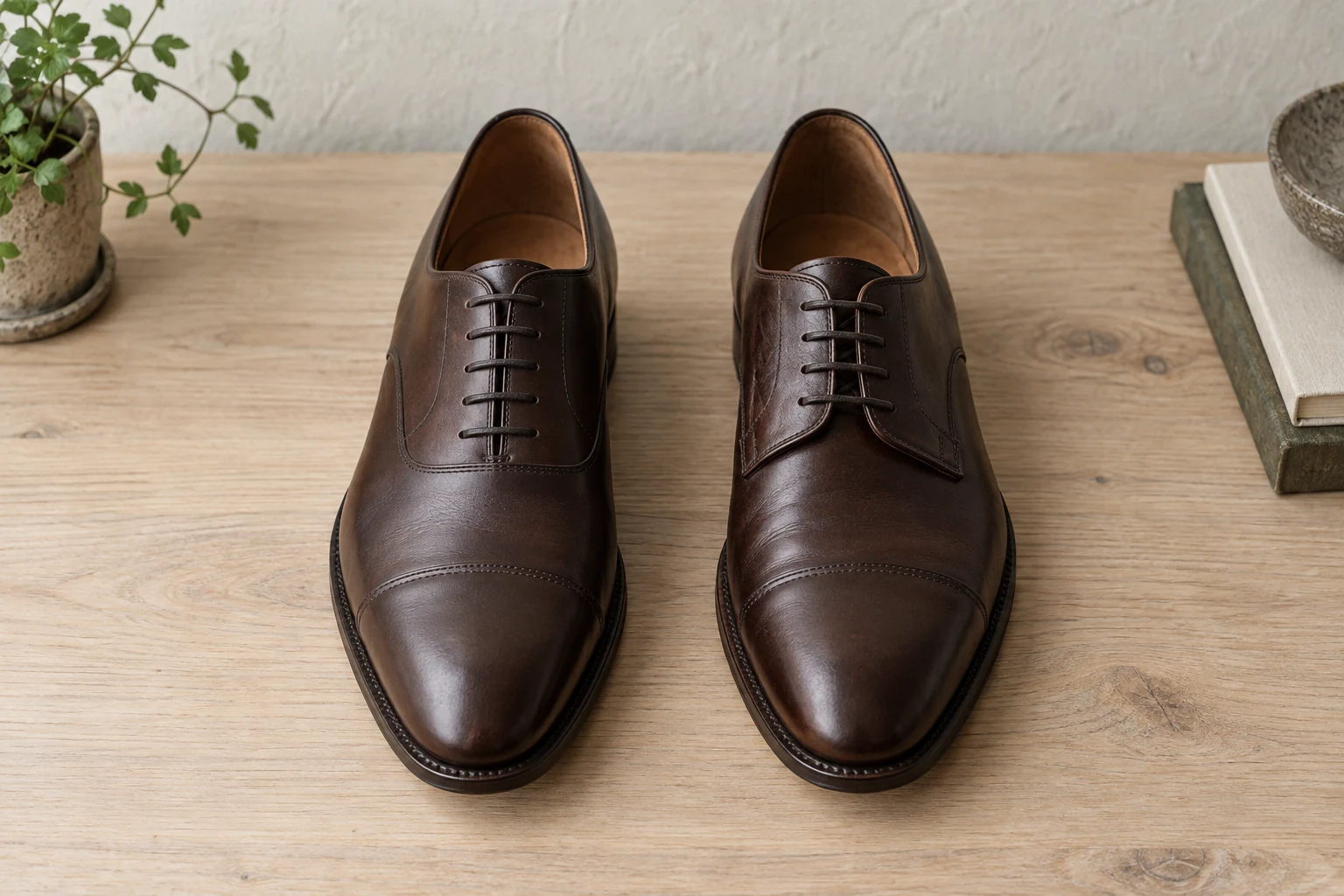
Oxford vs derby shoes: the difference and when to wear each
Oxford vs derby shoes explained: closed and open lacing, which is more formal, which fits a high instep, where brogues and bluchers fit, and what to wear with each.
Everyday style
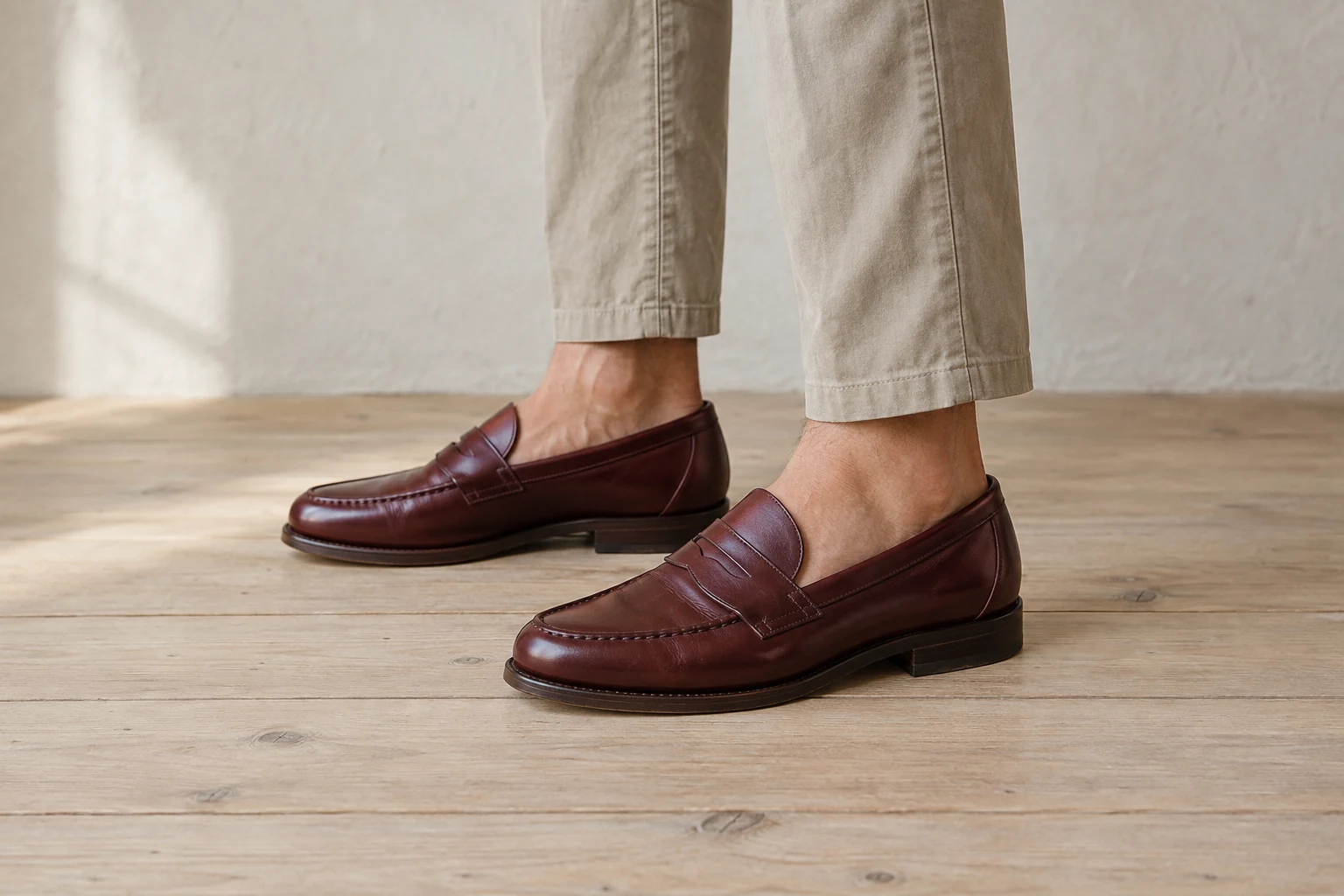
How to wear loafers, with or without socks
How to wear loafers for men and women: when to wear socks or no show socks, which pants and hem lengths work, outfits with jeans, suits and dresses.
Everyday style
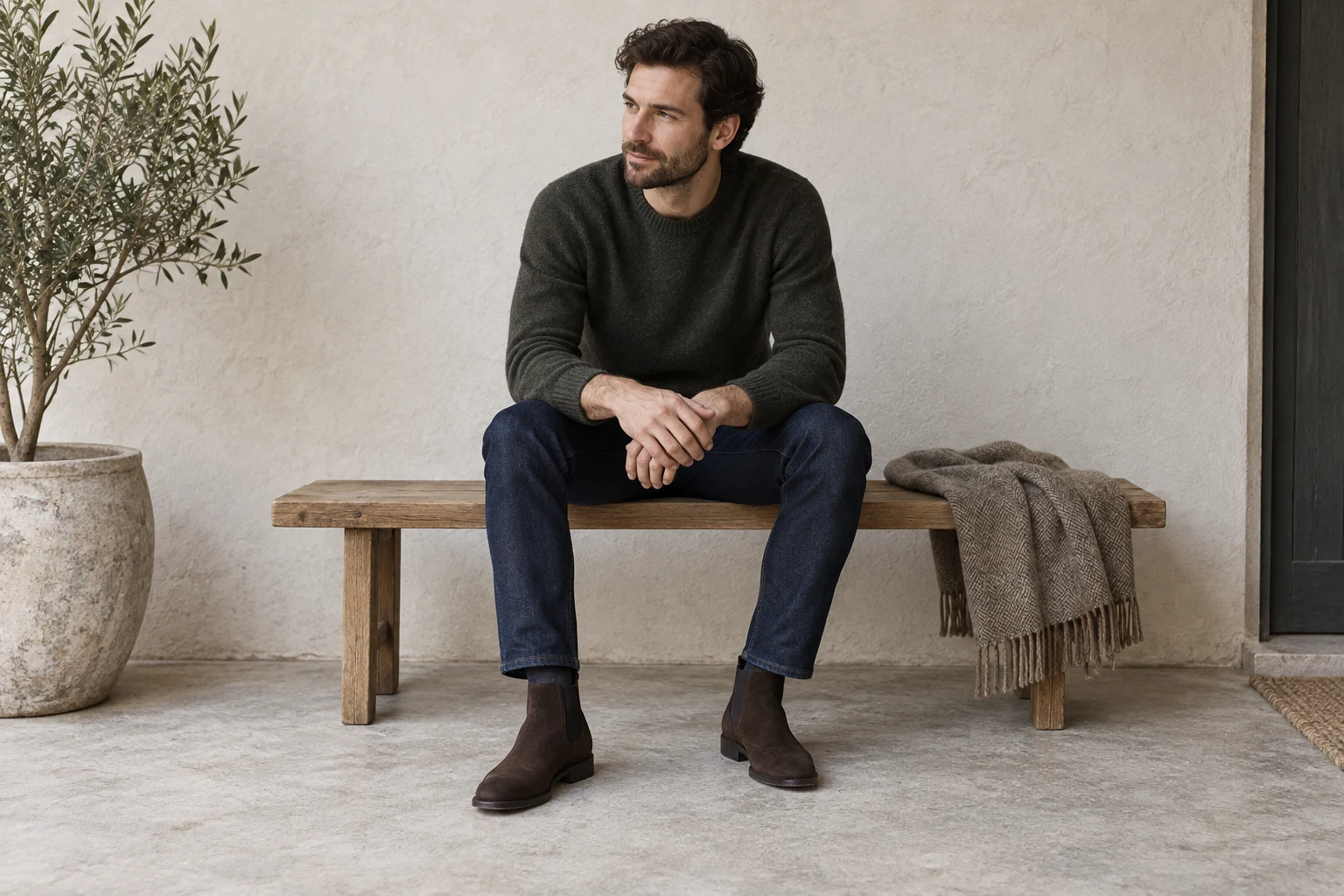
How to wear Chelsea boots: outfit ideas for men
Chelsea boots outfit ideas for men: which pants work, black vs brown and suede vs leather, how to wear them with jeans and suits, and mistakes to avoid.
Shoes and jewelry
How to polish shoes at home, step by step
How to polish leather shoes at home: clean and condition first, use cream for color and wax for shine, buff properly, and keep the shape with shoe trees.
Sizing
How should shoes fit? Toe room, width and heel
How should shoes fit? Check toe room, width and heel grip, learn the signs that shoes are too big or too small, and what changes for running shoes, boots and heels.