How to organize your closet so you can see everything
In this guide
A closet usually becomes a problem slowly. A few things get hung on top of other things, a stack of sweaters tips over, the shoes migrate to the floor, and one morning you buy a new black top because you cannot find the black top you already own. Learning how to organize your closet is less about containers than about one idea: you wear what you can see, and you forget what you cannot.
The approach below works for a reach in closet, a walk in closet or a single rail in a shared room. It starts with emptying and sorting, then decides what hangs and what folds, then places things by how often you actually use them. Buying organizers comes last, once you know exactly what you need them to hold.
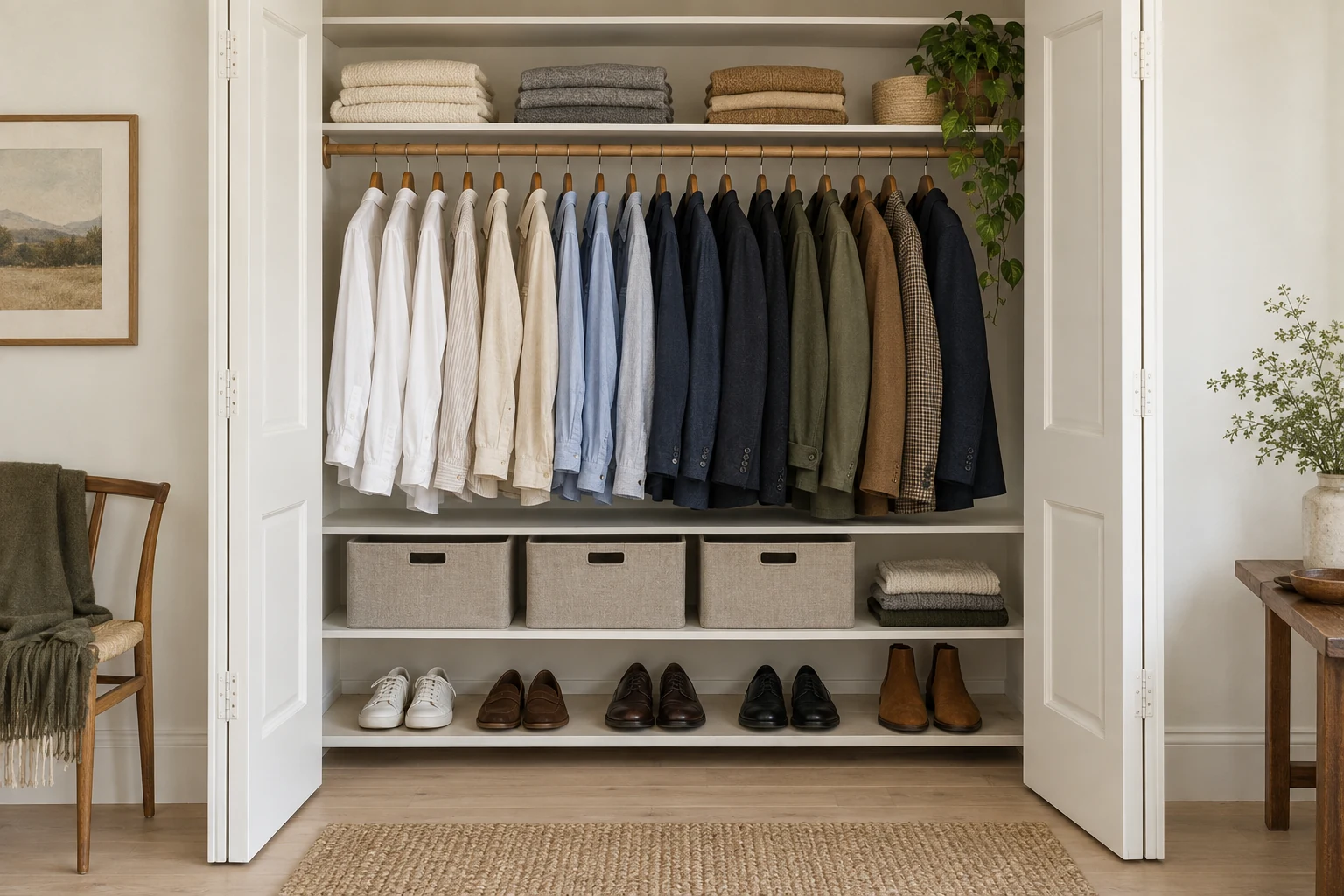
Empty the closet and sort by category
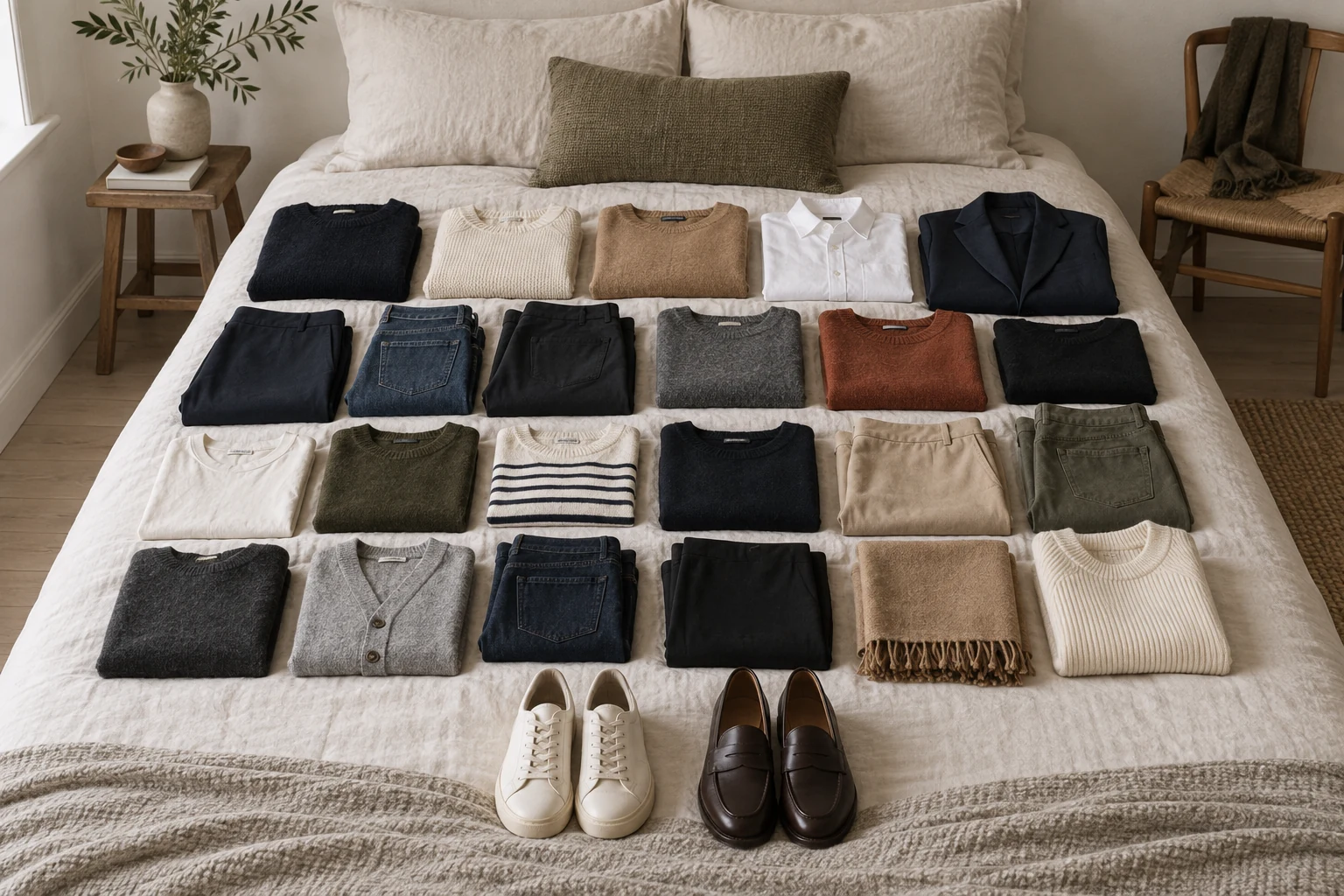
Take everything out, including the shoes on the floor and the bags on the top shelf. It feels like a bigger job than tidying in place, but it is the only way to see how many of each thing you own. Put the clothes on the bed in categories: trousers together, knits together, shirts together, dresses together. Most people discover duplicates at this stage, three nearly identical gray sweaters or five pairs of black trousers, and that is useful information.
While everything is out, make three piles: keep, decide later, and leave. Pieces that do not fit, need a repair you will not make, or have not been worn through a full year of seasons belong in the last two piles. If this part is difficult, our guide to decluttering your clothes walks through the questions in more detail. Wipe down the shelves and vacuum the floor before anything goes back. The University of Kentucky extension service suggests cleaning clothing storage areas at least once a year, and an empty closet is the easiest moment to do it.
Decide what hangs and what folds
Hang the clothes that hold a shape or wrinkle easily: blazers, suits, coats, dress shirts, blouses, dresses, skirts and wool trousers. Use hangers that match the weight of the garment. Shaped or padded hangers support jackets and coats at the shoulder, clip or bar hangers suit trousers and skirts, and bare wire hangers are best avoided because they can snag, rust and leave marks. Fasten the top button of a shirt or jacket so it does not slide off, and leave a little space between hangers so air moves and pieces do not crush each other. Our guide to hanging clothes goes garment by garment.
Fold knits, T shirts, jeans, casual trousers, workout clothes and anything heavy and stretchy. Woolmark recommends folding knitted garments in drawers rather than hanging them, because the weight of a sweater on a hanger pulls the shoulders out of shape over time. Our guides to folding a sweater and folding a T shirt show folds that keep a drawer or shelf readable. When you do stack, put the heaviest pieces at the bottom and keep stacks low enough to pull one piece out without toppling the rest.
| Clothes | Hang or fold | Why |
|---|---|---|
| Blazers, suits and coats | Hang on shaped or padded hangers | The hanger supports the shoulders |
| Dress shirts, blouses and dresses | Hang, top button fastened | They wrinkle easily and slide off otherwise |
| Wool trousers and skirts | Hang on clip or bar hangers | They hold a shape and a crease |
| Sweaters and knits | Fold in drawers | A hanger pulls the shoulders out of shape |
| T shirts, jeans and workout clothes | Fold, heaviest at the bottom | Heavy and stretchy pieces keep better folded |
Organize your closet by how often you wear things
The most valuable space in any closet is the band between your eyes and your waist, directly in front of the door. That is where the clothes you wear every week should go. Things you use every month, such as a suit or occasion shoes, can go to the sides or lower down. The top shelf and the back corners are for off season pieces, luggage and anything you touch a few times a year. This simple ranking does more for a crowded closet than any product, because it puts the daily decisions in the easiest place.
Within each zone, group by category and then by color, light to dark. A rail that runs shirts, then trousers, then jackets, each shading from white through blue to navy, is fast to scan, and gaps show you where a category is thin. Keep small accessories together in one place, belts in one tray, scarves in one basket, so an outfit can be finished without a search. The same logic scales to a walk in closet organizer: it simply gives you more zones, not a different system.
Choose shelves, drawers and containers last
Once you know what you are putting back, measure the closet: width, depth, the height of the rail and the space above and below it. Then decide what the space lacks. If most of your clothes are long dresses and coats, you need full height hanging. If most are shirts and jackets, a second rail at about half height doubles the hanging space in the same width. Closet organizer shelves and closet organizer systems with drawers suit people with a lot of folded clothes, and shelf dividers stop tall stacks from sliding into each other.
Choose clothes storage containers you can see into or clearly label, and prefer fabric bins or open baskets for clothes you use weekly, because lids slow you down. In drawers, filing folded clothes upright, the method popularized by Marie Kondo, lets you see every T shirt at once instead of only the top of a stack. A corner closet organizer, usually curved shelves or a corner rail, can rescue the dead space where two rails meet, but it is only worth it if the corner currently holds something you need and cannot reach.
Small closet organization ideas that work
In a very small closet, every piece has to earn its hanger. Start by moving the off season half of your wardrobe out entirely, into a bin under the bed or a high shelf elsewhere. Then add height rather than width: a second hanging rail, a shelf above the existing shelf, or hooks on the back of the door for tomorrow's outfit and bags. Slim, uniform hangers take up noticeably less rail space than a mix of bulky ones, and they make the rail look calmer.
Keep the floor clear if you can, because shoes piled on it hide each other and block the lower half of the closet. A narrow shoe shelf or a hanging organizer keeps pairs visible, and our guide to storing shoes covers the pairs you wear less often. If two people share one closet, split it by zone rather than by category, so each person has their own eye level section. A small closet will never hold everything you own, and it does not need to. It needs to hold the clothes you wear this season, arranged so each one can be seen.
Rotate clothes with the seasons
Twice a year, or whenever the weather turns, swap the seasons. Clean everything before it goes into storage, since body oils and small stains that are invisible now can set or attract insects over months. Make sure pieces are completely dry. The Kentucky extension guidance warns against storing clothes in basements, attics or garages where they meet damp, heat or fumes, and against wrapping them in plastic dry cleaning bags. Breathable cotton bags or clean pillowcases are better for natural fibers.
Wool and cashmere need a little more care. UC Integrated Pest Management advises storing clean, pest free wool in an airtight container to keep clothes moths out, while Woolmark warns that vacuum bags can trap moisture and are not ideal for delicate knits. The two fit together: clean and dry first, then a closed container in a cool, dry place you can check. Our guide to storing knitwear covers moths and long term storage in detail. When the boxes come back out, air the clothes before they return to the rail.
Keep it organized with small habits
Most closets fall apart because worn but not dirty clothes have nowhere to go. Give them a place: one hook, a short rail or a chair that is only for clothes you will wear again. Let them air there overnight before they go back into the closet, which lets moisture evaporate and wrinkles relax. Once a week, spend ten minutes putting that spot back to zero and returning anything that drifted into the wrong zone. To see what you really wear, turn every hanger backward at the start of a season and face it forward once you have worn the piece; by the next season change, the hangers still backward show you what to question.
It also helps to know what is in the closet without opening it. Some people keep a photographed list of their clothes, which makes gaps and duplicates obvious before shopping; our guide to making a digital wardrobe explains how. Snaza is one app built for this, a minimalist digital wardrobe for iPhone where you photograph and organize the pieces you own and keep a care label photo and notes with each one. If your closet is organized and you still feel you have too many clothes, a capsule wardrobe may be the next step.
Common mistakes
Buying organizers before sorting
Bins and drawer units bought for an unsorted closet usually end up holding the clutter more neatly. Sort, remove what you do not wear, and measure first, then buy only for what remains.
Hanging heavy sweaters
A heavy knit on a hanger stretches at the shoulders and grows longer over time. Fold sweaters on a shelf or in a drawer, or fold them over the bar of a hanger if you have no other space.
Storing clothes dirty or damp
Clothes put away worn or damp can develop odors, yellow stains or mildew, and wool attracts moths. Clean and dry everything before it goes into seasonal storage.
Questions people ask
Should clothes in a closet be organized by color or by type?
Type first, then color. Grouping by type (shirts, trousers, jackets) matches how you build an outfit, and shading each group from light to dark makes it quick to scan. Organizing only by color tends to mix a blazer with a T shirt and slows you down.
What should I hang and what should I fold?
Hang structured and wrinkle prone clothes such as jackets, dress shirts, blouses, dresses and wool trousers. Fold knits, T shirts, jeans, workout clothes and anything heavy or stretchy, because hanging can pull them out of shape.
How do I organize a closet with no shelves?
Add hanging shelves that attach to the rail, a small chest of drawers on the closet floor, or bins on a single added shelf above the rail. Use the back of the door for hooks, and fold knits into the hanging shelves rather than hanging them.
How can I organize my closet on a budget?
Start with the free steps, which do most of the work: sort, remove what you do not wear and place the rest by how often you use it. Matching slim hangers are usually the one purchase worth making, since they save rail space and make the closet look calmer. Shoe boxes, cut down cardboard boxes and baskets you already own make good drawer dividers and shelf bins until you know what you really need.
How often should I reorganize my closet?
A full empty and sort once or twice a year, usually at a season change, is enough for most people. A short weekly reset keeps it from drifting in between.
Sources and further reading
References used for this guide. Each opens the original page in a new tab.
- University of Kentucky Cooperative Extension Service, Clothing storage (CT LMH 144) Opens in a new tab
- Woolmark guide to storing wool clothes Opens in a new tab
- Woolmark everyday wool care Opens in a new tab
- University of California Integrated Pest Management, Clothes moths Opens in a new tab
- KonMari, How to fold clothes with the KonMari Method Opens in a new tab
Keep reading
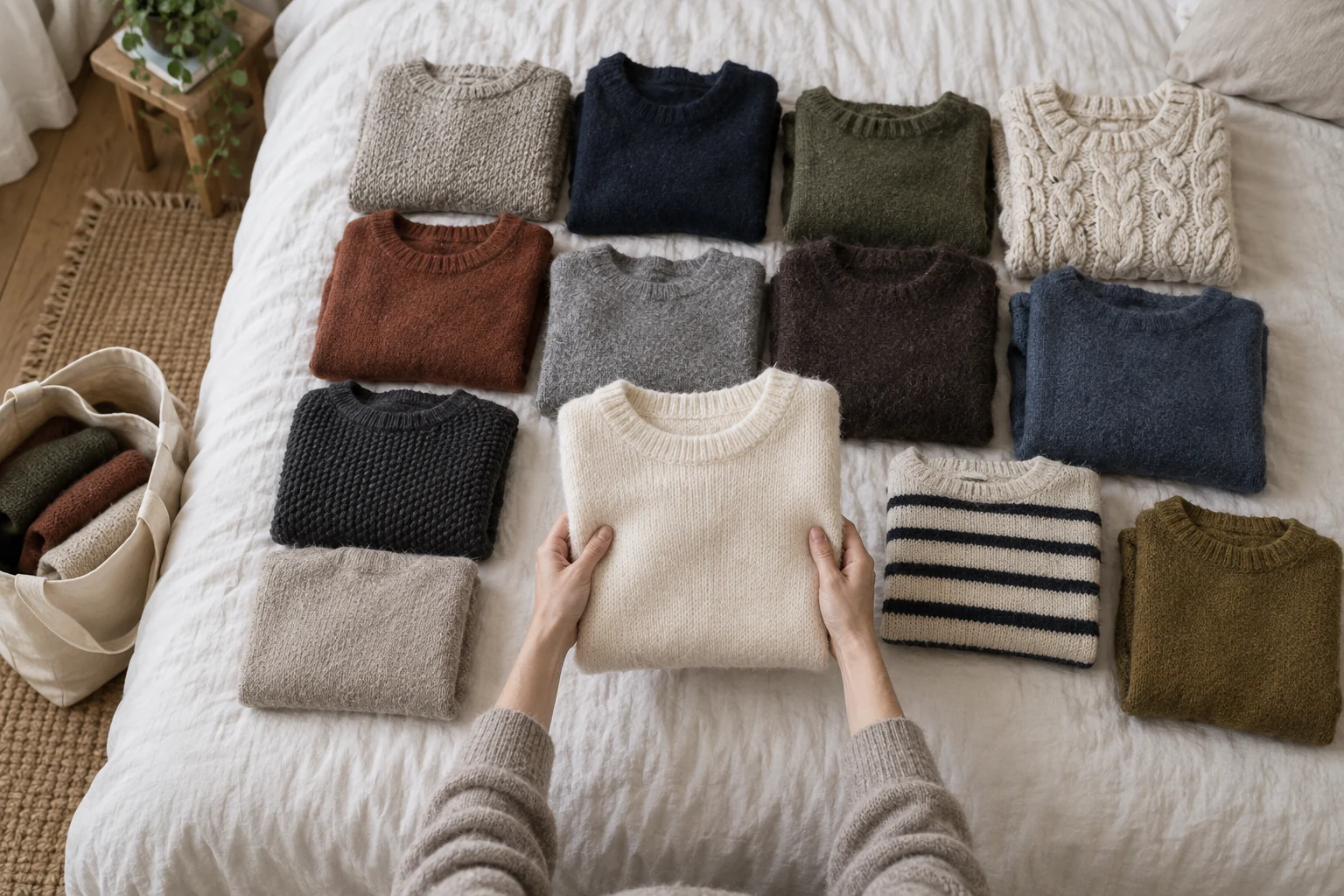
Closet and packing
How to declutter your clothes and decide what to keep
How to declutter clothes one category at a time, with honest questions for deciding what to keep, what to repair, and where the rest should go.
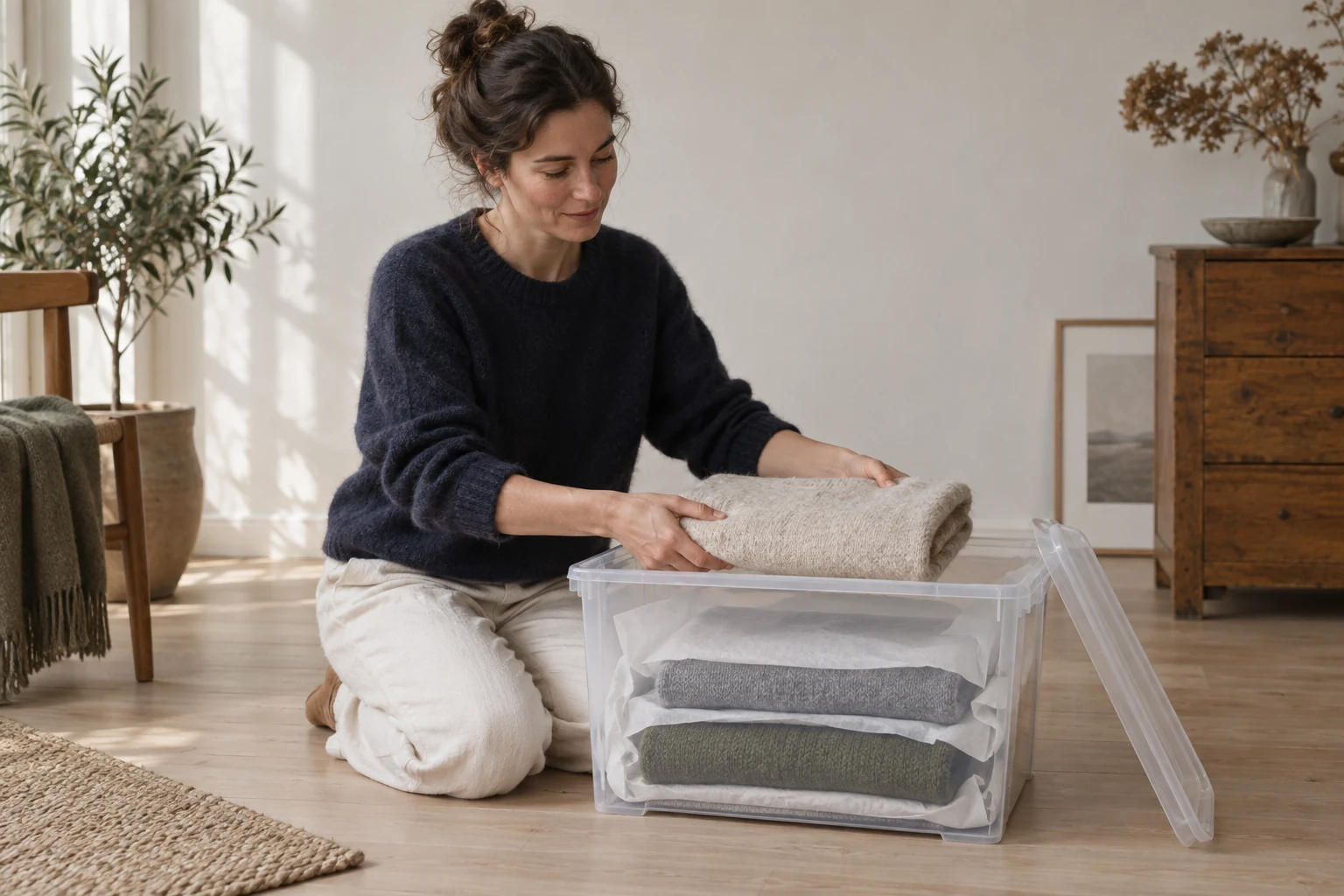
Closet and packing
How to store sweaters: folding, seasons and moths
How to store sweaters day to day and between seasons: fold instead of hang, clean before packing, choose bins or bags with care, and keep clothes moths out.
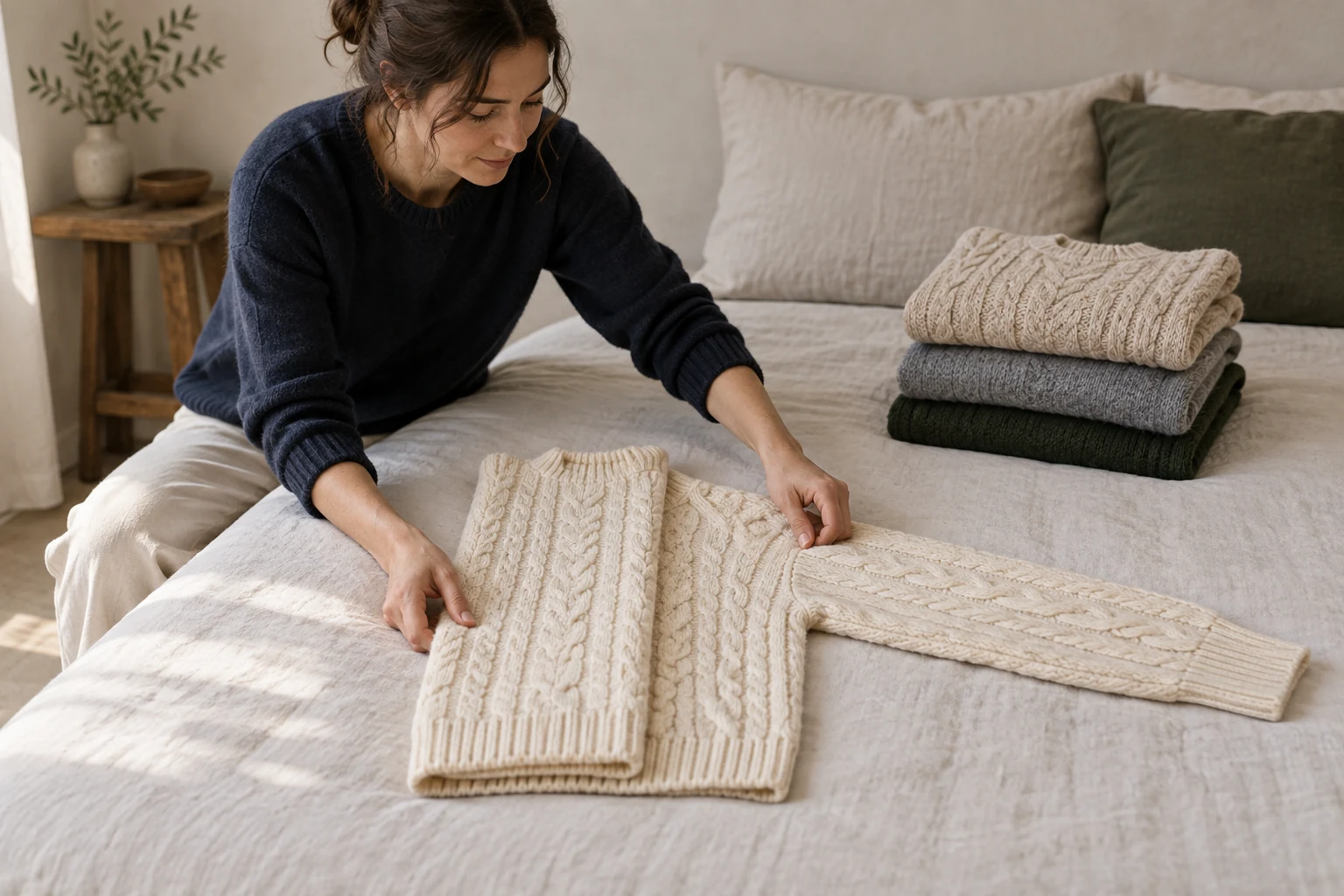
Closet and packing
How to fold a sweater so it keeps its shape
How to fold a sweater for a shelf or drawer, fold it over a hanger without stretched shoulders, pack it for travel, and store knitwear between seasons.
Closet and packing
How to build a capsule wardrobe from what you own
Build a capsule wardrobe from your real week and the clothes you already reach for, with examples for women and men and a simple way to test it.

Closet and packing
How to make a digital wardrobe you will actually use
Set up a digital wardrobe app or a simple photo album: photograph your pieces, sort them into a few categories, keep care notes and save the outfits that work.