What is modal fabric, and is it better than cotton?
In this guide
Modal usually finds you through touch. A T shirt, a pair of pajamas or a pack of underwear feels unusually smooth and cool, almost like silk jersey, and the label says something like 92% modal, 8% spandex. What is modal fabric, and why does it feel so different from the cotton next to it in the drawer? Modal is a manufactured fiber made from the cellulose of beech trees. It belongs to the rayon family, but it is engineered to be stronger when wet, which makes it far easier to live with than the rayon of a delicate summer blouse.
That wet strength decides most of what follows: how modal compares with cotton, where it disappoints, and why a cool, gentle wash keeps it soft and smooth for years.
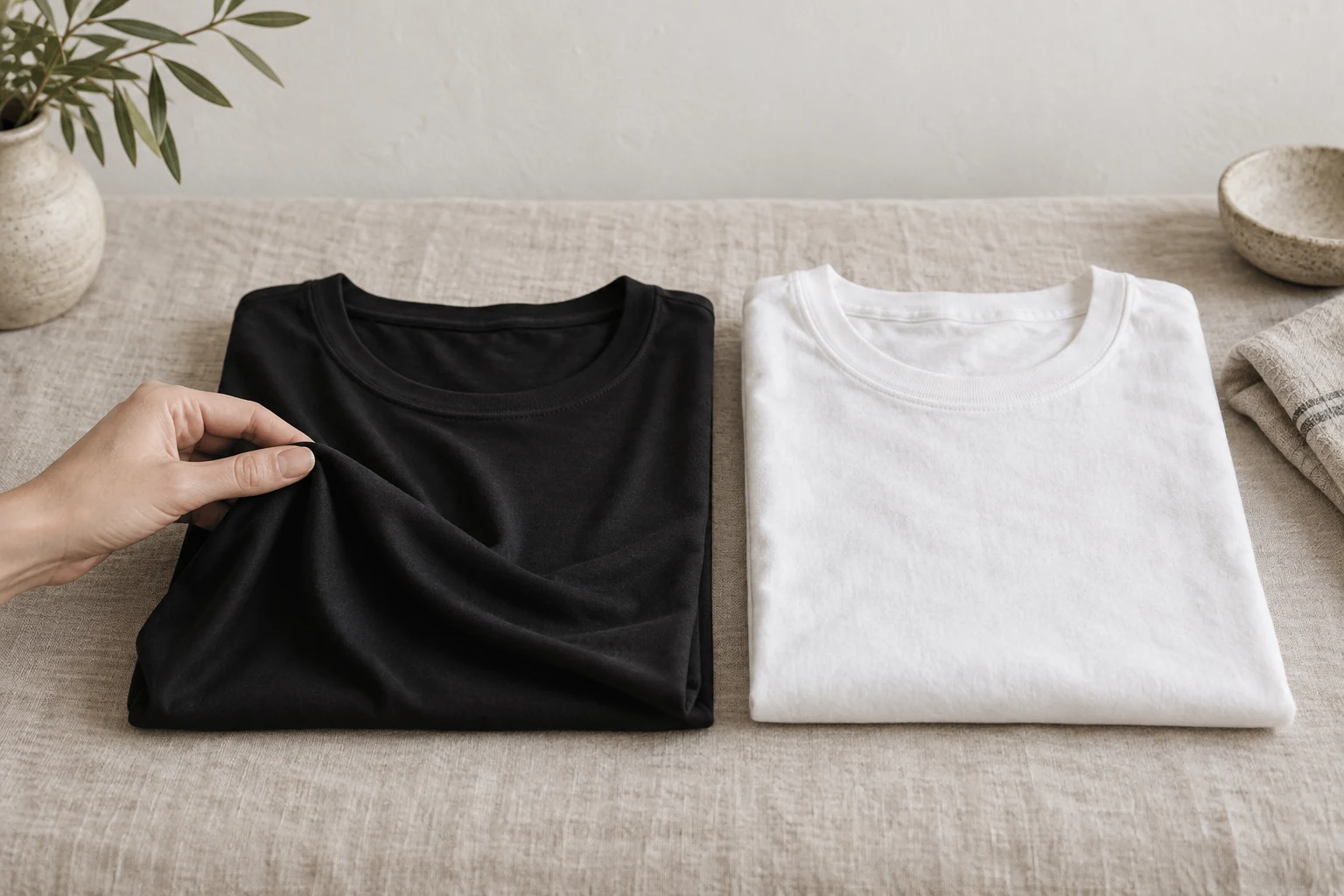
What is modal fabric made of?
Modal is made of cellulose, the structural material of plants, extracted from wood pulp and spun back into fiber. Beech is the classic raw material, and the best known producer, the Austrian company Lenzing, sells it under the TENCEL Modal name. Legally and chemically, modal is a kind of rayon. In the United States the fiber definitions set by the Federal Trade Commission group all regenerated cellulose fibers under rayon, and modal is widely used as the name for the high wet strength variety.
What makes modal different from ordinary rayon is how it is spun. The fibers are stretched as they form, which lines up the cellulose molecules along their length. That alignment gives modal much better strength when wet, better dimensional stability and less shrinkage, so a modal T shirt can usually go through a normal gentle wash where a viscose dress might shrink or twist. Modal is often blended with cotton for structure or with spandex for stretch, and you will see both on labels.
Is modal natural, or is it plastic?
Neither, strictly. Modal starts as wood, and its molecule is cellulose, the same one that makes up cotton, so it is not plastic and contains no petroleum based polymer. Polyester and nylon are plastics; modal is not related to them. But modal also is not a natural fiber in the way cotton, linen or wool are, because the fiber itself is created in a factory by dissolving pulp and reforming it. The usual description is semi synthetic or manufactured cellulosic.
That middle position explains the fabric. Modal breathes and absorbs like a plant fiber, but its fineness, smoothness and consistency come from being made to order. It is also why claims about modal vary so much between brands: the fiber name tells you the chemistry, while the wood source, the factory and the fabric construction decide the quality and the footprint. Our guide to rayon explains the whole family.
Modal fabric vs cotton
Modal feels smoother and cooler than cotton, drapes closer to the body and has a soft sheen. It resists pilling better than cotton, because its fibers are uniform and have a slick surface, and it holds dye well, so black modal stays black longer. It also tends to stay soft after many washes rather than turning stiff, which is why it is so popular for underwear, sleepwear and base layer T shirts.
Cotton wins on structure and toughness. A cotton T shirt keeps a crisper outline, a cotton oxford shirt holds a collar, and cotton tolerates hot water and a hot dryer when the label allows. Cotton is a natural fiber grown in fields; modal depends on a chemical process. Is modal better than cotton? For drape, softness against the skin and resistance to pilling, often yes. For garments that need shape, frequent hot washing or hard wear, cotton is usually the better choice. A cotton and modal blend is a sensible middle ground.
| Quality | Modal | Cotton |
|---|---|---|
| Feel | Smoother, cooler, soft sheen | Less smooth, without the sheen |
| Drape and shape | Drapes close to the body, little structure | Crisper outline, holds a collar |
| Pilling | Resists pilling better | Pills more readily |
| Heat | Cool or lukewarm gentle wash | Tolerates hot water and dryer if the label allows |
| Origin | Wood cellulose reformed in a factory | Natural fiber grown in fields |
Is modal breathable, and is it stretchy?
Modal is breathable. As a cellulose fiber it absorbs moisture readily and lets it evaporate from the surface, so it stays comfortable next to the skin on warm days and at night. It is not a technical sweat fabric, though. In a hard workout a modal shirt absorbs sweat and can become damp and heavy, where a polyester training shirt spreads moisture and dries quickly. Our guide to polyester vs cotton explains that trade off.
On its own, modal has some natural give in a jersey knit but little true stretch or recovery. The springy stretch in modal underwear, leggings and fitted tees comes from spandex, typically a small percentage of the blend. Pure modal knits can grow slightly in length when hung wet and heavy, which is one reason to dry them flat or on a hanger rather than a clothesline peg.
Modal fabric pros and cons
The advantages are real. Modal is very soft, cool to the touch and fluid, it takes color well and keeps it, it pills less than cotton, and it shrinks far less than ordinary rayon. It can usually be machine washed on a gentle cycle, and many labels allow a low tumble dry. For sensitive skin, its smooth, even surface is often more comfortable than rougher fibers.
The disadvantages matter too. Modal clings, so a thin modal T shirt shows the body more than cotton does. It has little structure, it can lose its shape if it is washed hot or hung wet, and cheap, thin modal can develop small holes along seams. The production still relies on chemical processing, and the environmental group Canopy has warned that some wood for rayon, viscose and modal comes from endangered forests. Choosing modal from certified wood sources reduces that risk.
How to wash and dry modal
Read the care label first; our guide to reading laundry symbols decodes it. Most modal clothing does well with a cool or lukewarm gentle cycle, around 86°F (30°C), a mild detergent and no fabric softener, which can coat the fibers and dull the smooth hand. Turn pieces inside out and wash them with similar weights; zippers and hooks from other clothes can snag fine knits. Put underwear and lingerie in a mesh bag.
For drying, a low tumble setting is often acceptable, but air drying is kinder and keeps the fabric looking new for longer. Lay heavier knits flat so they do not stretch. Modal rarely needs ironing; if it does, use a low setting or a steamer. If a modal shirt has started to pill after years of wear, our guide to removing pilling explains how to clear it without thinning the fabric.
Common mistakes
Washing hot and drying on high
Modal tolerates more than ordinary rayon, but heat still causes shrinkage and a tired, fuzzy surface over time. Keep washes cool and drying low or air based.
Expecting modal to perform like sportswear
Modal absorbs sweat rather than moving it away quickly, so it feels damp during hard exercise. Keep it for lounging, sleeping and everyday wear.
Using fabric softener
Softener leaves a coating that reduces absorbency and can make modal feel slippery rather than soft. The fabric is soft enough on its own.
Questions people ask
Is modal fabric toxic?
The documented chemical hazards of modal belong to the factory, where rayon type processes use chemicals that must be controlled to protect workers and nearby communities. The finished fiber is cellulose, and there is no established evidence that wearing modal is harmful. Washing new clothes before first wear is a sensible habit for any fabric.
Does modal fabric cause cancer?
There is no credible evidence that wearing modal causes cancer. Worries online usually mix up the chemicals used in manufacturing with the finished fabric. If chemical residues concern you, look for independent textile safety certifications on the label and wash before wearing.
Is modal the same as polyester?
No. Polyester is a plastic made from petroleum, while modal is made from wood cellulose. Modal absorbs moisture and breathes more like cotton, while polyester repels water and dries fast.
What is the difference between modal and viscose?
Both are rayon made from wood pulp, but modal is spun to be stronger, especially when wet, so it shrinks less and holds up better in the wash. Viscose is the more common, more delicate version; our guide to viscose fabric covers it in detail, and Tencel lyocell is the third close relative.
Sources and further reading
References used for this guide. Each opens the original page in a new tab.
- FTC Textile Rules, 16 CFR 303.7: rayon and lyocell definitions Opens in a new tab
- Lenzing: TENCEL brand overview, lyocell and modal fibers Opens in a new tab
- Wikipedia: Modal (textile), properties and production Opens in a new tab
- Canopy: Deforestation, so out of style (forest fiber in viscose and modal) Opens in a new tab
Keep reading
Fabrics
What is rayon? The fabric made from wood
What is rayon made of, is it natural or synthetic, and is it any good? How it is made, how it wears, how it compares with cotton and polyester, and how to wash it.
Fabrics
What is Tencel? Lyocell fabric explained
What Tencel is, how lyocell is made from wood, whether it is natural, how it compares with cotton and modal, why Tencel sheets feel cool, and how to wash it.
Fabrics
What is viscose fabric, and is it any good?
What viscose is, why it is the same thing as rayon, how to judge good viscose, how it compares with cotton and polyester, and how to wash it without shrinking.
Fabrics
Polyester vs cotton: which fabric to choose
Polyester vs cotton compared honestly: comfort, heat, sweat, odor, durability, skin and the environment, plus how to tell them apart and when a blend is best.
Washing and ironing
How to remove pilling from a sweater, and lint too
How to remove pilling from a sweater with a fabric shaver or sweater comb, clear lint with a roller, and wash and wear knits so the pills come back more slowly.