What is poplin fabric?
In this guide
The label says 100% cotton poplin, the shirt feels smooth and cool, and it looks slightly sharper than the cotton shirts next to it on the rack. Poplin is one of the most common fabrics in anyone's closet, especially in dress shirts and summer dresses, yet most people could not say what the word means.
So what is poplin? It is a way of weaving, not a fiber. This guide explains how it is made and how to recognize it, where it works best and where it does not, how it compares with oxford cloth, twill and broadcloth, and how to wash and iron it so it stays crisp.
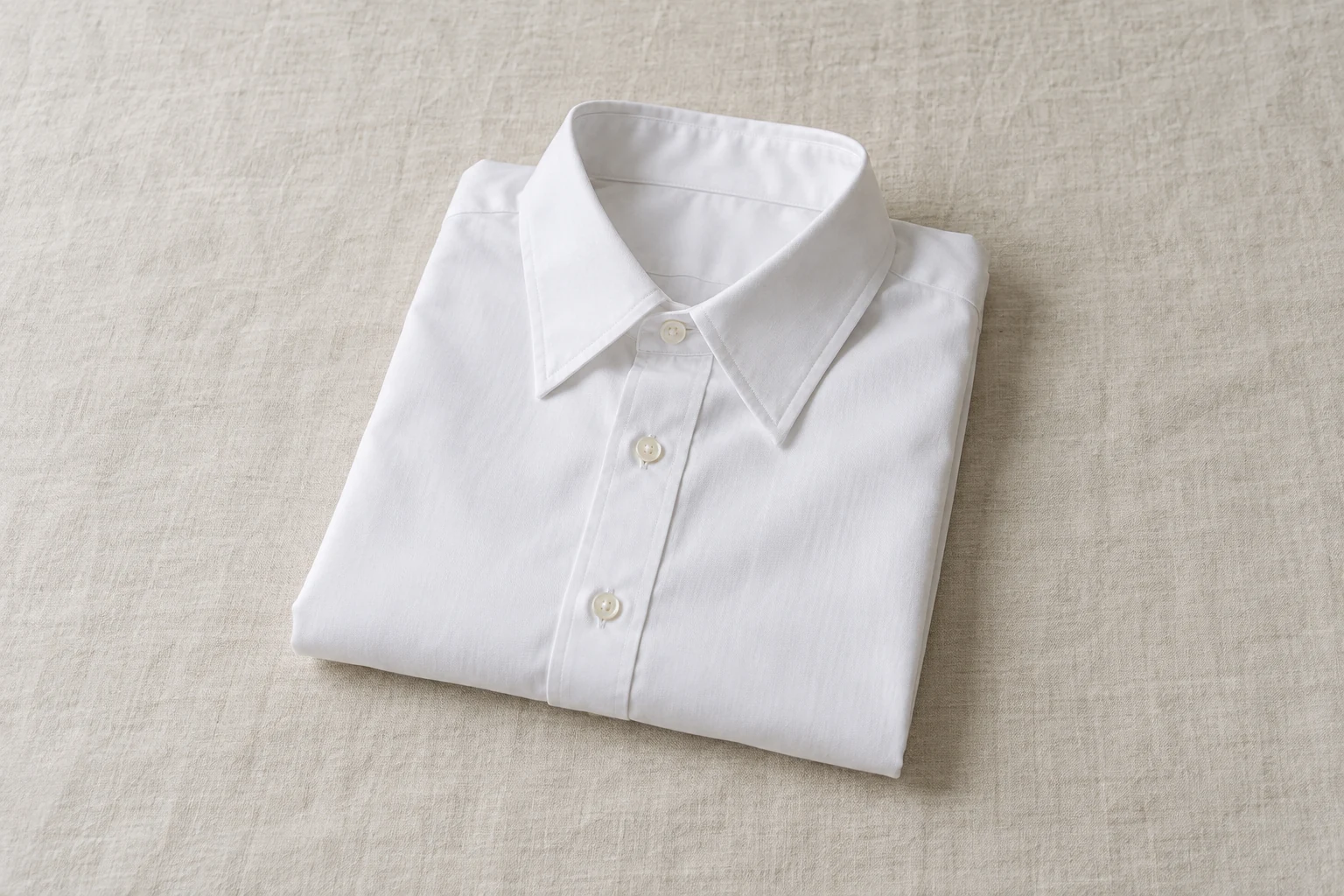
What is poplin fabric, and how is it made?
Poplin is a plain weave: each crosswise thread, the weft, passes over one lengthwise thread, the warp, then under the next, the simplest possible pattern. What makes it poplin is the density and the balance of the yarns. The warp threads are very fine and packed closely together, while the weft is usually slightly thicker, so the fabric shows a faint horizontal rib you can see only if you look closely. The result is smooth, firm and quite strong for its weight.
Poplin was originally made with a silk warp and a wool weft, and today it can be woven from cotton, polyester, silk, rayon, wool or blends. The origin of the name is uncertain: one explanation traces it to papeline, a fabric made in Avignon when it was a papal seat, another to the Flemish weaving town of Poperinge. In American shirting the same cloth is often called broadcloth, a name that stuck after the 1920s, when imported British cotton poplin was relabeled for the US market. For shirts, the two words now describe essentially the same fabric.
How to recognize poplin and judge its quality
Hold the fabric to the light. Poplin looks flat and even, with no diagonal lines like twill and no visible basket texture like oxford cloth. It feels cool, dry and smooth, almost silky in fine qualities, with a gentle sheen rather than a shine. Crumple a corner and it creases quickly and sharply, which is a clue in itself.
Quality comes from the yarn. Better cotton poplin uses long staple cotton spun into fine, often two ply yarns, which give a denser, smoother and more durable cloth that is less transparent. Cheap poplin is thin and papery, looks slightly hazy against the light and can pill or wear through at the collar. Rub it between your fingers: good poplin feels substantial despite its lightness, and the surface stays even. A little stretch means elastane has been added; pure cotton poplin has almost none.
Where poplin works, and where it does not
Poplin's smooth face and crispness make it the dressiest of everyday shirt fabrics. Shirtmakers such as Batch recommend it for formal occasions, business wear and ceremonies, and it is the natural choice under a suit or with a tie. Its lightness and breathability make it just as good in heat, as a summer shirt, a shirtdress, a blouse or loose trousers, which is why it appears in guides on dressing for very hot weather. It also takes printed designs cleanly, so you will see it in printed dresses and pajamas.
It is less happy in some roles. Pale, lightweight poplin can be slightly see through, so white poplin shirts often need a skin tone undershirt. It wrinkles quickly, which makes it a poor travel shirt unless it has an easy care finish. It offers little warmth, and it looks too formal for rugged, casual outfits, where a textured oxford or chambray sits more naturally with jeans.
Poplin vs cotton, oxford, twill and polyester
Poplin versus cotton is a false choice, because cotton is the fiber and poplin is the weave; most poplin is cotton. The more useful comparisons are with other weaves. Oxford cloth uses a basket weave with thicker yarns, so it is softer, more textured, more durable and more casual, and it hides wrinkles better. Twill has diagonal lines, drapes more softly, feels a little heavier and resists creasing, which makes it easier to iron and to wear all day. Pinpoint sits between oxford and poplin in formality.
Poplin is not the same as polyester, but polyester poplin exists, and blends of cotton and polyester are common in easy care shirts and uniforms. Those blends wrinkle less and dry faster, but they breathe less and can hold odor. Check the fiber line on the label, and our comparison of polyester and cotton explains what each fiber does. Poplin is often inexpensive because plain weaving is fast and efficient, but the price range is wide: fiber and yarn quality decide whether the result is cheap or fine.
| Fabric | Weave and texture | Character |
|---|---|---|
| Poplin or broadcloth | Plain weave, smooth, faint rib | Dressiest, crisp, wrinkles quickly |
| Pinpoint | Between oxford and poplin | Middle formality |
| Oxford cloth | Basket weave, thicker yarns, textured | Softer, durable, casual, hides wrinkles |
| Twill | Diagonal lines, softer drape | Resists creasing, easier to iron |
| Cotton and polyester poplin | Plain weave blend | Wrinkles less, breathes less, can hold odor |
How to wear a poplin shirt or dress
A white or light blue cotton poplin shirt is the backbone of business dress for men and women. Wear it tucked with tailored trousers or a suit for the office, or with the sleeves rolled and the collar open over chinos for a smart casual evening. Because poplin looks polished, it balances casual pieces well: a crisp shirt with dark jeans and loafers looks deliberate in a way a T shirt does not.
Poplin dresses and skirts suit warm weather and daytime events, with sandals or flat leather shoes. A crisp poplin shirtdress works from office to garden party. For a softer look, choose poplin in a relaxed, oversized cut, which lets the fabric's structure create volume without clinging. Printed poplin works best in simple shapes, where the print can carry the outfit.
Does poplin shrink? Washing, drying and ironing
Cotton poplin can shrink, typically a little in the first few washes, especially in hot water and a hot dryer. Many shirts are preshrunk, but not all, so follow the care label: most cotton poplin washes well at warm or cool temperatures on a normal or gentle cycle, with like colors. Our guide to washing white clothes helps keep white poplin bright. You can put poplin in the dryer if the label allows, but a low setting and removing it while still slightly damp reduce both shrinkage and wrinkles.
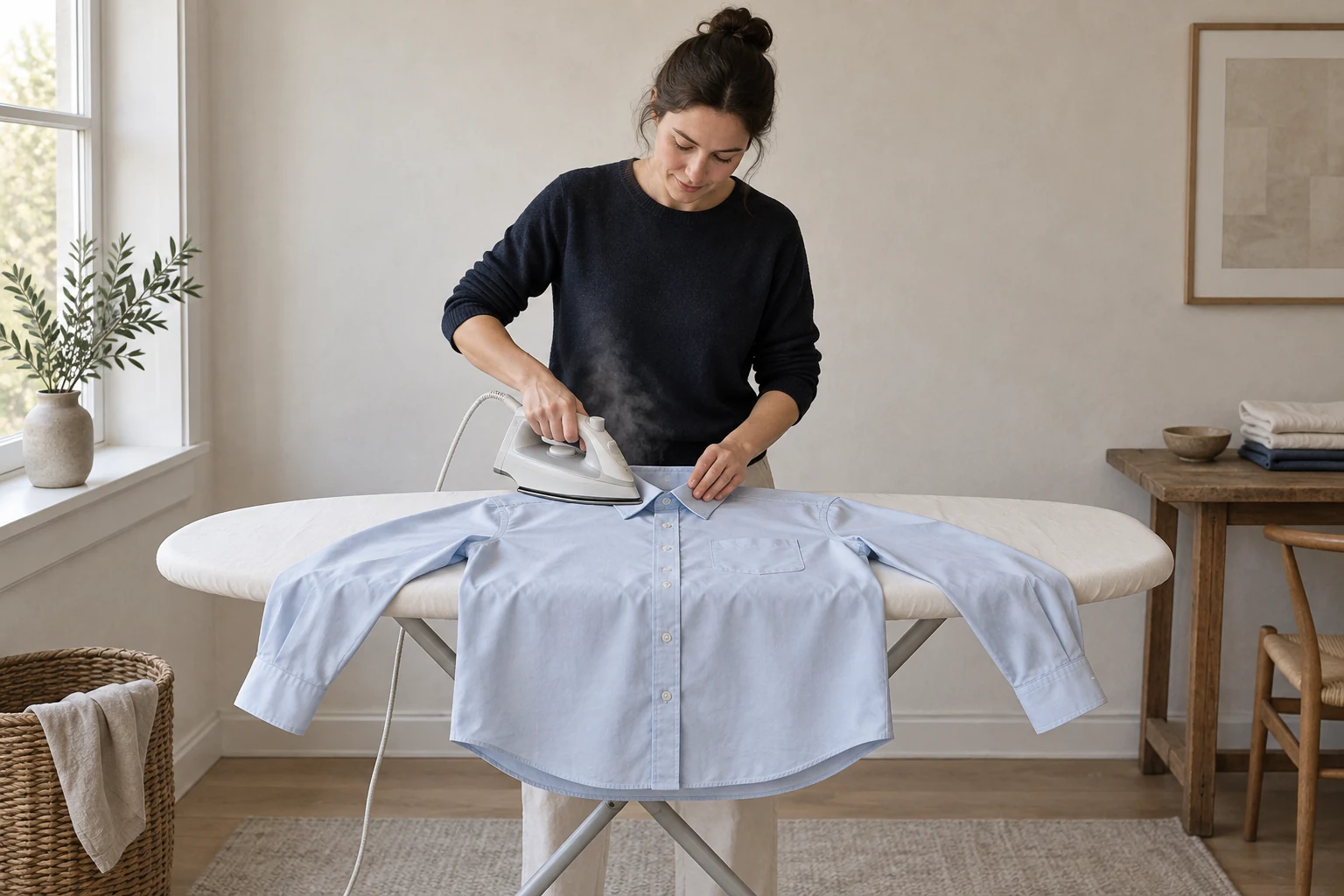
Poplin irons beautifully, which is part of its appeal. Iron cotton poplin while it is still slightly damp, at the cotton setting, and a steam iron will give it a sharp, flat finish; our guide on how to iron a shirt shows the order. Hang shirts on shaped hangers straight after drying. For blends with polyester, use a lower temperature, because synthetic fibers can glaze or melt under a hot iron.
Questions people ask
Is poplin stiff?
It is crisp rather than stiff. Fresh from the iron it holds its shape and feels firm, then softens with wear and washing. Starched collars and some finishes make it stiffer, but plain cotton poplin is comfortable against the skin.
Is poplin stretchy?
Pure cotton poplin has almost no stretch, because the tight plain weave does not give. Stretch poplin blends in a small percentage of elastane, which adds comfort in fitted shirts and trousers but can make the fabric look slightly less crisp.
What are the disadvantages of poplin fabric?
It wrinkles easily, light colors can be slightly transparent, and it offers little warmth. Thin, low quality poplin also wears through faster at the collar and cuffs. For travel or rugged use, oxford cloth or twill is often the more practical choice.
Should you buy cotton poplin shirts a size bigger?
Usually not. Buy the size that fits and wash it cool with low heat, since most shrinkage happens in the first washes and is small in preshrunk shirts. Size up only if the shirt is not preshrunk and the smaller size is already snug at the neck and sleeves.
Sources and further reading
References used for this guide. Each opens the original page in a new tab.
Keep reading
Fabrics
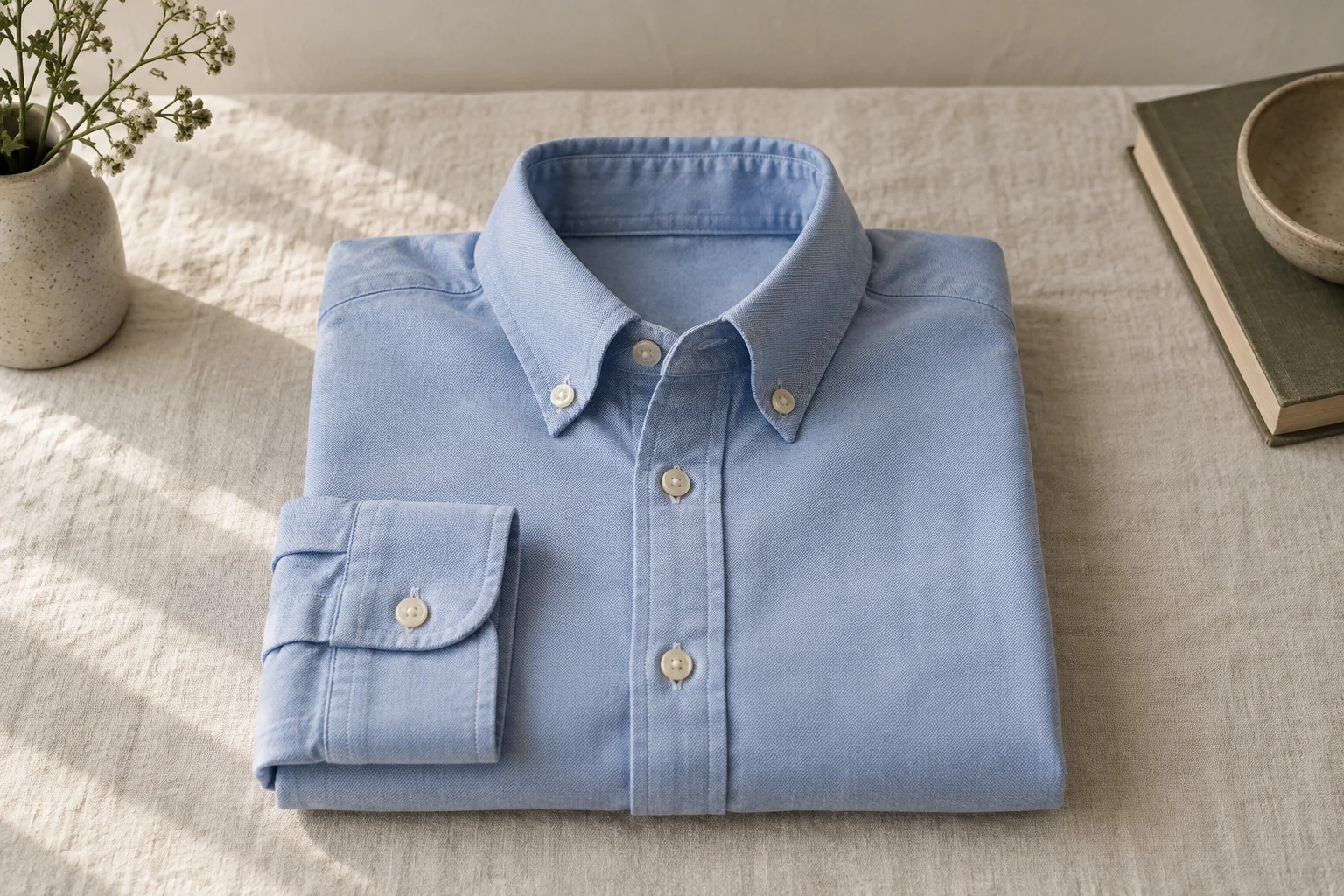
Oxford cloth: why the oxford shirt works everywhere
What an oxford cloth shirt is: the basketweave, oxford vs pinpoint and royal oxford, how it compares to a dress shirt, how to wear it and how to care for it.
Fabrics
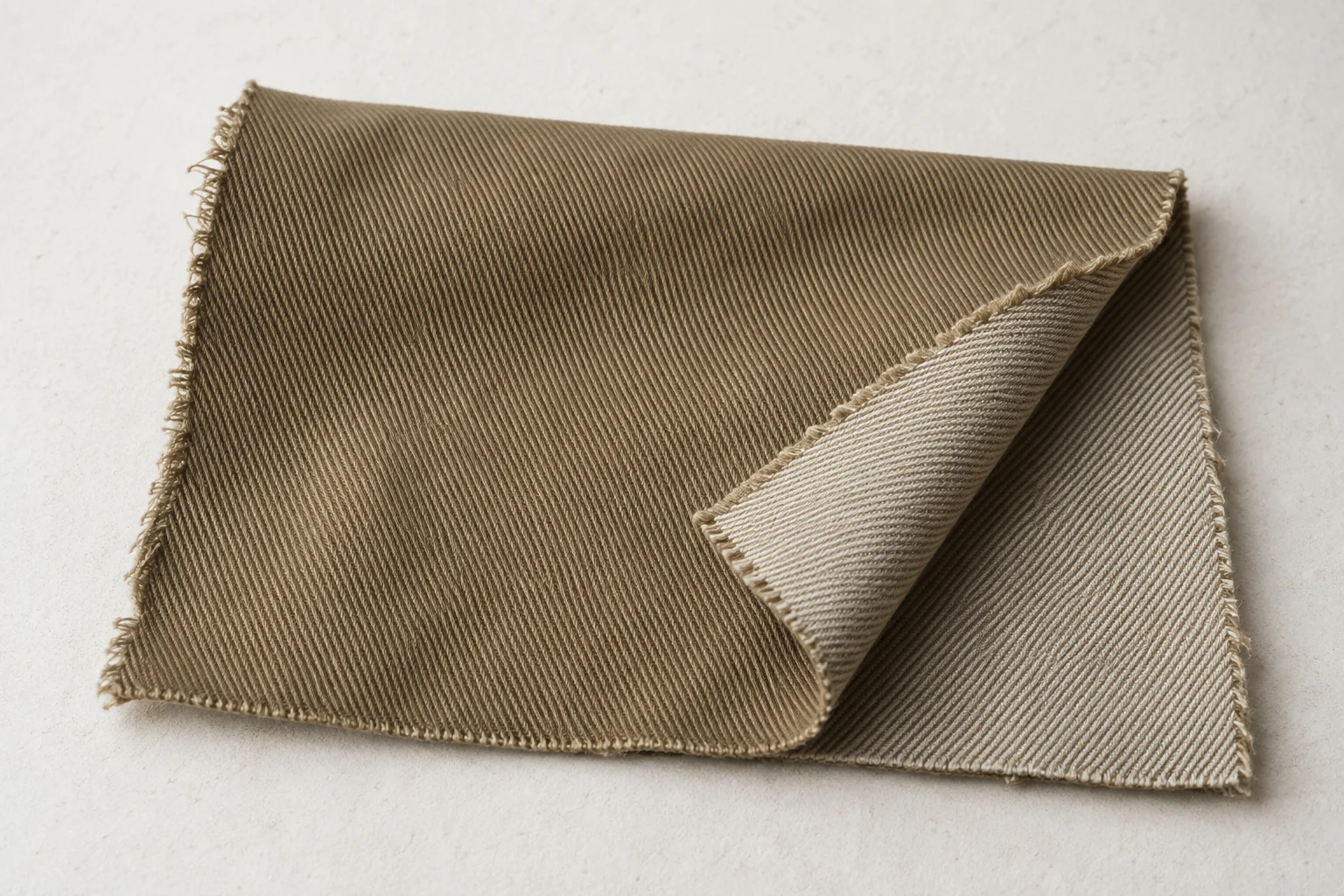
What is twill fabric, and what is it good for
What is twill? The weave behind jeans, chinos and gabardine: how to spot the diagonal, what twill is made of, where it works, and how it compares to cotton.
Fabrics
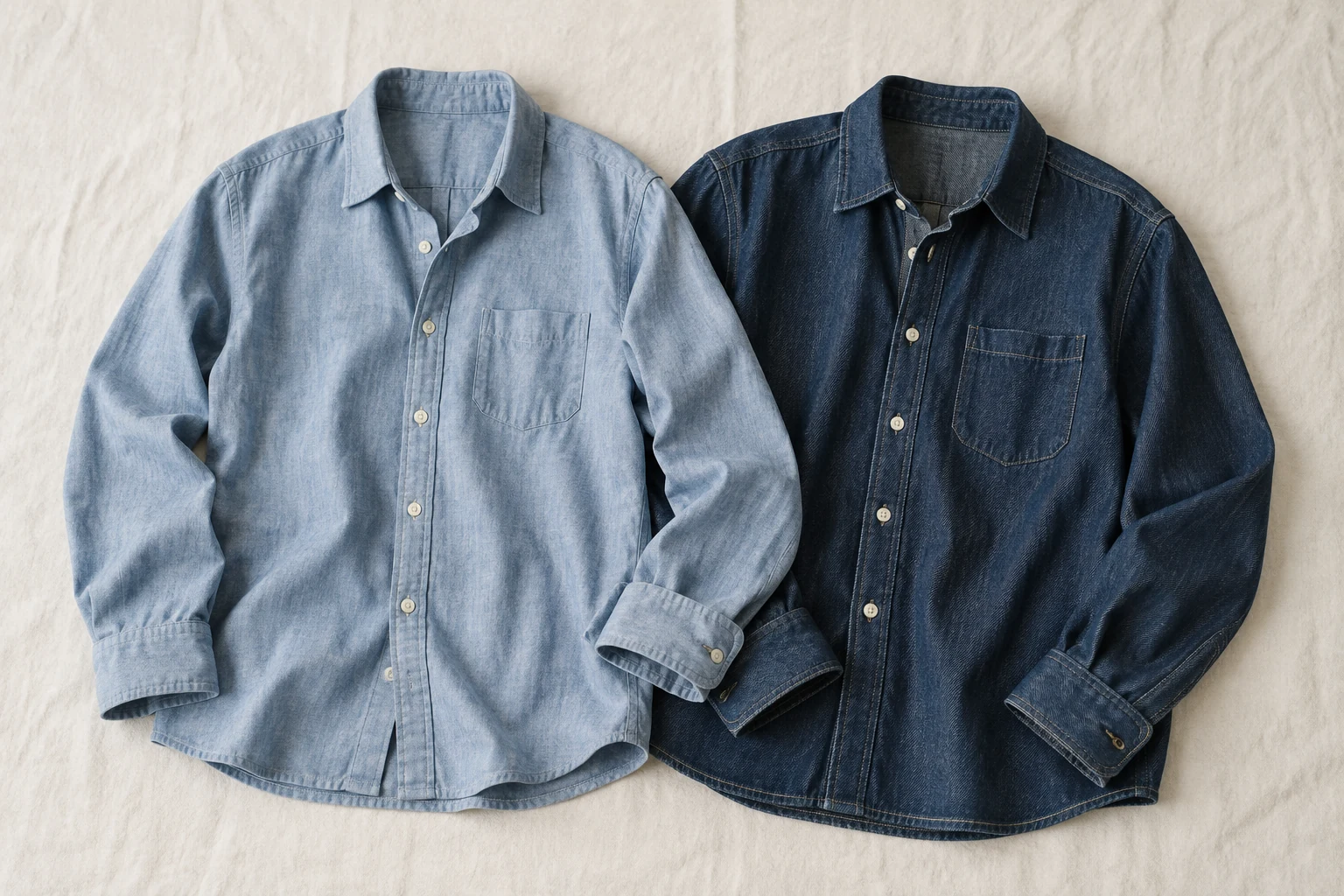
Chambray: what it is and how it differs from denim
Chambray explained: how this light plain weave differs from denim, what the chambray color is, how to wear a chambray shirt or dress, and how to care for it.
Fabrics
Polyester vs cotton: which fabric to choose
Polyester vs cotton compared honestly: comfort, heat, sweat, odor, durability, skin and the environment, plus how to tell them apart and when a blend is best.
Washing and ironing
How to iron a shirt in the right order
How to iron a shirt the way shirtmakers do: set the heat for the fabric, start slightly damp, then work collar, cuffs, sleeves, yoke, back and front in order.