How to remove deodorant and sweat stains
In this guide
Two very different problems hide behind the same search. One is the chalky white streak on a black top that appears the moment you pull it over your head. The other is the slow yellowing under the arms of a white shirt you have worn and washed dozens of times. Learning how to remove deodorant stains starts with telling them apart, because the fix for one does little for the other.
The first is quick and almost always reversible. The second takes more work and sometimes cannot be undone completely, which is why the prevention section at the end matters as much as the removal steps.
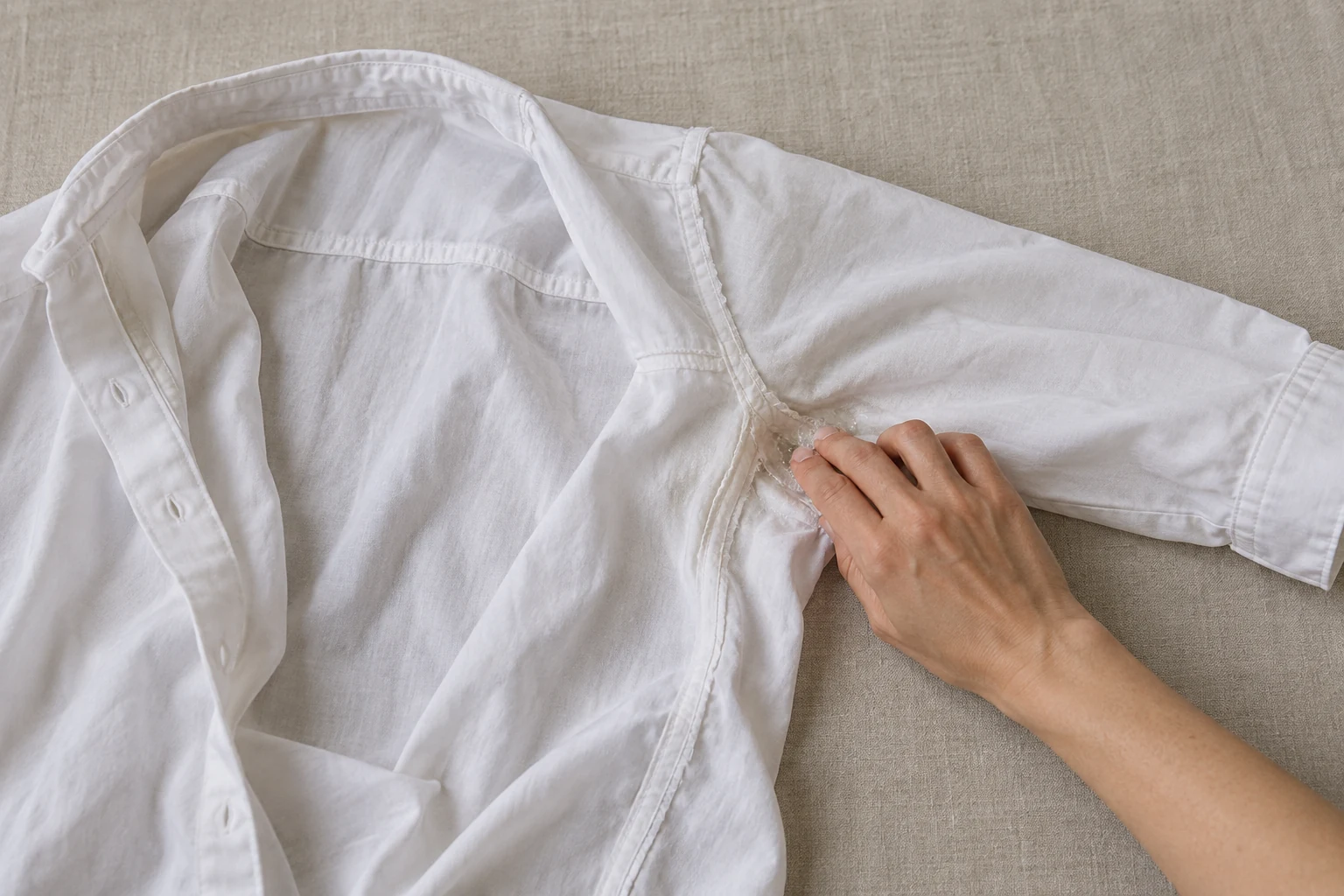
White marks and yellow stains are different problems
White marks are simply product. When a deodorant or antiperspirant touches fabric before it has dried, it leaves a whitish deposit of its ingredients, often the aluminum salts that reduce sweating. A patent filing from Beiersdorf, the skin care maker, describes these marks as removable by drying, brushing or washing. They show up most on black and navy clothes, and over time they can build into a stiff, dull patch in the armpit.
Yellow stains form differently. The same filing explains that they appear after washing, from an interaction between antiperspirant, skin oil, sweat and detergent, with the aluminum salts in most antiperspirants as one cause. Because they build up wash after wash, they are stubborn, and the filing notes they can be difficult or impossible to remove completely. Sweat on its own adds protein to the mix, which is why Iowa State University Extension groups it with blood as a stain that should not meet hot water before it is treated.
How to remove deodorant stains on black shirts
For a fresh white streak, let it dry for a minute, then brush it off with a dry, clean cloth, a soft clothes brush or a clean sock. Work lightly across the mark rather than pressing it in. A slightly damp cloth takes off whatever is left. This is the quick fix when you are already dressed and running late.
Buildup that has hardened over several wears needs detergent. The American Cleaning Institute suggests pretreating light deodorant stains with liquid detergent before washing; the University of Georgia Extension uses undiluted hand dishwashing liquid rubbed into the stain. Turn the shirt inside out, rub a few drops into the underarm, leave it for ten minutes and wash as the care label allows. Skip bleach of any kind on dark colors, and do not iron over residue, because the Georgia guide warns that heat on deodorant stains damages most fabrics.
How to remove yellow sweat stains from white clothes
Expect to work in rounds. A stain that took a year to form will not always vanish in one wash, but each pass should look lighter. Start with the gentlest step and only move on if the yellow remains. Check the care label first; everything here assumes a washable white cotton or cotton blend shirt.
Pretreat with liquid detergent
Rub undiluted liquid laundry detergent or dish soap into both sides of the underarm and leave it for ten minutes or so. For heavy stains, the American Cleaning Institute suggests a stain remover left on for five to ten minutes before washing.
Soak in oxygen bleach
Dissolve an oxygen bleach powder in warm water according to its label and soak the underarms. The University of Georgia Extension suggests 15 to 30 minutes for perspiration stains. The yellow should soften toward cream.
Try hydrogen peroxide on what remains
On white or colorfast fabric, the Georgia guide allows 3 percent hydrogen peroxide, the drugstore antiseptic, applied to the stain for 15 to 20 minutes. Rinse it out completely before using any other product.
Wash as warm as the label allows
The American Cleaning Institute recommends laundering perspiration stains in the hottest water safe for the fabric, with an enzyme detergent or oxygen bleach for stubborn cases.
Air dry and look again
Check the underarms in daylight before drying. If yellow remains, repeat the soak rather than putting the shirt in the dryer, where heat makes the stain harder to shift.
Dark armpit stains and faded color on colored shirts
On colored clothes, sweat sometimes changes the dye itself, leaving a patch that looks darker, lighter or a slightly different shade. Both the American Cleaning Institute and the University of Georgia Extension suggest the same small correction: a few drops of household ammonia on a fresh stain, or white vinegar on an old one, then a thorough rinse. Test either one on a hidden seam first. Some color changes are permanent, and no product can put back dye that has gone.
Ammonia and vinegar are useful here only because they are used on their own and rinsed out. Neither should ever meet chlorine bleach. The Washington State Department of Health warns that bleach and ammonia produce toxic chloramine gases and that bleach with an acid such as vinegar releases chlorine gas. Rinse the shirt well and let it dry before trying any bleach step.
| Stain | Where it shows | First move | Avoid |
|---|---|---|---|
| White deodorant marks | Black and navy clothes | Brush off with a dry cloth or clean sock | Ironing over the residue |
| Hardened buildup | Dark underarms after several wears | Liquid detergent or dish soap for ten minutes, then wash | Bleach of any kind on dark colors |
| Yellow sweat stains | White cotton shirts | Detergent, an oxygen bleach soak, a warm wash | Hot water before treating, and the dryer |
| Changed color | Colored shirts | Ammonia on fresh stains, vinegar on old, then rinse | Letting either meet chlorine bleach |
Silk, wool and dry clean only clothes
The Georgia guide is explicit that its deodorant methods apply only to washable items, not to garments marked dry clean only. Silk blouses, wool suiting and structured jackets should go to a cleaner, and it helps to say that the stain is sweat and antiperspirant, because a cleaner treats it differently from an ordinary soil. If a silk or wool piece is labeled washable, follow our guides to washing silk and hand washing clothes, and use only mild detergent on the underarm; skip peroxide, ammonia and bleach.
How to prevent armpit stains
Most prevention comes down to keeping product off the fabric. Apply a thin layer of deodorant or antiperspirant and give it a few minutes to dry before you dress; much of the white transfer happens when a shirt goes on over a still damp underarm. Tops that pull over the head drag across the underarm on the way down and pick up the most product, so give them the longest drying time.
Since yellowing builds up wash after wash, the next best habit is to deal with sweat early. Rinse or pretreat the underarms of white shirts before they go in the hamper on hot days, and wash them sooner rather than letting them sit. A thin cotton undershirt takes the brunt of it for shirts you want to keep pristine. If yellowing keeps coming back, it may be worth trying a deodorant without aluminum, since the aluminum salts in antiperspirants are one known cause, though deodorant alone will not reduce sweating. For lingering odor in the fibers, see our guide to getting smells out of clothes, and for keeping whites bright, our guide to washing white clothes.
Common mistakes
Reaching for chlorine bleach first
Start with detergent and oxygen bleach. Chlorine bleach is the harshest option, it is unsuitable for many fabrics, and it must never follow ammonia or vinegar without a thorough rinse in between.
Hot water before the stain is treated
Sweat contains protein, and Iowa State University Extension notes that hot water and dryer heat set protein stains. Pretreat and soak in cool or lukewarm water first, then wash warmer if the label allows.
Ironing over the underarm
Heat on deodorant residue can scorch or discolor fabric. Wash the area clean before it meets an iron.
Questions people ask
Why do my shirts get deodorant stains after washing?
The yellow comes from a mix of antiperspirant, sweat and skin oils that reacts with detergent in the wash, bonds to the fabric and builds up over repeated laundering, which is why it often appears after washing rather than while you wear the shirt. Aluminum salts in antiperspirant are one known cause. It is not a sign that you sweat more than anyone else.
Does deodorant stain wash out?
The white marks usually do, since they are only product sitting on the fabric; brushing often removes them before you even reach the washer. Hardened buildup and yellow stains are harder, and a normal wash rarely clears them on its own. Pretreat with liquid detergent, soak in oxygen bleach on whites and washable colors that pass a hidden test, and repeat before drying.
Does dish soap remove deodorant stains?
Often, yes. The University of Georgia Extension method for antiperspirant and deodorant stains is to rub undiluted hand dishwashing liquid into the stain and then launder, which loosens the residue so the wash can carry it away. Give it ten minutes before washing, and move on to an oxygen bleach soak if yellowing remains.
Does baking soda remove deodorant stains?
A paste of baking soda and water is a popular home remedy, and it can act as a mild scrub on sturdy white cotton. Detergent and oxygen bleach are the methods recommended by the American Cleaning Institute and university extension guides, so start there.
Can old yellow armpit stains be removed completely?
Often they can be lightened a lot, but very old buildup may never disappear entirely. Several rounds of detergent, oxygen bleach and a warm wash give the best chance. Past that point, a shirt with permanent yellowing is a candidate for wearing under a sweater.
Will aluminum free deodorant stop yellow stains?
It removes one of the known causes, so it may help. It does not stop sweat, and sweat and skin oils can still discolor fabric over time, so prompt washing still matters.
Sources and further reading
References used for this guide. Each opens the original page in a new tab.
- American Cleaning Institute stain removal guide Opens in a new tab
- University of Georgia Extension, removing antiperspirant and deodorant stains Opens in a new tab
- University of Georgia Extension, removing perspiration stains Opens in a new tab
- Iowa State University Extension AnswerLine, dealing with sport stains Opens in a new tab
- Beiersdorf patent application on marks formed by antiperspirants on clothing Opens in a new tab
- Washington State Department of Health, dangers of mixing bleach with cleaners Opens in a new tab
Keep reading

Washing and ironing
How to get smell out of clothes
How to get smell out of clothes, whether it is sweat, a musty washer smell or smoke: airing, better washing, careful use of baking soda and vinegar, and prevention.
Washing and ironing
How to wash white clothes and keep them white
How to wash white clothes: sort them, pick the right water temperature and detergent dose, use oxygen or chlorine bleach safely, and rescue whites that yellowed.
Washing and ironing
Laundry symbols explained: how to read a care label
What laundry symbols mean, in plain words: the wash tub, triangle, square, iron and circle, plus the dots, bars and crosses that change each instruction.
Stain removal
How to get blood out of clothes
Get blood out of clothes with cold water and an enzyme soak, rescue dried stains on sheets and jeans, and learn which mistakes set blood for good.
Washing and ironing
How to hand wash clothes properly
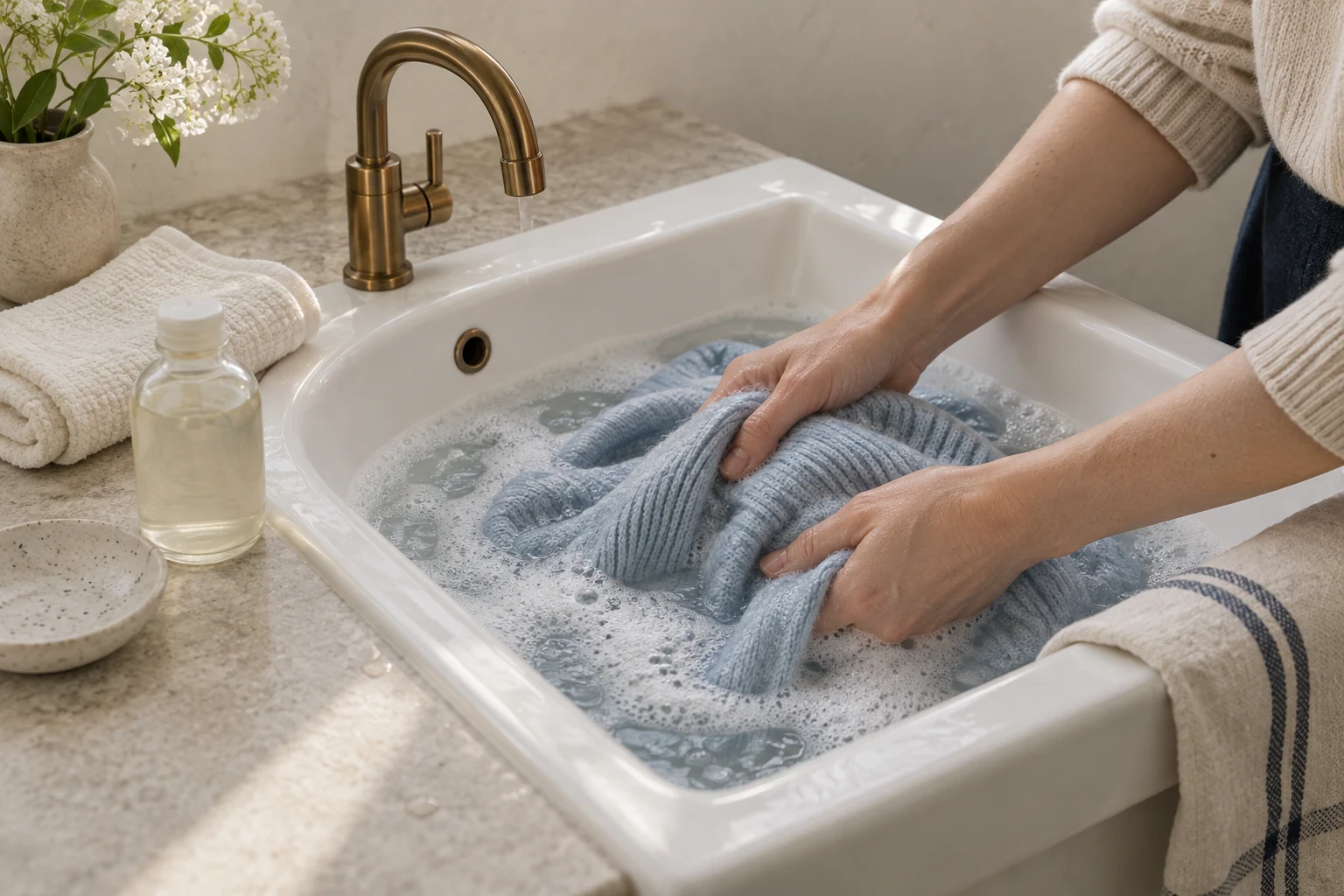
How to hand wash clothes in a sink or basin: which detergent to use, water temperature by fabric, how long to soak, how to rinse and how to dry without stretching.