How to hand wash clothes properly
In this guide
What does that small washtub with a hand dipped into it, on the label of a new sweater, bra or silk top, actually ask of you? And what do you do when you are traveling, the hotel laundry costs more than the shirt, and the only tool is a bathroom sink? Knowing how to hand wash clothes is a small skill that solves both situations, and it takes about fifteen minutes of attention plus drying time.
Hand washing works because you control the three things that damage delicate fabric in a machine: heat, friction and the violent pull of the spin. The routine below is the same for most garments; what changes from fabric to fabric is the water temperature, the detergent and how the piece dries.
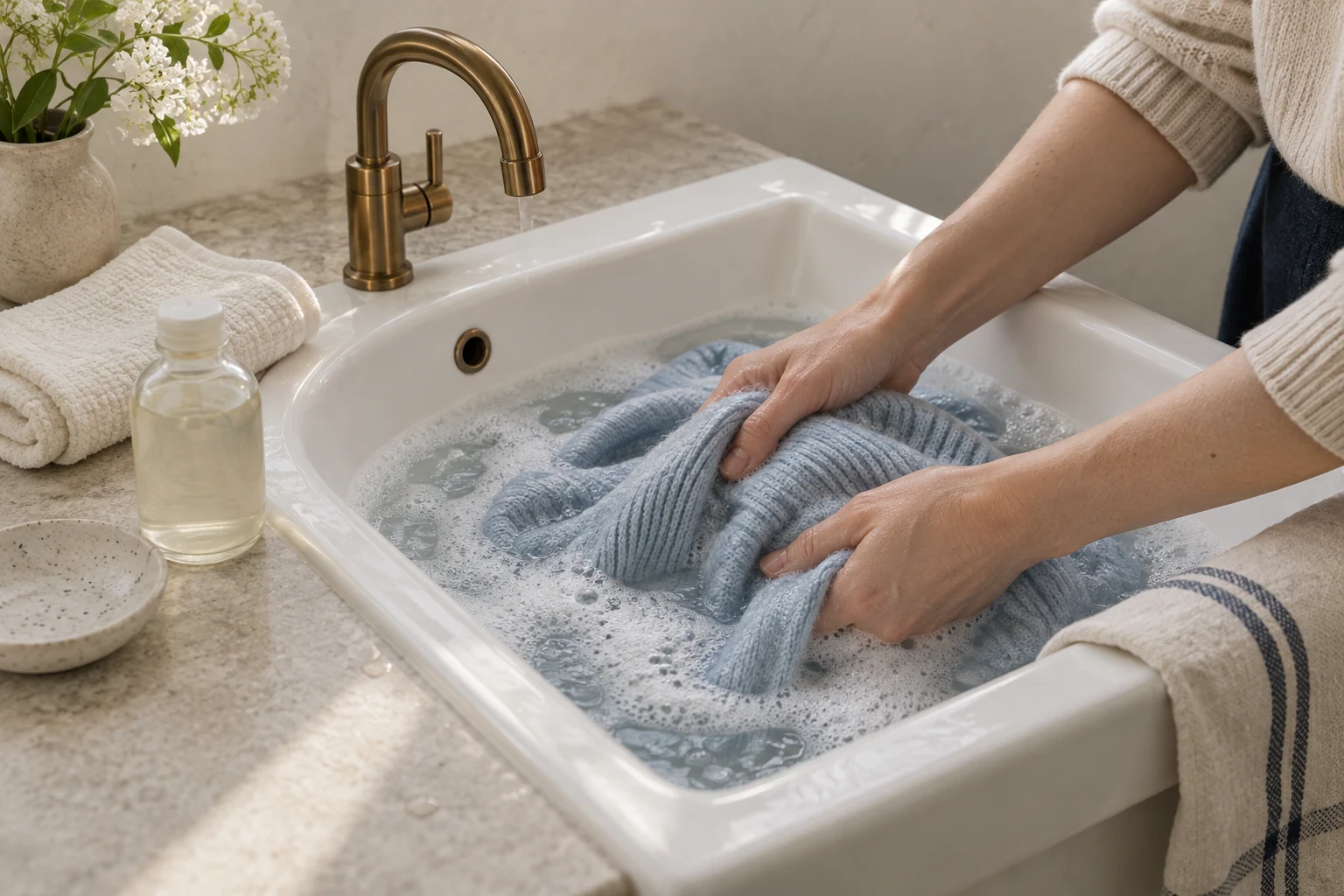
Know what should be hand washed
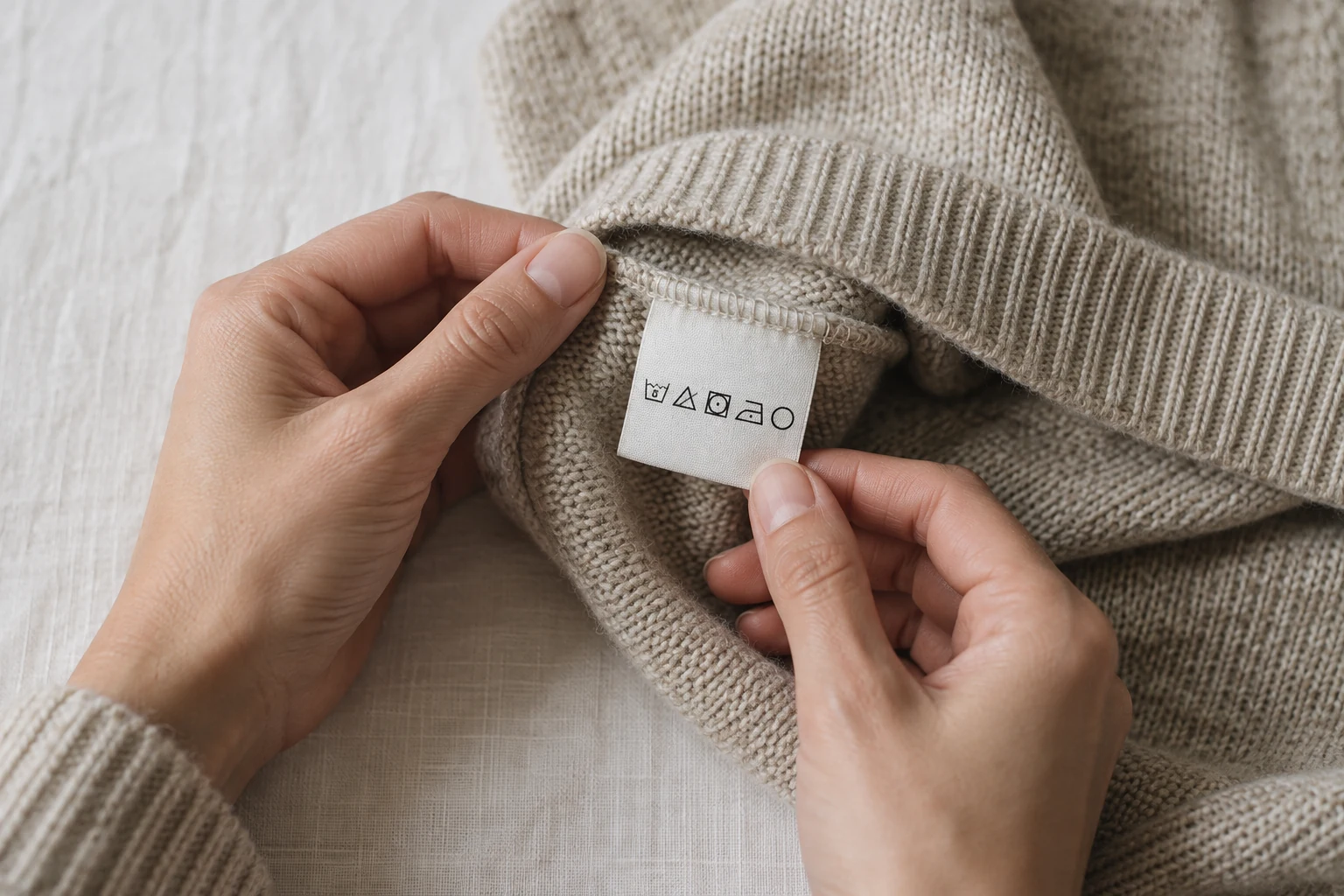
Start with the care label. A hand in a washtub means hand washing, and a number or dots inside the tub, if present, give the maximum water temperature. GINETEX, the international association behind these symbols, describes the process as dissolving a fine detergent in plenty of water and letting the textile float in the solution, which is a good summary of the whole method. Our guide to reading laundry symbols explains the rest of the label.
Wool and cashmere knits, silk (see our guide to washing silk), lace, lingerie and bras (our guide to washing a bra covers underwires and molded cups), swimwear, beaded or sequined tops and anything with delicate trims are the usual candidates. Hand washing is also a fine way to wash everyday cotton and synthetic clothes when you have no machine. It is not a gentler substitute for dry cleaning, though. A label that says dry clean only is a strong signal that the maker expects water to cause damage, often because of linings, interfacings, shaped tailoring or unstable dyes, and those garments belong with a professional.
Choose a gentle detergent for hand washing
A liquid detergent labeled for delicates or for hand washing is the easiest choice, because it dissolves at low temperatures and rinses out cleanly. For wool, cashmere and silk, choose one that says it is suitable for wool; the Woolmark Company advises against enzyme detergents and bleach for wool, and the same caution protects silk. For sturdy cottons and synthetics, a small amount of your usual liquid laundry detergent works well, and a bar of laundry soap is useful for rubbing into grimy collars and cuffs before the soak.
The American Cleaning Institute notes that some dishwashing liquids can be used for hand washing delicate fabrics, never in a washing machine, where they foam over. If you use one, choose a plain formula without added bleach or strong fragrance and use only a few drops. Travel laundry detergent in small bottles or sheets is simply concentrated detergent; check that it suits the fabric, and dose it as carefully as you would at home. Whatever you use, less is more: excess detergent is hard to rinse out by hand and leaves fabric stiff or sticky.
How to hand wash clothes, step by step
Wash light and dark colors separately, and do a quick color test on anything new or brightly dyed by pressing a damp white cloth against an inside seam. If color transfers, wash that piece alone or take it to a cleaner.
Clean the basin and fill it
Rinse out the sink or basin to remove soap scum and toothpaste, then plug it and fill it with enough water for the garment to float freely. Use cool water for silk and bright colors, lukewarm water around 86°F (30°C) for wool as Woolmark suggests, and no warmer than the label allows for anything else. Hot tap water can easily exceed the limit on the tag, so check it with your wrist.
Dissolve the detergent first
Add the detergent and swirl until it has dissolved completely. Undissolved detergent poured straight onto fabric can leave a concentrated patch that marks some colors.
Submerge and soak
Turn knits and dark clothes inside out, press them under the surface and leave them for about 10 minutes, the soak time Woolmark gives for wool. Everyday cottons can soak longer, up to half an hour, if they are quite dirty. Do not leave anything overnight; long soaks let dyes move and can stretch knits.
Squeeze, do not scrub
Gently squeeze the water and suds through the fabric several times, and work a little extra detergent into underarms, collars and cuffs with your fingertips. Scrubbing a knit against itself is how felting and pilling begin, so save firm rubbing for sturdy cottons.
Rinse until the water runs clear
Drain the basin, press the garment against the side to remove soapy water, then refill with clean water of about the same temperature and move the garment through it. Repeat two or three times, until you see no suds and the fabric no longer feels slippery.
Press out the water
Lift the garment with both hands, supporting its weight, and press it against the basin. Lay it on a clean towel, roll the towel up and press along the roll. Do not wring knits or silk. A sturdy cotton T shirt can take a gentle twist, but pressing works for everything.
Dry each piece the right way
Sweaters and other knits dry flat on a towel or mesh rack, patted back into shape, because a wet knit on a hanger stretches under its own weight. Our guides on washing wool and washing cashmere cover reshaping in detail. Shirts, blouses and dresses dry well on a plastic or wooden hanger, with the collar straightened and the seams tugged into line. Bras and swimwear can be laid flat or hung from the center rather than by the straps, which stretch.
Keep everything away from radiators, heaters and direct strong sun, which can shrink, yellow or fade delicate fibers. Thin synthetics may be dry in a few hours; cotton and knitwear often take a day. Make sure seams and waistbands are fully dry before you fold anything away, since trapped moisture leads to musty smells. Our guide to air drying clothes covers racks, lines and indoor drying in more detail.
| Garment | Water | Detergent | Drying |
|---|---|---|---|
| Wool and cashmere knits | Lukewarm, about 86°F (30°C), 10 minute soak | Wool safe, no enzymes or bleach | Flat on a towel or mesh rack |
| Silk | Cool | Suitable for wool, no enzymes | Hanger, collar and seams straightened |
| Bras and swimwear | No warmer than the label | Gentle delicates detergent | Flat, or hung from the center |
| Everyday cotton and synthetics | No warmer than the label, soak up to 30 minutes | A little regular liquid detergent | Hanger or line, away from heaters |
Washing clothes in a sink while traveling
A hotel sink works the same way as a basin at home. If the plug is missing, a flat rubber stopper or a small plastic bag pushed into the drain will hold water long enough. Wash in the evening so pieces have the night to dry, and do underwear, socks and a shirt rather than trying to wash jeans. The towel roll is your best tool: rolling each piece tightly in a dry bath towel and kneeling or pressing on it removes enough water that a merino T shirt or synthetic shirt can be dry by morning.
Hang clothes where air moves, over the shower curtain rod or on hangers, not bunched on a towel bar. Packing a few fast drying pieces makes this far easier; our guide to packing a suitcase covers what travels well.
Common mistakes
Using too much detergent
The American Cleaning Institute reminds readers that more detergent is not necessarily better. By hand, the extra is especially hard to rinse out and leaves clothes stiff, dull or irritating to skin. If a garment still feels slick after two rinses, give it a third.
Wringing knits and delicates
Twisting stretches knitted loops and breaks fine fibers, leaving a sweater misshapen or a silk top with permanent creases. Press water out against the basin and in a towel instead.
Washing mixed colors together
Dyes can bleed in a basin just as in a machine, and in still water they settle straight onto the fabric beside them. Wash darks, brights and whites in separate batches, starting with the lightest.
Questions people ask
Is hand washing better than the delicate cycle?
It is gentler, because nothing spins or tumbles, and it is the safer choice when the label shows a hand in the tub. A delicate or wool cycle in a mesh bag is fine for garments whose label shows a machine washtub with bars underneath.
Can I use the hand wash cycle on my washing machine instead?
For garments whose label shows a machine washtub with one or two bars, a hand wash or wool cycle with a mesh bag is fine. When the label shows only a hand in the tub, the basin is the safe route, because machine cycles with the same name vary from brand to brand. If you do use the machine, check its manual for what the cycle actually does and choose the lowest spin.
Can I use regular laundry detergent to hand wash clothes?
Yes for cotton and synthetics, in a small amount, fully dissolved. For wool, cashmere and silk, use a mild detergent that is labeled safe for wool and free of enzymes and bleach.
How long should clothes soak when hand washing?
About 10 minutes is enough for most delicates and lightly worn clothes. Sturdy cottons with more soil can soak for up to half an hour. Longer soaks rarely clean better and give dyes time to bleed.
Can I hand wash something labeled dry clean?
Sometimes. A label that says dry clean, without the word only, tells you dry cleaning is safe but does not say water is harmful. Test a hidden seam for color and try hand washing only simple, unlined pieces; anything labeled dry clean only should go to a professional.
Sources and further reading
References used for this guide. Each opens the original page in a new tab.
- GINETEX: care symbols and what they mean Opens in a new tab
- The Woolmark Company: how to wash wool Opens in a new tab
- American Cleaning Institute: laundry basics Opens in a new tab
- Federal Trade Commission: complying with the Care Labeling Rule Opens in a new tab
- The Woolmark Company: choosing a detergent for wool Opens in a new tab
Keep reading
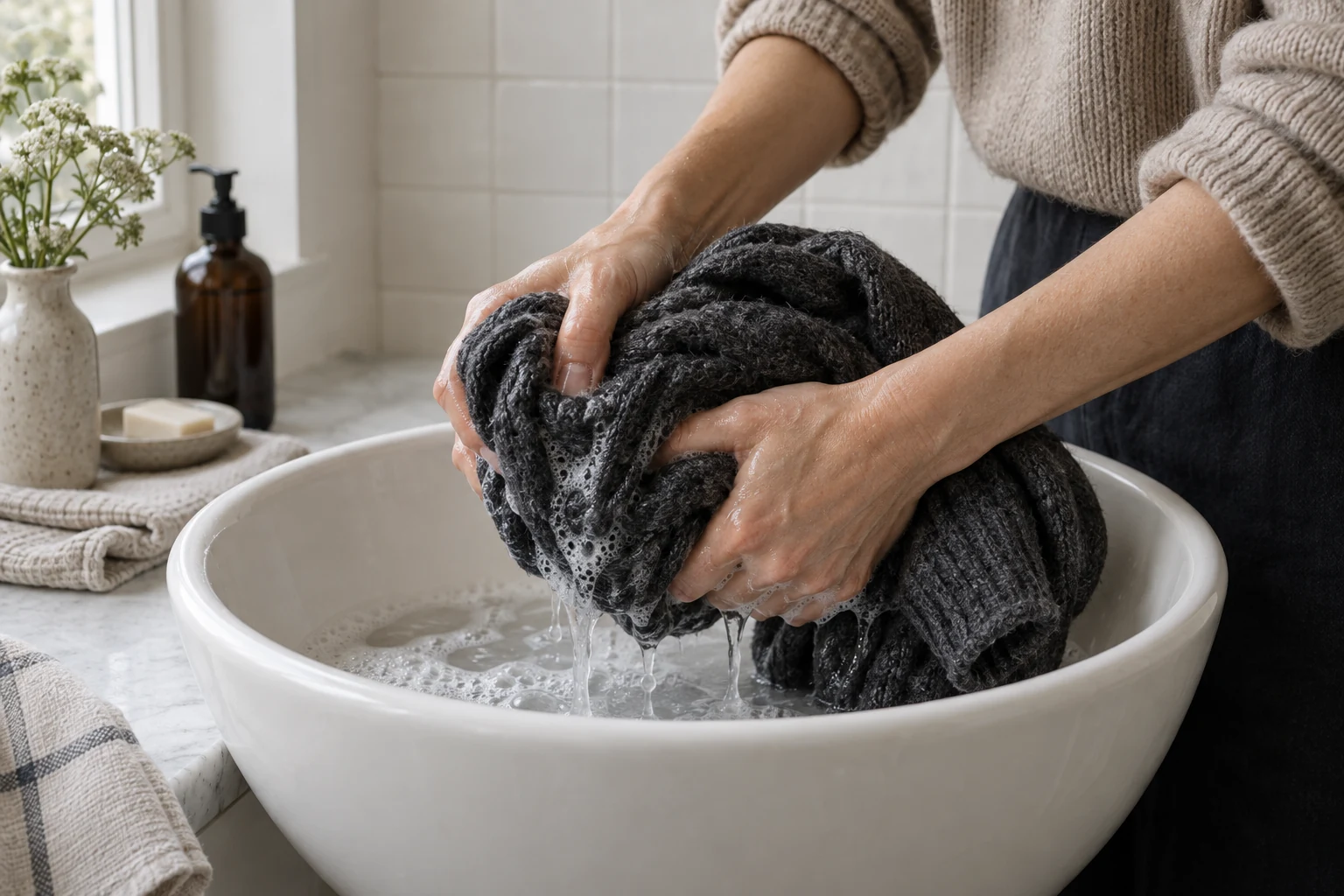
Washing and ironing
How to wash a wool sweater without shrinking it
How to wash a wool sweater by hand or in the machine: read the label, pick a wool detergent, keep water cool and calm, then dry it flat so it keeps its shape.
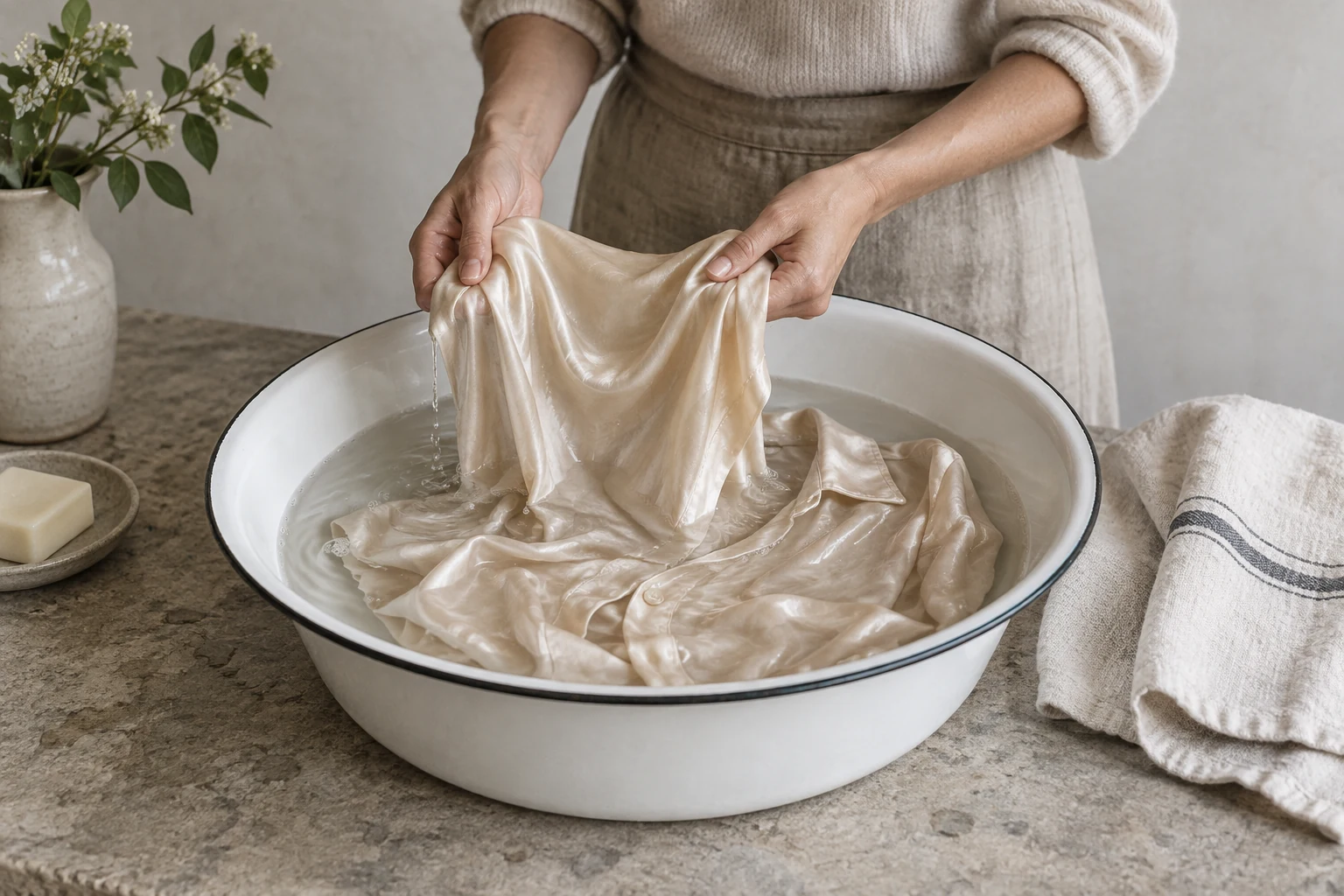
Washing and ironing
How to wash silk at home
How to wash silk safely: when the label says a cleaner is the better choice, how to test for color bleeding, and how to hand wash, dry and iron silk at home.
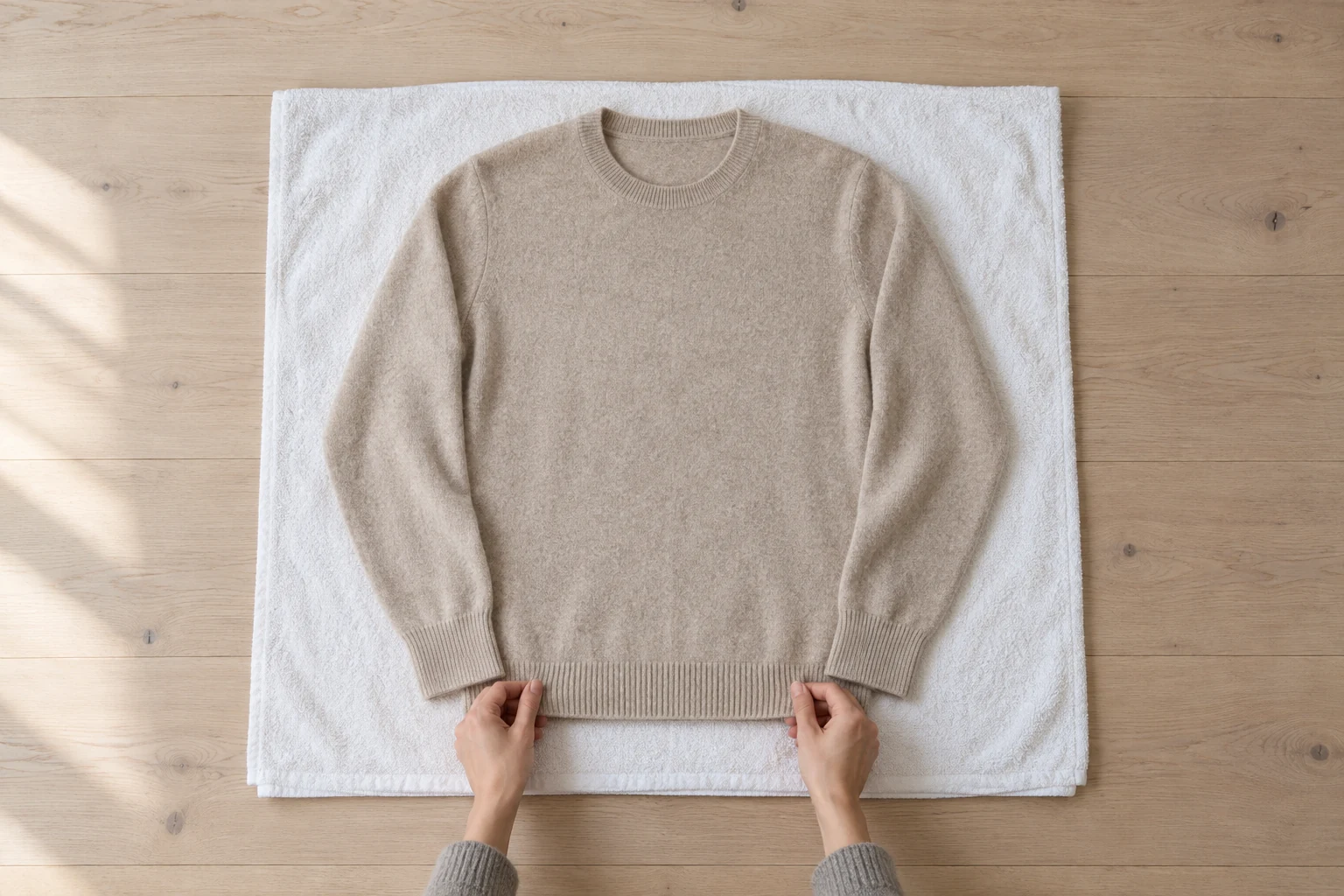
Washing and ironing
How to wash cashmere by hand or machine
How to wash a cashmere sweater or scarf at home: read the label, hand wash in lukewarm water with a wool detergent, press out the water and dry it flat.
Washing and ironing
Laundry symbols explained: how to read a care label
What laundry symbols mean, in plain words: the wash tub, triangle, square, iron and circle, plus the dots, bars and crosses that change each instruction.
Closet and packing
How to pack a suitcase without wrinkles
How to pack a suitcase step by step: plan outfits first, roll or fold each piece, layer the bag, use packing cubes well, and follow carry on rules.