How to do a French tuck
In this guide
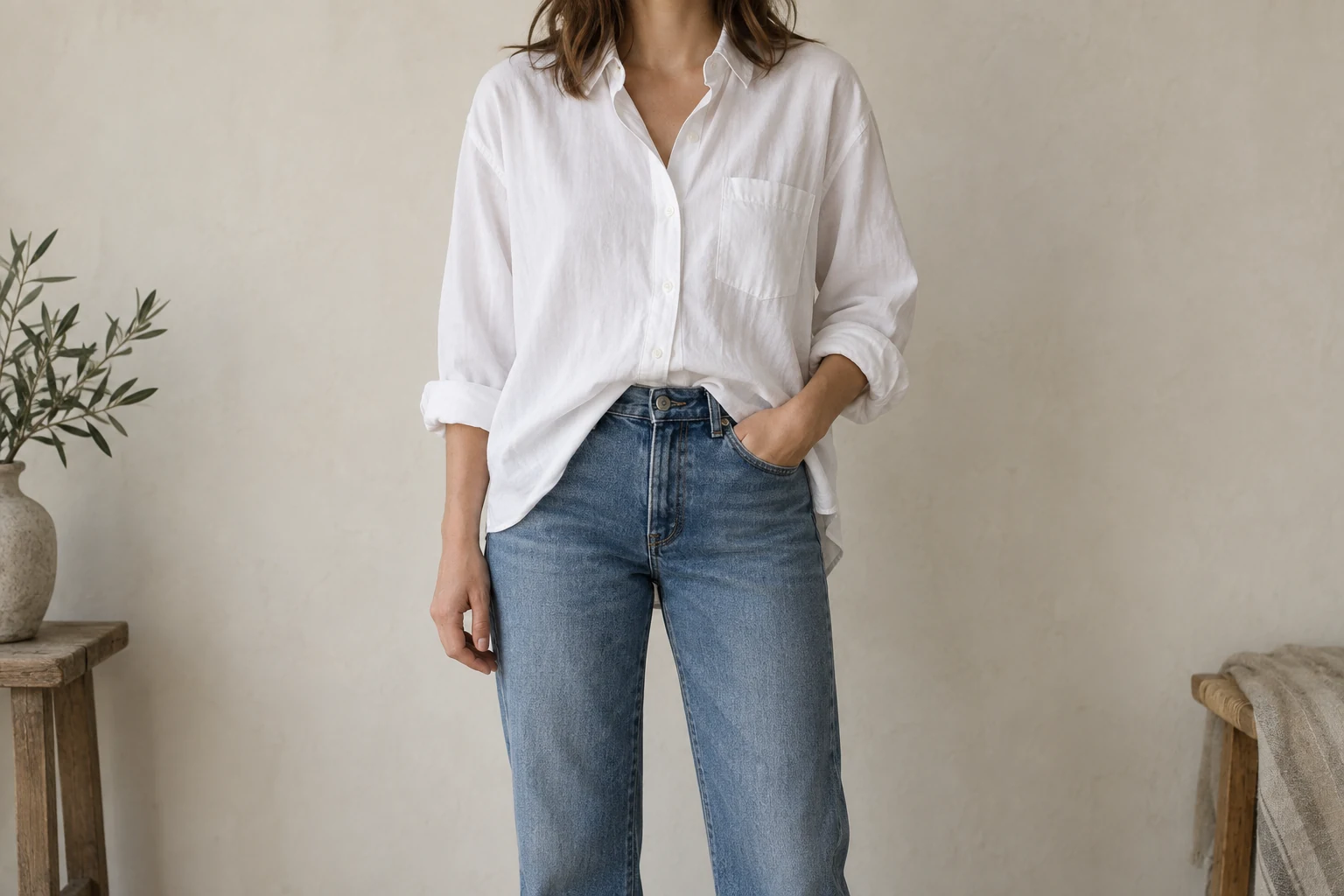
A soft, roomy shirt and a pair of high waisted jeans should be the easiest outfit in the closet. Worn out, the shirt hides the jeans' waist and the whole outfit reads as one long block. Tucked all the way in, it balloons over the waistband and feels too formal for a Saturday. The French tuck sits between those two: only the front goes in, so your waist shows while the rest of the shirt stays loose and comfortable.
The move is simple, but the result depends on the top, the waistline and how much fabric you tuck. This guide walks through the technique step by step, explains which garments it suits and which it does not, and covers the variations. Most of the questions about it come from women, yet nothing here is gendered: the French tuck became widely known through a man on television, and it works the same way on anyone's jeans.
What a French tuck is and why it works
A French tuck is a partial tuck: the center of the front hem goes into the waistband and everything else hangs free. You will also see it called a front tuck or half tuck, although half tuck sometimes means tucking one whole side. The style was made famous by Tan France, the fashion expert on Netflix's Queer Eye, who used it on many of the men he styled. His reasoning, as the menswear site Put This On reports it, is balance: a glimpse of the waist gives a loose top some shape. In practice, marking the waist also shows where your legs begin, so a roomy shirt no longer turns the body into one straight column.
Compare it with the two alternatives. A full tuck shows the whole waistline and can feel dressy or snug, and it asks the top to fit fairly closely. An untucked shirt keeps comfort but hides the waist and shortens the leg line. The French tuck lets you keep the ease of an untucked top while giving the outfit a waist. It is a styling choice, not a rule, and some people find it looks fussy in motion. Try it in a mirror, then walk and sit before deciding.
| Style | The waist | Best with |
|---|---|---|
| Full tuck | Shows the whole waistline | Fairly close tops, suits, blazers and ties |
| French tuck | Shows a glimpse at the center front | Loose, thin tops with mid or high rise bottoms |
| Untucked | Hidden, and the leg line looks shorter | Wrap tops and tops with a finished hem band |
Choose a top and waistline that suit the tuck
The best tops are loose and made of fabric thin enough to fold without a lump: a relaxed T shirt, a soft button down, a drapey blouse, a fine knit sweater. Length matters too. The top should reach at least a few inches below your waistband so there is enough fabric to tuck and still hang in a curve. A cropped top has nothing to spare, and a very long tunic leaves a lot of fabric flapping around your thighs. A thick, chunky sweater can work if you tuck only a small amount just behind a belt buckle, but a large tuck will bulge.
The bottoms need a defined waistband, ideally with a button and belt loops, sitting at mid or high rise. Straight leg, wide leg and relaxed jeans all work (our tour of jeans cuts explains the differences), as do tailored trousers and skirts with a waistband. Low rise jeans put the tuck at the hips, where it looks accidental, and soft elastic waists often let the fabric slip back out. If you like the silhouette with wide leg trousers, our guide to styling wide leg trousers shows how different tucks change that shape.
How to do a French tuck, step by step
Stand in front of a full length mirror in the shoes you plan to wear. Shoes change your posture and where the waistband sits, so they change how the tuck looks.
Fasten your bottoms first
Button and zip your jeans or trousers with the top hanging over them. Unlike a full tuck, you do not need to open the waistband, because only a small amount of fabric goes in.
Find the center front
Locate the middle of the hem, which on a button down is the placket. Undoing the lowest button or two there first reduces bulk and lets the fabric spread more naturally.
Tuck about an inch
Push roughly an inch of the front hem down behind the button of your waistband, using a thumb or two fingers. Miik, a Canadian clothing maker, puts it plainly: do not tuck too much.
CheckYou should see a short, soft curve form across the front.
Pull a little back out
Lift the fabric just above the waistband so it blouses over slightly. This softens the line and gives you room to move, so the tuck does not pull loose the first time you bend.
Let the sides and back fall
Run your hands down the sides so the untucked fabric hangs straight. Turn to check your profile: the top should angle gently from the tucked center toward the loose sides, not hitch up on one hip.
Variations: side tuck, belt tuck and half tuck
Moving the tuck slightly off center creates an asymmetric line that many people find more relaxed. On a button down, one simple version is to tuck just one front panel near the placket and leave the other out. If you are wearing a belt you want to show, tuck on both sides of the buckle so the fabric frames it; this is also the easiest way to tuck a heavier sweater, because the belt holds the fabric rather than the waistband alone.
A half tuck in the broader sense, with one whole side tucked and the other loose, is more casual still and suits big T shirts and soft flannel. For a more polished look, the full tuck is usually the better choice, and our guide on how to tuck in a shirt covers the standard and military methods. Whichever version you use, the amount of fabric decides the look. A small tuck reads relaxed; a deep one starts to pull the whole top sideways.
When to skip the French tuck
The French tuck is casual by nature, which makes it less suited to settings where a finished look is expected. With a suit, a formal blazer or a tie, a full tuck is the convention in most American workplaces and at formal events, because a loose shirttail below a jacket hem looks unplanned. In an office with a relaxed dress code a front tuck can be fine; our guide to business casual for women explains where most offices draw that line.
Skip it too when the garment works against it. Close fitting tops have no extra fabric to create the soft curve, so they simply look half undone. Very slippery fabrics such as some satins slide out within an hour, and stiff, heavy shirting creates a hard fold. Bodysuits, wrap tops and tops with a finished hem band are meant to be worn as they are. If you find yourself redoing the tuck every time you sit down, the combination of top and waistband is wrong, not your technique.
Keep the tuck in place
Most French tucks slip because there is too little fabric inside the waistband to hold it, or because the waistband is loose. Tucking slightly deeper, perhaps an inch and a half instead of one, usually solves the first problem without changing the look much. Tucking the fabric behind a belt rather than just the waistband adds grip. Cotton and linen tend to stay put better than silky fabrics, so reach for them on a long day.
Check it once after you have sat down for the first time, since sitting moves the waistband and often shifts the fabric. A quick push back behind the button fixes it. Tucks leave creases, so hang the shirt up afterward; our guide on getting wrinkles out without an iron helps if the fold line remains the next morning.
Common mistakes
Tucking too much fabric
A deep tuck pulls the whole top forward and creates a pouch at the waistband. Start with about an inch and add more only if it keeps slipping out.
Pulling the fabric flat
If the front above the waistband is stretched tight, the tuck looks stiff and pops out when you move. Blouse the fabric slightly over the waistband so it drapes.
Using a top that is too short
When a top barely reaches the waistband, tucking the front lifts the whole hem and exposes your midriff at the sides. Choose longer tops for this technique.
Questions people ask
Can men do a French tuck?
Yes. The French tuck was popularized on men, and it works the same way with a relaxed shirt, such as an oxford cloth button down, and jeans or chinos. In settings that expect a tucked shirt, such as with a suit or tie, a full tuck is still the convention.
Is the French tuck outdated?
Trends come and go, and some stylists now prefer a full tuck or no tuck at all with certain cuts. The reason the French tuck works has not changed, though: it shows the waist while keeping a loose top relaxed. If it balances your outfit in the mirror, it is not out of style; if it looks fussy on you, a full tuck or a shorter top that sits at the waistband does the same job.
What is the difference between a French tuck and a half tuck?
The terms are often used interchangeably for tucking just the front. Some people use half tuck for tucking one whole side and leaving the other out, which looks more casual and asymmetric.
Does a French tuck work with a sweater?
It works with fine knits that fold easily. With a chunky sweater, tuck only a small section just behind a belt buckle, or leave it out and let the sweater's length do the work.
What body types does a French tuck flatter?
It can work on almost any body, because it simply marks where the waistband sits and lets the rest of the top fall loose. People with a shorter torso often prefer a smaller tuck so the top does not look cropped, and anyone who dislikes attention on the waist can tuck just behind the button and blouse the fabric generously. Our guide to dressing for your body shape covers proportion more broadly, without any need to hide or fix anything.
Sources and further reading
References used for this guide. Each opens the original page in a new tab.
Keep reading
Everyday style
How to tuck in a shirt so it stays put
How to tuck in a shirt so it lies flat and stays in all day: the standard tuck, the military tuck, shirt stays, and when to leave a shirt untucked.
Everyday style
How to style wide leg pants: tops, shoes and hems
How to style wide leg pants with the right tops, shoes and hem length, for work and weekends, with practical fixes for pants that drag, swamp you or feel sloppy.
Dress codes
Business casual for women: what to wear to work
What business casual means for women at work: trousers, skirts, dresses, knitwear and shoes, with outfit formulas, what to avoid and how to read your office.
Everyday style
How to find your personal style, starting with your closet
How to find your personal style by studying the clothes you already wear most: what to notice, how to keep simple notes, and when a style quiz actually helps.