How to clean a diamond ring at home
In this guide
A diamond that sparkled at the counter can look cloudy within weeks of daily wear. Nothing is wrong with the stone. Diamonds attract oil, so hand lotion, soap, skin oils and fine dust build a film on the back of the stone, where light should enter and bounce back out, and the ring slowly goes dull.
Learning how to clean a diamond ring at home is simple and takes about half an hour, most of it waiting. The method below follows the gentle routine the Gemological Institute of America (GIA) gives for engagement rings, warm water, mild soap and a soft toothbrush, with notes on which popular shortcuts to skip, when the ring needs a jeweler instead, and how to check that the stone is still secure while you have it in your hand.
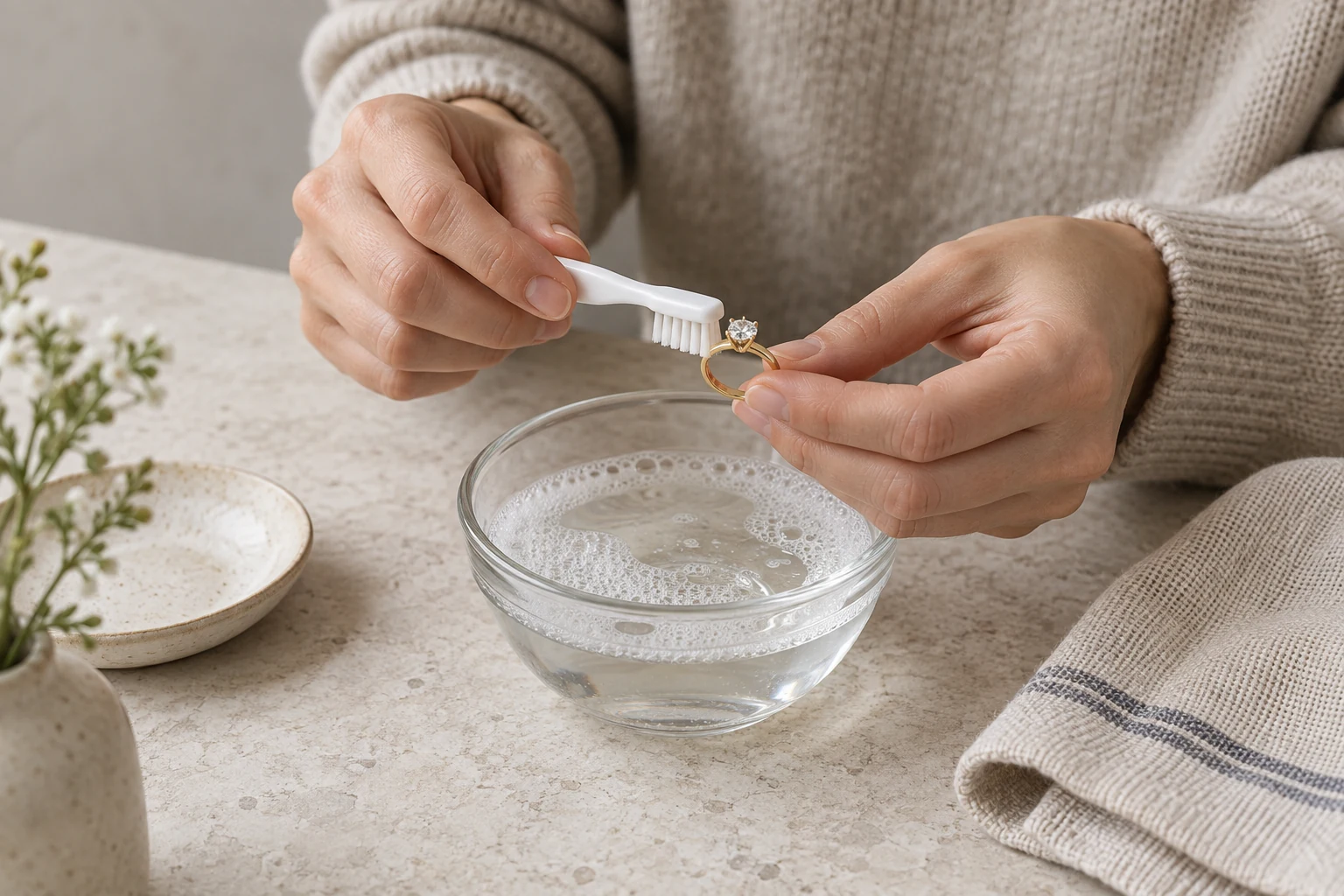
Why a diamond ring loses its sparkle
A diamond's brilliance comes from light entering the top, reflecting off the angled facets on the underside and returning to your eye. GIA notes that even the touch of a finger can leave enough oil to dull that effect. Once the back of the stone is coated, light leaks out instead of bouncing back, and the diamond looks gray or glassy rather than bright.
The dirt collects where you cannot easily see it: under the stone, between the prongs and in the gallery, the open metalwork beneath the setting. That is why wiping the top with a cloth helps only a little. The cleaning has to reach behind the diamond, which means soaking to loosen the film and a soft brush to lift it out.
How to clean a diamond ring at home
You need a small bowl, warm water, a mild dish soap without moisturizers, a new soft toothbrush kept only for jewelry, and a lint free cloth. GIA names warm water, mild soap and a soft toothbrush as a safe way to clean a diamond, and a plain dish soap is a good degreaser for the oily film. Work at a table, not at the sink; GIA warns against cleaning jewelry near an open drain, and if you must use the sink, close the plug or cover the drain first.
Mix the solution
Fill the bowl with warm water, comfortable to your hand, and add a few drops of mild dish soap. Stir until you see a light foam. Hot or boiling water is unnecessary and risky for other stones in the setting.
Soak the ring
Place the ring in the bowl for 20 to 30 minutes. The soap loosens the oil film and lotion residue so the brush does not have to work hard.
Brush gently, especially underneath
Lift the ring out and brush with the soft toothbrush, working around the prongs and up under the diamond from the back and sides. Dip the brush in the solution as you go.
CheckYou should see cloudy residue come away from the gallery.
Rinse in clean water
Rinse the ring in a second bowl of clean warm water, or under a gentle tap with the drain firmly closed. Soap left behind leaves its own film.
Dry and polish
Pat the ring dry with a lint free cloth or let it air dry on a soft towel, then polish the metal lightly. Paper towels and tissues can leave fibers caught in the prongs.
What not to clean your diamond with
GIA is clear that chlorine, as in household bleach, and abrasives such as scouring powders or toothpaste should never be used on diamonds in jewelry. The diamond itself is hard, but the metal is not: chlorine can attack gold alloys and weaken prongs, and abrasives scratch the polished metal and leave grit in the setting. Baking soda paste is abrasive for the same reason, so it has no advantage over soap. Vinegar and hydrogen peroxide are not needed for the diamond, and they can harm pearls, opals, emeralds and other softer or treated stones that often share a ring with a diamond.
Boiling water and quick temperature changes are another popular shortcut to skip. Diamonds cope with heat, but some are clarity enhanced, and fracture filled stones in particular can be damaged by heat and by ultrasonic cleaning. Those stones need the gentle routine only: a lint free cloth, or warm water, mild soap and a soft brush. Your grading report says whether a stone is treated. If you do not know, treat the ring as if it were and stay with the gentle method. Colored gems and pearls in the same piece set the rules for the whole ring; our guide to cleaning pearls explains why they need even gentler handling.
| Method | Verdict | Why |
|---|---|---|
| Warm water, mild dish soap, soft toothbrush | Safe | Degreases the oily film without harming metal or stones |
| Chlorine bleach | Never | Attacks gold alloys and weakens prongs |
| Toothpaste, scouring powder, baking soda | Never | Abrasive, scratches metal and leaves grit in the setting |
| Vinegar or hydrogen peroxide | Skip | Unneeded, and can harm pearls, opals and emeralds |
| Boiling water or ultrasonic at home | Only for untreated stones in sound settings | Can damage fracture filled stones or shake a loose stone free |
What jewelers use, and when to use one
Jewelers usually clean with an ultrasonic cleaner, which sends high frequency vibrations through a solution to shake dirt loose, and a steam cleaner, which blasts residue away with pressurized steam. GIA notes that ultrasonic cleaners are safe for untreated diamonds but can damage treated ones, and vibration can shake a stone loose from a worn setting, so it is best done by a jeweler who can check the ring first. The same caution applies to home ultrasonic machines: they are not a problem for a solid, untreated diamond in a sound setting, but they can shake a loose stone free.
A professional clean once or twice a year also brings the ring onto a bench where someone looks at it under magnification. There, a thin prong, a lifted claw or a worn band shows up before a stone is lost. If you want the shine that a jeweler gives, the difference is often polishing of the metal as well as cleaning of the stone.
Check the setting while the ring is clean
A clean ring is the best moment to inspect it. Hold it close to your ear and tap it gently with a fingernail, or press the stone lightly with a fingertip: if it moves, clicks or rattles, stop wearing it and take it to a jeweler. GIA suggests having prongs checked about every six months and looking for gaps between the stone and the metal with a 10x loupe if you have one. Run a cloth over the prongs; a snag means a claw is lifting.
Check the fit, too. Fingers shrink in the cold, and a ring that has become loose can slide off without you noticing. Our guide to measuring ring size explains how to check whether a resize makes sense.
How to keep your diamond ring sparkling longer
GIA suggests cleaning a ring you wear every day about once a week, which keeps the film from building up. Between cleans, handle the ring by the band, not the stone, and put it on after lotion, hand cream, sunscreen and hair products have dried, not before. Take it off for gardening, the gym, cleaning with chemicals and swimming in chlorinated pools, where both knocks and chemicals do their damage.
Store it on its own in a soft pouch or a lined compartment, since diamonds scratch other jewelry and other diamonds. Our guide to storing jewelry shows how to keep pieces apart. If you also wear silver pieces, keep them in a separate place and use the right method for each; our guide to cleaning silver jewelry covers tarnish, which diamonds never develop.
Common mistakes
Using toothpaste
Toothpaste is an abrasive. It scratches gold and platinum and leaves grit in the setting. Soap and a soft brush clean better.
Cleaning over an open drain
A soapy ring slips easily. Clean over a bowl on a table, or close the drain before you start.
Wearing it during chores
Bleach, household cleaners and knocks against hard surfaces damage the setting faster than anything else. Take the ring off first.
Questions people ask
Does dish soap clean a diamond ring?
Yes. A few drops of mild dish soap in warm water fits GIA's advice of warm water and mild soap, and it cuts the oily film that dulls a diamond. Choose a plain formula without moisturizers or strong dyes, and rinse well so no soap is left behind.
Can I clean a diamond ring with baking soda?
It is better not to. Baking soda is mildly abrasive and can dull polished gold or platinum and lodge in the setting. It does not clean the diamond better than soap, so the risk has no payoff.
Can I use window cleaner on a diamond ring?
GIA mentions an overnight soak in an ammonia based household cleaner for plain diamond jewelry, and some jewelers use ammonia solutions. It is only suitable for a plain diamond ring in gold or platinum, never for pearls or soft stones, and never mixed with bleach. Mild dish soap does the job with far less risk.
How often should I clean my diamond ring?
A quick soak and brush once a week keeps an everyday ring bright, and a thorough clean and inspection by a jeweler once or twice a year keeps it secure. Rings worn only occasionally need cleaning after wear, before they go back in storage.
Can I clean a diamond ring with other stones the same way?
The soap and soft brush method is gentle enough for most sapphires and rubies too. Pearls, opals, emeralds and turquoise are more delicate and should not soak; wipe them with a damp soft cloth and ask your jeweler about the rest.
Sources and further reading
References used for this guide. Each opens the original page in a new tab.
Keep reading
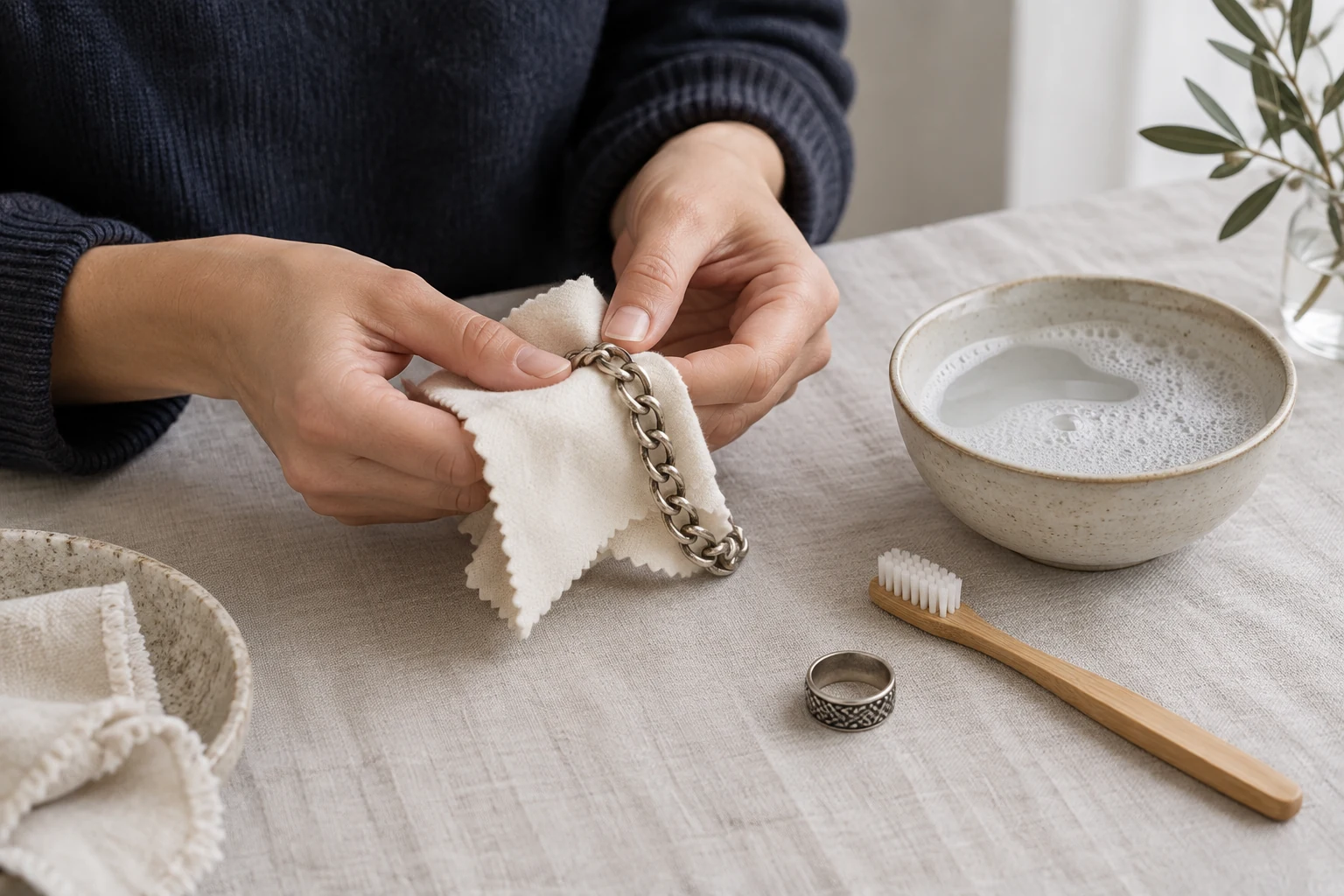
Shoes and jewelry
How to clean silver jewelry at home, gently
How to clean silver jewelry at home, gentlest method first, with care for pearls, stones and plated pieces, a short gold section, and simple ways to prevent tarnish.
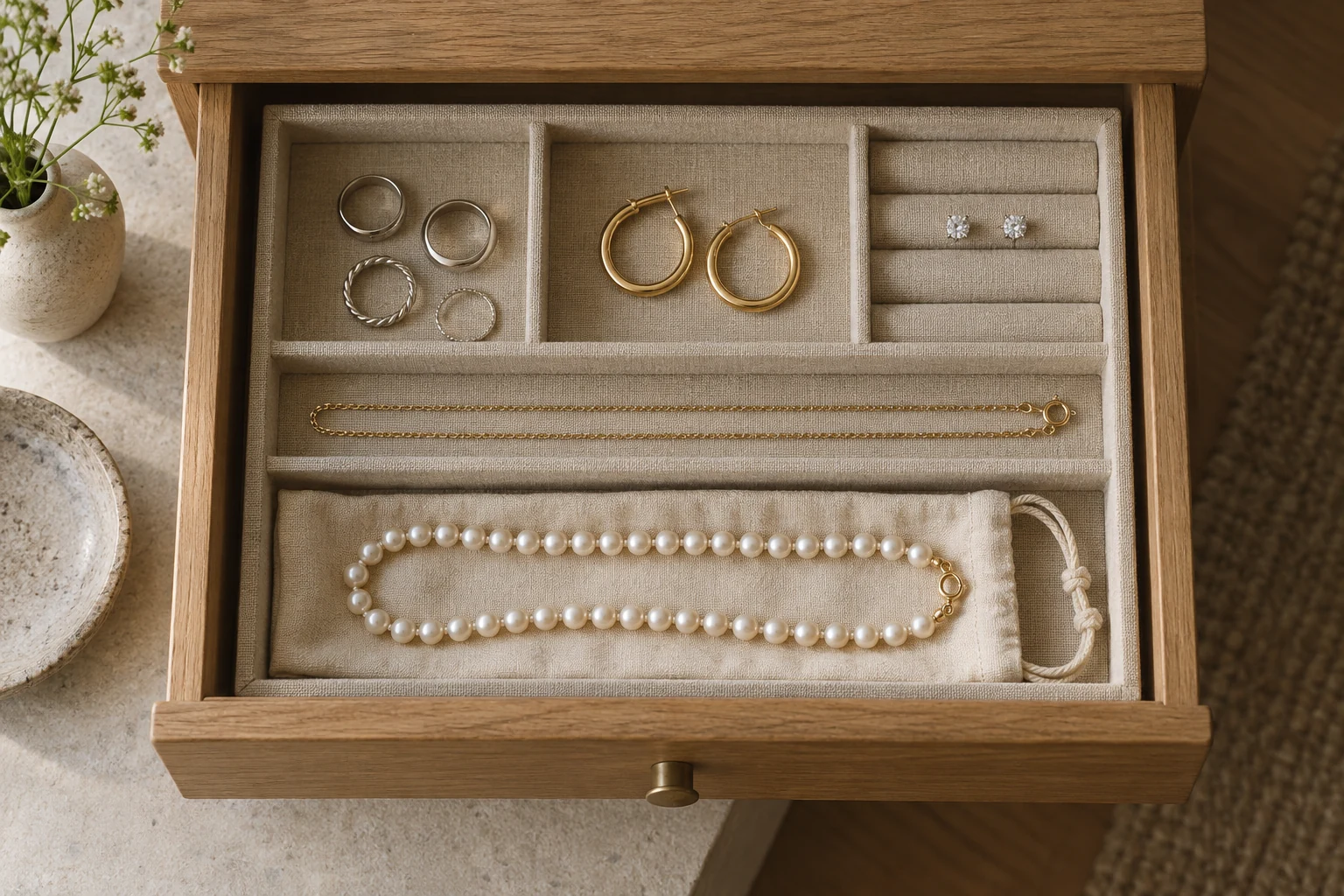
Closet and packing
How to store jewelry without tangles or tarnish
How to store jewelry at home and on the road: keep silver from tarnishing, pearls from drying out, chains from tangling and diamonds from scratching everything else.
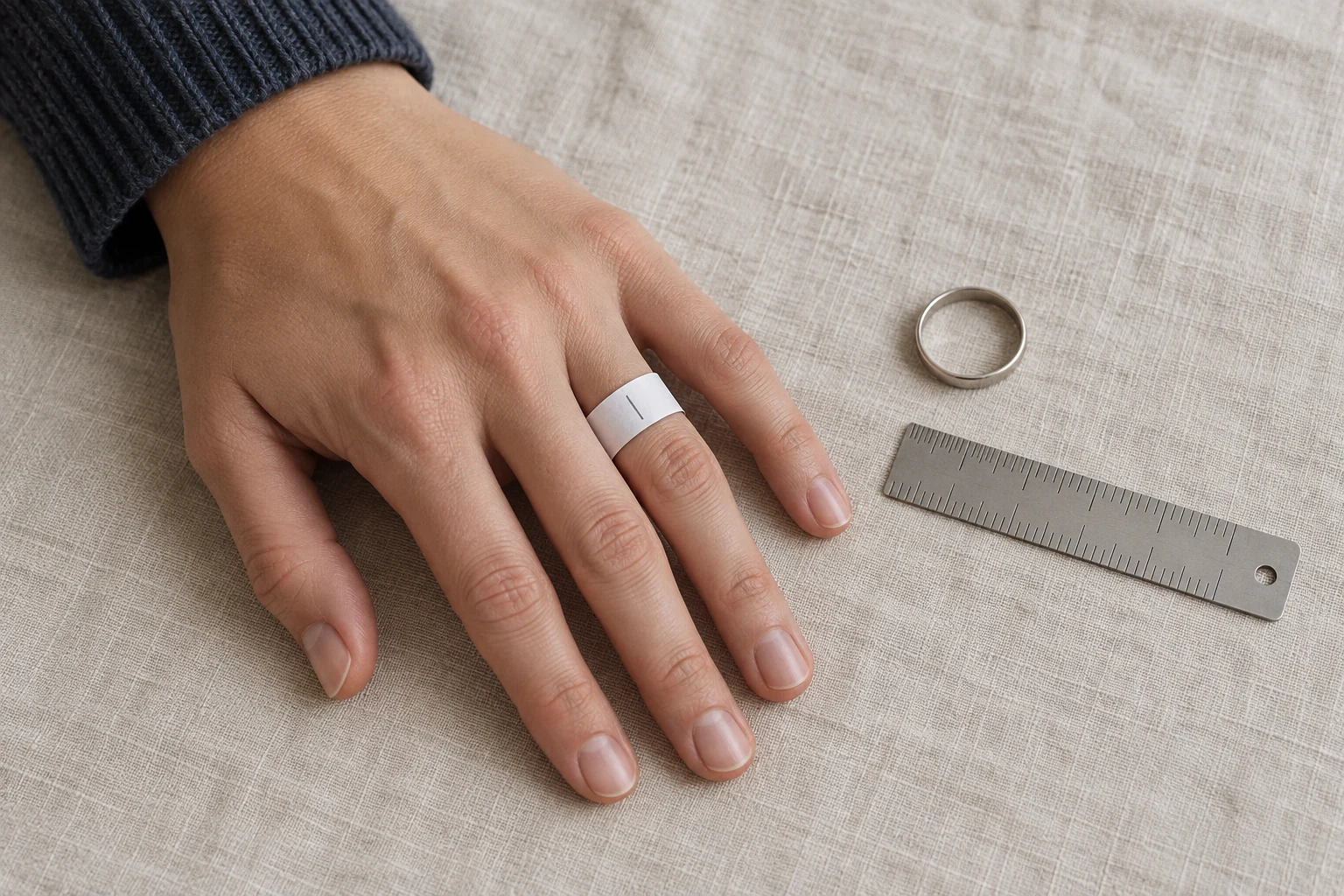
Sizing
How to measure ring size at home
Find your ring size at home with paper, string or a ring you already own, read a ring size chart in millimeters, and allow for knuckles, wide bands and warm hands.
Shoes and jewelry
How to clean pearls safely at home
How to clean pearls without harming the luster: a wipe after wearing, a gentle soapy clean, drying a strand flat, and the cleaners that can ruin pearls.
Everyday style
How to layer necklaces without tangling
How to layer necklaces so they sit apart and stay untangled: choosing lengths, spacing them 2 inches apart, mixing gold and silver, and using layering clasps.