Festival outfits that look good from noon to 2 a.m.
In this guide
You have the wristband, the group chat has a shared album already, and now you need festival outfits for two or three days that look great in photos at 4 p.m. and still make sense at 1 a.m. when the wind picks up and you have walked ten miles. Most outfit inspiration only solves the first part.
This guide solves both. It starts with what to check about your festival, then gives a simple formula, full outfits for women and men, looks for EDM and rave festivals, and the shoes, bags and layers that decide whether you enjoy the headliner. It ends with how to photograph your look and what to leave at home.
Check the site, the forecast and the rules first
Every festival outfit is shaped by three things you can look up in five minutes. The first is the ground: desert polo fields are dusty, grass fields turn to mud after rain, and city parks mean concrete and long lines. The second is the forecast for day and night, because open sites lose heat quickly after sunset. Coachella, held in April in the California desert, tells visitors to plan for daytime heat and cold nights, and the same pattern holds for most summer festivals away from the city.
The third is the rules, which are stricter than people expect. Coachella's published list, for example, limits bags to 18 by 13 by 8.5 inches (46 by 33 by 22 cm), allows sunscreen only in non aerosol form, allows hats, sunglasses and light parasols, and bans umbrellas, glass and metal bottles and professional cameras. Other festivals require clear bags or ban certain backpacks. Read your festival's page before you plan the outfit, since a bag you cannot bring in changes the whole look.
A simple formula for music festival outfits
Build every day from five parts. A breathable base in cotton, linen or a light technical knit, cut loose rather than tight, because the National Weather Service advises lightweight, loose, light colored clothing in heat so air can move and sunlight is reflected. One statement piece for the photos: a crochet top, a sheer shirt, a printed short sleeve shirt, a metallic skirt, a vintage band tee. Closed shoes you have already walked in. A small bag worn across the body. And a night layer, such as a denim jacket, a zip fleece or a light overshirt, tied at the waist or folded in the bag.
Sun protection belongs in the outfit rather than on top of it. A bucket hat, cowboy hat or cap, sunglasses and loose sleeves you can pull over your shoulders do more than sunscreen alone over a long afternoon. Sunburn also makes it harder for your body to cool itself, and heat illness at festivals is real, so plan the outfit around staying cool, then make it look good. Our guide to dressing for 90 degree days goes deeper on fabrics for heat.
Festival outfits for women
A desert boho look still works when it is lighter than the Pinterest version: a white cotton eyelet top with a tiered midi skirt in rust or olive, a woven belt, a straw cowboy hat and broken in ankle boots, with a denim jacket tied at the waist for the night. For a more current take on boho style, swap the skirt for loose linen trousers and add a crochet vest over a bralette or fitted tank, plus silver rings and a small beaded bag.
If you prefer something sharper, try a Y2K mood: a fitted baby tee or a halter in a metallic or sheer mesh fabric, low slung cargo pants or a denim mini with bike shorts underneath, chunky sneakers and small tinted sunglasses. A black version, a sheer long sleeve over a black bralette with wide black trousers and platform boots, photographs well against bright stages at night. For plus size festival outfits, the same ideas work best in fabrics that do not trap heat: a loose matching linen set, a wrap dress in cotton voile over bike shorts to prevent chafing, or wide trousers with a cropped mesh shirt over a supportive bra top.
Festival outfits for men
Festival outfits for men are easiest with one good shirt. A boxy short sleeve shirt in a bold print or a sheer knit, worn open over a white tank, with relaxed shorts that end just above the knee and chunky sneakers, is the dependable daytime look. Add a bucket hat and small sunglasses, and carry a light overshirt or zip fleece for the evening. If shorts are not your thing, loose linen or ripstop trousers keep you cooler than jeans and handle dust better.
For a more styled version, try a vintage band tee or a cropped knit polo with wide cargo pants in olive or khaki, a canvas belt, silver chains and trail runners, which crosses into gorpcore and suits muddy fields. A western mood also works well at desert and country festivals: a pearl snap shirt with the sleeves rolled, straight jeans and worn in boots. Check our guide to wearing cowboy boots before you plan eight hours on your feet in a new pair.
EDM and rave festival outfits
EDM festival outfits and rave festival outfits trade the day look for movement and light. You will dance for hours in a hot crowd, so choose stretch and mesh over heavy denim: a mesh top over a sports bra with high waisted shorts or flared stretch pants, or for guys, a sleeveless mesh or sheer tank with loose track pants or nylon shorts. Reflective fabric, iridescent finishes, a few glow pieces and bright colors look great under stage lights and flashes, while matte black reads as cool and disappears.
Keep everything secure. A small crossbody or a belt bag worn in front keeps your phone safe in a crowd, and closed shoes protect your toes from being stepped on. Bring earplugs, since sound levels near big stages can damage hearing over a long day; our guide to what to wear to a concert covers hearing protection. For EDM festival outfits for guys, the most common misstep is overheating in a hoodie; carry it in the bag instead, and put it on after the last set.
Shoes, bags and the night layer
Shoes decide your festival. Wear closed shoes you have already walked in for a full day: chunky sneakers, trail runners, broken in ankle or western boots, or combat boots for mud. New shoes, thin sandals and anything with a heel are the most common reasons people leave early. Add cushioned socks, and pack a spare pair, since wet or dusty socks cause blisters fast. If rain is forecast, look at our guide to dressing for rain and choose boots you do not mind ruining.
Your bag should hold water, sunscreen, a charger, cards, earplugs and a bandana or face covering for dust, and nothing more, within your festival's size rules. The night layer is the other half of the outfit: a denim jacket, a leather jacket, a zip fleece or a light puffer that you would be happy to be photographed in. Pick it on the first day, then treat it as part of every look rather than something you put on in defeat at midnight.
| Festival setting | Daytime outfit | Shoes | Night layer |
|---|---|---|---|
| Desert | Loose cotton or linen, hat, sunglasses, bandana for dust | Broken in boots or chunky sneakers | Denim jacket or zip fleece |
| Grass field | Light layers you do not mind getting muddy | Combat boots or trail runners | Fleece or light puffer |
| City park | Sharper looks, printed shirts, skirts or cargos | Clean sneakers you have walked in | Overshirt or leather jacket |
| EDM or rave | Mesh, stretch, reflective or glow pieces | Closed sneakers with cushioned socks | Hoodie carried in the bag |
| Rain forecast | Quick drying synthetics, no suede | Waterproof boots | Hooded rain shell |
How to photograph your festival outfit, and what to leave at home
The best festival photos happen in the hour before sunset, when the light is warm and low and the crowd is thinner. Stand with the sun behind you or to one side, let the photographer crouch slightly so your legs look long, and take a walking shot, one full body photo and one close shot of the detail you are proudest of, such as a crochet top, jewelry or boots. Dust and sweat build up during the day, so take the outfit photos early and the candid ones later.
A few things are better left at home. Sacred or ceremonial items from cultures that are not yours, such as feathered headdresses, turn an outfit into a costume at best and hurt people at worst. So do glitter and fabrics that shed into the grass and water. And anything you would be sad to lose or ruin, from a favorite silk shirt to real gold, is safer at home; wear pieces that can take sweat, dust and a spilled drink, and see our guide to getting sunscreen out of clothes for the laundry after.
Common mistakes
Wearing brand new shoes
Even comfortable sneakers rub in new places after ten miles on uneven ground. Wear your festival shoes for a few long days beforehand, or choose a pair you already trust.
Planning only for the afternoon
Open sites cool fast after sunset. An outfit without a night layer ends with you buying an overpriced merch hoodie, so choose a jacket that suits the look and carry it.
Ignoring the bag rules
Festivals set limits on bag size, type and contents. A bag that is too big may not get through the gate, so check the official list before you build the outfit around it.
Questions people ask
What should I wear to a festival if I get cold easily?
Dress for the afternoon in light layers and add warmth from the outside in as the sun goes down: a long sleeve over your top, then a fleece or jacket, then a beanie. Wide trousers in linen or ripstop are cooler than jeans by day and warmer than shorts at night.
What do people in their 40s and 50s wear to festivals?
The same things that work at any age: breathable fabrics, one piece you love, comfortable closed shoes, a hat and a good night layer. There is no age limit on a crochet top or a printed shirt; choose what you enjoy wearing for ten hours.
What should I wear to a renaissance festival?
Renaissance fairs are a different kind of festival where many guests dress in costume, often a loose linen shirt, a laced bodice or vest, a long skirt or breeches and boots. You can also go in ordinary clothes with one period touch; either way, wear comfortable shoes, because most fairs mean dirt paths and a lot of walking.
Can I wear sandals to a music festival?
Only if the site is small and paved and you are staying in a calm area. In crowds, dust and mud, open sandals leave your toes exposed and wear out quickly, so closed sneakers or boots are the safer choice.
Sources and further reading
References used for this guide. Each opens the original page in a new tab.
Keep reading
Dress codes
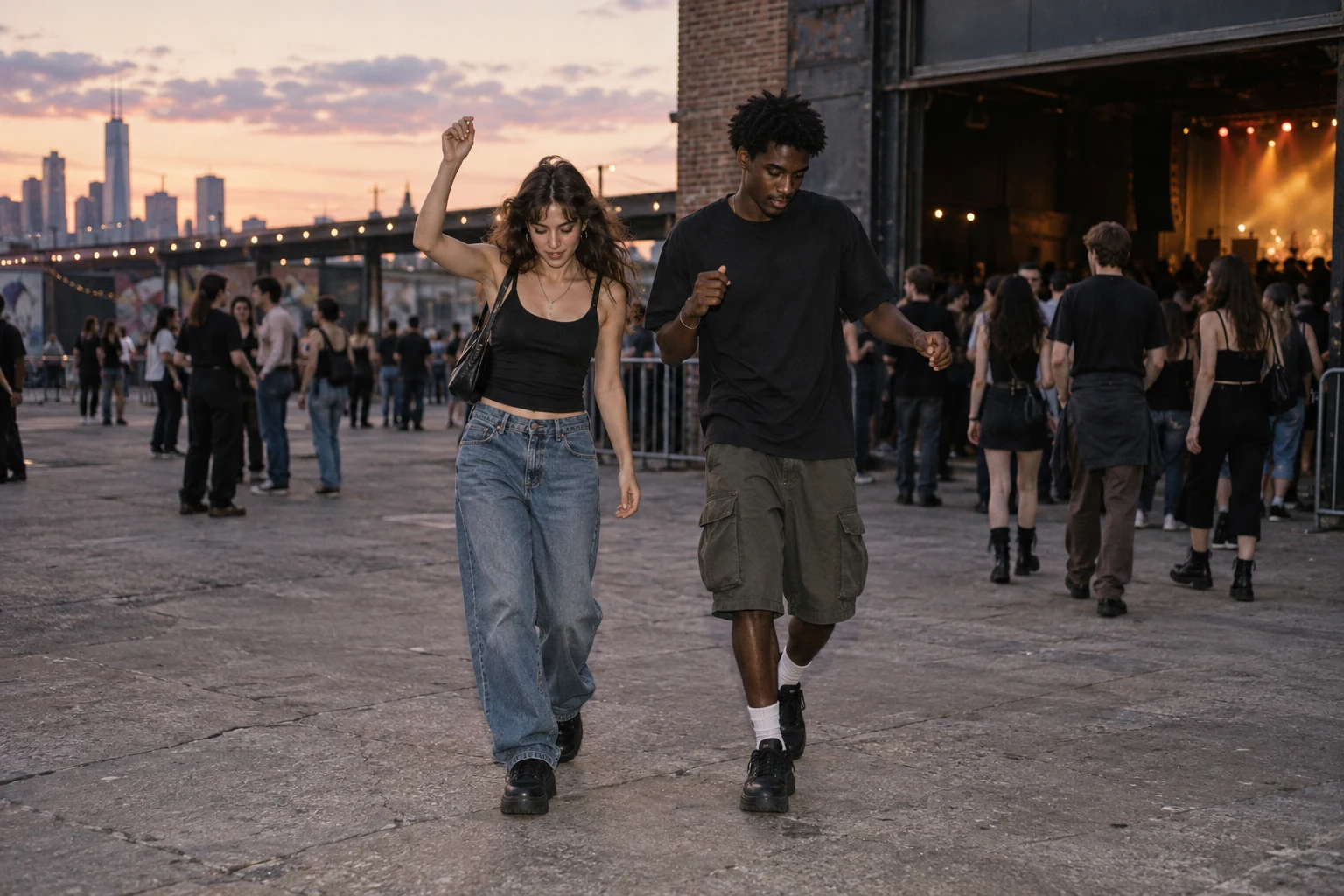
What to wear to a concert
Concerts have no dress code, but hours standing, crowd heat and bag rules do. What to wear to a stadium, club, lawn or symphony concert, for any age.
Styles
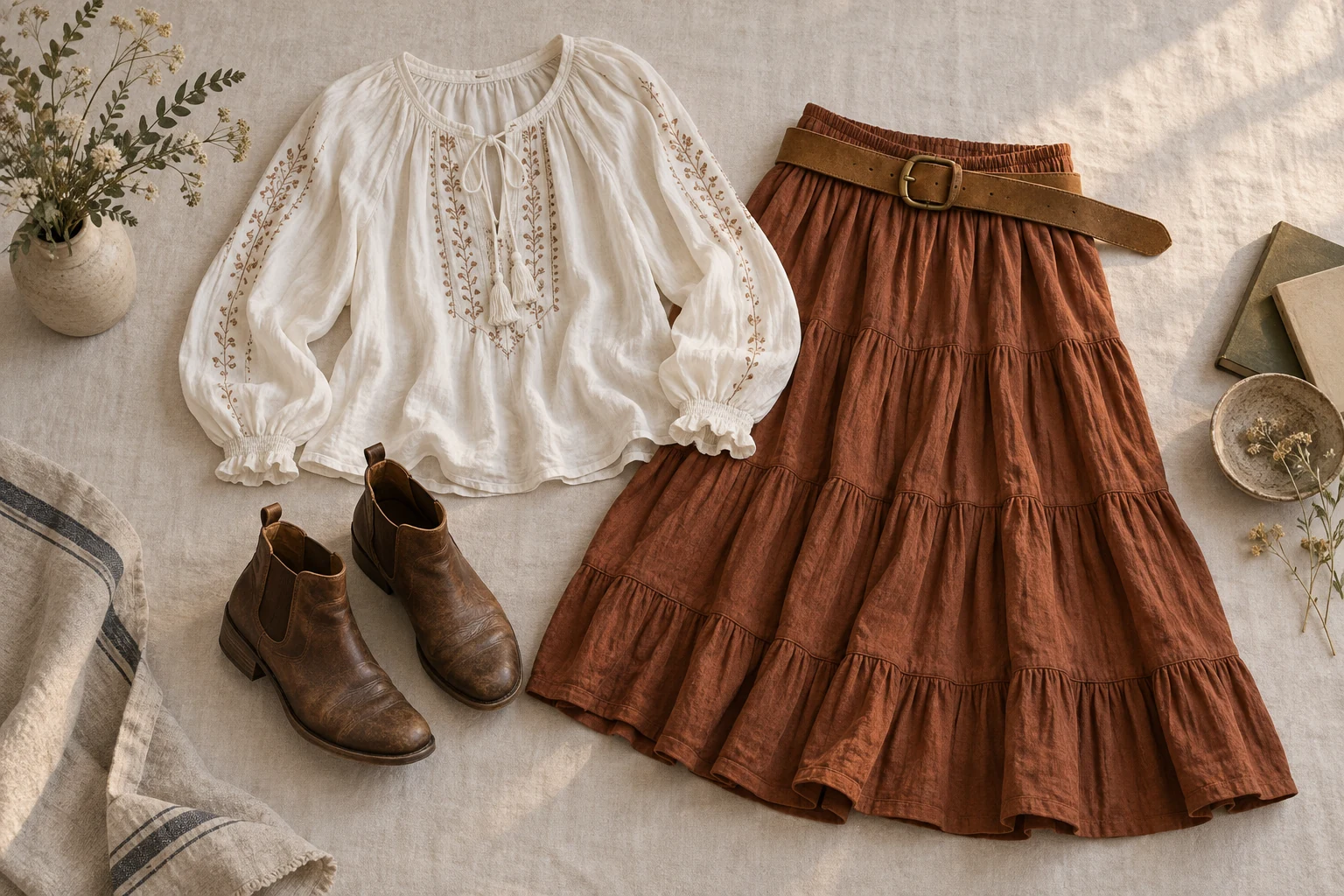
Boho style: pieces, fabrics and how to wear it
What boho style means, where it came from, the key pieces and fabrics of boho clothing, and outfits for everyday, weddings and every age without a costume look.
Styles
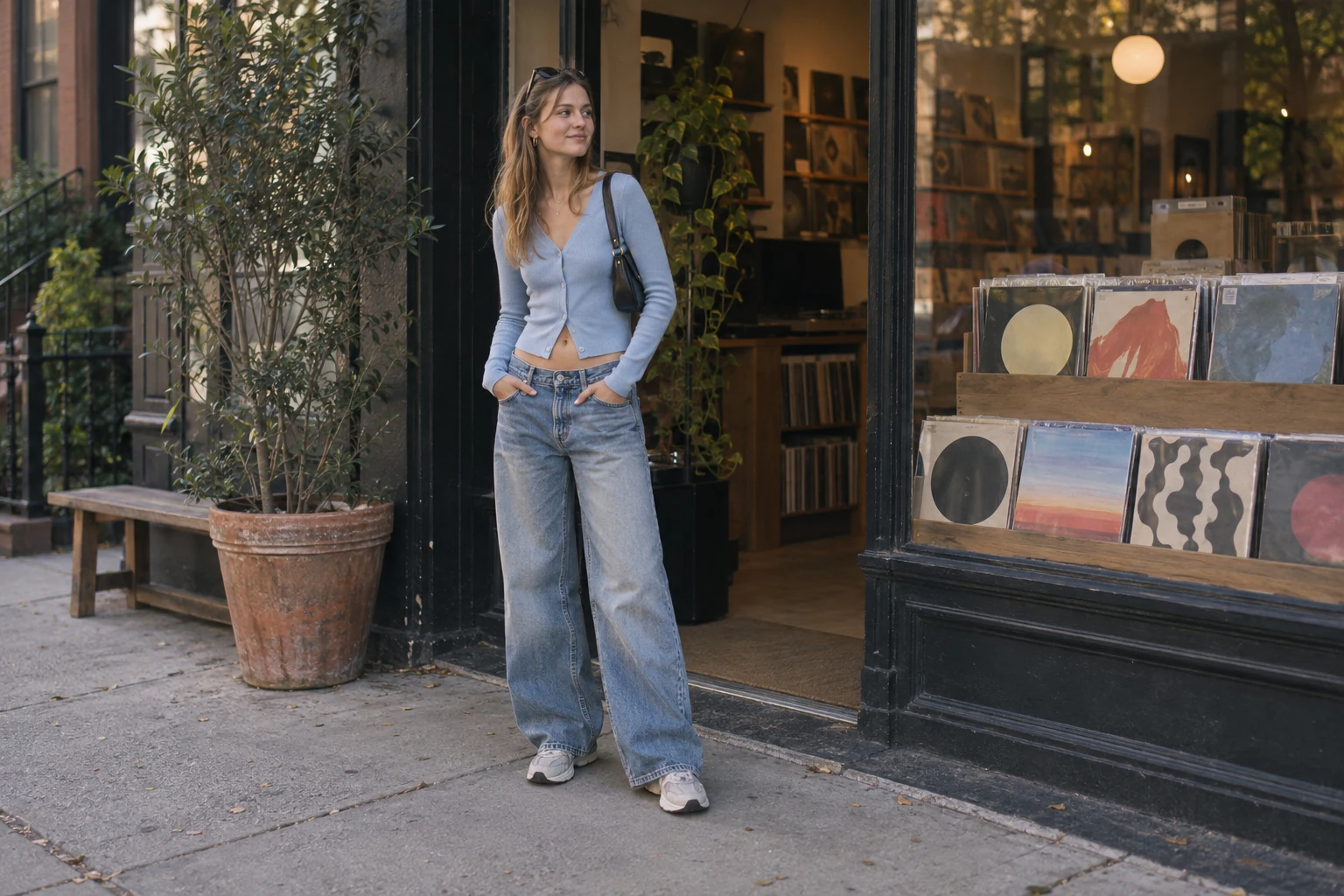
Y2K fashion: what defined it and how to wear it
What Y2K fashion is, the early 2000s trends that defined it for women and men, and how to wear Y2K outfits today, from everyday looks to a theme party.
Weather
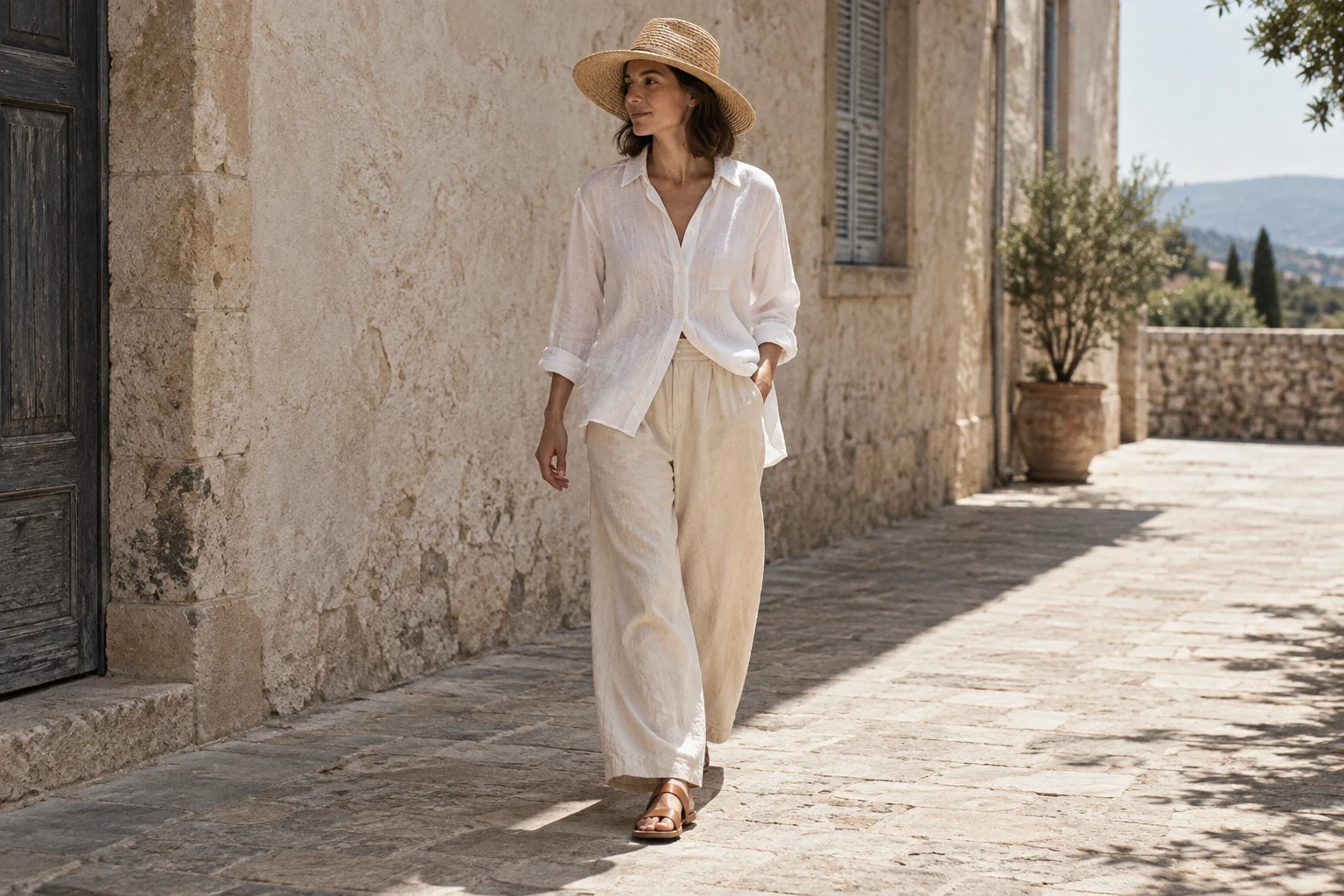
What to wear in 90 degree weather
At 90°F clothing is part of staying safe. Loose fabrics, when to cover up, what to wear to work and outdoors, and the signs that heat is getting to you.
Everyday style
K pop outfits: what to wear to a concert and beyond
K pop outfits for concerts, parties and dance class: how idol style works, what to wear for a long standing show, fandom colors, and KPop Demon Hunters looks.