A packing list for vacation, built around outfits
In this guide
Every ultimate packing list online seems to be written for a trip you are not taking. It tells you to bring a sarong and a headlamp when you are going to Chicago for a long weekend, and forgets the one thing you actually need, a jacket smart enough for the dinner on Saturday. The better packing list for vacation is the one you build from your own trip: how many days, what the weather will do, and what you will be doing each day.
This guide shows how to build that list in about fifteen minutes, with guidance on quantities for a three day and a seven day trip, the essentials that are not clothes, and a final check to run the night before you leave. Write it once, keep it, and it becomes your own printable packing list for every trip after this one.
A packing list for vacation starts with the days
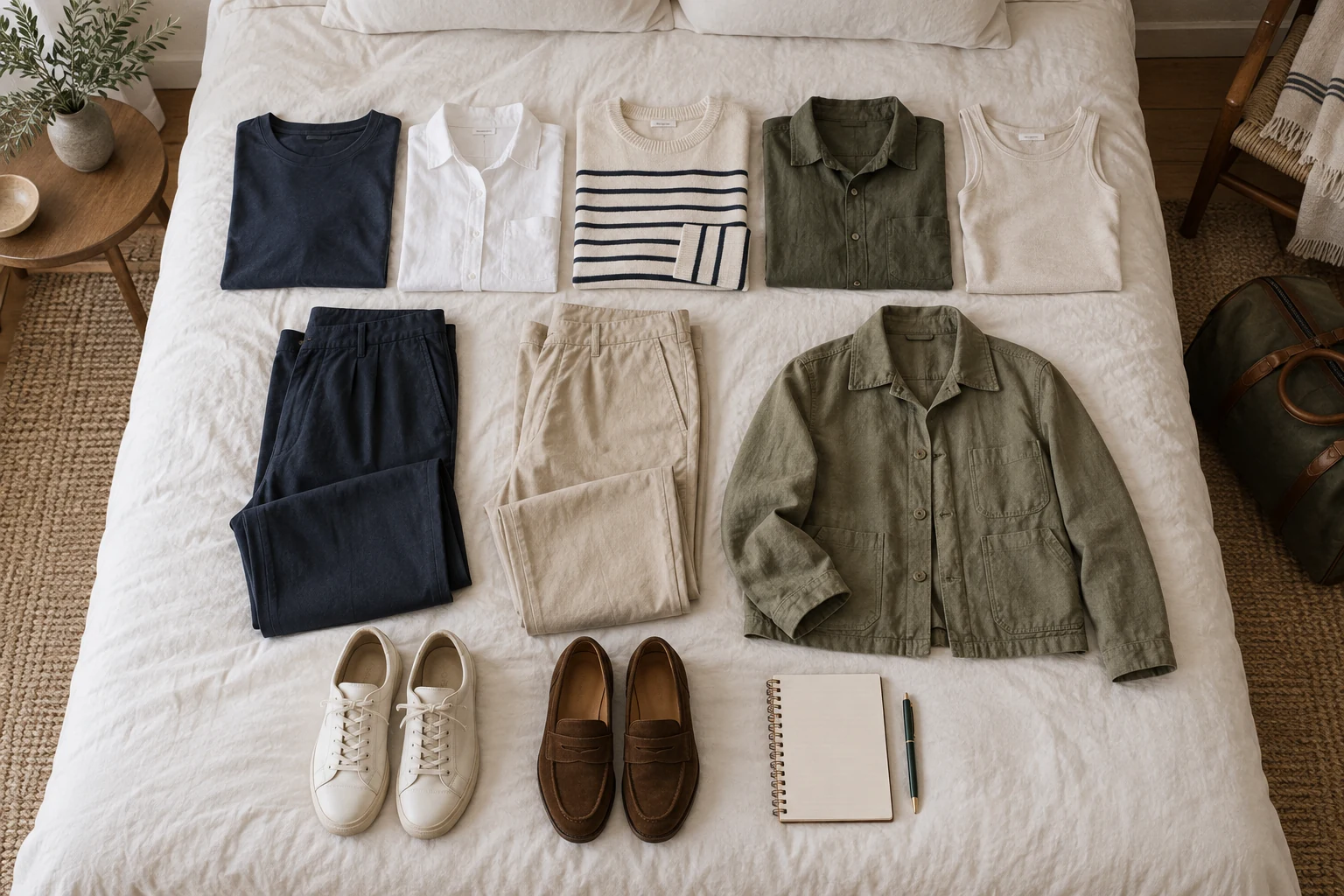
Write the dates down one line per day, then add the forecast and what you expect to do: travel day, beach, walking tour, hike, a nice dinner, a wedding. That page is the real packing list for vacation, because it tells you exactly which situations your clothes must cover. A week at a beach resort needs mostly the same two or three outfits repeated; a week in a city with one formal event needs walking clothes, one layer for cool evenings and a single outfit for the event.
Look at the forecast highs and lows, not just the average. A trip where the days reach 75°F (24°C) and the evenings drop to 55°F (13°C) needs both short sleeves and a warm layer. If the weather is uncertain, pack one warm layer and one rain layer rather than extra outfits. For guidance on specific temperatures, our guides to dressing for 50 degree weather and dressing for 70 degree weather show what tends to work.
What to pack for a 3 day trip
A long weekend usually fits in a carry on. As a starting point, plan on two or three tops, one or two bottoms, one layer such as a sweater or cardigan, the jacket you wear on the journey, sleepwear, underwear and socks for each day, and two pairs of shoes at most, one of them on your feet. Add one outfit for a nicer dinner if it is in the plan, and ideally make it share at least the shoes or the jacket with the rest.
Wear the bulkiest pieces on the way: boots, the heaviest sweater and the coat. That leaves the bag for lighter things and makes it easier to stay within carry on size limits. Toiletries can be minimal for three days, and travel sizes keep you within the TSA carry on limit of 3.4 ounces (100 ml) per container in one quart size bag. These quantities are a guide rather than a rule; a trip with a hike and a wedding needs more, a beach weekend needs less.
What to pack for a week long trip
A seven day packing list does not need seven of everything. Four or five tops, two or three bottoms, one warm layer, one outer layer suited to the weather, sleepwear, and two or three pairs of shoes (one for walking, one that dresses up, and sandals or sneakers if the trip needs them) cover most weeks, especially if you can do a small wash halfway through. Underwear and socks are the exception: bring one set per day plus one, or plan the wash.
For a warm destination, swap the warm layer for a light shirt or cardigan for air conditioning and evenings, and add swimwear and a cover up. For a cold one, add thermal layers, a hat and gloves, and wear the heavy coat and boots on the journey. For a business trip, plan the meeting outfits first and build the rest around their shoes and trousers. If you are traveling with a suit, our guide to folding a suit for travel keeps it presentable.
| Item | 3 day trip | Week long trip |
|---|---|---|
| Tops | Two or three | Four or five |
| Bottoms | One or two | Two or three |
| Layers | One sweater or cardigan, plus the jacket you travel in | One warm layer and one outer layer |
| Shoes | Two pairs at most, one worn | Two or three pairs |
| Underwear and socks | One set per day | One set per day plus one, or a midweek wash |
| Extras | One nicer dinner outfit if it is planned | Swimwear or thermals, as the weather needs |
Essential things to pack besides clothes
Clothes can usually be bought at your destination. Documents, medicines and the right charger often cannot, so these essentials deserve their own section of the list. Keep ID or passport, travel documents, cards and some cash, prescription medicines in their original labeled containers with enough for a few extra days, glasses or contact lenses, phone, charger and power bank in your carry on. The CDC advises keeping medicines in the carry on and in their original containers, and TSA does not allow power banks or spare lithium batteries in checked bags.
Toiletries, a small first aid kit, sunscreen and any insect repellent the destination calls for can go in either bag, with liquids over 3.4 ounces in the checked one. For international travel, add a plug adapter, check your passport's expiration date against the entry rules for your destination well before you leave, and keep photos or copies of your documents separate from the originals. The CDC's list for a travel health kit is a good reference for longer or more remote trips.
Run a final check the night before
Pack the night before, not the morning of, and run through the list in the same order each time. The order matters because it goes from what you cannot replace to what you can, so the most important things are checked while you are still fresh. Once the bag is packed, our guide to packing a suitcase covers how to roll, fold and layer it.
Documents and money
Passport or ID, tickets or boarding passes, reservations, insurance details, cards and a little cash.
CheckAll of it is in the bag you will carry, not the one you will check.
Medicines and health
Prescriptions in original containers plus a few extra days' supply, any glasses or contacts, and your usual pain reliever.
CheckThese are in the carry on too.
Electronics
Phone, charger, power bank, headphones and any adapter.
CheckThe power bank is in the carry on, not the checked bag.
Clothes, by outfit
Lay out each day's outfit, then count underwear, socks and sleepwear.
CheckEvery day on your list has an outfit, and every piece appears in at least two outfits, except for the formal one.
Shoes and toiletries
Shoes for each type of day, toiletries in travel sizes in a clear quart bag for the carry on, full sizes in the checked bag.
CheckYou are carrying no more than three pairs of shoes, including the pair on your feet.
Keep your list for next time
After the trip, spend five minutes with the list. Cross out what you did not use, add what you missed, and note what worked: the sweater you wore every evening, the shoes that hurt on the second day. Save it as a note on your phone, a document you can print, or a spreadsheet template with columns for each trip. Over a few trips it becomes more reliable than any packing list template you could download, because it reflects how you actually travel.
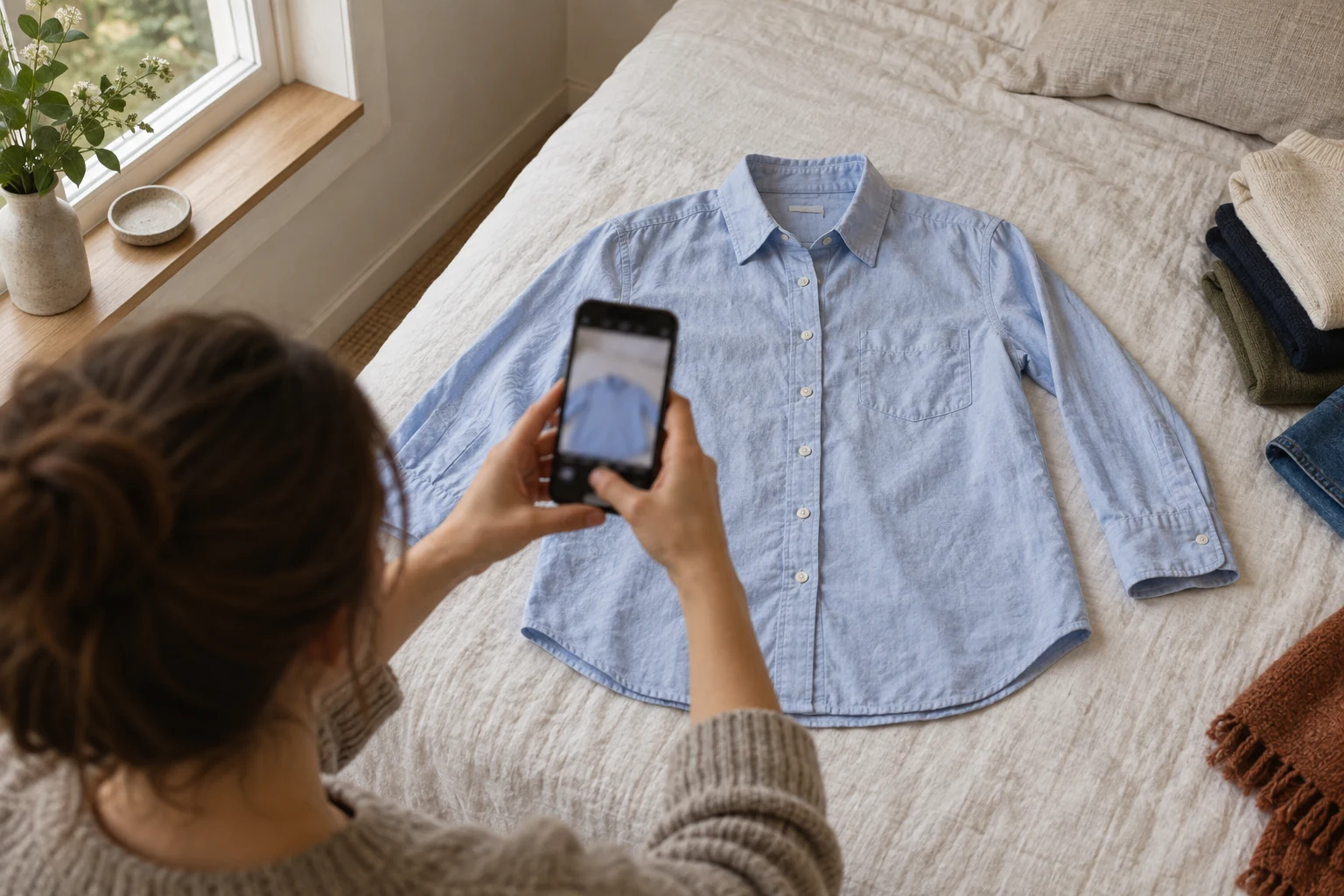
It also helps to be able to see your clothes while you plan, especially if you pack at the last minute. Snaza, a minimalist digital wardrobe for iPhone, has no packing features, but if the pieces you own and the looks you have saved are already there, you can scroll through them while you write the list instead of pulling everything off the rail; our guide to making a digital wardrobe explains the idea for any app or photo album. The list itself can live wherever you like.
Common mistakes
Packing one outfit per day with no overlap
Separate outfits for every day double the size of the bag. Plan around shared bottoms, layers and shoes, and let tops change the look.
Packing for the average temperature
The average hides cool mornings and warm afternoons. Check highs and lows and bring one layer for each end of the range.
Putting medicines in the checked bag
Checked bags are sometimes delayed or lost. Keep prescriptions in your carry on, in original containers, with a few days' extra supply.
Questions people ask
How many outfits should I pack for a 7 day trip?
Plan seven days of outfits, but build them from about four or five tops and two or three bottoms that all combine. Add one warm layer, one outer layer and two or three pairs of shoes. With a midweek wash, you can pack even less.
What are the 5 4 3 2 1 and 3 3 3 packing rules?
They are counting shortcuts for about a week away. The 5 4 3 2 1 method is usually five tops, four bottoms, three pairs of shoes, two swimsuits or accessories and one hat, though versions vary. The 3 3 3 rule means three tops, three bottoms and three pairs of shoes that all combine. Both work only if the pieces share a color base, so treat the numbers as a ceiling and check them against your days and forecast.
What are the most commonly forgotten items?
Chargers, medicines, sleepwear, a plug adapter for international trips and a layer for cool evenings are easy to overlook, and some of them are awkward or expensive to replace on arrival. Checking documents, medicines and electronics first, before clothes, catches most of them.
Is there a printable packing list for vacation?
You can print the final check in this guide and add your own clothes by day. A list you build from your own trips is more useful than a generic template, so keep a copy and edit it after each trip.
What should I pack for international travel?
Everything on a domestic list plus your passport, a plug adapter, copies or photos of your documents kept separately, and any medicines with prescriptions, since some countries restrict certain medicines. Check your destination's entry requirements, including how long your passport must remain valid, well before you leave.
What should you never pack in checked luggage?
Power banks and spare lithium batteries, which TSA requires you to carry in the cabin. Beyond the rules, keep anything you cannot replace quickly out of the checked bag: medicines, passport and documents, keys, jewelry, cash and fragile electronics. A delayed suitcase is then an inconvenience rather than a problem.
Sources and further reading
References used for this guide. Each opens the original page in a new tab.
Keep reading
Closet and packing
How to pack a suitcase without wrinkles
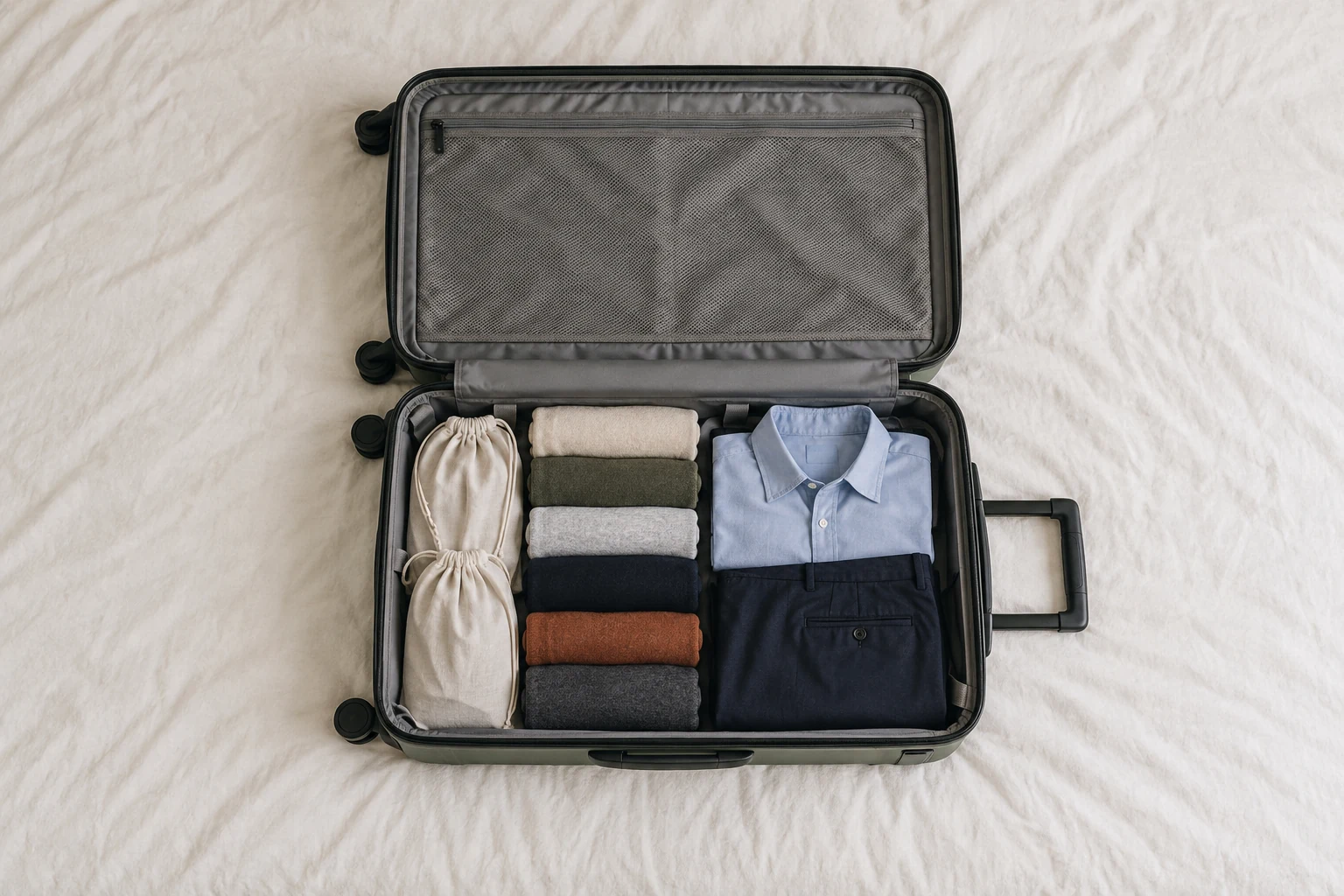
How to pack a suitcase step by step: plan outfits first, roll or fold each piece, layer the bag, use packing cubes well, and follow carry on rules.
Closet and packing
How to build a capsule wardrobe from what you own
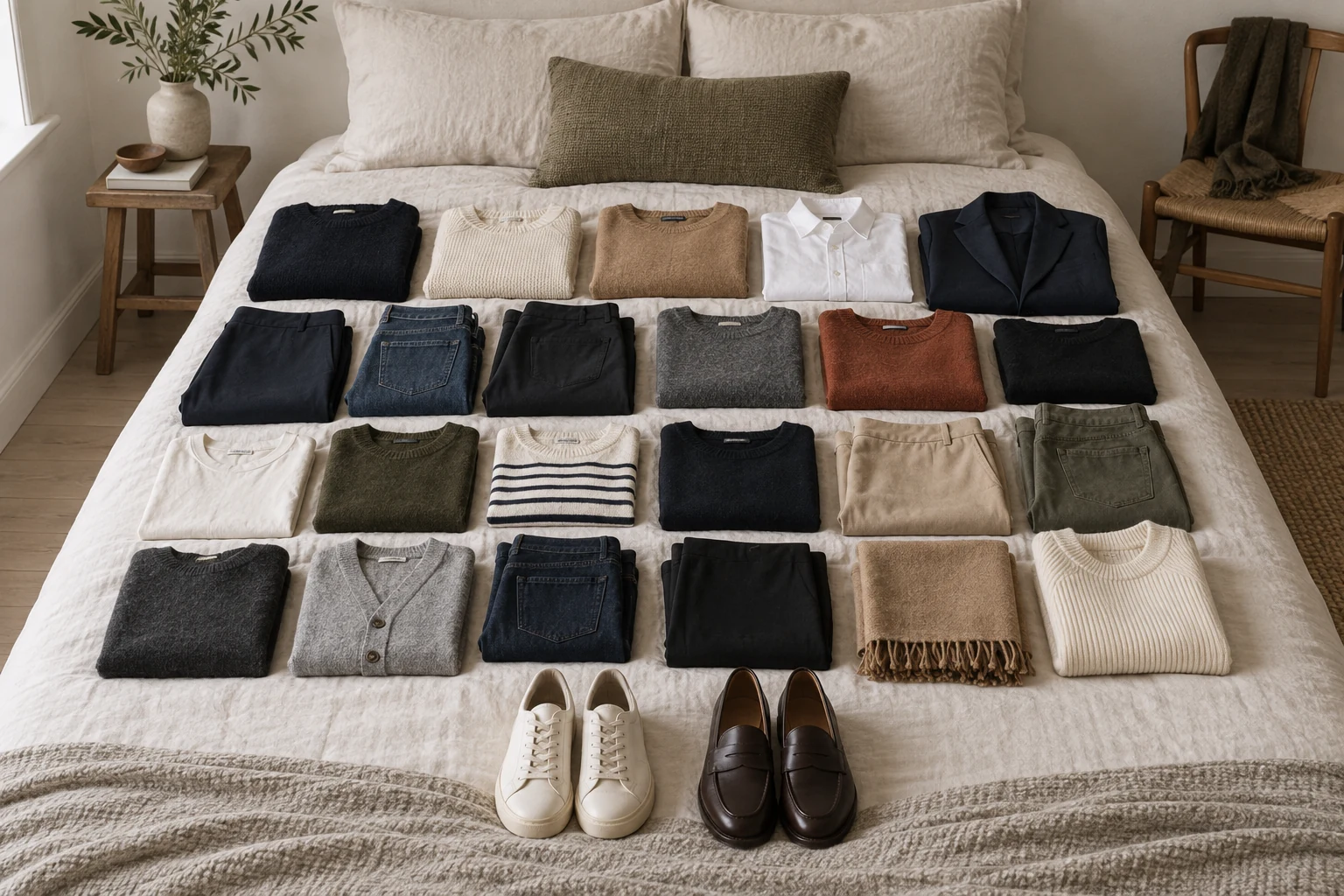
Build a capsule wardrobe from your real week and the clothes you already reach for, with examples for women and men and a simple way to test it.
Closet and packing
How to fold a T shirt neatly
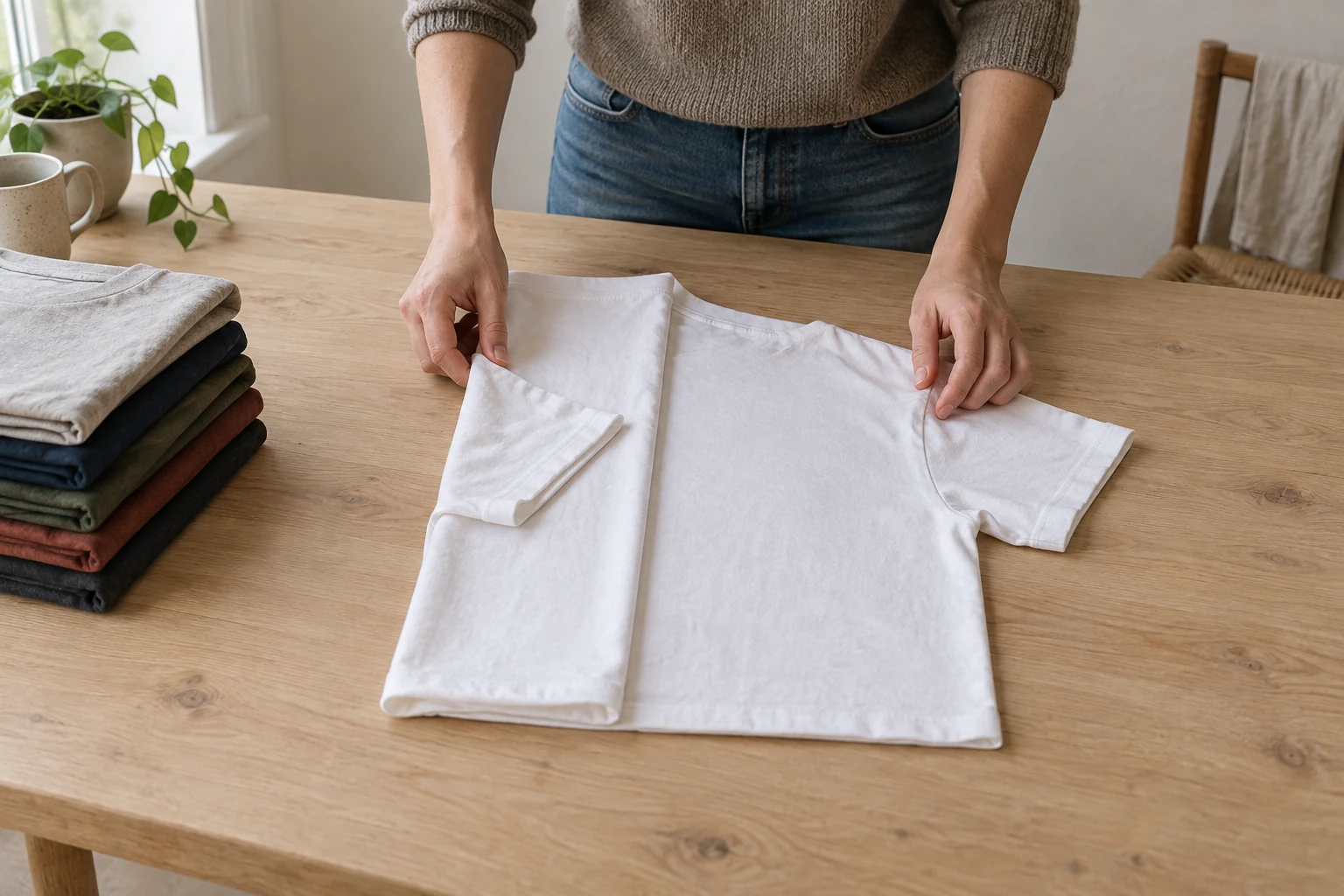
How to fold a T shirt four ways: a neat shelf fold, the fast two second fold, an upright file fold for drawers and a tight roll for packing.

Weather
What to wear in 50 degree weather
50°F can feel like spring in the sun and like late fall in the wind. How to match the jacket to the day, what to wear under it, and outfits for men and women.
Closet and packing
How to make a digital wardrobe you will actually use
Set up a digital wardrobe app or a simple photo album: photograph your pieces, sort them into a few categories, keep care notes and save the outfits that work.