How to dress well as a man: fit, basics and outfits
In this guide
You look at friends who always seem well dressed and cannot quite say why. Their clothes are not expensive or loud. A plain tee, dark jeans and clean sneakers somehow look better on them than the same things look on you. The difference is almost never the brand. It is fit, condition and a few habits that anyone can learn.
This guide covers how to dress well as a man in your twenties, whether you are a student, starting your first job or just tired of looking unfinished. It explains what makes a man well dressed, how clothes should fit, how to build a small wardrobe that works, complete casual and smarter outfits for summer and winter, and how to do all of it on a budget.
What makes a man well dressed
Well dressed men tend to share three things. Their clothes fit the body they have now, not the one they had three years ago or hope to have. Their clothes are in good condition: no stretched collars, pilled sweaters, faded black or scuffed shoes. And their outfits suit the situation, a little more considered than the minimum, without looking like they tried too hard. None of this depends on money, which is why a well fitted secondhand oxford shirt beats a new designer tee that hangs badly.
Personal style comes after those basics, and it grows from repetition. Most men who dress well wear a small number of pieces they like, in colors that work together, and they wear them often. If you are not sure what you like yet, look at the photos you save and the outfits you feel best in, and notice the patterns. Our guide to finding your personal style walks through that process in detail.
Start with fit
Fit is the single biggest upgrade. For a T shirt, the shoulder seam should sit at the edge of your shoulder, sleeves should end around mid bicep, and you should be able to pinch roughly 2 to 3 inches (5 to 8 cm) of fabric at each side of the torso; the hem should end a couple of inches below the waistband. Relaxed and boxy cuts are fine and current, as long as they are cut that way on purpose, rather than simply a size too big. The same shoulder rule applies to shirts, sweaters, jackets and coats, and it is the hardest thing for a tailor to change.
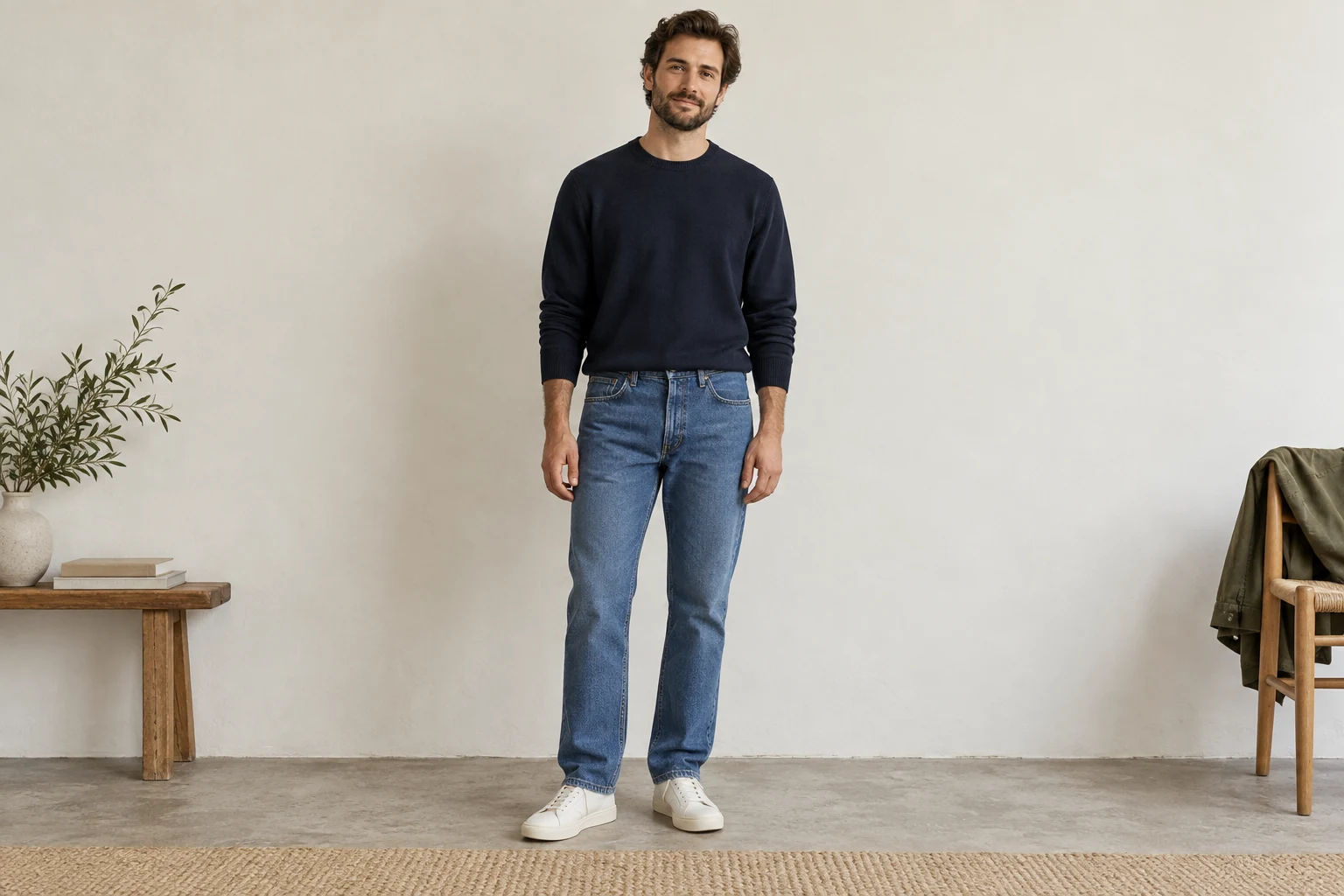
For a button down shirt, the collar should close without choking you, with room for a finger or two, and cuffs should reach the base of the thumb. Trousers and jeans should sit at your waist without a belt doing all the work, and the hem should touch the shoe with a slight break or none at all; wide and relaxed trousers are fine if they are hemmed. Our guides to dress shirt fit and how jeans should fit cover each piece in detail. Hemming trousers and shortening sleeves are inexpensive, and they make cheap clothes look expensive.
Build a small wardrobe that all works together
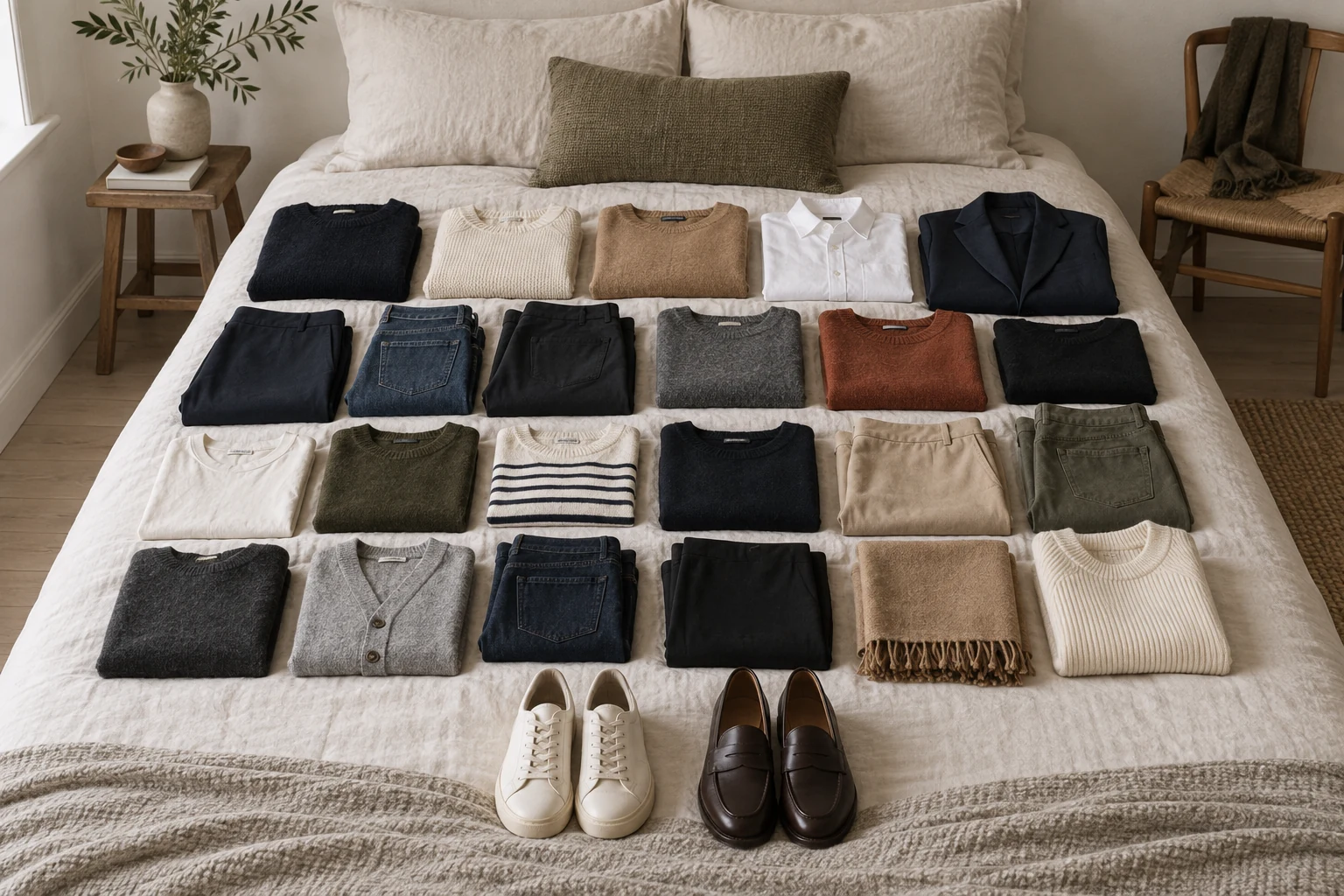
Most well dressed men rely on a short list of pieces. A useful core for a young man in North America might be: three or four plain T shirts in white, gray, navy and black; two oxford shirts in white and light blue; a knit polo; a crew neck sweater and a cardigan or zip knit; dark straight jeans and a lighter pair; chinos in khaki or olive and wool or gray trousers; one jacket for the season, such as a chore coat, a denim jacket or a bomber; a navy or charcoal overcoat; clean white leather sneakers, brown loafers or boots, and one pair of dress shoes.
Keep most of it in calm colors, such as navy, gray, white, olive, cream, brown and black, so any top works with any bottom, and add color in one piece at a time. You may have heard of the 3 3 3 rule: three tops, three bottoms and three pairs of shoes that all combine, which gives many outfits from nine pieces. It grew from minimalist wardrobe challenges such as Project 333, which asks people to dress with 33 items for three months. You do not need to follow a number, but the principle, fewer pieces that all match, is the heart of dressing well. Our guide to building a capsule wardrobe goes further.
How to dress well casually, summer and winter
For everyday casual wear, a heavyweight white tee, dark straight jeans with a clean hem and white leather sneakers is the foundation, and it already looks better than most outfits if everything fits. Add an open overshirt in olive or a light blue oxford shirt worn as a jacket, and you have a look for class, errands or a coffee date. For a first date or a dinner, swap the tee for a knit polo or a fine crew neck sweater and the sneakers for brown loafers.
In summer, when it is above about 80°F (27°C), choose linen or cotton camp collar shirts, a light knit polo, lightweight chinos or tailored shorts that end above the knee, and loafers or canvas sneakers without visible socks. Light colors such as cream, sage and light blue look fresh. In winter, below about 40°F (4°C), build layers: a T shirt or thin thermal, an oxford shirt or a merino sweater, a quilted liner or a cardigan, and a wool overcoat or a parka, with dark jeans or wool trousers and leather boots. Our guide to casual outfits for men has many more combinations.
Dressing up for work, events and dress codes
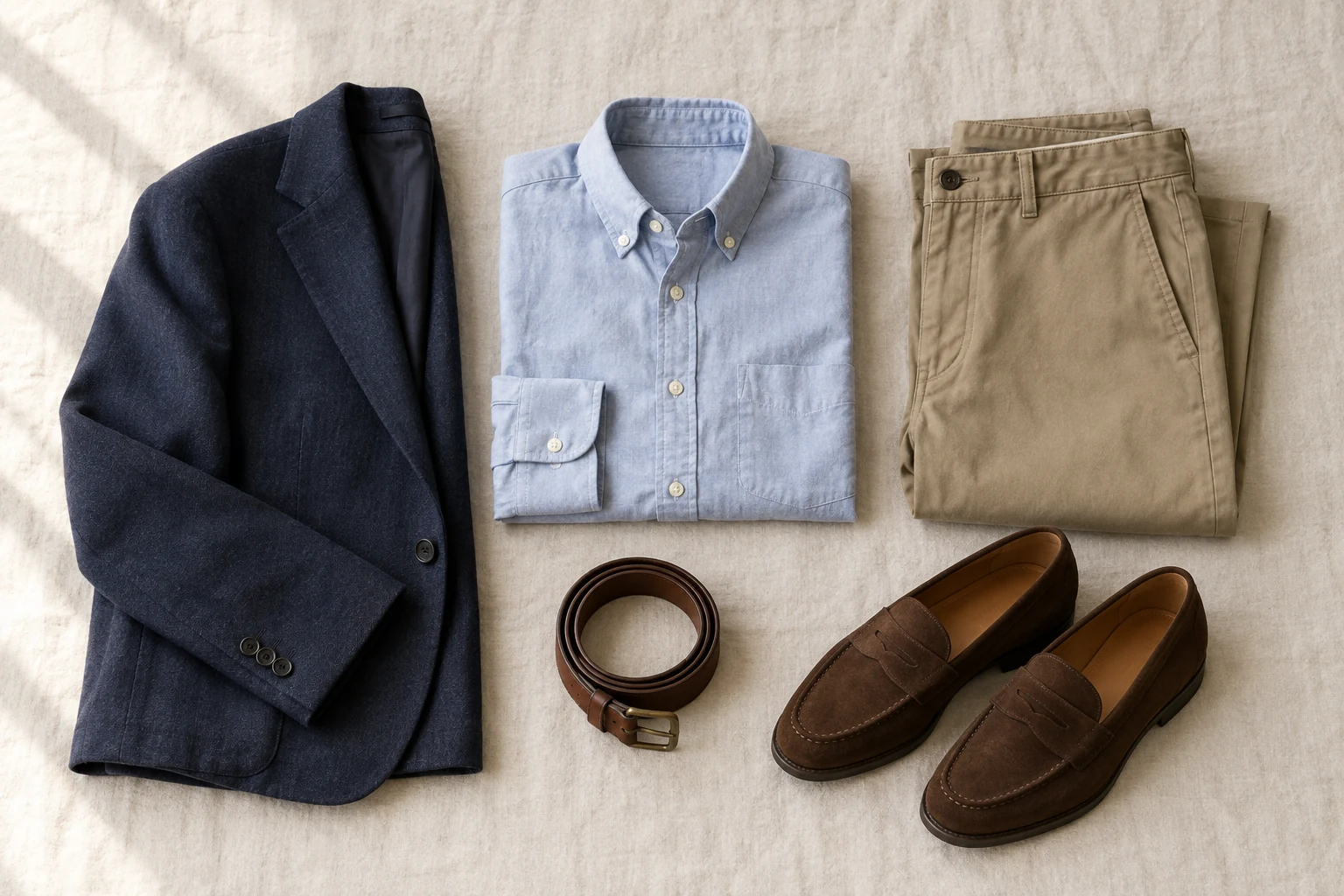
Dressing well also means reading the occasion. The Emily Post Institute describes casual as clean and comfortable rather than sloppy, and dressy casual or smart casual as a balance, usually a collared shirt and trousers with a sport coat or blazer and an optional tie. That covers most dinners, parties, networking events and relaxed offices. For many first jobs, a business casual version of the same, chinos or wool trousers, an oxford shirt, a sweater or unstructured blazer and leather shoes, is the default; our guide to business casual for men explains where the lines usually fall.
A simple habit makes you look well dressed almost everywhere: go one step above the minimum. If everyone will be in tees, wear a knit polo; if it is jeans and shirts, add a jacket. For weddings, interviews and formal events, a well fitting navy or charcoal suit with a white shirt, a simple tie and polished dark shoes is still the safest and best looking choice for most men, and the invitation or employer's dress code always takes priority over general advice.
| Occasion | Outfit | Shoes |
|---|---|---|
| Class or errands | Heavyweight tee, dark jeans, overshirt | White leather sneakers |
| Date or dinner | Knit polo or fine sweater, chinos or jeans | Brown loafers or clean sneakers |
| Business casual | Oxford shirt, wool trousers or chinos, sweater or blazer | Loafers or derbies |
| Party or smart casual | Collared shirt, trousers, sport coat, tie optional | Leather shoes |
| Wedding or interview | Navy or charcoal suit, white shirt, simple tie | Polished dark leather shoes |
A written dress code from the host or employer always comes first.
Grooming and the details people notice
Small details carry a surprising amount of weight. Clean shoes matter more than expensive ones, so wipe sneakers after wearing and polish leather now and then. Match leather belts to leather shoes in roughly the same color, and pick socks that either blend with the trousers or are clearly deliberate, such as white socks with loafers in a relaxed outfit. Keep jewelry minimal and personal, like a simple watch, a silver ring or a thin chain.
A regular haircut, trimmed or clean shaven facial hair, clean nails and a light fragrance or none at all complete the picture. Clothes care is part of this too: fold knits instead of hanging them, wash dark clothes inside out in cold water to keep them from fading, and replace T shirts when the collar stretches. Our guide to matching your belt, shoes and socks covers the combinations that trip most people up.
How to dress well on a budget
Dressing well cheaply is mostly about spending in the right places. Put more money into the things you wear most and that show wear quickly, like shoes, a coat and jeans, and less into trend pieces. Buy plain basics in good fabric, such as heavyweight cotton tees and wool sweaters, rather than many thin ones. Secondhand stores are excellent for wool coats, blazers, oxford shirts and leather shoes, and our guide on how to thrift shows how to find and check them.
Before buying anything, start from what you already own. Try on everything, keep what fits and suits you, set aside what needs a tailor and let go of what you never wear. The gaps become obvious: often a pair of well fitting trousers, a plain white tee and clean shoes. Fill those first, one piece at a time, and wear the new pieces with the old ones until you know what works.
Common mistakes
Buying one size up for comfort
Clothes that are too big in the shoulders and too long in the sleeves look borrowed. If you like a relaxed look, choose pieces cut relaxed in your real size.
Too many statements at once
A loud print, a big logo, bright sneakers and a statement jacket compete for attention. Let one piece stand out and keep the rest simple.
Ignoring trouser length
Hems that pile up over the shoes make even good trousers look sloppy. Hem them to touch the shoe with a slight break or none.
Neglecting shoes
Dirty sneakers or scuffed leather drag down a good outfit. Clean them regularly and rotate pairs so they last longer.
Questions people ask
What is the 3 3 3 rule for dressing men?
It is a simple capsule idea: three tops, three bottoms and three pairs of shoes that all combine, which gives many outfits from nine pieces. It is related to Project 333, a minimalist challenge to wear 33 items for three months.
What makes a man well dressed?
Fit, condition and suitability. Clothes that fit your body now, are clean and in good repair, and suit the occasion will make you look well dressed more reliably than any brand or trend.
What is trendy for men right now?
Relaxed and wide trousers, knit polos, workwear jackets, loafers and clean retro sneakers are widely worn, along with quieter colors and less visible branding. Trends change quickly, so add one current piece to a wardrobe of basics rather than rebuilding everything.
How do I help my partner dress better?
Start with fit rather than style, since most men look better immediately in clothes that fit. Offer to go shopping together, compliment what works, and suggest one or two upgrades such as well fitting jeans or clean shoes, while respecting that the style should still feel like theirs.
Sources and further reading
References used for this guide. Each opens the original page in a new tab.
Keep reading
Everyday style
Casual outfits for men, built from a few good basics
Casual outfits for men for everyday, work, dates, casual weddings and every season, built from a short list of basics, with the fit and color rules behind them.
Dress codes
Business casual for men: what to wear to work
What business casual means for men at work, with outfit formulas, the right shoes, when jeans are allowed and how to read your own office's version of the code.
Closet and packing
How to build a capsule wardrobe from what you own
Build a capsule wardrobe from your real week and the clothes you already reach for, with examples for women and men and a simple way to test it.
Sizing
How should jeans fit? Waist, seat, thigh and length
How should jeans fit at the waist, seat, thigh and ankle? Clear checks for men and women, how rigid and stretch denim change, and where the hem should land.
Styles
Ivy style: the classic pieces and how to wear them now
What Ivy style is, how it differs from preppy, the core pieces from oxford shirts to loafers, Black Ivy and Japanese Ivy, and modern Ivy League outfits for men.