Lolita fashion: substyles, silhouette and etiquette
In this guide
A museum courtyard, a convention hall or a city park on a Sunday afternoon: a small group in full skirts, lace blouses, bows and parasols, drinking tea and photographing one another. Some readers arrive here after seeing a scene like that; others have fallen for a print online and want to know how to wear it properly. Lolita fashion looks like a costume to outsiders, but to the people who wear it, it is a carefully studied style with its own history, rules and manners.
This guide explains where Lolita fashion came from, what the name means in its community, how the silhouette is built, the main substyles, and the etiquette that makes meetups pleasant for everyone. It is written for curious readers and for beginners putting together a first outfit, which the community calls a coord, short for coordinate.
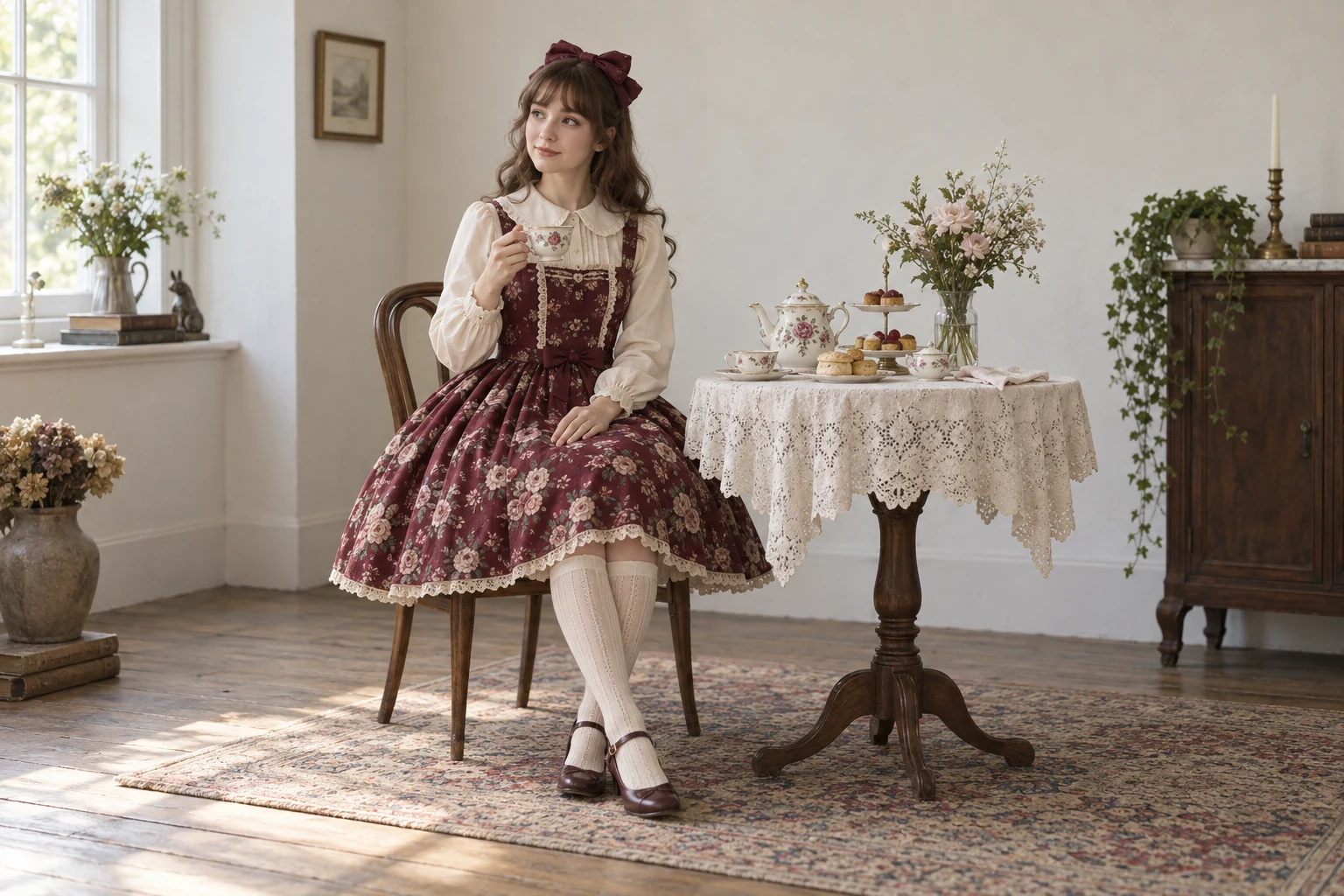
What Lolita fashion is and where it came from
Lolita fashion grew out of Japan's culture of kawaii, or cuteness, and took shape between the late 1970s and the 1990s. The word appeared in a Japanese fashion magazine in 1987, and by the late 1990s the style had become a recognizable subculture in Tokyo's Harajuku district. The Victoria and Albert Museum in London traces an important influence to Visual Kei, a Japanese music scene that mixed glam rock, metal and punk with historical references such as Rococo and Victorian costume. Fans dressed in the spirit of their favorite musicians, and the look grew into a fashion of its own.
Labels such as Baby, The Stars Shine Bright, founded in 1988, and Angelic Pretty built the sweet side of the style, while Mana, guitarist of the band Malice Mizer, popularized the gothic side through his label Moi même Moitié. The 2002 novel Kamikaze Girls by Novala Takemoto, later a film, brought the fashion to a wide audience in Japan and abroad. Today there are communities across North America, Europe, China and elsewhere, many organized through online groups and local meetups.
What the name means, and what it does not
In English the word Lolita is tied to Vladimir Nabokov's 1955 novel, and that connection makes many people uneasy on first hearing. Japanese usage took the word in a completely different direction. In the fashion, Lolita came to stand for cuteness, elegance and modesty, with no sexual meaning, and the Victoria and Albert Museum stresses that distinction. Community guides go further and state plainly that the fashion is not associated with the novel at all.
The clothes themselves make the point. Skirts reach the knee or below, blouses are high necked or modestly cut, and shoulders are usually covered. The ideal is a doll or a Victorian lady, dressed for her own pleasure, not a child and not a pin up. If you have wondered whether Lolita fashion is problematic, the fair answer is that the fashion is not, though the English name can cause confusion, so wearers often explain it simply as a Japanese street fashion inspired by historical dress. Treat anyone who sexualizes it, or the people wearing it, as wrong.
The silhouette and how a coord is built
The defining shape is a full skirt that stands away from the body, held out by a petticoat, a stiff underskirt of layered net or organza. Of all the skirt shapes, Lolita uses two: a bell, gathered at the waist and rounding out like a cupcake, and an A line, which flares gradually toward the hem. Skirts usually end around the knee. The rest of the coord is built to match that shape, so the pieces look like one planned outfit rather than a dress with extras.
A complete coord usually has these layers, chosen in this order so each answers the main piece.
Choose the main piece
Start with a JSK (jumperskirt, a sleeveless dress worn over a blouse), an OP (one piece, a dress with sleeves) or a skirt. Its print, color and cut decide everything else, so the rest of the coord should repeat one or two of its colors.
Add the petticoat
Pick a petticoat that suits the skirt: a fuller one for a bell shape, a softer A line one for flared skirts. It should be slightly shorter than the skirt so it does not peek out.
CheckYou should see the skirt stand out evenly all the way around.
Pick the blouse
Under a JSK or with a skirt, wear a blouse with a collar and sleeves that suit the mood: lace and puffed sleeves for sweet, a simple Peter Pan collar for classic, black or high necked for gothic. Check that the collar sits neatly over the dress straps.
Finish legs and feet
Knee socks, over the knee socks or tights, often patterned, fill the space between hem and shoe. Round toed shoes with a strap, low heeled Mary Janes or lace up boots complete the line. Pointed stilettos look out of place.
Top it with headwear and accessories
A headbow, a bonnet, a small hat or a lace headdress frames the face, and a small themed bag, a wristcuff or a parasol finishes the coord. Look in a full length mirror: the eye should travel from head to toe without stopping at a clash.
The main substyles: sweet, classic and gothic
Sweet Lolita fashion is the most famous. It uses pastel pinks, lavenders, mint and cream, with prints of sweets, toys, animals and fairy tales, lots of lace and large bows. Classic Lolita is quieter and more grown up in mood, closer to historical dress, with florals, stripes, muted colors such as wine, navy and ivory, and details like cameos and straw hats. Gothic Lolita, the dark version people often ask about, uses black, deep red, purple and navy, with crosses, bats, candles, church windows and dramatic lace. These three are the core that most guides describe.
Around them sit many smaller styles. Punk adds plaid, safety pins and chains; hime, or princess, adds glitter and big curled hair; wa and qi draw on Japanese and Chinese traditional dress; country uses gingham and straw baskets; and old school means the simpler coords of the early 2000s. Casual Lolita keeps the silhouette with fewer accessories for everyday wear. There is also Ouji, a related style built on knee length shorts or trousers, blouses and waistcoats, which many people of any gender wear alongside Lolita friends.
| Substyle | Signature colors and details |
|---|---|
| Sweet | Pastel pink, lavender, mint and cream; sweets, toys and fairy tale prints; big bows |
| Classic | Wine, navy and ivory; florals, stripes, cameos and straw hats |
| Gothic | Black, deep red, purple and navy; crosses, bats, candles, dramatic lace |
| Punk | Plaid, safety pins and chains |
| Hime | Glitter and big curled hair |
| Country | Gingham and straw baskets |
| Casual | The same silhouette with fewer accessories, for everyday wear |
Community etiquette and meetups
Meetups are the heart of the community: tea parties, museum visits, picnics and shopping trips where everyone dresses up. Good manners are part of the fun. Arrive in a finished coord if you can, share tables and space, and treat the venue kindly, since skirts and petticoats take up room and lace catches on chairs. If you want a photograph of someone in Lolita, whether you are in the fashion or simply passing by, ask first and respect a no. Wearers are dressing for themselves, not performing for strangers.
The community also has opinions worth knowing before you shop. Many members object to replicas, cheap copies of a brand's original print, because they copy an artist's work; indie brands and offbrand pieces with original designs are widely welcomed. Beginners worry about being called ita, a slang word for a coord that misses the mark, but good communities offer kind advice rather than mockery, and every experienced wearer started somewhere. Remember that Lolita is a fashion, not cosplay: you wear it as yourself, not as a character.
Who can wear Lolita, and how to start
People ask whether it is acceptable to wear Lolita fashion if you are not Japanese. The fashion has had international communities for many years, and Japanese brands sell abroad and hold events overseas, so non Japanese wearers are a normal, welcome part of it. What matters is learning the style and its history and treating it with care. Adults of every age wear it, and men wear Lolita too, sometimes called brolita, as well as Ouji and other related styles. Body size is not a barrier, though fit matters; many brand pieces use shirring at the back for adjustable fit, and indie makers offer extended sizes.
To start, study photographs of coords you love and decide on one substyle. Buy a petticoat early, since it makes the biggest difference, then one main piece, one blouse and shoes in a color that works with several outfits. Secondhand community marketplaces are where many people buy brand pieces in the United States, and indie makers cover a wide range of budgets. Many silk, lace and chiffon pieces need gentle care; our guide to hand washing clothes and the care label will protect delicate prints, and steaming relaxes creases without crushing lace.
Questions people ask
What are the three main styles of Lolita fashion?
Sweet, classic and gothic. Sweet uses pastels and playful prints, classic uses muted colors and historical details, and gothic uses black and dark jewel tones with dramatic motifs. Many smaller substyles, such as punk, hime and country, grow from these three.
Is Lolita fashion childlike?
It borrows the innocence of a doll or a storybook, especially in sweet coords, but it is worn by adults and is rooted in historical European dress. Classic and gothic coords in particular look more like Victorian ladies than children, and the whole style centers on modesty rather than youthfulness.
Is Lolita fashion the same as cosplay?
No. Cosplay recreates a specific character, while Lolita is a fashion people wear as themselves, choosing their own coords. Wearers often find it frustrating to be treated as costumed performers, so compliments are welcome but assumptions are not.
Do you have to wear a petticoat with Lolita?
For the classic silhouette, yes. Most main pieces are designed to be worn over one and hang flat and shapeless without it. Casual coords sometimes use a lighter petticoat, but skipping it entirely changes the look to something else.
What is Ouji fashion?
Ouji, meaning prince, is a style related to Lolita, built on knee length shorts or trousers with blouses, waistcoats, knee socks and boots. It is worn by people of any gender and often appears at Lolita meetups beside sweet, classic and gothic coords.
Sources and further reading
References used for this guide. Each opens the original page in a new tab.
Keep reading
Styles
Dark academia fashion: pieces, palette and outfits
What the dark academia aesthetic is, where it came from, the clothes and colors that define it, and dark academia outfits for men and women you can wear today.
Styles
Cottagecore fashion: what it is and how to wear it
What cottagecore is, where it came from and how to wear it: the core pieces, colors and fabrics, real outfits, and how to start from clothes you already own.
Styles
Coquette aesthetic: what it means and how to wear it
What coquette means, where the coquette aesthetic came from, the bows, lace and soft colors that define it, and how to wear coquette outfits as an adult every day.

Washing and ironing
How to hand wash clothes properly
How to hand wash clothes in a sink or basin: which detergent to use, water temperature by fabric, how long to soak, how to rinse and how to dry without stretching.
Everyday style
Types of skirts and how to wear each one
The main types of skirts by shape, pleat and length, what each one is called, how to tell them apart and how to wear each one for work, weekends and evenings.