How to get paint out of clothes
In this guide
The roller slipped, and now there is a pale stripe of wall paint across the sleeve of a favorite sweatshirt. Paint on clothes almost always happens while you are busy with something else, whether it is a bedroom wall, a kids' craft table or a freshly painted door frame. How to get paint out of clothes depends above all on two things: what kind of paint it is, and whether it has dried.
Wet water based paint is one of the easier stains to remove. Dried paint and oil paint take more work and the right solvent, and a stain that has been through the dryer may be there for good. This guide goes through each case, with the safety points that matter when solvents come near fabric.
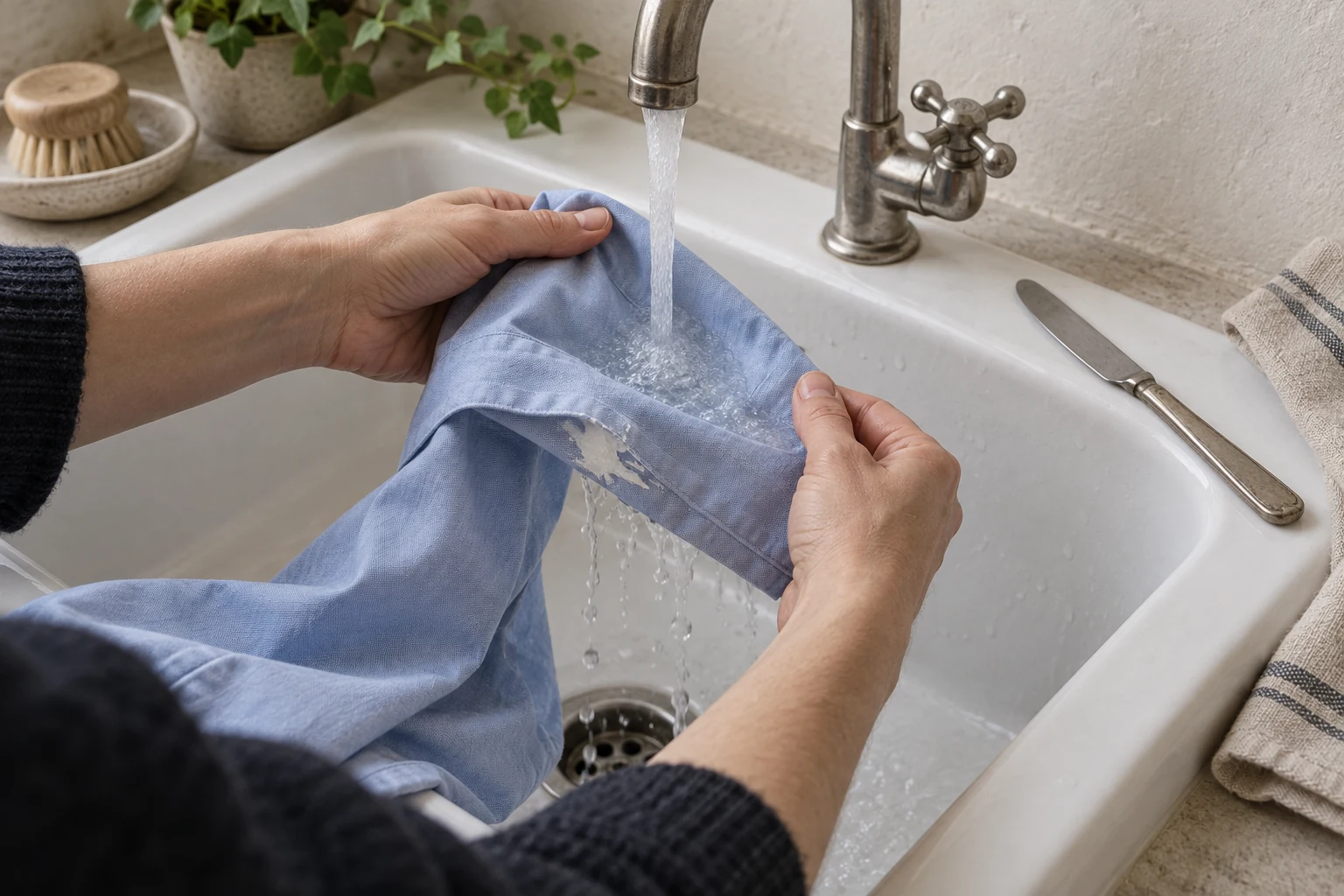
Identify the paint and act fast
Check the can or tube if you have it. Latex, acrylic, tempera, poster paint, washable kids' paint and most wall and craft paints are water based: they clean up with soap and water while wet but dry to a flexible plastic film that water no longer dissolves. Oil based paints, alkyd enamels, many trim and floor paints and artists' oil colors are solvent based, and the label will say to clean brushes with mineral spirits or paint thinner. Spray paint can be either, so read the can.
If there is no label, dab a hidden part of the stain with a cloth dampened in warm soapy water. If color transfers to the cloth, it is water based. If nothing moves, try a drop of rubbing alcohol; latex usually softens with it, while oil paint does not. Whatever it is, keep it wet if you cannot deal with it right away. The University of Georgia textile extension suggests wrapping the stained area in plastic to stop it drying, since dry paint is much harder to shift.
| Paint | Examples | While wet | Once dry |
|---|---|---|---|
| Water based | Latex, acrylic, wall and craft paint | Scrape, flush from the back, detergent | Rubbing alcohol, scrub, then detergent |
| Washable kids' paint and tempera | Poster and school paints | Rinses out easily with detergent | Treat like dried latex |
| Oil based | Alkyd enamels, trim and floor paint, artists' oils | Thinner named on the can or mineral spirits | Same solvent, several rounds |
| Spray paint | Either type | Read the can | Match the method to the type |
No label? Color that transfers to a warm soapy cloth means water based.
Remove wet latex or acrylic paint
This is the best case, and it usually comes out completely if you move quickly. Work from the back of the fabric so you push paint out the way it came in, not further through, and keep the stain wet from start to finish. The same steps work for washable kids' paint and tempera, which rinse out even more easily.
Lift off the excess
Use a spoon or a dull butter knife to scrape up any blob of paint, lifting rather than smearing. Wiping with a cloth spreads it across more fibers, so leave the blotting until the thick layer is gone.
Flush from the back
Turn the garment inside out and hold the stain under cool or lukewarm running water. You should see cloudy color rinsing out. Cool water keeps the paint soft; there is no benefit to hot water here.
Work in detergent
Rub a few drops of liquid laundry detergent or dish soap into both sides of the stain with your fingers or a soft toothbrush, then rinse. Repeat until the rinse water runs clear. Dish soap does help with fresh latex, because it loosens paint that has not yet cured into a film.
Pretreat and wash
Apply a stain remover, then wash on the warmest setting the care label allows. Check the spot before drying; if any color remains, repeat the detergent step or go on to the dried paint method below.
Remove dried latex and acrylic paint
Once water based paint has dried it acts like a thin layer of plastic glued to the fibers, so the job is to soften the film and then break it up. Scrape off as much as you can first with a butter knife or your fingernail; on sturdy cotton and denim, flexing the fabric often cracks the paint so flakes fall away.
Then saturate what remains with rubbing alcohol (isopropyl, 70% or higher) and let it sit for several minutes. Scrub gently with an old toothbrush, and you should see the paint soften, turn gummy and begin to lift. Blot with a clean cloth, apply more alcohol, and repeat. Alcohol based hand sanitizer and some aerosol hairsprays work on the same principle and can help in a pinch. Finish by rubbing in liquid detergent, rinsing, and washing as usual.
Acetone nail polish remover is stronger on stubborn acrylic, but use it with care. The Drycleaning and Laundry Institute warns that acetone dissolves acetate, which is common in linings and some dressy fabrics, and it can also damage triacetate and modacrylic. Check the fiber content, test in a hidden seam, and never use acetone on those fibers. Some dyes run with alcohol or acetone too, so test either solvent first on colored clothes.
Remove oil based paint
Water alone will only spread oil paint, so you need a solvent, much as with grease stains. Work outdoors or by an open window, away from flames, pilot lights and heat, and wear gloves. Check the care label first: if the garment is dry clean only, stop here and take it to a cleaner, since solvents can damage finishes you cannot see.
Scrape off the excess. Lay the stain face down on a pad of paper towels or an old rag, then dab the back with the thinner named on the paint can, or with mineral spirits or turpentine if the can is gone. The paint will transfer into the towels; move to a clean area of towel and keep tamping until no more color comes out. While the area is still damp with solvent, work in liquid laundry detergent, which helps carry the solvent and the loosened paint away. The UGA extension suggests soaking stubborn stains overnight in hot water before washing, if the fabric allows it, and repeating the process as needed.
Wash the garment on its own, then let it air dry and check it before it goes anywhere near a dryer. Solvents are flammable, and clothes that still smell of them should not go into a dryer. Rags soaked in oil paint or linseed oil should be laid flat outdoors to dry or sealed in a water filled metal container, because they can heat up as they dry.
Paint that has already been washed and dried
Paint that went through a wash usually survives with its edges softened. The dryer is the bigger problem, because heat fuses the film into the fibers. Try the dried paint method anyway: saturate with rubbing alcohol, give it time, and scrub. On oil paint, try the solvent method. Expect several rounds, as with dried ink stains, and stop if the fabric starts to pill or thin.
If the stain will not move after two or three honest attempts, it is probably permanent. Delicate fabrics, silk, wool and anything labeled dry clean only should go to a dry cleaner, ideally before you try anything, and you should tell them what kind of paint it is. For casual clothes, a small speck can become your painting shirt, and dyeing a garment darker can hide a light stain on cotton.
Common mistakes
Rubbing wet paint with a cloth
Rubbing pushes paint into a wider area and deeper into the weave. Scrape the excess, then flush from the back.
Putting the garment in the dryer too soon
Heat sets paint and makes it close to permanent. Air dry after each attempt and only machine dry once the stain is completely gone.
Using acetone without checking the fiber
Acetone dissolves acetate and damages some other synthetics, leaving a hole where the stain was. Read the fiber label on the care label and test first.
Mixing products
Do not combine bleach with other cleaners or with solvents, and rinse out one product before trying the next. Chlorine bleach does not remove paint anyway and can leave a pale patch.
Questions people ask
Does dish soap remove paint from clothes?
Yes, on wet water based paint. Dish soap or liquid laundry detergent helps flush fresh latex and acrylic out of fabric. On dried paint or oil paint, soap alone is not enough; you need rubbing alcohol for dried latex and a solvent such as mineral spirits for oil paint, followed by detergent.
Will baking soda remove paint from clothes?
Not really. Baking soda is a mild abrasive and deodorizer, but it does not dissolve paint film. A paste can help scrub loosened flakes once alcohol or solvent has softened them, but it does not replace them.
What dissolves dried paint on fabric?
Rubbing alcohol softens most dried latex and acrylic paint, and acetone is stronger where the fiber tolerates it. Mineral spirits, turpentine or the thinner named on the can dissolve oil based paint. Always test in a hidden spot and follow with detergent and a normal wash.
Does paint permanently stain clothes?
Often it does not if you treat it while wet. Dried paint is harder but frequently removable with alcohol or solvent and patience. Paint that has been heat dried in a machine dryer is the most likely to be permanent, especially on synthetics.
Is there a best paint remover for clothes?
It depends on the paint. For latex and acrylic, rubbing alcohol plus a laundry stain remover works well. For oil paint, use the thinner named on the can. Commercial paint strippers made for walls and furniture are too harsh for fabric and should not be used on clothes.
Sources and further reading
References used for this guide. Each opens the original page in a new tab.
Keep reading
Stain removal
How to get ink out of clothes
Remove pen ink from clothes with rubbing alcohol and blotting, rescue dried or washed stains, and know which inks and fabrics need a professional cleaner.
Stain removal
How to get grease out of clothes
Get grease out of clothes with an absorbent powder and dish soap, tackle black car grease, and rescue oil stains that survived the washer and dryer.
Washing and ironing
Laundry symbols explained: how to read a care label
What laundry symbols mean, in plain words: the wash tub, triangle, square, iron and circle, plus the dots, bars and crosses that change each instruction.
Stain removal
How to get gum off clothes
How to get gum off clothes: freeze it hard, scrape it away, dissolve the sticky film that is left, then wash. Includes old gum and gum that went through the dryer.
Stain removal
How to fix dye transfer: color run remover and other fixes
Red sock turned the load pink? How to fix dye transfer on white and colored clothes: rewashing, oxygen bleach soaks, color run remover, and what to do after drying.