How to style a trench coat: outfits for men and women
In this guide
The first cool, damp morning of the season arrives, and the trench coat that has been hanging in the closet since spring is suddenly the obvious choice. Then comes the hesitation: does it look right over a hoodie, should the belt be tied or buckled, and why does it look sharper on everyone else? Learning how to style a trench coat is mostly learning a handful of small decisions about fit, belt, collar and what goes underneath.
This guide explains what makes a trench coat a trench, how it should fit, the small moves that change its mood, and trench coat outfits for women and men, from jeans and sneakers to tailoring. It also covers black, navy, cropped, denim and leather versions, and how to look after the coat so it lasts for years.
What makes a trench coat a trench
The trench coat began as military rainwear. In 1879 Thomas Burberry invented gabardine, a tightly woven, breathable cotton that resisted rain better than the rubberized coats of the time, and British outfitters developed officers' raincoats from it. During the First World War the coat became an optional item for British officers, and the details that define it today came from the field: epaulettes on the shoulders, D rings on the belt for attaching equipment, a storm flap at the shoulder and a shield across the back to shed rain. Veterans kept wearing the coats after the war, and films such as Casablanca made them a civilian icon.
A classic trench is double breasted with wide lapels, a self belt at the waist, raglan or set in sleeves with buckled straps at the cuffs to keep rain out, and buttoned pockets. It is usually made in cotton gabardine or cotton twill in tan, khaki or stone, and it falls somewhere between above the knee and mid calf. Knowing these parts helps with styling, because most of the ways to change the look come down to what you do with the belt, the collar and the cuffs.
How a trench coat should fit
A trench is an outer layer, so try it on over the thickest thing you will wear under it, usually a sweater or a hoodie. The shoulders should sit at or just past your own; raglan sleeves are more forgiving here because there is no shoulder seam. When you button it, the front should close without pulling across the chest, and when you cross your arms the back should not strain. The sleeves should cover your wrist bone and the cuff of a shirt or sweater underneath.
Length changes the mood. A knee length trench is the most versatile and works for most heights. A long trench that reaches the mid calf looks dramatic and modern, especially over wide trousers, but it can overwhelm a shorter frame unless the outfit underneath is simple and tonal. A short or cropped trench that ends at the hip looks casual and youthful and pairs best with high waisted trousers or barrel jeans. Oversized trenches are fine if the shoulders drop on purpose and the sleeves are not falling over your hands.
Belt, collar and sleeves: small moves that change the look
The belt is the biggest lever. Worn open, tie the belt behind you so it does not hang down at your sides; it gives the back a gentle shape and keeps the front clean. Worn closed, you can buckle it neatly for a crisp, classic look, or skip the buckle and knot it loosely at the front for something softer and more relaxed. With the coat open, you can also let the belt hang loose through the loops for a casual, slightly undone look, though it can drag on the ground if the coat is long.
The collar can be flat for a tidy look or turned up at the back for wind and a bit of attitude. Pushing the sleeves up slightly, or folding the cuffs back once to show a knit underneath, makes the coat look lived in and helps on warmer days. Draping the coat over the shoulders without putting your arms in reads very editorial but is impractical for commuting. Try each in a mirror; the same coat can look like a uniform or like a campaign photo depending on these choices.
How to style a trench coat for women
The easiest outfit is also the most reliable: a tan trench open over a striped long sleeve tee, straight blue jeans and white sneakers or ballet flats, with the belt tied behind and a shoulder bag. For a softer look, wear it over a slip skirt and a fine knit with loafers, or over a simple knit dress with knee boots, knotting the belt at the front to define the waist. A trench over a hoodie with wide trousers and chunky sneakers is the modern casual version that works for class and weekends.
For work, a trench over a fine turtleneck, tailored trousers and pointed flats looks polished without trying, and a navy or black trench suits offices where tan feels too casual. A tonal outfit in cream, stone and camel under a tan trench looks especially expensive, which is the idea behind our guide to monochrome outfits. For evening, wear a black trench belted over a black dress with slim heels and gold jewelry, and let the collar stand up.
How to style a trench coat for men
For how to style a trench coat for men, start with the version you will wear most: a tan or stone trench open over a gray crewneck sweater, dark straight jeans and white leather sneakers or brown loafers. It is simple, grown up and works everywhere from campus to a first date. For a more relaxed city look, try a hoodie or a sweatshirt under the trench with wide chinos and chunky sneakers, the belt tied at the back so it does not flap.
The trench was made to go over tailoring, and it still looks best there. Over a navy or gray suit, a white shirt and dark shoes, it covers the jacket completely when it falls past the hem, so choose a length that does; our guide on how a suit should fit helps with the layers underneath. A black trench over a black roll neck, black trousers and polished boots is the sharp evening version. In spring, a lighter cotton trench over a white oxford shirt and navy trousers with suede loafers keeps things fresh.
Black, navy, cropped, denim and leather trench coats
The classic tan or khaki trench goes with almost anything, especially blue denim, white, navy, cream and brown. A black trench coat is sleeker and more urban; style it with black, gray and white, or with denim for contrast, and lean into leather boots and silver jewelry. Navy is the gentle middle ground, excellent over gray and cream, and it hides city grime. Olive, brown and gray trenches all behave like earthy neutrals and suit fall.
A short or cropped trench works like a jacket: wear it with high waisted jeans or trousers so the proportions meet at the waist. A denim trench is casual, so pair it with plain knits and avoid heavy double denim unless the washes clearly differ; our guide to the Canadian tuxedo explains how. A leather trench is the boldest; keep what is underneath quiet, like a black knit and straight trousers, and let the coat carry the outfit. A plaid trench also counts as a statement, so pair it with solids.
| Trench | Pairs well with | Shoes |
|---|---|---|
| Tan or khaki | Blue denim, white, navy, cream, brown | White sneakers, loafers, ballet flats |
| Black | Black, gray, white, contrasting denim | Leather boots, slim heels |
| Navy | Gray, cream, white | Suede loafers, clean sneakers |
| Cropped | High waisted jeans or trousers | Flats, loafers, ankle boots |
| Leather | Quiet black knit and straight trousers | Polished boots |
Weather, etiquette and care
A cotton trench is best in mild, changeable weather, roughly 45 to 65°F (7 to 18°C), with a sweater underneath at the colder end. Gabardine sheds light rain but is not fully waterproof, so for heavy downpours bring an umbrella too; our guide on what to wear in the rain covers wetter days. Etiquette is simple: take the coat off indoors, especially at a restaurant or someone's home, shake off rain before you sit, and fasten or tie the belt behind you so it does not trail on the floor.
For care, read the care label before anything else; many trench coats are dry clean only because they are lined and have structured collars, while some unlined cotton trenches can be washed gently. Between cleanings, brush off dust, let a damp coat dry on a wide hanger away from heat, and spot clean marks promptly. Our guide to reading care labels helps with the symbols, and hanging clothes properly keeps the shoulders from stretching.
Common mistakes
Letting the belt dangle
A loose belt hanging from the side loops looks messy and can drag on wet ground. Tie it behind you when the coat is open, or knot it at the front when closed.
Buying it too tight
A trench bought to fit over a T shirt will not close over a sweater. Try it on over your thickest layer and check that you can cross your arms.
A suit jacket showing below the hem
Over tailoring, a trench that ends above the jacket hem looks unfinished. Choose a length that covers the jacket completely.
Questions people ask
What does a trench coat look good with?
Almost anything: jeans and a knit, a hoodie and wide trousers, a dress and boots, or a suit. Tan trenches look especially good with blue denim, white, navy and cream, while black trenches suit black, gray and denim.
Are trench coats still in style?
Yes. The trench has been part of menswear and womenswear for more than a century, and designers reinterpret it every season with oversized, cropped, leather and colored versions. A well fitted classic trench will not look dated.
Should you button a trench coat or leave it open?
Both are correct. Buttoned and belted is warmer and more formal; open with the belt tied behind is relaxed and shows the outfit underneath. Choose by the weather and the look you want.
Can you wear a trench coat with sneakers?
Yes, clean white leather sneakers or simple canvas sneakers are one of the easiest ways to make a trench feel young and casual. Keep the rest of the outfit simple, like jeans and a knit, so the coat stays the focus.
Sources and further reading
References used for this guide. Each opens the original page in a new tab.
Keep reading
Everyday style
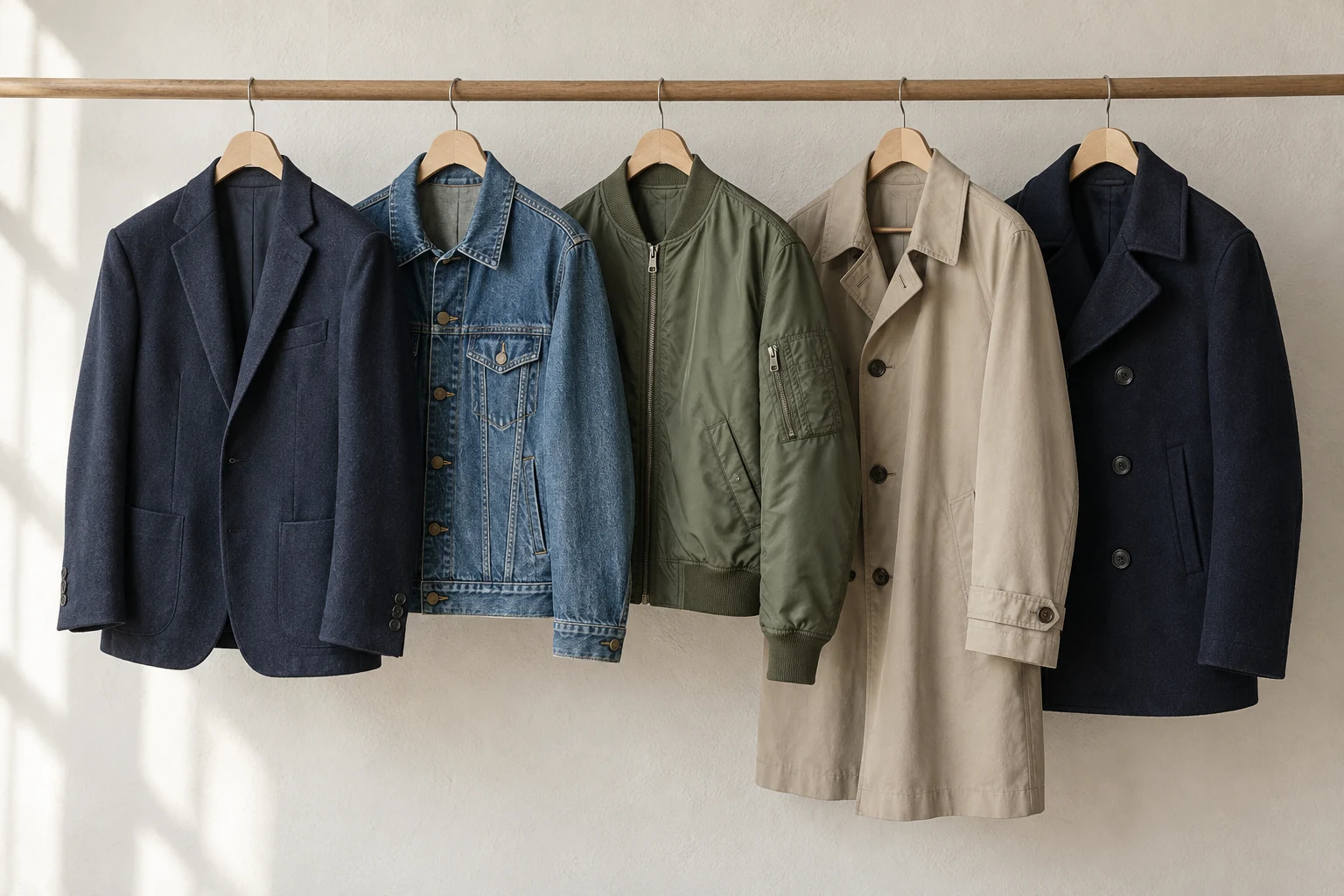
Types of jackets and when to wear them
A clear guide to the main types of jackets for men and women, from blazers and bombers to parkas and trench coats, with the fabric and weather each one suits.
Weather
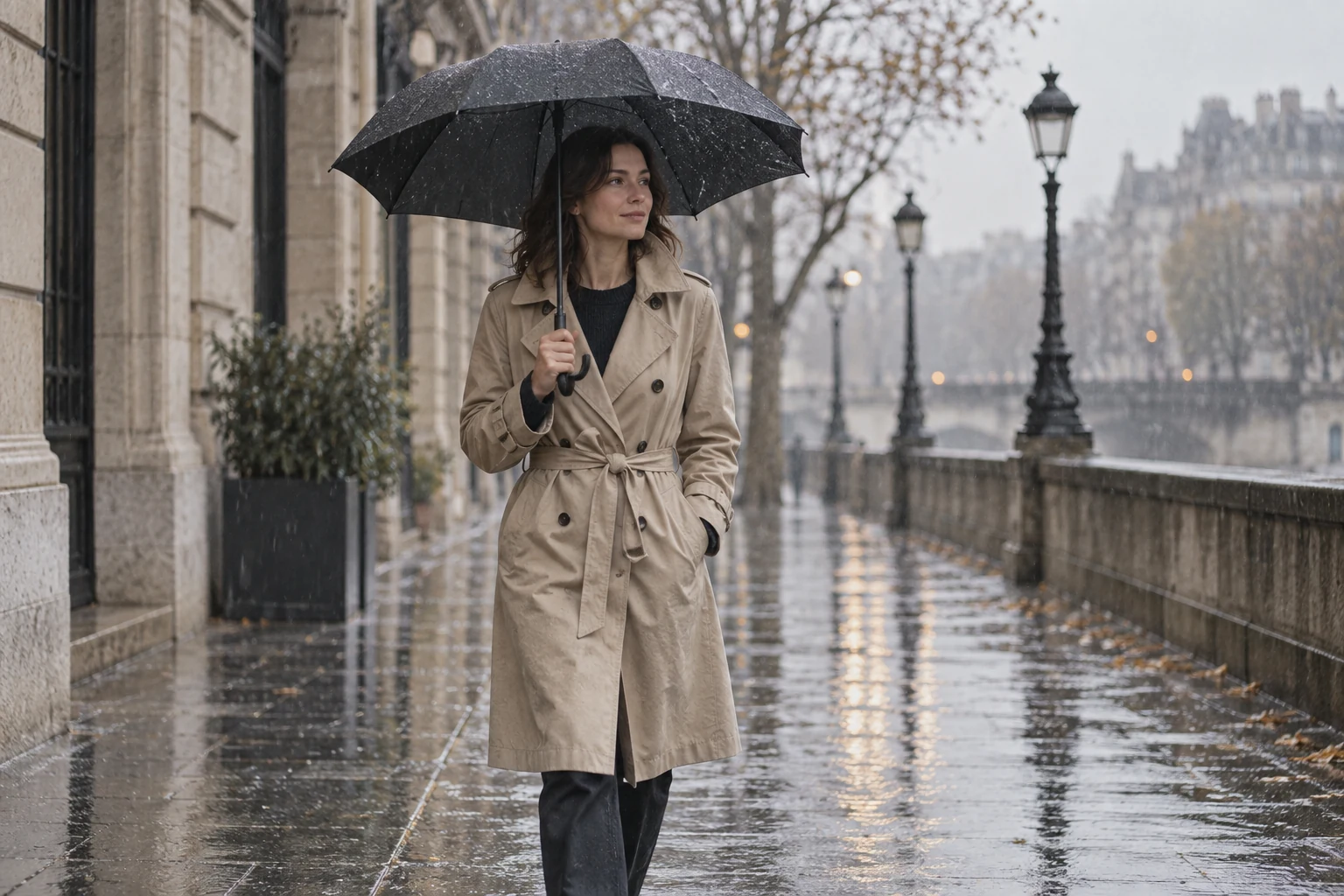
What to wear in the rain, warm or cold
What to wear in the rain to work, on a warm summer day or a cold spring one: choosing a raincoat, pants and shoes that cope with puddles, and outfits that stay dry.
Everyday style
Monochrome outfits: how to wear one color head to toe
What a monochrome outfit is, how to make one color look rich instead of flat, which colors work best, and monochrome outfit ideas for men and women.
Weather
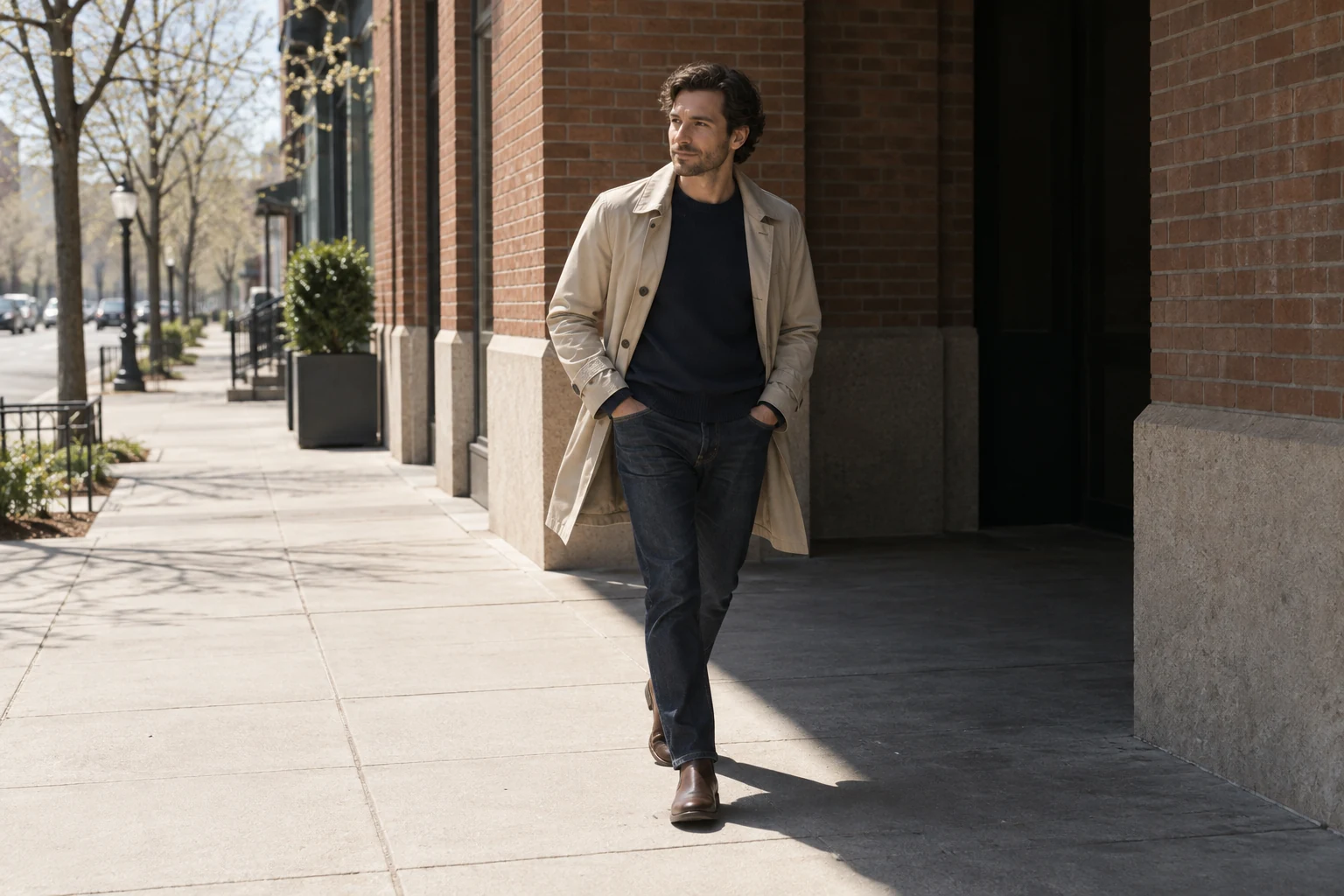
What to wear in 50 degree weather
50°F can feel like spring in the sun and like late fall in the wind. How to match the jacket to the day, what to wear under it, and outfits for men and women.
Everyday style
How to style barrel jeans: tops, shoes and outfits
How to style barrel jeans: the right fit and length, which tops and shoes balance the curve, and barrel jeans outfits for every season, work and weekend.