How to store sweaters: folding, seasons and moths
In this guide
Spring arrives, the heavy knits have not left the chair for weeks, and the closet needs the space back. Or it is the other way around: fall, and the sweater you pull out of a box has a small hole at the cuff that was not there in March. Knowing how to store sweaters well covers both moments. The sweater you wear every week needs a place where it keeps its shape and is easy to reach. The sweater leaving for six months needs cleaning, a sensible container and a place you will actually check.
The principles are simple and apply to wool, cashmere, alpaca, cotton and synthetic knits alike, although animal fibers need the most attention because clothes moths feed on them. Most of what goes wrong in storage comes from three things: gravity, moisture and insects.
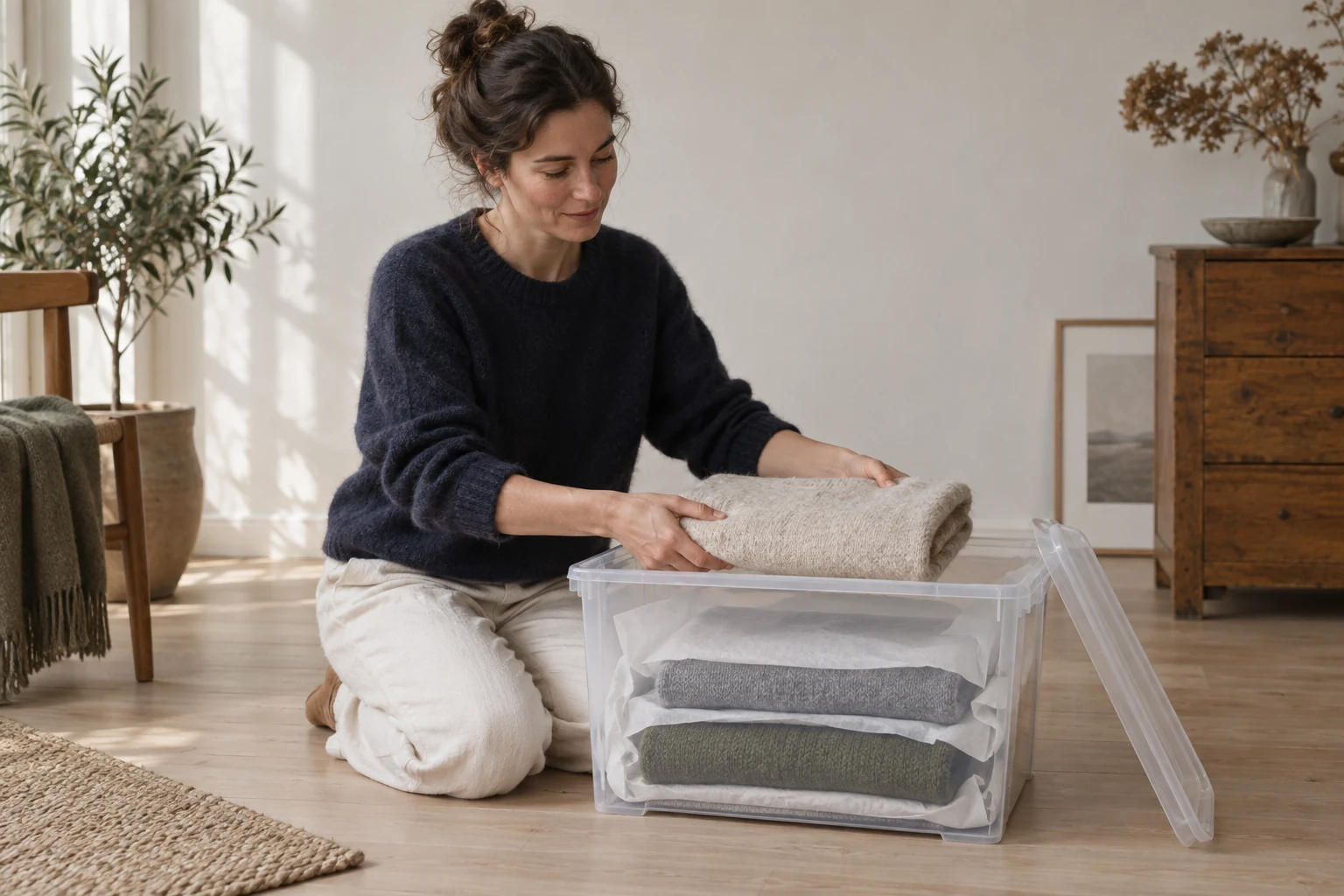
Fold sweaters instead of hanging them
A knit is built from loops, and loops stretch. On a hanger, the whole weight of the sweater hangs from two small points at the shoulders, and over weeks that pull shows up as pointed bumps and a body that has grown longer. Woolmark recommends folding knitted garments and keeping them in drawers or on shelves, while saving hangers for woven wool such as jackets and pants. The heavier the knit, the more this matters: a chunky cardigan suffers faster on a hanger than a fine merino crew neck.
Fold with the sleeves crossed over the back and the body folded to the width of your shelf, rather than pulling the sweater tight into a crisp rectangle. If shelf space is short, you can fold a sweater lengthwise and drape it over the bar of a padded hanger so the weight rests on the bar rather than the shoulders. For a neat method that suits drawers and shelves, see our guide to folding a sweater.
How to store sweaters in your closet day to day
Before a sweater goes back on the shelf, empty the pockets and take off belts, brooches and anything else that could weigh down or snag the knit. Woolmark also suggests closing zips and buttons and giving wool a day's rest between wears so the fibers recover their spring. If it smells of cooking or smoke, lay it flat to air for an hour first. A sweater that is damp from rain or a long day should dry fully at room temperature before it is folded into a stack.
Keep stacks low enough that you can slide out the bottom sweater without dragging it from under the others, because friction is what starts pilling and snags. Shelf dividers, open fabric boxes and shallow drawers are the most practical sweater storage ideas because each keeps a small stack upright and visible. Group sweaters by weight or by how often you wear them, and keep delicate or embellished knits away from zips and hooks. Our guide to organizing your closet covers the wider layout.
High shelves and small spaces need a slightly different setup. On a shelf above eye level, stacks are hard to see and topple when you pull from below, so put sweaters in open fabric bins or boxes with a handle on the front and a label, and lift the whole bin down instead of tugging at one knit. In a closet with no shelves, a hanging fabric organizer on the rail holds folded sweaters without any weight on their shoulders. Drawers go further with the upright file fold, and a shallow lidded bin under the bed takes the heaviest knits you wear only in the coldest weeks.
Before seasonal storage: clean, dry and check
Wash or clean every sweater before it is stored, even ones that look clean. Woolmark notes that food stains and body oils attract moths, and the University of California's integrated pest management program adds that clothes moths prefer soiled fabric, so a sweater worn once and put away is more at risk than a freshly washed one. Follow each care label, and see our guides to washing a wool sweater and washing cashmere for the details.
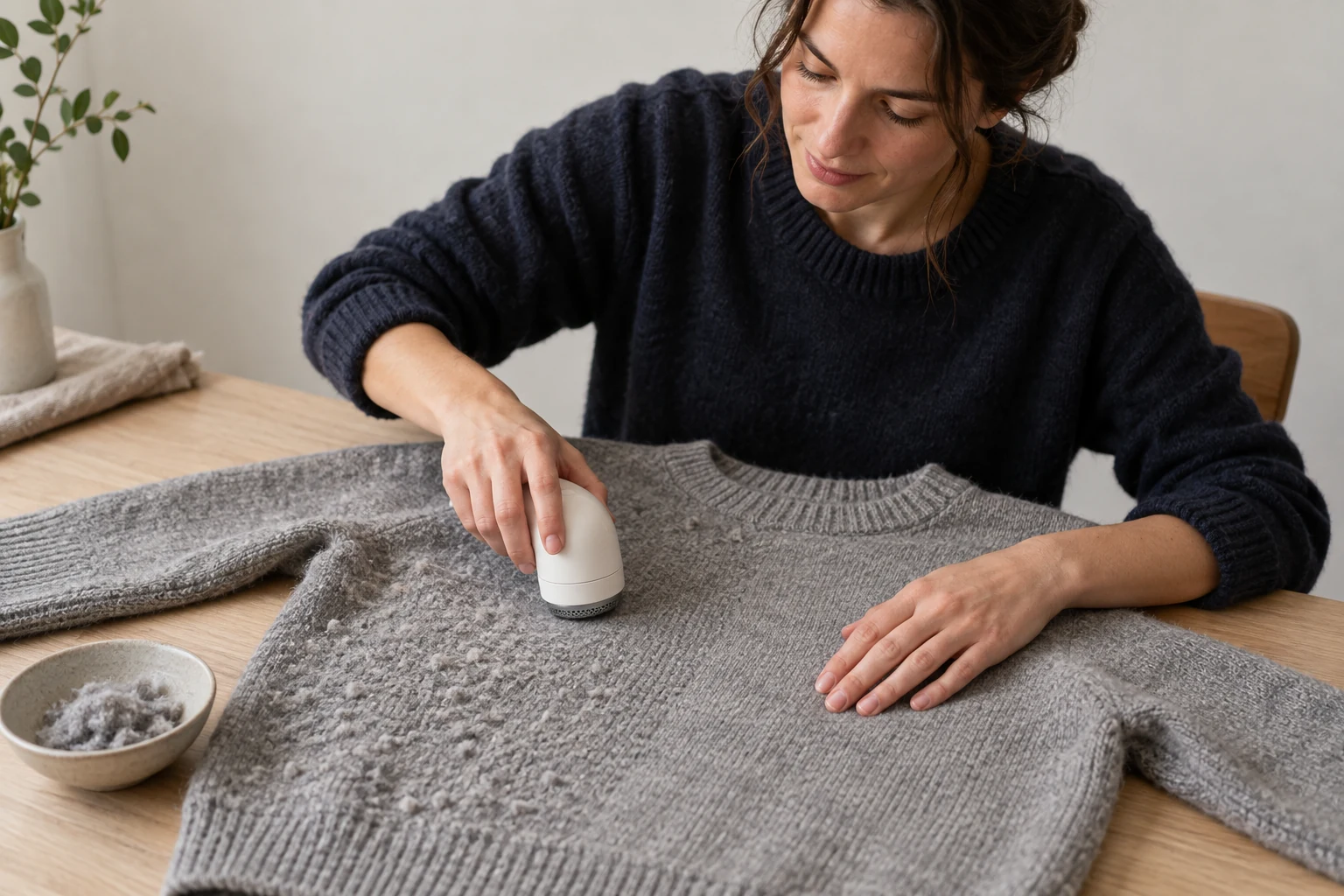
Let everything dry completely, then check it again. Thick cuffs, collars and seams hold water long after the chest feels dry, and sealed damp wool is a recipe for mustiness and mold. While each piece is in your hands, look for small holes, loose seams and missing buttons, and mend them now, so an old flaw is not mistaken for new damage in the fall. This is also a natural moment to remove pills with our guide to removing pilling, and to set aside anything you did not wear all winter; our guide to decluttering your clothes can help with that decision.
Bins, bags or boxes: choosing storage for winter clothes
Two sensible pieces of advice seem to pull against each other. The UC program recommends storing clean, pest free woolens in an airtight container, because a sealed box keeps moths out. Woolmark points out that vacuum bags do not let clothes breathe and can trap moisture, and suggests cotton or wool storage bags for delicate pieces. Both are right under different conditions. An airtight container protects only what goes in clean and dry, and only if the room itself stays dry. A breathable bag suits a dry closet that you open often enough to notice a problem.
For most homes, lidded clothing storage bins with a good seal are the practical middle ground. Clear bins let you see what is inside without unpacking; a sachet of silica gel inside helps absorb stray moisture. Fill them loosely, heaviest sweaters at the bottom, with tissue paper between delicate pieces, which Woolmark suggests to prevent snagging. Vacuum storage bags for clothes save a great deal of space, but Woolmark notes that they can need resealing, can trap moisture and are not ideal for delicate clothing; they also press fine knits flat. Keep them for hardwearing items, and give cashmere and fine merino a box or a cotton bag instead.
| Storage | Best for | Watch out |
|---|---|---|
| Airtight container | Keeping moths away from clean, dry woolens | Only protects what goes in clean and dry, in a dry room |
| Clear lidded bin with a good seal | Most homes; see contents without unpacking | Fill loosely, heaviest at the bottom, add silica gel |
| Cotton or wool storage bag | Delicate pieces in a dry closet you open often | Does not seal out moths |
| Vacuum bag | Hardwearing items where space is tight | Traps moisture, may need resealing, flattens fine knits |
Where to keep stored clothes, including winter coats
Choose a spot that is cool, dry and dark, and that you can reach. A shelf at the top of a bedroom closet or a bin under the bed usually beats an attic or basement, where temperature and humidity swing with the seasons. The UC program notes that low indoor humidity makes conditions less favorable for clothes moths. Label each container with its contents so you can find one sweater in October without opening everything, and open the boxes every month or two to look for condensation, musty smells or insects; Woolmark likewise recommends checking stored clothes from time to time.
Winter coats are the exception to folding. A woven wool coat belongs on a broad, shaped hanger that supports its shoulders, with buttons closed and pockets empty. Clean it before storage, following our guide to washing a wool coat if the label allows it at home, then cover it with a breathable cloth garment bag rather than the thin plastic from the dry cleaner, which can hold in moisture. Give coats enough space in the closet that they are not crushed against each other.
Keep clothes moths out, and deal with them if they arrive
Clothes moths are small, about a quarter inch (6 mm) at rest, and they flutter weakly near the infested items rather than flying toward lights like pantry moths. The damage is done by their larvae, which feed on wool, fur, feathers and blends containing wool, usually in hidden places such as under collars and cuffs. Signs include silky webbing or tubes on the fabric, small cases the color of the fabric, grazed patches and holes. Pheromone traps, sold at hardware stores, attract the males and are useful mainly for telling you whether moths are present.
Prevention is cleaning and sealing, backed up by checking. The UC program is candid about the usual remedies: cedar oil can kill small larvae but not large ones, and cedar loses that effect after several years; a tightly made chest matters more than the wood. Little is known about how well herbal repellents work. Mothballs work properly only in an airtight container, are toxic, leave a strong smell and can soften plastic buttons, so they are a poor fit for most homes.
If you find an infestation, take everything out of the closet or box, clean each item as its label allows, and vacuum the space thoroughly, especially the corners and cracks, emptying the vacuum promptly. The UC program lists washing in water of at least 120°F (49°C) for 20 to 30 minutes, dry cleaning, or sealing an item in a plastic bag and freezing it for several days below 18°F (about 8°C below zero) as ways to kill all stages. Hot water will ruin many woolens, so check the label first, and call a pest professional if the problem is widespread. Small holes found afterward can often be closed neatly; see our guide to fixing a hole in a sweater.
Common mistakes
Packing sweaters away unwashed
A sweater worn once still carries body oils and invisible food traces, which moths seek out. Clean everything first, even pieces that look fresh.
Sealing anything slightly damp
Moisture trapped in a sealed bin or vacuum bag has nowhere to go. Wait until cuffs and seams are completely dry, and add a silica gel sachet to the box.
Trusting cedar or lavender alone
Cedar oil can kill small larvae but loses that effect within a few years, and little is known about lavender and other herbal repellents. A clean sweater in a well sealed container, checked a few times a season, does far more.
Compressing fine knits in vacuum bags
Hard compression can flatten the loft of cashmere and fine merino and set creases. Save vacuum bags for sturdy clothes and give delicate knits a box or a cotton bag.
Questions people ask
Is it better to hang or fold sweaters?
Fold them. Hanging lets the weight of the knit pull on the shoulders, which leaves bumps and gradually lengthens the body. Woolmark recommends folding knitwear and keeping hangers for woven garments such as coats and jackets.
Are vacuum storage bags bad for sweaters?
They are fine for sturdy, fully dry sweaters over a season, and they save a lot of space. They are a poor choice for delicate knits, because they press fine knits flat and trap any moisture already inside, and they sometimes lose their seal. Check them partway through the season.
What is the best container for storing sweaters?
For most homes, a clean plastic bin with a lid that closes well, kept somewhere cool and dry, protects sweaters from dust and moths and lets you see what is inside; a silica gel sachet helps with stray moisture. Cotton storage bags suit delicate cashmere and fine merino in a dry closet you open often. Skip the thin plastic from the dry cleaner, and whatever you choose, pack the sweaters clean and completely dry.
How do I know if I have clothes moths?
Look for small, fluttering moths near your closet, silky webbing or tubes under collars and cuffs, tiny cases the same color as the fabric, and grazed patches or holes. A pheromone trap placed in the closet will confirm whether males are present.
Sources and further reading
References used for this guide. Each opens the original page in a new tab.
- Woolmark, how to store wool clothes Opens in a new tab
- Woolmark, caring for wool: folding, resting and airing garments Opens in a new tab
- Woolmark, how to dry wool, on why wet knits stretch on hangers Opens in a new tab
- University of California Statewide IPM Program, clothes moths pest notes Opens in a new tab
Keep reading
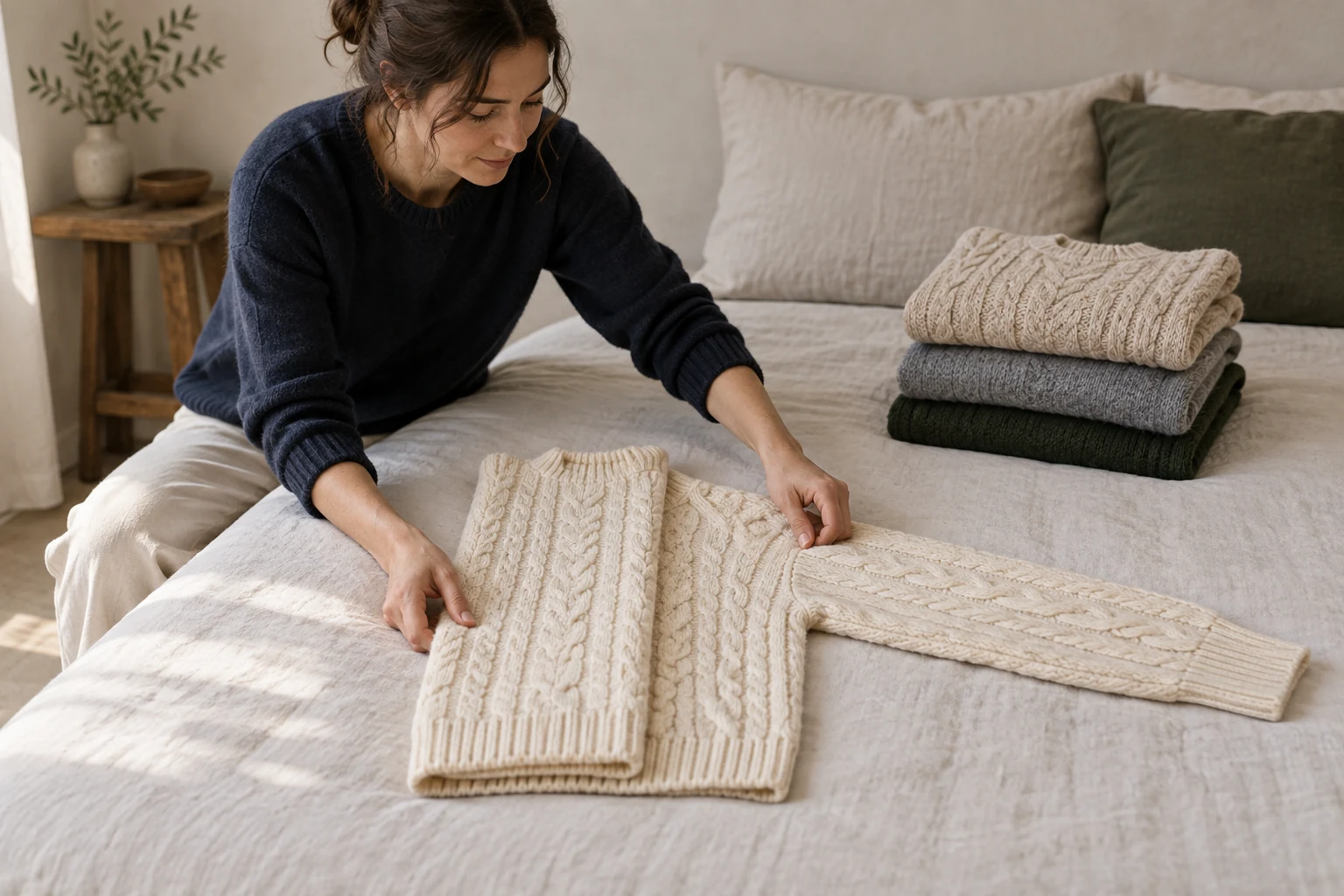
Closet and packing
How to fold a sweater so it keeps its shape
How to fold a sweater for a shelf or drawer, fold it over a hanger without stretched shoulders, pack it for travel, and store knitwear between seasons.
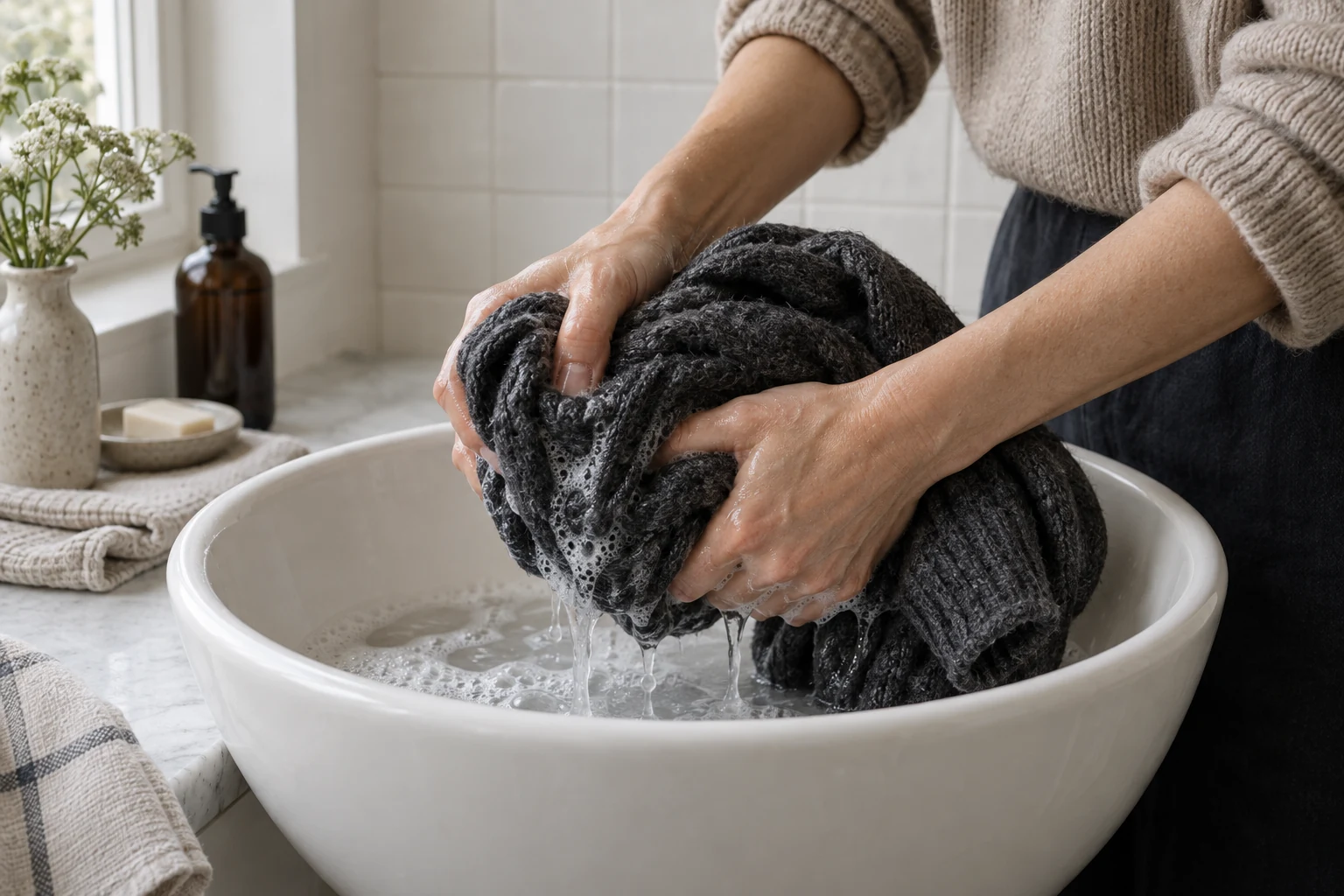
Washing and ironing
How to wash a wool sweater without shrinking it
How to wash a wool sweater by hand or in the machine: read the label, pick a wool detergent, keep water cool and calm, then dry it flat so it keeps its shape.
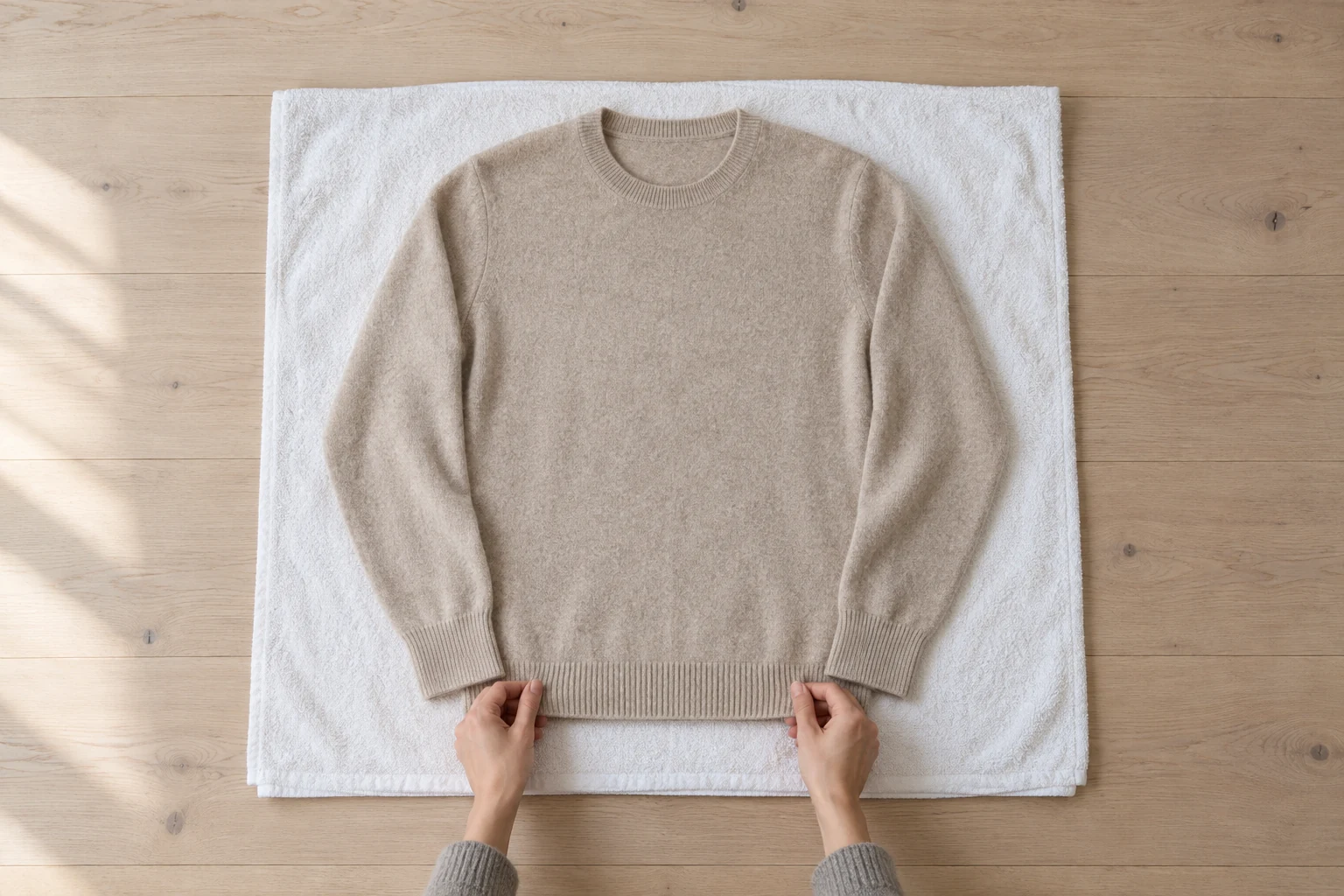
Washing and ironing
How to wash cashmere by hand or machine
How to wash a cashmere sweater or scarf at home: read the label, hand wash in lukewarm water with a wool detergent, press out the water and dry it flat.

Closet and packing
How to organize your closet so you can see everything
How to organize your closet by what you wear most: what to hang and fold, zones and shelves, small closet ideas and a simple seasonal rotation.
Washing and ironing
How to remove pilling from a sweater, and lint too
How to remove pilling from a sweater with a fabric shaver or sweater comb, clear lint with a roller, and wash and wear knits so the pills come back more slowly.