How to get coffee out of clothes
In this guide
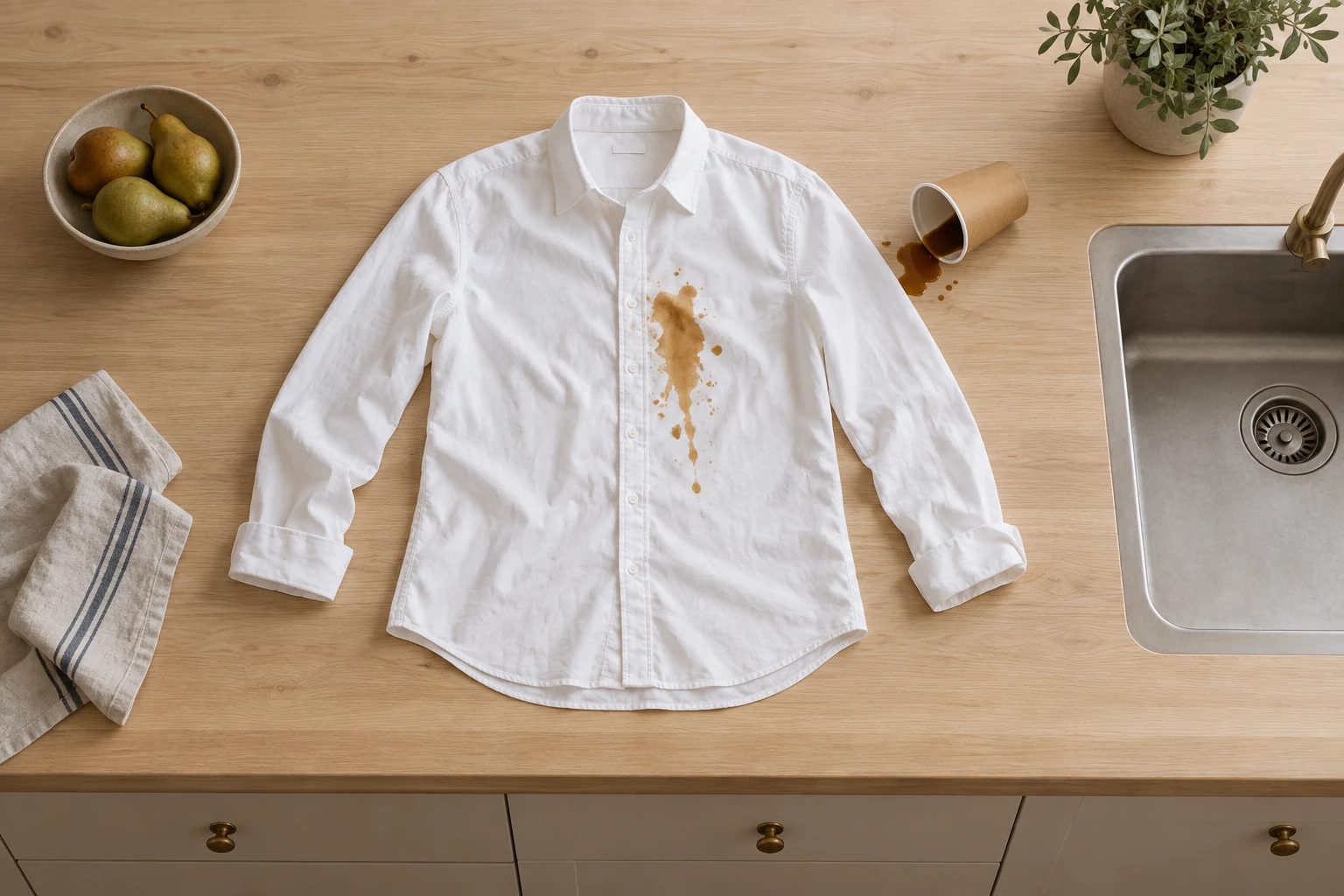
The lid was not quite on, the train braked, and now there is a brown splash down the front of a white shirt with a meeting in forty minutes. Coffee is one of the most common stains on clothes, and also one of the more forgiving ones. Knowing how to get coffee out of clothes comes down to three things: water early, detergent before the wash, and no heat until the mark is gone.
Black coffee is a tannin stain, the same family as tea, red wine and fruit juice. Its brown color comes from plant compounds that dissolve in water and respond well to detergent and bleach. Coffee with milk or cream is a combination stain: tannins plus a little protein and fat. That changes the order of treatment slightly, which is why this guide asks what was in the cup.
What to do right after you spill coffee
Blot first. Press a napkin or paper towel onto the spill to lift out as much liquid as you can, turning to a clean area each time, and do not rub, which spreads the stain and grinds it into the weave. Then get cool water through the fabric. The American Cleaning Institute and the University of Georgia Extension both start coffee stains the same way: sponge or rinse them promptly in cool water. If you can reach a sink, hold the fabric inside out under the tap so the water pushes coffee back out the way it came in.
Cool water is the safe default even for black coffee. Hot water can lift a fresh tannin stain on sturdy fabric, but if the coffee had milk in it, heat can set the milk protein, and you rarely know the fabric's limits standing in a café. At work or on the road, a bottle of water and a stack of napkins are enough to keep the stain from setting: wet one napkin, press it against the back of the stain, and blot from the front with a dry one. Skip the bar of soap in the restroom. Iowa State University Extension notes that bar soap and other natural soaps can make tannin stains harder to remove, so plain water is better than a lather you cannot rinse away.
How to get coffee stains out of clothes at home
These steps are for washable fabrics such as cotton, linen, polyester and blends. Read the care label before you start, and test anything stronger than water on an inside seam, especially on bright or dark colors.
Rinse from the back with cool water
Turn the garment inside out and run cool water through the stain for a minute or two. You should see the brown lighten noticeably. The more coffee you rinse out now, the less the detergent has to do.
Treat any cream or milk first
If the coffee had cream, whole milk or a sweet oily creamer, rub a drop of dish soap into the stain first to break up the fat. Cornell Cooperative Extension advises treating the greasy part of a combination stain such as coffee with cream before anything else, because the fat can hold the color in place.
Pretreat with liquid laundry detergent
Work a little heavy duty liquid detergent, ideally one with enzymes, into the stain from both sides with your fingertips or a soft brush. Leave it for 10 to 15 minutes. The stain should look paler and less sharply edged when you check it.
Or soak in a vinegar and dish soap solution
For a stubborn mark, the University of Georgia Extension suggests soaking the stain for 15 minutes in 1 quart (about 1 liter) of warm water with 1/2 teaspoon of dishwashing liquid and 1 tablespoon of white vinegar, then rinsing. The mild acid helps loosen the tannins. Use either this soak or the detergent step, and rinse the vinegar out completely before any bleach goes in.
Wash with bleach that is safe for the fabric
Wash in the warmest water the care label allows, with oxygen bleach for colors and most whites. Chlorine bleach is fine on white cotton and linen if the label allows it, but never on wool, silk or spandex. Our guide to using oxygen bleach explains how much to use.
Air dry and check
Look at the spot in daylight while it is still damp and again when dry. If you can see any brown ring, repeat the pretreatment and wash. Only use the dryer once the stain is completely gone, because the heat can set what is left.
How to get dried coffee stains out of clothes
Dried coffee can usually still be removed, especially if the garment has not been through a dryer. Older stains need time more than force. The American Cleaning Institute suggests pretreating or soaking older coffee stains in a product containing enzymes, then laundering. In practice that means dissolving enzyme detergent or an enzyme presoak in a basin of warm water, submerging the stained area and leaving it for at least 30 minutes, several hours for an old mark. Then follow the home steps above from the pretreatment onward.
Stains that have been ironed or tumble dried are harder, because the heat has cooked the color into the fibers. They are not always permanent. A long soak in oxygen bleach solution, overnight if the fabric tolerates it, can often fade a set coffee mark on white or pale cotton a great deal, and repeating the soak once or twice helps. On colored clothes, test the oxygen bleach solution on an inside seam first. If the mark sits on a white shirt collar together with sweat and body oil, our guide to removing sweat stains covers that mixture.
Coffee on white shirts, wool and silk
A coffee stain on a white shirt looks worse than it is, because the contrast is high, but white cotton is also the easiest fabric to rescue. You can use warmer water, and chlorine bleach is available as a final step if the label permits it. Never mix chlorine bleach with vinegar or ammonia, since the combination releases toxic gas. If you use the vinegar soak, rinse the garment thoroughly before any chlorine bleach goes near it. For keeping whites clean in general, see our guide to washing white clothes.
Wool, cashmere and silk need gentler handling. Blot and rinse with cool water in the same way, then dab the stain with a little wool or silk detergent dissolved in cool water and rinse again. Do not rub. Woolmark advises against enzyme detergents and against bleach of any kind, chlorine or oxygen, on wool, and silk is just as sensitive, so the stronger steps above are off the table. Our guides to washing silk and washing wool cover the full wash. On a suit, a tie or anything labeled dry clean only, blot, rinse lightly with cool water only if the label allows water at all, and take it to a dry cleaner quickly with a note saying whether it was coffee with or without milk.
Common mistakes
Using hot water on coffee with milk
Heat can set the milk protein and lock the coffee color in with it. Start with cool water whenever you are not sure what was in the cup, and move to warmer water only in the wash.
Lathering with bar soap
True soaps can make tannin stains such as coffee harder to remove. Use liquid laundry detergent or a little dish soap instead, and rinse well.
Putting it in the dryer too soon
A faint ring you cannot see when the shirt is wet often shows up after drying, and dryer heat makes it much harder to lift. Air dry and inspect in daylight before using heat.
Questions people ask
Does coffee stain clothes permanently?
Usually not. Coffee is a water soluble tannin stain, and fresh or dried coffee on washable fabric generally comes out with detergent, time and oxygen bleach. The stains most likely to leave a trace are old ones that have been through a hot dryer or an iron, and even those often fade with repeated oxygen bleach soaks.
Does vinegar remove coffee stains?
White vinegar helps, especially mixed with a little dish soap in warm water as a 15 minute soak, but it works best as one step rather than the whole treatment. Follow it with a proper wash. Never combine vinegar with chlorine bleach.
Will dish soap get coffee stains out of clothes?
Dish soap is useful for coffee with cream or milk, because it breaks up the fat that can hold the color in place. On black coffee it helps as part of a soak, but a heavy duty liquid laundry detergent is usually more effective for the tannin itself.
How do you get coffee out of clothes without washing them right away?
Blot, then press a wet napkin against the back of the stain and blot from the front with a dry one until little more color transfers. Keep the fabric damp if you can until you get home and can pretreat and wash it properly. What matters most is that the stain never dries in heat, so keep it away from hand dryers and radiators.
Sources and further reading
References used for this guide. Each opens the original page in a new tab.
- American Cleaning Institute: stain removal guide Opens in a new tab
- University of Georgia Extension: removing coffee and tea stains from textiles Opens in a new tab
- Iowa State University Extension AnswerLine: holiday stains by stain type Opens in a new tab
- Cornell Cooperative Extension: removing stains at home Opens in a new tab
- Woolmark: choosing a detergent for washing wool Opens in a new tab
- Washington State Department of Health: bleach mixing dangers Opens in a new tab
Keep reading

Stain removal
How to get red wine out of clothes
Get red wine out of clothes by blotting and flushing with cool water, then treating what is left with detergent and oxygen bleach, even once it has dried.
Washing and ironing
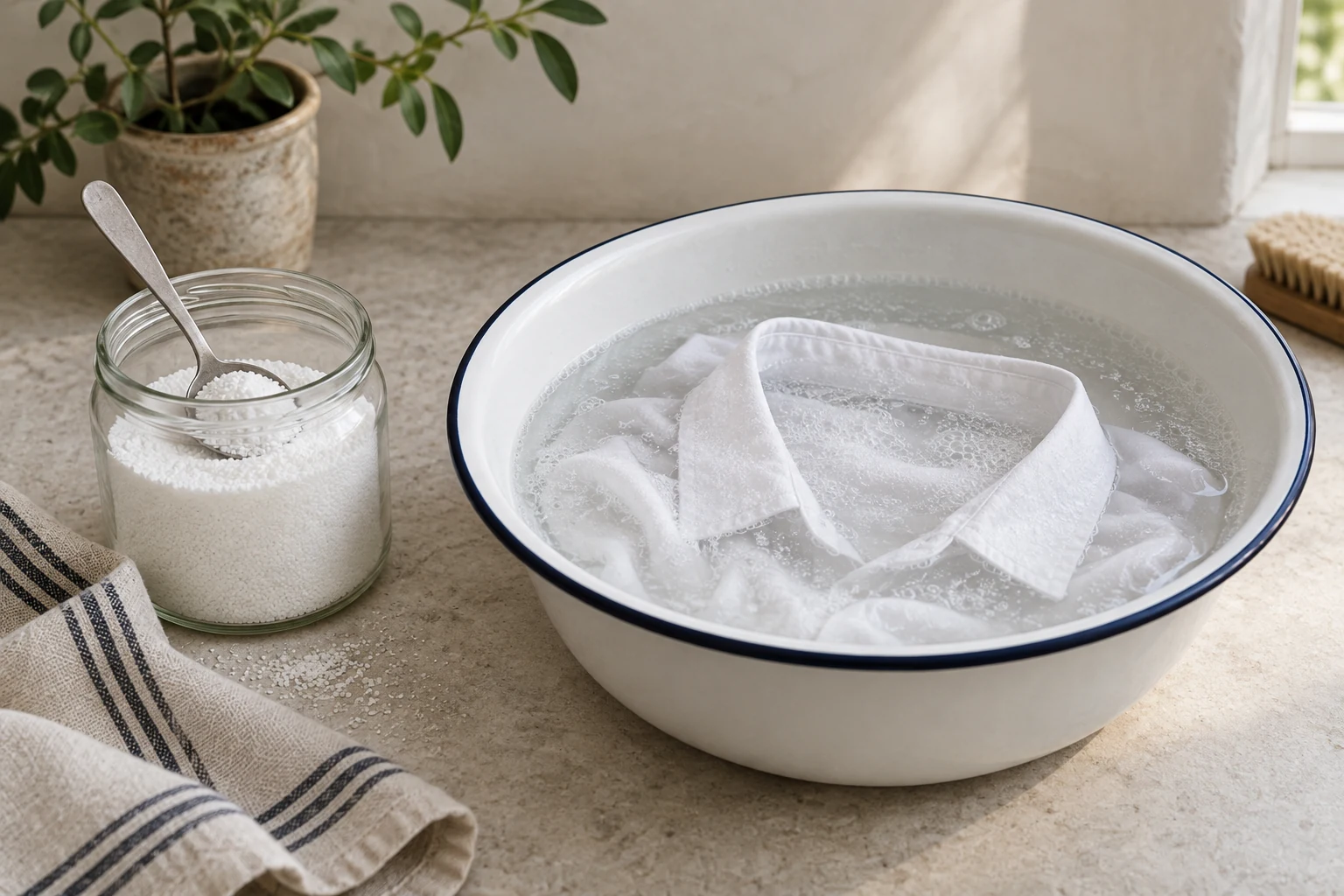
How to use oxygen bleach (sodium percarbonate) on clothes
What sodium percarbonate is, how oxygen bleach powder works, how to use it in the wash or as a soak on whites and colors, and the safety rules that matter.
Washing and ironing
How to wash white clothes and keep them white
How to wash white clothes: sort them, pick the right water temperature and detergent dose, use oxygen or chlorine bleach safely, and rescue whites that yellowed.
Stain removal
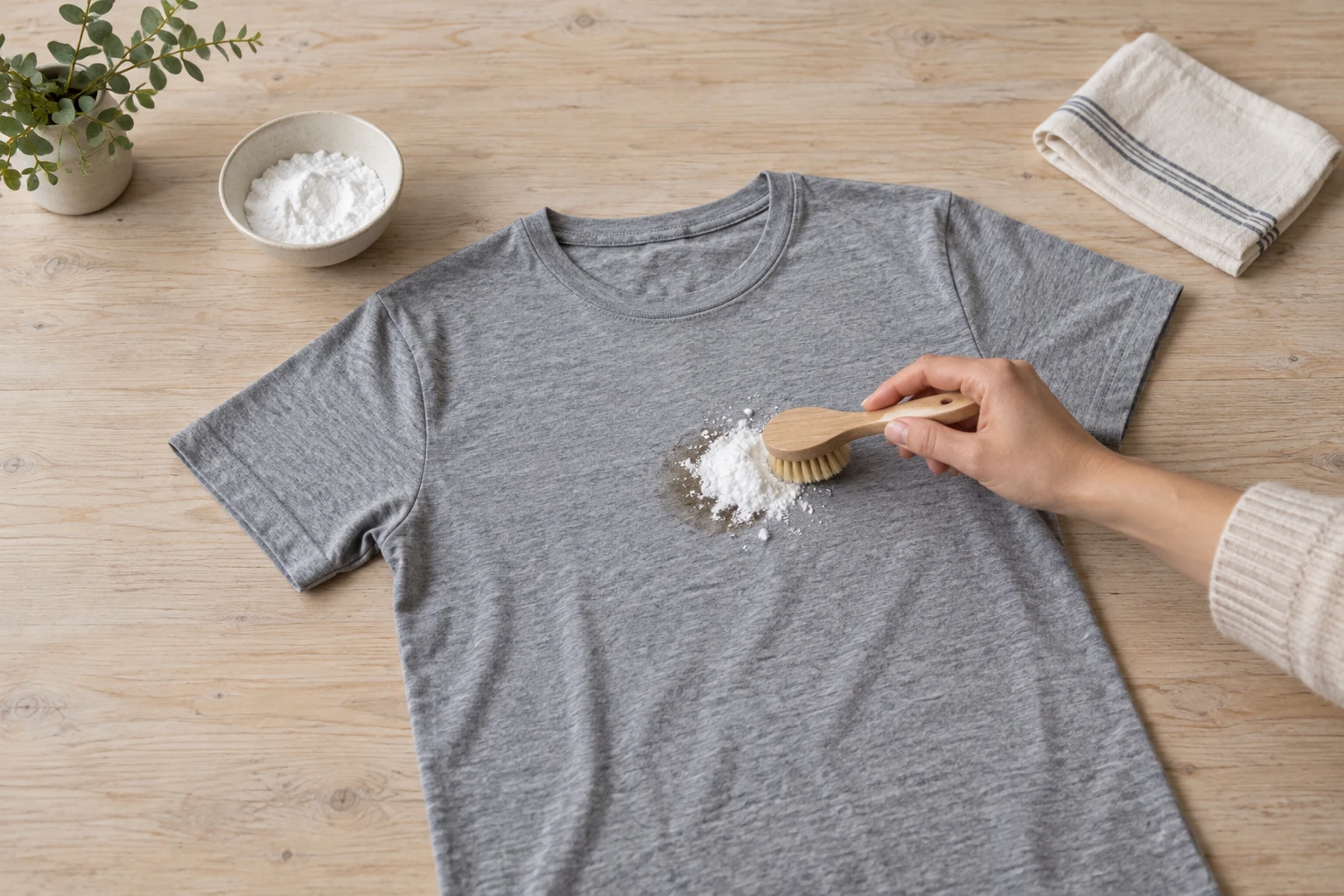
How to get grease out of clothes
Get grease out of clothes with an absorbent powder and dish soap, tackle black car grease, and rescue oil stains that survived the washer and dryer.

Washing and ironing
Laundry symbols explained: how to read a care label
What laundry symbols mean, in plain words: the wash tub, triangle, square, iron and circle, plus the dots, bars and crosses that change each instruction.