What is satin, and how is it different from silk
In this guide
Satin turns up on a wedding guest dress, the lapels of a tuxedo, a pillowcase that promises smoother hair, and a bottle of paint labeled satin finish. The word describes a look more than a material, which is why shopping for it gets confusing: two satin blouses can feel completely different and cost ten times as much. Answering what is satin starts with how it is woven.
This guide explains what satin is and what it is made of, the real difference between satin and silk, the main types you will see on labels, how to judge quality, where satin works and where it does not, and how to care for it.
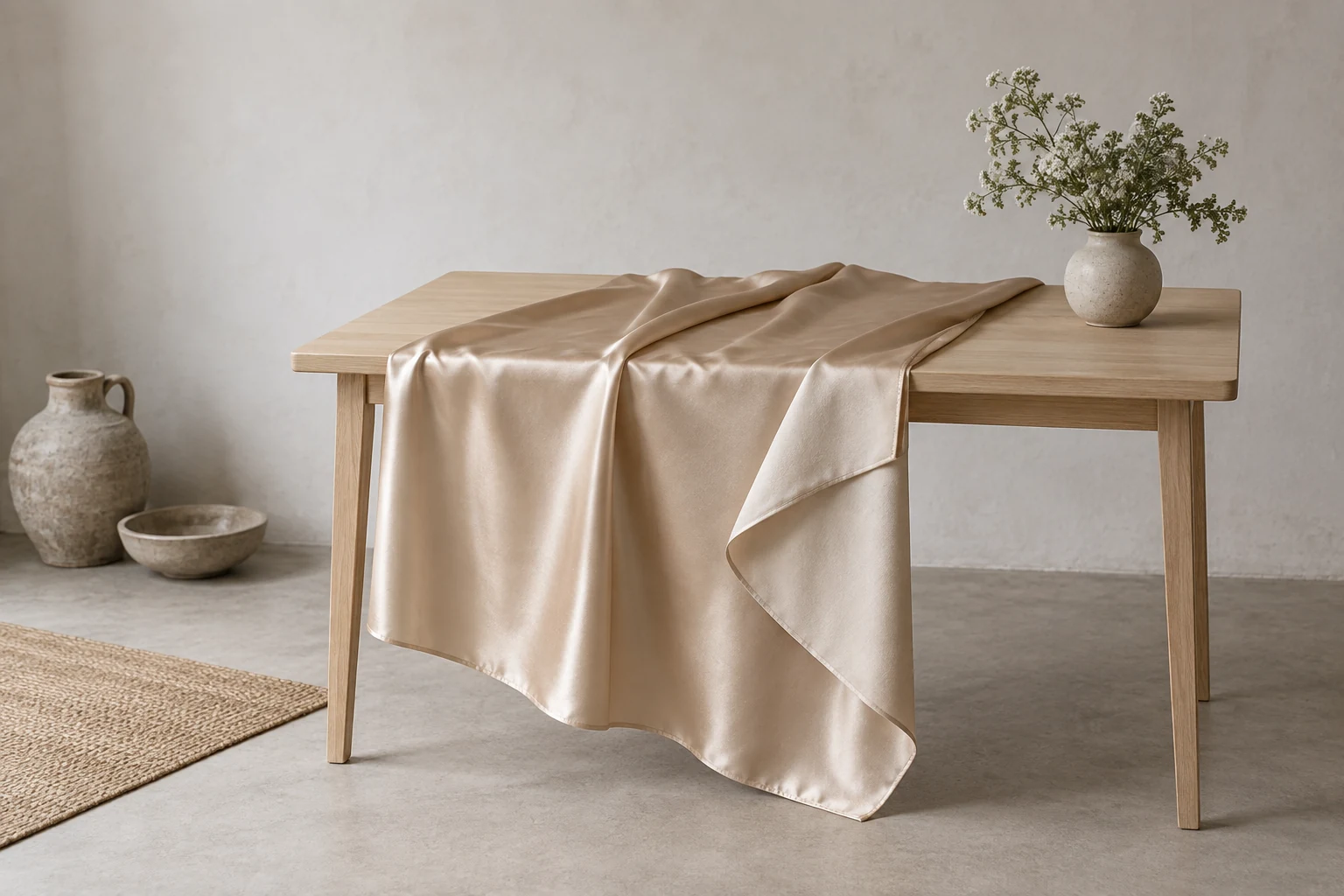
What satin is: a weave, not a fiber
Every woven fabric is made of lengthwise warp threads and crosswise weft threads. In a plain weave such as poplin they alternate over and under one at a time. In a satin weave, each thread floats over four or more threads before dipping under one, and the points where it dips are spread out so they do not line up. The result is a face made almost entirely of long, parallel floats. Light bounces off them in one direction instead of scattering, which gives satin its liquid sheen, while the back of the cloth looks matte.
Those long floats explain both the beauty and the weaknesses of satin. They make it smooth and slippery, so it drapes and moves beautifully and feels cool against the skin. They also catch easily on a ring, a zipper or a rough fingernail, and a pulled float shows as a bright line. The name itself is a reminder of where satin began: it is usually traced to Zaitun, the medieval name used by Arab and European traders for the Chinese port of Quanzhou, through which silk satin reached the West.
Satin vs silk: what is satin made of
Silk is a fiber, spun by silkworms. Satin is a way of weaving. So silk satin exists, and it is the original, but satin can be made of any long, smooth filament fiber. Today most affordable satin is polyester, and you will also see nylon, acetate and viscose (rayon), sometimes with a little spandex for stretch. When cotton is woven in a satin construction, it is called sateen, which is the familiar smooth, slightly shiny cotton in sheets and summer trousers.
The fiber changes how the cloth behaves. Silk satin breathes, absorbs moisture, feels cool in warm weather and takes dye with a deep, soft glow. It is also expensive and delicate. Polyester satin is strong, holds its color, resists wrinkles and costs far less, but it does not absorb sweat, so it feels warm and clammy in heat and can look glassy rather than luminous. Acetate and viscose satins sit in between: they drape well and breathe better than polyester, but they weaken when wet. Our guide to viscose explains that family of fibers. If a label just says satin, check the fiber content to know what you are buying.
Types of satin you will see on labels
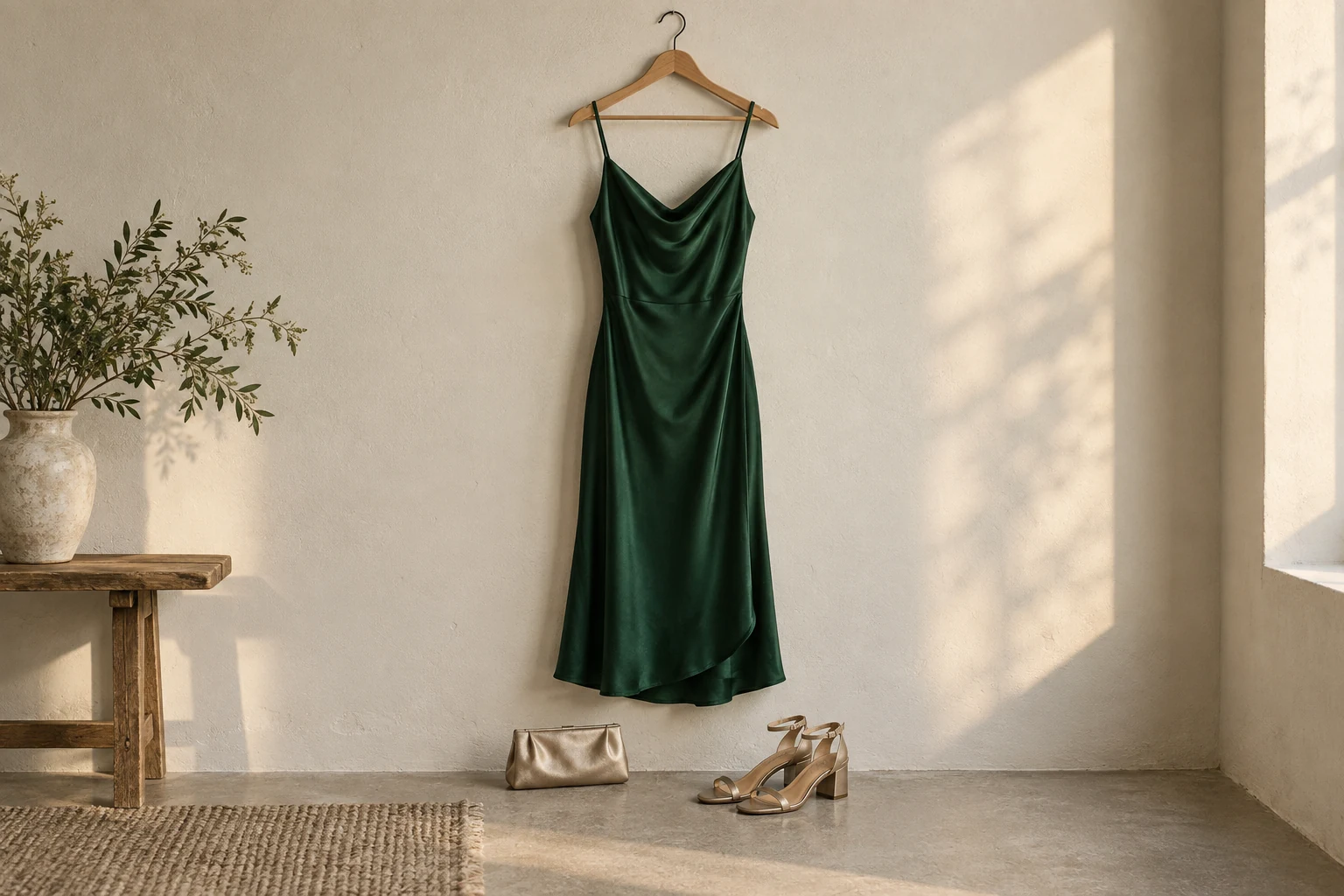
Charmeuse is a lightweight, fluid satin, traditionally silk, with a bright face and dull back. It is the fabric of slip dresses, bias cut skirts and lingerie, and it clings to whatever is underneath. Duchess satin (also spelled duchesse) is heavy, stiff and densely woven, with a low, rich luster. It holds structured shapes, which is why it appears in wedding gowns, ball skirts and formal coats. Crepe back satin has a satin face and a pebbly crepe back, so a designer can use either side, sometimes both in the same dress for contrast.
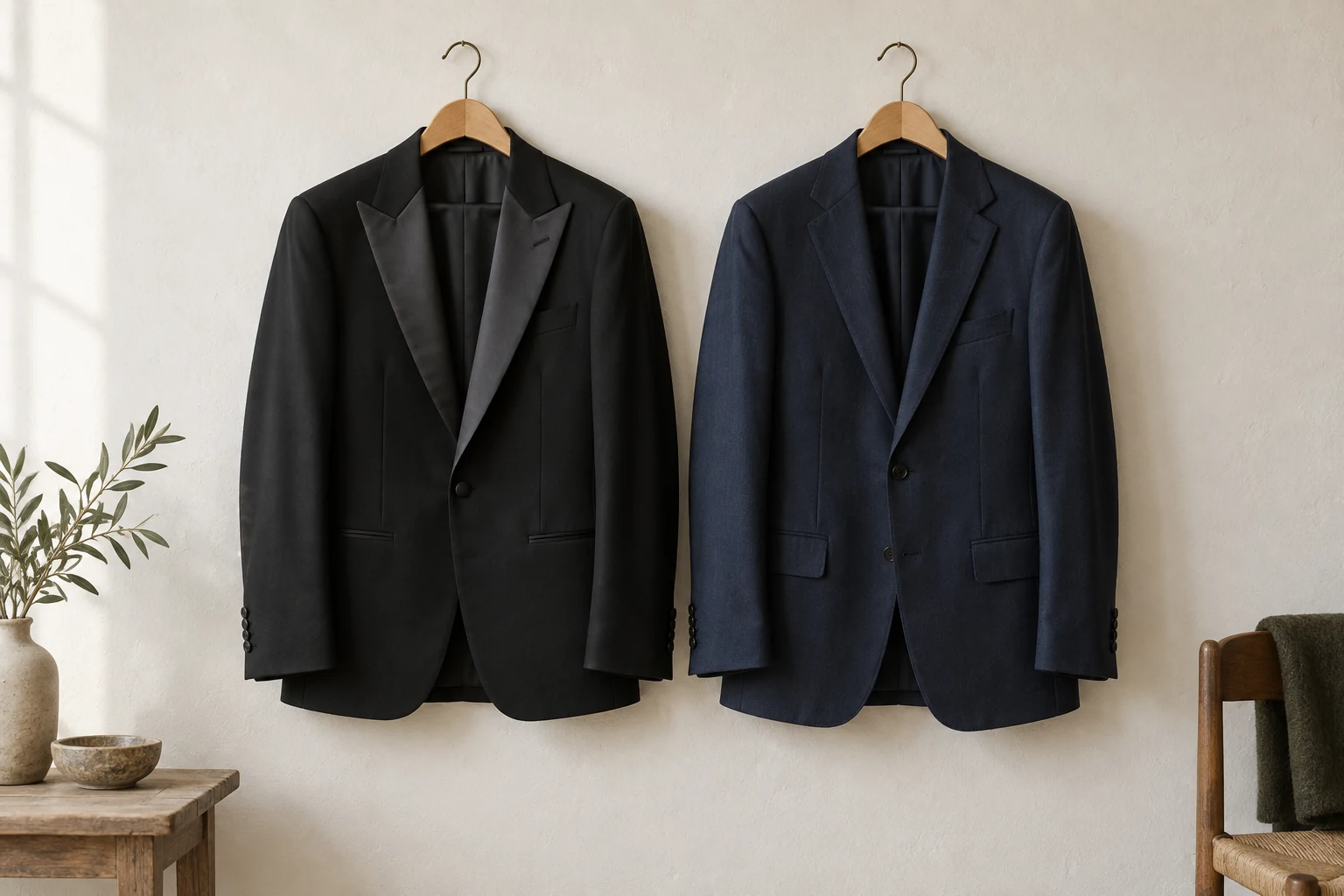
Sateen is cotton or another short fiber woven in a satin construction; it is softer in sheen and easier to wash. Slipper satin is a medium weight satin often used for evening shoes and bags. Peau de soie is a heavier, fine ribbed satin with a subtle, almost matte finish, a classic choice for bridesmaid dresses and formal shoes. On menswear, the silk facings on tuxedo lapels and the stripe down tuxedo trousers are usually satin or grosgrain, which is one of the details that separates a tuxedo from a suit; see our guide to suit vs tuxedo.
| Type | What it is like | Used for |
|---|---|---|
| Charmeuse | Light, fluid, bright face, dull back | Slip dresses, bias cut skirts, lingerie |
| Duchess | Heavy, stiff, dense, low rich luster | Wedding gowns, ball skirts, formal coats |
| Crepe back | Satin face and a pebbly crepe back | Dresses using either side, or both |
| Sateen | Cotton in a satin weave, softer sheen | Sheets and summer trousers |
| Slipper satin | Medium weight | Evening shoes and bags |
| Peau de soie | Heavier, fine ribbed, almost matte | Bridesmaid dresses and formal shoes |
How to recognize satin and judge its quality
Satin is easy to recognize: a smooth, glossy face that reflects light in a clean line, and a dull back. Silk satin has a soft, pearly glow and warms quickly in your hand. Polyester satin often has a harder, brighter shine that can look almost wet under flash photography, and it stays cool and slightly slippery. Burn tests are not practical in a shop, so rely on the label and on your hands.
For quality, look at density and weight. Hold the fabric to the light: good satin is tightly woven with no gaps, and the sheen is even rather than streaky. Rub a corner between your fingers; cheap satin feels thin, crackles and shows every crease, while better satin drapes in soft folds and recovers from light creasing. Check the seams, because satin frays and puckers easily, and a well made garment has clean, flat seams and finished edges. For silk, weight is often given in momme, and a higher number means a denser silk that is more opaque and wears longer.
What satin is used for, and how to wear it
Satin is at home in eveningwear and occasion dressing: slip dresses, bias cut midi skirts, wide leg trousers, camisoles and blouses for cocktail attire, and gowns for black tie. A satin skirt worn with a chunky knit or a plain T shirt and loafers is the easiest way to bring it into daytime, because the matte texture balances the shine. For men, satin appears as tuxedo lapels, bow ties, pocket squares and the occasional evening shirt; a satin bomber or a camp collar shirt is a bolder, more fashion led choice.
Satin is less forgiving in a few places. It shows sweat marks and water spots, especially in pale colors and in polyester that does not absorb moisture, so it is a poor choice for a hot outdoor summer wedding unless it is silk. Stiff, very shiny satin can highlight every seam and fold, which is why many people find a softer charmeuse or a crepe back satin more flattering. Around the home, satin pillowcases and bonnets are popular for hair; the smooth surface creates less friction than cotton, although the claimed benefits for skin and hair rest mostly on dermatologists' experience rather than solid trials.
How to wash satin, and what happens if it gets wet
Care depends on the fiber, so read the care label first. Polyester satin usually tolerates a cool, gentle machine wash inside a mesh bag, then line drying. Silk satin is best hand washed in cool water with a mild silk or wool detergent, rolled in a towel and dried flat away from sun; our guide to washing silk has the full method. Acetate satin and structured pieces such as a duchess satin dress or tuxedo lapels should go to a dry cleaner. Never wring satin, which creases the floats permanently.
Water on silk and acetate satin can leave a ring or spot as it dries, because the finish and the fibers swell unevenly. If that happens, dampen the whole panel evenly, or have it professionally cleaned, rather than rubbing the spot. Iron satin on the reverse at a low setting, or better, use a steamer held a few inches away; direct heat on the face can leave shine marks. See our guide to steaming clothes.
Common mistakes
Assuming satin means silk
Most satin in stores is polyester. Check the fiber content before paying silk prices, and before choosing satin for a hot day.
Wearing jewelry that snags
Rings, bracelets with prongs and rough bag straps catch the long floats and leave pulled threads. Put jewelry on last and carry smooth bags with satin.
Ironing the face on high heat
High heat melts polyester satin and leaves shiny patches on silk. Steam, or iron the reverse on low with a pressing cloth.
Questions people ask
Is satin basically plastic?
Only when it is made of polyester or nylon, which are plastics in the chemical sense. Satin itself is a weave, and it was woven from silk for centuries before synthetics existed. Silk satin, viscose satin and cotton sateen are not plastic at all.
Is satin a good fabric?
It is excellent for drape, sheen and a smooth feel, and good quality satin lasts well with care. Its downsides are snagging, visible sweat and water marks, and, in polyester, poor breathability. It is a good choice for evening and occasion clothes, and a weaker one for hard wearing everyday pieces.
Is satin bad to wear in summer?
Polyester satin can feel hot and sticky because it does not absorb sweat. Silk satin is much more comfortable in warm weather, and a loose cut helps any satin breathe. For truly hot days, linen or light cotton is a better choice.
What is the difference between satin and sateen?
Both use the satin weave. Satin is made from long filament fibers such as silk or polyester and has a high gloss. Sateen is made from cotton or other short staple fibers, with a softer, more matte sheen, and is common in bedding and casual trousers.
What does satin finish mean on paint?
It borrows the name from the fabric. A satin paint finish has a soft, low sheen between matte and semi gloss, much like the glow of satin cloth. It has nothing to do with textiles otherwise.
Sources and further reading
References used for this guide. Each opens the original page in a new tab.
Keep reading
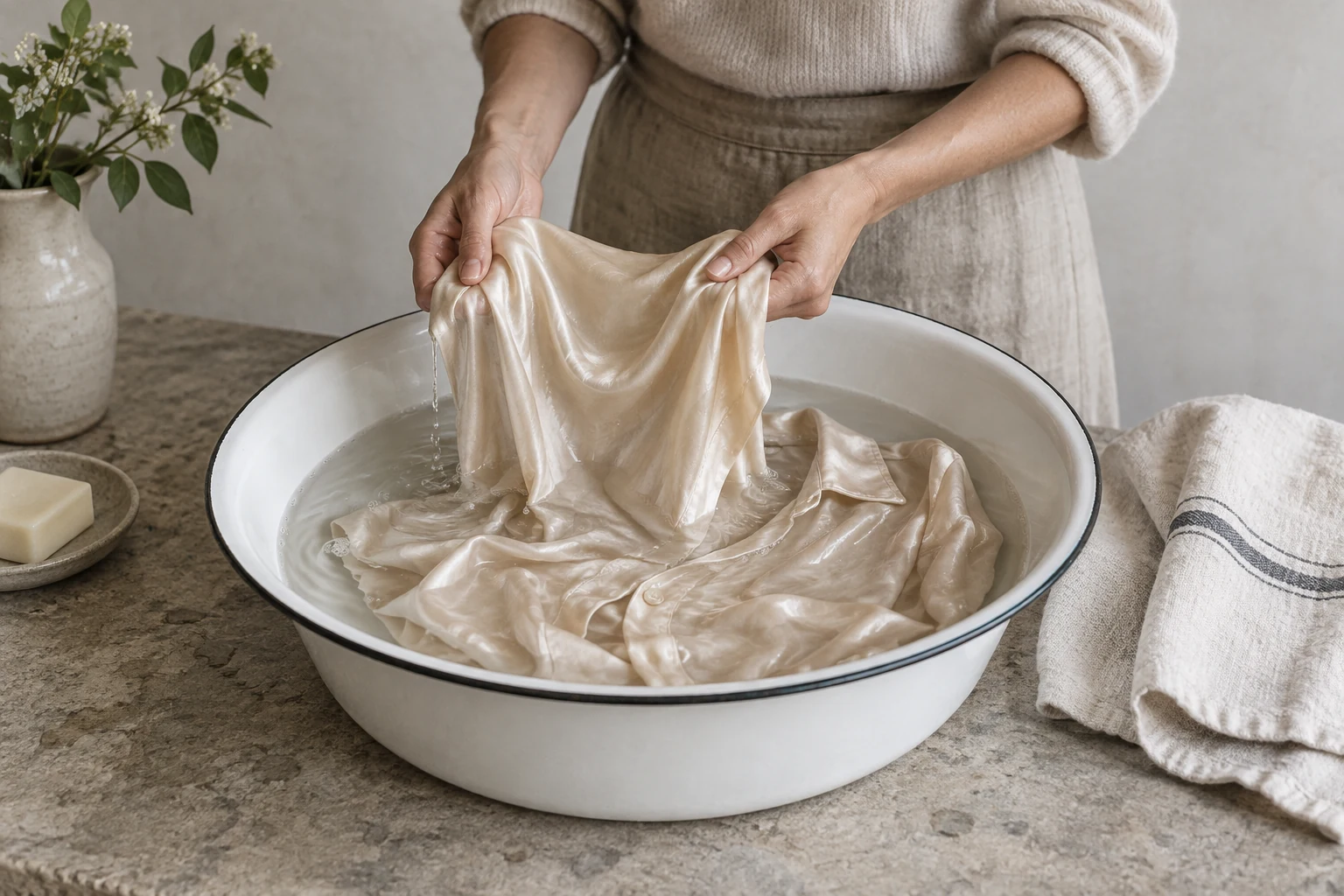
Washing and ironing
How to wash silk at home
How to wash silk safely: when the label says a cleaner is the better choice, how to test for color bleeding, and how to hand wash, dry and iron silk at home.
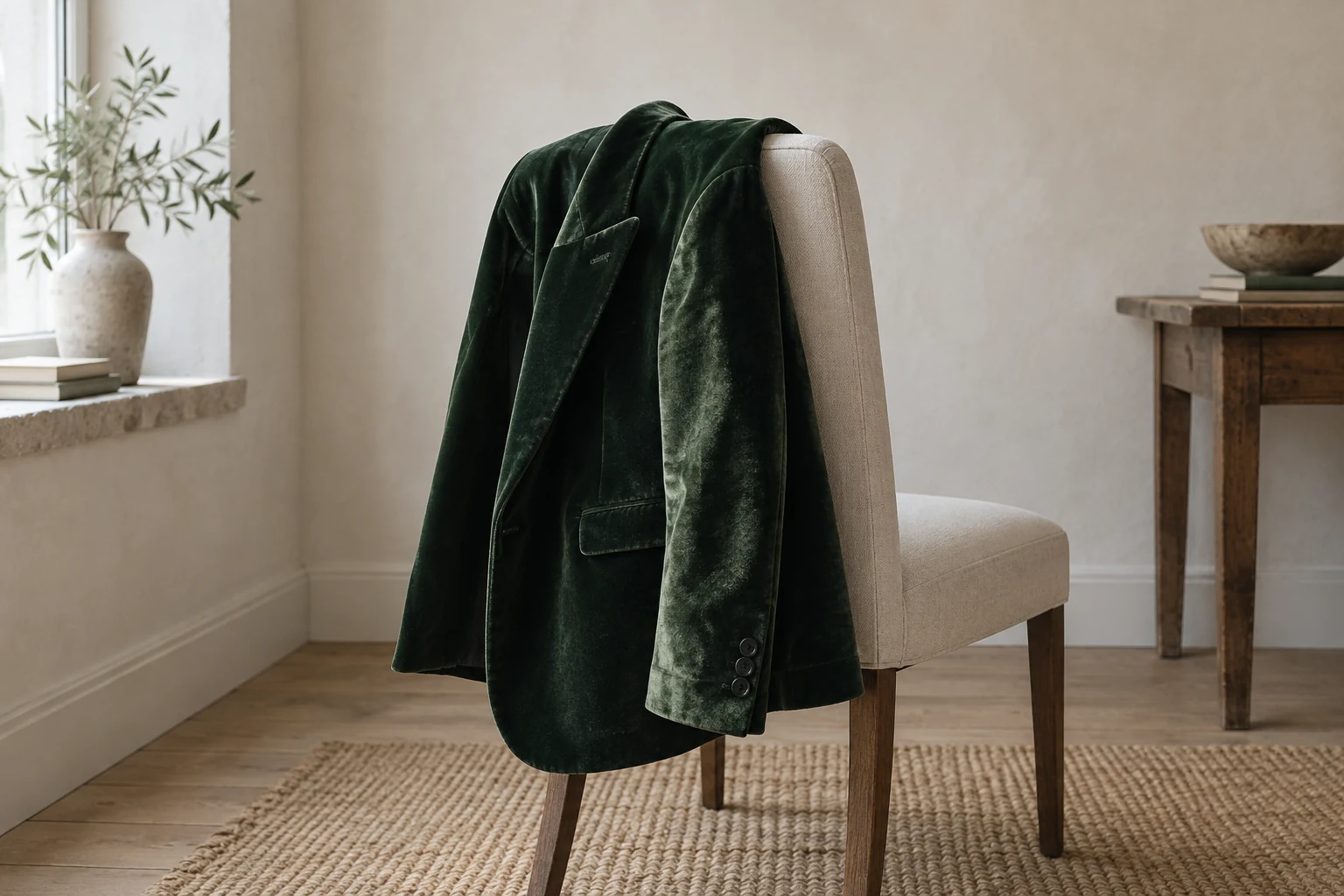
Fabrics
What is velvet, and how to care for it
What velvet is and how its dense pile is woven, silk vs cotton vs polyester velvet, velvet vs velveteen and velour, how to wear it and how to care for it.
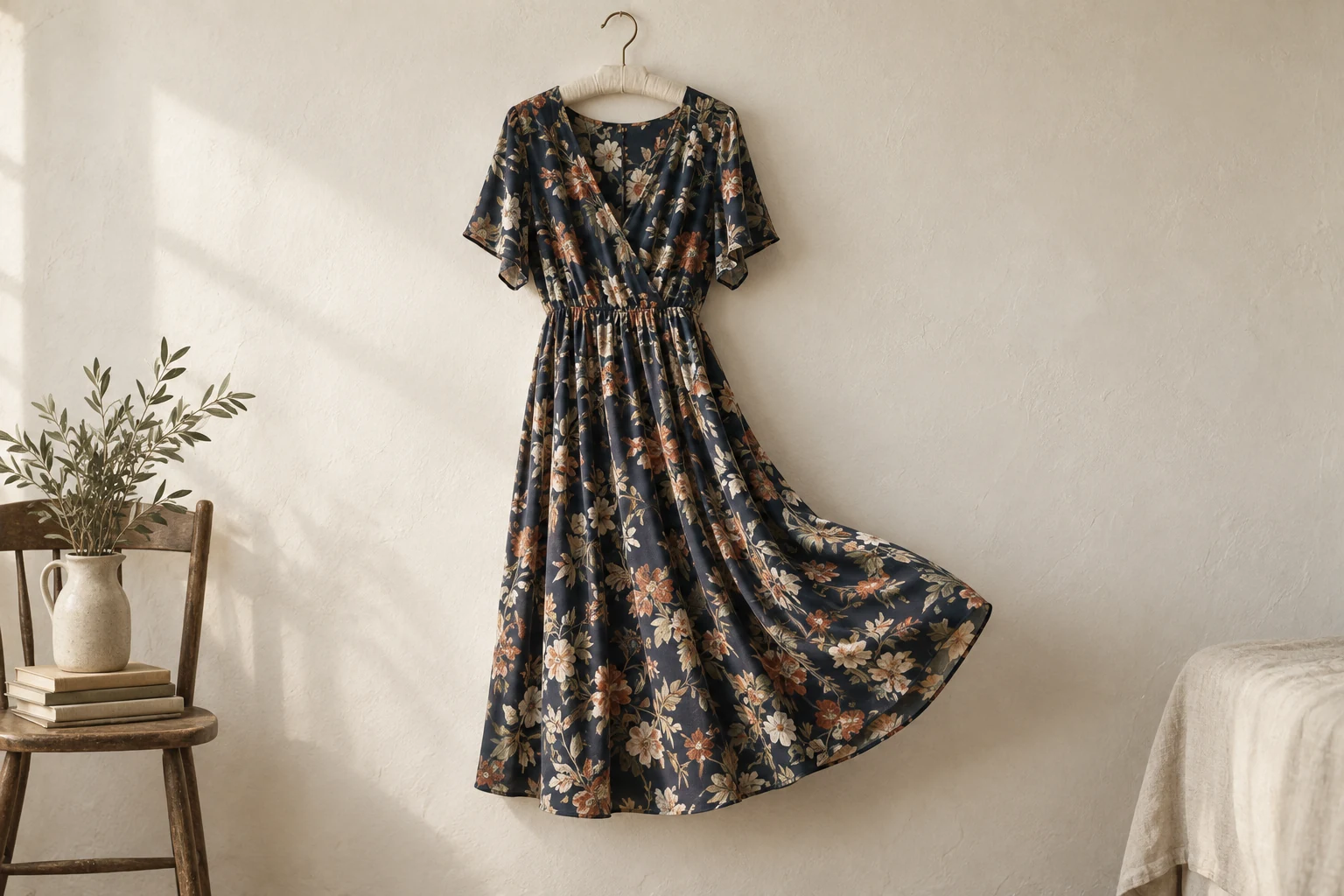
Fabrics
What is viscose fabric, and is it any good?
What viscose is, why it is the same thing as rayon, how to judge good viscose, how it compares with cotton and polyester, and how to wash it without shrinking.
Suits and tailoring
Suit vs tuxedo: how to tell them apart and which to wear
Suit vs tuxedo explained: the satin lapels, trouser stripe and bow tie that set a tuxedo apart, and which one a wedding, prom or black tie invitation asks for.
Dress codes
Cocktail attire for women: what to wear
What cocktail attire means for women: dress lengths, fabrics, jumpsuits and tailored sets, shoes and bags, and how the invitation, venue and season change it.