What is viscose fabric, and is it any good?
In this guide
Viscose is everywhere once you start reading labels: the swingy printed midi dress, the slippery lining inside a blazer, the soft ribbed top that is 95% viscose and 5% elastane. It feels pleasant and costs less than silk, yet people warn that it shrinks and falls apart. So what is viscose, and is it a fabric worth buying? Viscose is a fiber made from wood cellulose, and it is the same thing Americans usually call rayon. Its reputation depends almost entirely on how well it is made and how it is washed.
Good viscose and poor viscose can carry exactly the same label, so the useful skills are telling them apart in a shop, knowing where viscose beats cotton and polyester and where it loses, and washing it in a way that does not undo the purchase.
Is viscose the same as rayon?
Yes. Viscose is the name of the chemical process used to make most rayon, and it is also the everyday name for the fiber in Europe, the UK and much of the world. In the United States, the Federal Trade Commission's generic fiber name is rayon, so American labels more often say rayon, while clothing made for international markets frequently says viscose. A garment labeled 100% viscose and one labeled 100% rayon can be exactly the same fiber.
The process gets its name from the thick, viscous solution at its center. Wood pulp is treated with caustic soda and carbon disulfide until the cellulose dissolves into a honey like liquid, which is forced through fine holes into an acid bath where it sets as filaments. Modal and lyocell are close relatives made by adjusted processes; our guides to rayon, modal and Tencel lyocell compare the family.
Is viscose natural, plastic or polyester?
Viscose is not polyester and it is not plastic. Polyester is made from petroleum based polymers, while viscose is regenerated cellulose, the same molecule found in cotton and wood. It also is not natural in the way cotton, linen, wool or silk are, because the fiber only exists after heavy chemical processing. The usual term is semi synthetic.
The same logic applies to bamboo. The Federal Trade Commission has said that most soft bamboo textiles are really rayon made from bamboo pulp, with no trace of the original plant structure left, and they must be labeled that way. So bamboo viscose is viscose, whatever the marketing suggests.
How viscose feels and where it works
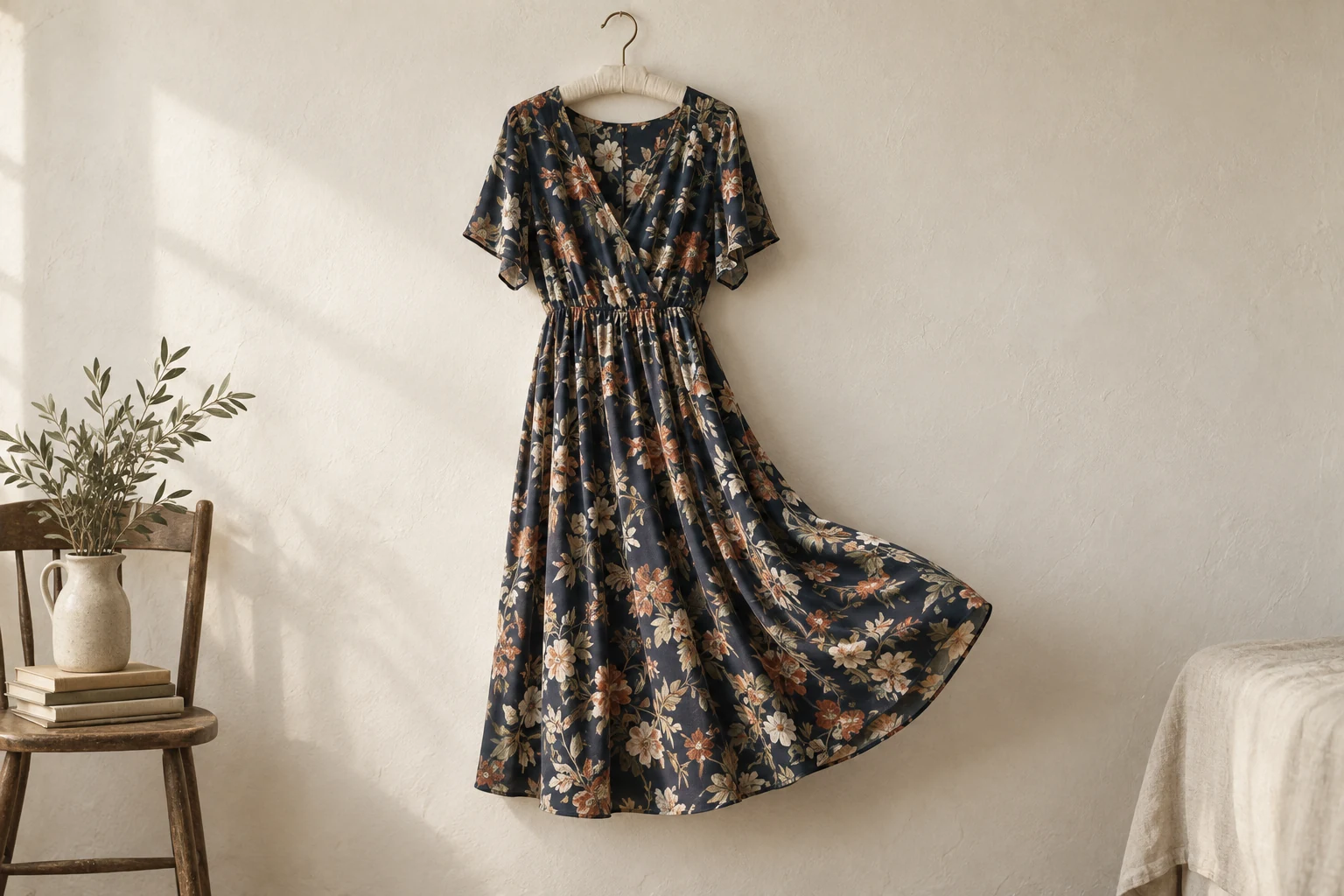
Is viscose breathable? Yes. It absorbs moisture well, feels cool and smooth on the skin and lets heat escape, so it is comfortable in warm weather in a way polyester often is not. It drapes heavily and moves with the body, and it takes dye brilliantly, which is why so many printed summer dresses, blouses and wide trousers are made of it. It is also the traditional material for jacket linings, where its smoothness helps a coat slide on and its breathability keeps you cooler than a polyester lining.
Is viscose stretchy? A woven viscose has almost no stretch, so fitted woven pieces need enough ease. Viscose jersey has some give, and most stretchy viscose tops and dresses get their spring from a small percentage of elastane. Viscose also wrinkles readily, so it suits relaxed, flowing shapes better than crisp tailoring.
How to tell if viscose is a good material
Viscose varies more than most fabrics, and the fiber name alone tells you little. Hold the fabric up to the light: a dense, even weave with some weight to it will wear far better than a thin, see through one. Rub a corner gently between your fingers; cheap viscose can already feel slightly fuzzy or papery, and that surface will pill and thin quickly. Good viscose crepe has a pebbly, springy texture, and good viscose twill or satin feels substantial rather than flimsy.
Look at the construction too. Seams on viscose should be neatly finished and not puckered, because a weak fiber under a tight seam is where holes appear first. Generous seam allowances and a hem with some depth allow for small shrinkage and alterations. Check the care label for a clue to the maker's confidence: a dry clean only label on a simple dress often signals fabric that shrinks or bleeds in water.
Viscose vs cotton, and viscose vs polyester
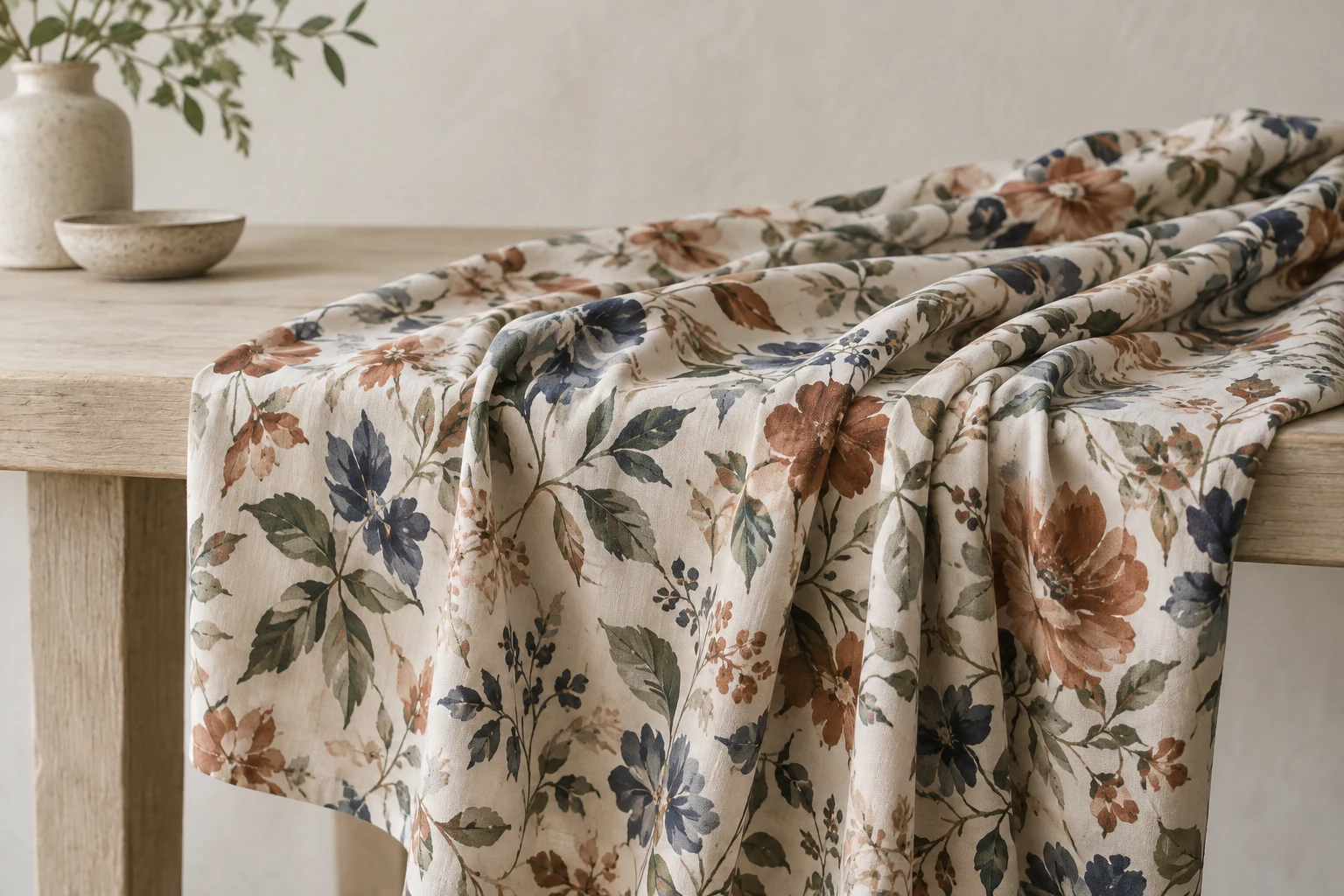
Compared with cotton, viscose is silkier, drapier, cooler to the touch and more vivid in color. Cotton is the practical partner: stronger when wet, easier to wash, less prone to shrinking and better at holding shape. Is viscose breathable like cotton? Broadly yes, since both are cellulose and both absorb sweat, but a viscose dress will feel lighter and more fluid while a cotton one feels crisper.
Is viscose better than polyester? For comfort in heat, usually. Viscose absorbs moisture and breathes, while polyester sheds water and can feel clammy. Polyester is far more durable, resists wrinkles and shrinkage, and survives rough washing. Blends of viscose and polyester are common in suiting and dresses because the polyester adds strength and wrinkle resistance to viscose's drape. For the broader picture, see polyester vs cotton.
| Quality | Viscose | Cotton | Polyester |
|---|---|---|---|
| Feel | Silky, drapey, cool | Crisper, matte | Smooth, can feel clammy |
| Comfort in heat | Absorbs and breathes | Absorbs and breathes | Sheds water, breathes less |
| Strength and washing | Weak when wet, shrinks if careless | Stronger wet, easy to wash | Very durable |
| Wrinkles | Wrinkles readily | Wrinkles | Resists wrinkles |
Why viscose has a bad reputation
Some of the criticism is about wear. Viscose loses much of its strength when wet, so it shrinks, twists or tears when washed carelessly, and cheap viscose can look tired after a season. Those problems are real but manageable with good fabric and gentle care.
The bigger concerns are about production. The viscose process uses carbon disulfide, a highly toxic chemical that has harmed workers and polluted nearby communities where factories are poorly controlled. And much of the wood comes from forests: the environmental group Canopy has documented viscose supply chains reaching into ancient and endangered forests. Is viscose toxic to wear? The documented harm is to people and places involved in making it; the finished fiber is cellulose. If sourcing matters to you, look for viscose with FSC or PEFC certified wood, or choose lyocell, whose solvent is recovered and reused.
How to wash viscose without shrinking it
Follow the label first; our guide to reading laundry symbols explains each symbol. If washing is allowed, hand wash in cool water with a mild detergent, or use a delicate cycle in a mesh bag at 86°F (30°C) or lower. Do not soak for long, and never wring. Press the water out, roll the garment in a towel, then hang it on a padded hanger or dry knits flat. Our guide to hand washing clothes shows the full method.
Keep viscose out of the dryer unless the label clearly allows it. Iron on the reverse side at a low to medium setting while the fabric is slightly damp, or steam it, since direct heat can leave shiny marks. A viscose rug follows a similar logic: the fiber looks silky but hates water, so spills should be blotted immediately and deep cleaning left to a professional.
Common mistakes
Wringing wet viscose
Wet viscose is at its weakest, and twisting it stretches and distorts the fabric permanently. Press water out gently instead.
Buying a snug fit in woven viscose
Woven viscose has no stretch and may shrink slightly. Choose enough room through the shoulders, hips and length, especially if you plan to wash it at home.
Ironing on the right side
A hot iron can leave a permanent shine on viscose. Press on the reverse or through a pressing cloth.
Questions people ask
Is 100% viscose the same as rayon?
Yes. Viscose is the most common kind of rayon, and the two names are used for the same fiber on labels in different countries. Modal and lyocell are related fibers made by modified processes.
Is viscose good quality?
It can be. Dense, weighty viscose with well finished seams can last for years and look lovely, while thin, cheap viscose pills and shrinks quickly. Judge the fabric weight, weave and construction rather than the fiber name alone.
Does viscose shrink?
It can, especially in warm water or a dryer, because the fibers swell and weaken when wet. Cool hand washing, no wringing and air drying keep shrinkage to a minimum, and dry cleaning is the safest choice for tailored pieces.
Is viscose good for summer?
Yes, it is one of the most comfortable fabrics for heat because it breathes, absorbs sweat and drapes away from the body. It does wrinkle, so pair it with relaxed shapes, and see our guide to dressing for 80 degree days for full outfits.
Sources and further reading
References used for this guide. Each opens the original page in a new tab.
- FTC Textile Rules, 16 CFR 303.7: rayon as the generic name for regenerated cellulose Opens in a new tab
- Wikipedia: Viscose (rayon), process, properties and health concerns Opens in a new tab
- Federal Trade Commission: How to avoid bamboozling your customers (bamboo rayon labeling) Opens in a new tab
- Canopy: Deforestation, so out of style (viscose and endangered forests) Opens in a new tab
Keep reading
Fabrics
What is rayon? The fabric made from wood
What is rayon made of, is it natural or synthetic, and is it any good? How it is made, how it wears, how it compares with cotton and polyester, and how to wash it.
Fabrics
What is modal fabric, and is it better than cotton?
What modal fabric is made of, why it feels so soft, how it compares with cotton, whether it is plastic or toxic, and how to wash modal so it stays smooth.
Fabrics
What is Tencel? Lyocell fabric explained
What Tencel is, how lyocell is made from wood, whether it is natural, how it compares with cotton and modal, why Tencel sheets feel cool, and how to wash it.
Fabrics
Polyester vs cotton: which fabric to choose
Polyester vs cotton compared honestly: comfort, heat, sweat, odor, durability, skin and the environment, plus how to tell them apart and when a blend is best.
Washing and ironing
How to hand wash clothes properly
How to hand wash clothes in a sink or basin: which detergent to use, water temperature by fabric, how long to soak, how to rinse and how to dry without stretching.