Types of pants and how to wear each
In this guide
Online shops list dozens of names for pants, from chinos and slacks to palazzos, culottes and joggers, and it is not always clear which are genuinely different garments and which are the same thing sold under a new label. Knowing the real types of pants helps you read a dress code, shop without guessing and see what is missing from your own closet.
They make more sense once you sort them by family (what they are made of and how formal they are) and then by cut (the shape of the leg and where the waist sits). This guide goes through both, for men and women, with how to wear each type. A quick word on names: in the United States and Canada, pants is the general word, while trousers usually means tailored pants with a waistband, belt loops and a fly.
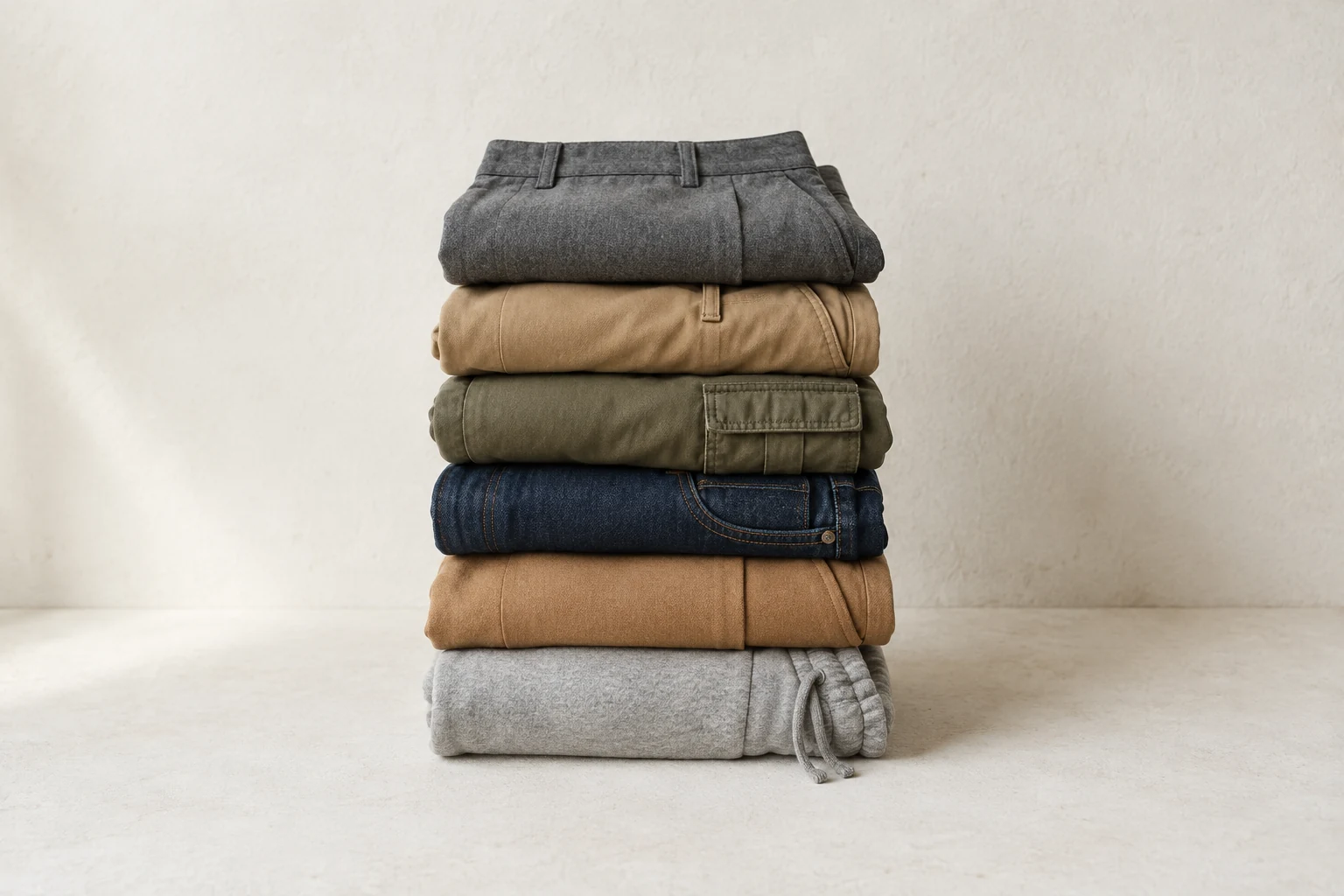
How pants are sorted: family, cut and rise
Family tells you the formality. Tailored dress pants are the most formal, casual cotton pants such as chinos come next, jeans follow, and soft knit pants such as joggers and sweatpants sit at the relaxed end. When a dress code says business casual or smart casual, it is mostly telling you which family to reach for.
Cut tells you the shape. Skinny pants are tight all the way down, slim pants follow the leg without gripping it, straight pants fall in a line from the knee, tapered pants narrow toward the ankle, wide leg pants stay full, and flared or bootcut pants widen below the knee. Rise is the distance from the crotch seam to the waistband: low rise sits on the hips, mid rise near the navel, high rise at or above it. Most names in shops are simply a family plus a cut, so a slim chino and a straight chino are the same type of pants with different legs.
Dress pants and tailored trousers
Dress pants, also called slacks or trousers, are cut from suiting fabrics such as wool, wool blends or polyester blends, with a pressed crease down the front, belt loops or side adjusters, and a clean hem. They come flat front or pleated; pleats are folds below the waistband that add room at the hip and thigh, and they have returned to fashion after years of flat fronts. The hem can be plain or finished with a cuff, a turned up band at the bottom that adds weight and a slightly traditional look.
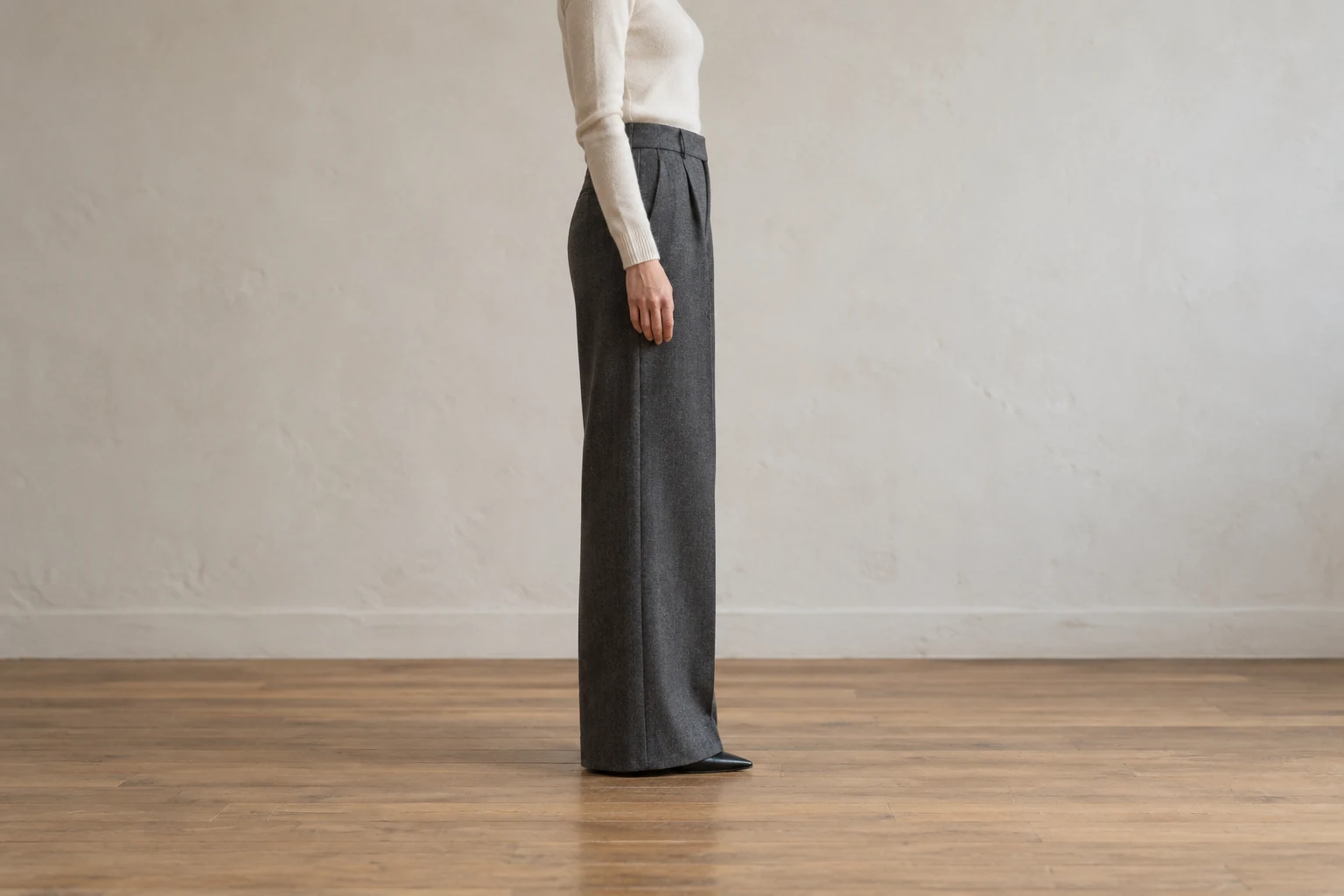
Wear them with a dress shirt and blazer for business professional settings, or with a knit polo or fine sweater for business casual. Women's tailored trousers come in more cuts: cigarette pants are slim, straight and usually end at the ankle; wide leg trousers fall fully from a high waist; and palazzo pants are the widest and softest, often in drapey fabrics. Length is what makes tailored pants look right, and our guides to how long dress pants should be and women's pants length explain the hem for each shoe.
Chinos, khakis, corduroys and cargo pants
Chinos are made from chino cloth, a cotton twill that began as military uniform fabric in the nineteenth century and reached civilian American wardrobes after soldiers brought it home from the Philippines. Khakis are cut from the same kind of twill; in everyday American use, khakis tends to mean the classic tan color and a slightly fuller, more workwear cut, while chinos are often lighter, slimmer and sold in many colors. They are the backbone of business casual and smart casual for men and work just as well for women with a knit or a crisp shirt.
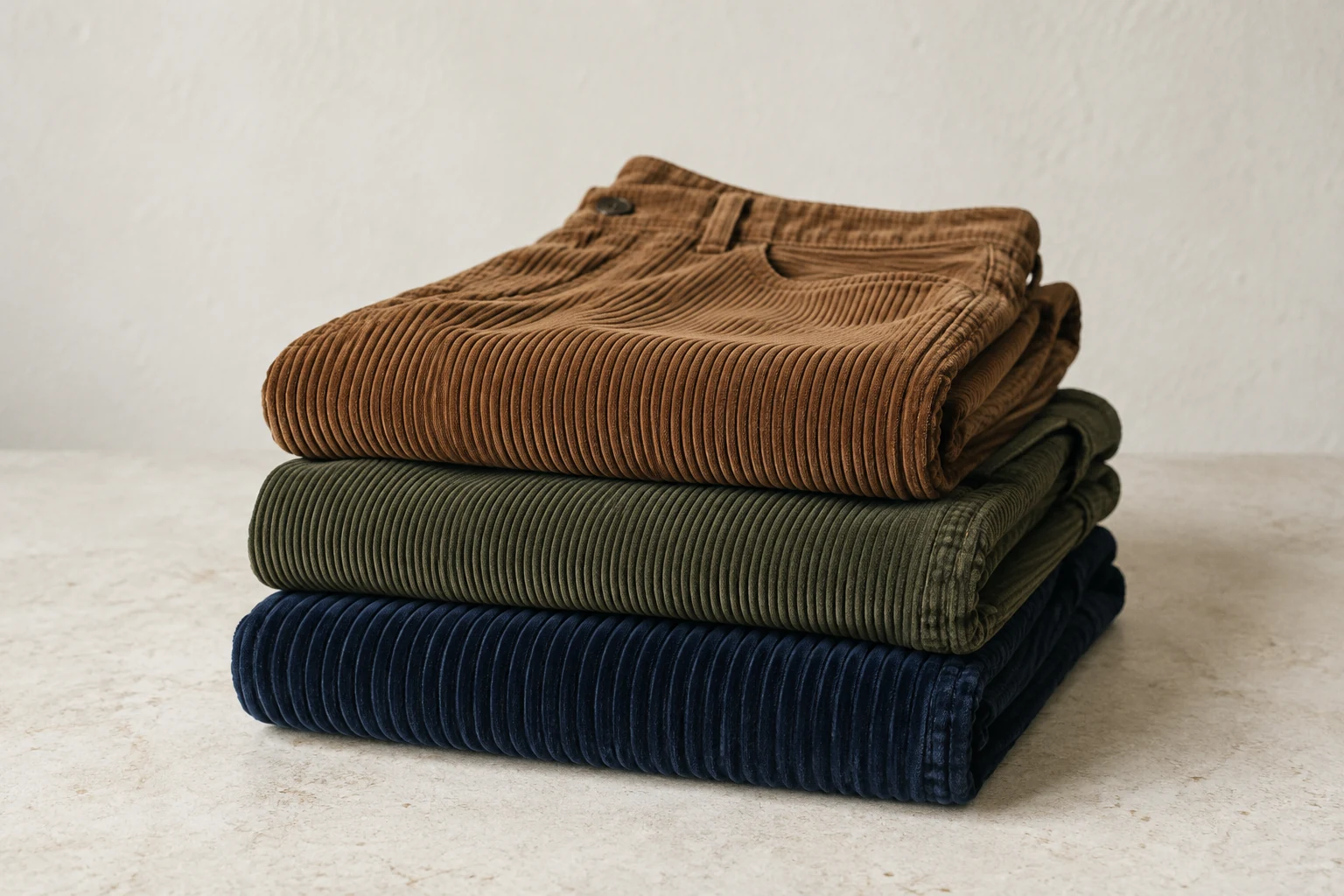
Corduroys are cotton pants with raised ribs called wales; wide wales look rustic, fine wales look neater, and our guide to corduroy explains the difference. Cargo pants carry large patch pockets on the thighs. They came from British army battle dress of 1938, were adapted by American paratroopers during World War II, and had big fashion moments in the early 2000s and again in the 2020s. Keep cargos casual: a plain T shirt, a sweatshirt or an overshirt and sneakers or boots.
Jeans
Jeans are pants made of denim, a sturdy cotton twill usually dyed indigo, with five pockets and rivets at the stress points. They cover every cut listed above, from skinny to wide, and every rise. Dark, clean, unripped jeans can pass in many business casual offices, while light washes, distressing and very loose cuts read more casual.
Because there are so many cuts, jeans have their own guide: types of jeans goes through skinny, straight, bootcut, mom, boyfriend, wide leg and more. If a pair looks wrong on you, it is usually the rise or the fit at the seat rather than the style, and how jeans should fit explains what to check.
Joggers, sweatpants, track pants and leggings
Soft pants are cut from knits rather than woven fabric, so they stretch and move. Sweatpants are the loosest, in fleece backed cotton or cotton blends with an elastic waist. Joggers are a slimmer, tapered version with ribbed or elastic cuffs at the ankle, and the neater ones, in smooth fabric, can be worn with a jacket or a crisp sweater. Track pants are lighter, often in shiny synthetic fabric with side stripes, and belong to sports and streetwear.
Leggings are skin tight knit pants, usually with spandex, worn for exercise and as everyday pants with a long top or sweater. Golf pants and hiking pants are technical versions of chinos, in stretch synthetic fabric with more movement. All of these are the most casual type of pants, so reserve them for home, travel, the gym and relaxed weekends unless a smart jogger is clearly styled up.
| Family | Examples | Where it fits |
|---|---|---|
| Tailored dress pants | Wool or blend slacks, cigarette, wide leg, palazzo | Business professional, formal events |
| Casual cotton | Chinos, khakis | Business casual and smart casual |
| Rugged cotton | Corduroys, cargo pants | Weekends and casual days |
| Denim | Jeans in every cut and rise | Casual; dark, clean pairs in some offices |
| Soft knits | Joggers, sweatpants, track pants | Home, travel, gym, relaxed weekends |
| Stretch | Leggings, golf and hiking pants | Exercise and active days |
Types of pants for women: wide, cropped and flared
Several types of pants are mainly sold for women, and they are defined by shape. Culottes are wide, knee to mid calf length pants that can look like a skirt when you stand still. Gaucho pants are a similar wide cropped style, named after South American horsemen, and were especially popular in the 1970s. Capri pants, introduced by Sonja de Lennart in 1948 and named for the Italian island, are slim pants cropped between the calf and ankle. Paperbag pants have a high waist gathered by a belt or tie, which ruffles above the waistband.
Flared pants and bell bottoms widen dramatically below the knee and belong to 70s fashion, while bootcut pants widen only slightly to sit over a boot. Wide leg and palazzo pants suit almost anyone when the hem nearly reaches the floor in the shoes you plan to wear; our guide to styling wide leg trousers covers tops and shoes. Jumpsuits and overalls, which join pants to a top, are close relatives, though shops usually file them as their own category.
Choosing the right type for the occasion
For formal events and conservative offices, choose tailored dress pants in a dark solid color, usually as part of a suit. For business casual, chinos, khakis, tailored women's trousers and in some offices dark jeans are the usual range. For weekends, jeans, corduroys, cargos and smart joggers all fit. When unsure, choose one step more formal than you think the setting needs; it is easier to relax a look than to dress one up.
Fabric matters as much as type in hot or cold weather. Linen and lightweight cotton pants breathe in summer, while flannel wool and corduroy keep you warm in winter. Most men get daily use from two or three types (dark jeans, chinos and one pair of dress pants), and many women add one wide leg or cigarette trouser to the same base. If you are rebuilding your wardrobe, our guide to building a capsule wardrobe shows how few pairs you really need.
Questions people ask
What are the different categories of pants?
The useful categories are tailored dress pants, casual woven pants such as chinos, khakis, corduroys and cargos, jeans, and soft knit pants such as joggers, sweatpants and leggings. Within each category, pants are further described by leg cut and rise.
What types of pants should every man own?
For most men, a pair of dark jeans, a pair of chinos in navy, tan or olive, and one pair of wool dress pants in gray or navy cover almost every occasion. Add shorts, joggers or corduroys depending on climate and lifestyle.
What are some fancy styles of pants?
Tailored wool trousers, wide leg or palazzo pants in silk or crepe, velvet trousers for evening, and tuxedo pants with a satin stripe down the side are the dressiest. For women, a wide leg trouser with a silky top can stand in for a dress at many cocktail events.
What is the difference between slacks and trousers?
In North America they are practically the same thing: tailored pants with a waistband, belt loops, a fly and usually a crease. Slacks sounds slightly older and was once used for casual pants that were not part of a suit, while trousers is the more common word in fashion today.
Are chinos and khakis the same thing?
They come from the same cotton twill and overlap a lot. Khakis usually refers to the tan color and a fuller, more workwear cut, while chinos are often lighter weight, slimmer and made in many colors.
Sources and further reading
References used for this guide. Each opens the original page in a new tab.
- Wikipedia: Trousers, on terminology, pleats, cuffs and fly construction Opens in a new tab
- Wikipedia: Chino cloth, its twill weave and military origins Opens in a new tab
- Wikipedia: Cargo pants, from 1938 British battle dress to fashion Opens in a new tab
- Wikipedia: Capri pants, origin and alternative names Opens in a new tab
Keep reading
Everyday style
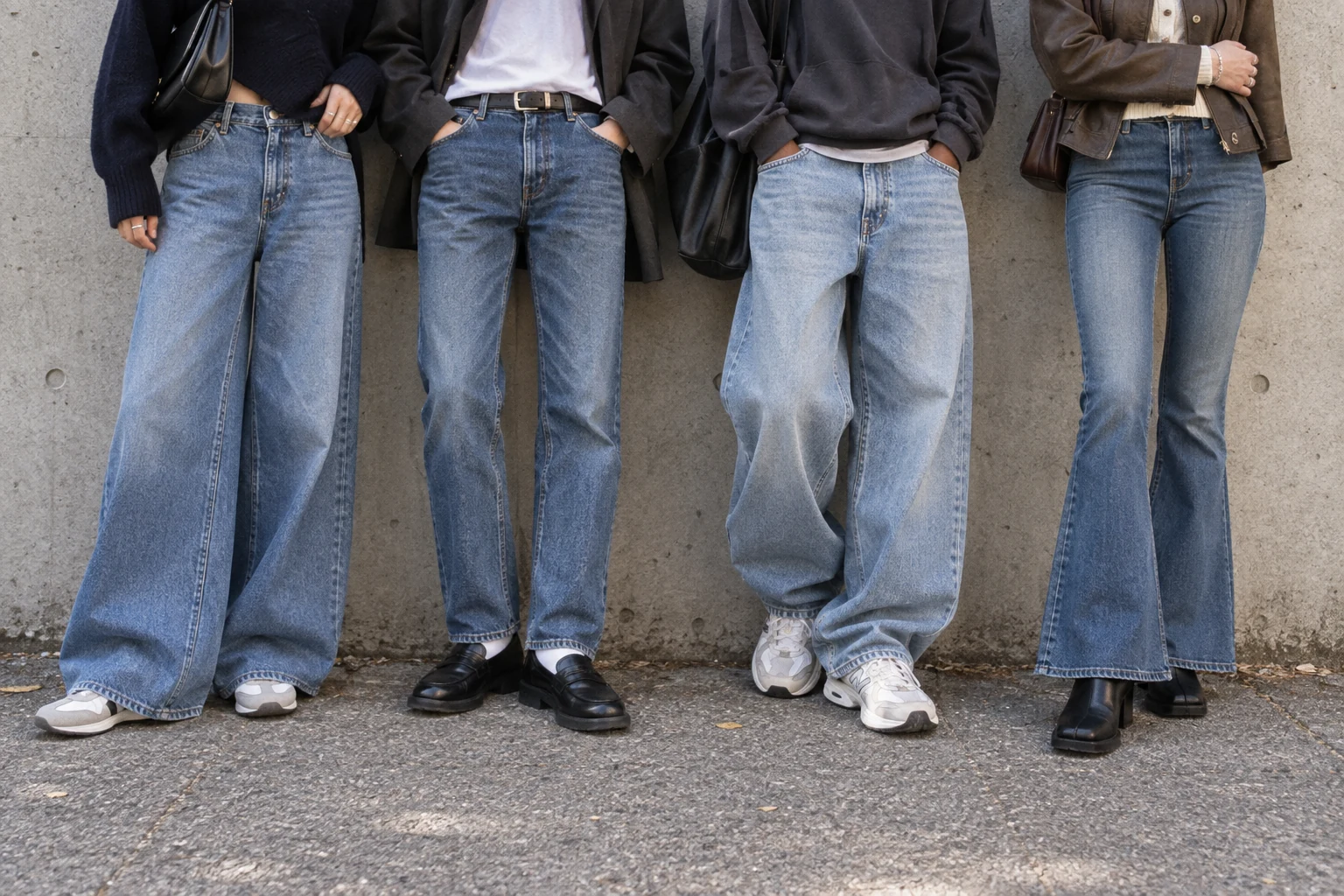
Types of jeans: fits and cuts explained
The main types of jeans explained: rise, skinny to baggy leg shapes, bootcut, flare, wide leg, mom and boyfriend jeans, with what each suits and how to wear it.
Suits and tailoring
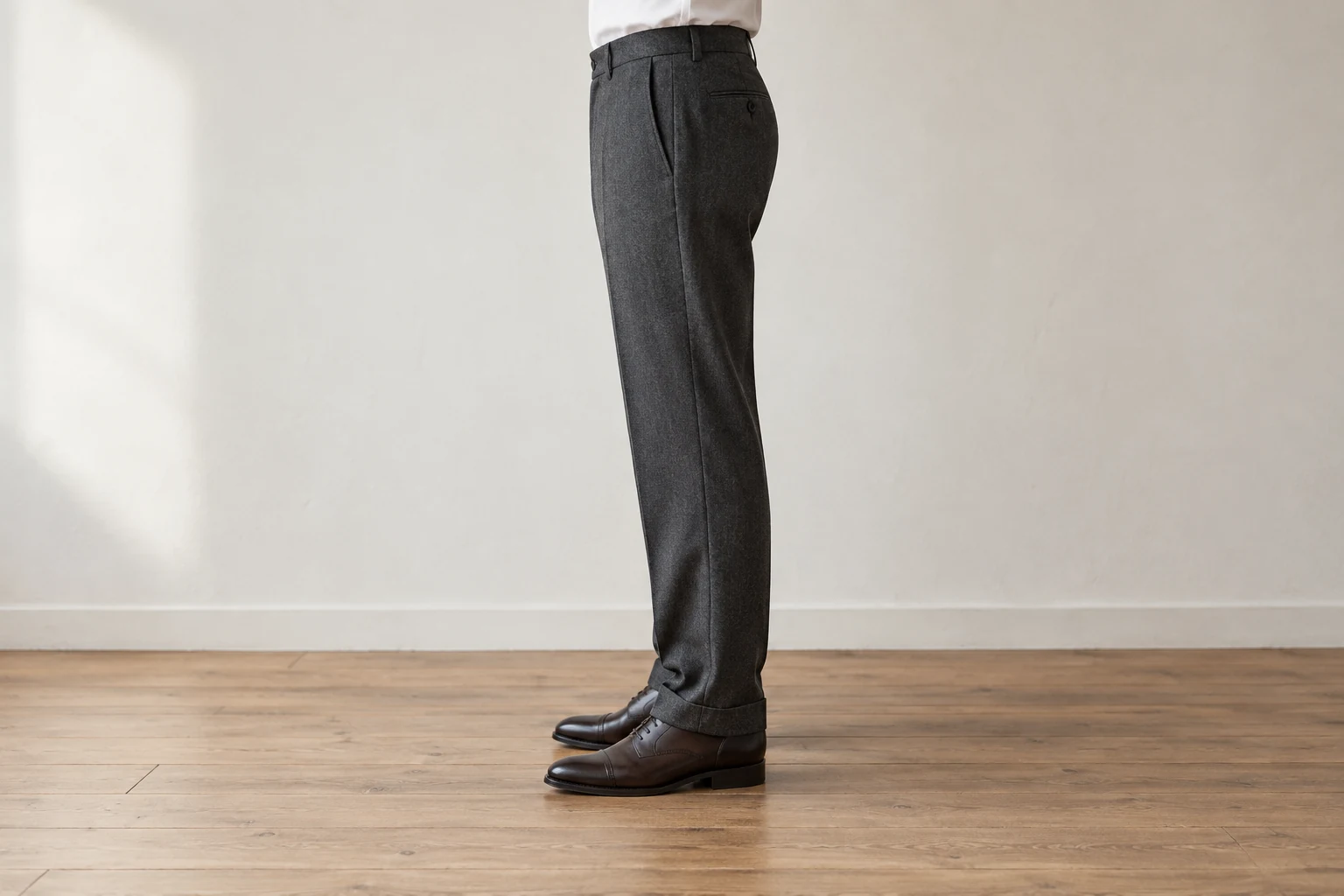
How long should dress pants be? Choosing your break
How long should dress pants be? Learn the no break, slight break and full break, how shoes and leg width change the answer, and exactly what to tell your tailor.
Everyday style
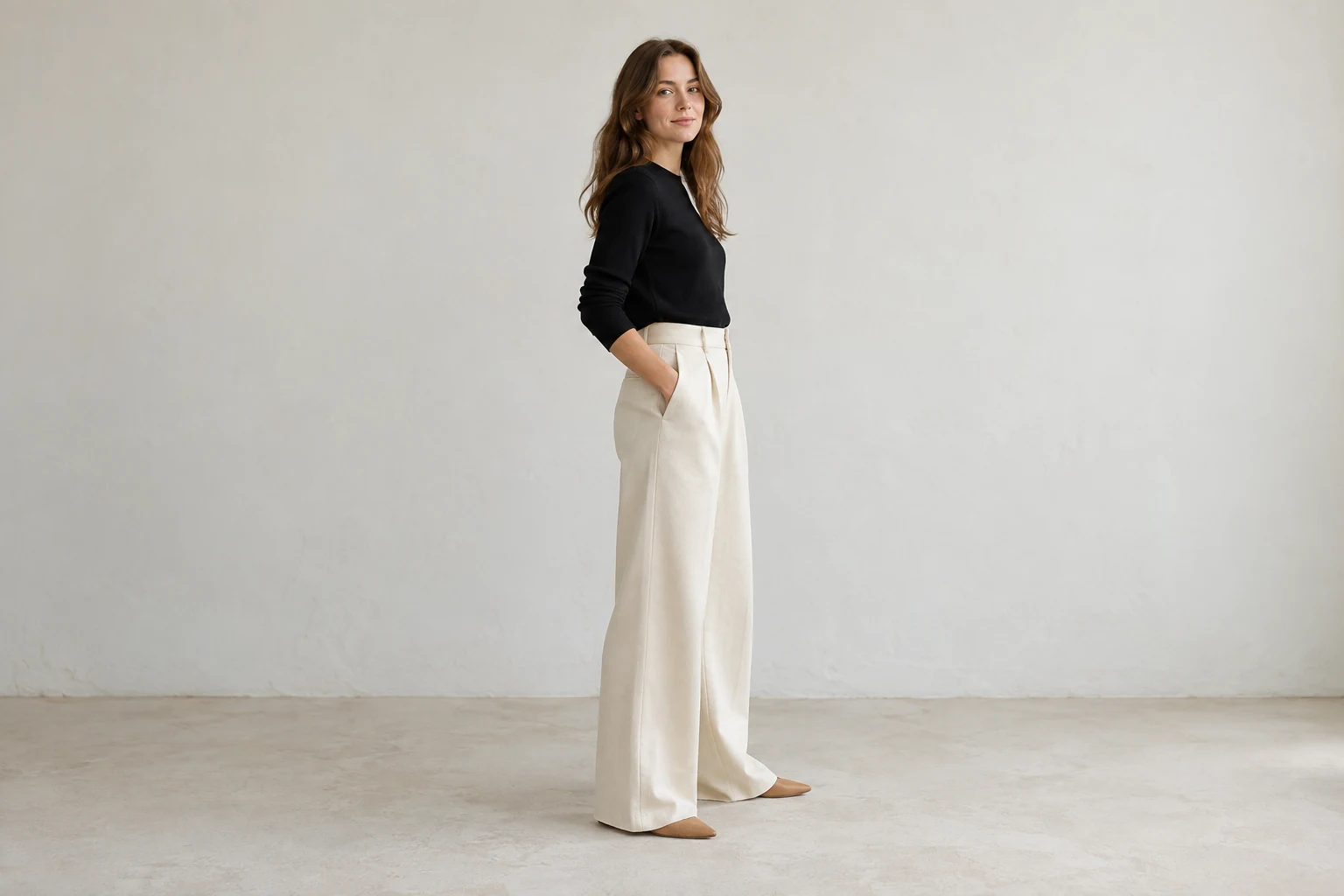
How to style wide leg pants: tops, shoes and hems
How to style wide leg pants with the right tops, shoes and hem length, for work and weekends, with practical fixes for pants that drag, swamp you or feel sloppy.
Sizing
How long should women's pants be? Lengths by style
How long should women's pants be? Where the hem should land for trousers, wide leg, straight, ankle and cropped pants, in flats or heels, and finding your inseam.
Fabrics
Corduroy: wales, care and how to wear it
What corduroy is, how wale counts change the look, how to wear corduroy pants and jackets without looking dated, and how to wash it without flattening the pile.