Seersucker: the summer fabric explained
In this guide
It is late June, the forecast says 90°F, and you have an outdoor event where a suit is expected. Or you have spotted a blue and white striped shirt with a strange crinkled texture and wondered whether it is meant to look like that. It is. The texture defines seersucker, one of the few fabrics designed to look good precisely because it never lies flat.
This guide explains what seersucker is and how it is woven, why it feels cooler than plain cotton, where the name and the fabric came from, and how to wear a seersucker suit, shirt, shorts or dress without it tipping into costume. It closes with care, which is refreshingly simple.
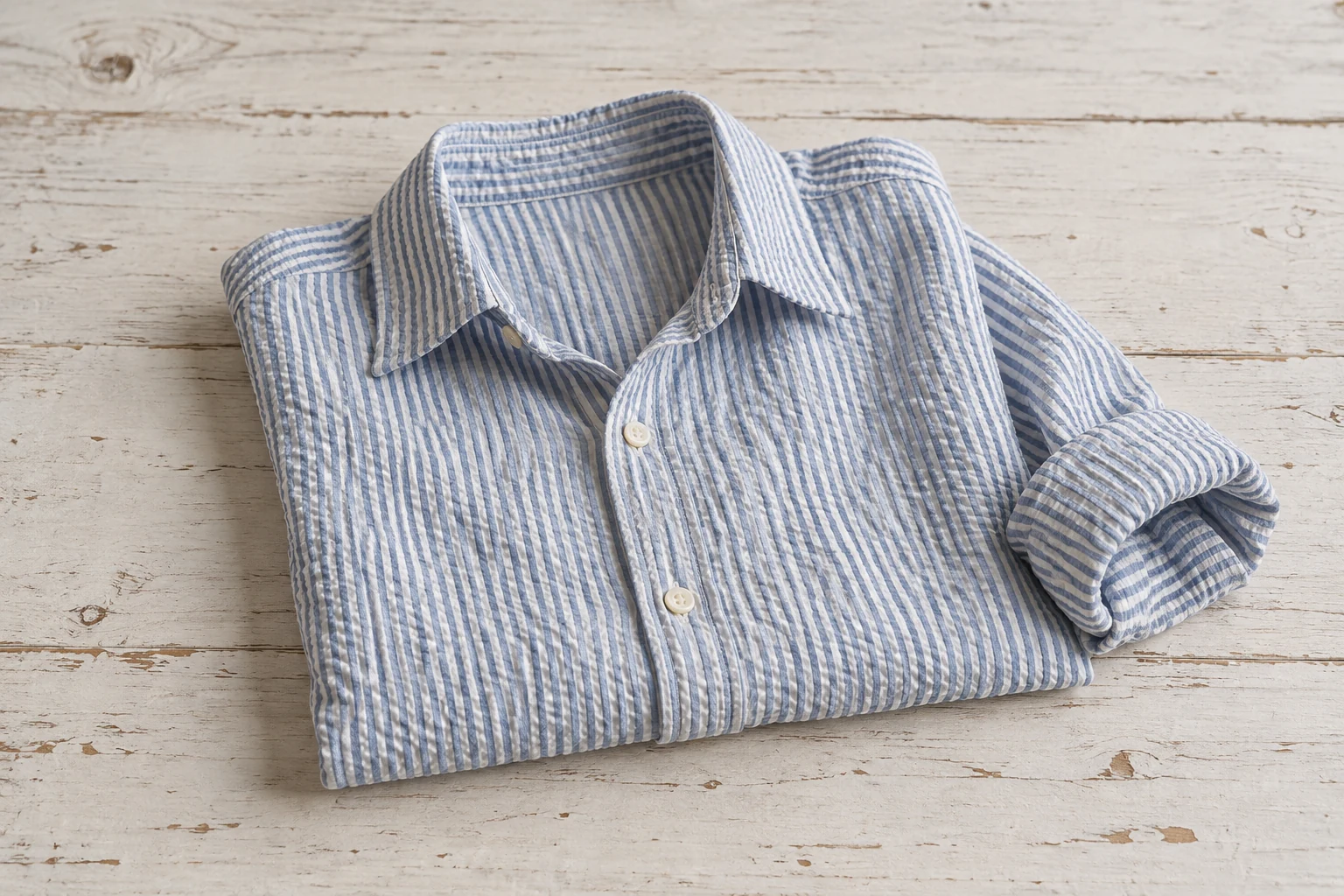
What seersucker is and how it is made
Seersucker is a thin, usually all cotton fabric woven with alternating stripes, some flat and some puckered. The puckering is built into the weave. The warp threads, which run the length of the cloth, are wound onto the loom in groups, and some groups are held at a slacker tension than others. As the cloth is woven, the slack threads bunch up and crinkle, while the tight ones stay smooth, so the finished fabric has permanent ridges running in stripes.
The classic seersucker is blue and white, but you will also find it in red, green, pink, yellow, gray and in checks where puckered squares alternate with flat ones. Because the texture comes from the weave, real seersucker keeps its crinkle through washing. Some cheaper fabrics imitate the look with chemical treatments or embossing, and those textures can relax over time; if you want the puckers to last, look for a woven slack tension seersucker in cotton.
The name comes from the Persian phrase shir o shakar, meaning milk and sugar, a comparison between the smooth stripe and the bumpy, granular one. The fabric was first made in India and spread through colonial trade to Britain and its colonies, and later to American mills, which produced it in quantity for work clothes long before it became a summer suiting.
Why seersucker feels cooler than plain cotton
Seersucker is not a different fiber from ordinary cotton, so the question of whether it is cooler than cotton is really a question about the weave. The puckers keep much of the cloth from lying flat against your skin, so there are small air gaps between you and the fabric. Air can move through those gaps, and when you sweat, the fabric does not cling in a damp sheet, which helps moisture evaporate and keeps you feeling cooler.
Seersucker is also lightweight and fairly open, and it is usually unlined in jackets, which matters as much as the texture. A lined wool suit traps heat regardless of how breathable the cloth is; a half lined or unlined seersucker jacket lets heat escape at the back. For very hot, humid days, seersucker sits alongside linen and light cotton poplin as one of the most comfortable choices, and our guide on what to wear in 90 degree weather compares them.
The other practical advantage is that the texture hides creases. A seersucker jacket that has been sat in all afternoon looks much the same as it did in the morning, which is why it has long been a traveling and commuting fabric in hot places.
From workwear to the Southern summer suit
In the United States, seersucker spent a long time as a working fabric. The Historic New Orleans Collection notes that it was cheap and durable, used for clothing given to enslaved people, and later for factory jumpsuits and the striped coveralls worn by railroad workers. Its association with gentlemen's summer suits came later, and the popular story that the New Orleans clothier Joseph Haspel invented the seersucker suit around 1909 is, the collection shows, not quite accurate: New Orleans stores were already advertising seersucker suits in the 1860s.
What Haspel did was make the seersucker suit a commercial success, selling lightweight, washable summer suits to men working in hot offices before air conditioning, and later patenting a wash and wear suit coat in 1937. From the South the suit spread to college campuses and summer resorts, and it became part of the preppy wardrobe. So is seersucker a Southern thing? It is strongly associated with the South and with summer events there, but it is worn widely across the country in hot weather. Since 1996 the United States Senate has even held an occasional Seersucker Thursday in summer, when members wear the fabric.
How to wear a seersucker suit
A seersucker suit for men is a summer daytime suit, best for outdoor weddings, garden parties, derbies, graduations and warm weather offices that allow some personality. Wear it with a white or pale blue shirt, a light tie in a solid knit, silk or linen, or no tie at all with the collar open. Brown or tan leather loafers, suede bucks or white canvas sneakers suit the casual nature of the cloth, and a straw hat such as a boater or a Panama finishes it on a sunny day. Our guide to garden party attire shows where it fits among summer dress codes.
Traditional American etiquette limits seersucker to the stretch between Memorial Day and Labor Day. That is a convention, not a rule, and it depends on your climate: in the Gulf South or Southern California it makes sense for more of the year. The more useful limits are occasion and color. Seersucker is too casual for black tie and too cheerful for most funerals, and a bright colored seersucker is harder to wear than blue and white or gray.
The jacket and trousers also work apart. A seersucker jacket over chinos or white trousers and a polo shirt is less of a statement than the full suit, and seersucker trousers or shorts with a plain navy polo or white oxford shirt are an easy weekend outfit. Avoid combining seersucker with other strong patterns; a small check or a solid shirt keeps it calm.
Seersucker dresses, shirts and shorts
For women, the seersucker dress is the most natural piece: a shirt dress, a sleeveless sheath or a smocked sundress in blue and white or pink and white, worn with flat sandals or espadrilles. It is a strong choice for a summer brunch, a daytime wedding in a casual setting or a vacation. A seersucker blazer over a white T shirt and jeans, or seersucker shorts or wide trousers with a plain linen top, give you the texture without a full outfit of stripes.
Seersucker shirts in short or long sleeves work for everyone and are cooler than a standard poplin shirt. They look best in a relaxed fit, worn untucked with shorts or tucked into chinos. Because the fabric is already patterned and textured, pair it with solids in one of its colors, or with white, navy or khaki.
| Piece | Pair it with | Good for |
|---|---|---|
| Full suit | White or pale blue shirt, light tie or open collar, loafers or bucks | Outdoor weddings, garden parties, graduations |
| Jacket alone | Chinos or white trousers and a polo shirt | A lighter statement than the suit |
| Trousers or shorts | Plain navy polo or white oxford shirt | Easy weekends |
| Dress | Flat sandals or espadrilles | Summer brunch, casual daytime wedding, vacation |
| Shirt | Shorts untucked or chinos tucked | Hot days, cooler than poplin |
Pair seersucker with solids in one of its colors, or with white, navy or khaki.
How to wash seersucker
Most seersucker shirts, dresses, shorts and trousers are cotton and machine washable. Check the care label, then wash in cool or warm water on a normal or gentle cycle with similar colors; the blue or red stripes on new pieces can release a little dye, so keep them away from whites the first few times. Our guide to separating laundry explains how to sort light and dark loads.
Tumble dry on low or hang to dry, and take it out promptly. You do not need to iron seersucker, and pressing it hard with a hot iron can flatten the puckers. If a collar or placket needs neatening, use a warm iron lightly on those areas only, or steam the garment on a hanger. Tailored seersucker suits with canvas or structure are safer dry cleaned or spot cleaned, unless the maker labels them washable; some are sold specifically as wash and wear.
Questions people ask
Why is it called seersucker?
The name comes from the Persian shir o shakar, milk and sugar. It compares the smooth stripes to milk and the puckered, grainy stripes to sugar, a neat description of how the fabric looks and feels.
Is seersucker cooler than cotton?
Seersucker is usually made of cotton, so the difference is the weave. Its puckered stripes hold much of the fabric away from the skin, letting air circulate and sweat evaporate, so it generally feels cooler than a smooth cotton of similar weight.
What are the downsides of seersucker?
It is firmly casual, so it will not work for formal or somber occasions. Bold colors can look like costume, and cheaper versions with embossed or chemically created puckers can flatten over time. It is also a warm weather fabric with little use in winter.
Can you wear seersucker to a wedding?
Yes, to a summer daytime wedding with a casual or garden party feel, especially outdoors or in the South. It is not right for an evening, black tie or formal church wedding. When unsure, choose blue and white or gray and wear a tie.
Sources and further reading
References used for this guide. Each opens the original page in a new tab.
Keep reading
Fabrics
What is linen, and why does it wrinkle?
What linen is made of, how flax becomes fabric, why linen wrinkles, how it compares with cotton, and how to wear and care for linen clothes and sheets.
Fabrics
Madras fabric: history, care and how to wear it
What madras fabric is, where it comes from, why bleeding madras runs in the wash, how it differs from other plaids, and how to wear and wash a madras shirt.
Dress codes
Garden party attire: what to wear outdoors
What garden party attire means for men and women: light day dresses and suits, shoes that work on grass, sun and heat, hats, and how garden formal differs.
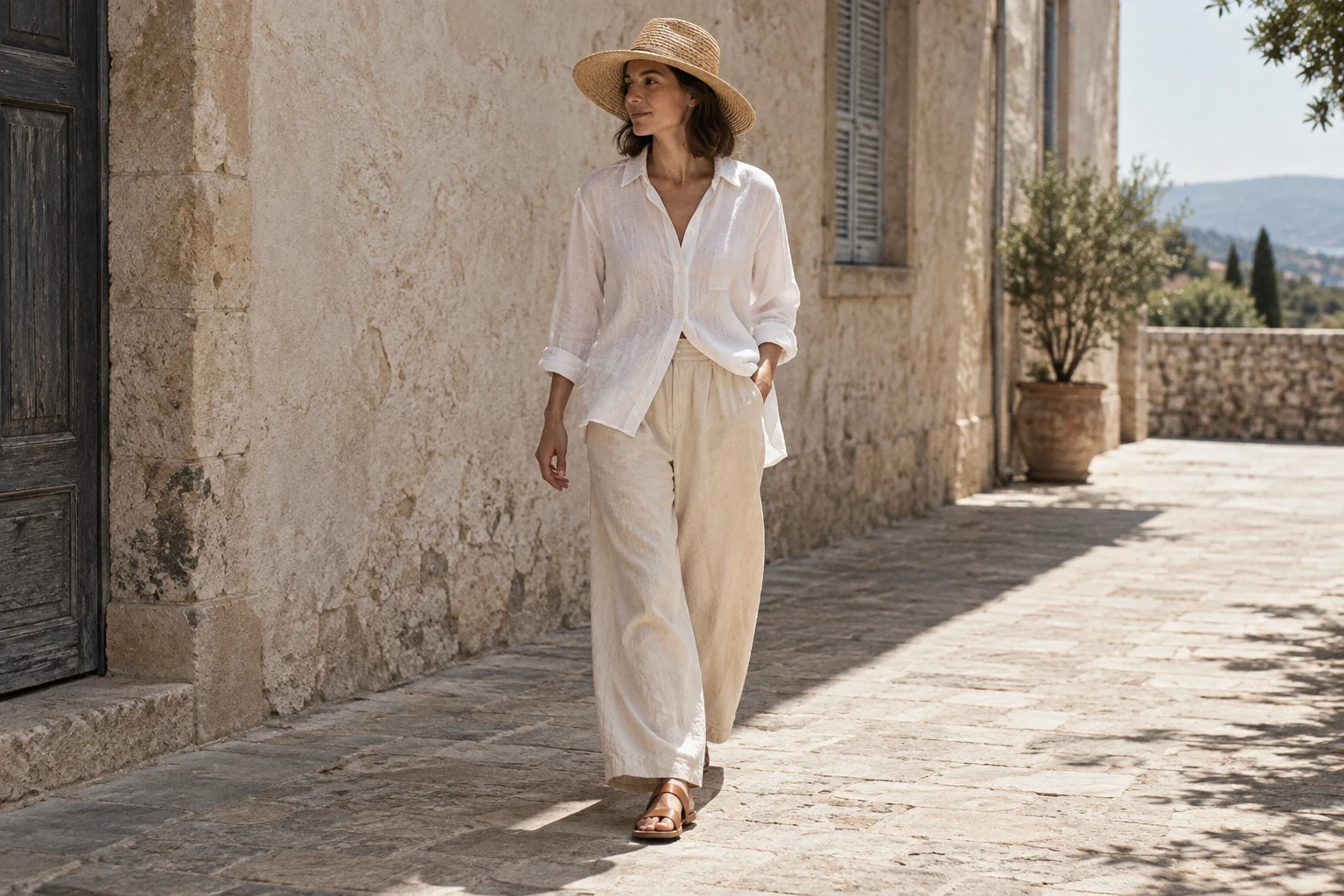
Weather
What to wear in 90 degree weather
At 90°F clothing is part of staying safe. Loose fabrics, when to cover up, what to wear to work and outdoors, and the signs that heat is getting to you.
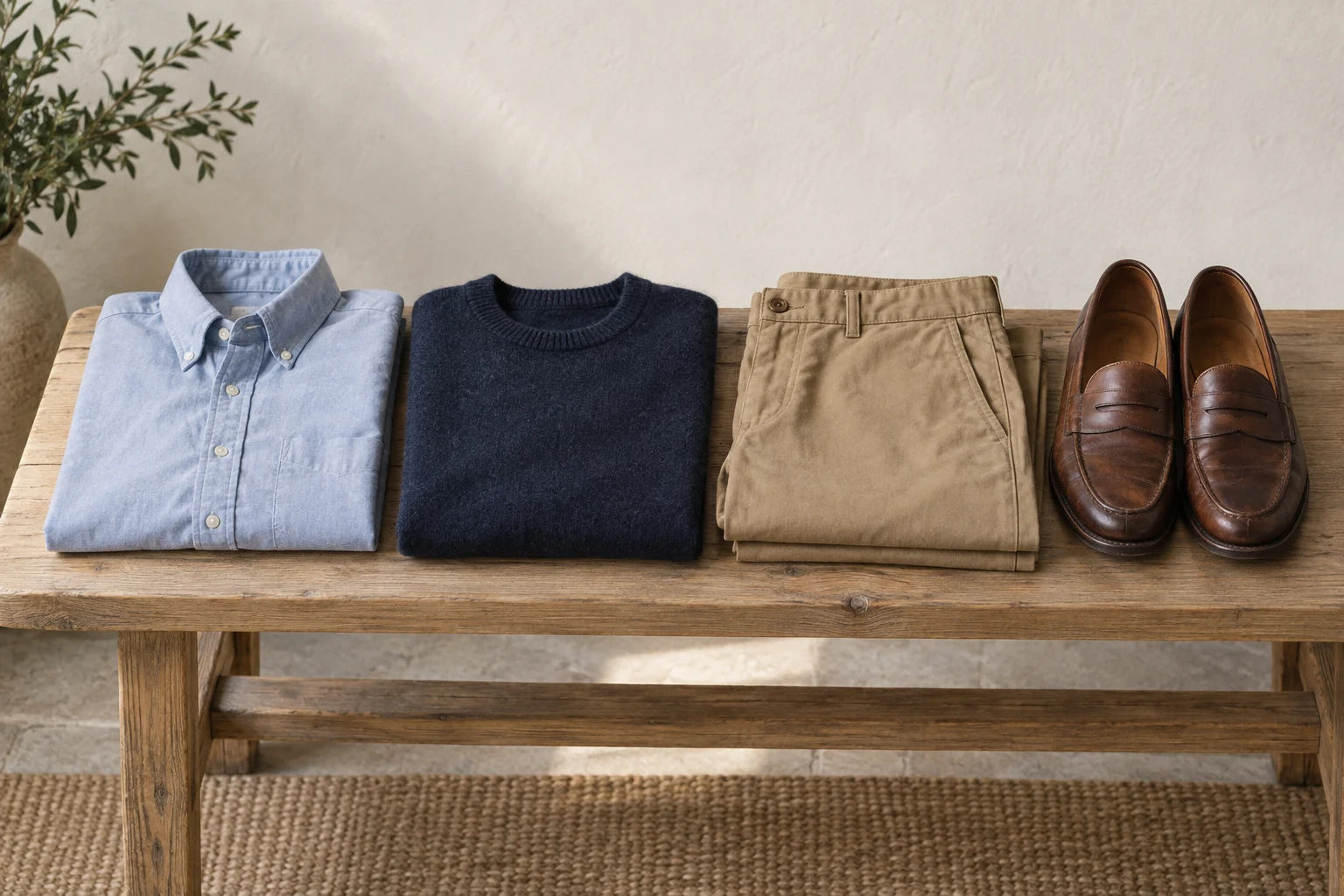
Styles
Preppy style: what it is and how to wear it now
What preppy style means, where it came from, the core pieces for men and women, and how to wear modern preppy outfits without looking like a costume.