How to tie a head scarf: five easy ways
In this guide
A silk square has been sitting in a drawer since someone gave it to you, or a bad hair morning is running into a sunny day, or treatment has thinned your hair and you want something soft and easy. Whatever brought you here, a head scarf solves more than one problem, and it looks intentional when it is tied well.
This guide shows how to tie a head scarf five ways, in order of difficulty: the kerchief, the retro chin tie, the headband, the wrap and a sleep tie. It starts with the one decision that makes the rest easy, the size and fabric of the scarf, and ends with notes on hair loss, sun and the head coverings that carry cultural or religious meaning.
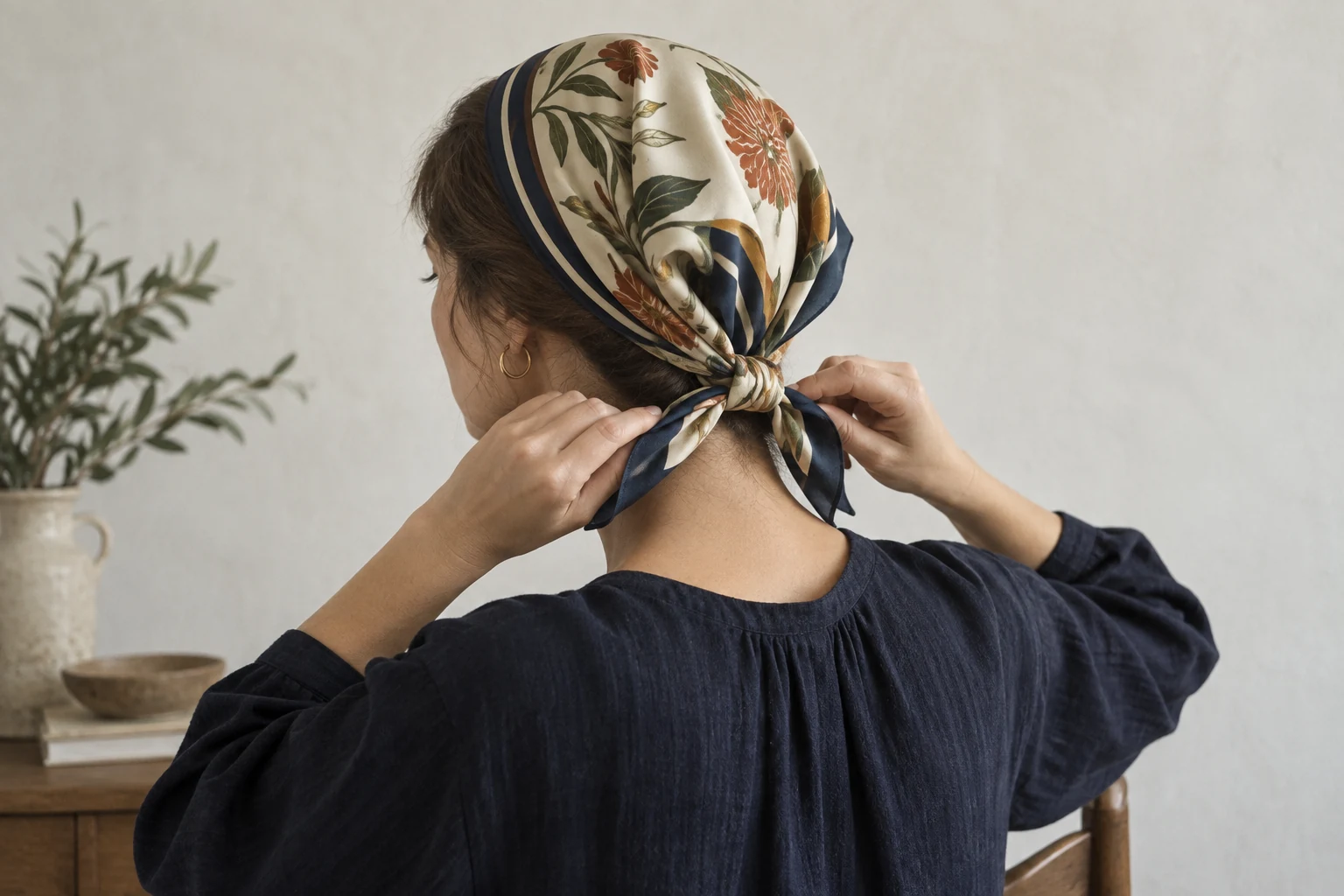
Choose the right size and fabric
Square scarves come in a few standard sizes. A 27 inch (70 cm) square is enough for a kerchief or a headband. A 35 inch (90 cm) square, the classic size of a luxury silk carré, has the length to tie under the chin or knot at the back with ends to spare. For a full wrap that covers all the hair, the American Cancer Society suggests a square of 35 inches or larger, or an oblong scarf around 21 by 78 inches (about 53 by 200 cm).
Fabric decides whether the scarf stays put. Silk is beautiful and light but slides, especially on fine or very short hair. Cotton, rayon, modal and bamboo blends have more grip and breathe well in heat. If you love a slippery silk, a thin velvet headband or a soft undercap underneath gives it something to hold on to, a trick the American Cancer Society recommends. Most styles start by folding a square into a triangle or a band; our guide on tying a scarf shows the band fold in detail.
| Scarf | Size | Good for |
|---|---|---|
| Small square | 27 inches (70 cm) | Kerchief or headband |
| Classic square | 35 inches (90 cm) | Chin tie, knot at the back, full wrap |
| Oblong | About 21 by 78 inches (53 by 200 cm) | Full head wrap |
| Silk | Any | Drape and sheen, but slides on fine or short hair |
| Cotton, rayon, modal or bamboo | Any | Grip and breathability in heat |
A thin velvet headband or soft undercap gives a slippery silk something to hold on to.
How to tie a head scarf as a simple kerchief
This is the foundation style and the one most people mean when they ask how to tie a head scarf correctly. It covers the top and back of the head and leaves the face open.
Fold the square into a triangle
Lay the scarf flat, wrong side up, and fold one corner to the opposite corner. For a neater edge, fold the long side over once more by an inch or two.
Place the long edge at your hairline
Hold the two ends and set the folded edge along your forehead, just at or slightly behind the hairline, with the point of the triangle falling down the back of your head.
Tie at the nape over the point
Bring both ends back under your ears and tie them in a firm double knot at the nape of your neck, over the point. Tuck the point up under the knot or let it hang.
CheckCheck the mirror: the edge should sit evenly across the forehead.
The 60s head scarf with a chin tie
The look of film stars in open cars, and of anyone keeping a hairstyle intact in the wind. Use a 35 inch square in silk for the proper drape. Fold it into a triangle, lay it over your head with the long edge well back from the forehead so some hair shows, and bring the ends down along the jaw. Cross them under the chin and take them to the back of the neck, tying a knot at the nape under the hair. For the softer version, simply tie a loose knot at the side of the chin instead.
Big sunglasses and a simple top complete it. It works with short hair as well as long, and it is one of the most practical sun and wind covers there is. If you like the era, our guide to 1950s fashion has more of that polished, open road style.
The headband and the 70s style
For a headband, fold the square into a triangle and then fold from the long edge toward the point, over and over, until you have a band about 2 to 3 inches (5 to 8 cm) wide. Lay the center of the band at the top of your head behind the hairline and tie it under your hair at the nape, or bring the ends up and tie a small knot or bow at the crown. This is the easiest style for anyone who wants to show off hair rather than cover it, and it keeps curls off the face on a hot day.
For a 70s headscarf, wear the band lower, across the forehead just above the brows, knotted at the back or at one side with the ends hanging over the shoulder. Pair it with loose waves, a peasant blouse or flared jeans, as described in our guide to 70s fashion. Worn with the knot on top and a bandana instead of a silk square, the same idea becomes the 1940s look associated with wartime factory workers; our guide on tying a bandana covers that version.
A full head wrap with an oblong scarf
A wrap covers all the hair and looks deliberate and sculptural. The American Cancer Society describes a method that suits most oblong scarves, and it is a good base for many variations.
Center the scarf on your forehead
Fold the oblong scarf in half lengthwise if it is wide, then place the center on your forehead with the ends falling evenly behind your ears.
Cross the ends at the back
Bring both ends to the nape of your neck and cross them, pulling snugly so the scarf covers the back of the head.
Bring them forward and cross again
Take the ends back up around the sides to the front and cross them again at the top or front of the head. You should feel the wrap sit firmly without pressing.
Finish with a knot, twist or rosette
Tie the ends in a knot and tuck them in, or twist each end and wrap it around the base to form a rosette, securing it with a safety pin hidden in the folds. Move the rosette to the back or the side to change the look.
Tying a scarf for hair loss, sleep and sun
For hair loss, comfort comes first. Choose a soft cotton or rayon scarf that grips, wear a thin cotton undercap or velvet headband beneath it so it cannot slide, and use a generous size so the wrap reaches the nape and covers the ears if you want. Pre tied scarves with a padded front give shape with no folding at all. The American Cancer Society's helpline, 1 800 227 2345, can also point you to organizations that provide free scarves and hats to people with cancer.
For sleep, many people with curly, coily or fragile hair wrap it in silk or satin, which feels smooth against the hair. Gather the hair loosely on top, lay a large square over it with the long edge at the nape, bring the ends forward, and tie them at the front or top of the head where the knot will not press on the pillow. Our guide to satin explains the difference between satin and silk.
In strong sun, a scarf protects the scalp and parting, but it does not shade the face. The Skin Cancer Foundation recommends hats with a brim of at least 3 inches for that, so a scarf is best worn under a brimmed hat or with sunscreen on the face and neck. Tightly woven, darker cotton blocks more light than sheer silk.
Cultural and religious head coverings
Many head coverings are not fashion accessories but part of faith or heritage: the hijab, the tichel worn by some married Jewish women, the gele of Nigerian celebrations, the dastar worn by many Sikhs and many other wraps across Africa, South Asia and the Middle East. Each has its own methods, fabrics and meaning, and people who wear them are the best teachers. The styles in this guide are general fashion ties; they are not substitutes for those traditions, and wearing a scarf in a way that imitates a sacred covering without understanding it can be hurtful.
Men wear head scarves too, most often as a bandana tied at the back or a durag, and the same tips about grip and size apply. Whatever the style, wash scarves as the fabric requires: silk by hand in cool water, cotton in the machine. Our guide on washing silk explains the gentle method.
Questions people ask
How do I keep a head scarf from slipping?
Choose a fabric with grip, such as cotton or rayon, and wear a thin velvet headband or cotton undercap beneath silk. Tie a firm double knot, and use one or two bobby pins through the scarf at the sides for extra hold.
How do you tie a scarf the Italian way?
The Italian or Parisian knot is usually a neck style: fold a long scarf in half, put it around your neck and pull the ends through the loop. On the head, the look people call Italian is the retro chin tie in silk with sunglasses, described above.
What size scarf do I need for a head scarf?
A 27 inch square is enough for a kerchief or headband. For chin ties and full coverage, a 35 inch square or larger, or an oblong about 21 by 78 inches, gives you enough length to knot securely.
Can I tie a head scarf with short hair?
Yes. The kerchief, the chin tie and the headband all work well with short hair. Because there is less hair to hold the scarf, a grippy fabric or a headband underneath matters more.
Sources and further reading
References used for this guide. Each opens the original page in a new tab.
Keep reading
Everyday style
How to tie a scarf: easy ways for every coat
How to tie a scarf step by step: warm knots for a long winter scarf, neat ways to wear a silk square, head scarf styles and the knots men reach for most.
Everyday style
How to tie a bandana around your neck or head
How to tie a bandana, step by step: the two basic folds, classic neck styles, a head wrap that stays put, easy bandana hairstyles and ways guys wear one.
Washing and ironing
How to wash silk at home
How to wash silk safely: when the label says a cleaner is the better choice, how to test for color bleeding, and how to hand wash, dry and iron silk at home.
Everyday style
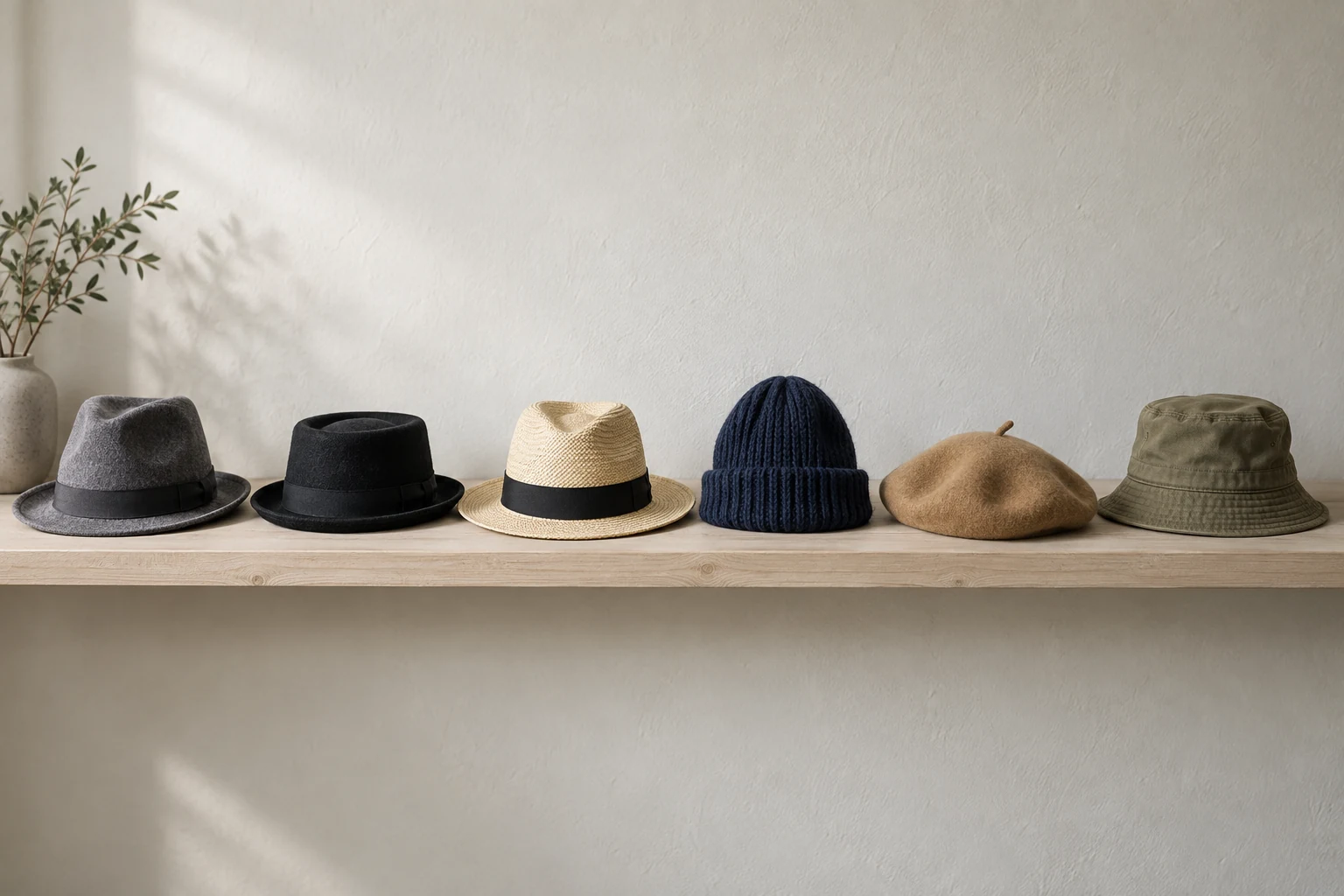
Types of hats and how to wear them
The names of hat types explained, from fedora, porkpie and derby to toque, beret, bucket hat and sun hat, with how to tell them apart and how to wear each one.
Styles
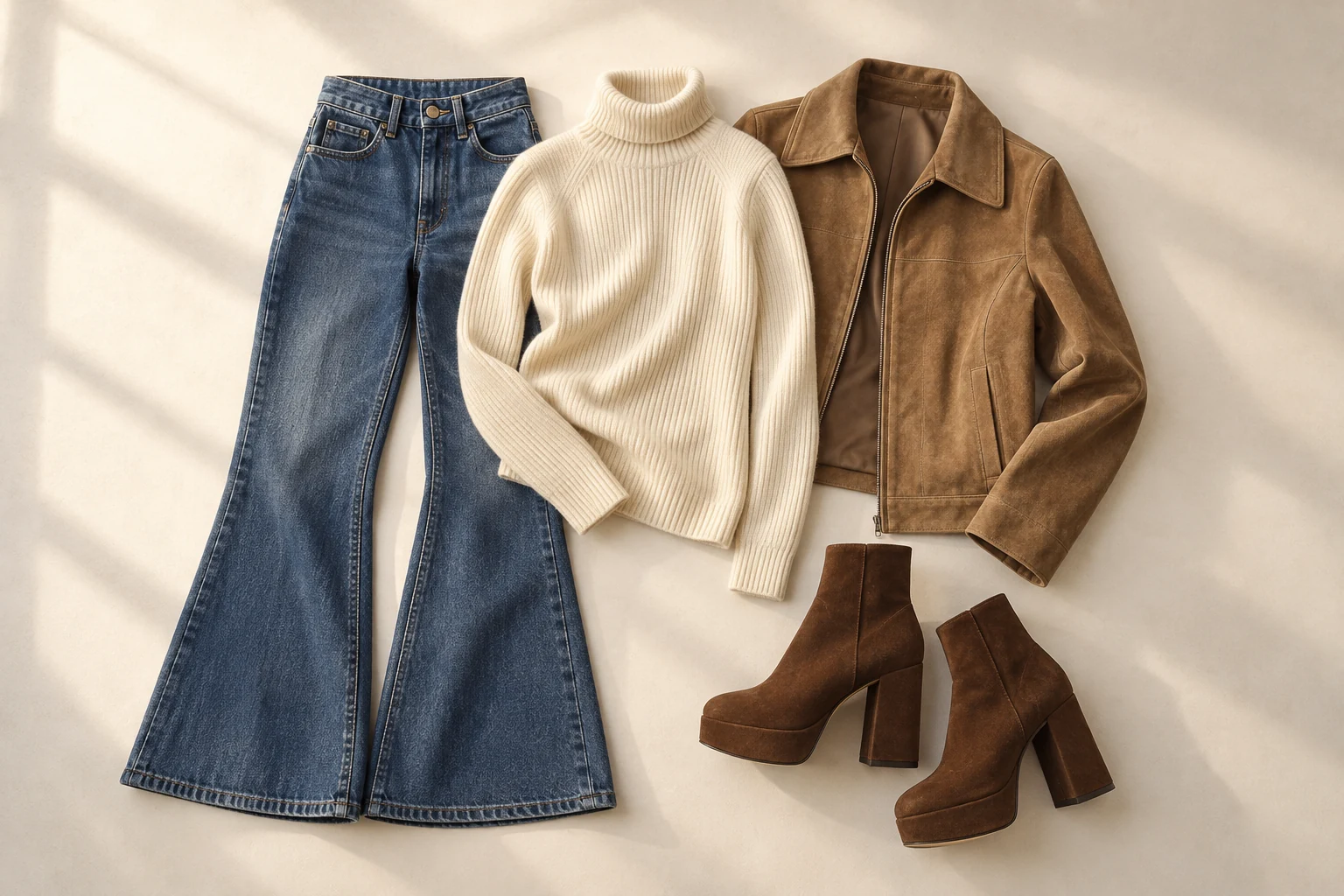
70s fashion: the looks and how to wear them now
The main looks of 70s fashion for women and men, from hippie and prairie to disco and punk, with party outfits and ways to wear the decade with normal clothes.