How to fold a sweater so it keeps its shape
In this guide
Take a sweater off a wire hanger after a few weeks and you can often see the problem: two small peaks at the shoulders, a neckline that has dropped, and a body that has grown longer than it was. Knits are made of loops, and loops stretch under their own weight. Knowing how to fold a sweater properly is the simplest way to keep a knit looking the way it did when you bought it.
This guide covers the basic fold for shelves and drawers, the hanger fold for when you have no shelf space, how to pack a sweater for travel, and how to arrange sweaters so they stay easy to see. Hoodies, oversized and chunky knits get a short section at the end.
Why sweaters should be folded, not hung
Woolmark, the wool industry body, advises that knitted garments be gently folded and stored in drawers, while woven wool such as jackets and trousers goes on shaped or padded hangers. The difference is structure. A woven fabric holds its shape on a hanger; a knit is elastic, so a hanger concentrates the whole weight of the garment on two small points at the shoulders. Over days and weeks, the knit stretches there and the hem slowly drops.
Heavier knits suffer most: a chunky wool cardigan or a long cotton sweater weighs far more than a T shirt and stretches accordingly. Fine merino and cashmere are lighter but more delicate, and hanger marks show easily on them. Folding also helps between wears. Woolmark suggests resting wool garments for about 24 hours before wearing them again so the fibers can recover, and a sweater laid flat on a shelf recovers better than one hanging from its shoulders.
How to fold a sweater for a shelf or drawer
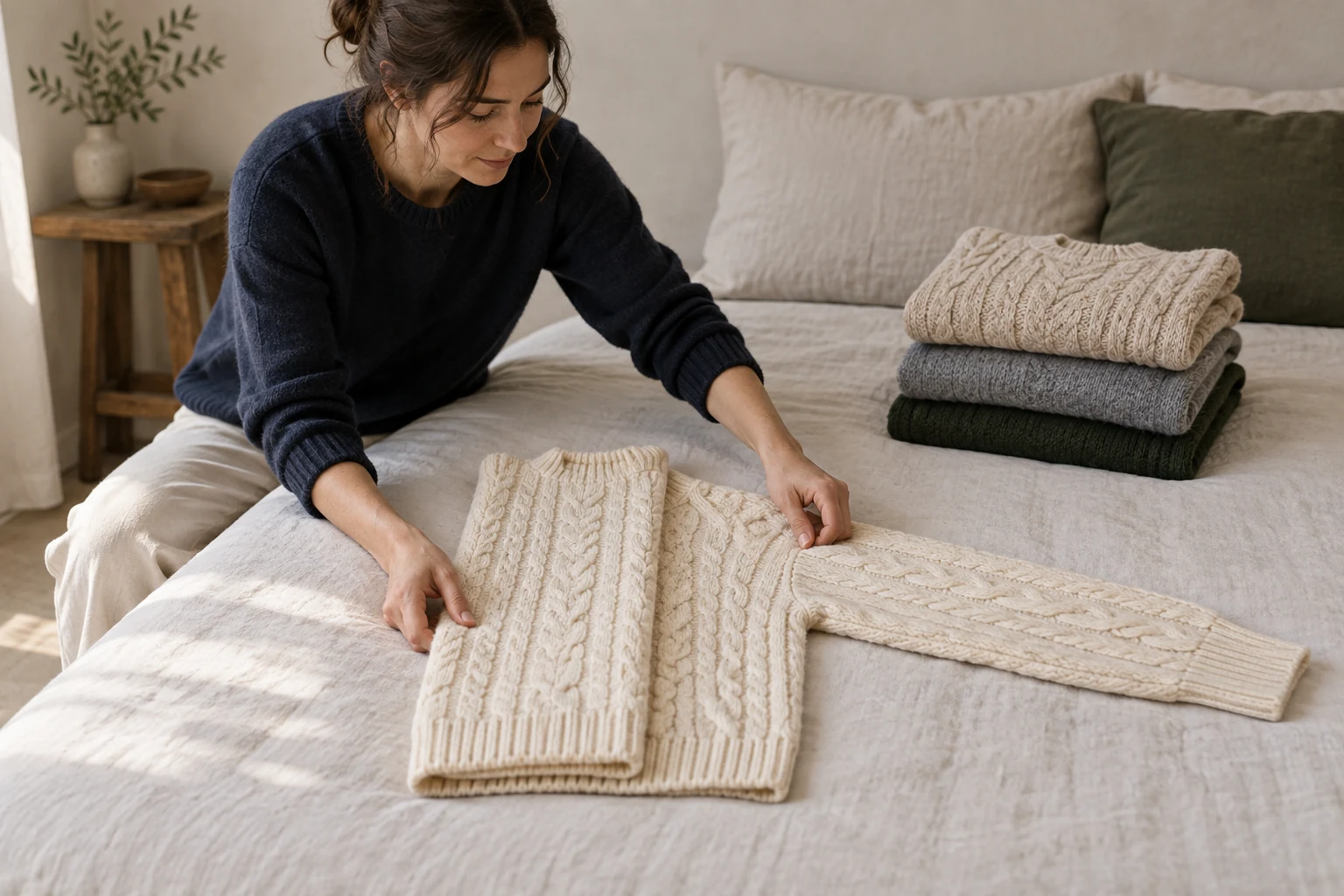
This fold makes a neat rectangle with the front of the sweater on top. Match its width to your shelf; for most adult sweaters, about 12 inches (30 cm) wide is a good target, which usually lines up with the outer edges of the shoulders. Work on a clean, flat surface such as a bed or table, because a sweater folded in the air comes out uneven.
Lay the sweater face down
Place it front side down with the neck away from you and the sleeves spread out. Smooth it gently with your palms without pulling the knit.
CheckThe hem is straight and the body lies at its natural width, not stretched wider.
Fold one side and its sleeve in
Fold one side of the body toward the center along a line from the outer shoulder straight down to the hem. Then fold the sleeve back down so it lies along the folded edge, or diagonally across the back if it is long.
CheckOne straight side, no cuff sticking out past the hem.
Fold the other side to match
Repeat on the other side at the same distance from the neck.
CheckA long, even rectangle with both sleeves lying on the back of the sweater.
Fold the body up
Fold the hem up to the shoulders for a single fold, or in thirds for a shorter, thicker rectangle that suits a shallow shelf. Fold softly, without pressing a sharp crease.
CheckThe edges line up and the rectangle sits flat.
Turn it over and place it
Flip the sweater so the front faces up and place it on the shelf with the folded edge facing out.
CheckYou can see the color and neckline from the front of the shelf. For drawers, fold once more and stand it on its edge, the file fold used in the KonMari method.
How to fold a sweater on a hanger
When there is no shelf space, you can still hang a sweater without stretching it by folding it over the bar of the hanger. The weight then rests across the middle of the garment instead of the shoulders. It works best with light and medium knits and a hanger with a nonslip or velvet finish. Very heavy knits are still better folded on a shelf.
Fold the sweater in half lengthwise
Lay the sweater flat and fold it in half down the center so the sleeves lie on top of each other.
CheckOne sleeve and one side of the body visible, the neck at the top corner.
Place the hanger at the underarm
Set the hanger on the sweater with the hook in the underarm corner, pointing toward the sleeves, and the bar running diagonally down across the body.
CheckThe hook sits in the armpit and the hanger lies inside the outline of the sweater.
Fold the body over the bar
Lift the body and fold it over the hanger so it drapes across the bar.
CheckThe body hangs over the diagonal bar like a towel over a rail.
Fold the sleeves over the other side
Fold the sleeves over the bar on top of the body. Pick the hanger up by the hook.
CheckThe sweater hangs securely, nothing is pulling at the shoulders, and the neckline is not stretched.
How to fold a sweater for travel
In a suitcase, light knits such as merino or fine cotton roll well: fold the sides in as for the basic fold, then roll tightly from the neck to the hem. The roll fills gaps and resists hard creases, and knits generally recover from a roll better than woven shirts do. Bulky sweaters are better folded flat and laid on top of everything else, where nothing heavy presses on them. Wearing the heaviest sweater on the plane saves the most space of all.
Pack sweaters clean and dry, and keep them away from shoes and toiletries. If a sweater arrives with a crease, hang it in a steamy bathroom for a while or lay it flat and let it relax; most knits recover on their own within hours. For the rest of the bag, our guide to packing a suitcase covers what to roll, what to fold and where each item goes.
| Method | Best for | Keep in mind |
|---|---|---|
| Basic shelf fold | Most sweaters, especially heavy and chunky knits | Match the width to the shelf, about 12 inches (30 cm) |
| File fold standing upright | Drawers | Lets you see every sweater at once |
| Folded over a hanger bar | Light and medium knits when shelves are full | Use a nonslip or velvet hanger |
| Rolled from neck to hem | Merino and fine cotton in a suitcase | Fold the sides in first |
| Folded flat on top of the bag | Bulky sweaters for travel | Or wear the heaviest one on the way |
Sweater storage ideas that keep knits visible
On open shelves, keep stacks to about three or four sweaters, fewer if they are chunky. Tall stacks press the bottom sweaters flat and topple when you pull one out, and the University of Kentucky extension service recommends putting the heaviest garments at the bottom when you do have to stack. Shelf dividers keep stacks from sliding into each other. In drawers, the upright file fold lets you see every sweater at once, which is the same reason it works for T shirts, as shown in our guide to folding a T shirt.
For off season storage, clean the sweaters first and make sure they are completely dry. Woolmark recommends breathable cotton bags and cautions that vacuum bags can trap moisture. UC Integrated Pest Management advises storing clean wool in airtight containers to keep clothes moths out. Clean and dry is the condition that makes either approach safe. Our guides to storing knitwear, washing wool and washing cashmere cover the seasonal routine in more depth, and for delicate knits the extension service suggests white tissue paper between folds to soften creases. If moths have already left a small hole, our guide to fixing a hole in a sweater shows how to close it before it grows.
How to fold hoodies, oversized and bulky sweaters
A hoodie folds like a sweater with one extra step. Lay it face down, fold the sides and sleeves in as for the basic fold, then fold the body up to just below the hood. Finally bring the hood down over the folded body, or tuck the body into the hood like a pouch, which keeps the stack tidy and stops the hood flopping over the shelf edge. Zip up hoodies fold more evenly when zipped closed first.
Oversized sweaters and long cardigans simply need a narrower rectangle. Fold the sides in further than usual, so the width matches your shelf rather than the sweater, and fold the body in thirds instead of in half. Chunky knits are thick enough that one fold may be all they need; forcing a second fold makes a tall, springy bundle that will not stack. For travel, give bulky sweaters their own flat layer at the top of the bag or wear the heaviest one on the way.
Jeans often share the same shelf, and they have their own simple fold, explained in our guide to folding jeans.
Common mistakes
Hanging a heavy knit by the shoulders
Hanger bumps and a lengthened body are hard to reverse in a heavy sweater. Fold it on a shelf, or fold it over the bar of a hanger instead.
Pressing sharp creases into the knit
Knits do not need crisp folds. Fold gently and let the sweater settle rather than flattening it with your hands, which can leave lasting lines in fine wool.
Storing sweaters after one wear without airing
Body oils and small food marks attract clothes moths during storage. Air a sweater after wearing it, and wash it according to its label before storing it for a season.
Questions people ask
Is it better to fold or hang sweaters?
Fold them. Woolmark advises folding knitted garments because hangers stretch the shoulders and lengthen the body over time. If you have no shelf space, fold the sweater over the bar of a hanger so the weight does not hang from the shoulders.
Is it better to roll or fold sweaters when traveling?
Roll light knits such as merino and fine cotton, which fill gaps and come out with few creases. Fold bulky sweaters flat and lay them on top, since rolling a chunky knit makes a stiff cylinder that takes more room than a flat fold. Either way, a knit usually relaxes within hours of being unpacked and hung in a steamy bathroom.
How do I get hanger bumps out of a sweater?
Mist the bump lightly with water or hold a steamer a few inches away, then smooth the knit with your hand and let it dry flat. For wool, a gentle wash and flat dry according to the care label usually resets the shape.
How do I fold a cardigan?
Button it first, at least the top and middle buttons, then fold it exactly like a sweater, face down with the sides and sleeves folded in. Buttoning keeps the front edges aligned so the cardigan does not twist.
Can I fold sweaters KonMari style?
Yes. Make the basic rectangle, fold it into a smaller rectangle that stands on its edge, and file it upright in a drawer. It works best for light and medium knits; very chunky sweaters are easier on a shelf.
Sources and further reading
References used for this guide. Each opens the original page in a new tab.
- Woolmark everyday wool care Opens in a new tab
- Woolmark guide to storing wool clothes Opens in a new tab
- University of Kentucky Cooperative Extension Service, Clothing storage (CT LMH 144) Opens in a new tab
- University of California Integrated Pest Management, Clothes moths Opens in a new tab
- KonMari, How to fold clothes with the KonMari Method Opens in a new tab
Keep reading
Closet and packing
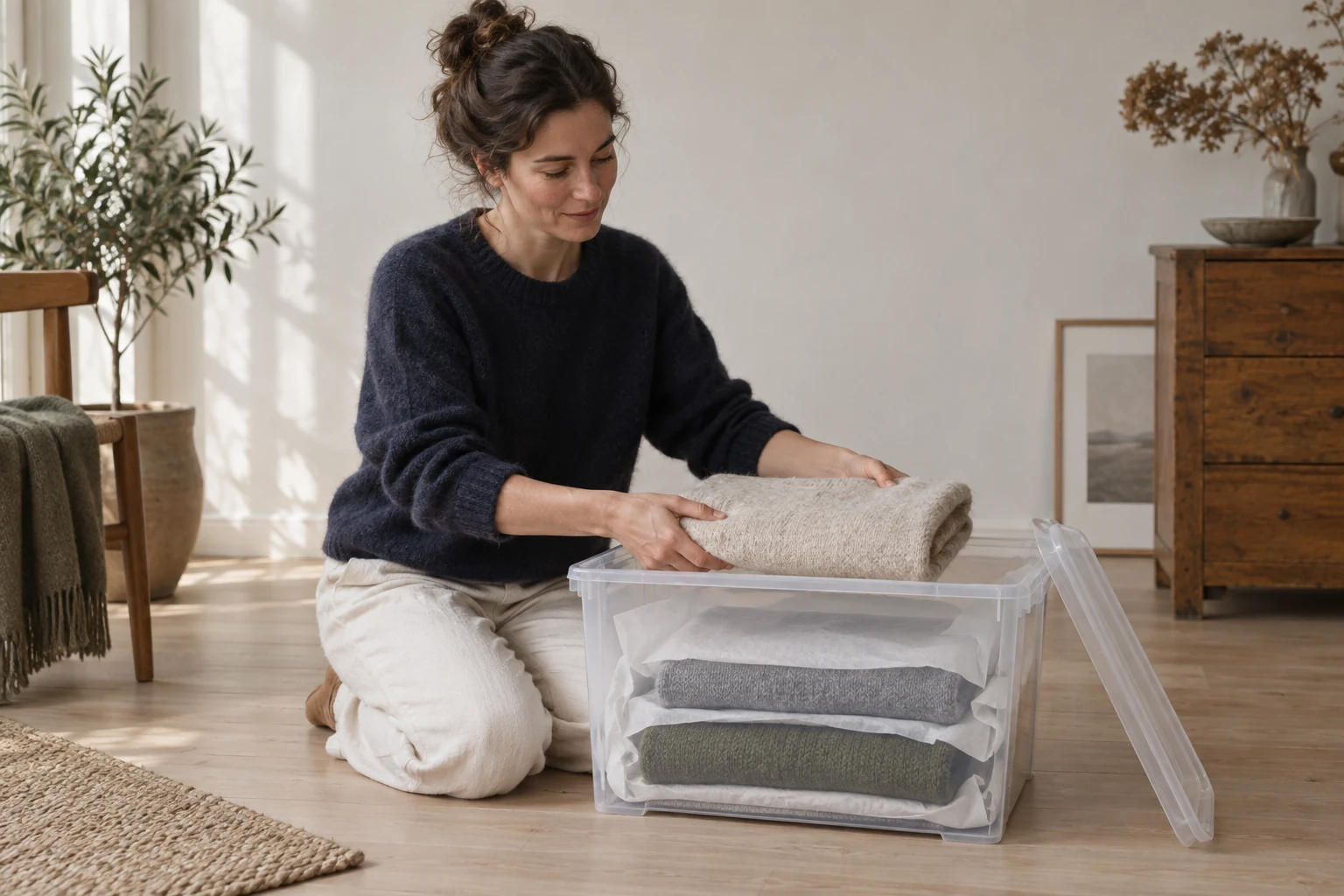
How to store sweaters: folding, seasons and moths
How to store sweaters day to day and between seasons: fold instead of hang, clean before packing, choose bins or bags with care, and keep clothes moths out.
Closet and packing
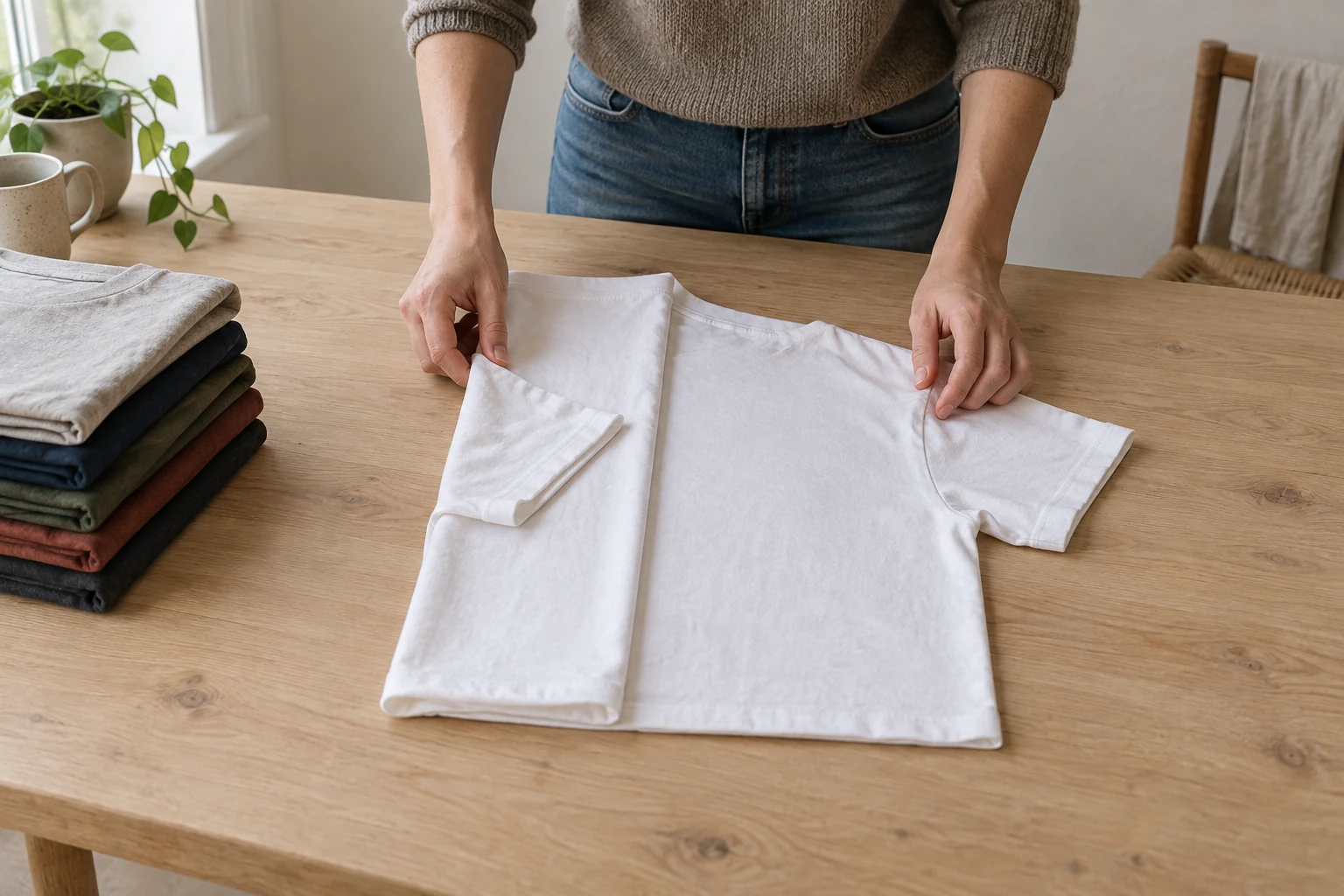
How to fold a T shirt neatly
How to fold a T shirt four ways: a neat shelf fold, the fast two second fold, an upright file fold for drawers and a tight roll for packing.
Washing and ironing
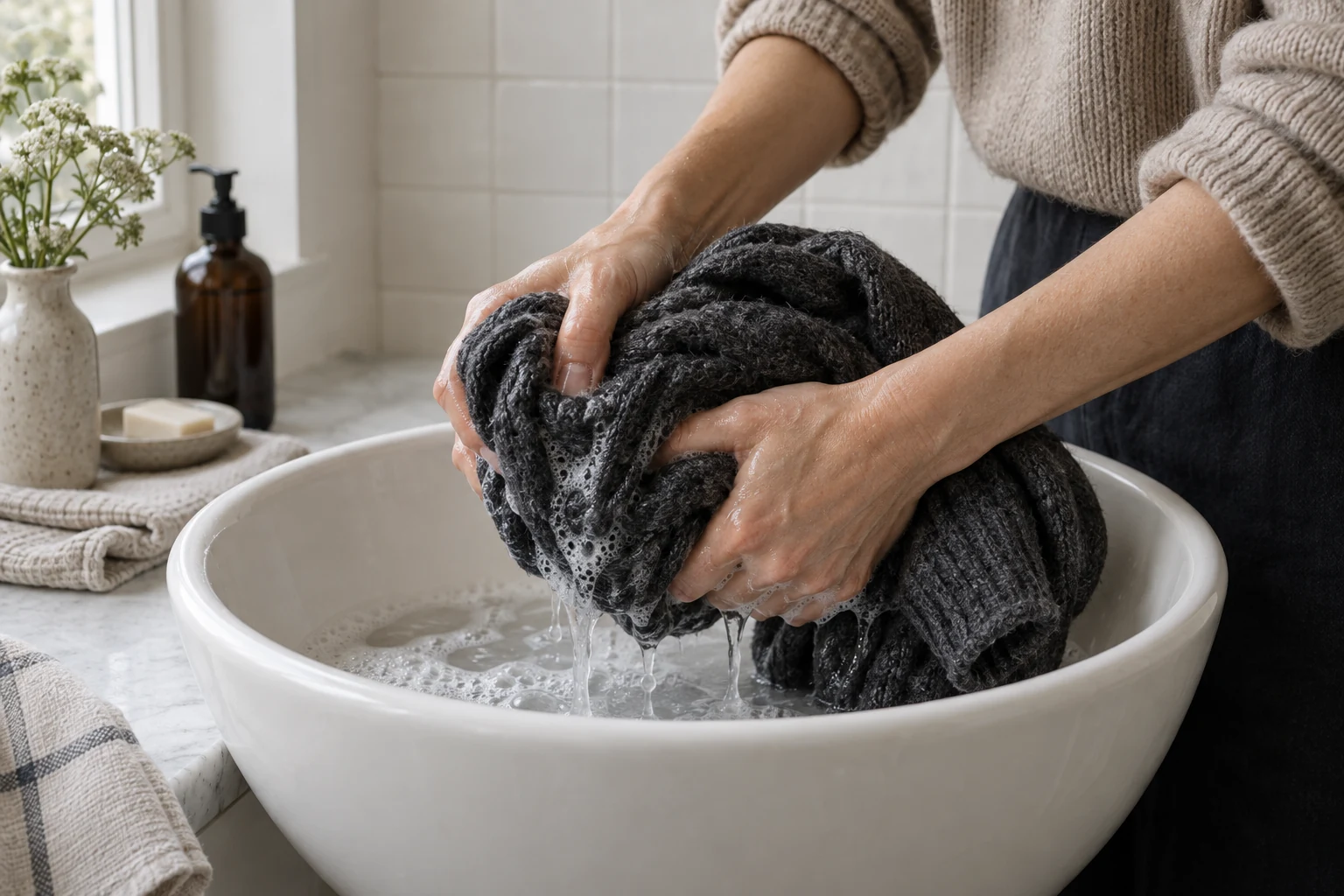
How to wash a wool sweater without shrinking it
How to wash a wool sweater by hand or in the machine: read the label, pick a wool detergent, keep water cool and calm, then dry it flat so it keeps its shape.
Closet and packing
How to organize your closet so you can see everything
How to organize your closet by what you wear most: what to hang and fold, zones and shelves, small closet ideas and a simple seasonal rotation.
Closet and packing
How to pack a suitcase without wrinkles
How to pack a suitcase step by step: plan outfits first, roll or fold each piece, layer the bag, use packing cubes well, and follow carry on rules.