Formal table setting: how to set a formal dinner table
In this guide
Start with the menu, not the cutlery drawer. A formal table setting looks complicated, but it rests on one idea: the table is laid in the order the meal will be eaten, so each guest works from the outside in. Once you have written down the courses for your dinner, nearly every fork, knife and glass has an obvious place, and the fistful of silverware on the sideboard stops looking like a puzzle.
This guide follows the conventions of the Emily Post Institute, the standard reference for American table manners. It covers what makes a setting formal, how to lay the cutlery, glasses, bread plate and dessert pieces, and how to use place cards. Other countries and households have their own traditions, and Emily Post itself encourages hosts to adapt to what they own. For an everyday or casual meal, our guide to how to set a table covers the basic setting.
What makes a table setting formal
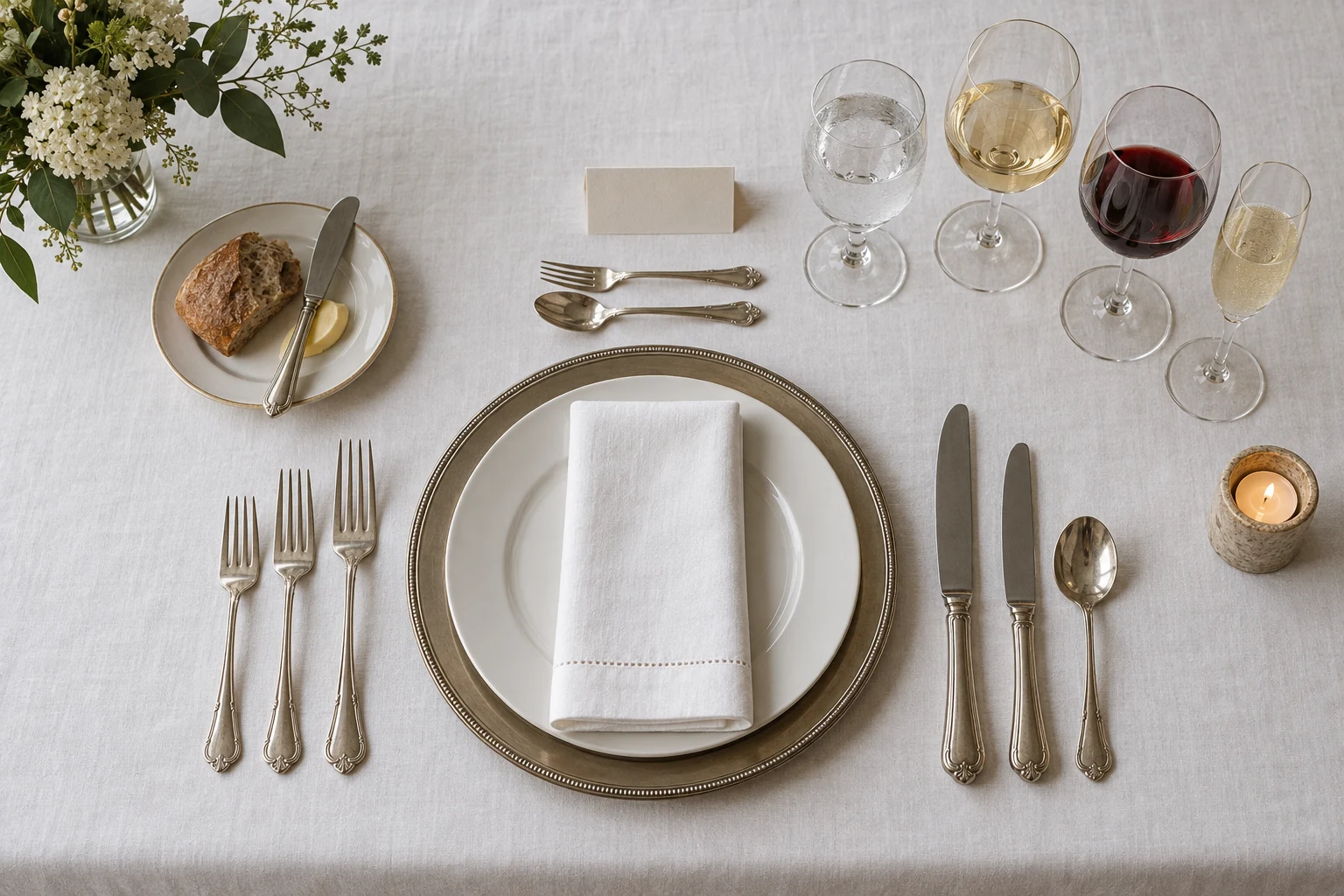
Emily Post describes the formal place setting as the one used for a meal of more than three courses, such as a dinner party or a holiday meal, and at high end restaurants that serve several courses. It is the informal setting taken further: more glasses, more plates and more cutlery, because more foods and drinks are coming. An informal table setting suits a three course dinner party and usually has one or two wine glasses. A basic table setting, with one fork, one knife, a spoon if needed and a water glass, suits everyday meals.
A formal table also has a particular look. White linens are still considered the most formal, though colored or patterned cloths and napkins can be just as elegant. The most formal table is symmetrical, with the centerpiece in the exact center, candlesticks in even numbers and every place setting spaced the same distance apart and the same distance from the table edge. Keep flowers and candles low enough that guests seated opposite each other can see and talk across the table.
Start with the menu and work from the outside in
Diners use utensils from the outside in, so the piece for the first course sits farthest from the plate and the dinner fork and knife sit closest to it. Forks go on the left, knives and spoons on the right, and every knife blade faces the plate. The one exception is the oyster fork, which, if you serve shellfish, is the only fork placed on the right, beyond the spoons.
Emily Post adds two limits that keep a formal set up from sprawling. No more than three of any implement are placed on the table at once, apart from the oyster fork. If more than three courses come before dessert, the utensils for the fourth are brought in with that course. Set only what the menu needs: if there is no soup, there is no soup spoon. A table with fewer, correctly placed pieces is more formal than one with every fork you own.
Set a formal table step by step
If you picture a formal table setting diagram for a menu of soup, fish, a main course and salad, the line of cutlery reads, from left to right: fish fork, dinner fork, salad fork, then the plate, then dinner knife, fish knife and soup spoon. Emily Post places the salad fork next to the plate here because the salad is served after the main course. If you serve salad first, it moves to the outside. The steps below build that layout.
Lay the cloth or mats
Spread the tablecloth so it hangs evenly on all sides. Emily Post gives a typical drop of 12 to 18 inches (about 30 to 45 cm); what matters is that it does not fall into guests' laps. Place mats sit about 1 to 2 inches from the table edge, centered in front of each chair.
Space the settings evenly
Put a charger or dinner plate at each seat, spaced at equal distances around the table and set back the same distance from the edge. In her 1922 book, Emily Post suggested using a tape measure if your eye is not reliable.
CheckYou should see a regular rhythm of plates with enough elbow room for each guest.
Place the forks on the left
Lay the forks to the left of the plate in reverse order of use, so the first course fork is farthest out. The dinner fork, the largest, sits nearest the plate unless the salad comes after the main course. Line up the bottoms of the handles so they sit about the same distance from the table edge.
Place knives and spoons on the right
Lay the dinner knife nearest the plate, then any fish knife, then the soup spoon on the outside, with every blade facing the plate. An oyster fork, if you need one, goes to the right of the spoons. The right side should mirror the left in length and alignment.
Add the bread plate and butter knife
Place the small bread and butter plate above the forks, on the left. Lay the butter spreader across it diagonally with the handle toward the right and the blade facing the diner, which is easiest for a right handed guest to pick up. A useful memory aid from Emily Post: make a lowercase b with your left hand and a d with your right, for bread on the left and drinks on the right.
Set the glasses
Place the water goblet directly above the knives, then the wine glasses to its right in the order they will be used, as described in the next section. You should be able to reach each glass without stretching across your neighbor's setting.
Fold and place the napkin
Lay the napkin on the charger or in the space for the plate, or to the left of the forks. If space is tight, it can sit under the forks. A simple fold looks more formal than an elaborate one guests have to unpick.
Finish with the place card
Set a place card above each plate. Check the whole table from one end: settings aligned, knives turned in, glasses in a neat line, nothing crowding the next guest.
| Piece | Where it goes |
|---|---|
| Forks | Left of the plate, in reverse order of use |
| Knives and soup spoon | Right of the plate, every blade facing in |
| Oyster fork | The only fork on the right, beyond the spoons |
| Bread plate | Above the forks, butter knife laid diagonally across it |
| Glasses | Above the knives, water goblet first, then wines to its right |
| Dessert fork and spoon | Above the plate, or brought in with dessert |
| Place card | Above the plate |
Never more than three of any implement at once, apart from the oyster fork.
Arrange the glasses in order of use
Glasses sit on the right, above the knives and spoons, and follow the same logic as the cutlery. Emily Post places the water goblet directly above the knives. The red or white wine glass goes just to its right, and a sherry glass or champagne flute, for a first course or an opening toast, goes to the right of the wine glasses. Reading from the outside in, the glass for the earliest course is the one farthest to the right, and the water goblet stays nearest the plate all evening.
A formal setting can hold up to five glasses. When there are more than three, arrange them with the smaller glasses in front so each is easy to reach. Glasses used for a particular course are removed when that course is cleared, which keeps the table from filling up as the meal goes on. At an informal dinner, one or two wine glasses to the right of the water glass are enough. For guests unsure what to do once the glass is poured, our guide on how to hold a wine glass covers the stem, toasting and the fork and knife.
Dessert cutlery above the plate, or brought in later
There are two correct ways to handle dessert. The first, common at informal and semi formal dinners, is to set the dessert fork and spoon above the plate for the whole meal. The fork lies horizontally with its handle pointing left, and the spoon lies above it with its handle pointing right, so each is picked up by the hand that will use it. Emily Post calls spoon above fork the traditional order, though you will now also see the two the other way round.
The second, and the more traditional for a fully formal dinner, is to bring the dessert spoon and fork in on the dessert plate just before dessert is served. This keeps the setting uncluttered through the earlier courses. Whichever you choose, clear the bread plate, the butter knife and any unused cutlery before dessert, so the table is ready for the final course.
Place cards and seating
Place cards save guests the awkward moment of hovering behind chairs, and they let a host seat people thoughtfully. Emily Post's 1922 guidance put the card above the plate on the tablecloth, noting that some hosts set it on the napkin where it is easier to read. Above the plate, near the dessert cutlery, remains the usual spot today. Write each name the way you would address that guest at the table; for a large or official event, full names or titles are clearer.
Seating is the host's decision, and Emily Post says the only mistake a guest can make with place cards is switching them. Traditionally the guest of honor gets the best seat, at the host's right, and at official dinners Emily Post seats guests by rank on either side of the hosts. At a private dinner party, you have more freedom: seat people who will enjoy each other, and place a shy guest beside someone generous with conversation.
Adapt a formal setting to what you own
You do not need a complete set of specialist cutlery to serve a formal dinner. Emily Post points out that salad or luncheon forks can double as dessert forks, and the Institute's own set uses a fish fork for dessert; it only draws the line at using an oyster fork for salad or dessert. Many skilled hosts manage a formal meal with limited tableware by washing a few pieces between courses and bringing them in with the next plate.
If you are short of glasses, serve one wine through the meal and set only one wine glass. If the table is narrow, move the dessert cutlery off the setting and bring it in later. The aim is that every guest can eat each course without wondering what to use. If you are also deciding what to wear, our guides to black tie, semi formal attire and what to wear to a gala can help you pitch the invitation.
Common mistakes
Setting cutlery for courses you are not serving
Extra forks confuse guests and break the outside in logic. Lay only what the menu needs, and bring in anything for a fourth course with the food.
A centerpiece that blocks the view
Tall arrangements stop guests talking across the table. Keep flowers and candles low, or move a tall piece to a sideboard once everyone sits down.
Putting the bread plate on the right
The bread plate belongs above the forks on the left, and drinks on the right. When plates end up on the wrong side, guests at a crowded table start using their neighbor's.
Questions people ask
What is the difference between a formal and an informal table setting?
A formal setting is used for meals of more than three courses and includes more glasses, a charger and cutlery for each course, often with dessert pieces brought in later. An informal table setting suits a three course dinner and usually has one or two wine glasses and fewer utensils. Both follow the same outside in logic.
Where does the water glass go in a formal table setting?
The water goblet sits directly above the knives, on the right. Wine glasses go to its right in the order they will be used, with any sherry glass or champagne flute for the first course or a toast farthest to the right.
Do I need charger plates for a formal dinner?
No. Emily Post describes the charger, or service plate, as optional. When used, it sits under the first courses and is exchanged for the main course plate when the entrée is served.
What is a semi formal table setting?
It is not a separate standard in Emily Post's guides; in practice it means the informal setting dressed up. Lay cutlery for three courses, one water glass and one or two wine glasses, a bread plate and dessert pieces above the plate, then add a pressed cloth, cloth napkins and candles. It suits a birthday dinner or a holiday meal that is special without being a long formal menu.
How can I make a formal table look elegant without buying more?
Precision does more than expensive pieces. Iron the cloth and napkins, space every setting the same distance apart, line up the handles and polish the glasses so they sparkle. A low centerpiece of flowers or greenery from the garden and candles in even numbers finish the look, and plain white plates with matching glasses look more formal than a mix of patterns.
Sources and further reading
References used for this guide. Each opens the original page in a new tab.
- Emily Post Institute: The formal place setting Opens in a new tab
- Emily Post Institute: Table setting guides, basic, informal and formal Opens in a new tab
- Emily Post Institute: B and D for bread and drink Opens in a new tab
- Emily Post Institute newsletter: Setting the places, from the 1922 edition of Etiquette Opens in a new tab
- Emily Post Institute: Where to sit guests at the table Opens in a new tab
- Emily Post Institute: Seating at an official luncheon or dinner Opens in a new tab
Keep reading
At the table
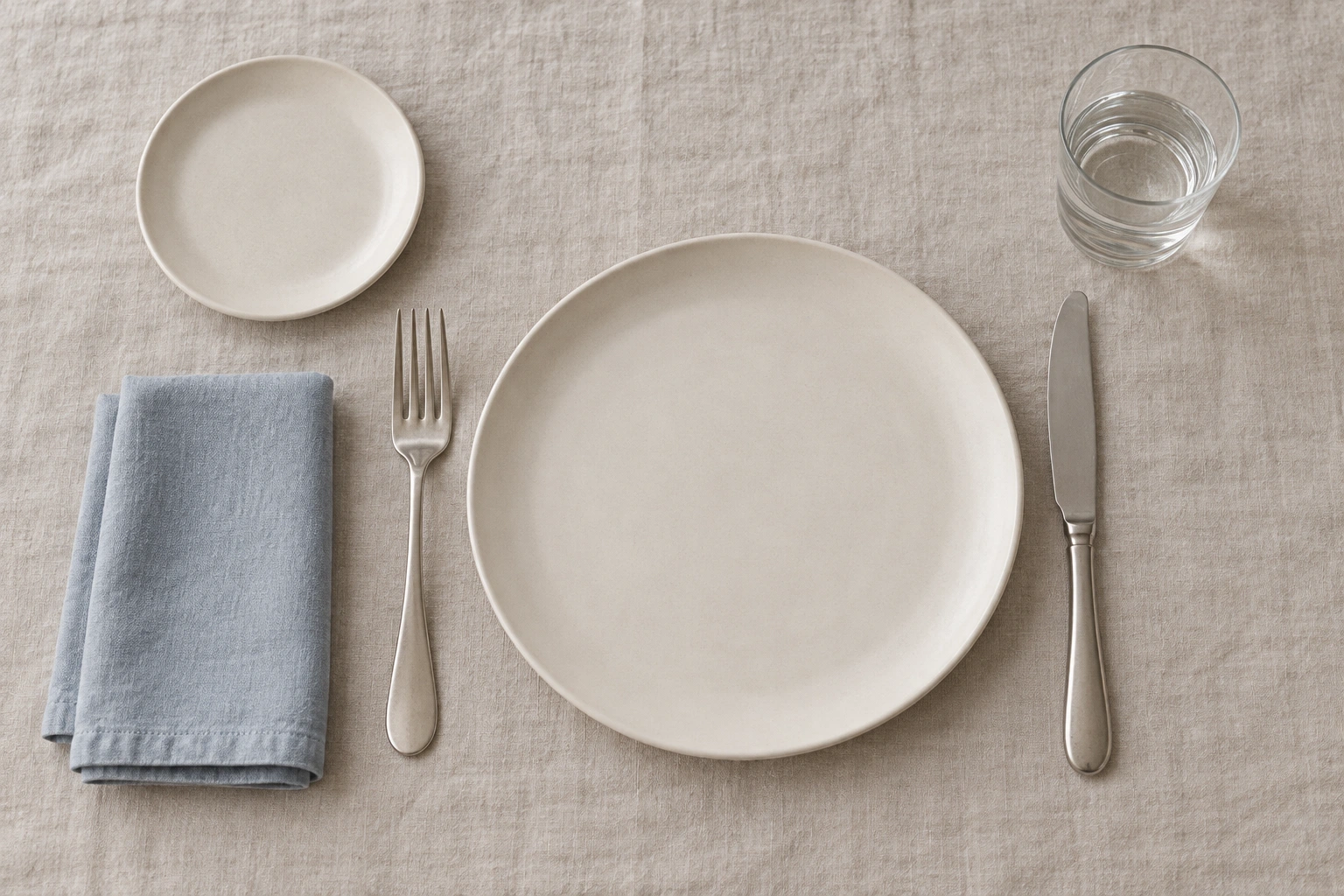
How to set a table: the basic place setting
How to set a table for everyday meals and for dinner: where the plate, fork, knife, spoon, glass and napkin go, and how to read a setting as a guest.

At the table
How to hold a wine glass, and other small table habits
How to hold a wine glass by the stem and why, how to toast, and how to hold a fork and knife in the American and Continental styles, with where to rest them.
Dress codes
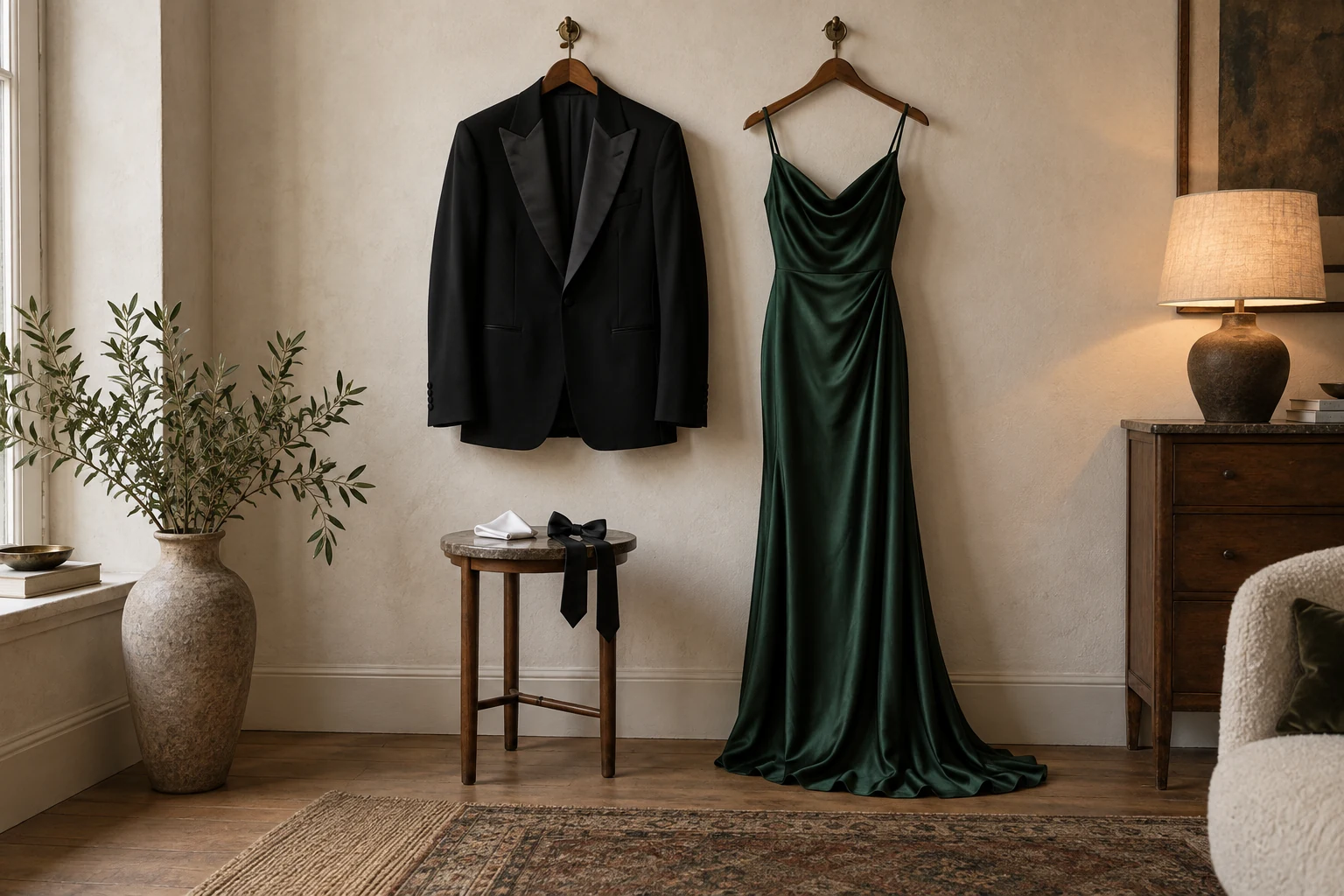
Black tie attire: what to wear, for men and women
Black tie attire explained: the tuxedo in detail, the shirt, bow tie and shoes, plus gowns and elegant alternatives for women and black tie weddings.
Dress codes
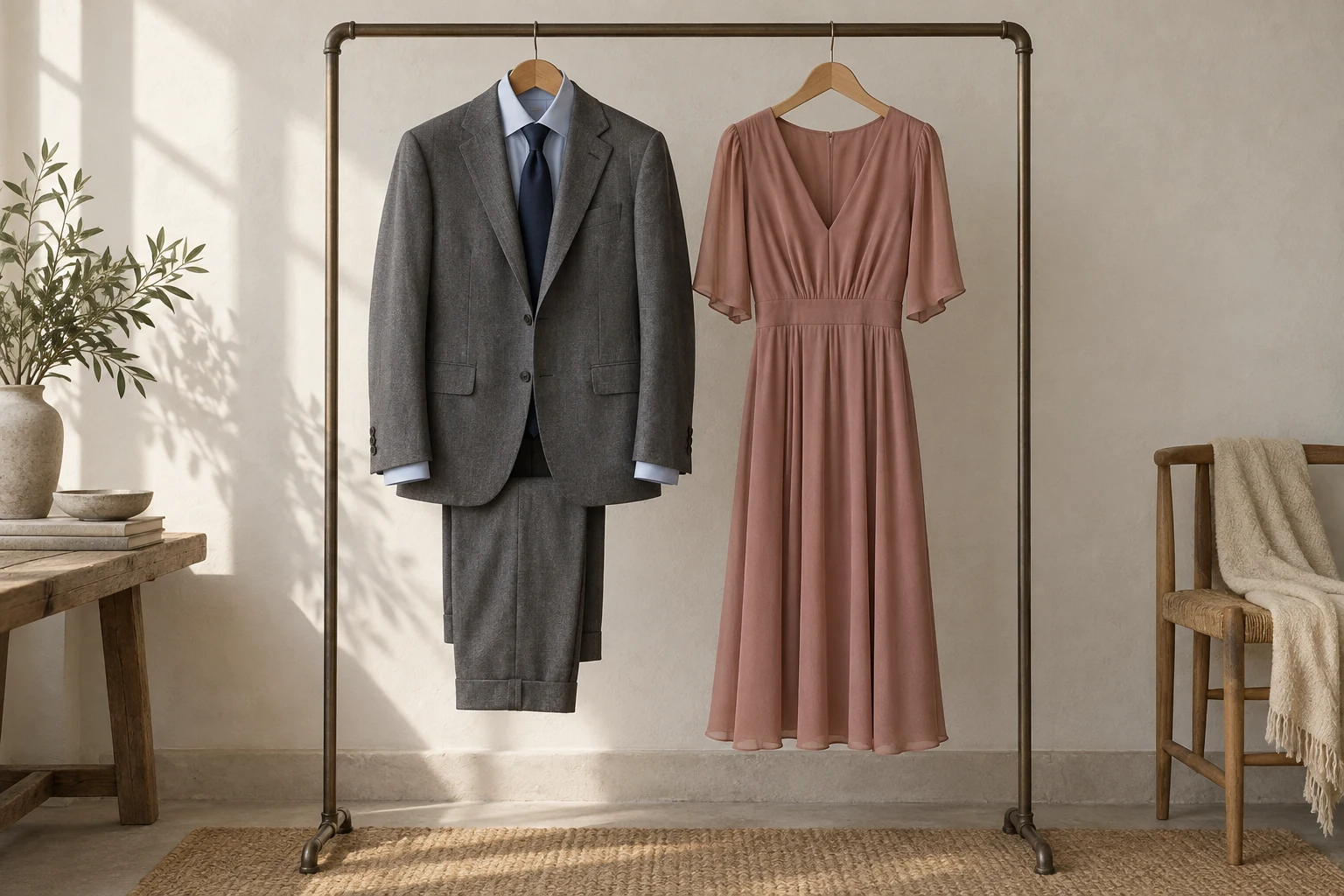
Semi formal attire for men and women
What semi formal attire means for men and women, how daytime and evening change it, and what to wear to a semi formal wedding, party or dance, with outfit ideas.
Dress codes
Wedding guest attire: every dress code decoded
Wedding guest attire explained from black tie to casual, with what men and women can wear for each dress code, plus color, venue and religious considerations.