What is a cummerbund, and how do you wear one?
In this guide
The pleated band of black silk that comes with many rented tuxedos raises more questions than any other piece of black tie. Which way up does it go? Does it replace a belt? Is it old fashioned? A cummerbund is simpler than it looks. It is a broad waist sash that covers the join between your shirt and trousers, and once you understand that job, the rules about wearing it make sense.
Putting one on takes about a minute, and the only real decisions are color, fabric and whether a vest would suit the evening better. If you are still deciding what the invitation actually requires, start with our guide to the black tie dress code.
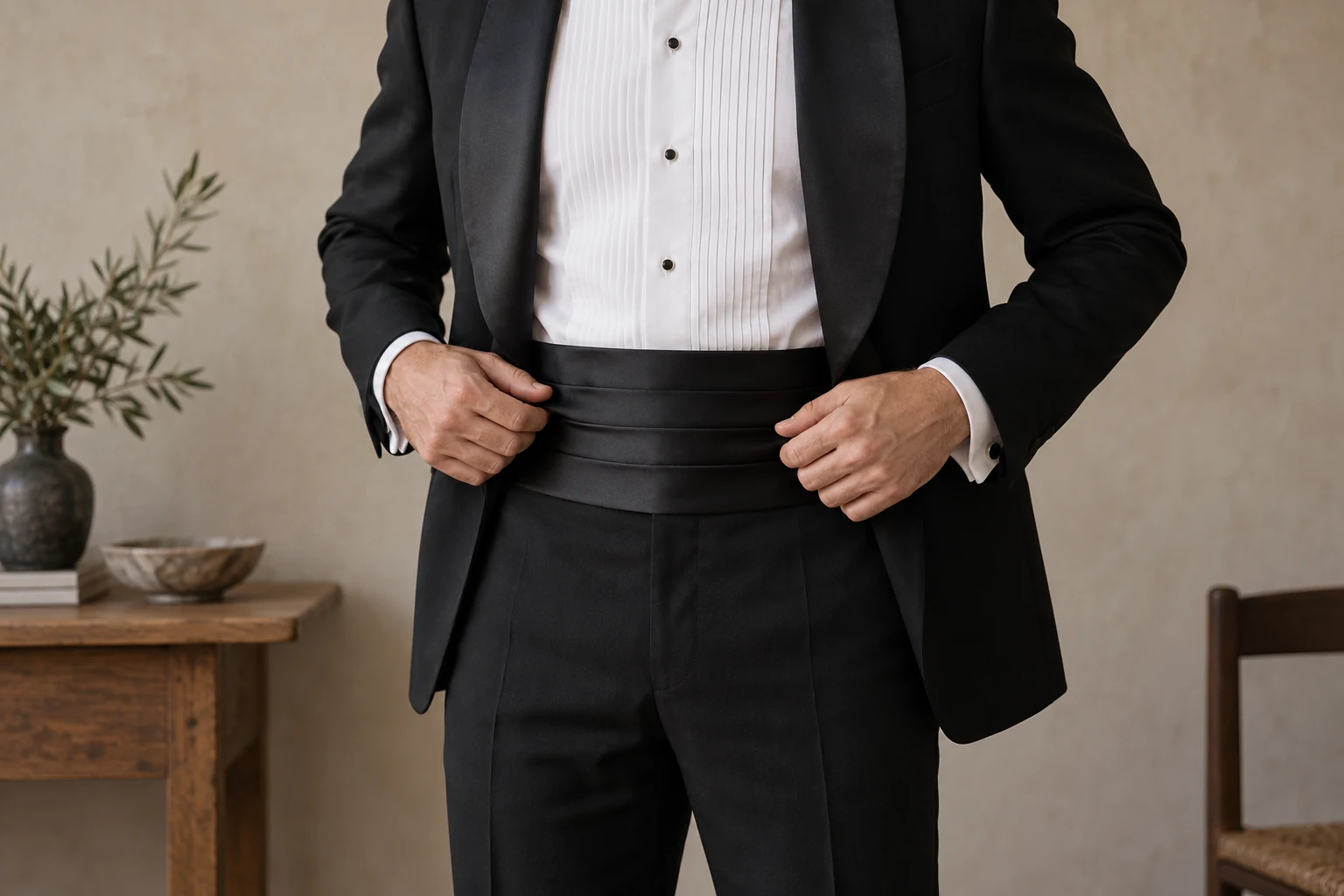
What is the point of a cummerbund?
A tuxedo cummerbund covers your waist. With a single breasted dinner jacket, the front opens below the button and shows the area where the white shirt meets the top of the trousers. In classic black tie, that join is considered untidy, so it is covered either with a cummerbund or with a low cut evening waistcoat. The result is a clean line from the bow tie down to the trousers, with nothing visible but black silk, white shirt and black cloth.
The cummerbund is not a belt and does not hold anything up. Tuxedo trousers are traditionally cut to be worn with suspenders and have no belt loops, so the cummerbund is purely about appearance. That is also why you never wear one with a double breasted dinner jacket, which stays buttoned and already covers the waist, or together with a vest, which does the same job.
Where the cummerbund came from
The word cummerbund is an English form of the Hindustani kamarband, from Persian, meaning waist band. British officers in colonial India adopted the waist sash worn by Indian soldiers, and it entered English in the early seventeenth century. It later moved into civilian evening dress as a lighter, cooler alternative to the waistcoat, and by the twentieth century it was a standard part of black tie in Britain and North America.
Is it cummerbund or cumberbund? The correct spelling is cummerbund, although the mispronunciation cumberbund is common. Another name you may see is simply waist sash. In South Asia, versions of the kamarband remain part of some military and ceremonial uniforms.
How to wear a cummerbund, step by step
Put the cummerbund on after your shirt, trousers and suspenders, and before the jacket. You need a mirror and about a minute.
Wear your trousers at the natural waist
Tuxedo trousers should sit around your navel, higher than most casual trousers, and be held up by suspenders. This puts the waistband where the cummerbund can cover it. If your trousers sit low on the hips, the cummerbund will ride above them and leave a gap of shirt.
Pleats facing up
Hold the cummerbund against your front with the pleats opening upward, like small shelves. This is the traditional orientation for civilian evening wear; the old story is that the pleats once held opera tickets. If the pleats face down, turn it over.
Fasten it at the back
Bring the strap around behind you and fasten the clasp or buckle at the small of your back, adjusting the strap so the band is snug but lets you sit and eat comfortably. Many cummerbunds have an elastic section for exactly this reason.
Center it and check coverage
Line up the center of the pleated panel with your shirt placket. It should cover roughly the bottom of the shirt front and the top of the trousers in equal measure, with no white showing below and no waistband showing above. If there is a small loop at the front, it can attach to a trouser button to stop it riding up.
Add the jacket
Button the jacket and look in the mirror. From the front you should see a smooth band of silk between the jacket's opening and the trousers, with the cummerbund's edges tucked out of sight under the jacket when buttoned.
How to choose a tuxedo cummerbund
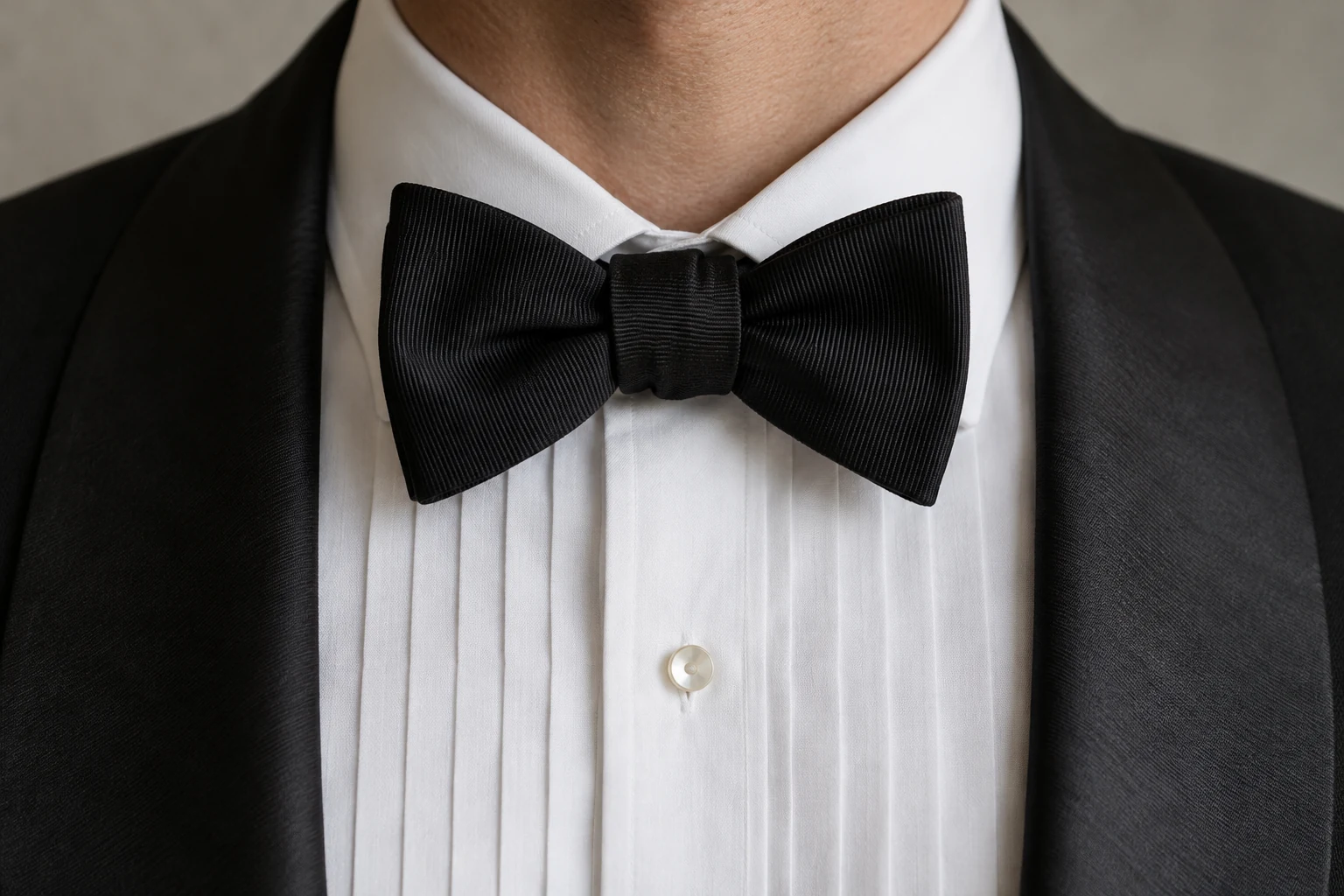
The classic cummerbund is black silk, with the fabric matched to the lapel facings of your jacket and to your bow tie: satin with satin lapels, grosgrain with grosgrain. Matching the three pieces is what makes the outfit read as one ensemble. Midnight blue works with a midnight blue tuxedo, and a deep burgundy is a traditional, quiet alternative for those who want a hint of color.
Brightly colored or patterned cummerbunds are popular for weddings, proms and holiday parties, often matched to a wedding color. They are a departure from traditional black tie and are best kept for events where playfulness is welcome. Avoid pre tied bow tie and cummerbund sets if you can; a self tied bow tie looks more natural, and our guide to tying a bow tie makes it easy to learn.
| Your tuxedo or event | Cummerbund | Notes |
|---|---|---|
| Satin lapel facings | Black satin | Match the bow tie too |
| Grosgrain lapel facings | Black grosgrain | Match the bow tie too |
| Midnight blue tuxedo | Midnight blue | Keeps the ensemble in one color |
| A hint of color | Deep burgundy | A traditional, quiet alternative |
| Weddings, proms, holiday parties | Bright or patterned, often a wedding color | A departure from traditional black tie |
Cummerbund vs vest
A cummerbund and a tuxedo vest are alternatives, never worn together. Both cover the waist. Some traditional style guides pair the cummerbund with a shawl collar and the low cut waistcoat with peak lapels, and most treat the cummerbund as the lighter, cooler choice for warm weather. In practice either works with most single breasted dinner jackets.
Choose a cummerbund if you run warm, if the event is in summer or indoors in a crowded room, or if you want the cleanest, simplest look. Choose a vest if you like more structure, plan to take your jacket off during dancing, or have a peak lapel jacket. A vest keeps you looking finished in shirtsleeves in a way a cummerbund does not. Our guide to wearing a waistcoat covers the evening vest, and suit vs tuxedo explains why neither belongs with a regular suit.
Cummerbund with suspenders, not a belt
Is it a cummerbund or suspenders? It is both. Suspenders do the practical job of holding the trousers up at the natural waist, and the cummerbund does the visual job of covering the waistband. Wear them together, with the suspenders buttoned inside the trouser waistband and the cummerbund over the top. Black or white silk suspenders are traditional and stay hidden under the jacket; our guide to wearing suspenders shows how to attach them.
Do not wear a belt with a cummerbund. Formal trousers usually have no belt loops, and a belt adds bulk and a buckle bump under the silk. If your rented trousers have loops and you cannot do without support, choose trousers with side adjusters or clip on suspenders rather than a belt.
Common mistakes
Wearing it with the pleats facing down
It is the most common cummerbund mistake and easy to spot in photos. Pleats open upward for civilian black tie.
Letting shirt show below it
Trousers worn low on the hips leave a gap between the cummerbund and the waistband. Raise the trousers with suspenders so the cummerbund covers the join.
Adding a cummerbund to a double breasted tuxedo
A double breasted jacket already covers the waist when buttoned, so the cummerbund is hidden and only adds heat and bulk. Leave it off.
Questions people ask
Is a cummerbund old fashioned?
It is less common than it once was, and many men now wear a tuxedo with neither cummerbund nor vest. But it is still correct for traditional black tie, and a well matched black silk cummerbund looks polished rather than dated. Bright novelty cummerbunds are what tend to look old fashioned.
Do people still wear cummerbunds?
Yes, particularly at formal weddings, galas and other black tie events, and they come with many rental tuxedos. At black tie optional events they are entirely optional.
Is cummerbund a Hindi word?
It comes from Hindustani kamarband, a word of Persian origin meaning waist band, and similar words are used in Hindi and Urdu today. British officers brought the garment and the word into English during colonial rule in India.
Can you wear a cummerbund with a suit?
Traditionally no. The cummerbund belongs to evening dress with a tuxedo and silk faced lapels. With an ordinary business suit, it looks out of place; use a belt or suspenders and let the jacket do the work.
Sources and further reading
References used for this guide. Each opens the original page in a new tab.
Keep reading
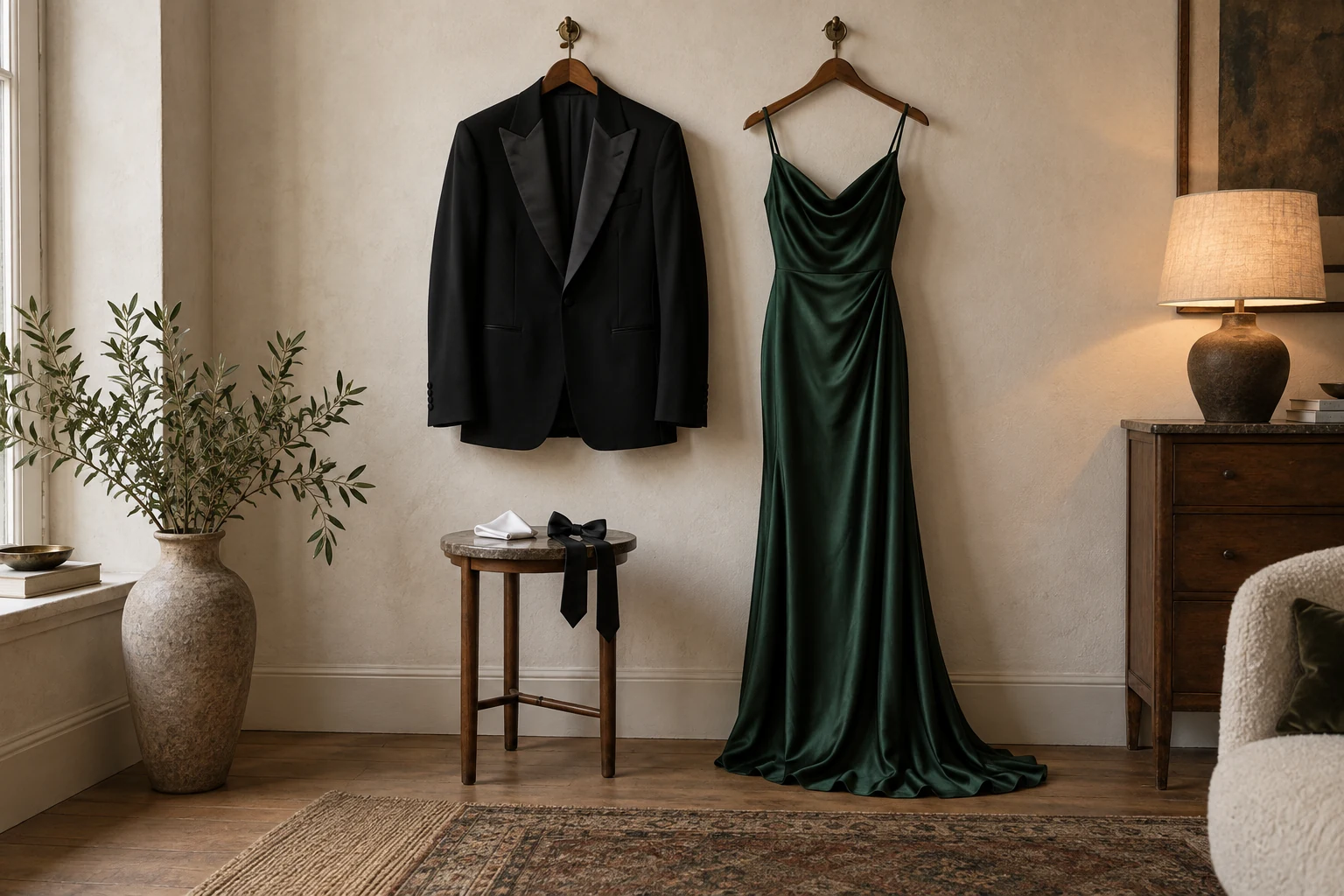
Dress codes
Black tie attire: what to wear, for men and women
Black tie attire explained: the tuxedo in detail, the shirt, bow tie and shoes, plus gowns and elegant alternatives for women and black tie weddings.
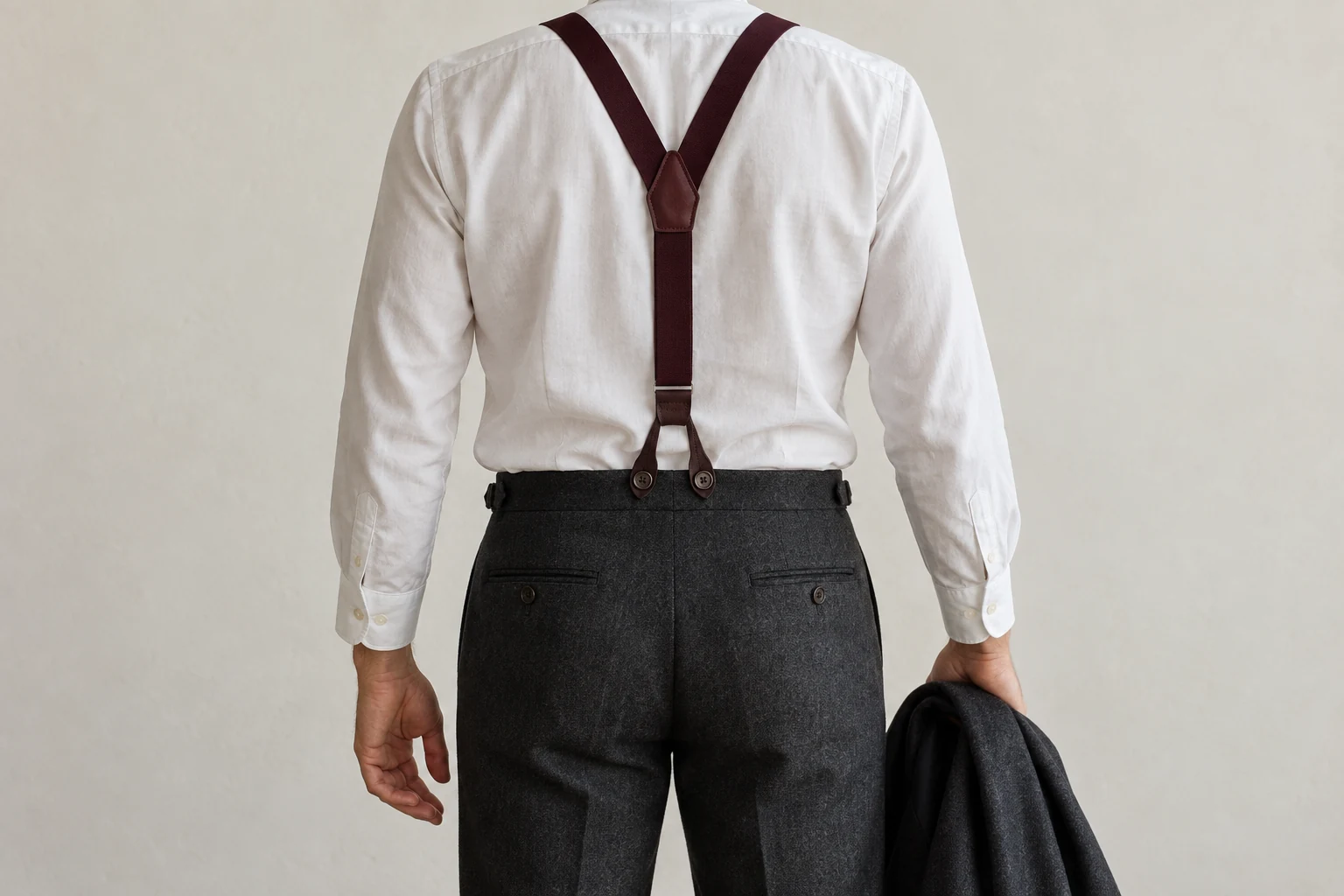
Suits and tailoring
How to wear suspenders with trousers and jeans
How to wear suspenders well: button or clip on, which back style, how to adjust the length, why not to add a belt, and outfits from suits to jeans.

Suits and tailoring
How to wear a vest: suit vests and casual vests for men
How to wear a vest as a man: how a suit vest should fit, the bottom button rule, wearing one without a jacket, and casual sweater, puffer and denim vests.
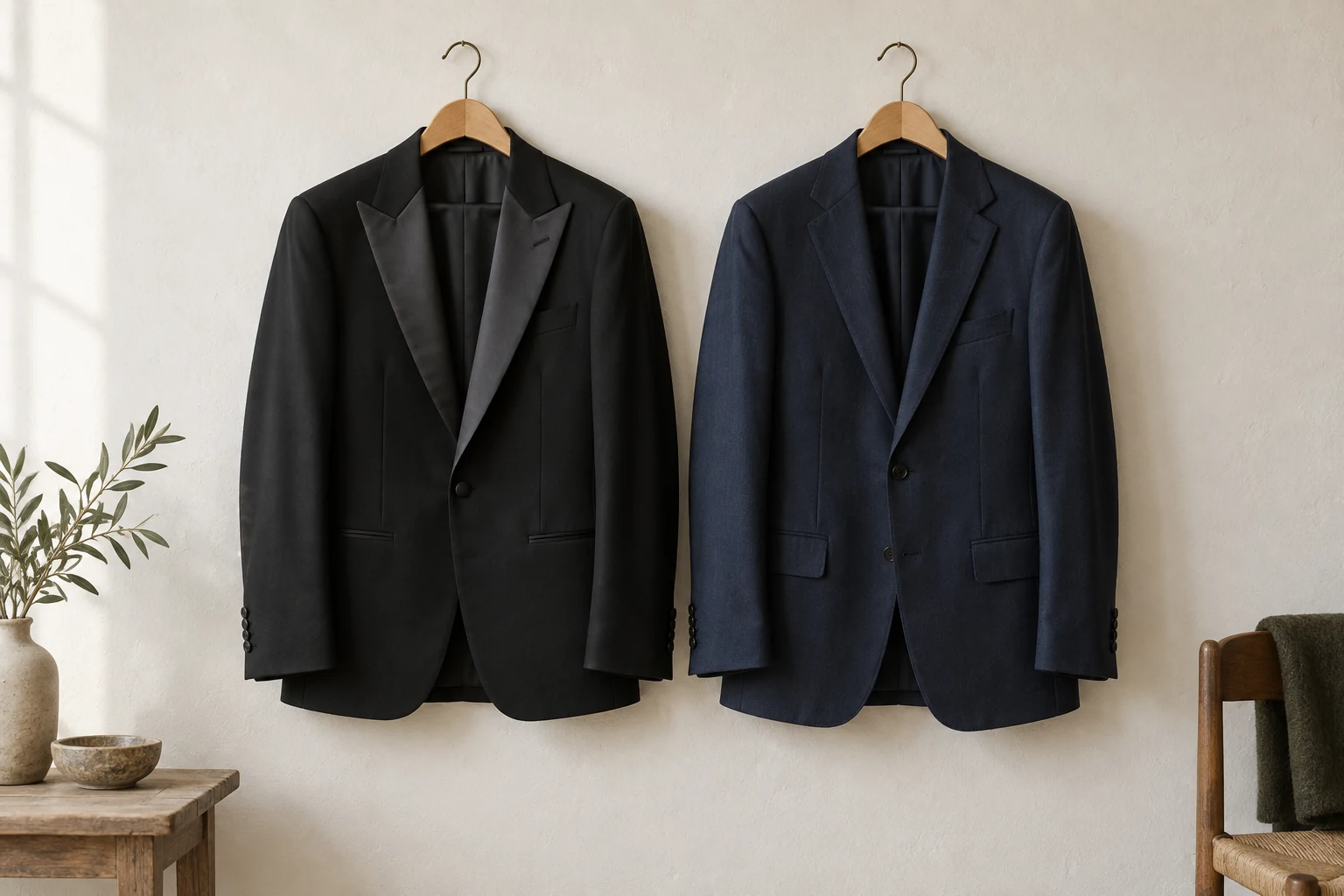
Suits and tailoring
Suit vs tuxedo: how to tell them apart and which to wear
Suit vs tuxedo explained: the satin lapels, trouser stripe and bow tie that set a tuxedo apart, and which one a wedding, prom or black tie invitation asks for.
Ties and knots
How to tie a bow tie, step by step
Learn how to tie a bow tie step by step, with a checkpoint after each fold, how to find the hidden opening, and how to fix a bow that is lopsided or loose.