How to fold jeans for drawers, shelves and travel
In this guide
Jeans are the bulkiest thing most people fold. Stack four pairs badly and the shelf leans, the drawer will not close, and the pair you want is always the one at the bottom with a sharp line across the thigh. Learning how to fold jeans properly fixes all three problems, and it takes about ten seconds a pair once your hands know the moves.
Every method below starts the same way, with one leg laid over the other and the crotch tucked in. What changes is the last few folds, which depend on where the jeans will live: a shelf, a drawer, a suitcase or a store style stack. There is also a short section on when hanging is the better choice.
Before you fold
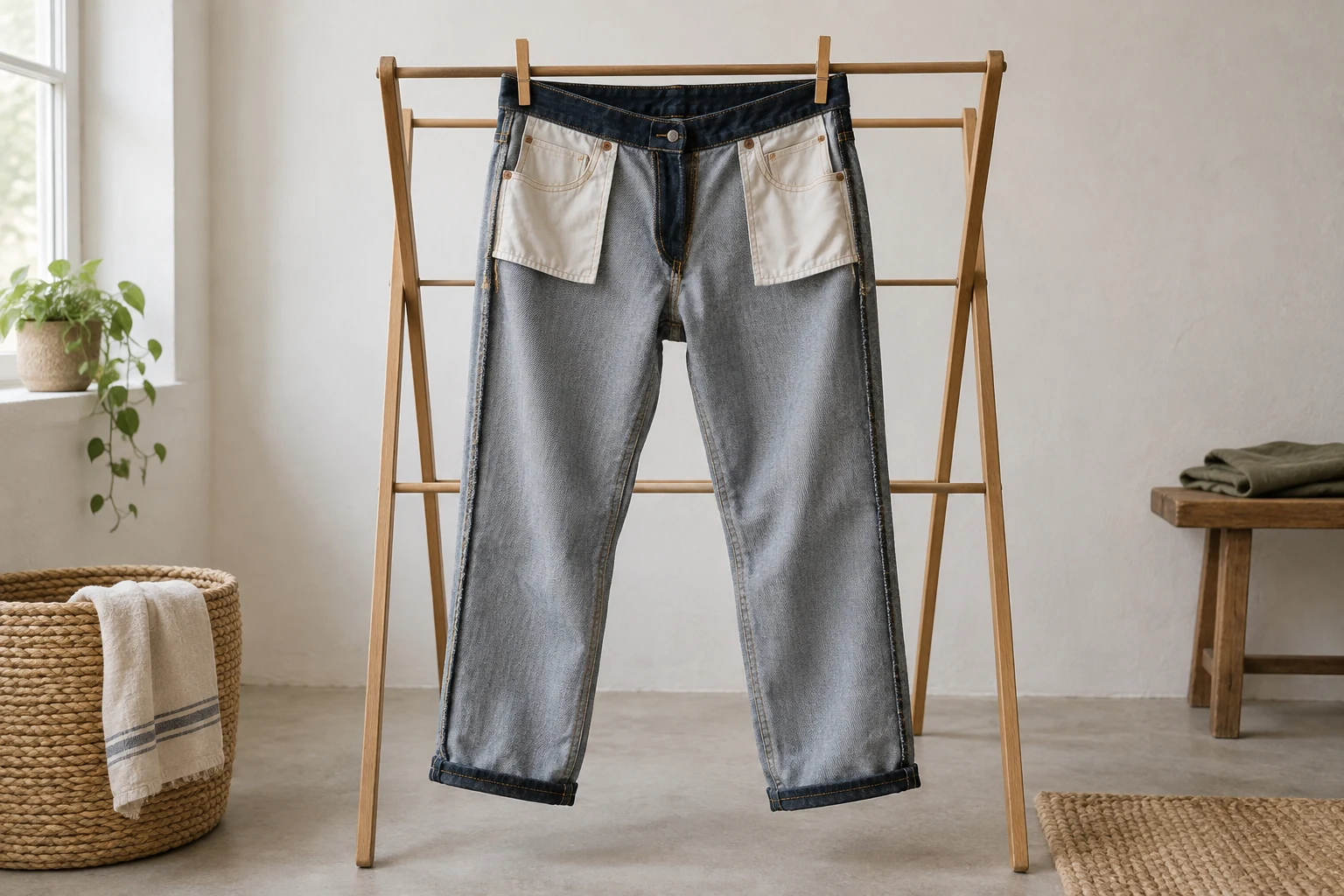
Fold jeans when they are completely dry. Denim holds moisture in the seams and waistband longer than it seems, and a damp pair folded into a drawer can smell musty within days. Levi Strauss suggests line drying jeans inside out in the shade rather than using a dryer, so turn them right side out again before you fold. Empty the pockets, do up the zip and the top button, and smooth the legs flat with your hands; the MakeYourOwnJeans guide makes the same point, since a closed fly keeps the front lying flat.
Work on a bed or table big enough to hold the full length. Most of the neatness in a fold comes from this moment: if the legs lie flat and the seams line up before the first fold, every later fold stays square. If the jeans have a pressed crease or you want to avoid one across the thigh, look at where your folds will fall and shift them an inch or two above or below the knee, where a soft line matters less. For washing questions, our guide to washing jeans covers how often and how cold.
How to fold jeans the standard way
This is the fold for open shelves, where jeans lie flat in a stack. It produces a firm rectangle about the width of one leg that sits squarely under the next pair, and it is also the starting point for every other fold in this guide.
Lay the jeans flat, front facing up
Spread them out with the waistband at the top and smooth the legs. The side seams should run straight down each side; if they twist, tug gently at the hem until they settle.
Fold one leg over the other
Fold the jeans in half along the center so the left leg lies on the right leg, with the side seams and hems matched. You should now see one leg shape with a back pocket facing up.
Tuck the crotch point in
A triangle of fabric sticks out at the crotch. Fold it back in toward the legs so the outline becomes a straight sided rectangle. This small tuck is what separates a neat stack from a lumpy one.
Fold the legs up in halves or thirds
Bring the hems up to the waistband for a fold in half, or fold the bottom third up and the top third down for thirds. Thirds suit taller shelves and longer inseams, halves suit shallow ones. The finished bundle should be about the width of one leg and lie flat without springing open.
The file fold for drawers, sometimes called the Japanese method
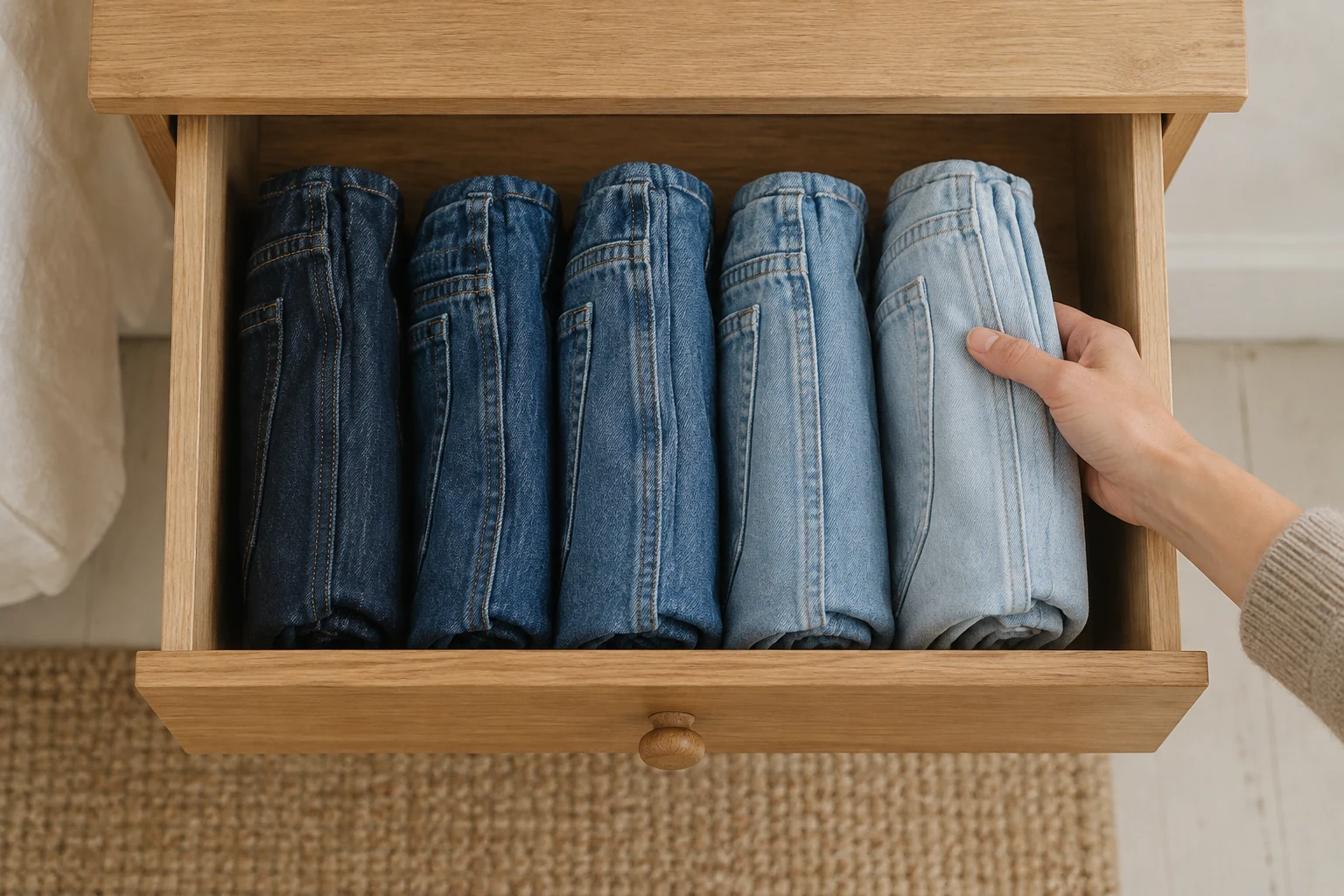
When people search for how to fold jeans the Japanese way, they usually mean the vertical file fold popularized by Marie Kondo. Instead of stacking clothes flat, you fold each piece into a compact rectangle that stands on its edge, and line the pieces up in the drawer like files in a cabinet. The KonMari guide describes the pants version in a few moves: fold the legs together, fold them up toward the waistband leaving a small gap at the top, then fold in half or thirds and stand the bundle upright. It is an excellent way to fold jeans for storage in a drawer, because you can see and lift out every pair without disturbing the others.
Start with the standard fold through the crotch tuck. Then bring the hems up to stop about an inch short of the waistband; that gap keeps the bundle from getting too thick at one end. Fold in half again, or in thirds if the drawer is shallow, and press the bundle firmly with your palms. Stand it on its long edge with the folded side facing up. Heavy or wide leg jeans may be too thick for three folds, so use fewer and accept a slightly taller bundle. If a bundle keeps falling over, the drawer is too roomy, and a shoebox or divider will hold the row upright. The same method works for our guide to folding T shirts, so a whole drawer can be filed the same way.
How to roll jeans for packing
Rolling is how to fold jeans for travel to save space. A tight roll fills the gaps between other items, is easy to fit into a packing cube and tends to leave softer creases than sharp folds. Denim is sturdy enough that the roll barely matters for wrinkles, which is why our suitcase packing guide puts jeans in the rolled group and structured shirts and blazers in the folded group.
For a simple roll, do the standard fold through the crotch tuck, then roll firmly from the waistband toward the hems, keeping the edges aligned so the roll does not telescope. For a roll that will not come undone in a busy bag, use the ranger roll: before folding, turn the hems outward by about 5 inches (13 cm) to make a deep cuff, fold the jeans lengthwise, roll from the waist down, and finish by pulling the cuff back over the roll like a sock. The same approach is how to fold shorts for travel, with a shallower cuff at the leg openings. Unpack and hang the jeans for a few hours at your destination and any soft creases will relax.
How to fold jeans for display or open shelves
Store style stacks look tidy because every pair is folded to the same size and shows the same face. Start with the standard fold through the crotch tuck, with one back pocket facing up. Measure the depth of your shelf and fold the legs to that size, often in thirds. Finish with the waistband and pocket detail facing the front edge of the shelf, so you can tell pairs apart by wash and cut without unfolding them. A piece of stiff card cut to the width you want, slipped inside while you fold and pulled out afterward, is the folding hack that makes every pair identical.
Keep stacks to four or five pairs, with the heaviest denim at the bottom. Taller stacks topple when you pull one out, and the pairs at the bottom get flattened into hard creases. If you own many pairs, sort them left to right from dark to light wash, or by cut, and put the ones you wear most at the top. Our guide to organizing your closet explains how to decide what earns shelf space.
When to hang jeans instead
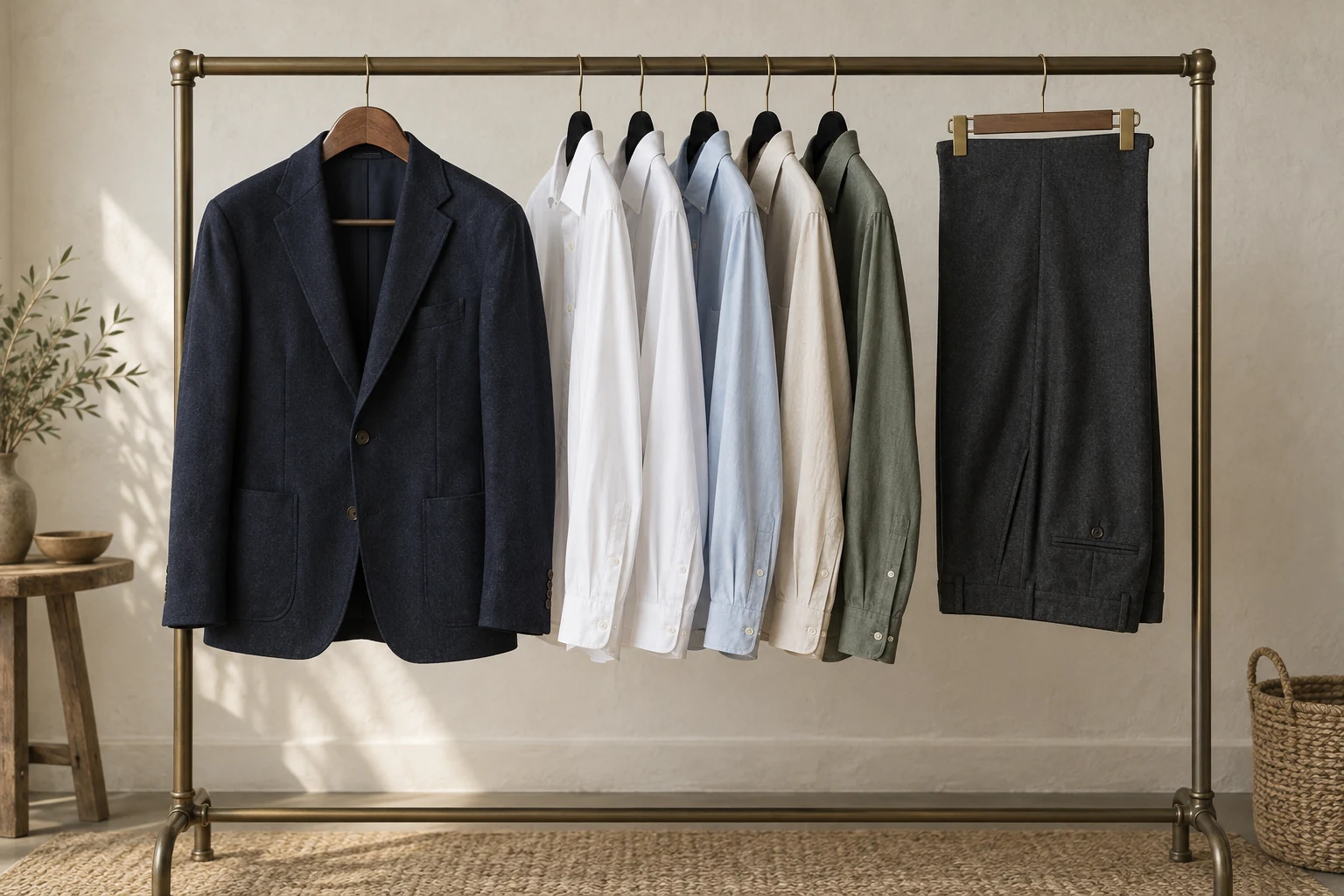
Jeans are one of the few garments that store equally well folded or hung. The MakeYourOwnJeans guide notes that hanging is quicker, provided the hanger is sturdy enough for the weight of denim. Hang jeans if drawer space is short, if you want to avoid fold lines on dressy dark denim, or if you wear them again after airing them for a day. Clip hangers that hold the jeans by the hem or waistband avoid the line a thin bar leaves across the thigh; our guide to hanging clothes covers which hanger suits which piece.
Raw or unwashed selvedge denim needs a little more thought. Many owners avoid folding it sharply in the same place for long periods, because the indigo wears along repeated creases and those lines can show up later as fades. Hanging, or folding loosely and changing the fold now and then, keeps the choice of where fades appear in your hands. Wherever the jeans are stored, keep them in a dry room; the same guide warns that humid attics and basements invite mildew.
| Method | Best for | Key move |
|---|---|---|
| Standard fold | Open shelves and flat stacks | Tuck the crotch point, then fold in halves or thirds |
| File fold | Drawers | Stop an inch short of the waistband and stand it on edge |
| Roll or ranger roll | Suitcases and packing cubes | Roll firmly from the waist; the ranger roll adds a cuff |
| Hanging | Short drawer space, dressy dark denim, raw selvedge | Clip hangers at the hem or waistband |
Folding jeans that are too long
Folding also covers the hem, not just the drawer. If a pair is simply longer than your leg, a neat cuff is the quickest answer: a single turn of about 2 inches (5 cm) for straight leg jeans, a double turn to hide the hem stitching, or a pinroll for slim legs. Our guide on how to cuff jeans walks through each style and which shoes they suit, including wide leg pairs and boots. If you find yourself cuffing the same pair by several inches every time, a permanent hem is kinder to the denim and to your patience, and our guide to measuring your inseam helps you tell a tailor the length you want.
Common mistakes
Skipping the crotch tuck
The triangle of fabric at the crotch makes one end of the bundle thicker than the other, so stacks lean and drawer rows tip. Folding it in takes a second and fixes both.
Folding jeans straight off a damp line
Waistbands and pocket seams dry last. Check them with your hand before folding, or give the jeans another hour to air.
Stacking every pair on one shelf
Tall stacks crush the pairs underneath and topple when you pull one out. Split them into short stacks or file them upright in a drawer.
Questions people ask
What is the proper way to fold jeans?
Lay them flat, fold one leg over the other along the center, tuck the crotch point in, then fold the legs up in halves or thirds. That basic rectangle works for shelves, and one more fold turns it into a bundle that stands upright in a drawer.
Is it better to fold or roll jeans?
Fold them for shelves and drawers at home, where neat rectangles stack and file well. Roll them for packing, where a tight roll fills gaps in a suitcase or cube. Denim wrinkles little either way, so choose by the space.
Does folding jeans leave creases?
Soft fold lines are normal and fall out after an hour or two of wear. Sharp creases come from tight folds held for weeks under a heavy stack, so keep stacks short and move the fold line away from the knee on dressy pairs. A little steam removes any that remain.
How do I fold jeans to save space in a small drawer?
Use the file fold and stand each pair on edge in a row. Fold into thirds instead of halves if the drawer is shallow, and fewer times if the denim is heavy. Standing bundles use the drawer's height, which a flat stack wastes.
Sources and further reading
References used for this guide. Each opens the original page in a new tab.
Keep reading
Everyday style
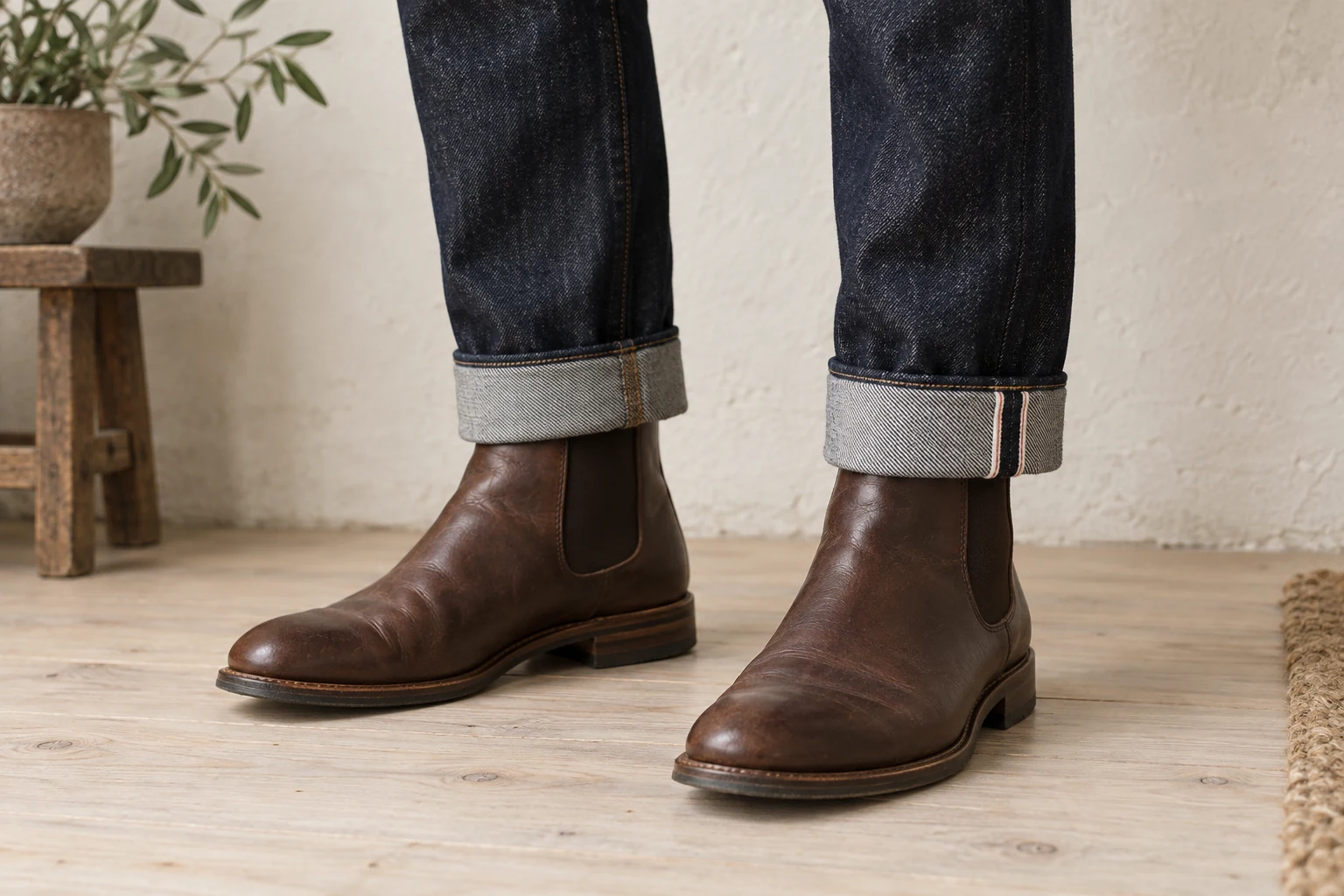
How to cuff jeans: single, double and pinroll
How to cuff jeans neatly: single, double, pinroll and Japanese cuffs, which jeans and shoes each one suits, and when to hem instead of rolling.
Closet and packing
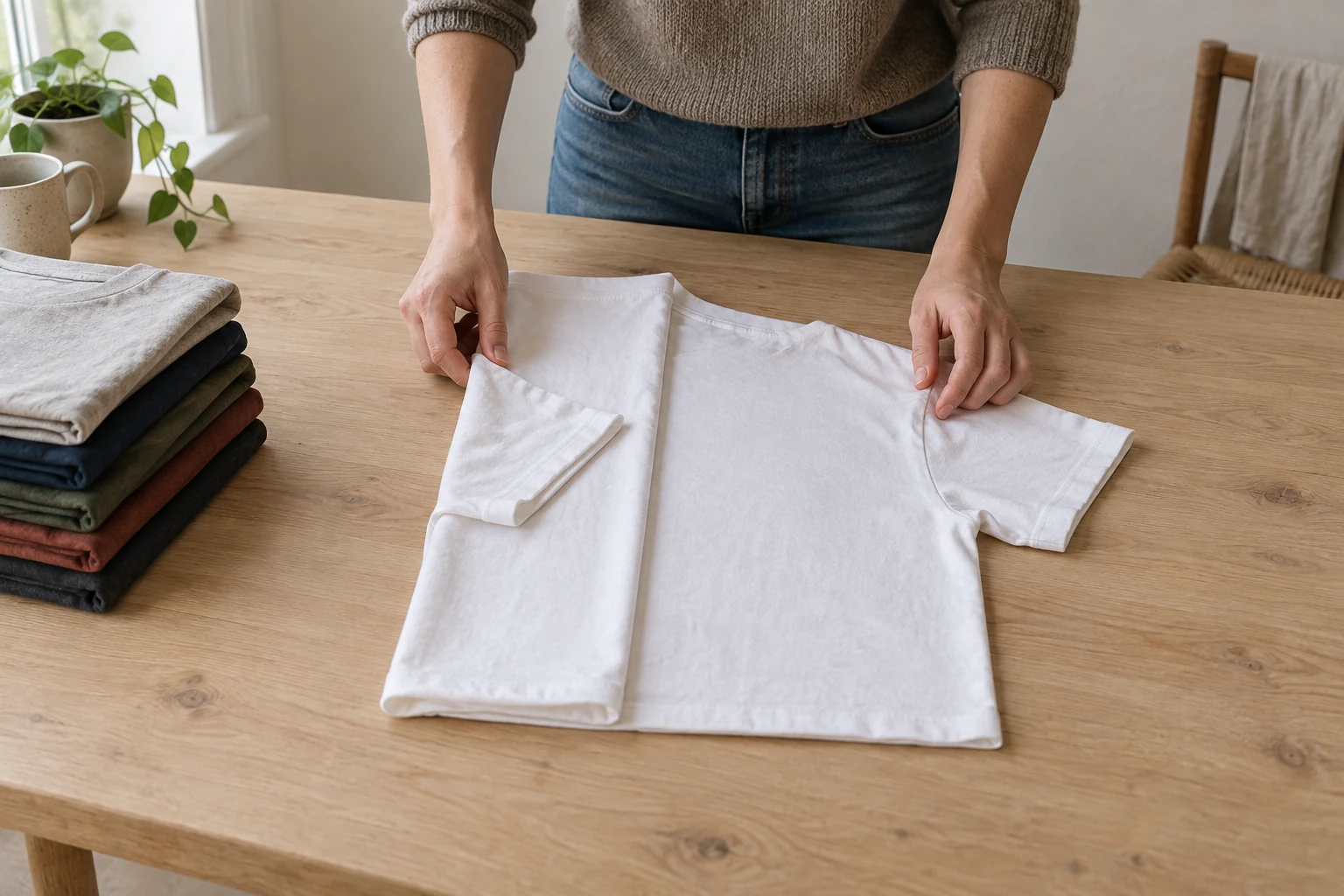
How to fold a T shirt neatly
How to fold a T shirt four ways: a neat shelf fold, the fast two second fold, an upright file fold for drawers and a tight roll for packing.
Closet and packing
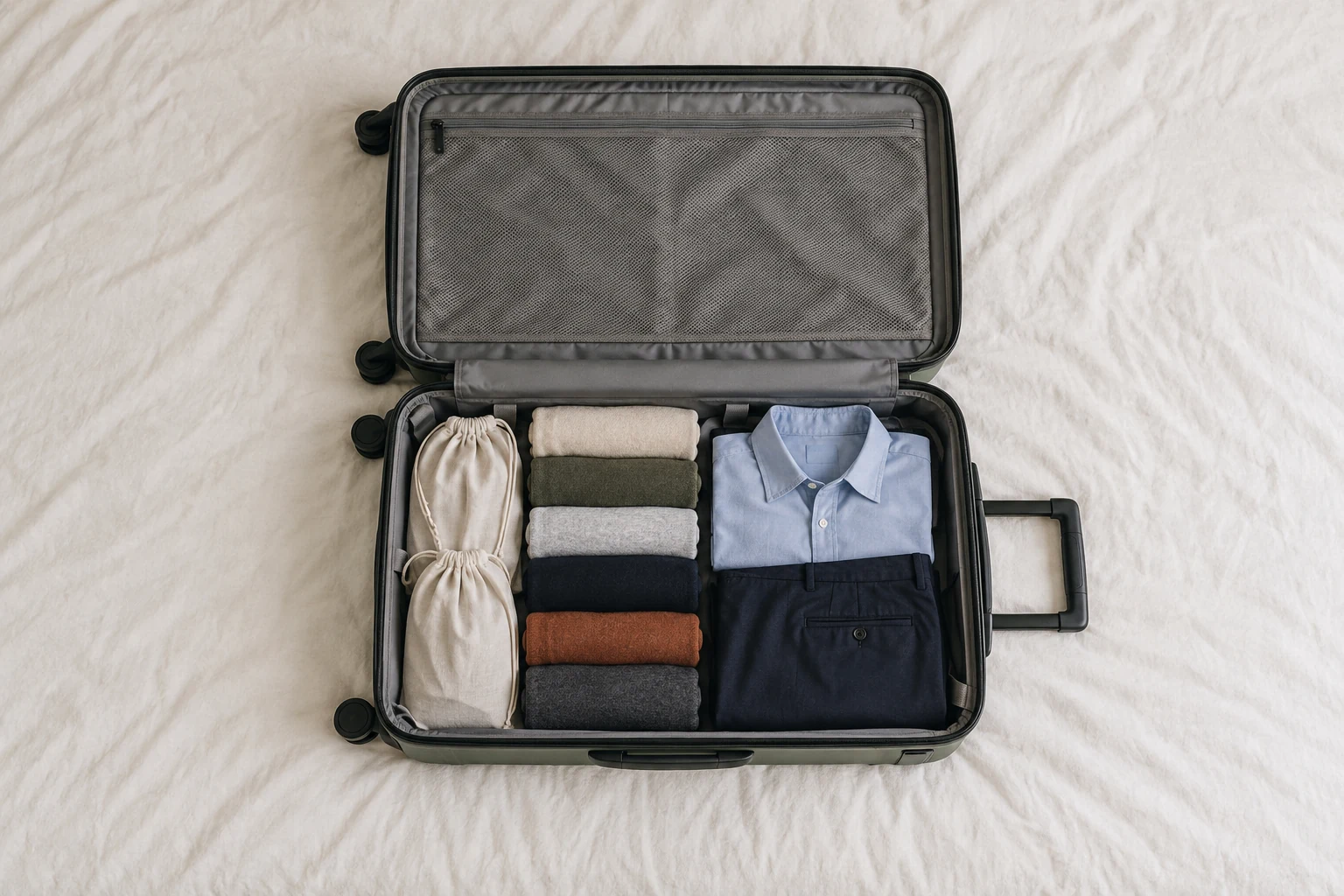
How to pack a suitcase without wrinkles
How to pack a suitcase step by step: plan outfits first, roll or fold each piece, layer the bag, use packing cubes well, and follow carry on rules.
Washing and ironing
How to wash jeans and how often to do it
How to wash jeans so they keep their color and fit: how often to wash, inside out in cold water, air drying, raw denim and what to do if your jeans shrink.
Closet and packing
How to hang clothes: which hanger for what
How to hang clothes so they keep their shape: what to hang and what to fold, which hanger suits each garment, small closet fixes and how to hang clothes to dry.