Casual outfits for men, built from a few good basics
In this guide
Most men do not need more clothes to dress better on an ordinary day. They need to know which of the clothes they already own go together, and which one piece to change when the plan changes from coffee with friends to dinner with a date or a friend's backyard wedding. That is what casual outfits for men really come down to.
This guide explains what casual, smart casual and business casual mean, lists the handful of basics that do most of the work, and then gives complete outfits by situation: everyday and weekend, office, dates and dinners, casual weddings, and summer and winter. Each one is built from pieces you probably already have or can find easily.
Casual, smart casual and business casual
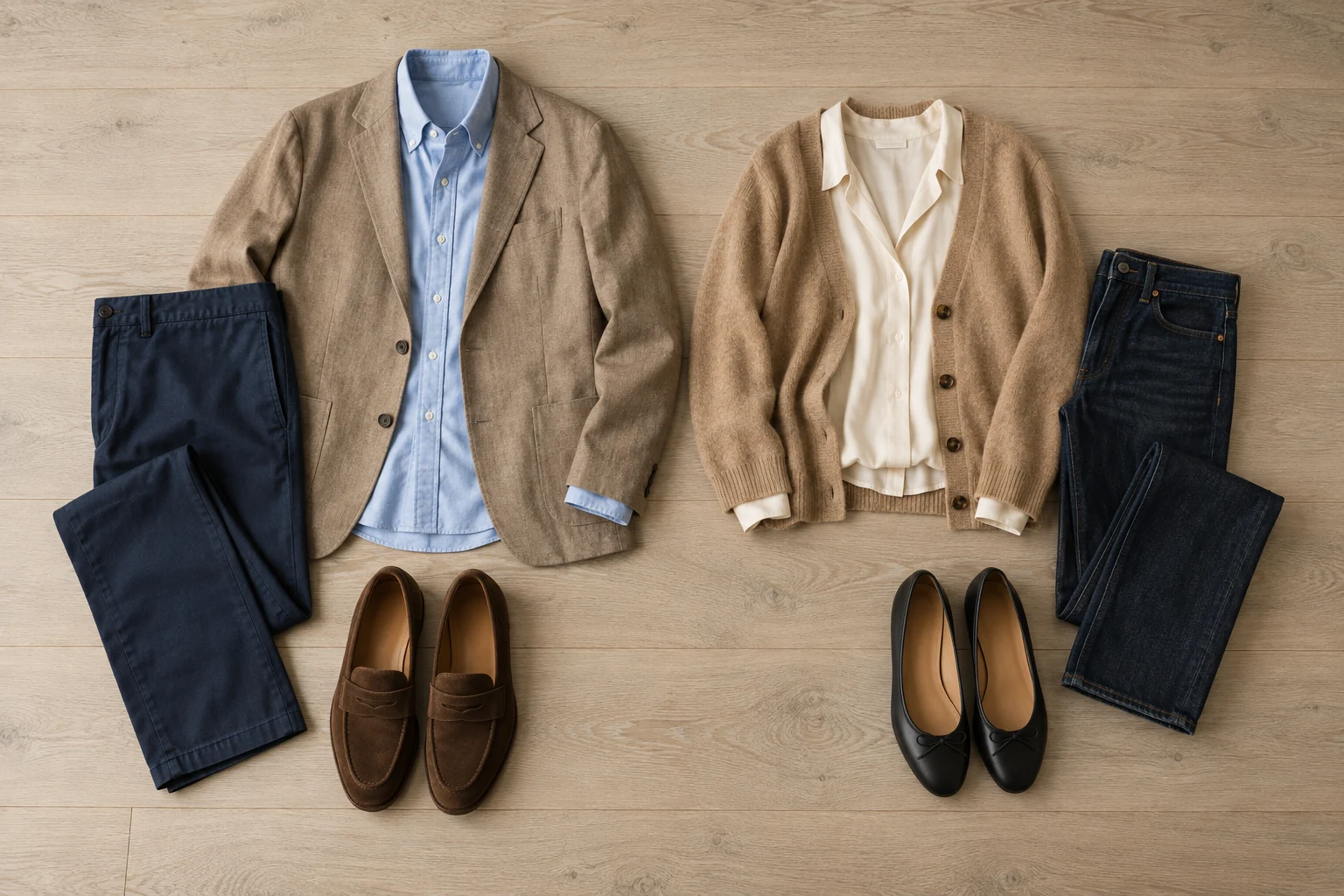
These words overlap, and even etiquette guides admit smart casual is loosely defined. The phrase has been in print since at least the 1920s and has always meant being well dressed in a casual way, which is why it depends so much on place and climate. A useful working scale from the Emily Post Institute: casual means clean khakis or good jeans without holes and a casual shirt; dressy casual adds a seasonal sport coat or blazer with trousers, tie optional; business casual is a blazer with slacks or khakis for work, again usually without a tie.
In practice, think of it as a ladder. At the bottom is a T shirt, jeans and sneakers. One rung up, swap the tee for an oxford shirt or a knit polo. Another rung, swap jeans for chinos or wool trousers and sneakers for loafers or boots. At the top of casual, add an unstructured blazer. Every outfit in this guide sits somewhere on that ladder, and our guide to the smart casual dress code explains the middle rungs in more depth.
The basics every casual wardrobe needs
Start with tops: three or four plain T shirts in a heavier cotton, in white, gray, black or navy; one white or light blue oxford shirt; a knit polo or a fine merino crewneck; and a hoodie or sweatshirt that is not worn out. Bottoms: dark straight jeans, a pair of chinos in khaki, olive or navy, and in summer, shorts that end just above the knee. Layers: an overshirt, a denim or chore jacket, and one warmer coat. Shoes: clean white or off white leather sneakers, one pair of loafers or suede desert boots, and a boot for bad weather.
Fit matters more than any label. T shirt shoulder seams should sit at the edge of your shoulders, sleeves should end midway down the upper arm, and trousers should fall to the top of the shoe with little or no break. Our guide to how jeans should fit covers the rise and leg, and colors that go together helps you keep a short wardrobe mixing easily. Choose neutral colors for the basics and let one piece at a time bring pattern or color.
Everyday and weekend casual outfits for men
The easiest everyday outfit is a heavyweight white T shirt, dark straight jeans with one small cuff and white leather sneakers. In cooler weather, add an olive overshirt worn open, or a gray hoodie under a denim jacket with the hood outside the collar. For a slightly more styled weekend look, try a navy knit polo with cream wide chinos and suede loafers, or a striped long sleeve T shirt with relaxed khaki trousers and canvas sneakers, a combination with a French feel.
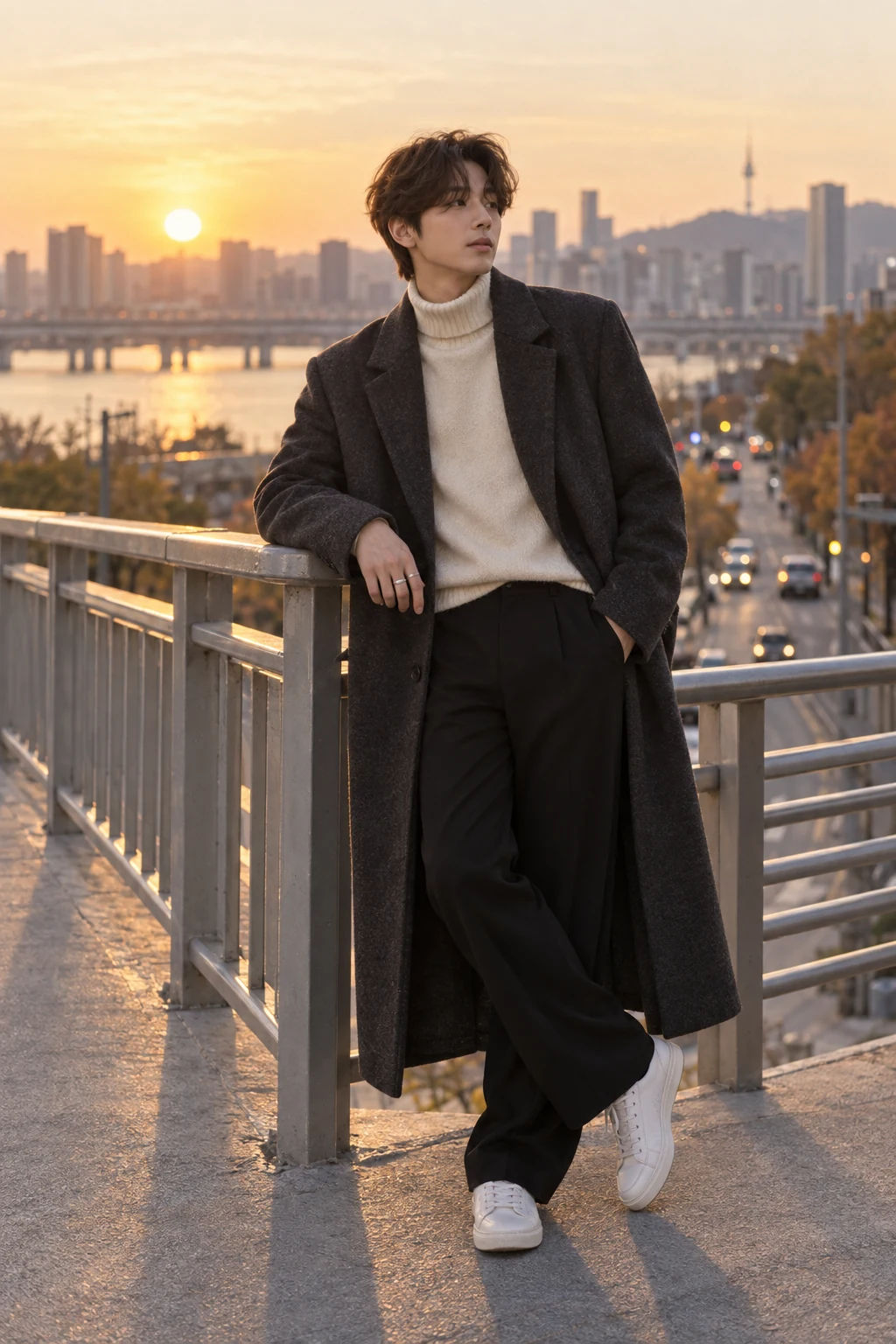
If you like a looser silhouette, the Korean and Japanese casual looks many younger men wear now are built from the same pieces in bigger proportions: a boxy white oxford shirt over a gray tee, wide pleated trousers in charcoal and chunky loafers with white socks, or a cropped chore jacket over a hoodie with wide cargo pants and trail runners. Our guide to Korean fashion for men goes further into those proportions, and the key is to choose one relaxed piece rather than making everything oversized.
Smart casual and business casual outfits for men
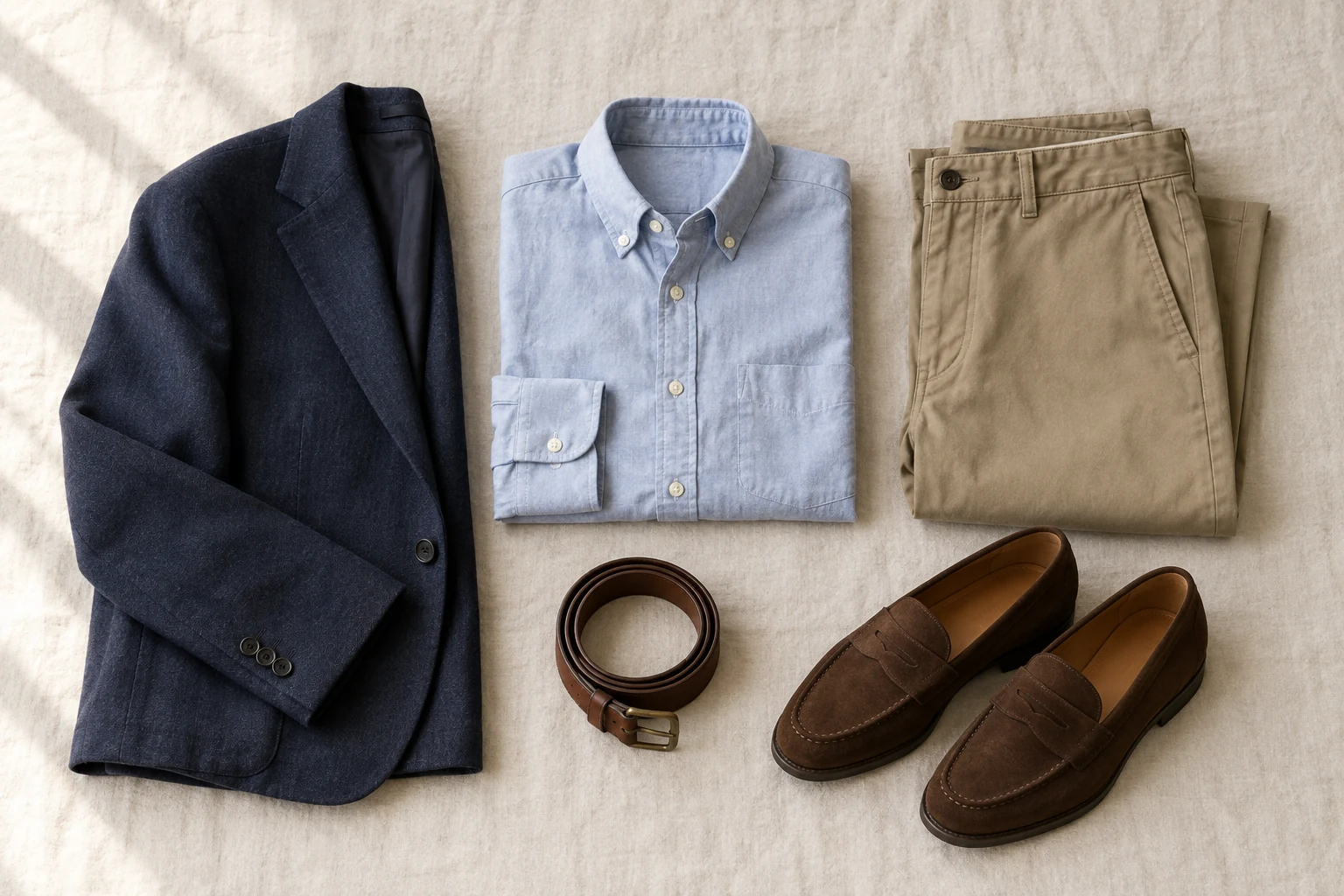
For a casual office, a light blue oxford shirt tucked into khaki chinos with a brown leather belt and brown suede desert boots is the dependable base. Add a navy crewneck over it when it is cool, with the collar outside the sweater. For a business casual office, move to gray wool trousers, a white or blue shirt, and loafers or leather derby shoes, with an unstructured navy blazer for meetings. Our guide to business casual for men covers what different workplaces expect.
Smart casual outfits for men sit in between. A black fine knit crewneck, charcoal trousers and black loafers is clean and modern; a white T shirt under a navy blazer with dark jeans and white leather sneakers works for creative offices and after work drinks. The things that tip smart casual back into casual are athletic sneakers, faded or ripped jeans and graphic tees, so keep those for the weekend.
| Occasion | Top | Bottom | Shoes |
|---|---|---|---|
| Weekend | Heavyweight T shirt, overshirt or hoodie | Dark jeans or relaxed chinos | White leather or canvas sneakers |
| Casual office | Oxford shirt, crewneck in cool weather | Chinos | Suede desert boots or loafers |
| Smart casual | Fine knit or tee under a blazer | Wool trousers or dark jeans | Loafers or minimal leather sneakers |
| Date or dinner | Knit polo, or leather jacket over a shirt | Dark jeans or trousers | Suede loafers or leather boots |
| Casual wedding | Linen or cotton blazer, crisp shirt | Chinos or trousers | Leather loafers or derbies |
Casual date and dinner outfits
For a casual date, look like yourself on a good day. A dark knit polo with the top button open, straight dark jeans and brown suede loafers is relaxed but clearly considered. An all black outfit, a black tee or fine knit, black trousers or jeans and black leather boots, is one of the most requested black casual outfits for men because it looks sharp with no effort in color matching; add a watch or a thin silver chain so it does not look flat.
For dinner somewhere nicer, add texture: a brown suede or corduroy overshirt over a cream knit, olive trousers and boots, or a leather jacket over a white oxford shirt with dark jeans. Tuck the shirt or knit if the trousers have a clean waist; see how to tuck in a shirt for tucks that stay put. What you want to avoid is looking dressed for a different event: gym shoes on one side, a full suit on the other.
Casual wedding outfits for men
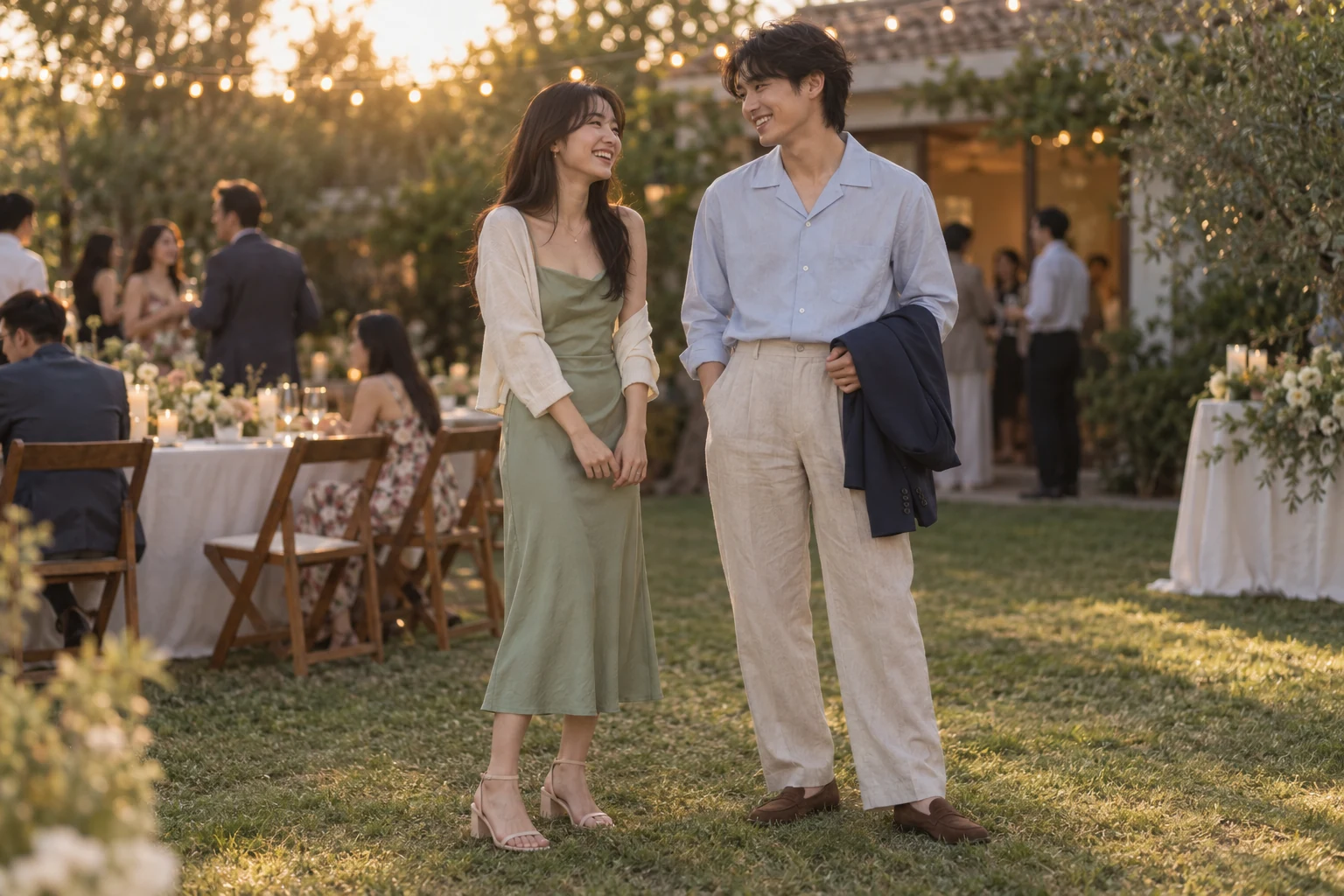
A casual wedding is still a wedding, and casual here usually means no suit required rather than a T shirt. Emily Post's guidance for informal weddings leaves the sport jacket optional for men, and that sets the tone: a light blazer in linen, cotton or wool with chinos or trousers, a crisp shirt and leather loafers or derbies. A tie is optional unless the couple says otherwise.
For a summer outdoor wedding, try a sage or tan unstructured linen blazer, a white shirt with the top button open, stone colored chinos and brown suede loafers. For autumn, a navy blazer over a light blue shirt, gray trousers and brown leather shoes. Skip jeans unless the invitation clearly says they are welcome, avoid all white so you do not compete with the couple, and read our guide to casual wedding attire for how to read the invitation.
Summer and winter casual outfits for men
Summer casual outfits for men depend on breathable fabric. Linen and cotton seersucker shirts, cotton or linen shorts that end just above the knee, and camp collar shirts in a single calm print all keep you cooler than synthetic sportswear. A short sleeve white linen shirt with navy shorts and canvas sneakers, or a knit polo with light chinos and loafers without socks, covers most hot days. Roll sleeves neatly if they are long; our guide to rolling up shirt sleeves shows the cleanest ways.
Casual winter outfits for men rely on texture and layering. Try a chunky cream knit over a flannel shirt with dark jeans and leather boots, under a navy wool coat or a quilted jacket. Another good formula is a gray hoodie under a charcoal overcoat with black jeans and boots, which mixes streetwear and tailoring in a very current way. Keep the coat long enough to cover your hips, and choose one scarf that goes with everything, such as navy, gray or camel.
Common mistakes
Everything oversized
One relaxed piece looks deliberate; a big tee, big jacket and big trousers together look like the wrong size. Balance one loose piece with the rest in your true size.
Worn out basics
Casual outfits depend on condition. A tee with a stretched collar or sneakers gone gray drags the whole outfit down, so replace basics before they look tired.
Too many colors
Three or more strong colors in one casual outfit usually fight. Keep two neutrals and one color, and let texture add interest.
Questions people ask
What is the 333 rule for men's clothing?
It is an informal capsule idea shared online with several versions; one common version is picking three tops, three bottoms and three pairs of shoes that all work together. It is a helpful exercise for seeing how many casual outfits a few good basics can make.
How should a man in his 40s or 50s dress casually?
The same basics work at any age, with a little more attention to fit and fabric: a good knit, an oxford shirt, dark jeans without distressing, chinos, and leather sneakers or loafers. Skip anything that looks borrowed from a much younger wardrobe, like heavily ripped jeans, and choose quality over trends.
Can you wear sneakers with smart casual?
Yes, if they are clean, minimal leather sneakers rather than running or gym shoes. They pair well with dark jeans or chinos and a blazer or knit, but for a stricter business casual office, loafers or boots are safer.
What are the trends in men's casual style right now?
The steady direction has been looser trousers, heavier plain basics, knit polos, workwear jackets and quieter colors. You can follow it by changing the cut of one trouser or jacket at a time, rather than replacing a whole wardrobe.
Sources and further reading
References used for this guide. Each opens the original page in a new tab.
Keep reading
Dress codes
Smart casual: what it means for men and women
What smart casual really means, how it differs from business casual, and what men and women can wear, including when jeans, sneakers and a blazer are right.
Dress codes
Business casual for men: what to wear to work
What business casual means for men at work, with outfit formulas, the right shoes, when jeans are allowed and how to read your own office's version of the code.
Dress codes
Casual wedding attire for guests
Casual on a wedding invitation still means dressed for a wedding. What men and women can wear, how venue and season change it, and where jeans fit in.
Styles
Korean fashion for men: pieces, proportions and outfits
Korean fashion for men explained: the soft tailored pieces, calm colors and relaxed proportions behind the Seoul look, with outfits for class, work, dates, winter.
Everyday style
How to dress well as a man: fit, basics and outfits
How to dress well as a man without a big budget: get the fit right, build a small wardrobe of basics, and put together casual, smart and seasonal outfits.