How to fold a dress shirt without creases
In this guide
A pressed shirt goes into a suitcase, or into a drawer because the rail is full, and the hope is always the same: that it comes out looking the way it went in. A dress shirt is harder to fold than a T shirt because of the collar, the placket and the long sleeves, and each of those remembers a bad fold. Learning how to fold a dress shirt well comes down to where you put the creases, since some will always appear, and a good fold hides them where a jacket or trousers cover them.
Below is the classic store fold, step by step, then how to pack shirts for travel, when rolling is the better choice, and how to fold the sleeves themselves when you want to roll them up to wear.
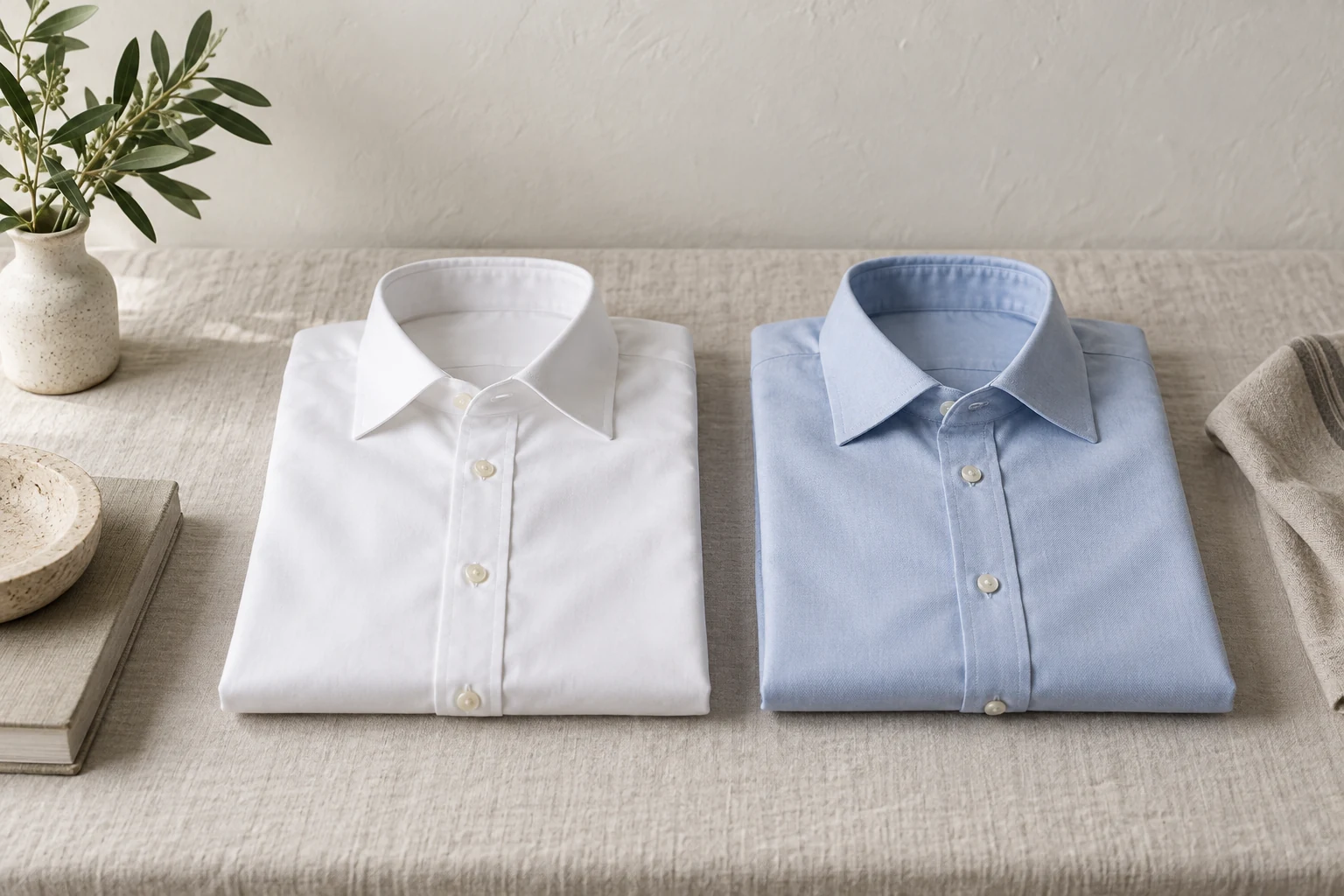
Start with a clean, cool, buttoned shirt
Fold a shirt only once it is completely cool and dry. Warmth and moisture are exactly what an iron uses to set a crease, so a shirt folded straight off the ironing board or warm from the dryer keeps every fold line you give it. If you have just pressed it, following our guide to ironing a shirt, hang it for twenty minutes first. The same order answers how to pack ironed clothes in a suitcase: iron, cool on a hanger, then fold.
Do up the top button and a few more down the front. Savile Row Company suggests the top and third buttons; other makers button every one. More buttons keep the placket straight and stop the front panels sliding apart as you fold, so button fully for travel. Set the collar up or down as it is worn, and if the shirt has removable collar stays, you can leave them in to keep the points flat or take them out if they tend to press marks through the fabric. Work on a large, flat, clean surface such as a bed or table.
How to fold a dress shirt, step by step
This is the fold shirts arrive in from a good shop. It suits shelves, drawers and suitcases, and it keeps the collar and front panel, the parts people see, completely free of creases.
Lay the shirt face down and smooth it
Place it buttons down with the collar at the top and the back facing you. Smooth the back and sleeves outward with flat hands. The yoke seam across the shoulders should run straight, with no fabric bunched at the sides.
Fold one side in by a third
Starting from the middle of one shoulder, fold that side of the body toward the center so the fold runs straight down to the tail. The folded edge should be parallel to the center of the back. A magazine or a piece of card laid on the back as a guide makes the width identical on both sides; slide it out at the end.
Lay the sleeve down along the fold
Fold the sleeve back across at the shoulder at a slight angle, then turn it straight down so it runs along the folded edge. On a long sleeve shirt, if the cuff hangs past the tail, fold the end of the sleeve back up. The sleeve should lie flat inside the width of the folded body.
Repeat on the other side
Fold the second side in to match and lay its sleeve on top. You now have a long, narrow rectangle with both sleeves hidden on the back.
Fold the tail up
Fold the bottom up once so the tail sits just below the collar, or in thirds if the shirt is long or the space is small. Keep the fold lines low and in the lower body, which is where trousers and a belt will cover them.
Turn it over
Flip the shirt so the collar and buttons face up. You should see a smooth front panel and a collar standing in its natural shape, with no fold lines across the chest.
How to fold a shirt for travel, wrinkle free
Wrinkles in a suitcase come from two things: sharp folds and movement. The classic fold takes care of the first; the rest is packing. Button up shirts for travel go near the top of the case, flat, after heavy things like shoes and toiletries are at the bottom. If you pack several, stack them with collars alternating top and bottom so the stack stays level, and lay a sheet of tissue paper between them so the fabric slides instead of gripping. Nimble Made suggests a variation where one shirt is wrapped around the next like a book cover, which softens the folds of both.
A shirt folded around something soft creases less than one folded against itself. A few rolled pairs of socks inside the collar hold it round, and a folded sweater in the middle of the stack gives each shirt a gentler bend. For a suit trip, pack shirts in the space above the jacket as described in folding a suit for travel; the whole approach to layers is in our guide on packing a suitcase.
When you arrive, unpack shirts first and hang them. Most light folds fall out within a few hours. The Art of Manliness suggests hanging a creased shirt in the bathroom while you shower, since steam relaxes the fibers; our guide to getting wrinkles out without an iron covers that and other hotel room fixes.
When to roll a dress shirt instead
Rolling clothes for packing saves space and suits soft fabrics, which is why so many packing lists recommend it. For a dress shirt, it is a trade off. A roll leaves no sharp fold lines, only a soft wave that hangs out quickly, but it can squash the collar and it will not look as crisp as a folded shirt when you unpack. It works well for oxford cloth, knit shirts, linen you expect to wear rumpled and non iron shirts, and for a spare shirt in a carry on.
To roll a long sleeve shirt for packing, button it, lay it face down, fold each side and sleeve in as for the classic fold, then roll firmly from the tail up to the collar, keeping the collar on the outside of the roll so it is not crushed. Nimble Made recommends this ranger style roll for travel; our guide to folding T shirts shows the same roll on a simpler garment. If crisp poplin or a shirt for a formal event must arrive perfect, fold it instead.
| Method | Best for | Trade off |
|---|---|---|
| Classic fold | Crisp poplin, formal shirts, shelves, drawers and suitcases | Soft lines on the lower body, hidden when tucked |
| Ranger roll | Oxford cloth, knit, linen, non iron and a spare in a carry on | Can squash the collar and looks less crisp |
| Hanging | Everyday storage at home | Needs rail space |
Folding dress shirts at home to save space
Dress shirts are woven and hold their shape on a hanger, so hanging is usually the first choice at home, as our guide to hanging clothes explains. Folding makes sense when the rail is full, for shirts you wear occasionally, or for the neat shelf look of a shop. Use the classic fold in thirds for drawers, and stack no more than four or five shirts so the ones at the bottom are not pressed into hard creases.
For a drawer, store shirts upright on the folded edge, collars all facing the same way, so you can see and lift one out without disturbing the rest. A shirt that has been folded for weeks will have soft lines across the lower body; a minute with a steamer or iron at the tail fixes them before you wear it, or simply tuck it in, since the fold lines sit below the waistband.
How to fold long sleeve shirt sleeves to wear
Sometimes the folding question is about the sleeves on your arms, not the shirt in a drawer. A neat roll looks intentional; a bunched sleeve shoved up the forearm looks rushed and creases the whole sleeve. Unbutton the cuff and the small gauntlet button above it first, whichever roll you choose. These styles work the same for everyone, and on narrower arms, women's shirts in particular, a slightly narrower fold keeps the roll from looking bulky.
The simple roll
Fold the cuff back on itself, then fold again by the same width, two or three times, stopping below the elbow. The inside of the sleeve shows only as a clean band. This is the quickest roll and the one that stays put best under a sweater.
The roll that shows the inside cuff
Pull the sleeve inside out up to just below the elbow, so the cuff sits there. Then fold the bottom of that inside out section up once, stopping just short of the top of the cuff so its edge peeks out. The result is a neat band with the cuff visible, which looks deliberate with a contrast lining.
The above the elbow roll
Fold the sleeve back in wide folds, each about the width of the cuff, until it sits just above the elbow. It stays up in heat and when you work with your hands, and it suits casual oxford and linen shirts better than fine dress poplin.
Common mistakes
Folding across the chest
A fold line across the front is the one everyone sees. Keep folds in the lower body and on the back, where a jacket or tucked tail hides them.
Folding a warm shirt
Heat and residual moisture set creases like an iron does. Let a freshly pressed or dried shirt cool on a hanger before it is folded.
Crushing the collar in the suitcase
Heavy items on top flatten collar points and leave a ridge. Pack shirts in the top layer and support collars with rolled socks.
Questions people ask
Is it better to fold or roll dress shirts for travel?
Fold crisp dress shirts you need to look sharp, because the classic fold keeps the front and collar smooth. Roll casual, oxford and non iron shirts to save space, since the soft wave a roll leaves hangs out quickly. Many travelers fold the important shirt and roll the rest.
How do I fold a dress shirt without a hanger?
Use the classic fold on a bed or table and store it flat or upright in a drawer. If you are in a hotel with no hangers to spare, drape the shirt over the back of a chair by the shoulders, buttoned, so it hangs rather than sitting folded in the case.
Should I take out collar stays before folding?
It depends on the shirt. Leaving plastic stays in keeps the collar points flat, but a stiff stay can press a mark into fine cotton if the shirt is squeezed in a case. Take metal stays out for travel and keep them in a small pouch.
How do I fold a shirt with a button down collar?
Fasten the collar buttons before you fold, along with the front buttons. Leaving them undone lets the points curl and creases the collar roll, which is the soft curve that makes a button down look right.
Sources and further reading
References used for this guide. Each opens the original page in a new tab.
Keep reading
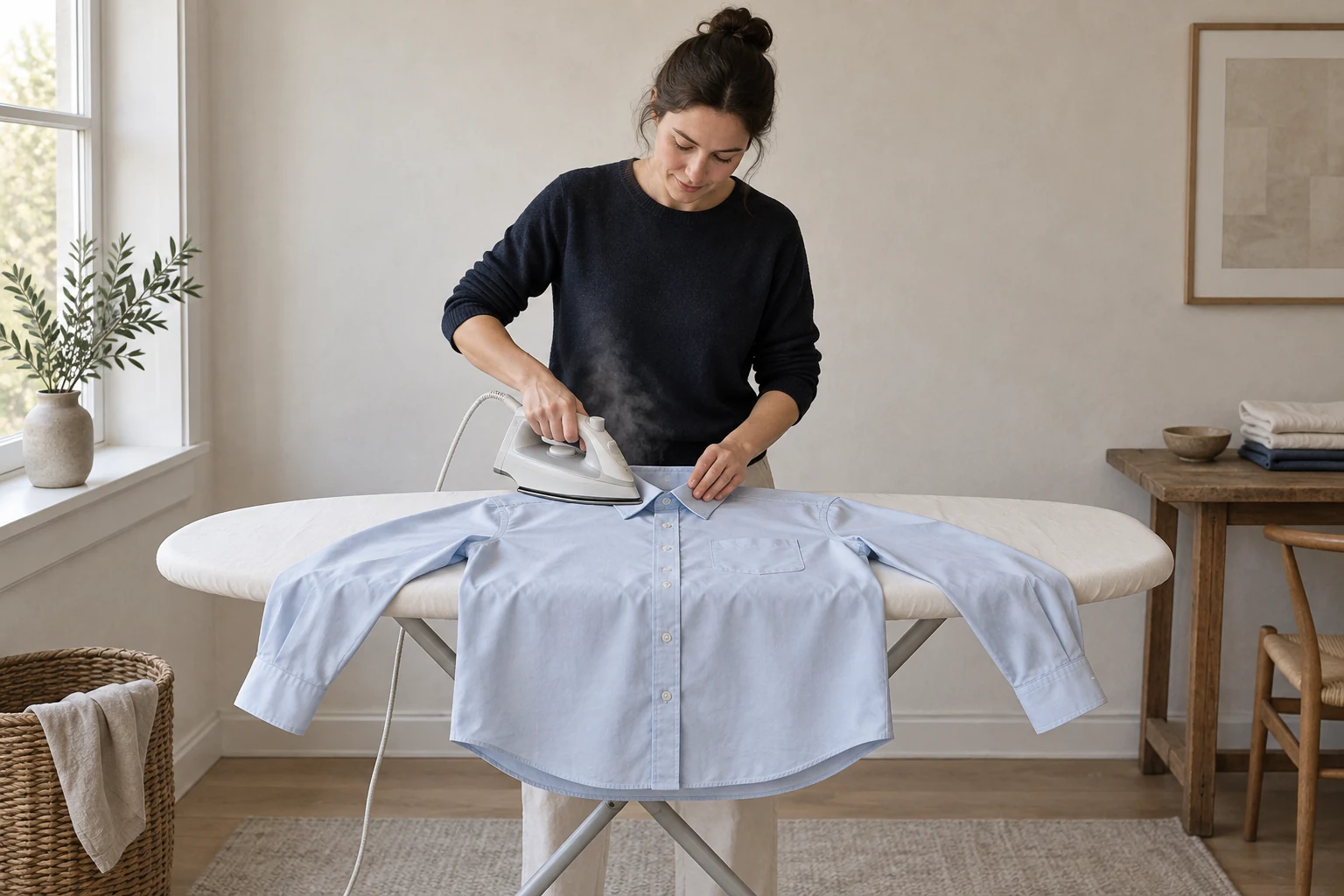
Washing and ironing
How to iron a shirt in the right order
How to iron a shirt the way shirtmakers do: set the heat for the fabric, start slightly damp, then work collar, cuffs, sleeves, yoke, back and front in order.
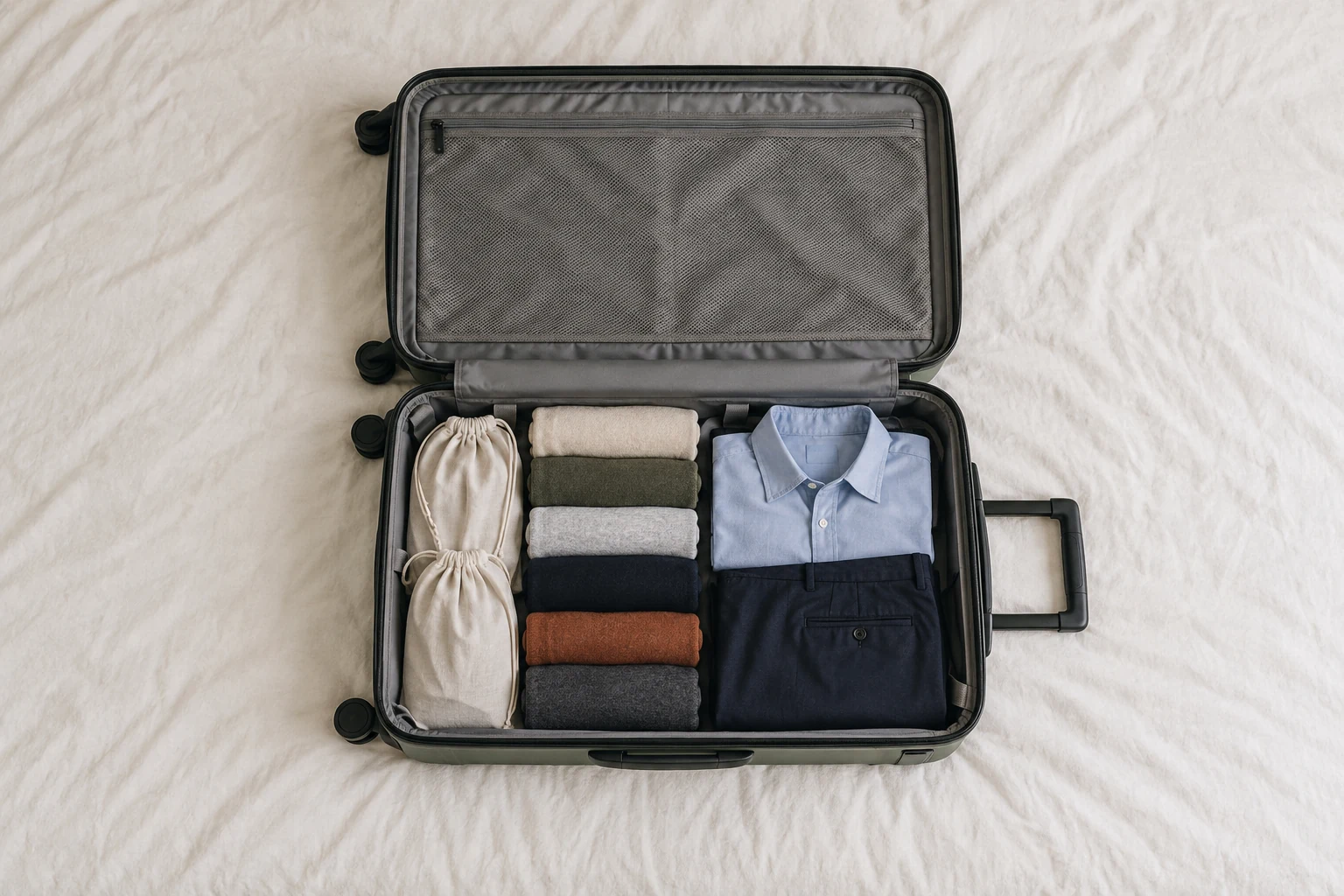
Closet and packing
How to pack a suitcase without wrinkles
How to pack a suitcase step by step: plan outfits first, roll or fold each piece, layer the bag, use packing cubes well, and follow carry on rules.
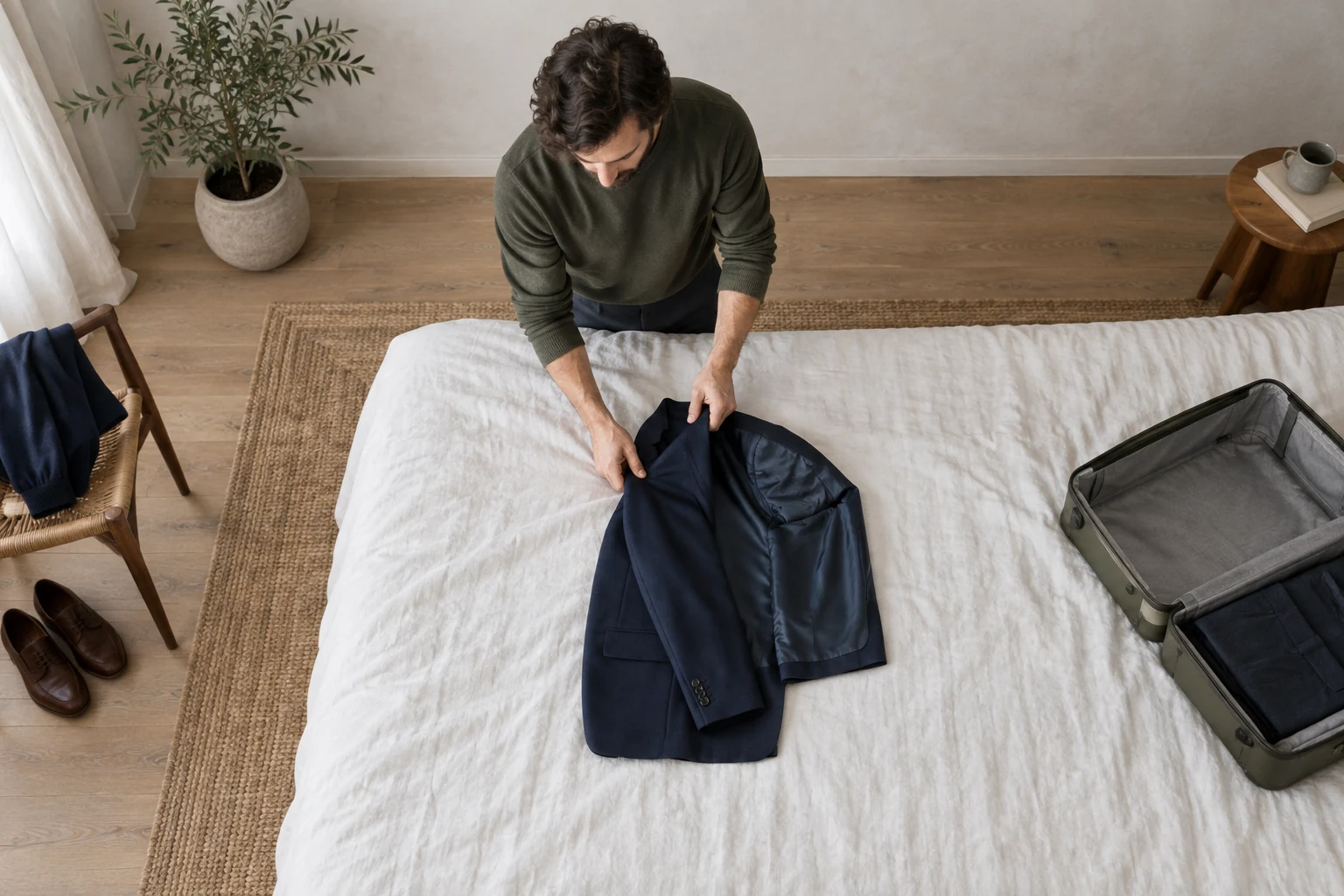
Suits and tailoring
How to fold a suit for travel, jacket and trousers
How to fold a suit for travel: the shoulder inversion fold for the jacket, folding suit trousers, where to pack them, and how to get wrinkles out when you arrive.
Closet and packing
How to fold a T shirt neatly
How to fold a T shirt four ways: a neat shelf fold, the fast two second fold, an upright file fold for drawers and a tight roll for packing.
Washing and ironing
How to get wrinkles out without an iron
Five ways to get wrinkles out without an iron: a clothes steamer, shower steam, the dryer, a spray bottle and smart hanging, matched to the fabric you have.