What to wear on a plane for comfort and security
In this guide
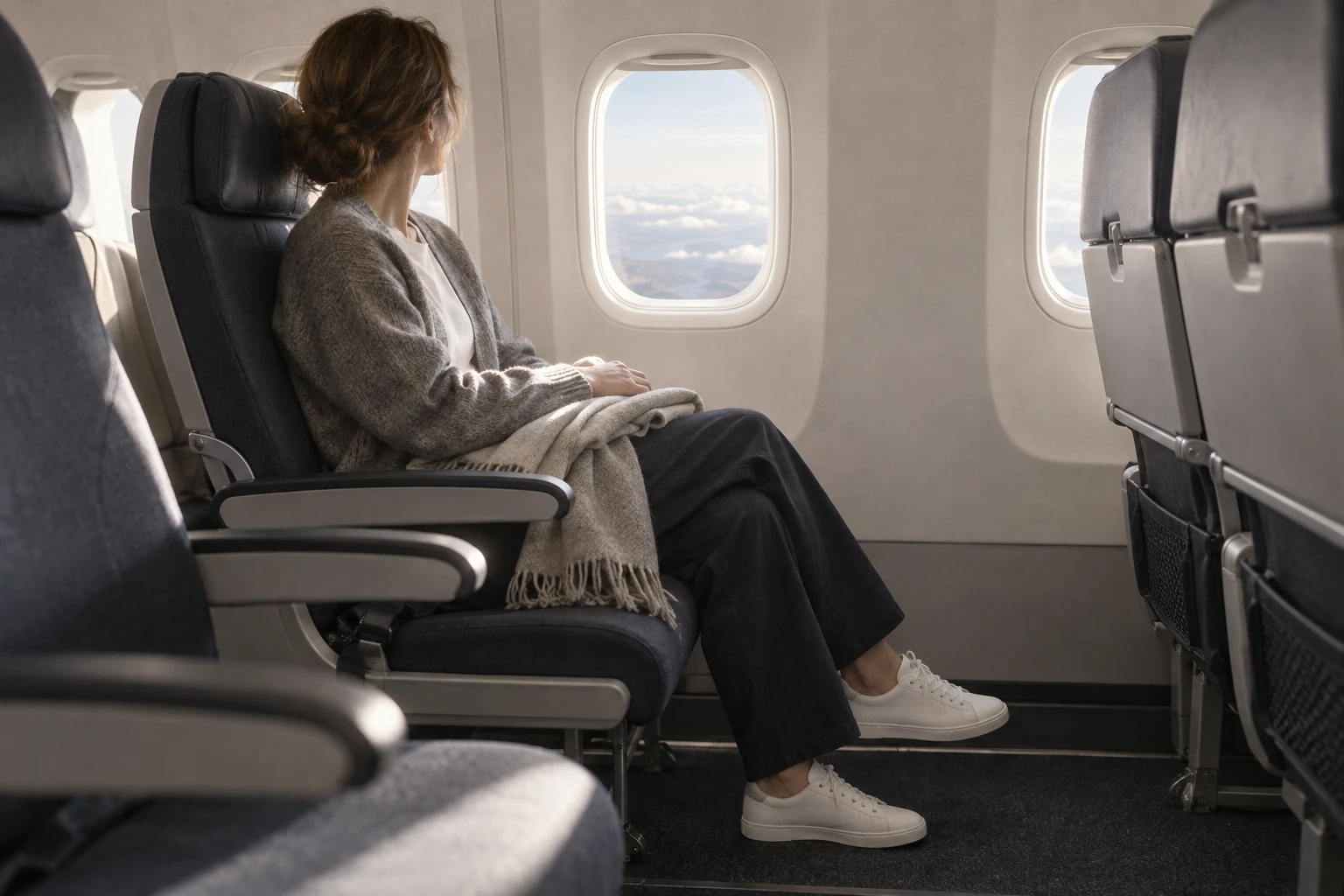
At five in the morning nobody wants to think about clothes, so the decision about what to wear on a plane usually gets made the night before, for a day that includes a security line, a cold gate, a cramped seat, a long walk to baggage claim and maybe a meeting or a dinner at the other end. An airport outfit has more jobs than most clothes you own.
The answer comes down to a few principles: layers for a cabin whose temperature you cannot control, a relaxed fit for hours of sitting, shoes that cope with swollen feet and still let you walk fast, and as little fuss as possible at the checkpoint. Within that, you can look as polished or as relaxed as you like.
What to wear on a plane: the basics
Start with a breathable base: a cotton or merino T shirt, a soft button down, or a knit top. Add a middle layer you can take off in your seat, such as a cardigan, a crewneck sweater or a zip fleece, and carry or wear an outer layer if your destination needs one. Cabin temperatures swing from warm while boarding to chilly at cruising altitude, and the air on board is dry, so natural fibers and moisture friendly knits usually feel better over many hours than a stiff synthetic.
For the lower half, the waistband matters more than the style. You will be seated with your hips bent for hours, so pull on trousers, soft chinos, relaxed jeans with some stretch, joggers in a nicer fabric, or a knit dress or skirt all work. Pockets that close are useful for a phone and boarding pass. Finish with socks, even if you plan to wear sneakers, because feet get cold at altitude. A large scarf or wrap earns its space as a blanket, a pillow and an extra layer on arrival.
Dress to get through security easily
Since July 2025, the Department of Homeland Security has let travelers at US airports keep their shoes on through standard TSA screening, ending a rule that had been in place for nearly two decades. Officers can still ask you to remove them if you need additional screening, so shoes you can slip off and on without sitting down remain the smart choice.
Other items still go into the bins at standard screening. The TSA's own description is that you remove items and place them on the belt, which in practice usually means jackets, belts with metal buckles, and bulky jewelry or watches. With TSA PreCheck you can keep a belt and light jacket on. Either way, fewer metal pieces mean fewer alarms and pat downs: skip the studded belt and the stack of bracelets, empty your pockets into your bag before you reach the line, and wear a jacket with a zipped pocket so small things do not get lost. Outside the United States, rules differ by country and airport.
| Item | Standard screening | With TSA PreCheck |
|---|---|---|
| Shoes | Usually stay on since July 2025 | Stay on |
| Jacket | Into the bin | A light jacket can stay on |
| Belt with a metal buckle | Usually into the bin | Can stay on |
| Bulky jewelry and watches | Usually into the bin | Fewer metal pieces still mean fewer alarms |
| Pocket contents | Empty into your bag before the line | Same |
Officers can still ask you to remove shoes for additional screening, and rules differ outside the United States.
What to wear on a long flight
On a long haul flight, comfort becomes a health question as well. The CDC notes that any trip of about 4 hours or more, by air or road, raises the risk of blood clots in the legs, because you sit still for a long time, and that the risk grows the longer you are immobile. Avoid anything that squeezes the waist, the backs of the knees or the calves, such as very tight jeans or shapewear, and get up and move when you can. The CDC also suggests flexing your ankles and working your calves while seated.
The CDC says some people may benefit from graduated compression stockings on long trips, but recommends asking your doctor first rather than choosing them on your own, especially if you have a condition that raises your risk. For overnight flights, a soft knit set, a long sleeve layer and thick socks make sleeping easier, and a change of top in your carry on lets you arrive fresher. Our guide to merino wool explains why it is a favorite for long travel days: it stays comfortable across a range of temperatures and resists odor.
Is it better to wear shoes or sandals on a plane?
Closed shoes are the better default. Feet often swell during a flight, cabin floors are cold and not especially clean, and if you ever had to leave an aircraft quickly, you would want shoes that stay on and protect your feet. Look for a pair with a little room, laces or elastic you can loosen, and a sole you can walk through a large terminal in. Clean sneakers, loafers, soft leather slip ons and low ankle boots all work; our guide on wearing loafers shows how to make them look deliberate.
Sandals are fine on a short daytime hop to somewhere warm, ideally with a back strap so they stay on, but bring socks for the cabin. Bare feet are a different matter: US airlines' contracts of carriage generally let crews refuse passengers who are barefoot, and walking through the cabin or into the restroom without shoes is widely considered poor etiquette. Heels are allowed, but a long walk to a far gate in them is not much fun.
Airport outfit ideas for women and men
For women, a reliable plan is wide leg knit trousers or relaxed jeans, a fitted T shirt, a long cardigan or a soft blazer and clean white sneakers or loafers. A jersey midi dress over leggings with a denim jacket and sneakers is equally comfortable. For a work trip, a knit set in a dark color with a wool coat looks meeting ready on arrival and forgives hours of sitting.
For men, try dark chinos or relaxed jeans with a little stretch, a T shirt or polo, a quarter zip or crewneck sweater and leather sneakers or loafers. If you need to look sharp as soon as you land, wear the jacket from your suit over a knit and carry the rest; our guide on folding a suit for travel covers the trousers. For everyone, wearing your heaviest shoes and bulkiest coat on the plane frees space in the bag, a trick explained in our guide on packing a suitcase.
What to avoid wearing on a plane
The pieces people most often regret are the tight ones: rigid skinny jeans, a firm waistband, compression garments not meant for travel. Next come outfits that are awkward in a tiny restroom, such as jumpsuits with many buttons or layered dresses with a slip and a belt. Lots of metal slows you down at security. Shorts and sleeveless tops seem sensible for a beach trip until the cabin cools, so pack a layer even if you board in summer clothes.
Two more are about the people around you. Strong perfume or cologne carries far in a sealed cabin, so go light or apply it after landing. And although there is no general dress code for passengers, airlines reserve the right to refuse clothing their staff consider offensive or indecent, and the definition is left to the crew. Nothing sheer, nothing with a slogan you would not want to explain at the gate.
Questions people ask
Is there a dress code to fly on a plane?
Not for paying passengers in any formal sense. Airlines' contracts of carriage generally let them refuse passengers who are barefoot or whose clothing staff consider offensive or indecent. Airline employees flying on staff tickets often do have dress codes, which is where many of the stories come from.
Do I still have to take my shoes off at airport security?
At US airports, generally no: travelers have been able to keep their shoes on at standard TSA screening since July 2025. You may still be asked to remove them if you need additional screening. Other countries set their own rules.
What is the 3 3 3 rule for travel clothes?
It is an informal packing shorthand with several versions, often three tops, three bottoms and three pairs of shoes that all mix together. The idea is that a small set of pieces that coordinate makes many outfits. Our guide to a travel capsule wardrobe shows how to build one.
Should I wear jeans on a plane?
Jeans are fine if they are relaxed and have some stretch. Very rigid or tight jeans become uncomfortable after a few hours of sitting, dig into the waist, and are a poor choice for long flights. For those, a soft trouser or knit pant is kinder.
Sources and further reading
References used for this guide. Each opens the original page in a new tab.
Keep reading
Closet and packing
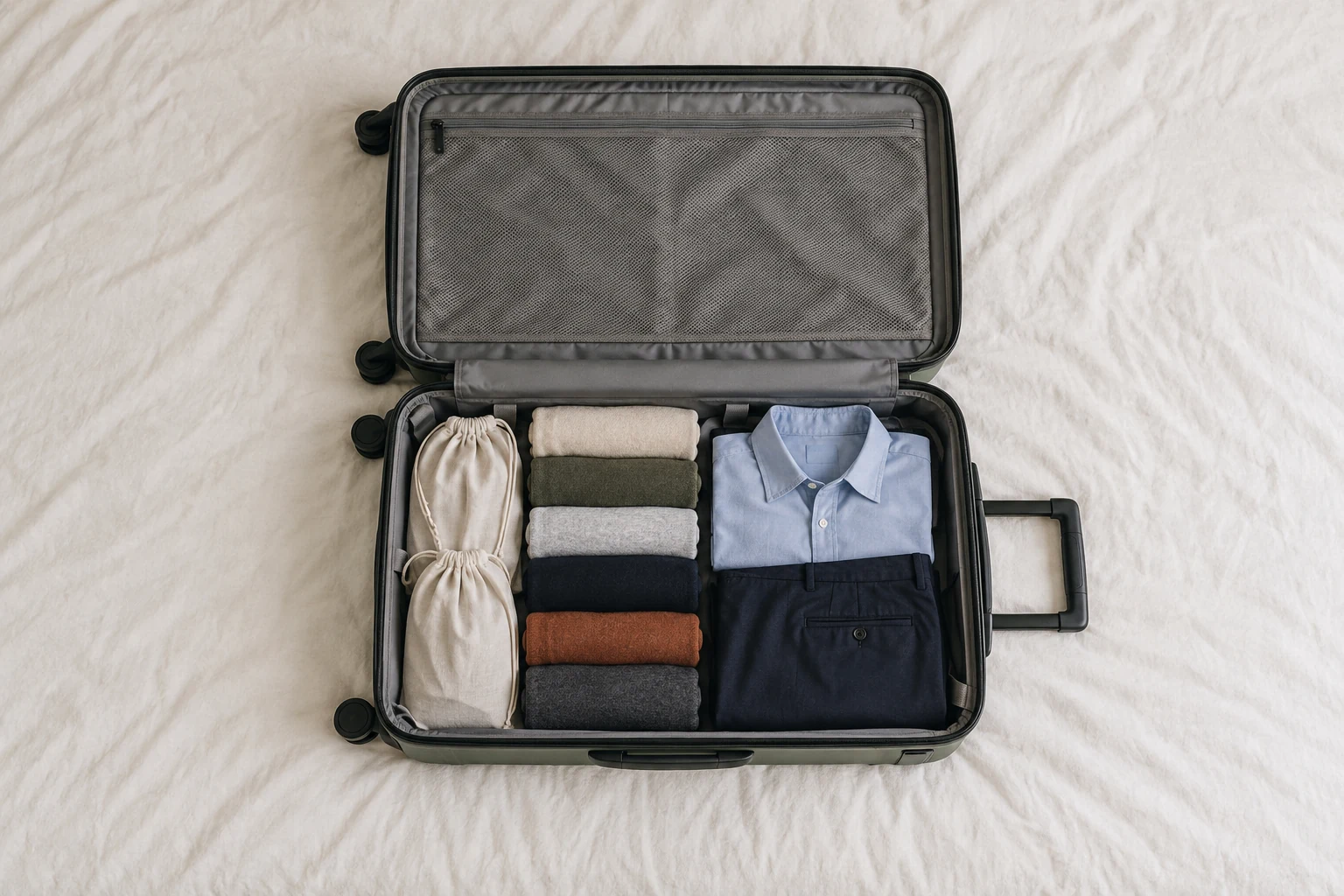
How to pack a suitcase without wrinkles
How to pack a suitcase step by step: plan outfits first, roll or fold each piece, layer the bag, use packing cubes well, and follow carry on rules.
Closet and packing
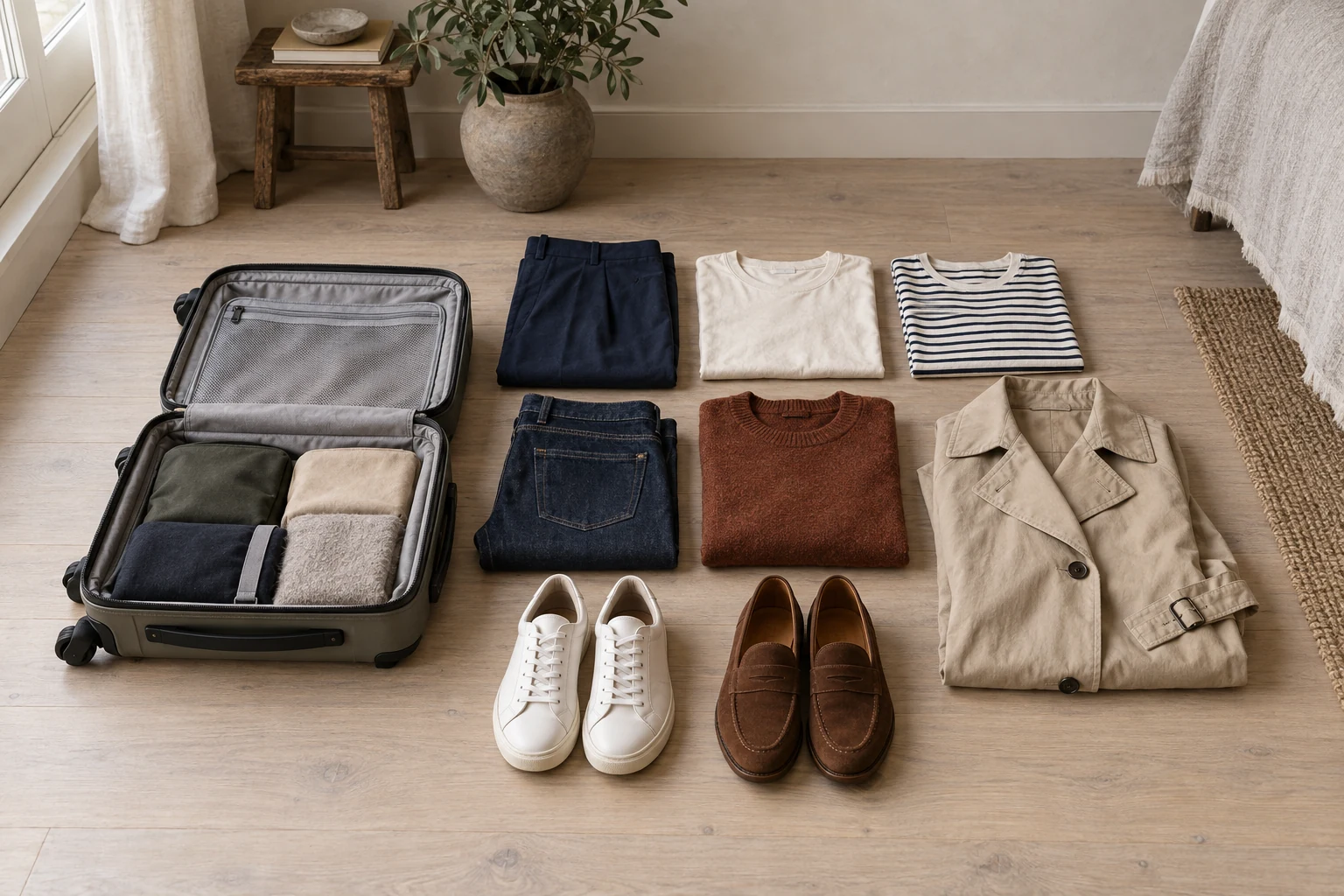
A travel capsule wardrobe that fits one bag
How to build a capsule wardrobe for travel: how many pieces to pack, a color plan that mixes, fabrics that survive a suitcase, and example lists for women and men.
Closet and packing
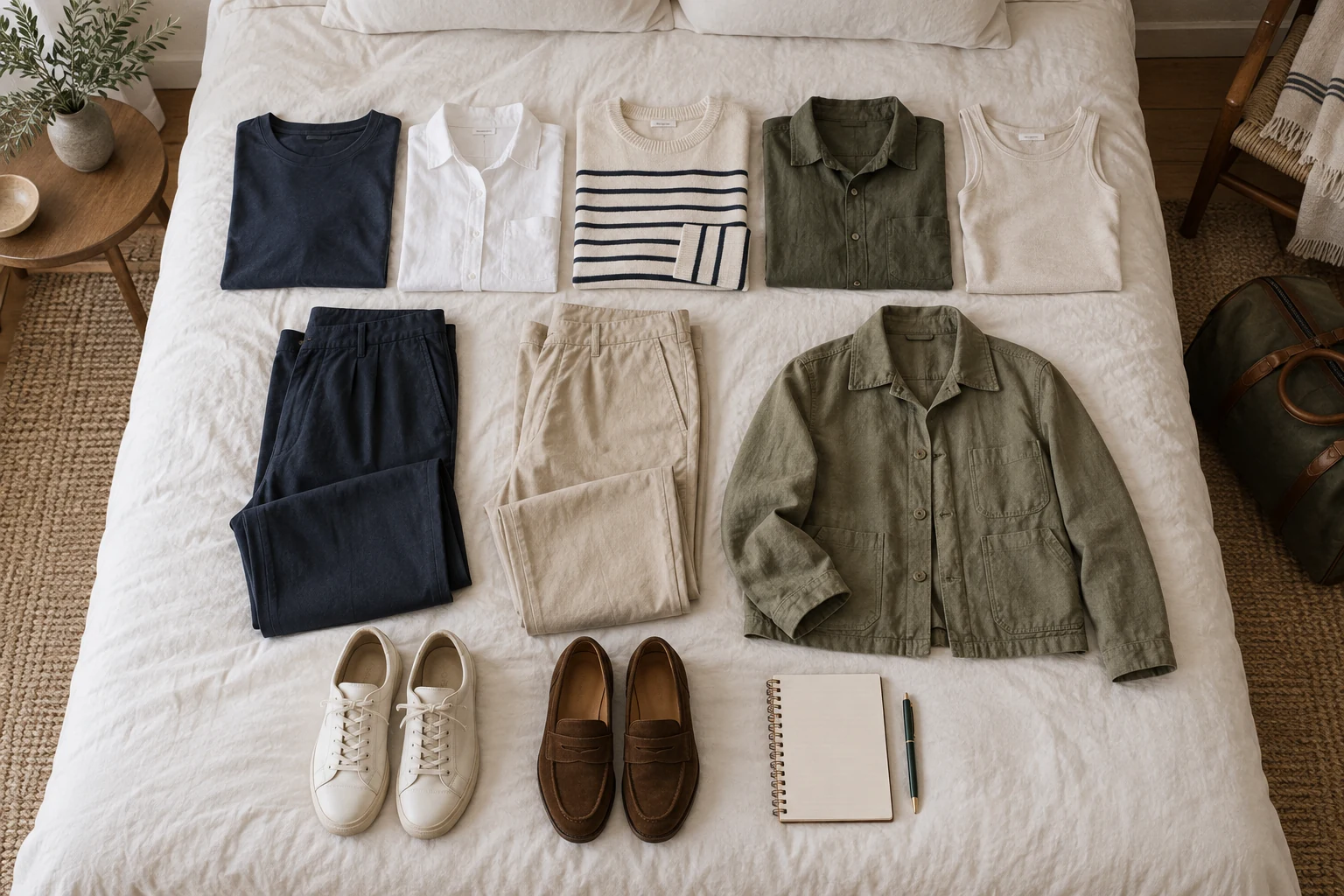
A packing list for vacation, built around outfits
A packing list for vacation that starts from your days and the forecast: how many clothes to bring for 3 or 7 days, travel essentials and a final check.
Closet and packing
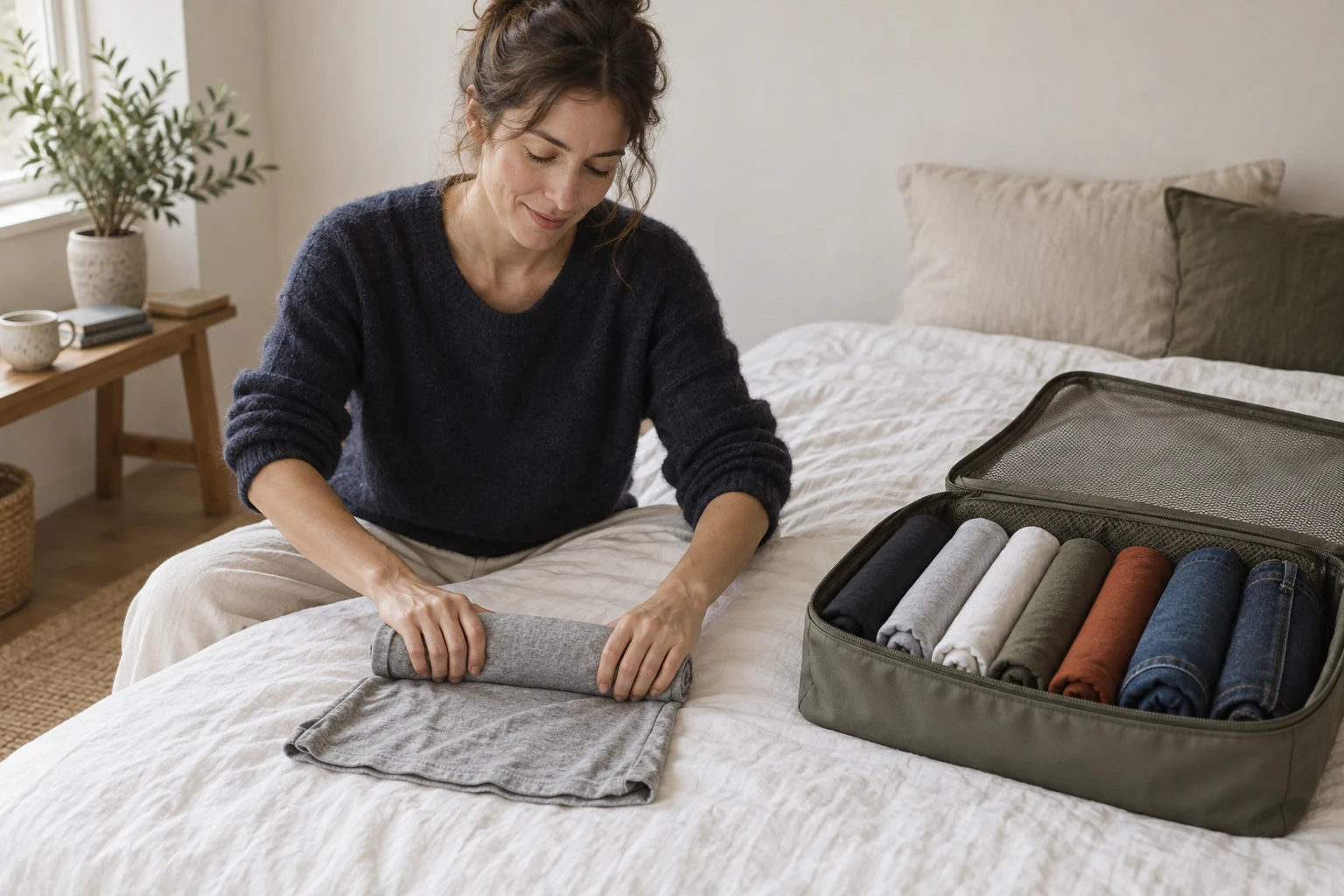
How to roll clothes for packing
How to roll clothes for packing: the basic roll and the ranger roll for shirts, how to roll pants and dresses, what not to roll, and how to pack the rolls well.
Closet and packing
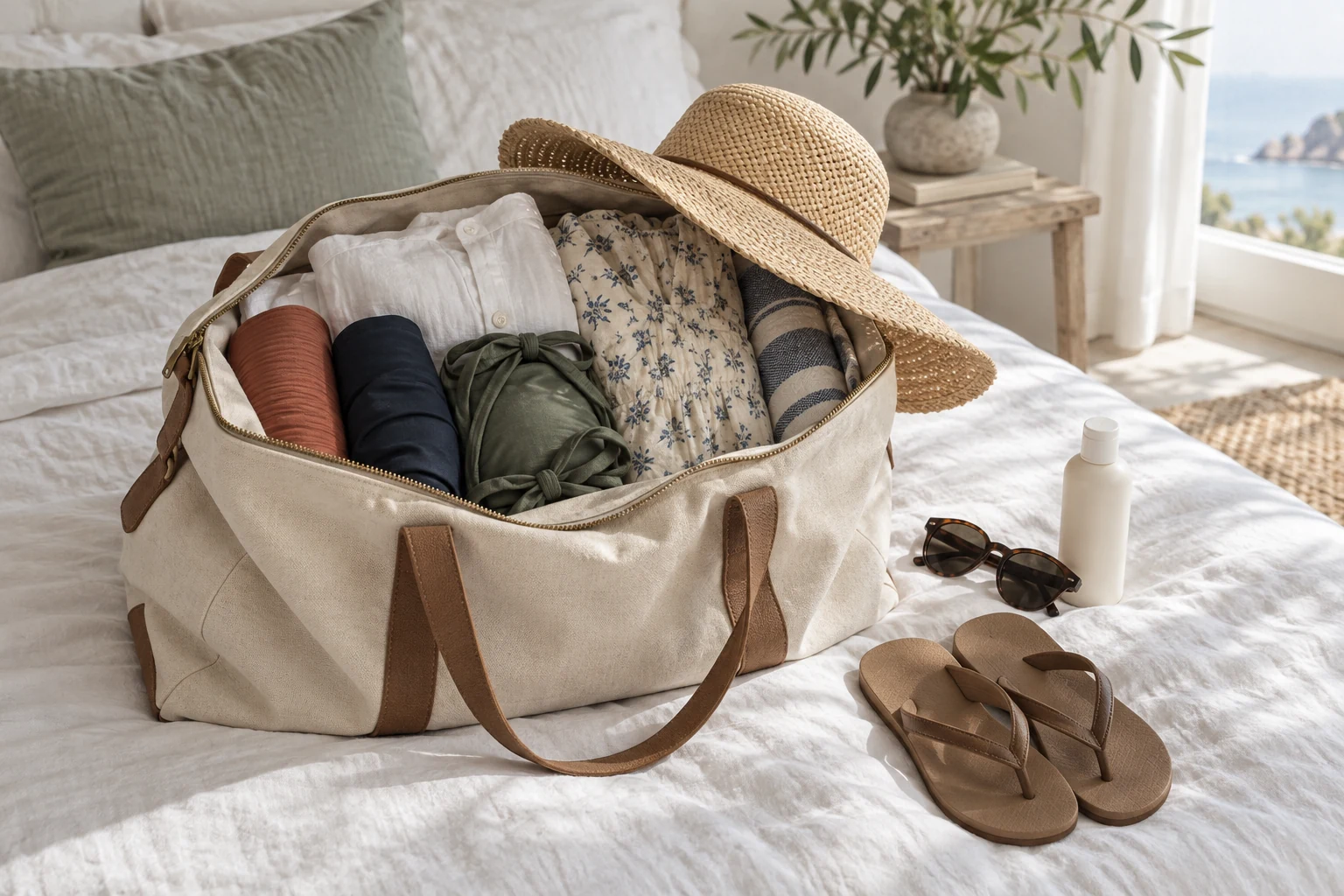
What to pack for a beach vacation
What to pack for a beach vacation: the clothes, shoes and sun protection you need, a 7 day list for women and men, and what to leave at home to travel light.