What is linen, and why does it wrinkle?
In this guide
A linen shirt on a hot afternoon feels different from anything else in the wardrobe: dry, cool, slightly crisp, and within an hour covered in soft creases. So what is linen, exactly, and why does it cost more than cotton and wrinkle so readily? The answer starts in a field. Linen is made from flax, a slender plant whose stems hold long, strong fibers, and nearly everything that makes linen special comes from those fibers.
Knowing how flax becomes fabric explains the rest: the creases, the coolness, the price, and why linen feels better in its second summer than its first. For washing instructions, our dedicated guide to washing linen covers every step.
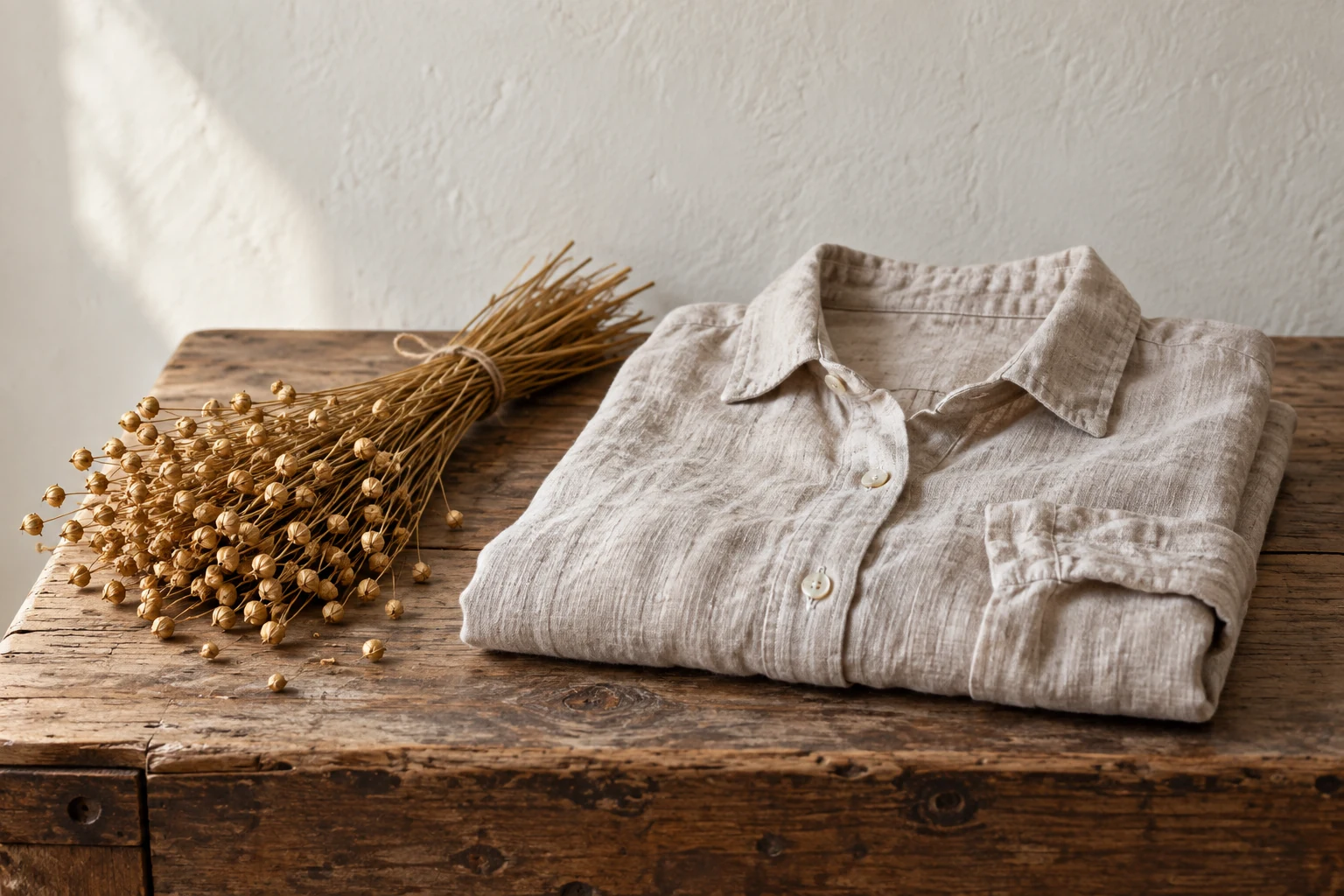
What is linen made of?
Linen is made from the bast fibers of the flax plant, Linum usitatissimum. Bast fibers are the long strands that run up the inside of the stem, just under the outer skin, and give the plant its strength. The same plant also produces linseed, which is where linseed oil comes from, but fiber flax is grown taller and more densely so the stems are long and straight.
Linen is among the oldest textiles people have made. Flax fibers found in a cave in the Caucasus suggest people were using wild flax more than 30,000 years ago, and ancient Egyptians wore linen daily and wrapped their dead in it. Today most of the world's flax fiber is grown in a coastal strip of Western Europe running from northern France through Belgium to the Netherlands, with France the largest producer. The cool, damp climate there suits the plant and the traditional retting process.
How linen is made, from flax plant to fabric
Turning flax into cloth takes more work than turning cotton into cloth, which is a large part of why linen costs more. Each stage separates the useful fiber from the rest of the stem without breaking its length, since long fibers make the smoothest, strongest yarn.
Growing and pulling
Flax is sown in spring and grows quickly into a slim plant with small blue flowers. At harvest the plants are pulled from the ground rather than cut, which keeps the full length of fiber that runs down into the root.
Retting in the field
The pulled flax is laid in rows on the field for several weeks in summer. Dew, rain and sun let natural microorganisms in the soil break down the pectin that glues the fibers to the woody core. In Europe this dew retting needs no irrigation.
Scutching and hackling
Machines crush and beat the dried stems to break away the woody parts, then comb the fibers. Combing separates the long, fine line fibers used for good linen from shorter tow, which makes coarser yarn. The rest of the plant is used for other products.
Spinning and weaving
The fibers are spun into yarn, often wet spun for finer, smoother threads, and woven, usually in a plain weave. The small slubs, or thicker spots, you see in linen come from natural variation in the fiber and are part of its character.
Why linen wrinkles, and why it feels cool
Linen wrinkles because flax fiber has very little elasticity. When you bend it, the fiber stays bent rather than springing back, so every time you sit, fold your arms or pack a shirt, the fabric records it. Heavier linen and tightly woven linen wrinkle a little less than fine, loose weaves, and blends with cotton, viscose or wool soften the effect. There is no way to make pure linen wrinkle free; the useful choice is whether you enjoy the relaxed look or pick a blend.
The same fiber structure explains why linen is so good in heat. Linen conducts heat away from the body, which is why it feels cool the moment you touch it. It absorbs a lot of moisture and releases it quickly, so it dries fast and does not cling when you sweat. It is also very strong, stronger than cotton, and it gets stronger rather than weaker when wet. The European flax industry describes the fiber as moisture absorbent and thermoregulating, and many people find linen bedding comfortable in both summer and winter for that reason.
Linen vs cotton, and is linen cotton?
Linen is not cotton. Both are natural plant fibers made mostly of cellulose, but cotton grows as fluffy fibers around the seeds of the cotton plant, while linen comes from the stem of flax. Cotton fibers are short, soft and a little springy, which makes cotton smoother, more elastic and much less prone to wrinkles. Linen fibers are longer and stiffer, which makes linen crisper, stronger, cooler, more absorbent and faster drying.
Is linen better than cotton? For very hot weather, for fabric that lasts and for a textured, relaxed look, often yes. For a smooth shirt that should look pressed all day, for soft everyday knits and for a lower price, cotton is usually better. Cotton and linen blends sit in between, keeping some of linen's coolness with fewer creases.
Linen meaning, weights and how to judge quality
The word linen comes from the Latin name of the flax plant, and it has a second meaning at home. Sheets, pillowcases, towels and tablecloths are traditionally called linens, which is why hotels talk about linen service and why a linen closet may hold nothing made of flax at all. When you shop, the fiber content on the label tells you whether household linens are actually linen.
Linen fabric comes in a wide range of weights. Handkerchief linen is fine and slightly sheer, good for summer shirts and blouses. Mid weights suit trousers, dresses and bedding, and heavy linen is used for jackets, aprons and upholstery. Good linen fabric for clothing feels substantial rather than papery, has a fairly even weave when held to the light, and softens rather than frays after washing. Stonewashed or garment washed linen has been prewashed to feel soft from the start and usually shrinks less at home.
| Type | Best for |
|---|---|
| Handkerchief linen | Fine, slightly sheer summer shirts and blouses |
| Mid weight linen | Trousers, dresses and bedding |
| Heavy linen | Jackets, aprons and upholstery |
| Stonewashed or garment washed | Softness from the first wear, with less shrinkage at home |
| Cotton and linen blends | Some of linen's coolness with fewer creases |
How to wear and care for linen
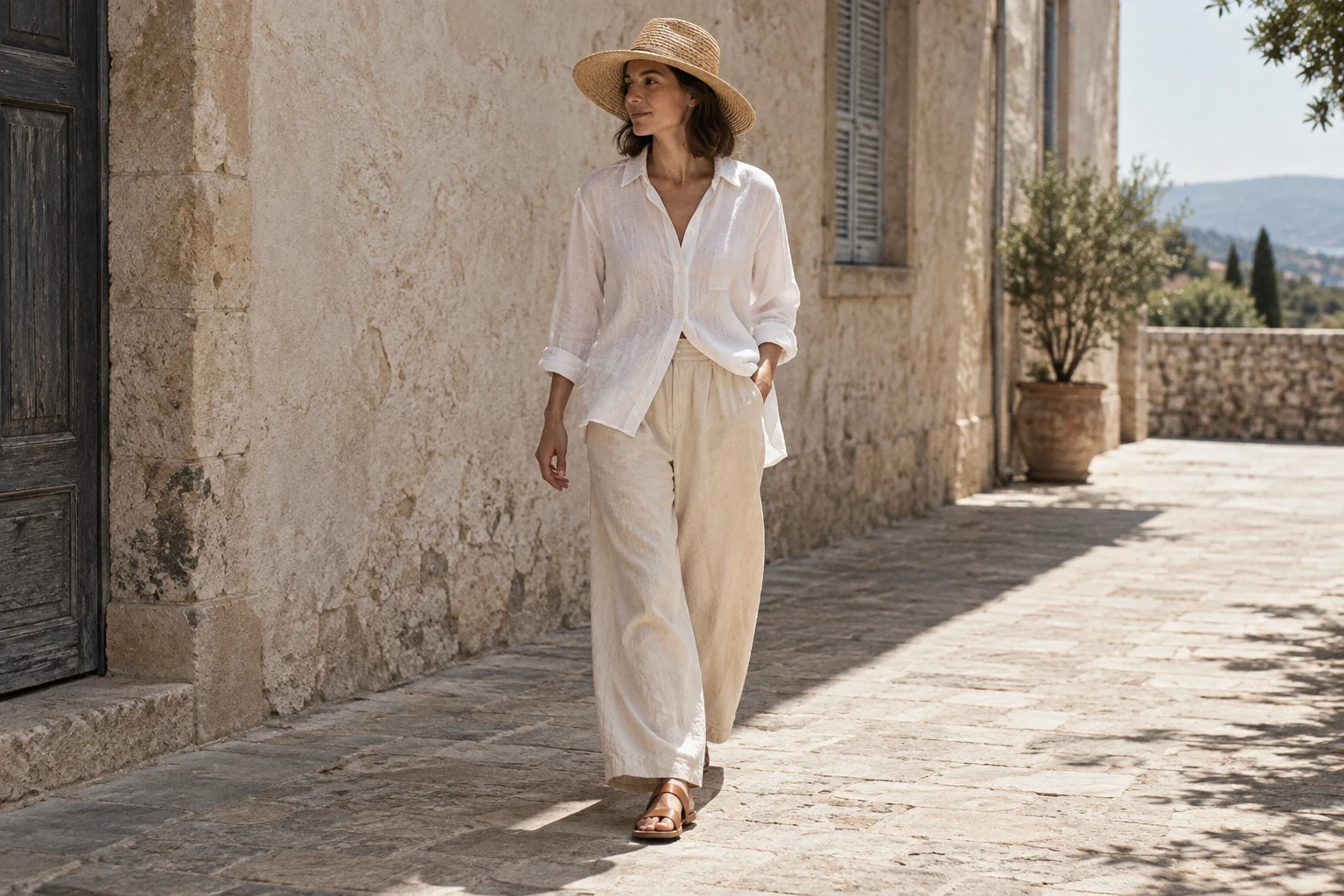
Linen looks best in relaxed shapes with a little ease: a loose shirt worn open over a T shirt, wide trousers, a shirt dress, an unstructured summer jacket. Natural colors like oatmeal, white, olive, navy and faded blue suit its texture, and the creases read as intentional when the rest of the outfit is equally easy. For dressier settings such as a summer wedding, a heavier linen or a linen blend suit holds its shape longer. Our guide to dressing for 90 degree heat builds complete outfits around it.
Most linen can be machine washed on a gentle cycle at around 86°F (30°C) with a mild detergent, then air dried; high heat in the dryer is what causes most shrinkage. Iron linen while it is still slightly damp for a crisp finish, or let it dry on a hanger for a softer look. Our guides to washing linen, ironing a shirt and removing wrinkles without an iron cover the details.
Questions people ask
Is linen a natural fabric?
Yes. Linen is spun from flax fibers that are separated mechanically from the plant's stem, with no dissolving or chemical regeneration of the fiber. Finishing and dyeing can add chemicals, as with any fabric, but the fiber itself is natural.
What is the downside of linen?
It wrinkles quickly, it can feel stiff until it has been washed a few times, and it costs more than cotton. Unwashed linen can also shrink in its first hot wash, so check whether a piece has been prewashed.
Does linen get softer over time?
Yes. Linen softens and becomes more supple with washing and wear, which is one reason good linen shirts and sheets feel better in their second year than their first. Gentle washing and avoiding harsh detergent help it soften without weakening.
Is linen good for sheets?
Many people love linen sheets for their cool, dry feel in summer and their breathability year round. They have a textured, slightly rumpled look and feel coarser than sateen at first, softening with use.
Sources and further reading
References used for this guide. Each opens the original page in a new tab.
- Alliance for European Flax Linen and Hemp: everything you need to know about European flax Opens in a new tab
- Wikipedia: Linen, fiber, production and history Opens in a new tab
- Alliance for European Flax Linen and Hemp: washing linen, care advice Opens in a new tab
- Wikipedia: Cotton, fiber structure and properties Opens in a new tab
Keep reading
Washing and ironing
How to wash linen, and does linen shrink?
How to wash linen shirts, pants and sheets: a gentle cycle, cool water and mild detergent, plus when linen shrinks, how to dry it and what to do about wrinkles.
Fabrics
Polyester vs cotton: which fabric to choose
Polyester vs cotton compared honestly: comfort, heat, sweat, odor, durability, skin and the environment, plus how to tell them apart and when a blend is best.
Fabrics
Seersucker: the summer fabric explained
What seersucker is, how its puckered stripes are woven, why it keeps you cool, where it came from, and how to wear a seersucker suit, shirt or dress in summer.
Weather
What to wear in 90 degree weather
At 90°F clothing is part of staying safe. Loose fabrics, when to cover up, what to wear to work and outdoors, and the signs that heat is getting to you.
Washing and ironing
How to get wrinkles out without an iron
Five ways to get wrinkles out without an iron: a clothes steamer, shower steam, the dryer, a spray bottle and smart hanging, matched to the fabric you have.