How to roll clothes for packing
In this guide
The suitcase is open on the bed, the pile beside it is bigger than the bag, and folding everything neatly has produced towers that slide over the moment you zip the lid. Rolling is the packing habit travelers keep coming back to, because it turns soft clothes into firm, even cylinders that fit into corners, stay in place and come out with fewer hard creases.
Learning how to roll clothes for packing takes a few minutes, but it is not the right answer for every garment. The method depends on what the fabric is and how the piece is built. This guide covers the basic roll, the tighter ranger roll, pants and dresses, what to fold instead, and how to arrange the rolls so the bag works for you on the trip.
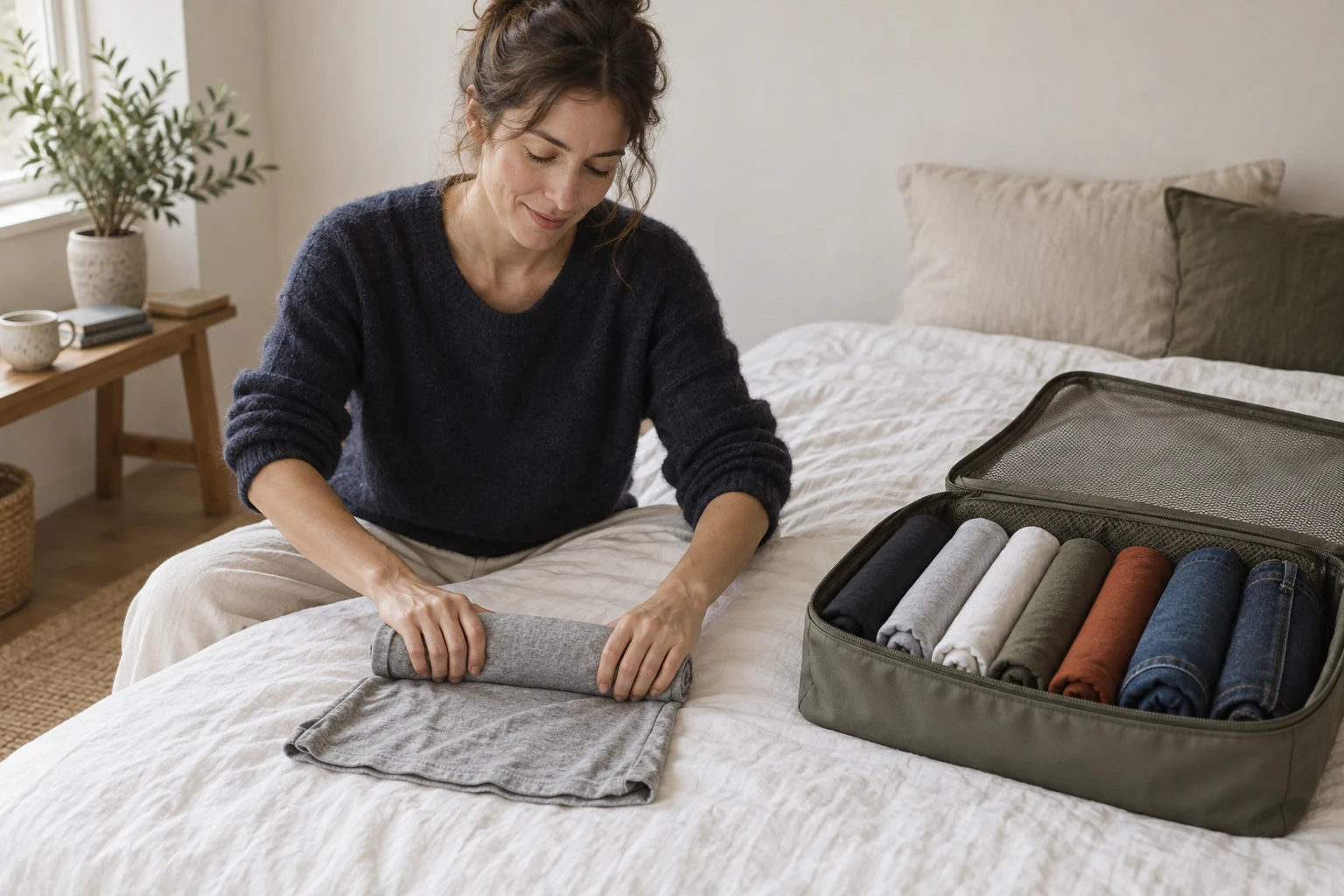
Is it better to roll or fold clothes when packing?
For soft clothes, rolling usually wins. A roll has no sharp fold lines, only gentle curves, so knits and casual cottons come out with softer wrinkles that drop out after an hour on a hanger. Rolling also squeezes air out of the fabric, and AAA's carry on advice puts the principle simply: air is the enemy of an efficient bag. Rolls fill odd spaces in a way flat stacks cannot, and they stay put in a half empty case.
Structured clothes are different. Blazers, suit jackets, crisp dress shirts and anything with a pressed crease look worse rolled, because the curve distorts shoulders, collars and interfacing. Those travel better folded flat or packed in a garment folder, as described in our guides on folding a suit for travel and folding a dress shirt. Most good suitcases end up with both: rolls at the bottom and a flat layer of structured pieces on top. Remember that rolling saves space, not weight, so an overweight bag stays overweight.
| Garment | Method | Tip |
|---|---|---|
| T shirts, polos, thin sweaters, pajamas | Basic roll | Smooth flat and roll tightly from the collar |
| Underwear, socks, T shirts for a tight pack | Ranger roll | Less suited to thick sweaters |
| Jeans and casual pants | Firm roll | Pack at the bottom or wheel end |
| Dress trousers and woven dresses | Loose roll around a soft layer | Fold dress trousers along the crease first |
| Knit dresses | Roll from the neckline | Fold lengthwise to the width of your cube |
| Blazers, suit jackets, crisp dress shirts | Fold flat | Pack on top or in a garment folder |
How to roll clothes for packing: the basic roll
This is the everyday method for T shirts, polos, thin sweaters, leggings and pajamas. It starts with a clean rectangle, so the roll is even from end to end.
Lay it face down and smooth it
Spread the shirt front side down on a bed or table and smooth out every wrinkle with your palms. Any wrinkle you roll in will still be there when you unpack.
Fold the sides in
Fold each side in toward the center so the sleeves lie along the body and the shirt becomes a long rectangle about the width of your packing cube. You should see straight, parallel edges.
Roll tightly from the collar
Starting at the collar, roll down toward the hem, keeping the roll firm and pressing out air as you go. Tight rolls hold their shape and wrinkle less than loose ones, which shift and crumple in transit.
Check the finish
The result should be a smooth cylinder with no bulges and the hem wrapped around the outside. If it springs open, it was rolled too loosely or the rectangle was uneven; unroll and try again.
The ranger roll for a tighter pack
The ranger roll, sometimes called the army roll, locks each roll into a small, firm bundle that will not unravel. AAA's packing advice suggests it when you need to compress items further. It works best on T shirts, underwear and socks, and less well on thick sweaters.
Make a cuff at the hem
Lay the shirt face down and fold the bottom 3 inches (about 8 cm) outward, turning that band inside out. This band becomes the pocket that holds the roll closed.
Fold the sides into a narrow panel
Fold the sleeves and sides toward the center in thirds so the shirt is a narrow rectangle, keeping the cuff flat at the bottom.
Roll down toward the cuff
Roll tightly from the collar toward the hem, stopping when you reach the inside out band.
Pull the cuff over the roll
Turn the band back over the roll like a sock over a foot. The roll is now enclosed and should stay closed even if you toss it into the bag.
How to roll pants, jeans and dresses
For jeans and casual pants, lay them flat, fold one leg exactly on top of the other, and fold the seat point in so the waist is square. Then roll firmly from the waistband down to the hem, or from the hem up if you want the thicker waist at the center. Jeans make a heavy, firm roll that belongs at the bottom of the case. Our guide on folding jeans shows the flat version if you prefer it.
Dress trousers can be rolled, but gently. Fold them along the crease so the lines stay where they belong, lay a soft T shirt or a sweater on top, and roll the two together loosely. The inner garment acts as a core, so the trousers bend around a gentle curve rather than a sharp fold. Knit dresses roll beautifully: fold them lengthwise into a panel as wide as your cube and roll from the neckline. Woven dresses in cotton or silk do better rolled around a soft layer the same way, and linen will wrinkle whatever you do, so pack it with a plan to steam or accept its creases.
How to pack the rolls in a suitcase or packing cubes
Stand rolls upright on end in a packing cube or across the suitcase, like files in a drawer, rather than stacking them. You can then see every piece at a glance and pull one out without unpacking the rest. AAA suggests clear or mesh cubes, with separate cubes for underwear, casual clothes and nicer outfits, and one set aside for laundry on longer trips. Put the heaviest rolls, such as jeans, at the wheel end so the bag stands well.
Fill gaps as you go. Socks and small rolls tuck into shoes, where they also help the shoes keep their shape. Put flat structured items and folded shirts on top, where nothing presses on them. For more on layering the whole bag, see our guide on packing a suitcase.
Rolling clothes for packing with fewer wrinkles
Rolling reduces wrinkles but does not eliminate them, and a few habits make a real difference. Pack clothes clean and completely dry, since damp fabric sets every crease. Smooth each piece flat before rolling. Keep rolls tight and the bag full enough that they cannot shift. And favor fabrics that resist wrinkles or look fine a little rumpled, which Rick Steves recommends for any traveler trying to pack light: knits, wool, and blends with some polyester or elastane forgive a suitcase better than crisp cotton or linen.
When you arrive, unpack straight away and hang anything that matters. Most soft wrinkles fall out overnight, and a steamy bathroom helps with the rest. Our guides to steaming clothes and getting wrinkles out without an iron cover quick fixes in a hotel room.
Common mistakes
Rolling structured jackets and dress shirts
Rolling bends shoulders, collars and interfacing into shapes that are hard to press out. Fold these flat or use a garment folder and pack them on top.
Rolling loosely
Loose rolls unwind and bunch up in transit, creating the creases you were trying to avoid. Roll firmly and, for small items, use the ranger roll to lock them.
Forcing too much into compression cubes
Squeezing rolls hard into compression cubes can set deep wrinkles in woven fabrics. Compress knits and sleepwear, and give dressier clothes more room.
Questions people ask
Does rolling clothes really save space?
It usually lets you fit more soft clothing into the same bag, mainly because rolls press out air and fill corners and gaps that flat stacks leave empty. The gain is smaller for structured items, and it does nothing for weight. For bulky sweaters and coats, wearing them on the plane saves more space than any fold.
What is the 3 5 7 rule in packing?
It is an informal shorthand for about a week away, most often told as three bottoms, five tops and seven sets of underwear and socks, all chosen to mix and match; some versions count shoes or swimwear instead. There is no official source, so treat the numbers as a starting point rather than a rule.
How many outfits should I pack for a 7 day trip?
Count the days and the activities, then plan outfits that share pieces. For a week, many travelers bring two or three bottoms, four to six tops, one layer and two pairs of shoes, and wash a few small items midway. Our vacation packing list walks through it.
Should I roll underwear and socks?
Yes. Rolled underwear and paired, rolled socks are compact and slot into shoes and corners. The ranger roll works well for both, and our guide on folding socks shows how to pair them without stretching the cuffs.
Sources and further reading
References used for this guide. Each opens the original page in a new tab.
Keep reading
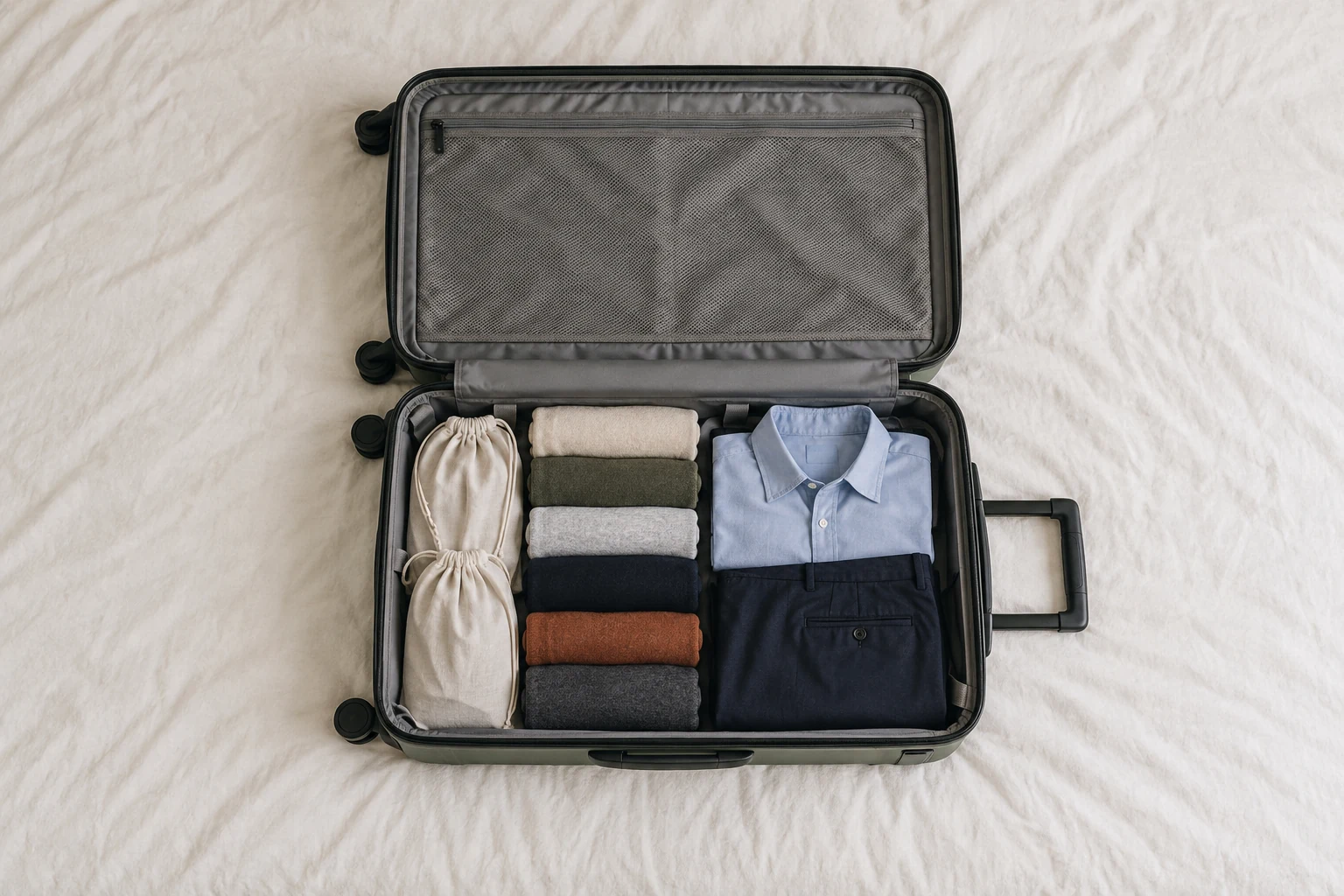
Closet and packing
How to pack a suitcase without wrinkles
How to pack a suitcase step by step: plan outfits first, roll or fold each piece, layer the bag, use packing cubes well, and follow carry on rules.
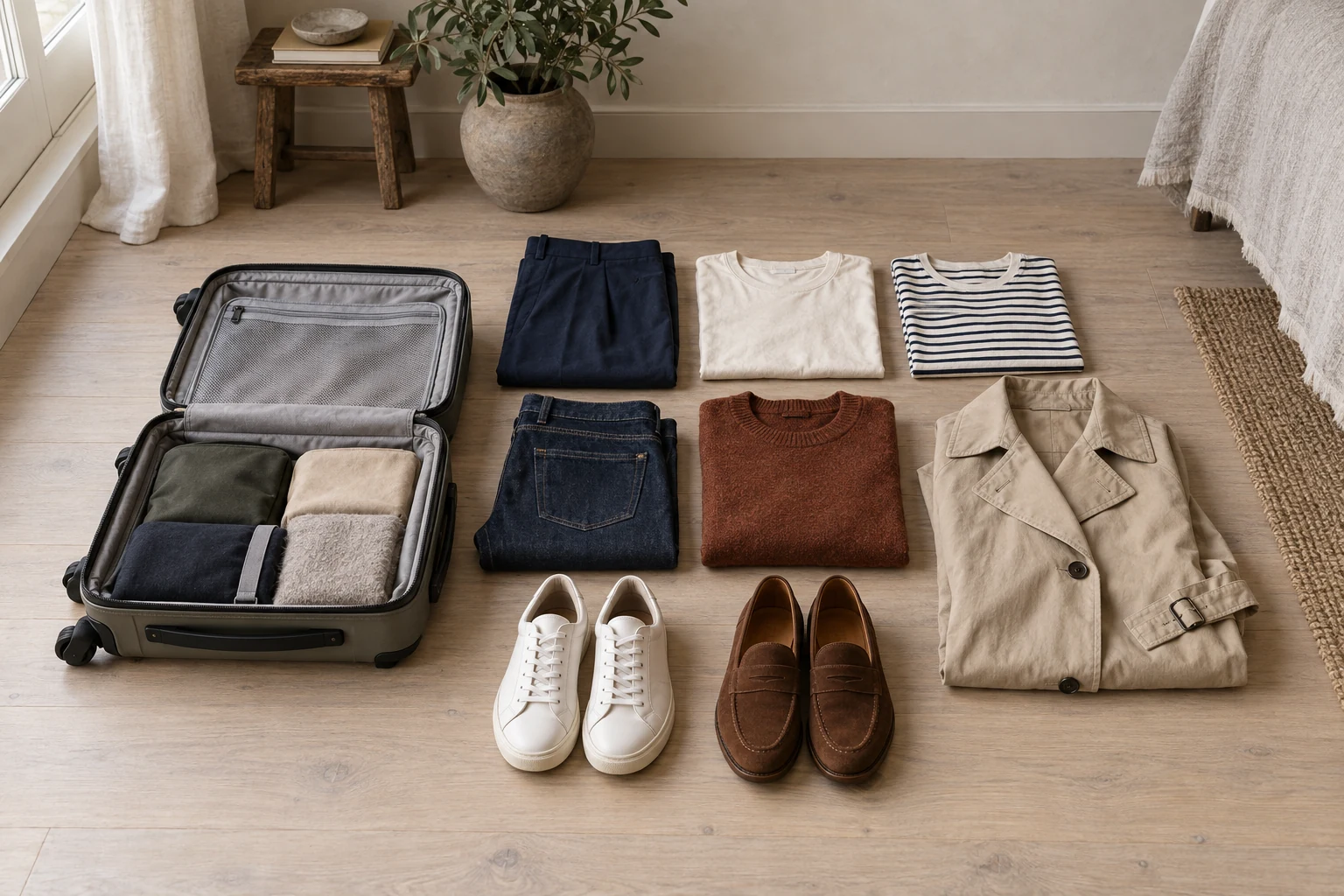
Closet and packing
A travel capsule wardrobe that fits one bag
How to build a capsule wardrobe for travel: how many pieces to pack, a color plan that mixes, fabrics that survive a suitcase, and example lists for women and men.
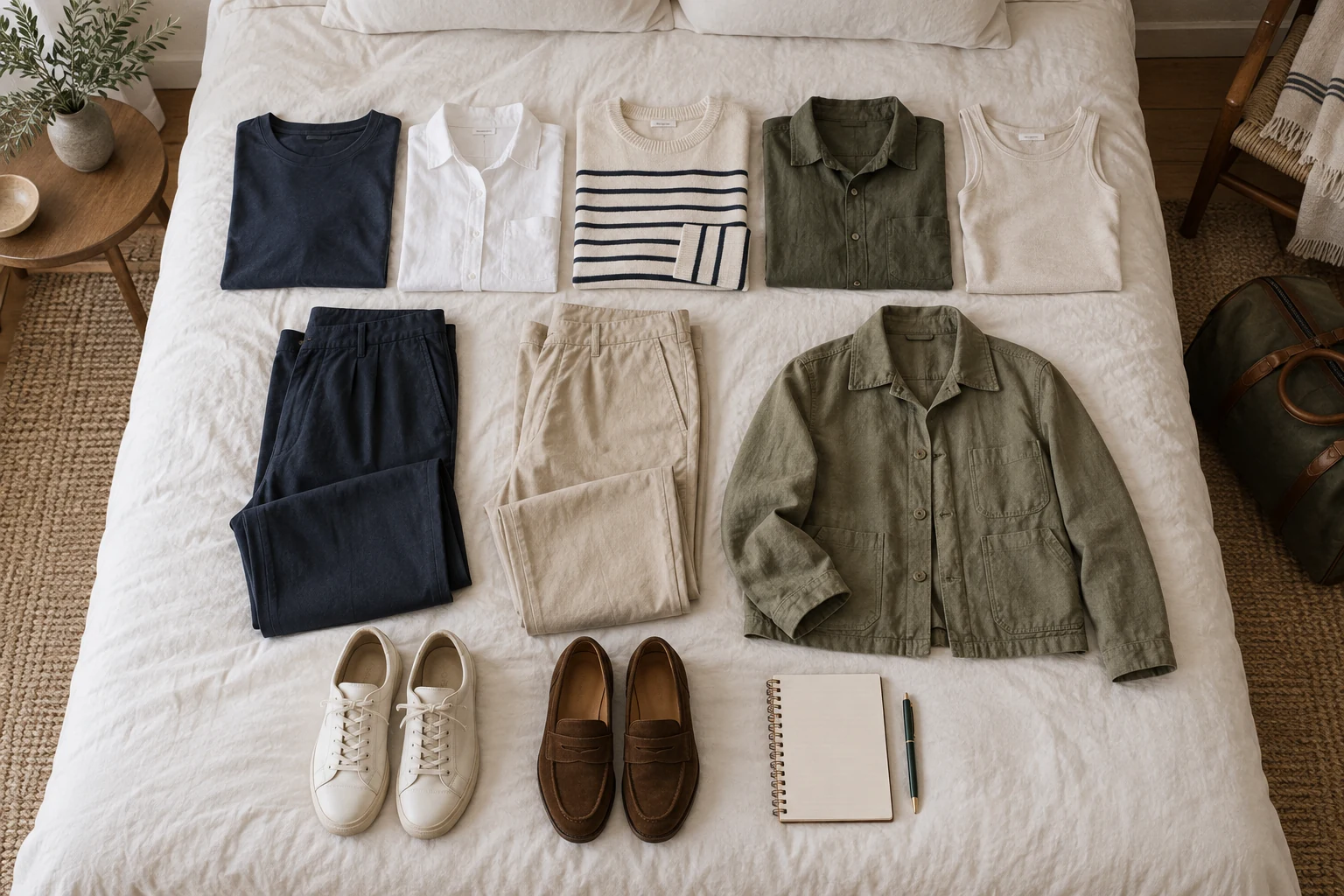
Closet and packing
A packing list for vacation, built around outfits
A packing list for vacation that starts from your days and the forecast: how many clothes to bring for 3 or 7 days, travel essentials and a final check.
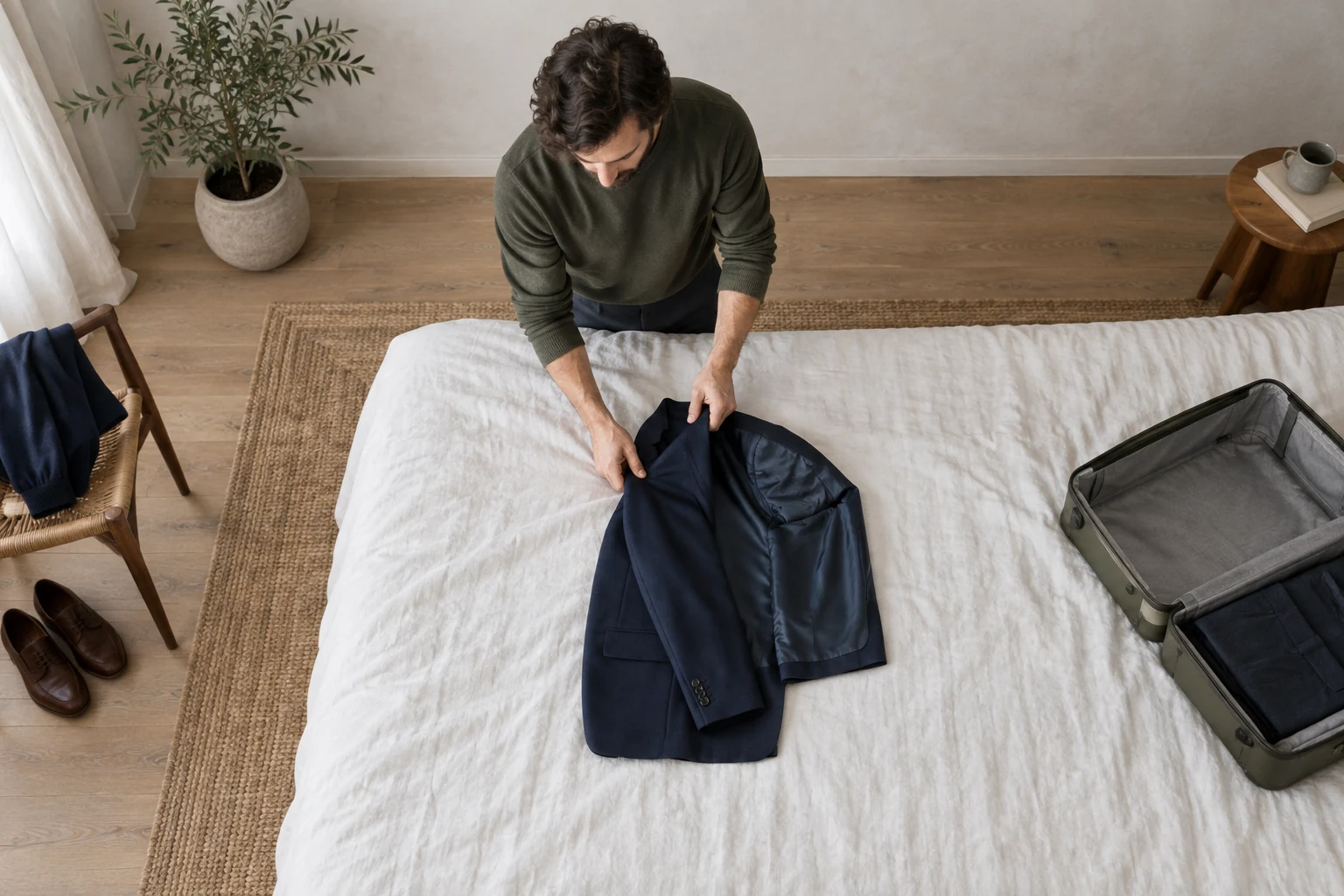
Suits and tailoring
How to fold a suit for travel, jacket and trousers
How to fold a suit for travel: the shoulder inversion fold for the jacket, folding suit trousers, where to pack them, and how to get wrinkles out when you arrive.
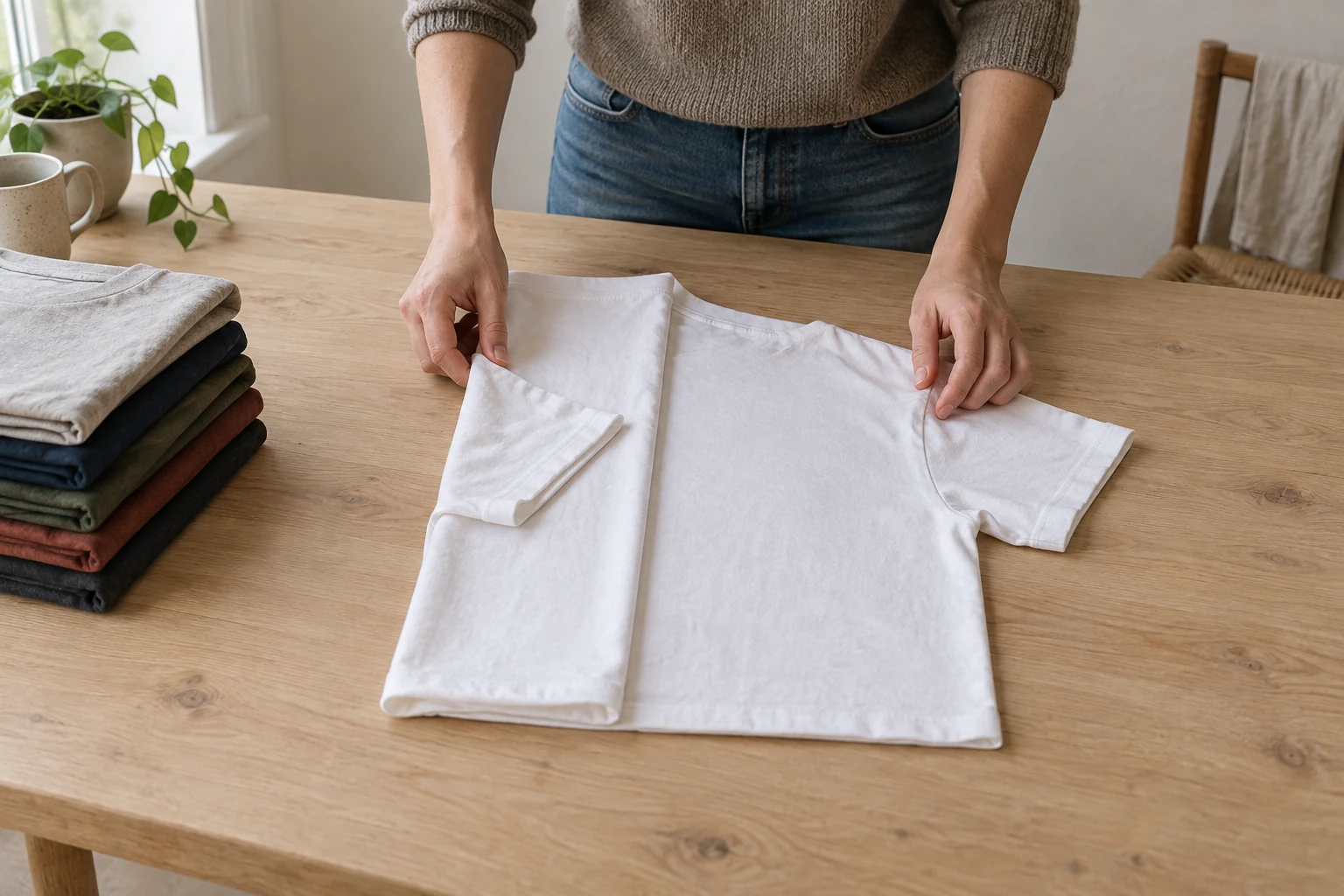
Closet and packing
How to fold a T shirt neatly
How to fold a T shirt four ways: a neat shelf fold, the fast two second fold, an upright file fold for drawers and a tight roll for packing.