How to use oxygen bleach (sodium percarbonate) on clothes
In this guide
A white shirt has gone gray at the collar, a kid's T shirt has a juice stain from last week, or you have read that chlorine bleach is too harsh for your colors. Somewhere in the search you found sodium percarbonate, a white powder sold in plain tubs, and wondered whether it is the same as the stain remover in the bright tub at the supermarket, and how to use it without ruining anything.
It is a genuinely useful product, and much gentler than chlorine bleach, but it is still a real chemical with its own rules about temperature, fabrics and mixing. Used within those rules, it handles most of the graying and organic stains that make people reach for chlorine in the first place.
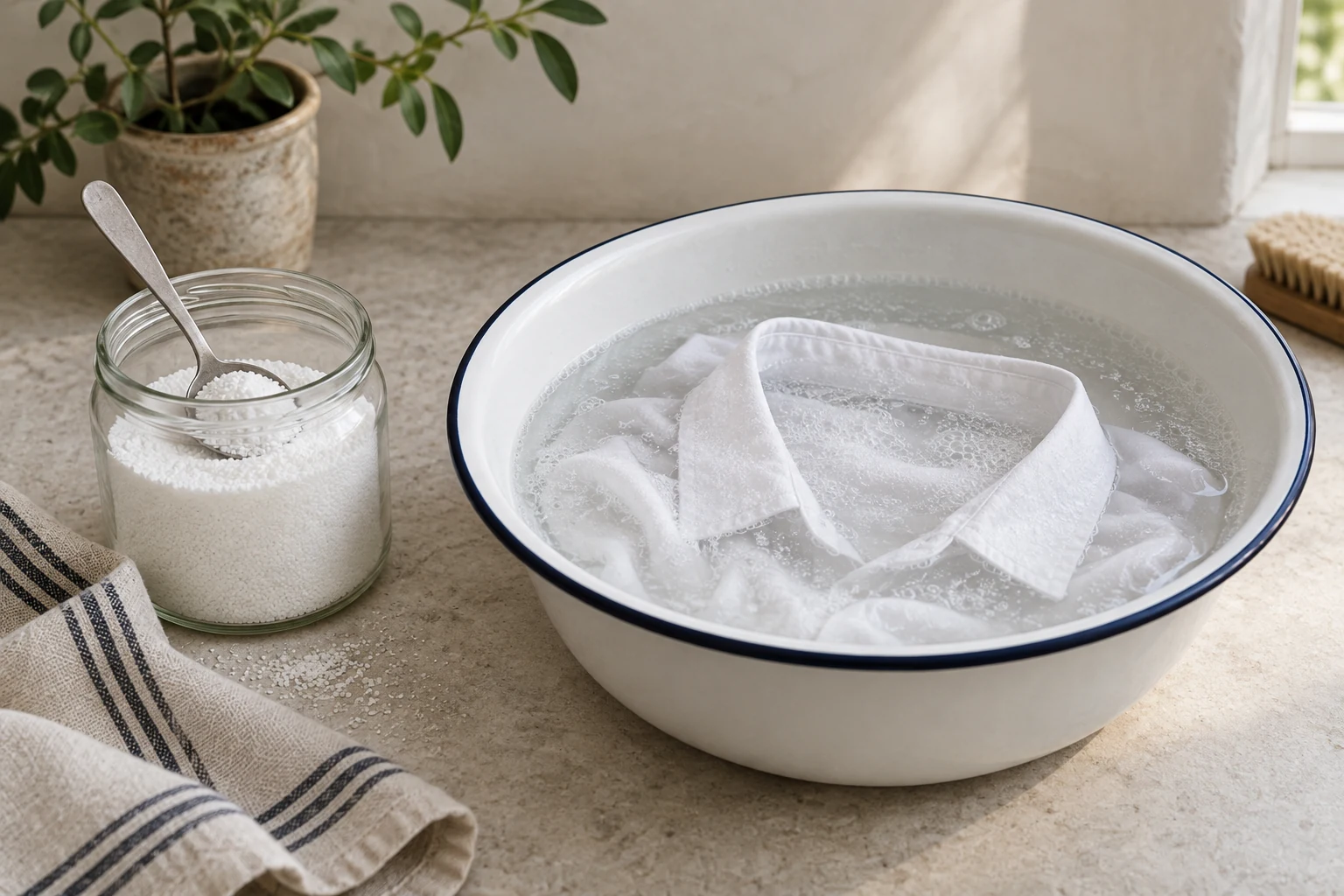
What sodium percarbonate is
Sodium percarbonate is a crystal made of sodium carbonate and hydrogen peroxide bound together, with the formula 2Na2CO3 · 3H2O2. It is a dry, stable way to store hydrogen peroxide. When it dissolves in water it separates back into hydrogen peroxide and sodium carbonate, the same compound sold as washing soda. The peroxide releases oxygen that breaks down the colored molecules in many organic stains, and the carbonate makes the water alkaline and helps soften it so detergent works better.
This is the oxygen bleach powder sold in plain tubs. Ingredient labels may list it as sodium carbonate peroxide or sodium carbonate peroxyhydrate. It is the main active ingredient in branded oxygen stain removers; Church and Dwight's ingredient disclosure for OxiClean Versatile Stain Remover, for example, lists sodium carbonate, sodium carbonate peroxide, a surfactant and a little salt and colorant. So a tub of pure sodium percarbonate does the same basic job, without the added surfactant and fragrance. Liquid color safe bleaches are a different format built on dilute hydrogen peroxide.
Is it the same as baking soda, borax or chlorine bleach?
No to all three. Baking soda is sodium bicarbonate, a much milder alkali with no bleaching power; our guide to baking soda in laundry covers what it can do. Borax is sodium tetraborate, a laundry booster and water softener that contains no peroxide, so borax is not oxygen bleach even though they often sit on the same shelf. Washing soda is sodium carbonate alone, which is half of sodium percarbonate without the peroxide.
Chlorine bleach, sodium hypochlorite, is the strongest of the group. It disinfects and removes color, which is why it ruins colored clothes and damages wool and silk. The American Cleaning Institute describes oxygen bleach as the gentler option for most fabrics, better at maintaining whiteness and brightness than restoring it. That distinction matters for expectations: regular oxygen bleach keeps whites from drifting gray, but a badly yellowed shirt may need several soaks, and some damage cannot be reversed. Our guide to washing white clothes covers when chlorine is the right tool.
| Product | What it is | Bleaches? |
|---|---|---|
| Oxygen bleach | Sodium percarbonate, washing soda bound with hydrogen peroxide | Yes, gently, most fabrics |
| Washing soda | Sodium carbonate alone | No, it softens water |
| Baking soda | Sodium bicarbonate, a milder alkali | No |
| Borax | Sodium tetraborate, a booster and water softener | No, no peroxide |
| Chlorine bleach | Sodium hypochlorite | Yes, strongly; ruins colors, wool and silk |
How to use oxygen bleach in the washing machine
Used in every white load and in colored loads that need a lift, oxygen bleach works as a booster alongside detergent.
Check the care label and the fabric
Look for the bleach triangle. An empty triangle or one with two diagonal lines allows oxygen bleach; a crossed out triangle means no bleach of any kind. Skip wool, silk, leather and anything labeled dry clean, whatever the label says about bleach, and see our guide to laundry symbols if a label is unclear.
Measure by the package
Branded products come with a scoop and a chart by load size and washer type. Pure sodium percarbonate is concentrated and usually dosed in tablespoons rather than scoops. More powder than the package suggests does not add safety or much extra power.
Add it to the drum before the clothes
The American Cleaning Institute says to add oxygen bleach to the wash water before the clothes go in, and OxiClean recommends the drum rather than the bleach dispenser, including in front loaders. Powder poured directly onto wet fabric can leave spots.
Use warm or hot water if the label allows
Oxygen bleach works best in warm to hot water. In a cold wash it dissolves slowly and releases oxygen weakly, so predissolve it in a cup of hot tap water first. Do not use boiling water.
Add detergent and wash normally
Use your usual detergent dose. Check stained spots before drying, since dryer heat can set what is left.
Soaking stains and dingy whites
A soak gives the peroxide time to work on organic stains such as wine, juice, coffee, tea, grass and food, and on the gradual graying of cotton whites. Dissolve the powder in a clean bucket or basin of the warmest water the fabric tolerates, at the concentration the package gives for soaking, and stir until no grains remain. Submerge the garments, keep them under the surface, and soak for the time the package recommends, often a few hours. Then wash as usual. For heavily yellowed whites, a second round often does more than one very long soak.
Colors are where people hesitate. Oxygen bleach is color safe in the sense that it does not strip dye the way chlorine does, but not every garment is colorfast. Test first: dab a little of the solution on an inside seam, wait a few minutes, and blot with a white cloth. If color transfers, keep that piece out of the soak. OxiClean also notes that its powder is not designed for dye transfer stains, the tint from a red sock in a white load; our guide to removing dye transfer covers that problem, and stain specific guides such as getting red wine out of clothes start with the right first aid.
Safety rules for oxygen bleach
Never store a dissolved solution in a closed bottle. OxiClean warns that the solution keeps giving off oxygen, and in a sealed container pressure can build until it ruptures. Mix only what you will use, in an open bucket or basin, and pour out what is left. Keep the dry powder in its closed tub in a cool, dry place; clumps mean moisture got in, which weakens it.
Do not combine it with other cleaners in the same bucket. OxiClean says not to mix it with chlorine bleach, and the Washington State Department of Health lists hydrogen peroxide among the chemicals chlorine bleach reacts with. Keep vinegar away too: Houston Methodist notes that hydrogen peroxide and vinegar can form peracetic acid, which irritates the eyes, skin and lungs. The powder and solution are also strongly alkaline, with a pH up to about 11 when diluted, and the pure chemical carries a danger warning for eye damage. Wear gloves for soaks, keep it away from your eyes and from children and pets, and rinse skin with water if it splashes.
Oxygen bleach for cleaning, and homemade versions
Because it breaks down organic stains and rinses away, oxygen bleach is also used for cleaning around the house: stained plastic containers, tile grout, outdoor furniture and unfinished wood decks. Follow the product's directions for each surface, test in a hidden spot, and rinse plants and soil nearby with clean water afterward. It is not a substitute for a registered disinfectant or for pool chlorine.
You may find recipes for making oxygen bleach by mixing washing soda with drugstore hydrogen peroxide. The peroxide sold for first aid is only about 3 percent, and a mixed solution loses strength quickly, so the result is weak and unpredictable. Buying sodium percarbonate powder, which stays stable while dry, is simpler and safer. For a one off stain on a white cotton garment, dabbing plain 3 percent hydrogen peroxide on the spot after testing a seam is a reasonable small scale alternative.
Common mistakes
Sealing the soak solution in a bottle
Dissolved oxygen bleach keeps releasing gas and can burst a closed container. Mix it fresh in an open basin every time.
Using it in cold water straight from the tub
The powder barely activates in cold water. Predissolve it in hot water, or wash warm when the label allows.
Treating wool and silk with it
Alkaline peroxide is hard on protein fibers and can weaken or yellow them. Use a mild wool detergent and spot treatment designed for delicates instead.
Topping up with chlorine bleach or vinegar
Combining cleaners does not multiply their power and can create irritating or toxic byproducts. Use one product, rinse thoroughly, and only then try another.
Questions people ask
Is sodium percarbonate the same as OxiClean?
It is the main active ingredient in OxiClean Versatile Stain Remover. The branded product also contains washing soda, a surfactant and small amounts of other ingredients, so it cleans a little more like a detergent booster. Pure sodium percarbonate does the oxygen bleaching part on its own.
Can you use oxygen bleach on colors?
Yes, on colorfast washable fabrics. It does not strip dye the way chlorine bleach does, but some dyes still bleed, so test an inside seam first. Keep it off wool, silk and leather.
What is another name for sodium percarbonate?
It is commonly sold as oxygen bleach or oxygen bleach powder, and ingredient lists may call it sodium carbonate peroxide or sodium carbonate peroxyhydrate. It is also used in homebrewing as a cleaner.
Is oxygen bleach safe for septic systems?
Used as directed in normal laundry amounts, oxygen bleach breaks down into oxygen, water and soda ash, and OxiClean states its powder is septic safe when used according to directions. As with any product, follow the dose on the package.
Sources and further reading
References used for this guide. Each opens the original page in a new tab.
- Sodium percarbonate: composition, uses and hazards (Wikipedia) Opens in a new tab
- American Cleaning Institute: how to use bleach Opens in a new tab
- OxiClean: frequently asked questions about Versatile Stain Remover Opens in a new tab
- Church and Dwight: OxiClean Versatile Stain Remover ingredient disclosure Opens in a new tab
- Houston Methodist: natural cleaning products and which ones not to mix Opens in a new tab
- Washington State Department of Health: dangers of mixing bleach with cleaners Opens in a new tab
Keep reading
Washing and ironing
How to wash white clothes and keep them white
How to wash white clothes: sort them, pick the right water temperature and detergent dose, use oxygen or chlorine bleach safely, and rescue whites that yellowed.
Stain removal
How to fix dye transfer: color run remover and other fixes
Red sock turned the load pink? How to fix dye transfer on white and colored clothes: rewashing, oxygen bleach soaks, color run remover, and what to do after drying.
Washing and ironing
Baking soda in laundry: what it can and can't do
How to use baking soda in laundry: how much to add, where to put it, what it does for odors and stiff towels, and why it cannot replace detergent on its own.
Washing and ironing
White vinegar in laundry: when it helps and when it doesn't
How to use white vinegar in laundry: how much to add, where it goes in the washer, what it can and cannot do, and the one mixing mistake that is truly dangerous.
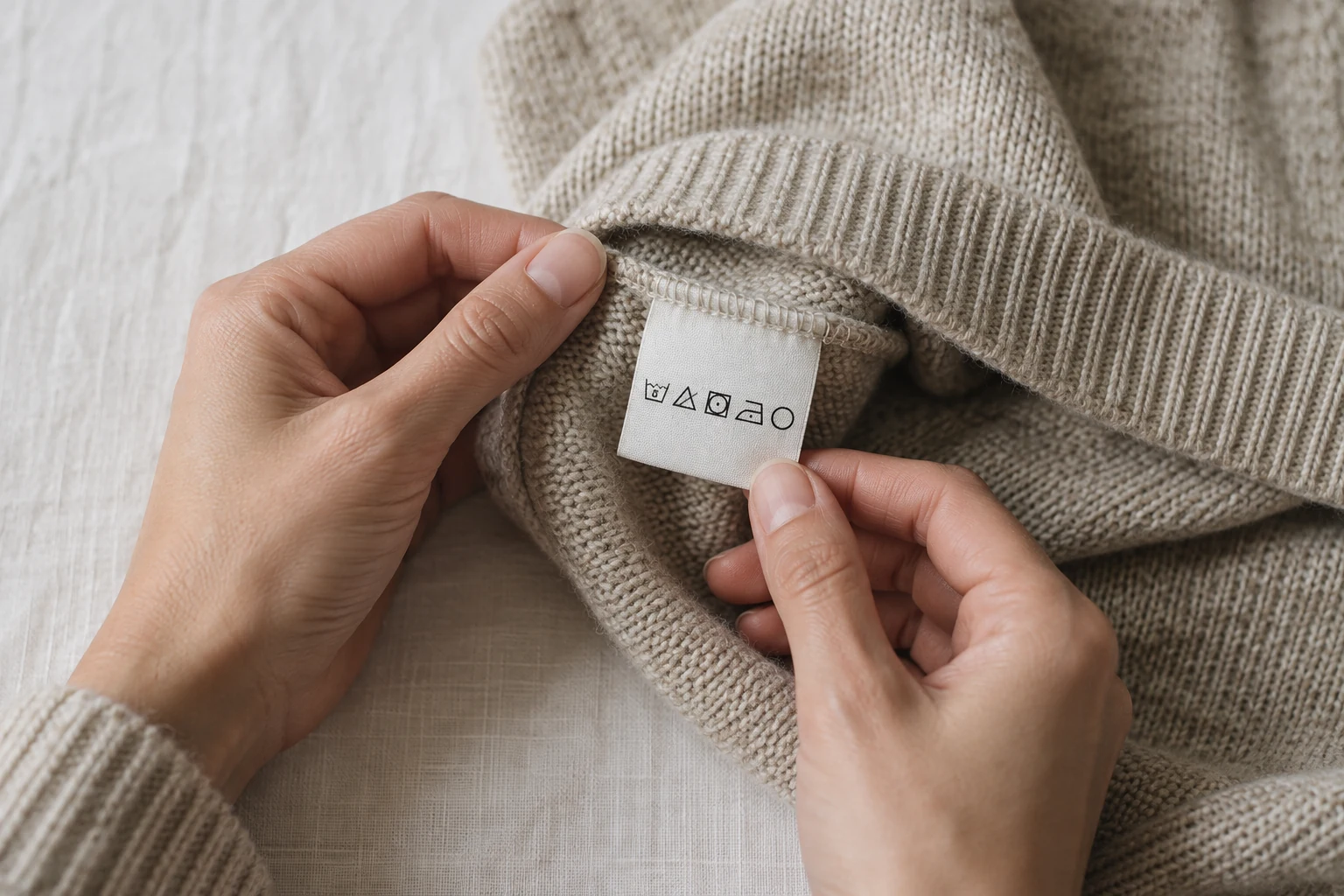
Washing and ironing
Laundry symbols explained: how to read a care label
What laundry symbols mean, in plain words: the wash tub, triangle, square, iron and circle, plus the dots, bars and crosses that change each instruction.