How to get blood out of clothes
In this guide
A nosebleed on a work shirt, a cut finger while cooking, a period that arrived overnight: blood stains tend to show up at the worst moment, and the first instinct is often to scrub with hot water. That instinct is the one to resist. If you are wondering how to get blood out of clothes, the short answer is cold water, patience and no heat until the mark is gone.
Blood behaves differently from most stains because it is made largely of protein. That single fact explains nearly every step below, from the water temperature to the kind of detergent that works and the reason the dryer is the real enemy. It also explains why a stain that looks hopeless after a day often lifts with a long enzyme soak.
Why blood needs cold water, not hot
Protein reacts to heat the way an egg white does in a pan. Iowa State University Extension explains that hot water, an iron or a dryer will cook a protein stain so that it coagulates between the fibers of the yarn, which makes it far harder to remove. Its advice is to pretreat protein stains in cold to lukewarm water, under about 100°F (38°C). A hot wash that seems more hygienic can turn a stain you could have rinsed away into a permanent brown shadow.
Time matters too. Fresh blood is still partly liquid and sits loosely in the fabric, so cold water alone can move most of it. Once blood dries, the proteins have bonded more firmly to the fibers and you need help from enzymes, which are proteins that break other proteins apart. The American Cleaning Institute makes the same split: cold water soaking for fresh stains, and an enzyme product for older ones.
How to get blood out of clothes when it is fresh
Work at the sink if you can. Before you start, glance at the care label, since everything that follows assumes a garment you are allowed to wash in water. If the label says dry clean only, skip to the section on delicate fabrics.
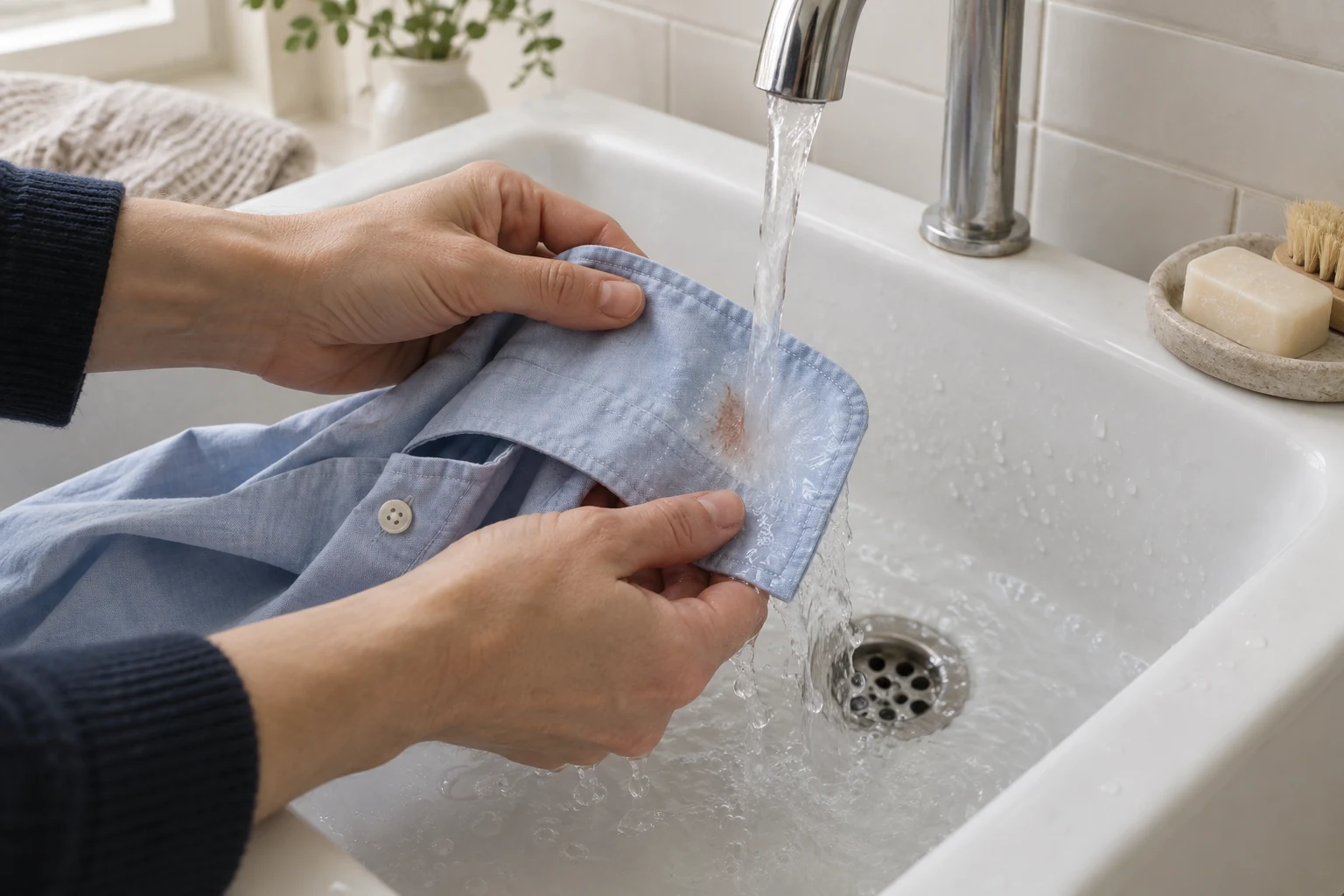
Flush from the back with cold running water
Turn the fabric inside out and hold the stain under a cold tap so the water pushes blood back out the way it came in, rather than through the whole thickness of the cloth. You should see the water run pink and the mark fade from red toward a pale rust.
Work in a little detergent
The University of Georgia Extension suggests rubbing the stain with bar soap or liquid detergent while it is under the cold water. Use your fingertips and rub the fabric gently against itself. Rinse and repeat until the water runs clear.
Soak in cool water if color remains
Submerge the area in a bowl of cool water for at least 30 minutes. A faint outline often loosens during the soak. Change the water if it turns pink.
Wash cool with an enzyme detergent
Rub a small amount of enzyme detergent into the spot, then wash the garment in the coolest setting the label allows, with the same detergent. Many liquid detergents contain enzymes; the label usually says so.
Check before you dry
Look at the spot in daylight while the garment is still wet. If any trace remains, repeat the soak instead of drying. Air dry the piece until you are sure the stain is gone, because dryer heat will set what is left.
How to remove old blood stains from clothes
Getting dried blood out of clothes is slower but usually possible if the garment has never been through a dryer. Soak it first in cool water for 30 minutes or so to rehydrate the stain, then move it into lukewarm water with an enzyme presoak or enzyme detergent. Cornell Cooperative Extension suggests about half a teaspoon of enzyme product in half a cup of warm water for a spot, or the package directions for a whole garment. Leave it for several hours or overnight, rub gently, rinse and check. It is normal to need two or three rounds.
If a faint mark survives, the next tool depends on the fabric. On white cotton and other colorfast fabric, the University of Georgia Extension suggests dabbing 3 percent hydrogen peroxide, the ordinary drugstore antiseptic, on the stain for one to three minutes before rinsing. Peroxide is a mild bleach, so test it on a hidden seam first, especially on colored clothes where it can lighten the dye. The American Cleaning Institute also allows a final wash with chlorine bleach where the label permits it, or oxygen bleach for colors. Use one bleaching product at a time and rinse well in between, because bleach reacts with peroxide and other cleaners. If you would rather not bleach at all, which is the safer choice on most colored clothes, repeat the enzyme soak instead; it works on the protein itself rather than on the color, so it lifts blood without touching the dye.
Blood that has already been washed hot and tumble dried is the hardest case. Try the enzyme soak anyway, since some of the stain may still respond, but accept that a set protein stain on a colored garment may not come out fully. For whites, our guide to washing white clothes covers safe whitening once the stain itself is gone.
Period blood on underwear, sheets and jeans
Period blood is the same protein stain, so the same method works: cold water first, enzyme detergent second, no heat until it is gone. The practical difference is scale and timing. You often find it in the morning, already dry, on a sheet or a pair of underwear. Rinse the area under a cold tap as soon as you notice it, then leave it to soak in cool water with a little enzyme detergent while you get ready for the day.
For dried period blood on sheets, treat the spot before the whole set goes into the machine. Gather the stained area into a bowl so it can soak without soaking the entire sheet, then wash the set as usual on a cool or warm cycle. Mattress protectors and mattresses need a different approach, so this method stops at the fabric that can go in the washer.
To get period blood out of jeans, work from the inside of the leg and keep the water cold. Indigo denim bleeds color easily, so skip hydrogen peroxide or any bleach unless a hidden test on an inside seam shows no change. Our guide on washing jeans explains how to keep dark denim from fading once the spot is clean.
Silk, wool and dry clean only pieces
Wool and silk are protein fibers themselves, which makes them tricky: the enzymes that digest a blood stain can also attack the fiber. Woolmark advises against enzyme detergents and any bleach on wool, and Cornell Cooperative Extension warns never to use chlorine bleach on wool, silk or spandex. For these fabrics, blot fresh blood with a clean white cloth dampened in cold water, working from the edge of the stain inward, and stop there. If the label permits hand washing, our guides to hand washing clothes and washing silk explain the gentle follow up.
For anything marked dry clean only, including most tailored jackets and structured dresses, your job is limited to blotting away excess with cold water, if a hidden spot shows that water leaves no ring. Then take it to a cleaner quickly and tell them it is blood, how old it is and anything you already applied. Professional cleaners have solvents and spotting agents that are not available at home, and they will work better on a stain that has not been cooked by a hair dryer or iron. If you are unsure what a symbol means, see our guide to reading laundry symbols.
| Fabric | First move | Avoid |
|---|---|---|
| Washable cotton, fresh stain | Cold tap from the back, then soap and a cool soak | Hot water, dryer, iron |
| Washable fabric, dried stain | Cool soak, then an enzyme soak for hours or overnight | Drying before the stain is gone |
| White colorfast cotton | Test, then 3 percent hydrogen peroxide for one to three minutes | Mixing peroxide with other bleaches |
| Indigo jeans | Cold water from the inside of the leg | Peroxide or bleach without a hidden test |
| Wool and silk | Blot with a cold damp white cloth, edge inward | Enzyme detergent and any bleach |
| Dry clean only | Blot with cold water, then a cleaner quickly | Hair dryer or iron |
Common mistakes
Using hot water to be thorough
Hot water sets blood rather than cleaning it. Keep every rinse and soak cold or lukewarm until the stain is completely gone, then wash at whatever temperature the label allows.
Drying or ironing to check the result
A damp stain can look gone when it is only diluted. Heat from a dryer, iron or hair dryer bonds what remains. Air dry and inspect in daylight first.
Scrubbing hard with a brush
Aggressive scrubbing spreads blood outward and roughs up the surface of the fabric. Rub the fabric gently against itself, or blot, and let water and time do the work.
Stacking products
Chlorine bleach reacts dangerously with ammonia and gives off chlorine gas with acids such as vinegar, according to the Washington State Department of Health. Use one product, rinse it out completely, and only then try another.
Questions people ask
Does hydrogen peroxide get blood out of clothes?
Yes, on white and colorfast fabric it often lifts the last trace of a blood stain. Use the 3 percent drugstore strength, leave it on for a few minutes, then rinse well. It can lighten dyes, so test a hidden seam first on anything colored, and never mix it with chlorine bleach.
Does dish soap get blood out of clothes?
On a fresh stain, yes, as long as the water stays cold. The University of Georgia Extension method uses bar soap or liquid detergent rubbed into the stain under cold running water, and a few drops of dish soap do the same job of loosening blood from the fibers. For a dried stain, dish soap is not designed to digest protein, so an enzyme detergent or presoak will do more.
Does salt help remove blood stains?
Some older guides suggest rubbing a fresh stain with wet salt after a cold soak, and it does no harm on sturdy cotton. It is not a substitute for cold water and detergent, though, and it can be abrasive on fine fabrics. If you have enzyme detergent, use that instead.
Can you get blood out after it has been washed and dried?
Sometimes. Soak the garment in cool water, then give it a long enzyme soak and check again before drying. Stains that went through a hot dryer are often partly permanent, especially on colored fabric, so treat any improvement as a win.
Can vinegar or baking soda remove old blood stains?
The fizz looks busy, but it is not part of the university extension methods for blood. Cold water, liquid detergent and an enzyme product are the tested route. If you do use vinegar for another reason, keep it far away from any chlorine bleach.
How do I get blood out of clothes quickly when I am out?
Find cold water and blot the stain from the back with a napkin or paper towel. A drop of hand soap helps on sturdy fabric. Avoid hand dryers and hot tap water, and treat the stain properly as soon as you get home.
Sources and further reading
References used for this guide. Each opens the original page in a new tab.
- American Cleaning Institute stain removal guide Opens in a new tab
- University of Georgia Extension, removing blood stains from textiles Opens in a new tab
- Iowa State University Extension AnswerLine, dealing with sport stains Opens in a new tab
- Cornell Cooperative Extension, removing stains at home Opens in a new tab
- Woolmark guide to detergents for wool Opens in a new tab
- Washington State Department of Health, dangers of mixing bleach with cleaners Opens in a new tab
Keep reading
Washing and ironing
How to wash white clothes and keep them white
How to wash white clothes: sort them, pick the right water temperature and detergent dose, use oxygen or chlorine bleach safely, and rescue whites that yellowed.
Washing and ironing
How to hand wash clothes properly
How to hand wash clothes in a sink or basin: which detergent to use, water temperature by fabric, how long to soak, how to rinse and how to dry without stretching.

Washing and ironing
Laundry symbols explained: how to read a care label
What laundry symbols mean, in plain words: the wash tub, triangle, square, iron and circle, plus the dots, bars and crosses that change each instruction.

Washing and ironing
How to wash jeans and how often to do it
How to wash jeans so they keep their color and fit: how often to wash, inside out in cold water, air drying, raw denim and what to do if your jeans shrink.

Stain removal
How to get red wine out of clothes
Get red wine out of clothes by blotting and flushing with cool water, then treating what is left with detergent and oxygen bleach, even once it has dried.