How to clean a wool coat at home
In this guide
It is the end of winter, your wool coat has a faint smell of the subway, a gray line along the collar, and a spot on the sleeve you cannot identify. The dry cleaner is expensive and slow, and the coat looks sturdy enough to survive a wash. Before you decide how to wash a wool coat, it helps to know what is inside it, because the answer depends less on the wool than on everything the wool is sewn to.
A tailored coat is built from layers: the outer wool, a lining, and often interfacing, canvas and shoulder pads that give the chest and shoulders their shape. Those layers shrink and react to water differently, so a full soak can pucker the front, bubble fused interfacing and leave the lining hanging below the hem. Most of the time, a wool coat needs cleaning in smaller, gentler ways, and a full wash is the last step, not the first.
Read the care label first
Under the FTC care labeling rule, clothing sold in the United States must carry at least one safe cleaning method. The wording matters. A label that says dry clean tells you dry cleaning is safe, but it does not promise that washing is unsafe; the maker only had to list one method. A label that says dry clean only is a warning: the FTC requires the maker to have evidence that washing would damage the garment. If your coat says dry clean only, take that seriously and keep your home care to the methods in the next two sections.
Some coats are designed to be washed. Unlined boiled wool jackets, some knitted coats and coats made from machine washable treated wool often carry a hand wash or gentle machine wash symbol. The label will also tell you the fiber mix, which matters: a coat of 70 percent wool and 30 percent polyamide behaves much like wool, while a coat with a large synthetic share may be more forgiving. If the symbols are unclear, our guide to reading care labels explains each one.
| Label says | What it means | What to do |
|---|---|---|
| Dry clean | Dry cleaning is safe; washing is not ruled out | Check the fiber mix and construction |
| Dry clean only | Washing would likely damage the coat | Brush, air, spot clean, then a cleaner |
| Hand wash | A gentle wash is safe | Tub of water no warmer than 86°F (30°C) |
| Machine wash, wool cycle | The coat is built to survive it | Wool cycle, mesh bag or inside out, low spin |
| Do not tumble dry | Heat will shrink or distort it | No dryer and no home dry cleaning kit |
How to clean a wool coat without washing it
Wool resists dirt and odor better than most fabrics, and regular light care keeps a coat clean for a whole season. Woolmark recommends brushing woven wool after wear, resting it between wears, and airing it to clear smells. These steps take minutes and often remove the need for a trip to the cleaner.
Brush it
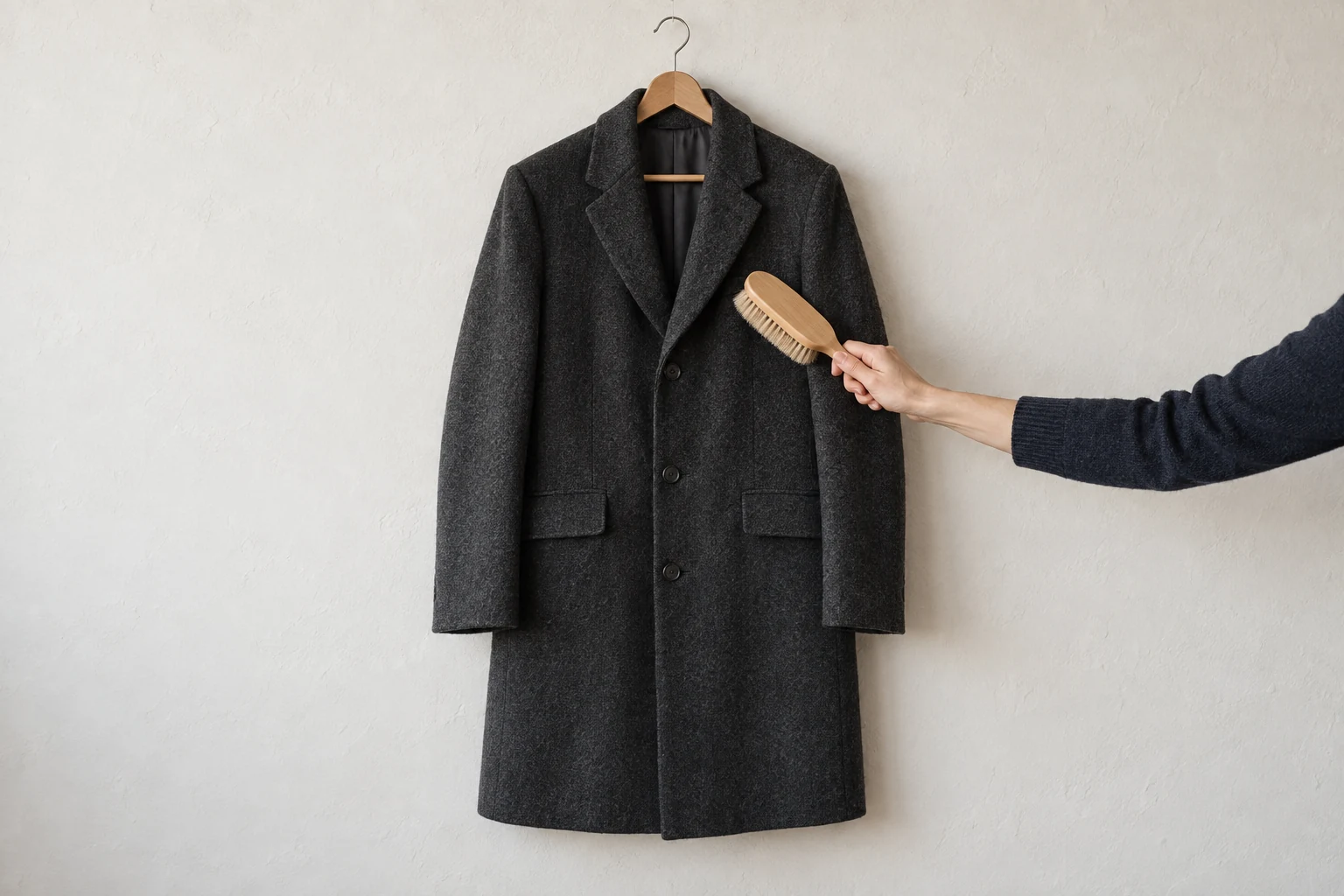
Lay or hang the coat and brush it with a soft natural bristle clothes brush, working in long strokes down the length of the fabric. This lifts dust and grit before they work into the weave and become stains. A lint roller helps with hair and fluff, but the brush does the real cleaning.
Air it
Hang the coat on a broad, shaped hanger in fresh air or near an open window for a few hours, out of direct sun. Food and smoke odors usually fade overnight. Let it rest a day between wears so the fibers recover their shape.
Steam out wrinkles and smells
Hang the coat in the bathroom while you run a hot shower, or pass a handheld steamer over it from a few inches away, then let it dry fully on the hanger before wearing. The moisture relaxes creases and freshens the fibers. Our guide to steaming clothes covers the technique.
Wipe the collar and cuffs
The collar and cuffs collect skin oil and makeup. Dampen a white cloth with cool water and a drop of wool detergent, dab the area without rubbing, then dab again with a cloth dampened in plain water. Let it dry before judging the result.
Spot clean stains
Treat spills as soon as you can. Woolmark's stain guidance starts the same way for almost everything: scoop or blot the excess with white paper towel, never rub, and test any treatment on a hidden area such as the inside of a hem facing to check for color loss before you touch the visible spot. Work from the outside of the stain toward the center with small amounts of liquid so you do not spread it or leave a water ring.
Water based stains such as coffee, mud and wine usually respond to cool water and a little wool detergent, dabbed and blotted in turns. Let mud dry completely first, then brush most of it away. Oily stains are different: Woolmark advises a solvent before water on grease, because water applied first can set a permanent ring. A small amount of a dry cleaning spot remover, used by its instructions in a ventilated room, is the safest home option; our guide to removing grease explains alternatives. Never use hot water, which sets protein stains such as blood and egg, and never use chlorine bleach on wool, which dissolves the fiber.
How to wash a wool coat by hand, when the label allows
Only wash the whole coat if the label shows a washing symbol. Choose a wool detergent that is pH neutral and free of enzymes and bleach, because enzymes designed to digest protein stains also attack wool, which is a protein fiber.
Prepare the coat
Empty the pockets, close the buttons and zips, and brush off loose dirt. Treat any spots first as described above.
Soak in cool water
Fill a clean bathtub with cool to lukewarm water, no warmer than about 86°F (30°C), and dissolve the detergent before the coat goes in. Submerge the coat and press it gently under the water. Let it soak for about ten minutes. Do not rub, knead or wring, because heat and agitation together are what felt and shrink wool.
Rinse at the same temperature
Drain, refill with water of the same temperature, and press the coat gently to rinse. A sudden change from warm to cold water can shock the fibers and encourage felting. Repeat until no suds remain.
Press the water out
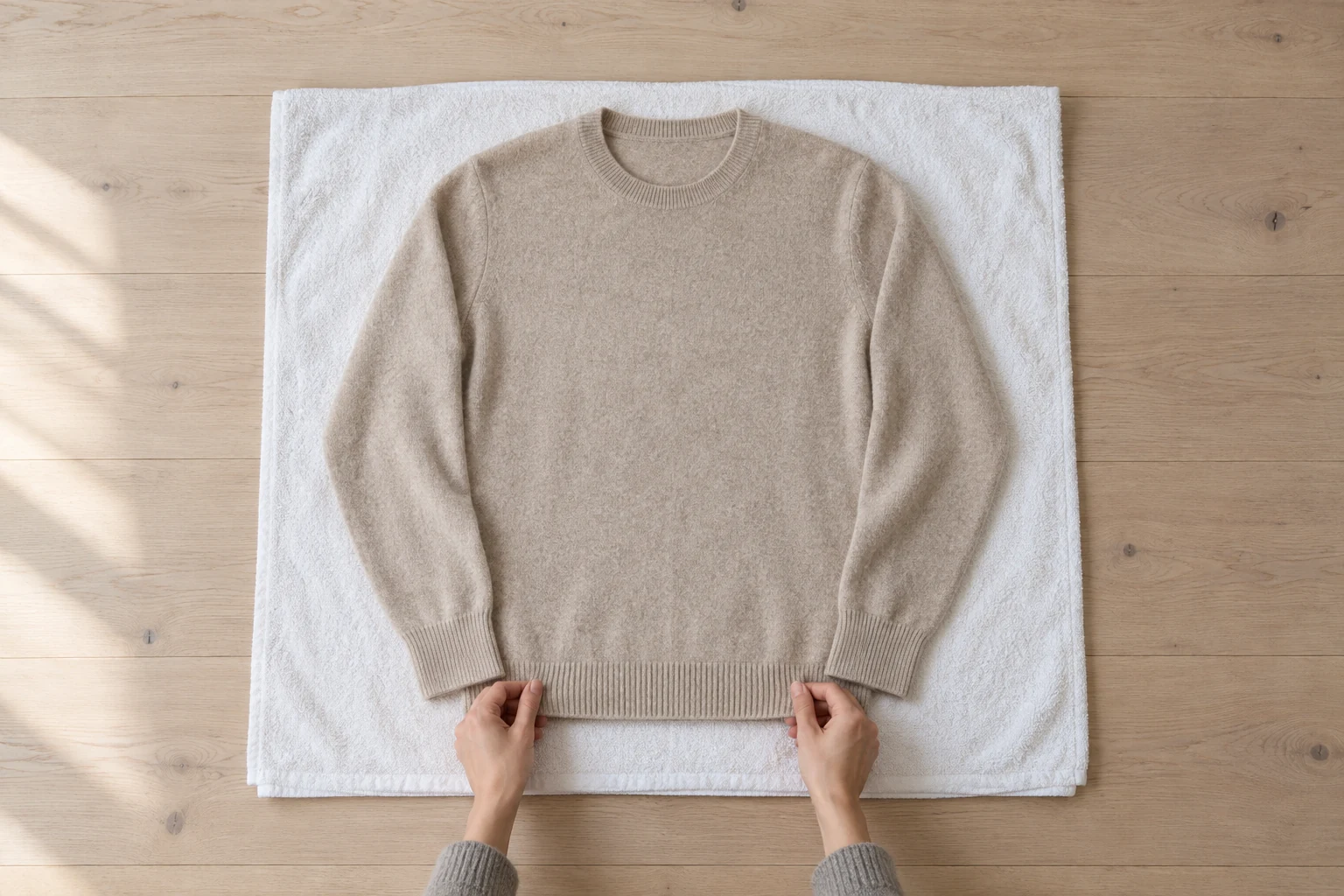
Drain the tub and press the coat against its bottom to squeeze water out. Then lay it on a large towel, roll it up, and press on the roll. A soaked coat is very heavy, so support it with both arms when you lift it.
Dry on a broad hanger
Hang the coat on a wide, shaped hanger, fasten the top button, and straighten the collar, seams and lining by hand. Dry it indoors at room temperature, away from radiators and direct sunlight, which Woolmark warns can damage and discolor wool. Expect it to take a day or two.
Washing machines and home dry cleaning kits
Can you wash a wool coat in the washing machine? Only if the label explicitly allows it, and then on the wool or hand wash cycle, in a mesh bag or with the coat turned inside out, with a low spin. Modern wool cycles move the drum very gently, which is why a treated wool sweater can survive them, but a heavy coat unbalances the drum and a lined coat can still distort. When the label says hand wash, hand wash. Never tumble dry a wool coat; the heat and tumbling together shrink wool quickly.
Home dry cleaning kits are something different from professional dry cleaning. They use a cloth dampened with a cleaning solution and your dryer's heat to create steam inside a sealed bag. They can freshen a coat and loosen light odors, but they do not remove ground in dirt or oily stains the way solvent cleaning does. Read the kit's instructions and your coat's label before trying one, and do not use one on a coat marked do not tumble dry.
When to go to a dry cleaner
Take the coat to a professional if it is structured and lined, if the label says dry clean only, if the coat is cashmere, camel hair or a blend with silk, or if a stain has not moved after one careful attempt at home. Point out stains and tell the cleaner what caused them, because the right solvent depends on the stain. For most people, one professional clean at the end of the season, before storage, is enough.
Store the coat clean. Woolmark notes that food stains and body oils attract clothes moths, so a coat put away with a dirty collar is an invitation. Hang it on a shaped hanger in a breathable cotton garment bag, not dry cleaner plastic, which traps moisture. Our guide to storing knitwear covers moth prevention in more detail, and removing pilling helps with the bobbles that form where a bag strap rubs.
Common mistakes
Washing a coat labeled dry clean only
That wording is a legal warning that washing can damage the garment. The lining, interfacing and wool can shrink by different amounts, and the result usually cannot be repaired.
Using hot water on a stain
Hot water can felt wool and set protein stains. Start with cool water and blotting, and use a solvent first on grease.
Using regular or biological detergent
Enzyme detergents break down protein, and wool is protein. Use a neutral wool detergent, and never chlorine bleach.
Drying near a radiator
Direct heat can shrink and yellow wool and dry the outer fabric faster than the lining, which distorts the shape. Dry at room temperature on a broad hanger.
Questions people ask
Is it best to dry clean a wool coat?
For a lined, tailored coat, yes: dry cleaning is the safest full clean, and many labels require it. Day to day, though, brushing, airing and spot cleaning keep a coat fresh, so most coats need a professional clean only once or twice a season.
Does 100% wool shrink when washed?
It can, badly, if it meets warm water and agitation together, because the scales on each fiber lock together in a process called felting. Wool treated to be machine washable resists this. The care label is the only reliable way to know which kind you have.
Can I wash wool with Dawn dish soap?
A drop of plain dish soap in cool water is a common way to lift a small grease spot on wool, but test it on a hidden area first and rinse it out well. For washing a whole coat, a neutral wool detergent is the better choice, since it is made for the fiber and rinses cleanly.
Is Woolite good for wool?
Products sold for wool and delicates are generally suitable if the formula is free of enzymes and bleach. Formulas change, so read the ingredient panel. Woolmark's guidance is to use a mild, neutral wool detergent without enzymes.
How do I get lint and hair off a wool coat?
A clothes brush used in long downward strokes removes most lint and hair and cleans the surface at the same time. A lint roller or a strip of tape picks up what remains. Brushing regularly also slows pilling.
Sources and further reading
References used for this guide. Each opens the original page in a new tab.
Keep reading
Washing and ironing
How to wash a wool sweater without shrinking it
How to wash a wool sweater by hand or in the machine: read the label, pick a wool detergent, keep water cool and calm, then dry it flat so it keeps its shape.
Closet and packing
How to store sweaters: folding, seasons and moths
How to store sweaters day to day and between seasons: fold instead of hang, clean before packing, choose bins or bags with care, and keep clothes moths out.
Washing and ironing
Laundry symbols explained: how to read a care label
What laundry symbols mean, in plain words: the wash tub, triangle, square, iron and circle, plus the dots, bars and crosses that change each instruction.

Washing and ironing
How to steam clothes with a garment steamer
How to steam clothes properly: set up a garment steamer, work each fabric, know what should never be steamed, and get wrinkles out with no steamer at all.
Washing and ironing
How to wash cashmere by hand or machine
How to wash a cashmere sweater or scarf at home: read the label, hand wash in lukewarm water with a wool detergent, press out the water and dry it flat.