How to measure your chest for shirts and jackets
In this guide
Under the arms or over them? Breathe in or out? Those are the two questions most people have while holding a tape measure, with a shirt, a blazer or a dress waiting in an online basket and a size chart asking for chest in inches. Learning how to measure chest size takes about a minute once you know where the tape goes, and that single number is the one most tops, jackets and dresses are sized by.
This guide walks through the measurement step by step, explains what changes for men and women (bust, high bust and underbust are three different numbers), shows how to measure a garment you already own, and ends with how to read the chest figure on a size chart. For the waist and hip numbers that usually come next, see our guide to measuring your waist and hips.
What you need, and what to wear
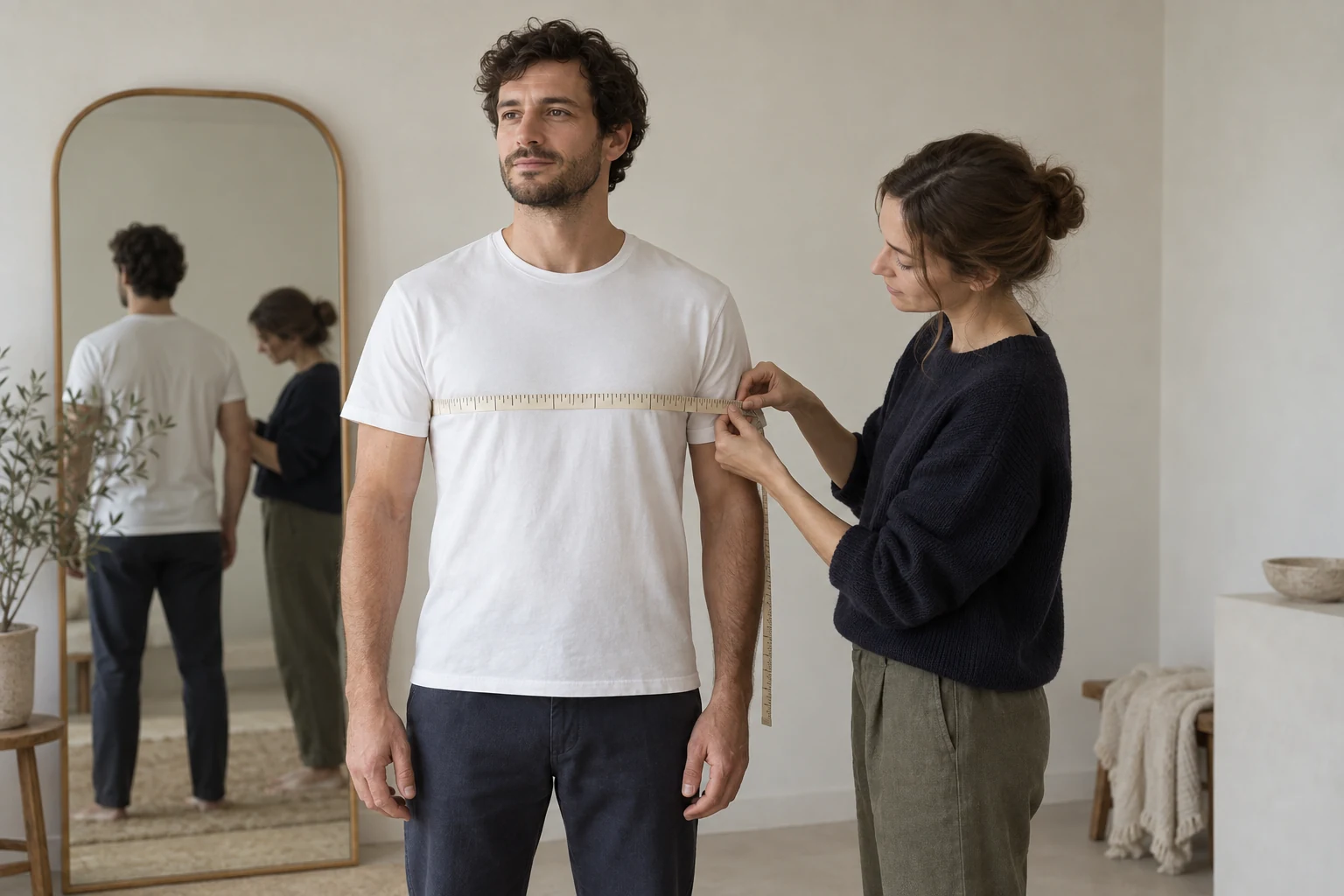
Use a soft, flexible tape measure of the kind sold for sewing, not a metal tape from a toolbox, which cannot follow the curve of your body. If you have no tape, a piece of string or a charging cable works: wrap it around, mark the point where it meets, then lay it along a ruler or a hard tape. Measure over bare skin or a thin T shirt, never over a sweater or a thick shirt, which can add an inch or more.
Women should wear the bra they normally wear with the kind of clothes they are buying, since a padded or minimizer bra changes the bust measurement. Stand in front of a mirror so you can see that the tape is level across your back, and ask someone to help if you can. Sewing pattern makers and clothing brands alike suggest a second pair of hands, because reaching behind your own back tends to tilt the tape and lift your shoulders.
How to measure chest size, step by step
The method is the same for men and women; only the name changes. Brands call it chest for men and bust for women, and both mean the circumference around the fullest part of the upper body.
Stand naturally
Stand straight but relaxed, feet together, arms hanging at your sides. Do not puff out your chest or pull your shoulders back; you want the size you are when you wear clothes, not the size you are when posing.
Place the tape under your arms
Raise your arms slightly, pass the tape around your back and bring it forward under your armpits, across the fullest part of your chest. For most men this is across the nipples or just above them; for women, across the fullest part of the bust. Then lower your arms so they rest at your sides.
Level the tape all the way round
Check in the mirror that the tape runs straight across your shoulder blades and parallel to the floor. A tape that dips at the back or rides up at the front gives a number that is too large.
Snug, not tight
The tape should lie flat against your body without pressing into it. You should be able to slip a finger under it, but it should not slide down. Breathe normally and read the number after a relaxed breath out.
Read and round
Read where the zero end meets the tape, in inches or centimeters. Round up to the nearest half inch or whole centimeter. Take it twice; if the two readings differ, measure a third time and use the one that repeats.
How to measure your chest size as a woman: bust, high bust and underbust
Women's size charts use three different upper body measurements, and it helps to know which is which. The bust, sometimes labeled full bust, is the measurement described above, around the fullest part of the breasts. The high bust, sometimes called upper chest, is taken directly under the arms, straight across the back and above the breasts. The underbust goes around the rib cage directly under the breasts, where a bra band sits.
Most clothing size charts use the full bust, and that is the number to use for dresses, blouses and knit tops. Sewing patterns are different: Simplicity drafts its misses patterns for a 2 inch difference between high bust and full bust, and tells sewers whose difference is larger than about 2.5 inches to choose a pattern by the high bust instead and adjust the bust afterward. The same reasoning helps with fitted jackets: if blazers that fit your bust are too big in the shoulders, your high bust may be the better guide, and a tailor can let out or take in from there. The underbust is mainly for bras, covered in our guide to measuring bra size.
| Measurement | Where the tape goes | Used for |
|---|---|---|
| Chest | Under the arms, across the fullest part of the chest | Men's tees, sweaters, casual shirts and jackets |
| Full bust | Around the fullest part of the breasts | Most women's size charts: dresses, blouses, knit tops |
| High bust | Under the arms, across the back, above the breasts | Sewing patterns and fitted jackets when the difference is large |
| Underbust | Around the rib cage just under the breasts | Mainly bras |
How to measure chest size for men's shirts and jackets
For men, the chest measurement drives the size of T shirts, sweaters, casual shirts and jackets. Lands' End, for instance, lists a small for chests around 34 to 36 inches, a medium for 38 to 40, a large for 42 to 44 and an extra large for 46 to 48. Other brands draw the lines differently, and slim fitting brands often run smaller, so compare your number with the brand's own chart rather than your usual letter.
Tailored jackets and suits are sized by the chest measurement in inches, so a man with a 40 inch chest usually starts with a 40 jacket, followed by a letter for length such as R for regular. The jacket itself measures larger than 40 inches around, because the maker adds room for a shirt and for movement; The Tie Bar's chart, for example, lists a 41 inch garment chest for its 40 regular jacket. Do not add that allowance yourself. Dress shirts are sized by neck and sleeve instead, explained in our guide to finding your dress shirt size, and our guide on how a suit should fit explains what to check once the jacket is on.
How to measure chest in clothing you already own
Many online size charts list garment measurements rather than body measurements, often as a chest or pit to pit figure. To compare, take a shirt or sweater that fits you well, button or zip it, and lay it flat and smooth on a table. Measure straight across from the seam under one armpit to the seam under the other, then double that number to get the full circumference. A shirt measuring 21 inches across, for example, is 42 inches around.
The difference between that garment figure and your body measurement is the ease, the room the maker built in. A close fitting knit may have almost none, a regular shirt several inches, and a relaxed overshirt or coat much more. A chart that says chest 24 inches is almost certainly describing a garment measured flat, 48 inches around, which would suit a body chest several inches smaller. Comparing garment to garment, your well fitting shirt against the chart, is the most reliable way to buy from a brand you do not know.
Read the chest size chart correctly
First check whether the chart shows body measurements or garment measurements; the heading or a note under the table usually says. Body charts give a range for each size, and if you fall between two, choose by the fit you want: the smaller for a trim fit in stretchy knits, the larger for woven shirts and jackets that need room to move. For women's dresses, the bust is one of three numbers, so check the waist and hips as well; our women's dress size guide explains how they work together.
Measure again every year or two, and whenever clothes start to feel different. Chest size changes with weight, training and age, and many people shop for years in a size that no longer matches the number they wrote down once.
Common mistakes
Measuring over clothes
A sweater or thick shirt adds an inch or more. Measure over bare skin or a thin layer.
Holding your breath
Filling your lungs or pushing your chest out can add several inches. Breathe normally and read the tape after breathing out.
Letting the tape droop at the back
A tape that slips down behind you reads too large. Use a mirror or a helper to keep it level.
Questions people ask
How do I measure my chest without a tape measure?
Wrap a piece of string, ribbon or a phone charging cable around your chest in the same position, mark or pinch where the end meets, and measure that length against a ruler or a hard tape. Keep it level and snug, exactly as you would a tape.
Is a 42 inch chest big?
For men, 42 inches is within the ordinary range and usually corresponds to a large in casual clothing and a size 42 jacket. For women, a 42 inch bust is typically around a size 16 in regular misses sizes, or a large, though brands vary.
What size is a 36 inch chest?
For men, a 36 inch chest is usually a small in casual clothing and a 36 jacket. For women, a 36 inch bust is often around a size 8, or a small to medium, on many American charts. Always confirm with the brand's own chart.
Is chest size the same as bra size?
No. A bra size combines the underbust measurement, which sets the band, with the difference between the bust and the band, which sets the cup. Your chest or bust measurement for clothing is a single circumference around the fullest part.
Sources and further reading
References used for this guide. Each opens the original page in a new tab.
Keep reading
Sizing
How to measure your waist and hips for clothes
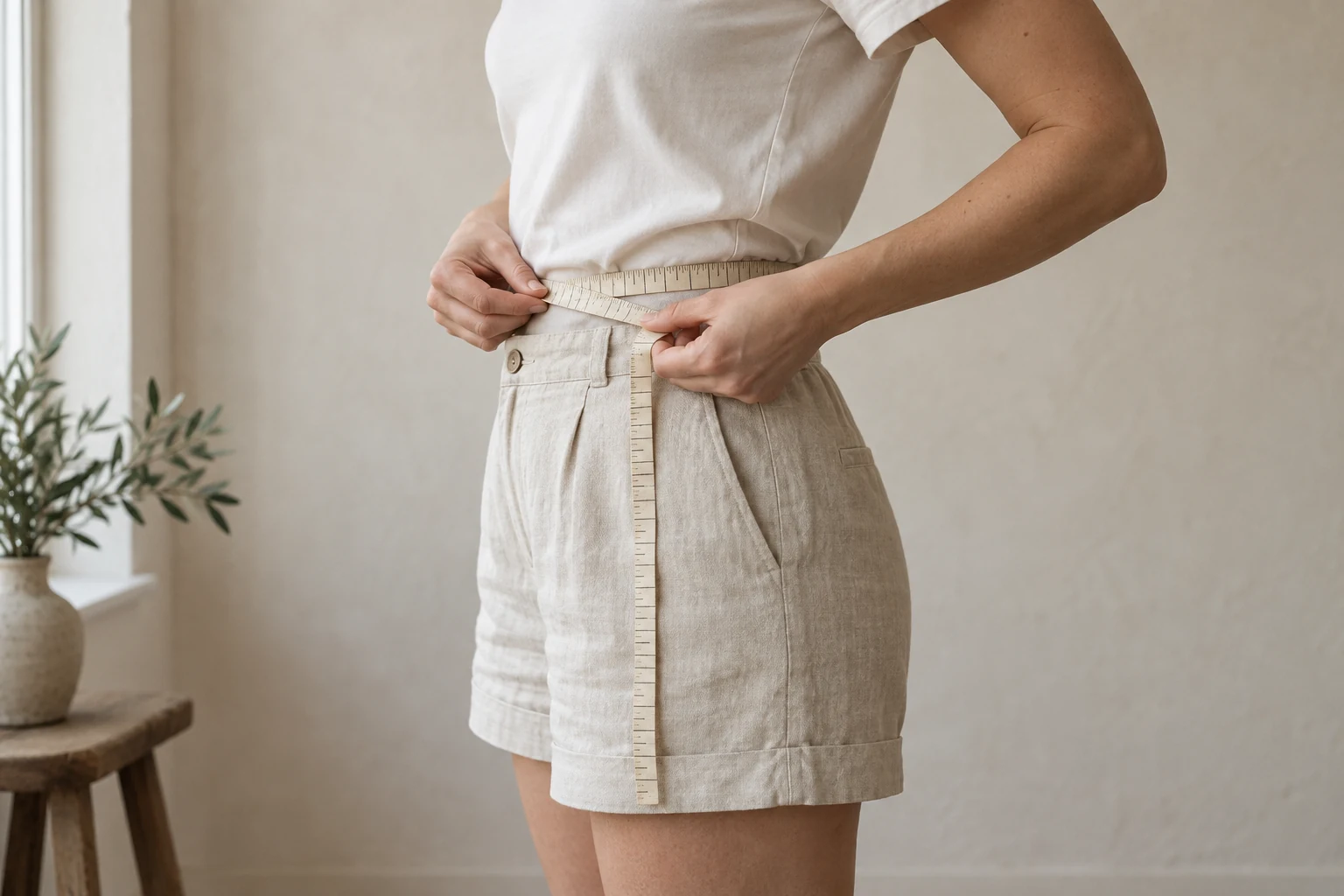
Where your waist really is, how to measure your waist and hips accurately, how pants and jeans sizing differs, and how to read a size chart before you order.
Suits and tailoring
How to find your dress shirt size: neck and sleeve
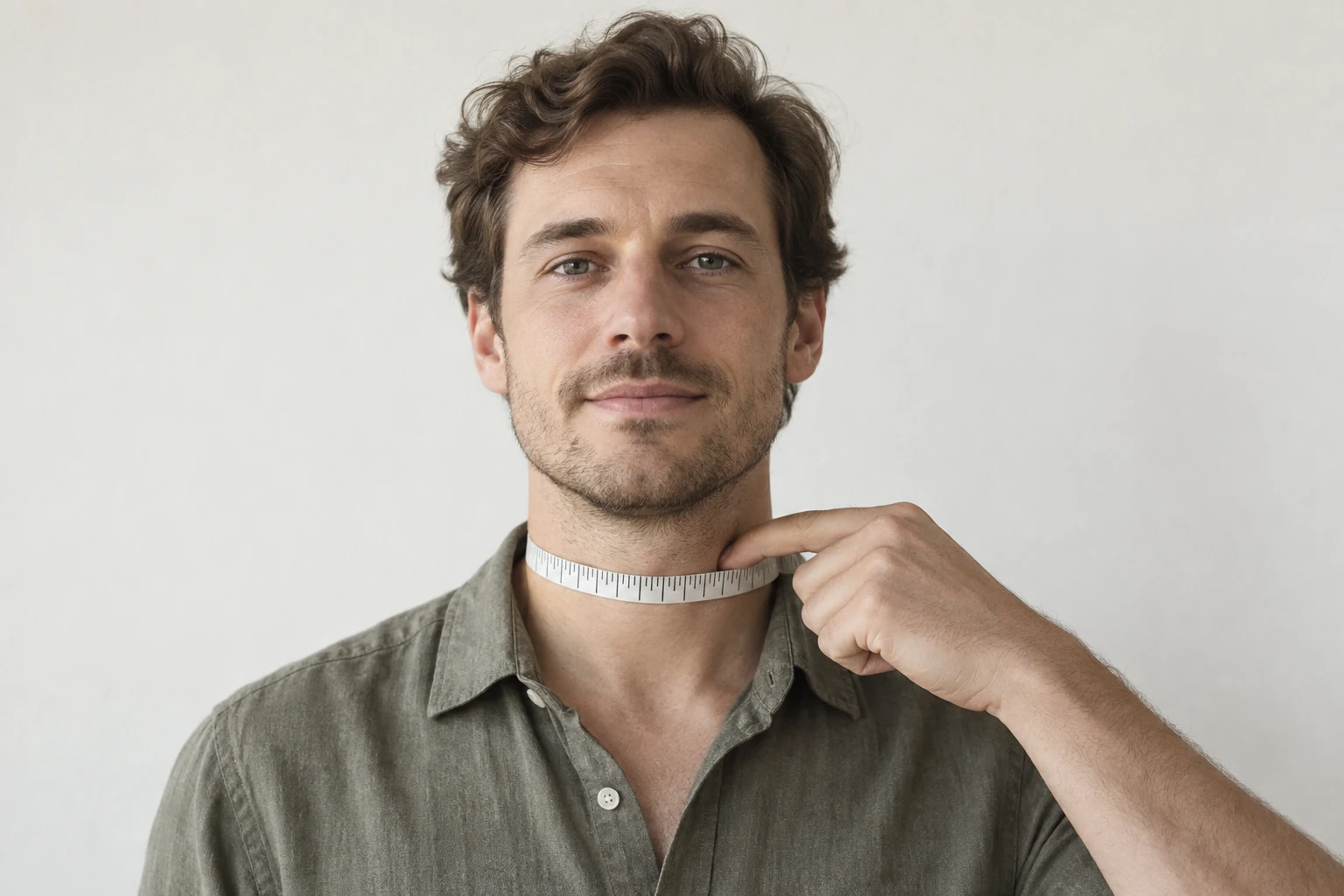
Read any dress shirt size chart with confidence: how to measure your neck and sleeve, what 15.5 34/35 means, how to check a collar, and slim vs classic fit.
Sizing
Women's dress size chart: US sizes and measurements
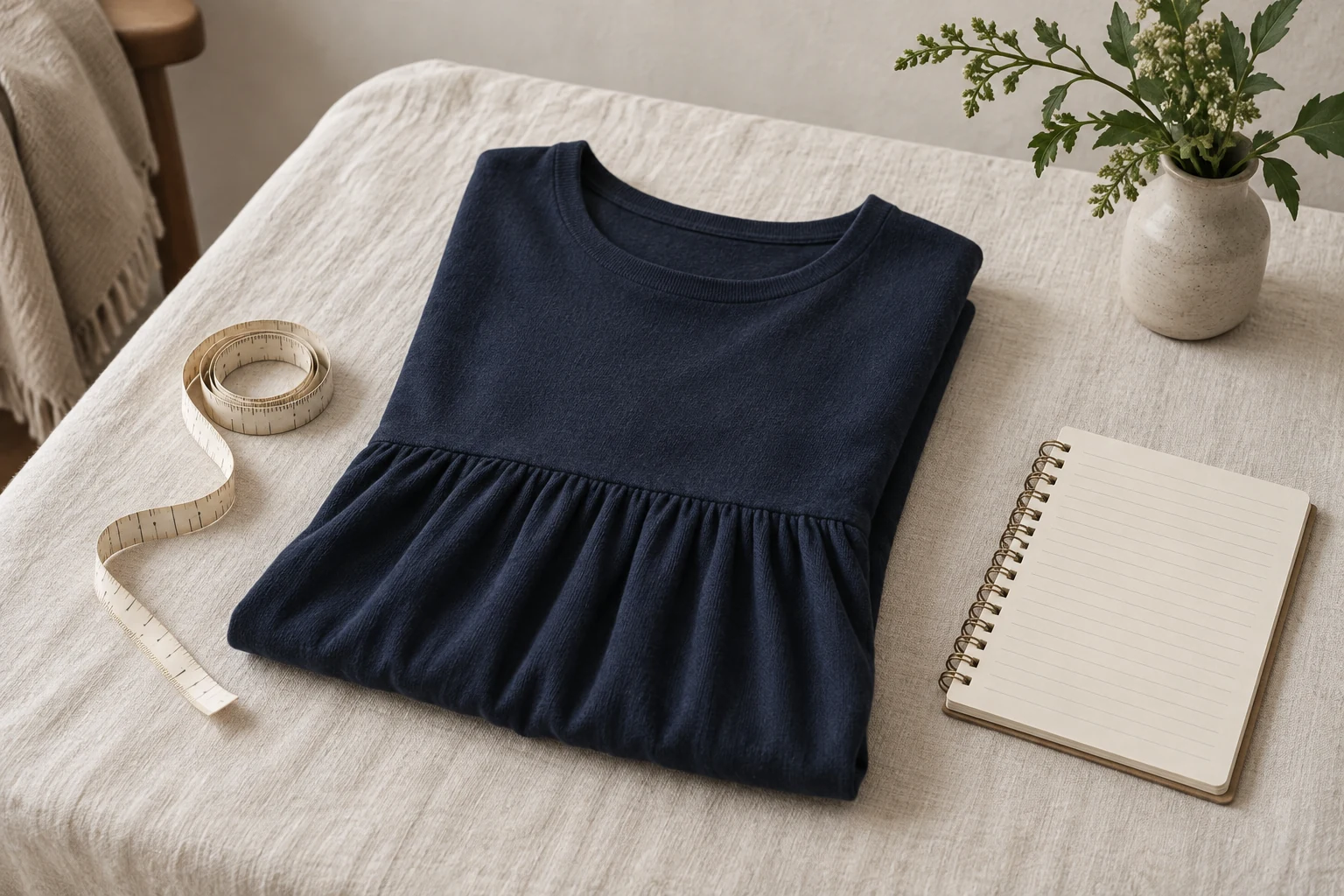
A women's dress size chart with US sizes 00 to 20 in inches and cm, how to measure yourself, letter and international sizes, and why brands never quite agree.
Sizing
How to measure bra size at home
Measure your band and bust with a soft tape, turn the numbers into a starting bra size, then use fit checks and sister sizes to find the one that really fits.
Suits and tailoring
How a suit should fit: shoulders, sleeves and length
How should a suit fit? Check the shoulders, collar, button, jacket length, sleeves and trousers in the mirror, and learn which problems a tailor can and cannot fix.