How to separate laundry by color, fabric and soil
In this guide
Three loads or one? With a full hamper, one machine and not much patience, it is tempting to throw it all in together. The honest answer is that sorting matters most for a few specific items and less than people think for the rest. Learning how to separate laundry properly protects whites from turning gray, keeps dark clothes dark and saves you from the red sock that turns everything pink.
Color is only the first cut. Fabric, weight and how dirty something is also change the piles, and each pile has a water temperature that suits it. If you are still learning the machine itself, start with our guide on how to do laundry, which covers loading and choosing a cycle.
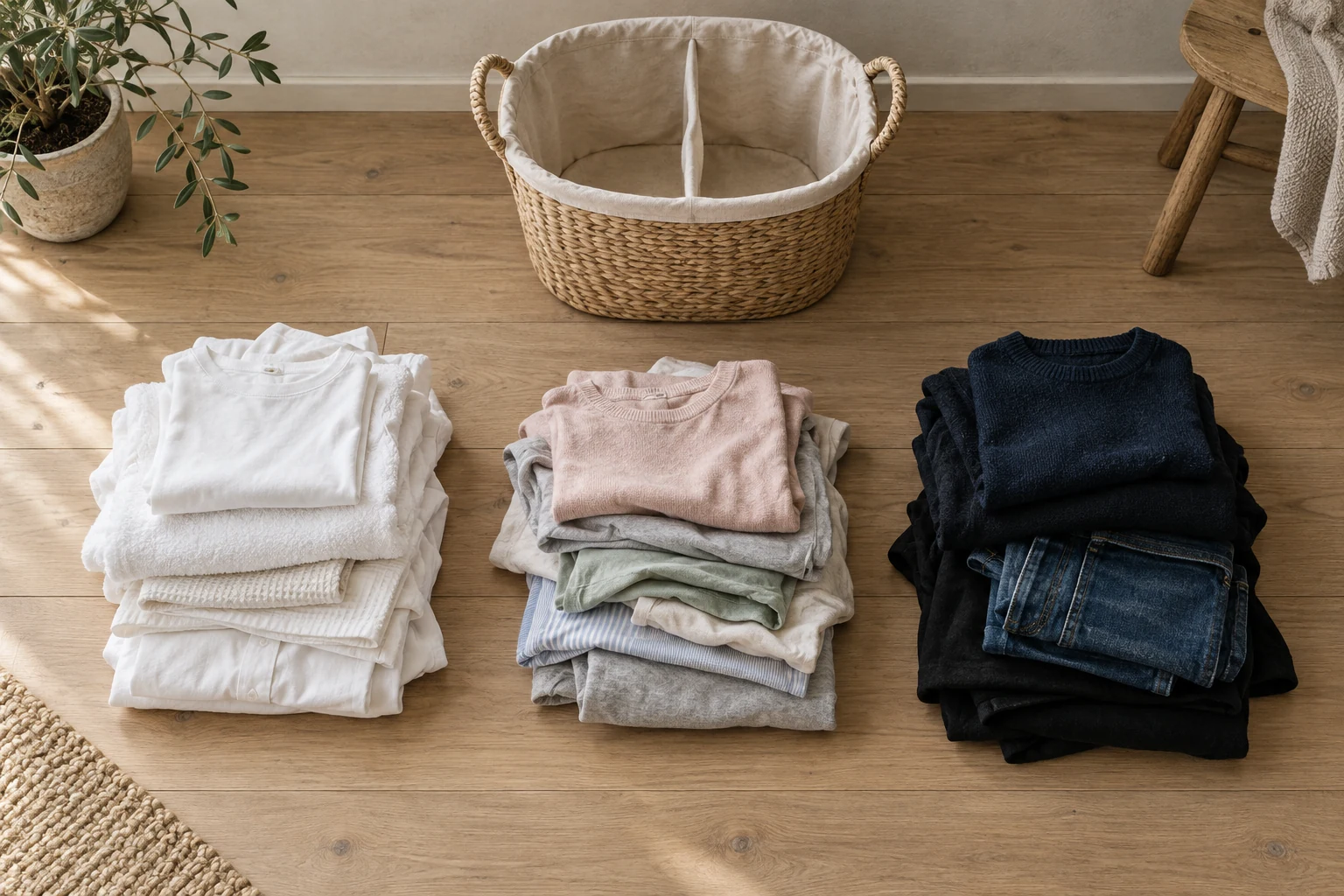
Why separating laundry still matters
Sorting prevents three problems. The first is dye transfer: some dyes, especially in new, dark and bright cotton, loosen in water and settle on lighter fabrics. The second is graying: whites washed repeatedly with colors slowly pick up a dull tint, and nylon and other synthetics are especially good at soaking up loose dye, which is why extension textile specialists single out white nylon as a color scavenger. The third is damage: heavy jeans and towels rub delicate fabrics, zippers snag knits, and lint from towels coats corduroy and fleece.
Sorting also lets each load get the right temperature, cycle and detergent. Kansas State University's extension laundering guide puts it simply: group items that need the same water temperature, agitation and spin speed. A sorted load of towels can be washed warm on a regular cycle, while dark clothes can go cold and gentle, and both come out better than they would have in one mixed load.
How to sort laundry, step by step
Sort on the floor or a bed where you can see everything at once, or into a laundry sorter as you go through the week, so the job is already done on wash day. The order below moves from the rules that matter most to the ones that only matter for certain loads.
Check the care labels
Pull out anything marked hand wash, dry clean or wash separately, and anything with a low temperature limit. Those items decide their own load, whatever their color. Our guide to reading care labels explains the symbols.
Separate by color
Make three main piles: whites (white T shirts, socks, underwear, sheets and towels), lights (pastels, light gray, cream, pale blue, light prints on white grounds) and darks (black, navy, dark gray, brown, dark green, burgundy, most denim). Put new bright or deep colors, especially reds and indigo jeans, in a fourth pile to wash on their own or with similar colors for the first few washes.
Pull out delicates
Lingerie, silk, fine knits, loosely woven fabrics and anything with lace or beading go into a delicates pile for a gentle cycle, ideally in mesh bags. Your colors can still be grouped roughly within this pile.
Split heavy from light
Towels, jeans, sweatshirts and bedding are heavy and abrasive. Wash them separately from light shirts and blouses so the lighter fabrics are not battered and so the heavy load dries evenly.
Separate lint givers from lint takers
Towels, chenille, flannel and fluffy new sweatshirts shed lint. Corduroy, velvet, fleece, dark synthetics and permanent press shirts catch it. Keep the two groups in different loads, or turn the lint takers inside out if you must combine them.
Set aside heavily soiled items
Muddy work clothes, sports kit and anything with a stain that needs pretreating should be washed apart from lightly worn clothes, so the dirt is not redeposited on everything else. Treat stains first, before they go through a dryer.
Which colors can be washed together
Colors are grouped by how much dye they might release and how much they might absorb. Whites can go with other whites and with white items that have small, colorfast prints. If you are wondering what colors you can wash with white, the practical answer is very pale pastels and cream that you have already washed several times without bleeding. Anything medium or dark will slowly dull whites, even if you never see a single stain.
Lights and brights can often share a load once the brights are old and stable: pastel shirts with medium blues, pinks and yellows, washed cold. Darks go together: black, navy, charcoal, brown and dark green, plus jeans that have been washed a few times. Reds, deep purples and new indigo denim are the usual troublemakers, so keep them out of light loads until you know they are stable. To test a new garment, wet a hidden spot and press a white cloth or paper towel against it; if color comes off, wash it alone or with the same color. If a load does come out tinted, rewash it before drying; our guide to removing dye transfer covers the rest.
What temperature to wash each load
Temperature is one of the reasons sorting works. For colored clothes, cold water is the safe default, because warm and hot water release more loose dye; cold keeps darks and brights from fading and suits most everyday loads with modern detergents. The University of Kentucky's extension laundry guide recommends hot for whites, warm for normal items and cold for bright or dark colors on a regular cycle, with hot or warm for heavily soiled loads.
Whites, towels, sheets and underwear can go warm or hot when the care label allows, which helps with body oils, odor and graying. Delicates and wool go cool or cold on a gentle cycle whatever their color. When a label and a general rule disagree, the label wins. For keeping whites bright over time, see our guide on how to wash white clothes, and for heavy cotton loads, our guide to washing towels.
| Load | What goes in | Water |
|---|---|---|
| Whites | White tees, socks, underwear, sheets and towels | Warm or hot if the label allows |
| Lights | Pastels, light gray, cream, pale blue | Cold |
| Darks | Black, navy, charcoal, brown, most denim | Cold |
| New brights and reds | Reds, deep purples, new indigo jeans | Cold, alone or with the same color |
| Delicates | Lingerie, silk, fine knits, lace | Cool or cold, gentle cycle, mesh bags |
| Heavy items | Towels, jeans, sweatshirts, bedding | Apart from light shirts, at the temperature their color needs |
When a care label and a general rule disagree, the label wins.
When it is fine to skip sorting
Sorting is not an all or nothing rule. If most of your clothes are older, well washed and medium colored, a single cold wash on a normal cycle is often fine, and many people wash that way every week. The risk comes from specific items: new darks and reds, white cotton and nylon that you want to stay bright, delicate fabrics, and towels that shed. Pull just those out and you get most of the benefit of full sorting with far less effort.
In a shared or college laundry room, where each load costs money, two loads usually do the job: a cold load of darks and colors, and a warm load of whites, towels and sheets. Put delicates in a mesh bag with the cold load. Dye catching sheets can reduce the risk of transfer in a mixed load, but they do not guarantee it, so do not trust them with a new red shirt and a white one in the same drum.
Make sorting easy every week
The easiest way to sort is to do it when you take clothes off, not on wash day. A laundry sorting hamper with two or three bags, labeled or simply lined in different colors, turns the whole job into dropping each item in the right place. A laundry sorter on wheels works well in a laundry room or closet, while a narrow hamper with a lid and a removable divided bag suits a small bedroom.
As you drop items in, empty pockets, close zippers and hooks so they do not snag, and turn dark jeans, printed shirts and knitwear inside out. Check pockets for tissues and pens, which cause more lint and ink disasters than any color mix. Our guide to washing jeans explains why dark denim benefits most from being washed inside out.
Common mistakes
Washing a new red or indigo item with lights
New deep colors release the most dye in their first washes. Wash them alone or with the same color until the rinse water runs clear.
Adding a single white item to a dark load
One white T shirt in a dark load will come out gray and stays that way. Wait for the next white load instead.
Overloading the drum to save a cycle
Clothes need room to move for detergent and rinse water to reach them. An overstuffed drum cleans poorly, traps lint and increases wear; judge load size by bulk, not weight.
Questions people ask
Is separating laundry really necessary?
Not for every item every time, but it is worth doing for whites, new darks and brights, delicates and towels. Those are the items most likely to fade, gray, shed lint or get damaged in a mixed load. Older, colorfast everyday clothes can usually share a cold wash.
Can I wash jeans with other clothes?
Yes, with other dark clothes and in cold water, once the jeans have been washed a few times. New raw or dark indigo denim can bleed a lot, so wash it alone or with other dark denim at first, inside out. Keep jeans away from delicates, since the heavy fabric and metal hardware can damage them.
Can I wash gray clothes with whites?
Light heather gray can often go with whites once it has been washed a few times, since it usually releases little dye. Dark charcoal belongs with darks. If you want the whites to stay as bright as possible, keep all gray out of the white load.
Should towels be washed separately?
Ideally, yes. Towels are heavy, shed lint and benefit from warmer water, so they wash better on their own or with sheets. Washing them with clothes leaves lint on synthetics and dark fabrics and can make the load dry unevenly.
Sources and further reading
References used for this guide. Each opens the original page in a new tab.
- Kansas State University Research and Extension: Laundering guide (MF1014), on sorting by color, fabric, lint and soil Opens in a new tab
- University of Kentucky Cooperative Extension: Tackling your laundry, on sorting and wash temperatures Opens in a new tab
- Maytag: Preventing excessive lint on a washer load, on lint givers, lint takers and load size Opens in a new tab
Keep reading
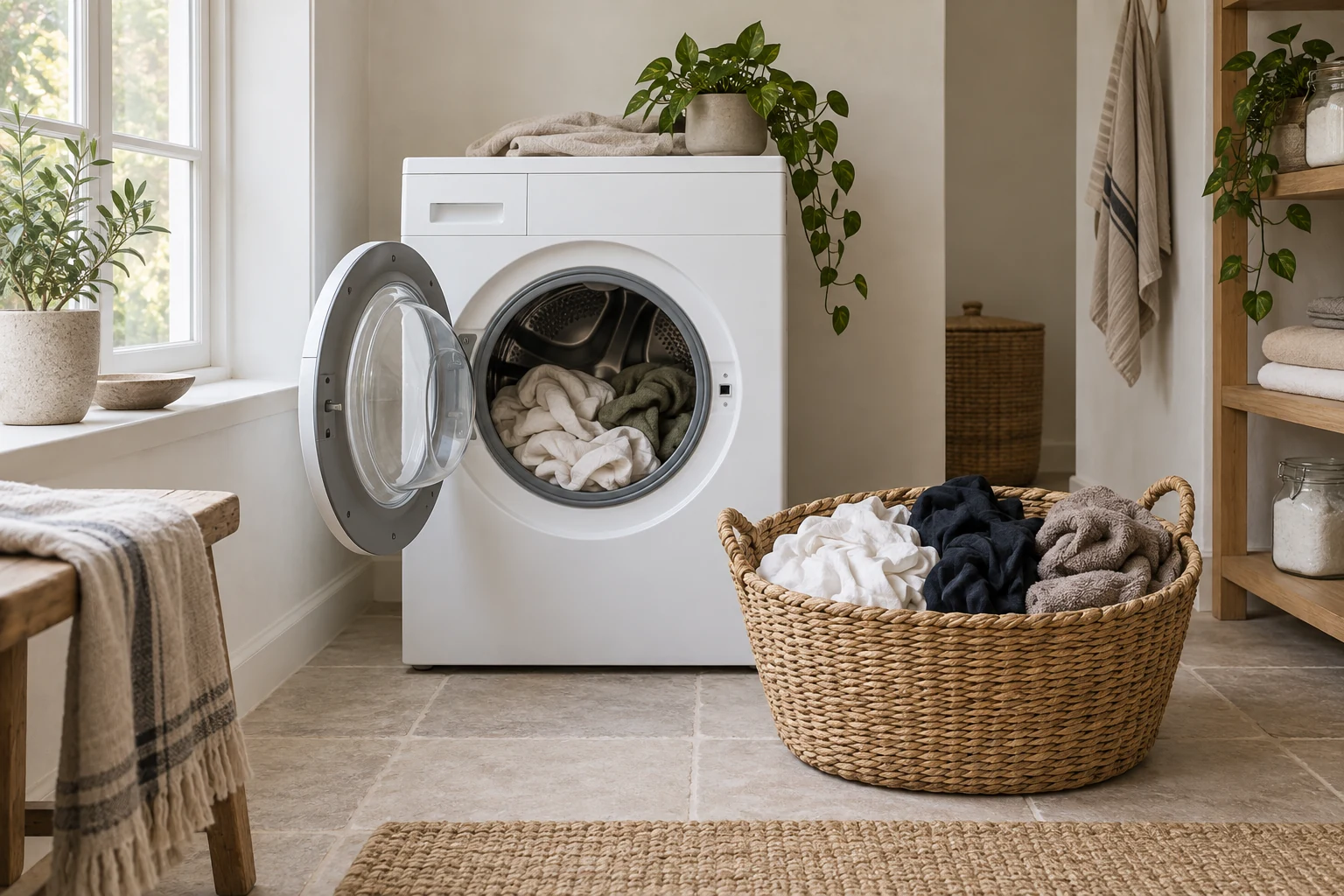
Washing and ironing
How to do laundry: a complete beginner's guide
How to do laundry from start to finish: reading labels, sorting, choosing the cycle and water temperature, measuring detergent, loading the washer and drying.
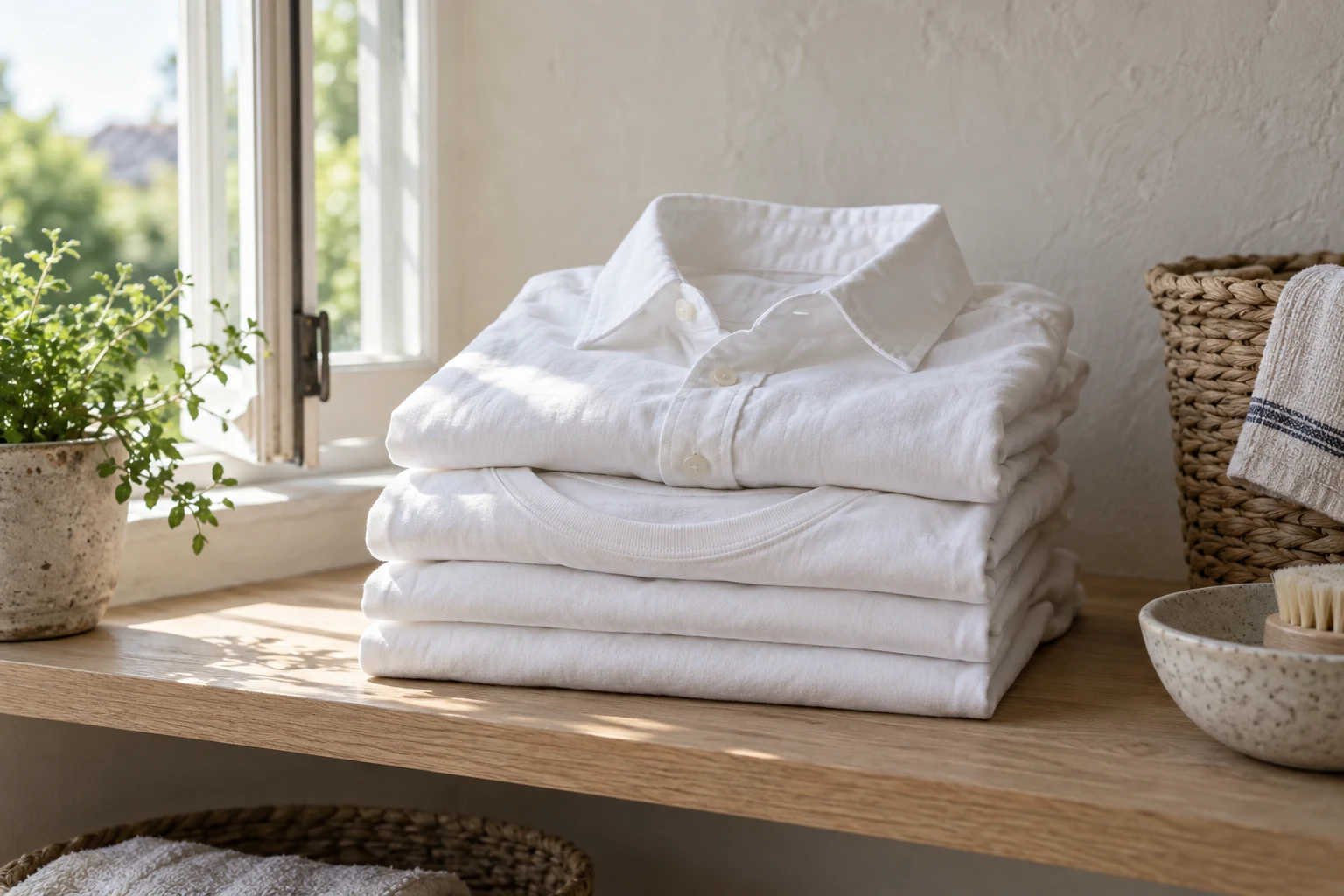
Washing and ironing
How to wash white clothes and keep them white
How to wash white clothes: sort them, pick the right water temperature and detergent dose, use oxygen or chlorine bleach safely, and rescue whites that yellowed.
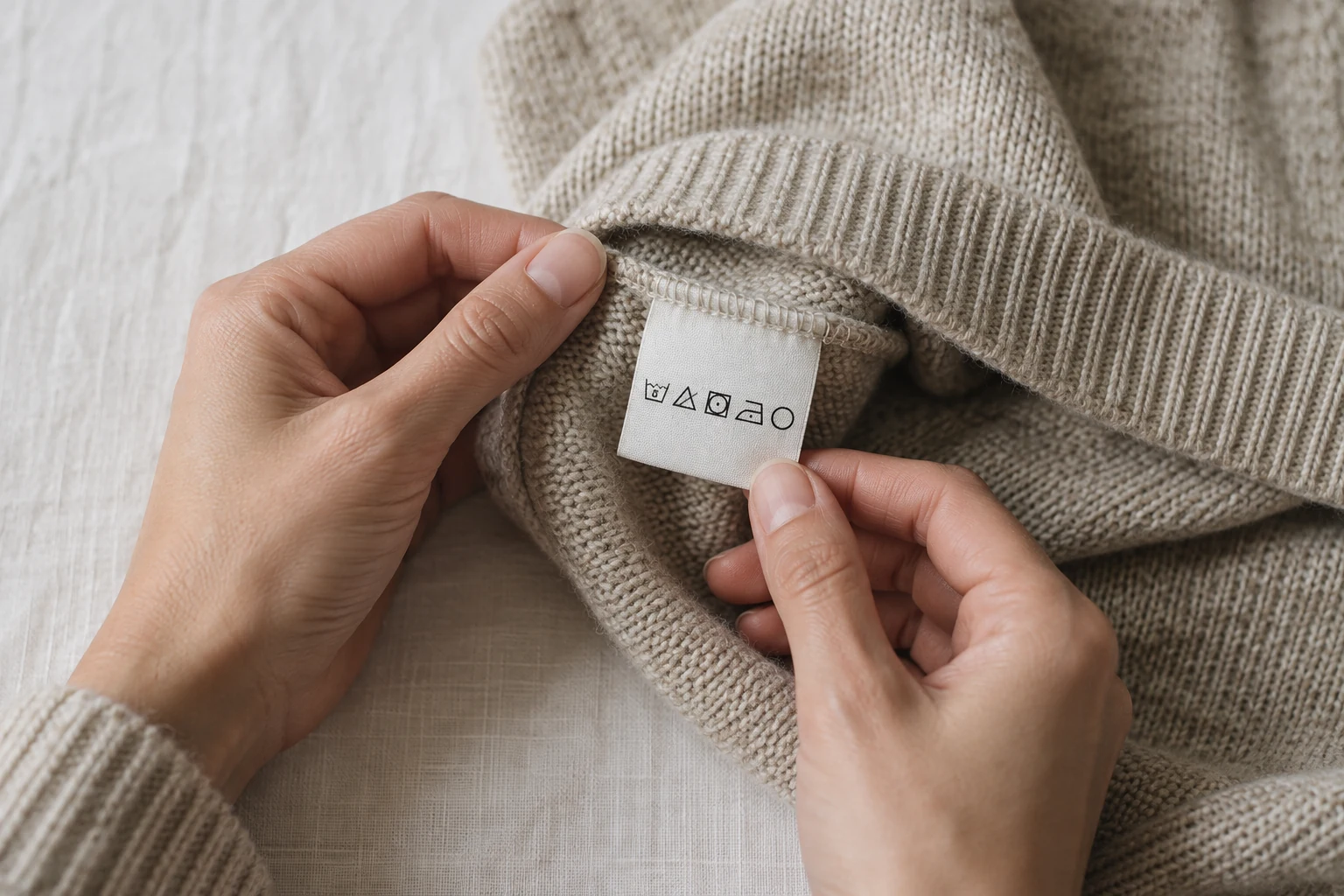
Washing and ironing
Laundry symbols explained: how to read a care label
What laundry symbols mean, in plain words: the wash tub, triangle, square, iron and circle, plus the dots, bars and crosses that change each instruction.
Stain removal
How to fix dye transfer: color run remover and other fixes
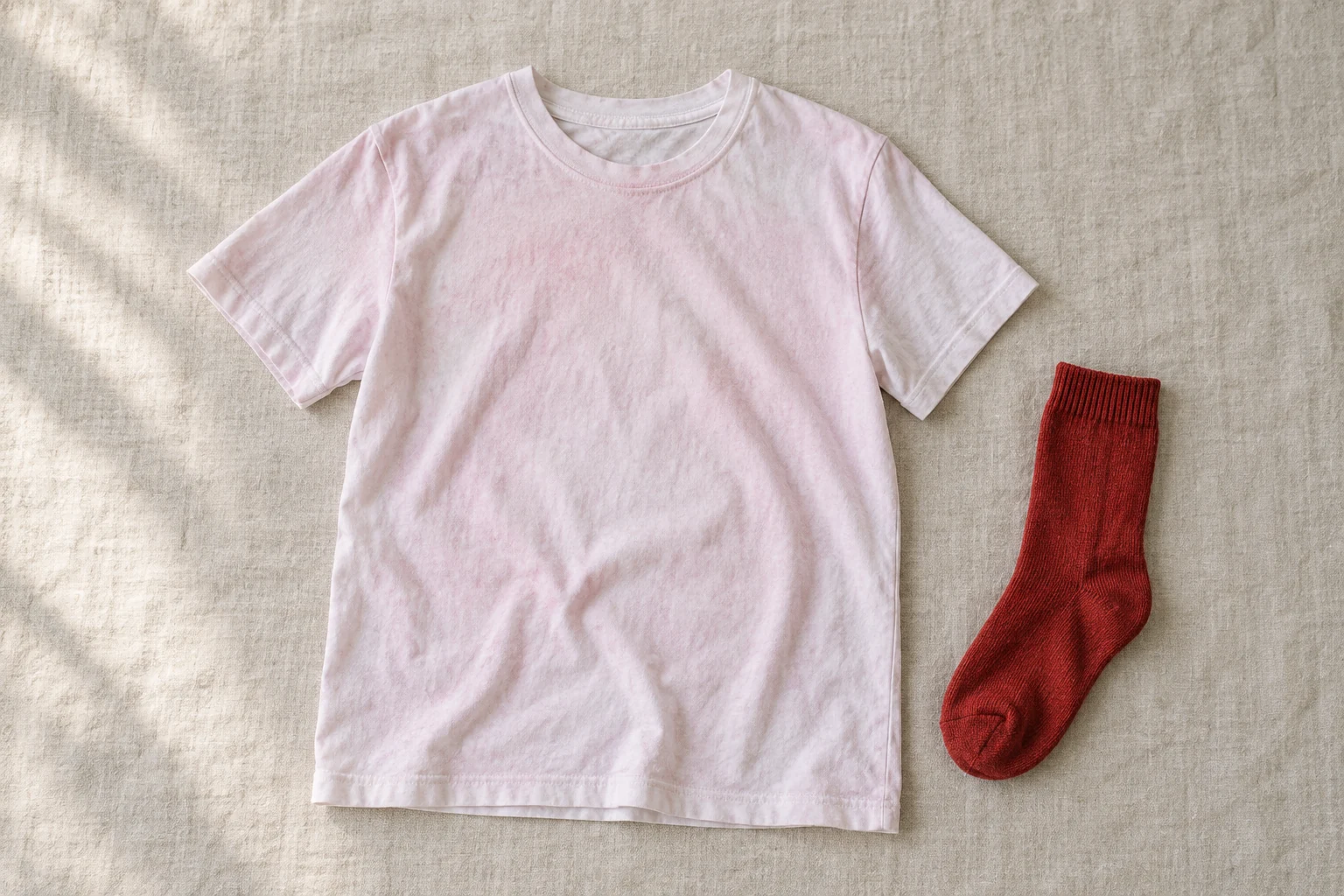
Red sock turned the load pink? How to fix dye transfer on white and colored clothes: rewashing, oxygen bleach soaks, color run remover, and what to do after drying.
Washing and ironing
How to wash towels so they stay soft
How to wash towels in a washing machine: the right temperature, less detergent, no softener, when vinegar helps, and how to fix towels that smell or feel stiff.