Oxford cloth: why the oxford shirt works everywhere
In this guide
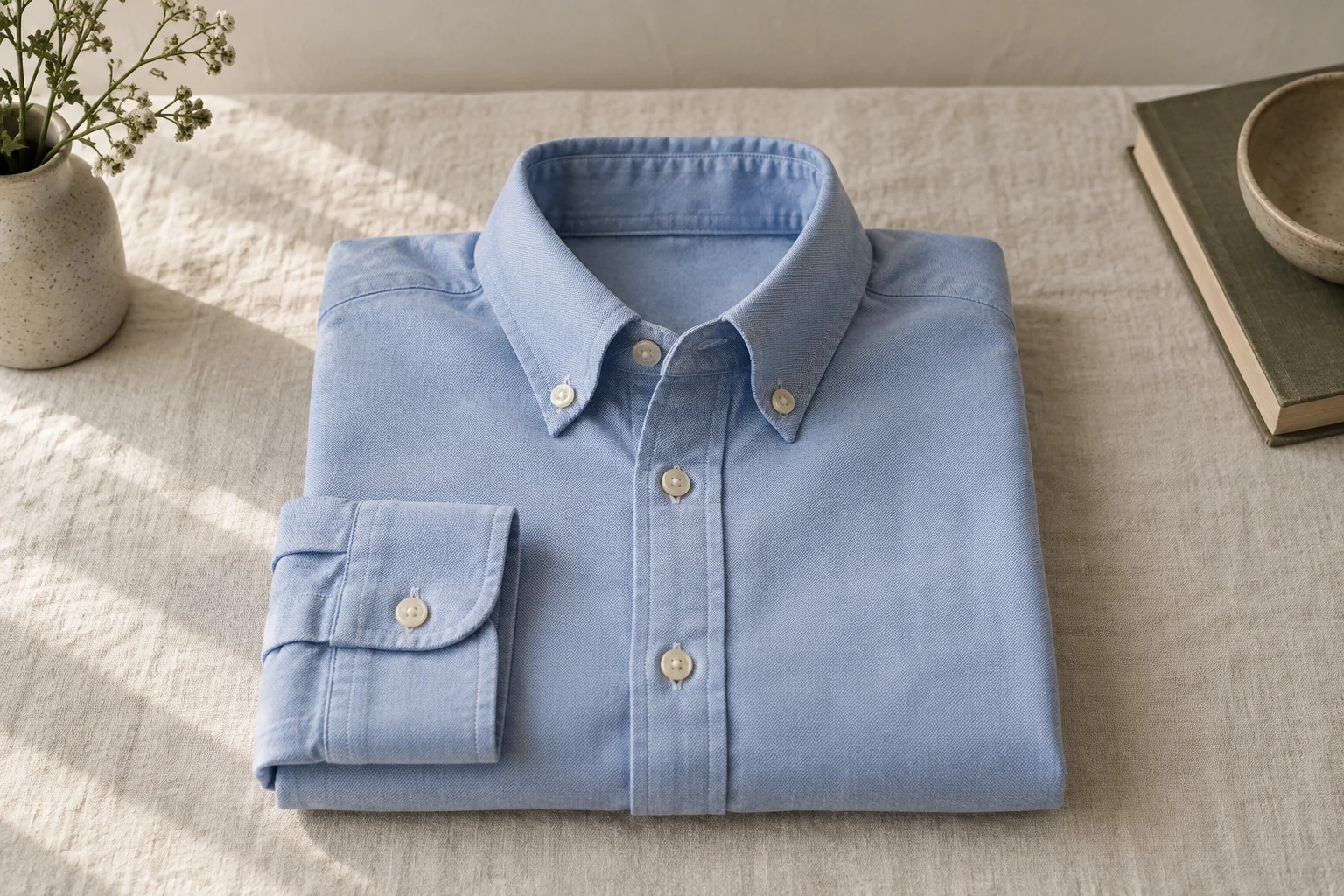
The office on Monday, dinner on Friday, a barbecue on Sunday: the one shirt that handles all three is very often an oxford cloth shirt. It is the button down collar shirt in white or pale blue that has been a fixture of American closets for more than a century, and it looks right in more settings than almost any other shirt. The reason is the cloth itself: sturdy enough for casual wear, neat enough to wear with a tie.
This guide explains what oxford cloth is, how to recognize it, how it differs from pinpoint and royal oxford and from a true dress shirt, how to wear it, and how to keep it looking good for years.
What oxford cloth is
Oxford is a woven cotton or cotton blend fabric in a basketweave, a variation of the plain weave. Instead of single threads crossing single threads, two fine warp yarns, the ones running the length of the cloth, are grouped and crossed by a single thicker weft yarn. That uneven pairing makes a slightly open, pebbly texture that you can see if you look closely at the shirt front.
Colored oxford shirts are usually woven with a dyed warp and a white weft, so a blue oxford is really blue and white threads interlaced, which gives it a soft, heathered look rather than a flat color. The cloth is heavier and a little looser than poplin, the smooth fabric of most business shirts. It wrinkles, but softly, and it gets softer with every wash, which is part of why people keep oxford shirts for a decade.
Oxford vs pinpoint vs royal oxford
Plain oxford, the classic oxford cloth fabric, uses relatively thick yarns and a visible basket texture. It is the most casual and the most durable of the family. Pinpoint oxford uses finer yarns and a tighter weave, so the surface looks smoother and shows only tiny points of texture; it sits between oxford and a business shirt and works well for daily office wear with or without a tie.
Royal oxford is a different animal despite the name: a fine, lustrous shirting with a more pronounced woven pattern that reads as dressy and is used for business and formal shirts. If you are shopping for one shirt to wear everywhere, choose plain oxford. If you want an oxford shirt that can sit under a suit at a conservative office, pinpoint is the safer bet.
Oxford shirt vs dress shirt
Strictly speaking, a dress shirt is one made to be worn with a suit and tie, usually in a smooth, fine cotton such as poplin, twill or pinpoint, with a point or spread collar and often barrel or French cuffs. An oxford cloth button down is a sport shirt in origin, with a textured cloth and a collar designed for comfort. It can be worn with a tie, and in many American offices it is, but it will always read slightly more relaxed.
In practice that means an oxford is ideal for business casual and smart casual dress codes, fine under a sport coat or with a knit tie, and acceptable under a suit in all but the most formal settings. For a black tie event, a wedding where you are in the party, or a formal interview in a conservative field, a smooth dress shirt looks sharper. If you are buying one, get your measurements right with our guide to finding your shirt size.
| Cloth | Texture | Best for |
|---|---|---|
| Plain oxford | Thick yarns, visible basket texture | Casual to business casual; most durable |
| Pinpoint oxford | Finer yarns, tighter and smoother | Daily office wear, with or without a tie |
| Royal oxford | Fine and lustrous with a woven pattern | Business and formal shirts |
| Poplin dress shirt | Smooth and fine | Suits, ties and formal occasions |
How to wear an oxford cloth shirt
White and light blue are the two to own first; they go with every trouser color and every tie. After those, pink, university stripes and ecru add variety without losing versatility. For the office, tuck it into gray or navy trousers or chinos, add a navy blazer and loafers or derbies, and a tie if you like. For weekends, wear it untucked or loosely tucked with jeans, sleeves rolled twice, over a T shirt if the evening turns cool.
The fit should be neat but not tight: the collar should close without pinching, the shoulder seam should sit at your shoulder bone, and the body should allow a little room since the cloth has no stretch. An oxford is also the natural base layer under a crew neck sweater, a classic preppy combination where just the collar and cuffs show. Women wear oxford shirts too, often slightly oversized with trousers or a skirt, and the same care rules apply.
Is oxford cloth too hot for summer?
Oxford is not the coolest shirting. Its thicker weft and basket construction make it heavier than poplin, and in heavy humidity it holds moisture against you for longer. It does breathe reasonably well because the weave is a little open, so on a dry warm day with sleeves rolled it is fine. On hot, humid days, a lightweight oxford, a chambray, a seersucker or a linen shirt will be more comfortable.
Compared with polyester, cotton oxford is generally more comfortable in warmth because cotton absorbs moisture and feels less clammy against skin, though pure polyester dries faster. Blends with a little polyester wrinkle less and dry faster at some cost to softness. Our comparison of polyester and cotton explains that trade in more depth.
Caring for an oxford shirt
Cotton oxford is easy to launder at home. Unbutton the collar points and cuffs, wash with similar colors on a normal cycle, and either tumble dry on low and remove it promptly or hang it to dry on a hanger. Many oxford shirts carry a wrinkle release finish that lets them go straight from dryer to wearer after a shake. Unbuttoning the collar before washing prevents stress on the buttonholes and helps the roll come back.
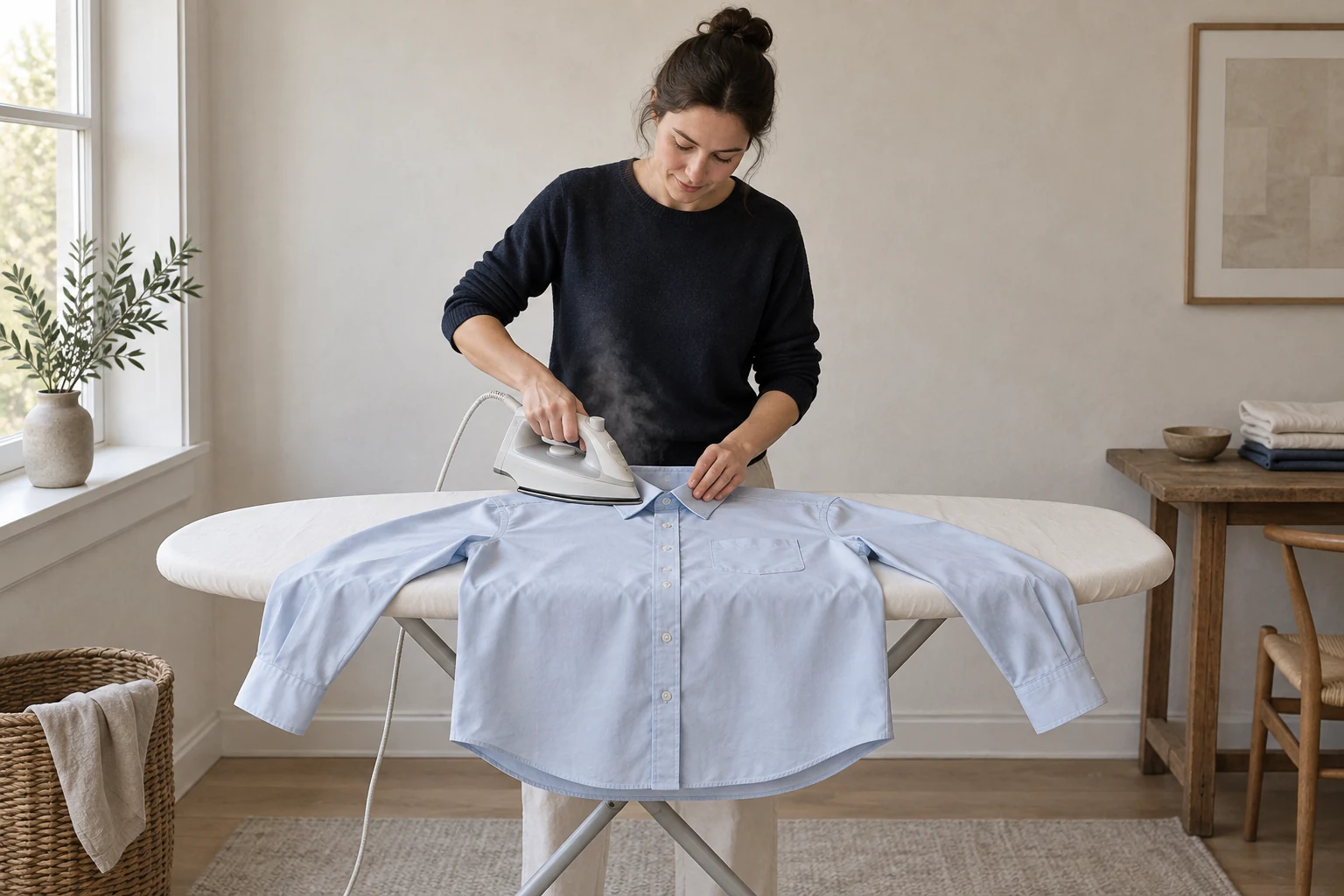
Ironing is optional for a casual look; a slightly rumpled oxford looks natural. For the office, iron it while slightly damp, collar first, and do not press the button down collar flat, which kills the roll. Our guide to ironing a shirt gives the order. A frayed collar edge after years of wear is normal and, for many people, part of the appeal.
Questions people ask
Is oxford cloth good quality?
Oxford is a sturdy, durable cotton cloth, and a well made oxford shirt can last for years. Quality depends on the cotton, the yarn, the weave density and the construction, so look for a soft but substantial hand, even texture, neat stitching and a collar with a generous roll.
Is oxford fabric waterproof?
Cotton oxford shirting is not waterproof. The oxford fabric used for bags and outdoor gear, often labeled with a number such as 420D or 600D, is a different product: a synthetic basketweave of nylon or polyester, usually coated to repel water. The D stands for denier, a measure of yarn weight, so a higher number means a thicker, tougher yarn.
Can you wear an oxford shirt with a suit?
Yes, in most business settings, especially with a textured suit or a knit or wool tie. It looks more relaxed than a smooth dress shirt. For formal events or conservative offices, choose a pinpoint or poplin shirt with a point or spread collar instead.
What does OCBD stand for?
OCBD stands for oxford cloth button down, the classic shirt with a button down collar in oxford cloth. The abbreviation is common among menswear enthusiasts and in store listings.
Sources and further reading
References used for this guide. Each opens the original page in a new tab.
Keep reading
Suits and tailoring
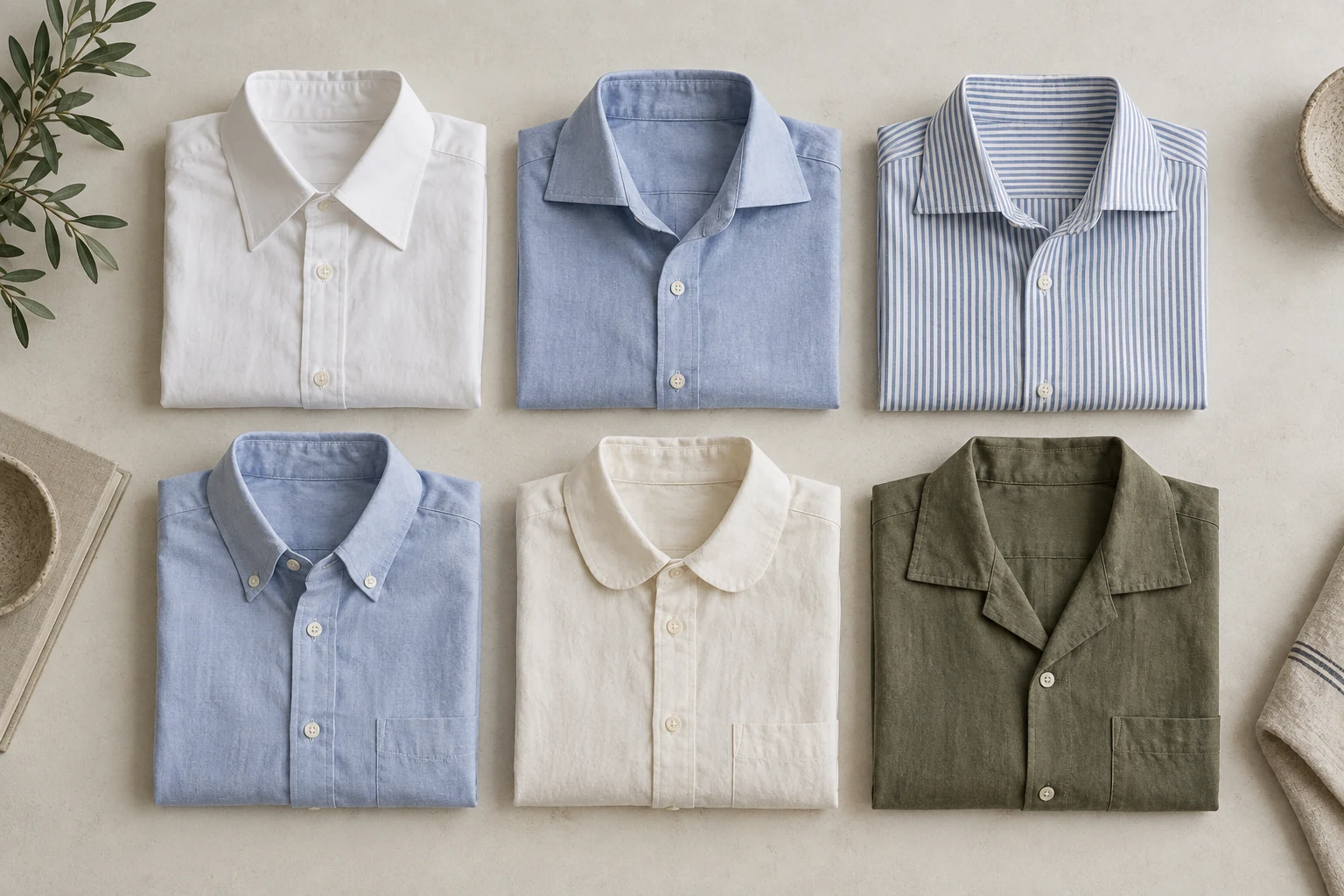
Types of collars: shirt collars and when to wear each
A guide to the types of collars on shirts: point, spread, cutaway, button down, club, wing, camp and band, plus T shirt necks and collars on dresses.
Styles
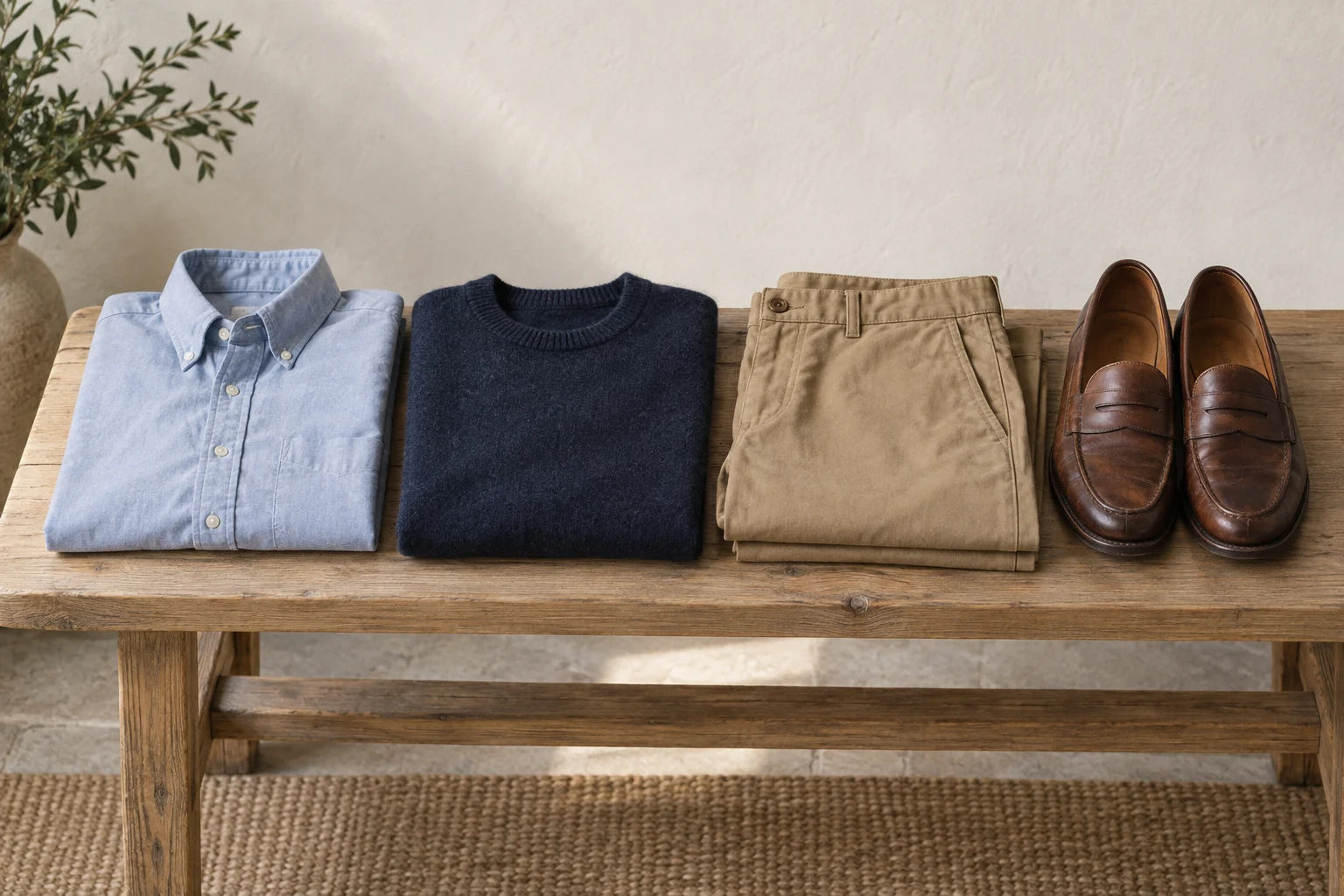
Preppy style: what it is and how to wear it now
What preppy style means, where it came from, the core pieces for men and women, and how to wear modern preppy outfits without looking like a costume.

Suits and tailoring
How to find your dress shirt size: neck and sleeve
Read any dress shirt size chart with confidence: how to measure your neck and sleeve, what 15.5 34/35 means, how to check a collar, and slim vs classic fit.
Fabrics
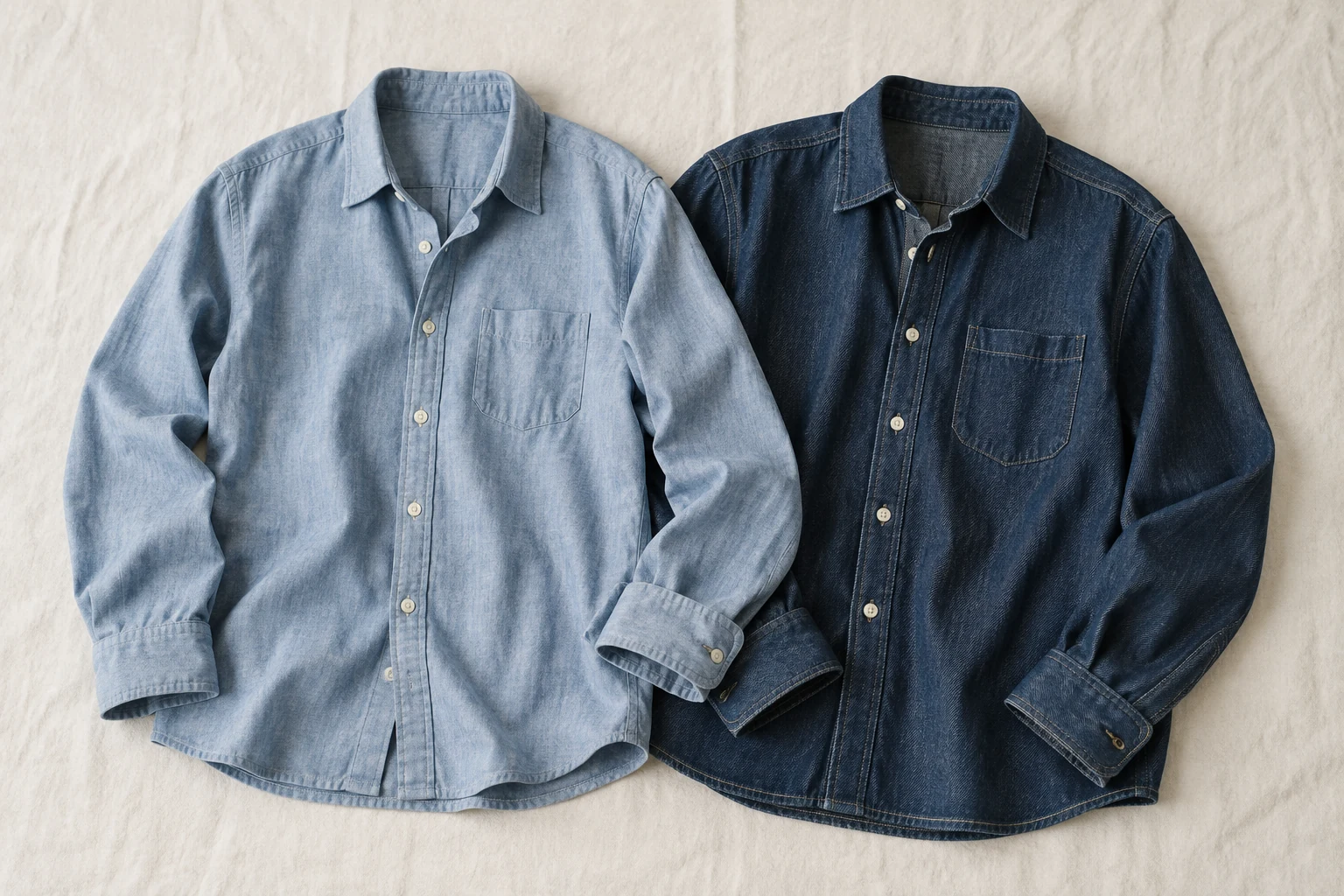
Chambray: what it is and how it differs from denim
Chambray explained: how this light plain weave differs from denim, what the chambray color is, how to wear a chambray shirt or dress, and how to care for it.
Washing and ironing
How to iron a shirt in the right order
How to iron a shirt the way shirtmakers do: set the heat for the fabric, start slightly damp, then work collar, cuffs, sleeves, yoke, back and front in order.