What to wear for jury duty
In this guide
A jury summons tends to arrive with a date, a reporting time and a building address, and very little about clothes. The morning itself is often a long wait in an assembly room, a walk through security and, if your name is called, hours of sitting in a courtroom where people are deciding something that matters a great deal to someone. What to wear for jury duty has to do two jobs: show respect for that setting and keep you comfortable through a long day.
The short version is office clothes on the relaxed side. This guide covers what courts actually say, outfit ideas for men and women, the questions about jeans and sneakers, and what to bring for the wait.
The jury duty dress code courts set
There is no national dress code for jurors. Each court sets its own, and the guidance usually appears on the summons or the court's juror web page. Read it before you go, because the details differ. The federal court for the Central District of California strongly suggests business attire, says ties are optional and rules out shorts, miniskirts, tank tops, flip flops and hats except for religious reasons. Maryland's state courts ask for clean, neat, comfortable and not revealing clothing you might wear to an office job, and exclude uniforms, graphic T shirts, beachwear and shorts. The federal court for the Northern District of Iowa asks jurors to avoid jeans, T shirts and sweatshirts.
Courts do enforce these rules. Central California says jurors who are not appropriately dressed will be sent home and ordered to come back on a later date, and Maryland warns that unsuitable clothing can extend your term of service. Dress so there is no question at the door, then make that outfit as comfortable as possible.
What to wear for jury duty: men
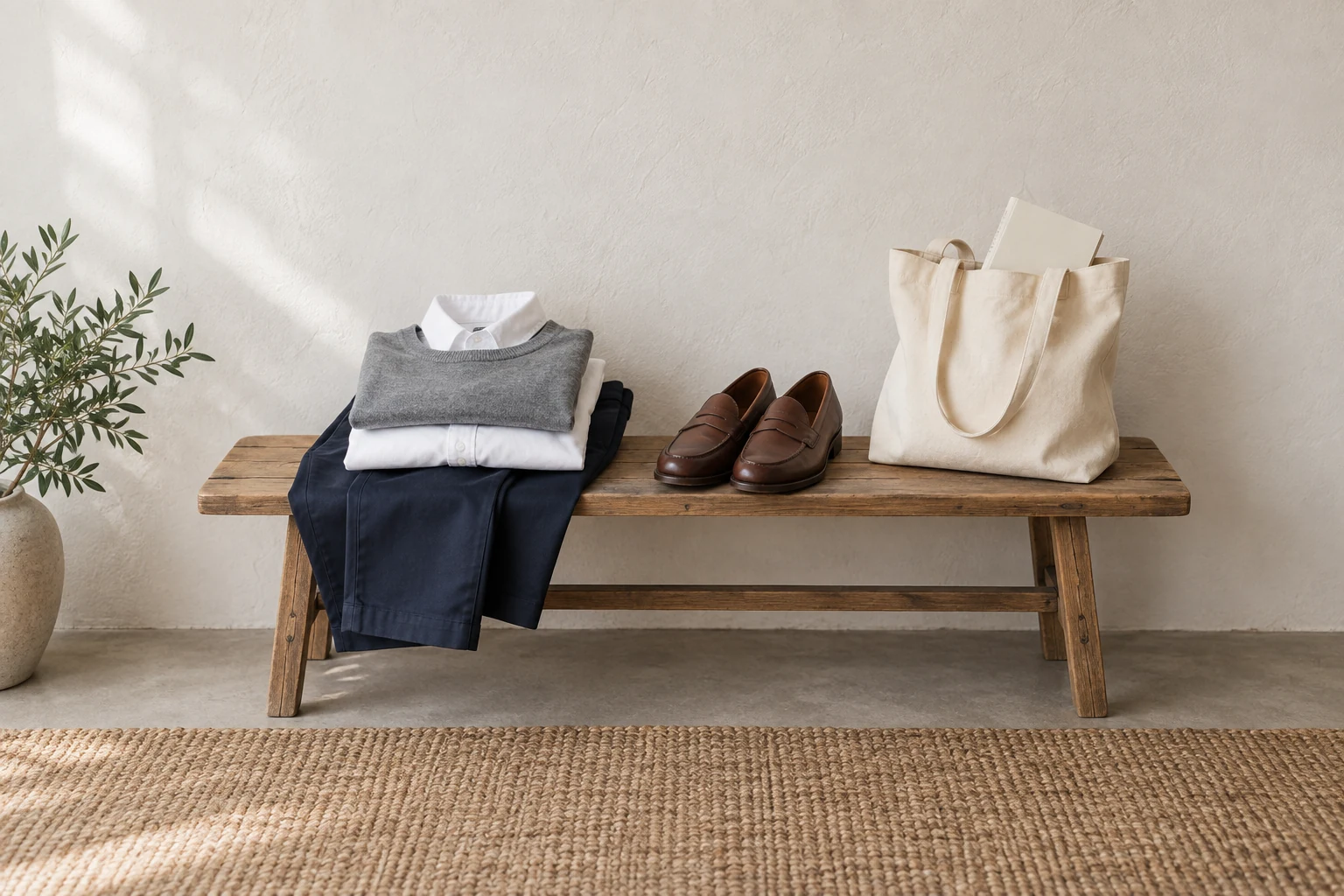
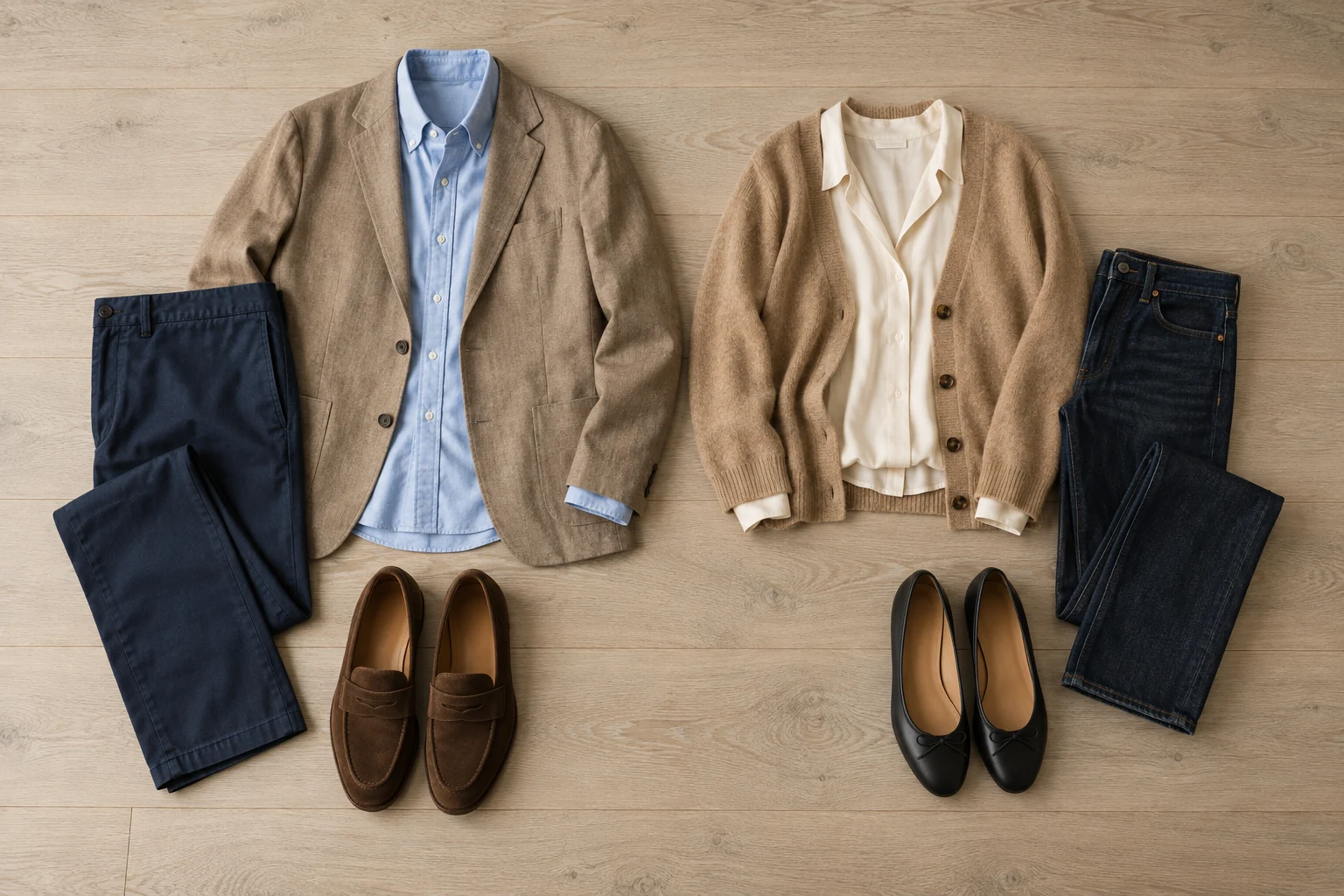
Chinos or wool trousers in navy, gray, olive or khaki, a button down shirt or a knit polo, and a sweater or casual jacket cover almost every court. Leather shoes such as loafers, derbies or plain boots look right, though clean, simple leather sneakers are accepted in many courthouses. None of the court rules above require a tie or suit for jurors, but they are never wrong, and some people simply feel more at ease dressed that way.
If you are called into a courtroom and seated on a panel, you may sit for several hours at a time, so pick trousers with a little room in the seat and a shirt that does not pull at the buttons. Our guide to business casual for men has more combinations that work here.
What to wear for jury duty: women
Trousers or a knee length or longer skirt with a blouse, a fine knit or a simple top plus a cardigan or blazer is the easiest formula. A plain dress with sleeves or a cardigan, worn with tights in winter, works just as well. Avoid anything cut very short, very low or sheer, since miniskirts and revealing clothes are the items most often named in court rules.
Shoes matter more than they seem. You may walk from a parking garage, stand in a security line and climb stairs between rooms, so choose flats, loafers, low block heels or ankle boots rather than anything you would not walk a mile in. A roomy tote with a zip is useful for the book, water and snacks you are allowed to bring. Our guide to business casual for women has further outfit ideas.
Can you wear jeans or sneakers to jury duty?
Often yes, but not everywhere, which is why checking your court's page matters. Many state courts accept neat jeans, and many jurors wear them. Some courts, including the federal court in northern Iowa, specifically ask jurors not to. When jeans are allowed, choose a dark wash with no rips or fading, and wear them with a collared shirt, blouse or sweater so the outfit still reads as office clothes.
Sneakers are similar. Clean, low profile sneakers in leather or plain canvas are fine at most courthouses, while running shoes and anything scuffed look out of place. Sweatpants, athletic wear and hoodies are the items to leave at home, since they read as too casual even where they are not formally banned.
| Item | Usually fine | Leave at home |
|---|---|---|
| Bottoms | Chinos, trousers, knee length or longer skirts | Shorts and miniskirts |
| Tops | Button downs, polos, blouses, fine knits | Tank tops, graphic tees, anything sheer or low |
| Jeans | Dark, clean, unripped, where the court allows | Faded or ripped pairs; jeans in courts that ban them |
| Shoes | Loafers, derbies, flats, low heels, clean leather sneakers | Flip flops and running shoes |
| Layers | A sweater, cardigan or blazer | Sweatshirts, hoodies, athletic wear |
Each court sets its own code, so read your summons or the court's juror page first.
Dress in layers for a cold courtroom
Courtrooms and assembly rooms are famously chilly, and both the California federal court and Maryland's courts tell jurors to bring a sweater or jacket. Temperatures also swing between rooms, so the best plan is a light base layer you are comfortable in all day, with a cardigan, sweater or blazer on top that you can take off. In winter, a warm coat you can hang or fold over a chair is better than a bulky one you have to hold.
Comfort beyond temperature counts too. Soft waistbands, breathable fabrics and shoes you have already broken in all help. If you are selected for a trial that runs several days, you can wear the same few pieces in rotation; nobody expects a new outfit each day.
Security screening and what to bring
You will pass through a metal detector, and your bag may be searched. Heavy belt buckles, lots of metal jewelry and boots with metal shanks slow you down, so keep metal light. Leave pocket knives, scissors and anything sharp at home; courts confiscate them, and Maryland notes that trying to bring in a weapon can lead to arrest.
Bring your summons and a photo ID, something to read, any medication or food you need, and a water bottle with a tightly sealed lid. Phone rules vary widely: Maryland allows phones in the building but not in use in courtrooms or deliberation rooms, while the northern Iowa federal court does not allow them in the building at all. Check your court's page so you do not have to walk your phone back to the car.
Can you dress so you do not get picked?
It is a common question, and the honest answer is that it is a poor plan. Clothes that break the dress code can get you sent home and told to return another day, which extends your service rather than ending it. Lawyers do notice appearance during jury selection, but they choose jurors mainly from answers to questions about background, experience and possible bias, and you are required to answer those questions truthfully.
If serving would cause genuine hardship, because of work, childcare, health or travel, use the court's process for requesting a postponement or excusal, usually explained on the summons. Dressing neutrally and answering honestly is both the respectful choice and the one that gets you through the day fastest.
Questions people ask
Is there a dress code for jury duty?
Yes, but it is set by each court. Most ask for neat business casual clothing and ban shorts, tank tops, flip flops, hats (except religious head coverings) and revealing or graphic clothing. The exact rules are on your summons or the court's juror web page.
What colors should I wear to jury duty?
There is no required color. Neutral, calm colors such as navy, gray, beige, olive and white look appropriate and do not distract, which suits a courtroom. Avoid clothing with slogans, logos or images, since some courts ban graphic T shirts outright.
Can I wear a hat to jury duty?
Usually not, apart from religious head coverings, which courts permit. Courts that list hats among banned items expect them off in the courtroom and often in the building, so treat a cap or beanie as something you take off at the door and carry in your bag.
Is jury duty dress different from what to wear to court as a witness or defendant?
The baseline is similar, but people with a role in a case usually dress more formally, often in a suit or a very conservative outfit. Our guide to what to wear to court covers those situations.
Sources and further reading
References used for this guide. Each opens the original page in a new tab.
Keep reading
Dress codes
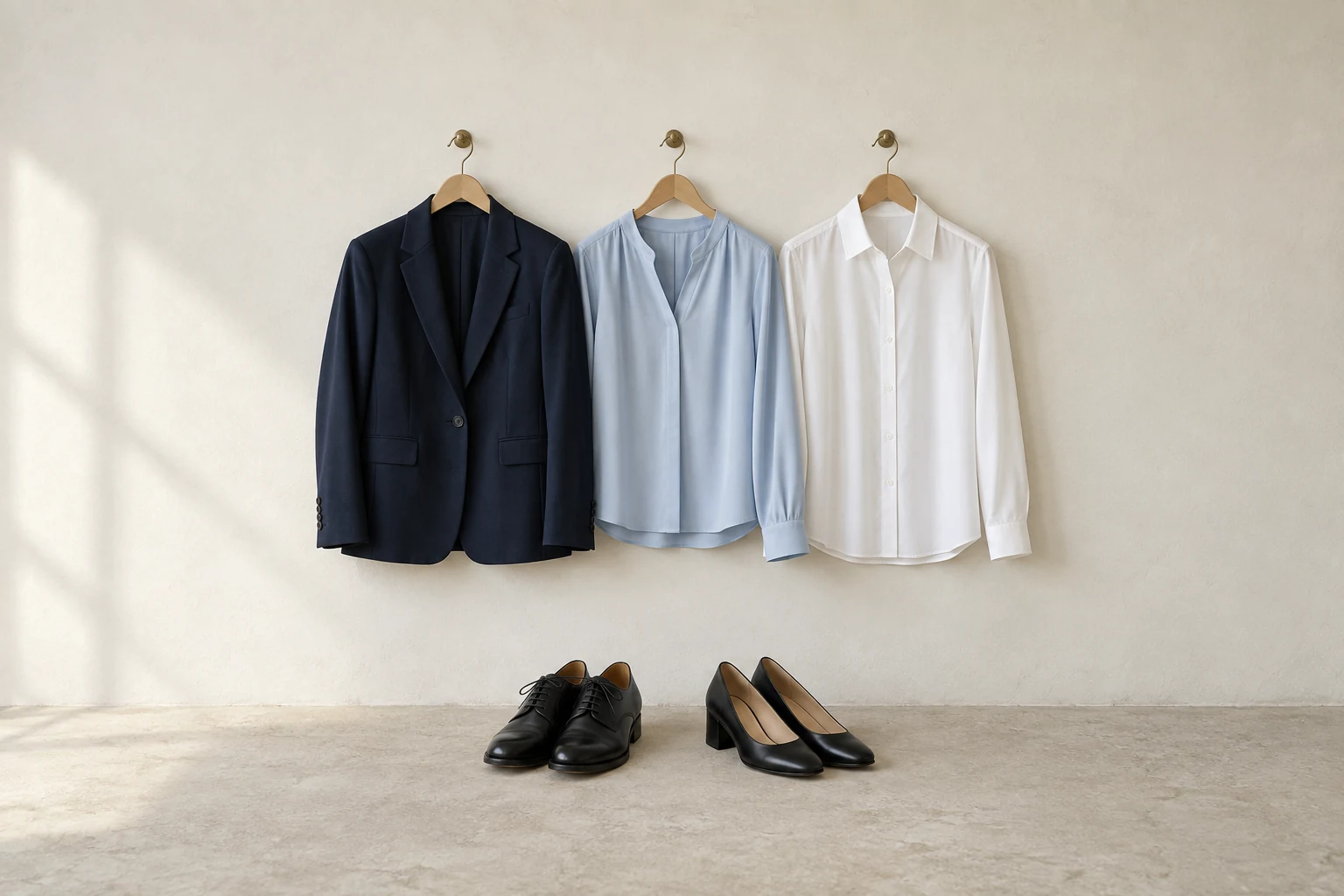
What to wear to court
What to wear to court as a defendant, witness, juror or observer: outfits for women and men, what not to wear, colors, security and video hearings.
Dress codes
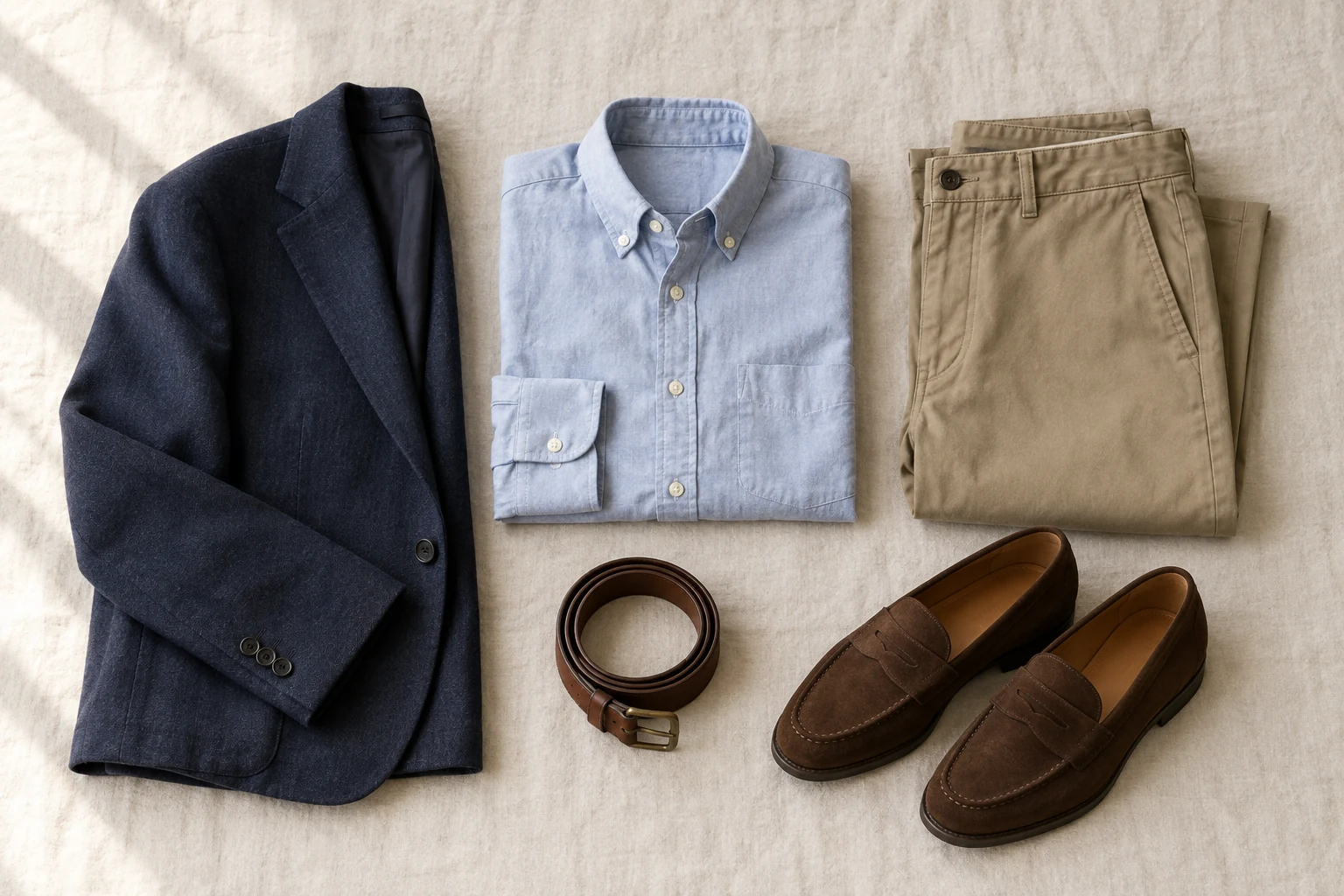
Business casual for men: what to wear to work
What business casual means for men at work, with outfit formulas, the right shoes, when jeans are allowed and how to read your own office's version of the code.
Dress codes
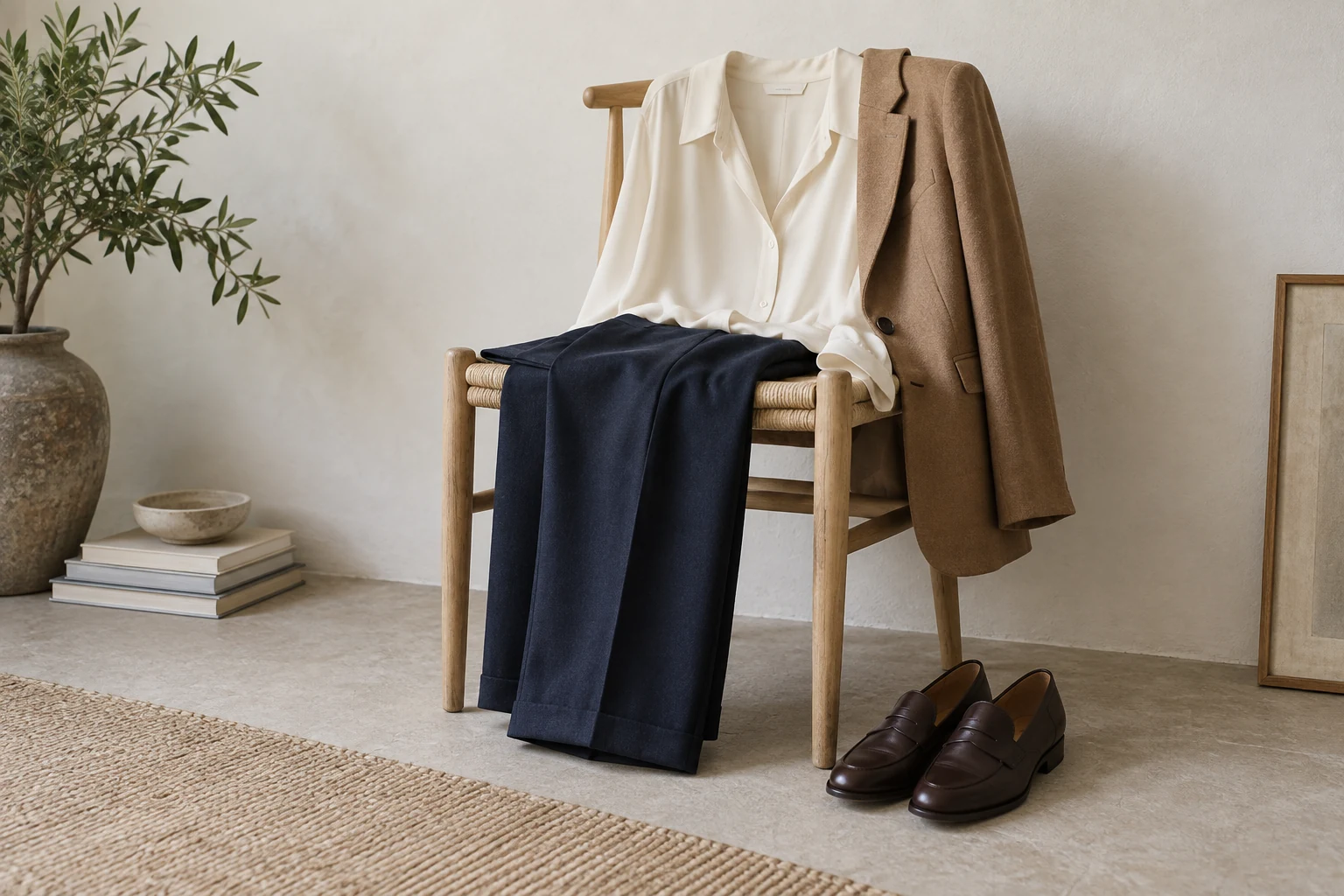
Business casual for women: what to wear to work
What business casual means for women at work: trousers, skirts, dresses, knitwear and shoes, with outfit formulas, what to avoid and how to read your office.
Dress codes
Smart casual: what it means for men and women
What smart casual really means, how it differs from business casual, and what men and women can wear, including when jeans, sneakers and a blazer are right.
Dress codes
What to wear to a job interview
What to wear to a job interview: how to read the company, dress one step above daily wear, outfits for men and women, video interviews and what to avoid.