What to pack for a beach vacation
In this guide
A beach trip looks like the easiest thing in the world to pack for, which is exactly why so many people arrive with six sundresses, no rain jacket, one swimsuit that never dries and a travel size sunscreen that runs out on day two. Warm weather clothes are small and light, so the bag fills with extras while the few things that really matter get forgotten.
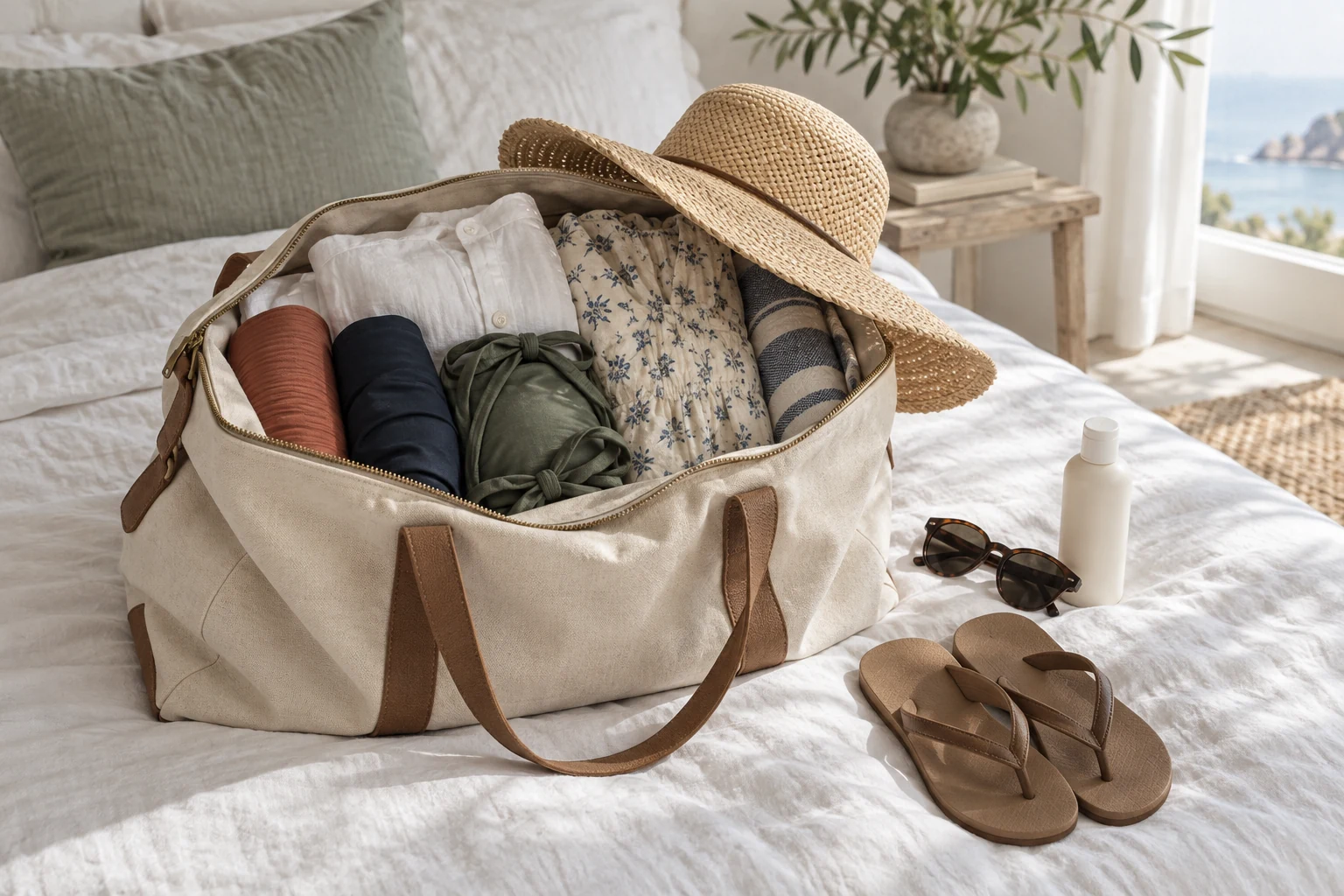
Deciding what to pack for a beach vacation works best in the same order you will use it: first the days themselves, then the swim and sun kit, then the clothes for everything around the beach. This guide gives you that order, a sample 7 day list for women and men, shorter versions for a long weekend, and the things you can safely leave at home.
Start with the days, not the list
Write down each day and what it holds: travel, beach, pool, a boat trip, snorkeling, a hike, a town day, nice dinners, possibly a rainy afternoon. A week of lazy beach days needs very different clothes from a week of excursions. Count the dinners out, since those decide how many dressier outfits you bring, and check the forecast for rain and evening temperatures, which on many coasts drop further than you expect once the sun goes down.
Then plan outfits that share pieces, so one pair of linen trousers works for a flight, a dinner and a cool evening walk. Our guide to a packing list built around outfits explains the method, and a travel capsule wardrobe shows how two neutral colors and one accent can make a small bag feel like a full wardrobe. Beach trips suit this approach especially well because the clothes are simple.
Swimwear and sun protection
Bring at least two swimsuits so one can dry while you wear the other; three if you swim twice a day or are staying somewhere humid. Add a cover up, a sarong or a loose shirt you can pull on for lunch, and a plastic or waterproof bag for wet suits on the last day.
Sun protection is where beach packing lists are most often thin. The American Academy of Dermatology recommends a broad spectrum, water resistant sunscreen of SPF 30 or higher, about one ounce (a shot glass) to cover an adult's body, reapplied every two hours and after swimming or sweating. At that rate, one person spending full days outdoors can go through a large bottle in a few days, so pack generously or plan to buy more on arrival. Some destinations regulate ingredients: Hawaii restricts certain chemical filters and Maui allows only mineral sunscreen, as explained in our guide on what to wear in Hawaii.
Clothing does part of the job without reapplying. The AAD suggests a wide brim hat that shades the ears and neck, not a straw hat full of holes, and sunglasses labeled as blocking UV, since dark lenses alone do not guarantee protection. The Skin Cancer Foundation recommends a brim of at least 3 inches and points out that a white T shirt gives a UPF of only about 7, falling to about 3 when wet. A rash guard or long sleeve shirt labeled UPF 50 is a far better choice for snorkeling or a long afternoon on a boat.
Clothes for the rest of the day
For daytime, pack loose shorts, T shirts and tank tops, a couple of button down shirts in linen or light cotton, and for women, a sundress or two and a skirt. Choose fabrics that breathe and dry quickly; heavy denim and clingy synthetics feel miserable in humid heat. Our guide on what to wear in 90 degree weather explains which fabrics keep you coolest.
For evenings, plan one or two outfits a step up: a linen shirt with chinos or tailored shorts for men, a midi dress or wide leg trousers with a silky top for women. Resort restaurants that list a dress code often mean no swimwear and no tank tops for men, and occasionally long trousers. Add one light layer, such as a cardigan, a cotton sweater or a denim jacket, for air conditioned rooms, the flight and breezy nights, plus a packable rain jacket if the forecast shows showers. Pack underwear and socks for every day, and sleepwear.
Shoes for sand, rocks and dinner
Three or four pairs cover almost everything. Flip flops or slides for the beach and pool, which also protect your feet from hot sand. Comfortable sandals or sneakers for walking around town and for travel days. Water shoes if the beach is rocky, has coral or you plan to kayak, since a cut foot can end the week's swimming. And one slightly dressier pair, such as leather sandals, espadrilles or loafers, for dinners.
If you plan to hike, bring real trail shoes rather than hoping sandals will do. Wear the bulkiest pair on the plane; our guide on what to wear on a plane explains why closed shoes are the better travel choice anyway.
| Pair | Use it for |
|---|---|
| Flip flops or slides | Beach, pool and hot sand |
| Comfortable sandals or sneakers | Walking around town and travel days |
| Water shoes | Rocky beaches, coral and kayaking |
| Leather sandals, espadrilles or loafers | Dinners out |
| Trail shoes | Only if you plan to hike |
Wear the bulkiest pair on the plane.
The beach bag and non clothing essentials
A foldable tote or backpack for the beach, a beach towel if your hotel or rental does not provide them, a refillable water bottle, and a waterproof phone pouch or small dry bag cover most days. Add after sun lotion or aloe, lip balm with SPF, insect repellent for evenings, a small first aid kit with bandages and pain relief, any prescription medicines, and chargers. Snorkel masks and a compact umbrella are worth bringing only if you will use them often; they are usually easy to rent.
If you are flying with only a carry on, the TSA limits liquids, gels, creams and aerosols in cabin bags to containers of 3.4 ounces (100 ml) or less, all fitting in one quart size bag per passenger. Sunscreen counts. Full size bottles need to go in checked luggage, or you can buy them at your destination. Sunscreen has a way of staining clothes, so our guide on getting sunscreen out of clothes is worth a look before you pack your favorite white shirt.
A 7 day beach vacation packing list
For women, a week might look like this: three swimsuits and a cover up, three pairs of shorts or skirts, one pair of linen trousers, five or six tops, two sundresses, one dressier dinner outfit, a light cardigan, a rain jacket, sleepwear, underwear for every day, flip flops, walking sandals or sneakers, water shoes and one dressier pair. Add a hat, sunglasses and a scarf that doubles as a wrap on the plane.
For men: two or three swim trunks, a rash guard or UPF shirt, three or four pairs of shorts, one pair of chinos or linen trousers, five or six T shirts or polos, two linen or cotton button down shirts for dinner, a light sweater, a rain jacket, sleepwear and underwear, flip flops, sneakers, water shoes and loafers or leather sandals. For a 3 or 4 day trip, halve the tops, keep two swimsuits, and bring one pair of shorts per two days. With children, add an extra swimsuit each, rash guards and sun hats, and a change of clothes in the day bag. Rolling soft pieces saves space; see our guide on rolling clothes for packing.
What to leave at home
The usual overpacking culprits are extra outfits for occasions that never happen, more than one pair of heels, several pairs of jeans, and delicate pieces that do not survive sand and saltwater, such as dry clean only silk or suede shoes. Leave expensive jewelry at home too: salt, sunscreen and chlorine are hard on metals and pearls, and valuables are easy to lose on a beach. Full size toiletries your hotel provides and a large hair dryer are rarely needed.
A good test is to lay everything out on the bed, then remove anything you cannot pair with at least two other pieces. What remains will usually fit a carry on for a week, with room for what you bring home.
Questions people ask
What is the most forgotten item when packing for a beach vacation?
Travelers most often mention chargers, a second swimsuit, sunglasses, after sun lotion and enough sunscreen. A written list built from your daily plan, checked the night before, catches most of them. Anything else can usually be bought on arrival.
What is the 3 5 7 rule in packing?
It is an informal shorthand for a week away, roughly three bottoms, five tops and seven sets of underwear, with versions that add shoes and swimwear. It is a useful starting point, not an official rule, so adjust it to your days and the chance of doing laundry.
What should you not bring to the beach itself?
Valuables you would miss, glass bottles (banned on many public beaches), anything that cannot get sandy or wet, and your good jewelry. Check the local rules too, since some beaches restrict alcohol, pets, grills or large tents.
What is the unspoken beach rule?
Most people mean simple courtesy: give neighboring groups space when you set up, keep music to yourself, shake towels downwind of others, and take all your trash with you. And where local rules protect them, leave shells, rocks and wildlife where you found them.
Sources and further reading
References used for this guide. Each opens the original page in a new tab.
Keep reading
Closet and packing
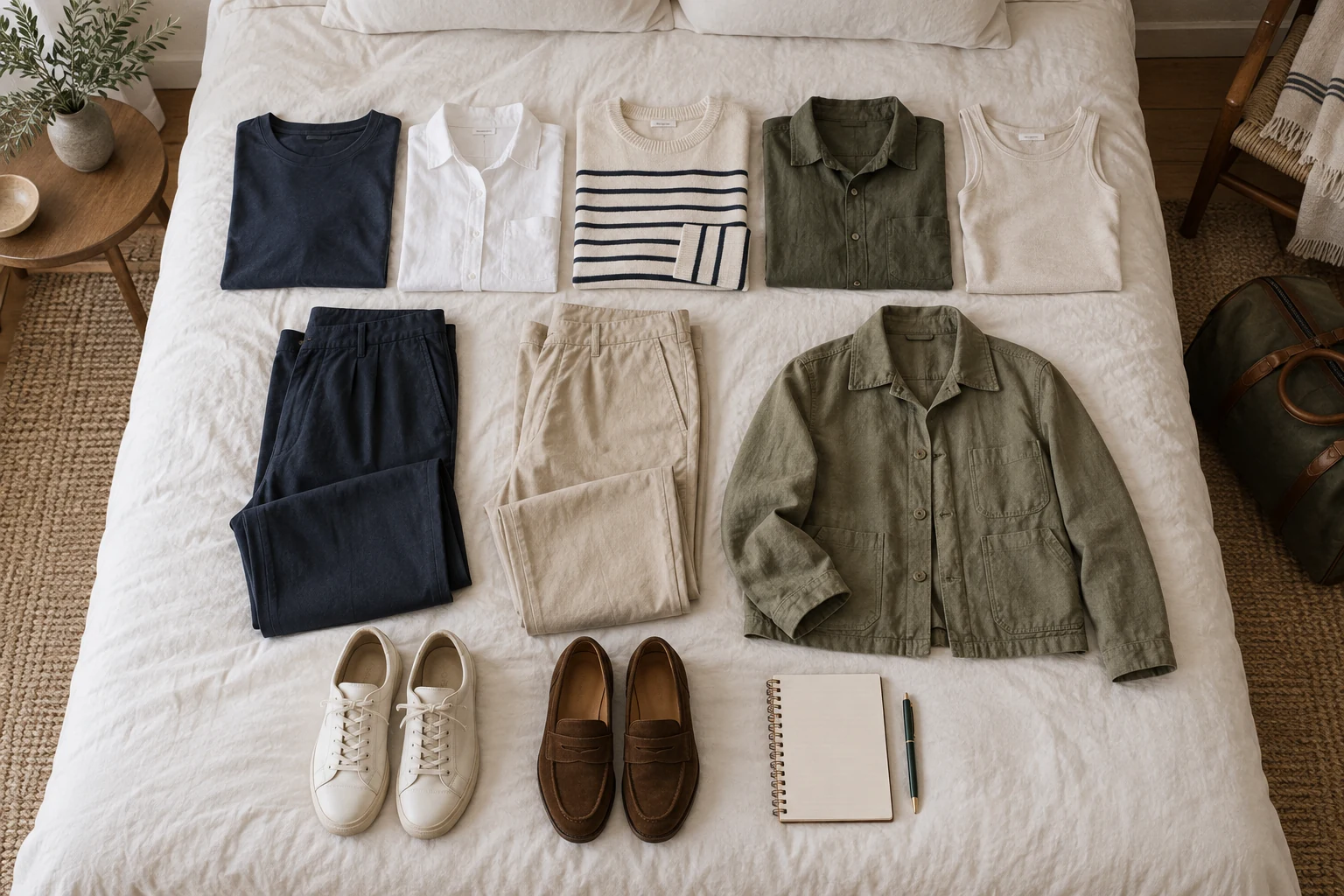
A packing list for vacation, built around outfits
A packing list for vacation that starts from your days and the forecast: how many clothes to bring for 3 or 7 days, travel essentials and a final check.
Weather
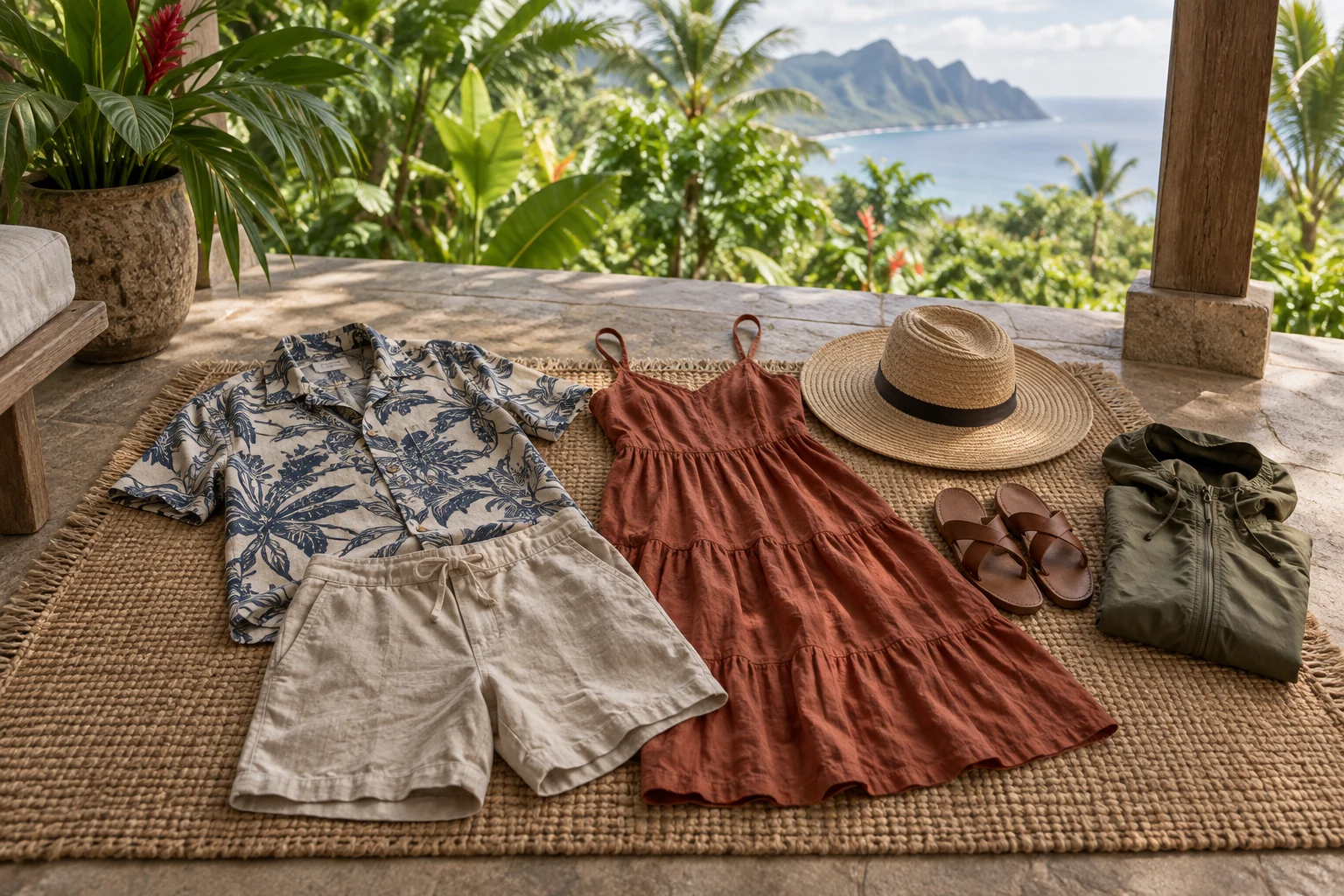
What to wear in Hawaii, from beach to summit
What to wear in Hawaii for beaches, dinners, luaus and cold volcano summits, with the weather by season, local dress customs and sunscreen rules to know.
Closet and packing
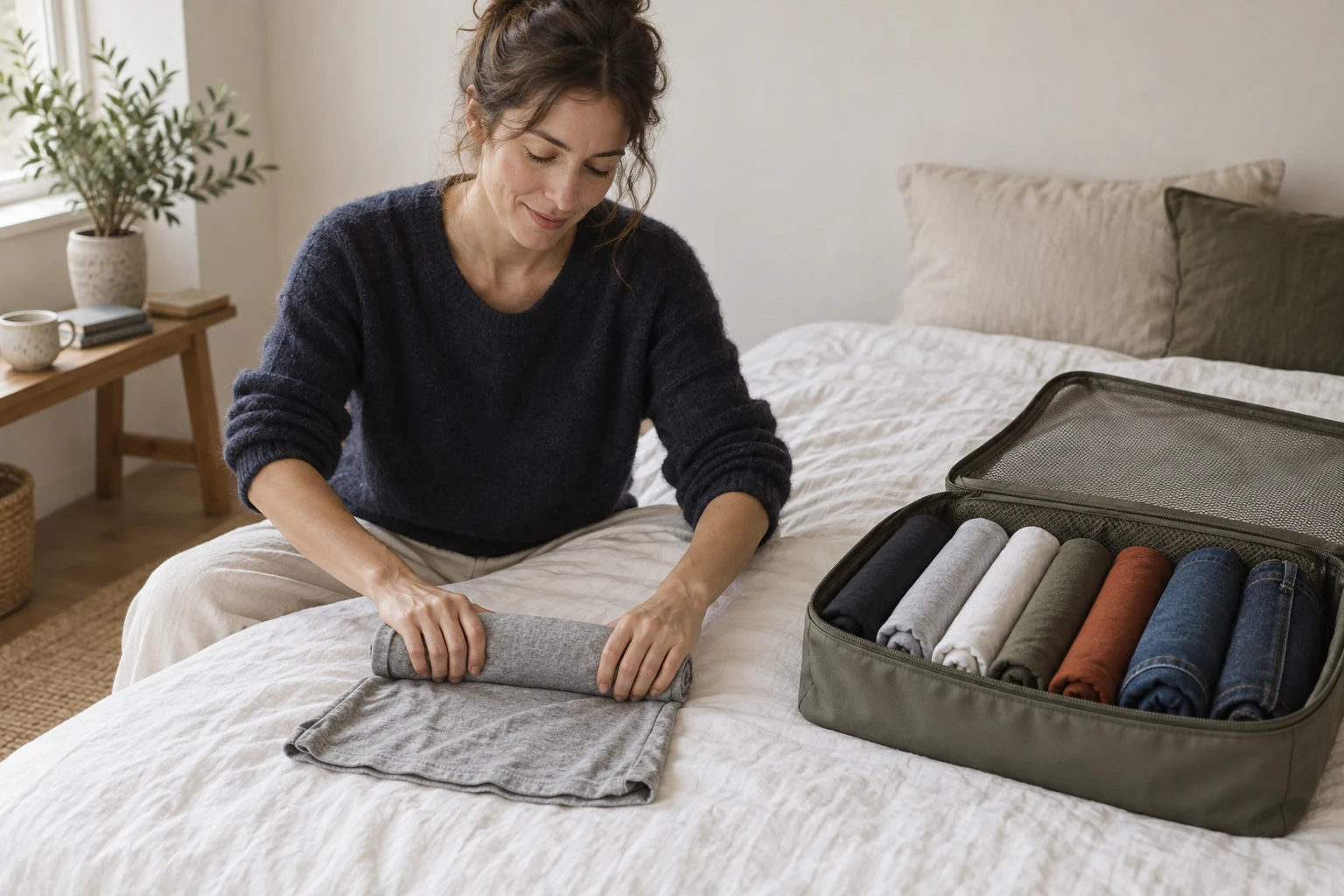
How to roll clothes for packing
How to roll clothes for packing: the basic roll and the ranger roll for shirts, how to roll pants and dresses, what not to roll, and how to pack the rolls well.
Closet and packing
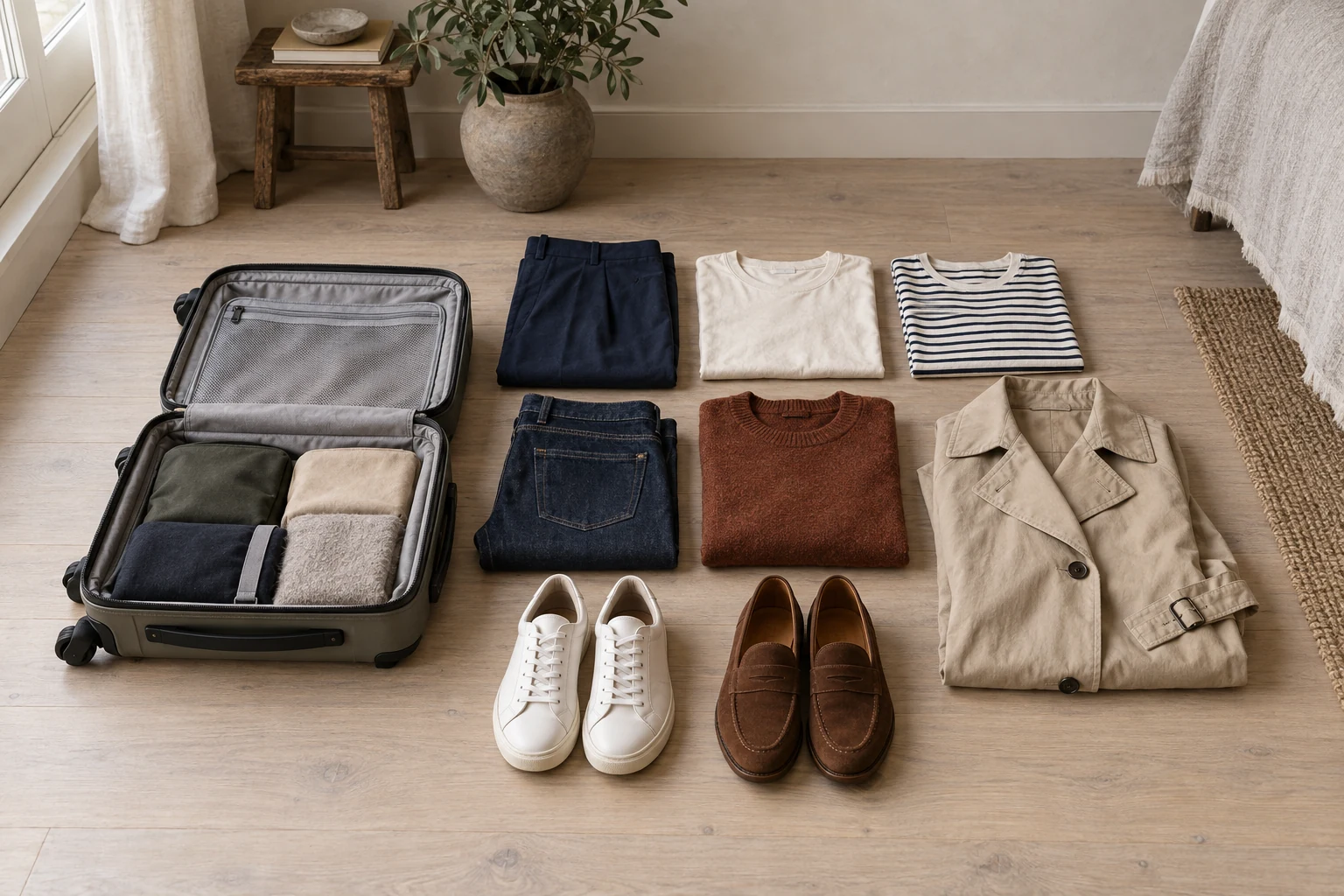
A travel capsule wardrobe that fits one bag
How to build a capsule wardrobe for travel: how many pieces to pack, a color plan that mixes, fabrics that survive a suitcase, and example lists for women and men.
Dress codes
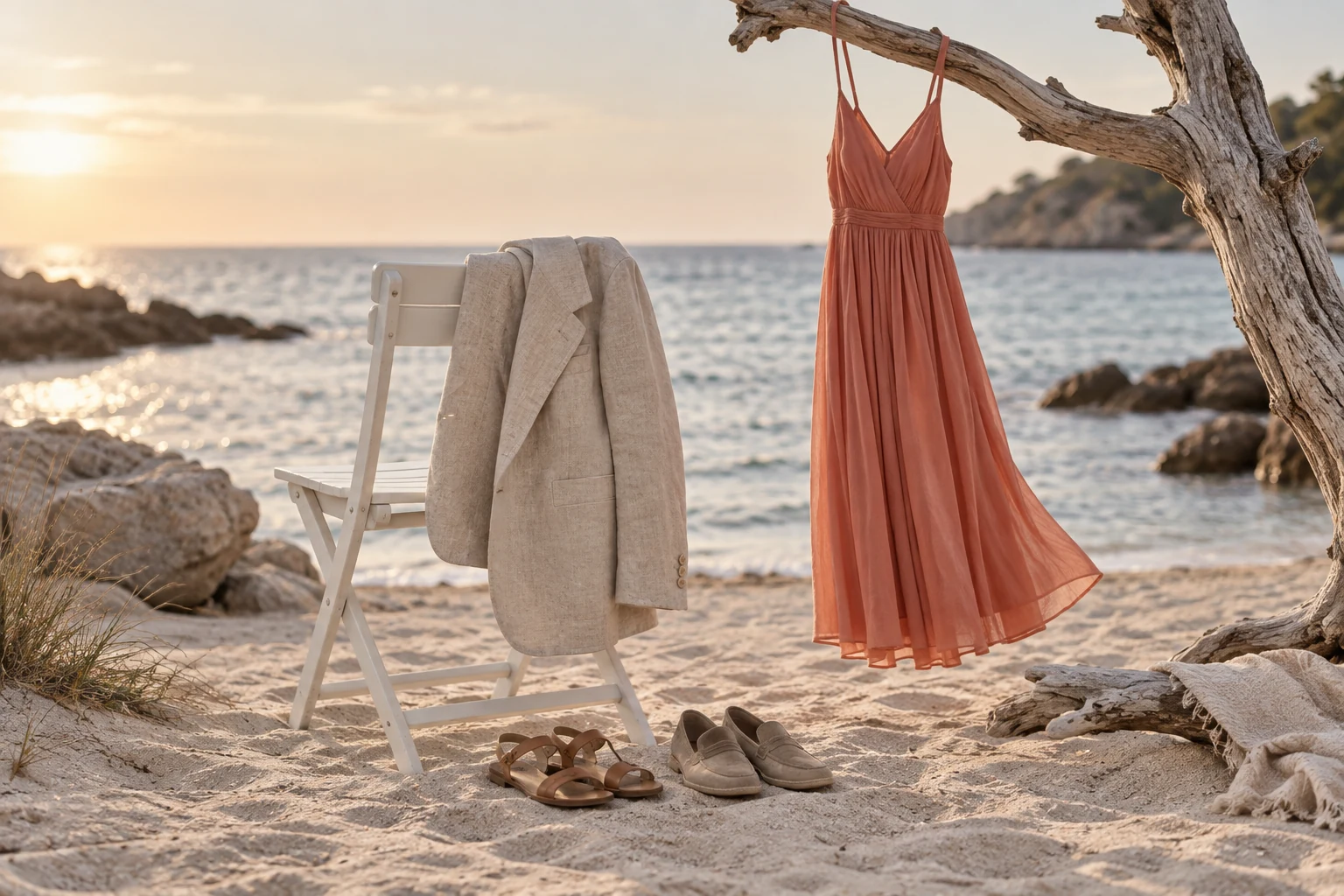
Beach wedding attire: what guests should wear
Beach wedding attire for guests: light fabrics, shoes that work on sand, and how to read the dress code, with outfits for men and women from casual to beach formal.