What to wear for a photoshoot: outfit ideas that photograph well
In this guide
You finally booked the photographer. Maybe it is a portrait session in the city for your birthday, graduation photos, an engagement shoot or family pictures with everyone home for the holidays. Now there is a closet to face, and the outfit you pick will be in these photos for years. The good news is that clothes that photograph well follow a few clear rules.
This guide collects the photoshoot outfit ideas photographers keep coming back to: how to plan around the location and the mood, which colors, patterns and textures work on camera, what to avoid, complete looks for solo portraits, couples and families, ideas by season, and a short list for the day before.
Start with the location and the mood
Before you choose a single piece, decide what the photos should feel like and where they will be taken. A golden hour field, a concrete city street, a warm cafe, a beach at sunset and a white studio each ask for a different outfit. A useful rule from travel and portrait photographers is to choose colors that either harmonize with the setting, such as warm neutrals in an autumn park, or contrast with it on purpose, such as a red dress against a gray street or bright colors under an overcast sky.
Then match the formality to the mood. A soft, candid session suits relaxed knits, linen and denim, while an editorial city shoot can take a sharp coat, tailored trousers or a slip dress. Talk to your photographer, who has seen what works in that exact location and light. If you plan to change once, choose two looks that feel different, for example one casual and one dressy, so the gallery has variety.
Colors that photograph well
There is no single best color to wear for a photo shoot, but some choices are reliable. Solid colors, soft pastels, earth tones such as rust, olive, camel and cream, and deep jewel tones such as navy, emerald and burgundy all photograph well because they give the camera clean shapes and flatter most skin tones. Mid tones are the easiest; very bright white can lose detail in strong sun, and pure black can lose its shape in the shade, though both work well with good light and some texture.
Colors to be careful with are neon shades, which can cast color onto skin and look harsh, and colors that match the background too closely, such as bright green in a leafy park, which can make you disappear into the scene. Choose one main color and one or two supporting neutrals rather than many strong colors. Our guide to colors that go together helps build a palette, and a tonal look from our monochrome outfits guide is almost impossible to get wrong on camera.
Patterns, logos and texture
Small, tight patterns are the one thing photographers warn about most. Thin stripes, tiny checks, fine houndstooth and dense geometric prints can clash with the grid of a digital camera sensor and produce moiré, a wavy, shimmering pattern that was never on the fabric. If you love a patterned piece, choose a larger, softer print, such as a big floral or a wide stripe, or ask your photographer to take a test shot and zoom in to check it.
Large logos and text pull the eye away from faces and date a photo quickly, so leave graphic tees at home unless they are part of the story. Texture, on the other hand, is a gift. Chunky knits, linen, corduroy, satin, velvet and soft leather catch light and add depth even in a simple outfit, and pieces that move, such as a flowing midi skirt, a long coat or a loose shirt, give the photographer something to capture when you walk or turn. Our guide to posing for pictures shows how to use that movement.
Fit, comfort and what not to wear
Wear what you feel good in and what truly fits. A top that gaps at the buttons, a waistband that pinches or a strap that keeps slipping will show on your face long before it shows in the frame. Very stiff new clothes can crease awkwardly and look like costume, while thin, clingy jersey can show every line underneath. Slightly structured fabrics, a defined waist, or a deliberately oversized shape all photograph more clearly than something baggy by accident.
Check the small things the day before. Remove tags and lint, steam out creases, and try the whole outfit on, including shoes, bag and jewelry; our guide to steaming clothes makes that quick. Choose shoes you can walk in on the actual ground, whether grass, sand or cobblestones, and keep them clean, since full length photos show them clearly.
Outfit ideas for a solo portrait shoot
For a city street shoot, try a long camel or charcoal coat over a fine black knit and wide trousers with loafers, or a white shirt with the sleeves pushed up, straight dark jeans and ballet flats. The clean lines suit concrete and glass, and the coat moves beautifully when you walk. For a cafe or bookstore session, soft textures work best: a cream cable knit with a plaid midi skirt and knee socks, or an oatmeal cardigan over a white tee with gray trousers.
For a park or field in soft light, a flowing floral or solid midi dress in a muted color, a linen shirt in pale blue with cream trousers, or a knit vest over a white shirt feels natural and warm. For a studio or an editorial mood, go bolder with one strong color, a satin slip dress, a tailored suit worn with a T shirt, or a sculpted top against a plain backdrop. In every case, one hero piece plus quiet supporting pieces is the formula that keeps attention on you.
Couple and family photoshoot outfit ideas
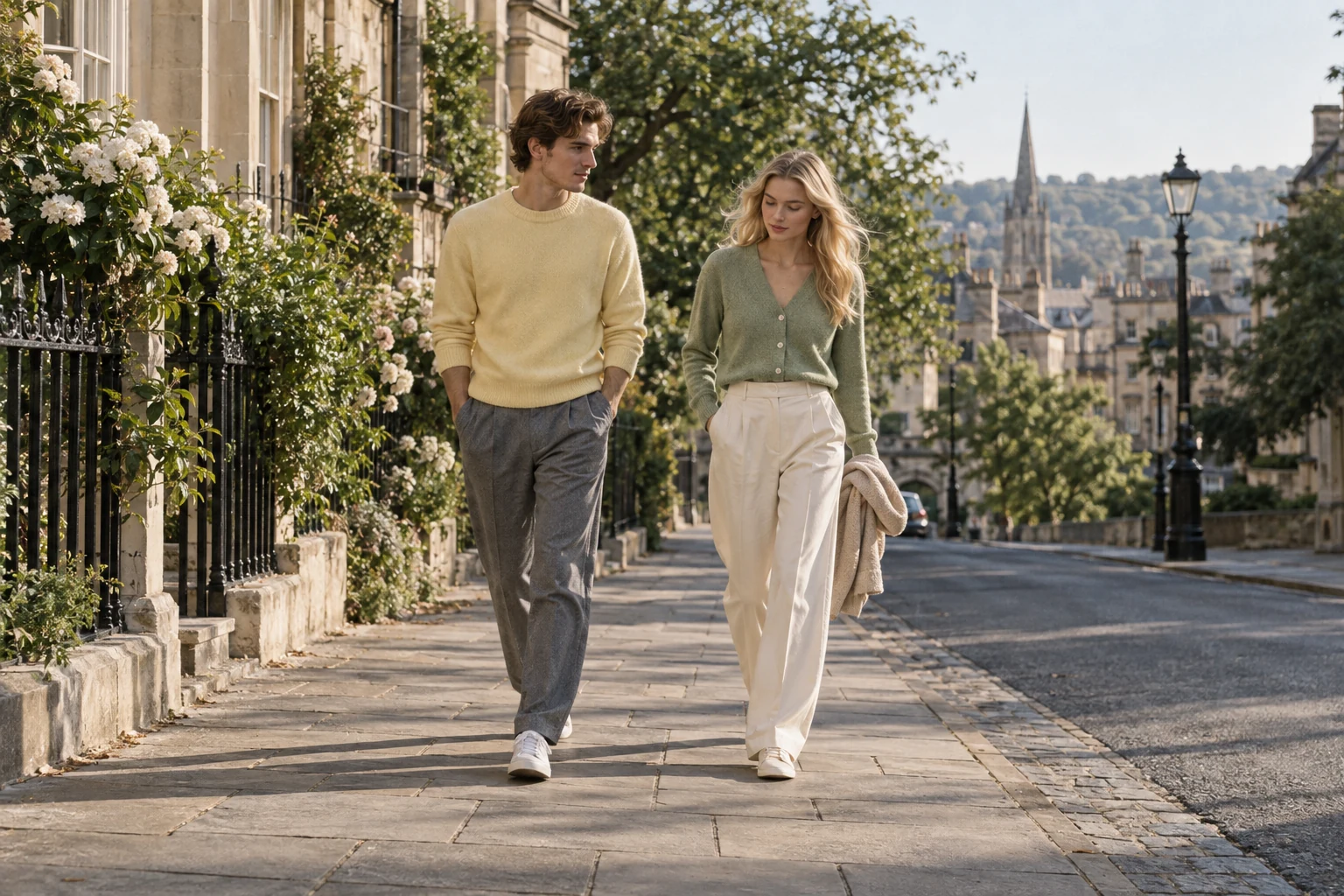
For couple and engagement photoshoot outfit ideas, coordinate instead of matching. Choose one color family and wear different shades of it, or let one person wear a soft pattern and the other a solid pulled from that pattern. A cream knit dress beside a camel coat and navy trousers, or a pale blue linen shirt beside a white linen dress, looks connected without looking like a uniform. Keep formality similar too; a gown next to a hoodie will look like two different shoots. Our guide to matching outfits for couples has more combinations.
Family photoshoot outfit ideas follow the same logic on a bigger scale. Pick three or four colors, such as cream, rust, olive and denim, and spread them across everyone, with at most one or two patterned pieces in the group. Dress the youngest children in comfortable clothes they can move in, give everyone a layer or texture, and plan the adults' outfits first, since they fill most of the frame.
Fall, winter, spring and beach photoshoot outfit ideas
Fall photoshoot outfit ideas lean on warm colors and texture: rust, mustard, olive, camel and cream in chunky knits, corduroy, suede and wool, with boots. Winter and Christmas photoshoot outfit ideas add richer fabrics, such as velvet, cashmere and wool coats in burgundy, forest green, navy or cream, and a scarf for a touch of color near the face. Our guide to fall outfits has more pieces that suit autumn light.
Spring photoshoot outfit ideas can go lighter and fresher: pastels, soft florals, white cotton and light denim, with a trench coat or cardigan for cool mornings. For beach photoshoot outfit ideas, choose flowing linen and cotton in white, sand, soft blue or dusty pink that move in the wind, and plan to go barefoot. Avoid heavy fabrics and anything you would mind getting wet or sandy.
| Setting | Palette | Outfit ideas |
|---|---|---|
| City street | Camel, charcoal, black, white, one bold color | Long coat, fine knit, wide trousers, loafers |
| Cafe or bookstore | Cream, oatmeal, brown, plaid | Cable knit with midi skirt, cardigan with trousers |
| Park in fall | Rust, mustard, olive, camel | Chunky knits, corduroy, suede boots |
| Winter or holiday | Burgundy, forest green, navy, cream | Velvet, cashmere, wool coat, scarf |
| Beach | White, sand, soft blue, dusty pink | Flowing linen and cotton, barefoot |
Get ready the day before
Lay out each outfit in full on the bed, then photograph it on your phone in daylight; a quick picture shows problems, such as a pattern that shimmers or colors that clash, that a mirror hides. Pack a small bag with a lint roller, safety pins, a spare pair of comfortable shoes, blotting papers, a hair tie and water. If you are changing outfits, hang the second look in a garment bag so it arrives without creases.
Finally, plan hair and grooming around the outfit rather than separately. An updo shows off a neckline, loose hair softens a structured coat, and freshly trimmed hair and nails show clearly in close portraits. Then relax. The photos that people love most are usually the ones where they forgot about the clothes.
Common mistakes
Tiny stripes and small checks
Fine, tight patterns can create moiré on digital cameras. Choose solids or larger prints, or ask for a test shot.
Head to toe matching
Identical outfits on couples or families look flat and dated. Share a color palette and vary the shades and textures.
Brand new shoes on the day
Stiff new shoes hurt on a long walk between spots and change how you stand. Wear them in first, or bring a comfortable backup.
Questions people ask
What should I wear to a photo shoot if I don't know what suits me?
Start with a solid color near your face that you are often complimented in, a well fitting pair of trousers, jeans or a skirt, and one piece with texture. Send a picture of two options to your photographer; they know which will work in the location.
What is the best color to wear for a photo shoot?
There is no single best color, but mid tones, earth tones, soft pastels and jewel tones are reliable. Avoid neon and colors that blend into the background, and choose a palette that either harmonizes or deliberately contrasts with the setting.
What not to wear for a photo shoot?
Avoid neon colors, large logos and text, tiny tight patterns, clothes that do not fit, and stiff pieces you have never worn. Also skip anything you will need to adjust constantly, because it will show in your expression.
Should I bring more than one outfit?
If your session is longer than about an hour or covers more than one location, two outfits add variety. Make them clearly different in mood or color, and plan where you will change.
Sources and further reading
References used for this guide. Each opens the original page in a new tab.
Keep reading
Everyday style
How to pose for pictures without feeling awkward
How to pose for pictures standing, sitting and walking, what to do with your hands, easy poses for women and men, groups, couples and clothes that photograph well.
Everyday style
Matching outfits for couples that look stylish, not silly
How to do matching outfits for couples, from a subtle shared color to full twinning, with ideas for dates, vacations, weddings, holidays and couple photos.
Everyday style
What colors go together: color combinations for outfits
Practical color combinations for outfits: build on neutrals, try tonal dressing, add one accent, and test contrast against your own skin and hair in daylight.
Everyday style
Monochrome outfits: how to wear one color head to toe
What a monochrome outfit is, how to make one color look rich instead of flat, which colors work best, and monochrome outfit ideas for men and women.
Weather
Fall outfits for women and men, from class to weddings
Fall outfits for women and men by temperature and occasion: class, work, weekends, dates, fall wedding guest looks and family photos, built from layers you own.