What to wear to a funeral
In this guide
Of all the things to think about when someone has died, clothes seem the smallest, and in a sense they are. Still, the question of what to wear to a funeral tends to arrive a few days before the service, alongside everything else you are carrying. Getting it right lets you stop thinking about yourself and be present for the people who are grieving, which is the whole point of going.
The expectations are simple and forgiving. Mourners are not judged on style, only on whether their clothes show care and do not draw attention. This guide covers the general standard, how to read the family's wishes and the customs of different faiths, what men and women typically wear, and how to manage heat, cold and the things you might not own.
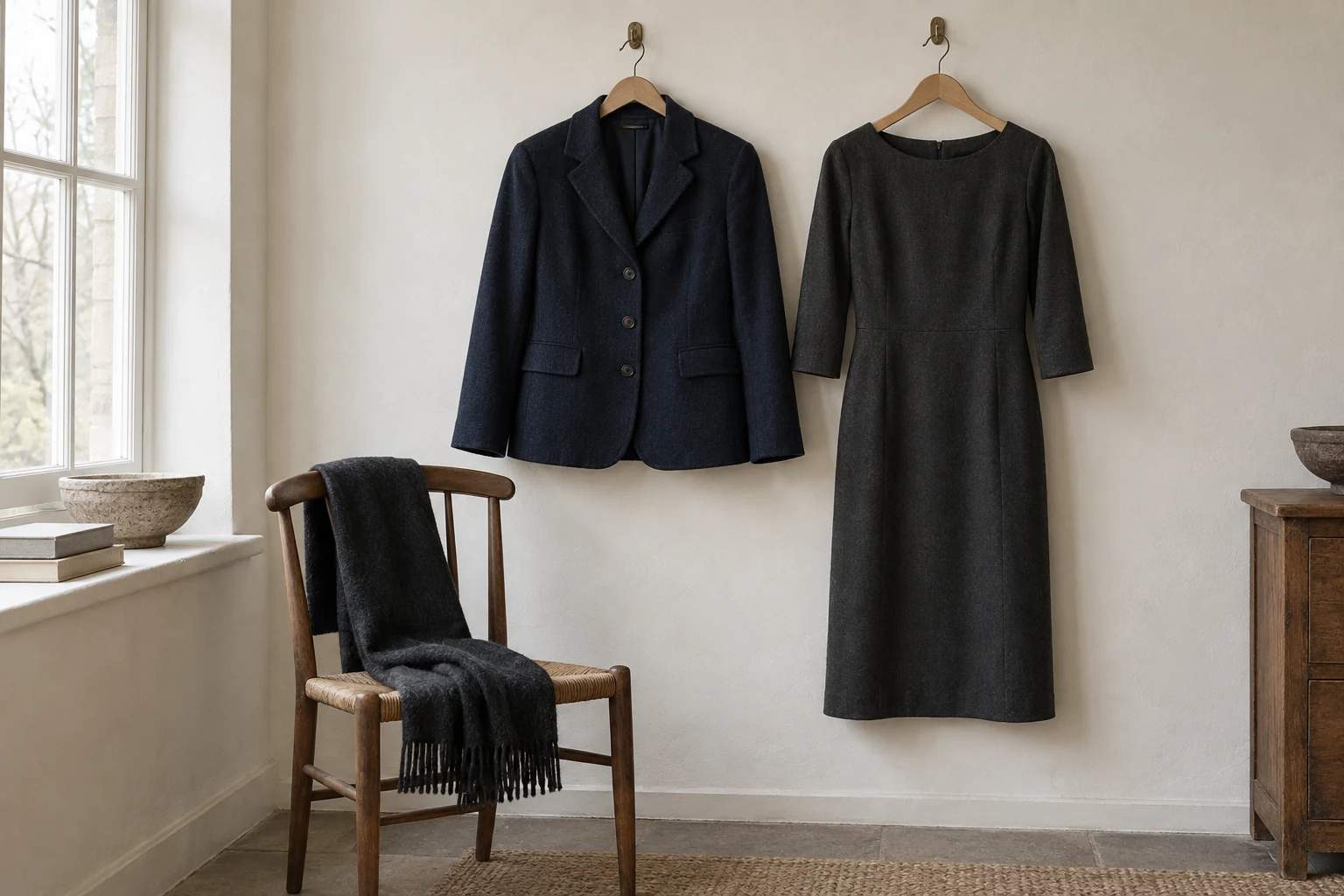
What to wear to a funeral: the general standard
In most funerals in the United States and Canada, guests wear dark, understated clothing of the kind you might wear to a formal office or a religious service. Black is the traditional mourning color in Western cultures, but the Emily Post Institute notes that funeral clothing is no longer limited to black or dark gray. Navy, charcoal, dark brown, deep green and muted tones are all respectful. What matters more is that the clothes are clean, neat and pressed, and that nothing about them feels like it belongs at a party.
Think of the outfit as quiet rather than somber. A plain dark dress, a dark suit, dark trousers with a simple top: none of these need to be new or expensive. Avoid anything that asks to be looked at, such as bright colors, shine, big logos, loud patterns or very revealing cuts. If you are unsure whether something is too much, it probably is, and a simpler version will serve you better.
Check the family's wishes and the type of service
Before you choose anything, read the obituary, the funeral home's page and any message from the family. More families now ask for something specific: a celebration of life with bright colors, the person's favorite color, a sports team's jersey or simply come as you are. When the family has asked, their request is the dress code. Arriving in black at a service where the family asked everyone to wear yellow sets you apart from the tribute they planned.
The type of service also shapes the outfit. A funeral in a church or funeral home tends to be the most formal. A graveside service means standing on grass, sometimes on uneven ground, in whatever weather the day brings, so shoes and a coat matter more; our guide to dressing for the rain helps if the forecast looks wet. A memorial held weeks later, or a gathering at a family home afterward, may be a little more relaxed. If you have a role, such as serving as a pallbearer, Emily Post advises a dark suit unless the family requests otherwise; ask the funeral director if you are unsure.
Respect different faiths and cultures
Mourning customs are not universal, and the respectful approach is to learn the expectations of the family's tradition rather than assume your own. In many Hindu communities, for example, mourners wear white and black is considered inappropriate, with modest clothing that covers the arms and knees. White has also long been associated with mourning in Chinese tradition, while in Japan mourners usually wear black. Families within any tradition vary, and a family that is Hindu or Chinese may still hold a service where dark clothing is expected.
Places of worship bring their own expectations. At a Jewish funeral, men are customarily asked to cover their heads with a kippah, and in some congregations women do too; the funeral home or cemetery usually provides them. Some faiths ask guests to remove shoes, cover their hair or cover shoulders and knees in the prayer space. Our guide on what to wear to church covers the range of expectations in Christian congregations. If you do not know, ask a family friend, the funeral home or someone who shares the tradition. People are rarely offended by a respectful question, and it is much easier than guessing.
Children follow a similar standard to the adults in the family, in their own clothes. Emily Post notes that children generally do not wear black, so a neat outfit in a dark or muted color is fine.
| Service | What to wear |
|---|---|
| Most funerals in the US and Canada | Dark, simple, neat clothes in black, navy, charcoal or muted tones |
| A family request, such as a favorite color | Exactly what the family asked for |
| Graveside service | Steady shoes for grass and a coat for the weather |
| Many Hindu services | White, modest clothing covering arms and knees; black is avoided |
| Jewish service | A dark business outfit; men cover their heads with a kippah |
| Japanese service | Usually black |
Families within any tradition vary, so a respectful question is better than a guess.
What to wear to a funeral: men
A dark suit in black, charcoal or navy with a white or light shirt and a dark, plain tie is the traditional choice and suits almost any service. Choose dark leather shoes with a fresh polish and dark socks. The tie should be quiet: solid black, navy, dark gray or a subtle pattern. If you need a refresher, our guide on how to tie a tie gets you through a simple knot in a few minutes.
If you do not own a suit, you can still dress appropriately. Men's funeral attire without a suit means dark trousers (wool, dark chinos or other smart trousers), a collared shirt in white, light blue or a dark solid, and dark leather shoes. A dark blazer or sweater adds formality and warmth. This is close to office wear, and our guide to business casual for men covers the pieces in more detail. At a service the family has described as casual, the same outfit without the jacket still shows care. Jeans, shorts, athletic shoes and T shirts with graphics are generally too casual unless the family has asked for them.
What to wear to a funeral: women
A simple black dress for a funeral remains a classic for good reason: it is easy, respectful and works across most services. Choose a hem at or below the knee and a modest neckline, and if the dress is sleeveless, bring a cardigan or jacket in case the service is in a place of worship. Equally appropriate are a dark skirt or trousers with a plain blouse or fine knit, or a dark trouser suit. My Jewish Learning notes, for example, that any dark business outfit, including a pantsuit, is proper at a Jewish funeral.
Shoes should be comfortable and steady. Graveside services mean grass and soft ground where narrow heels sink, so flats, low block heels or dark leather boots are practical. Keep jewelry and makeup simple, and choose a bag that holds tissues without drawing attention. If you want more ideas built from pieces you likely own, our guide to business casual for women is a useful starting point, since most funeral outfits sit at a similar level.
Funerals in summer heat and winter cold
Wondering what to wear to a funeral in the summer? Nobody expects you to suffer in heavy black wool at 90°F (32°C). Choose lighter fabrics in dark but not necessarily black shades: navy or charcoal cotton, linen blends, tropical weight wool or a crepe dress with short sleeves. Men can wear a lightweight suit and take the jacket off for a hot graveside service if the men in the family do the same, and a short sleeve dress with a light layer for indoors works well for women. Sunglasses at an outdoor burial are practical and accepted, and our guide to dressing for 90 degree weather covers fabrics that stay cooler in the sun.
A winter funeral outfit adds a coat, and here many people worry about owning only a bright or casual one. Wear what keeps you warm; you can take it off inside, and nobody will judge a parka at a snowy cemetery. A dark wool coat is ideal if you have one. Boots with some grip are wise on icy paths, and gloves and a scarf in quiet colors complete it. Our guide to dressing for 40 degree weather helps with layers that stay neat.
Common mistakes
Wearing something that draws attention
Sequins, bright colors, large logos, very short or tight cuts and statement accessories pull eyes toward you at a moment that belongs to the family. Choose the simpler option whenever you are unsure.
Ignoring the family's request
If the family asks for bright colors or a favorite team's shirt, following that request is the respectful choice, even if it feels unusual. Their wishes override the traditional standard.
Staying home because of clothes
If you truly have nothing dark or formal, come in the neatest clean clothes you own. Your presence matters far more to the family than your outfit, and nobody will remember what you wore.
Questions people ask
What should you not wear to a funeral?
Avoid bright or neon colors, sequins and shiny party fabrics, large logos, graphic T shirts, very short or low cut pieces, athletic wear and flip flops. Loud jewelry and strong perfume draw attention in the same way. The exception is a family request: if they ask for bright colors or a team shirt, that request replaces the usual standard.
Can you wear jeans to a funeral?
Usually it is best not to, unless the family has asked for casual clothes or the service is very informal. If jeans are truly all you have, choose a clean, dark, undamaged pair with a collared shirt or plain top and a jacket or sweater. It is better to attend in neat jeans than to miss the service.
Is it disrespectful to wear navy or gray to a funeral?
No. Navy, charcoal and dark gray are as respectful as black in most Western traditions, and the Emily Post Institute notes that funeral attire is no longer limited to black. They are also more comfortable in summer.
Can women wear pants to a funeral?
Yes. Dark trousers with a plain top, or a dark trouser suit, are entirely appropriate at most funerals. Some religious communities have their own expectations, so check if the service is in a place of worship you do not know.
Can I wear white to a funeral?
It depends on the tradition. In many Hindu communities and some East Asian traditions, white is the mourning color and the right choice. At a typical Western service, an all white outfit may stand out, though a white shirt or blouse under dark clothes is completely normal.
Can you wear normal clothes to a funeral?
Yes, if they are neat and understated. Most people do not own a black suit or a formal dress, and dark trousers or a skirt with a plain shirt, blouse or sweater are appropriate at most services. What makes clothes too casual is usually the type of garment, such as athletic wear, graphic T shirts or flip flops, rather than whether it was bought for the occasion. When the family asks for casual clothes or a celebration of life theme, everyday clothes are exactly what they hope to see.
Sources and further reading
References used for this guide. Each opens the original page in a new tab.
Keep reading
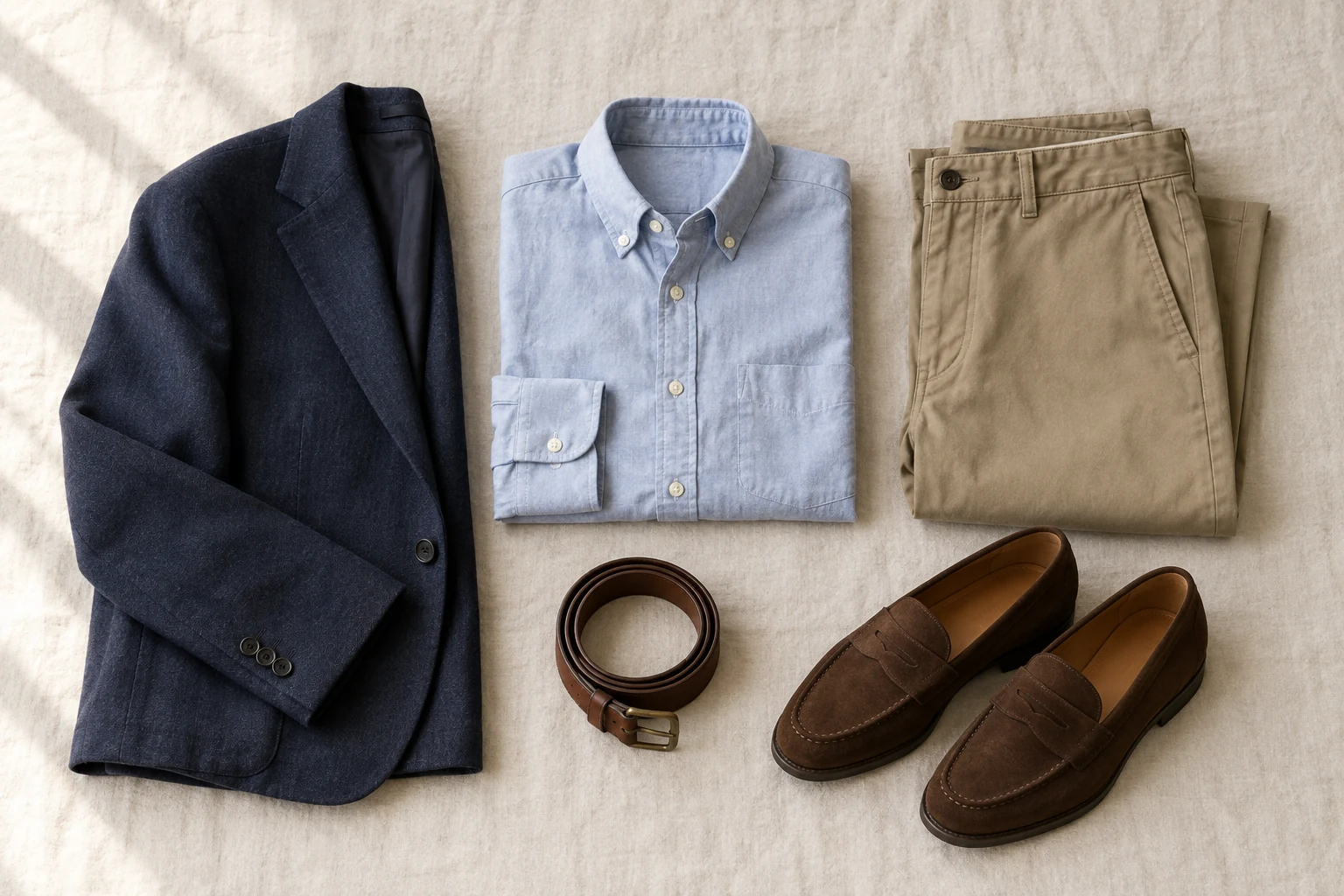
Dress codes
Business casual for men: what to wear to work
What business casual means for men at work, with outfit formulas, the right shoes, when jeans are allowed and how to read your own office's version of the code.
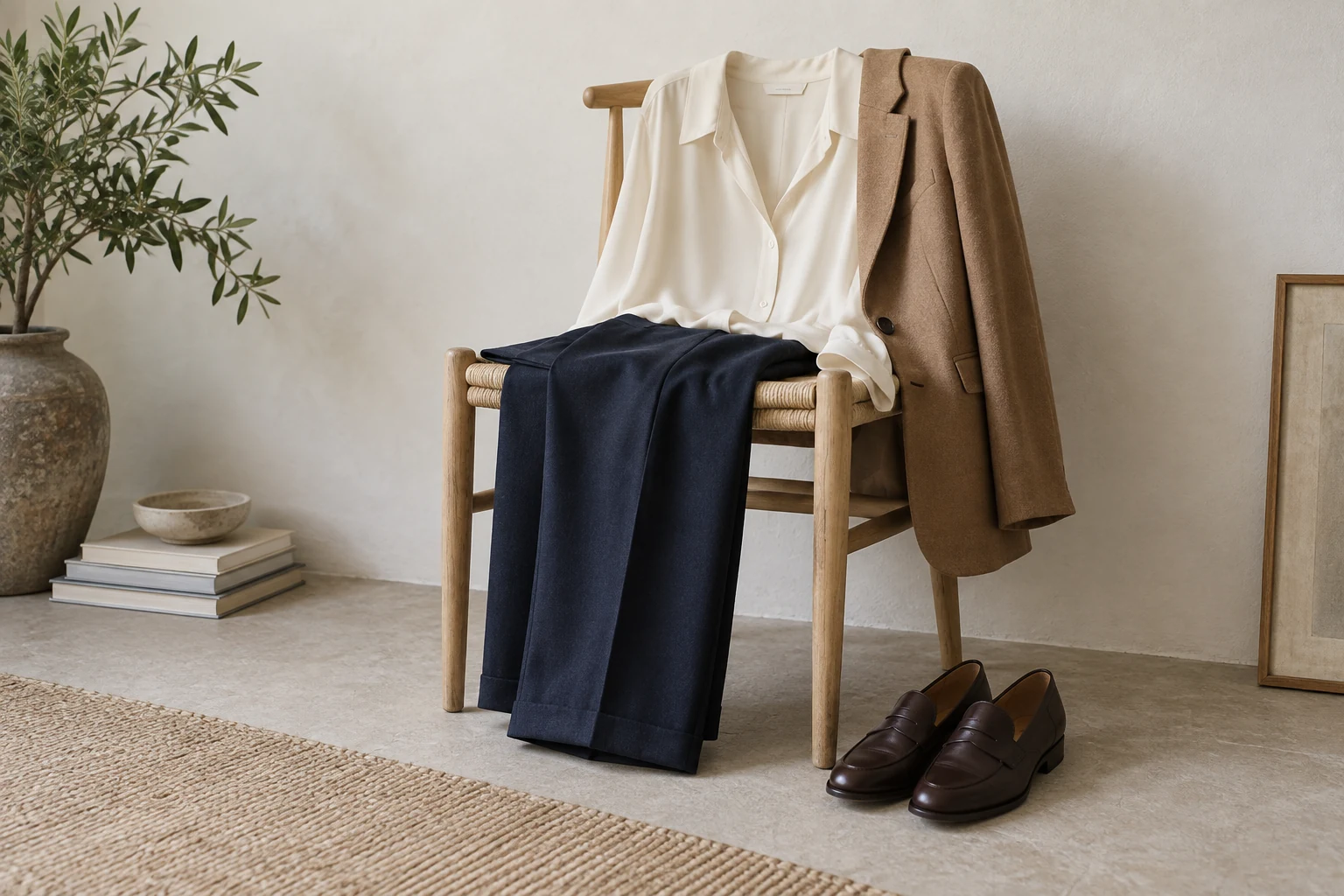
Dress codes
Business casual for women: what to wear to work
What business casual means for women at work: trousers, skirts, dresses, knitwear and shoes, with outfit formulas, what to avoid and how to read your office.
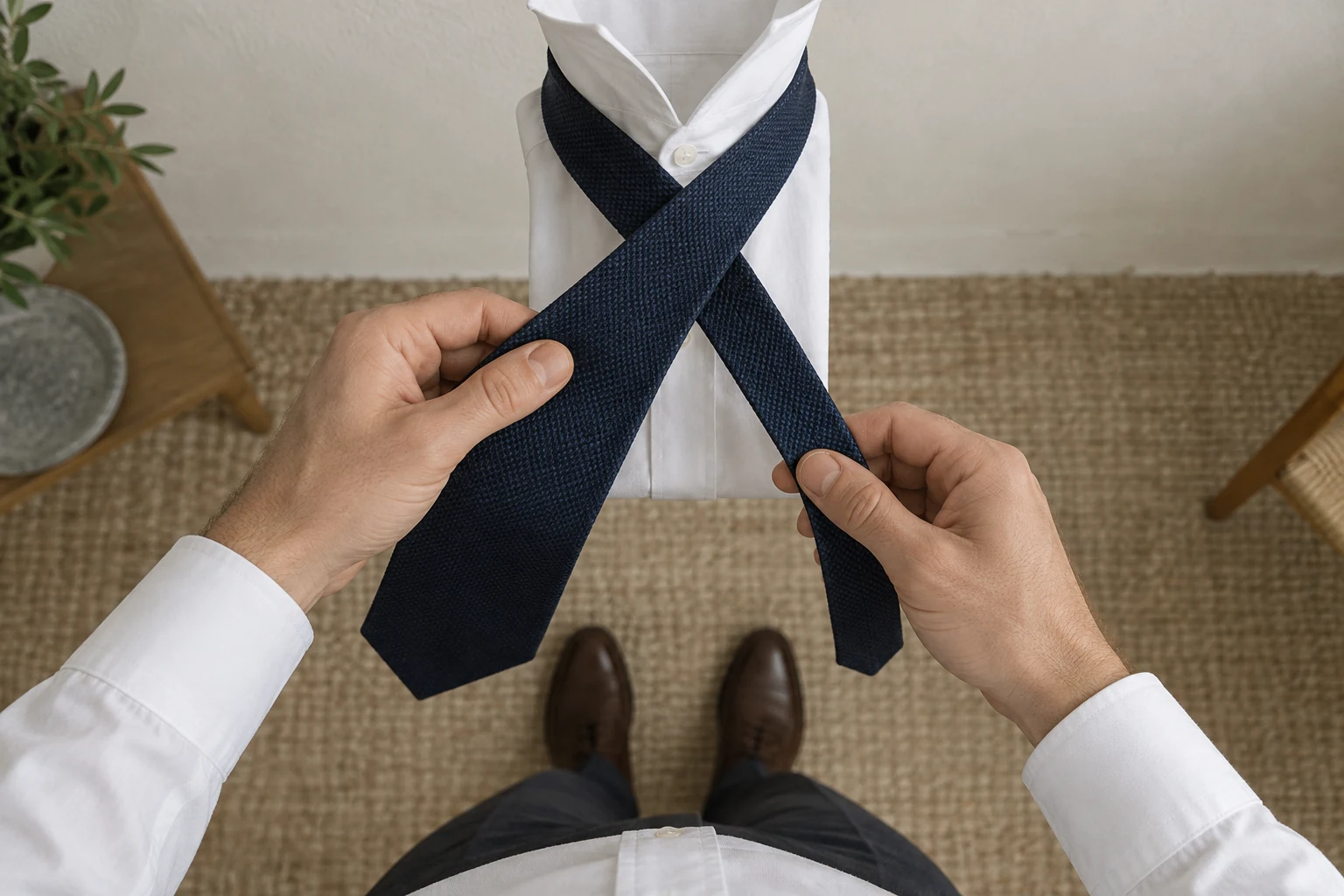
Ties and knots
How to tie a tie: the easiest knot for beginners
Learn how to tie a tie with the four in hand, the easiest dependable knot: six steps from your own point of view, then length, dimple and which knot to try next.
Dress codes
Wedding guest attire: every dress code decoded
Wedding guest attire explained from black tie to casual, with what men and women can wear for each dress code, plus color, venue and religious considerations.
Shoes and jewelry
How to polish shoes at home, step by step
How to polish leather shoes at home: clean and condition first, use cream for color and wax for shine, buff properly, and keep the shape with shoe trees.