How to get wrinkles out without an iron
In this guide
A shirt pulled from a suitcase or the bottom of a laundry basket can look like a crumpled paper bag, and the hotel room has no iron, or the one at home has no board and there is no time. That is when people look up how to get wrinkles out without an iron, and most creases need less than you think: a little moisture, a little warmth and gravity will do most of the work.
The methods below run from the most effective to the most improvised. None of them will give you the knife edge of a pressed collar or a trouser crease, and it helps to know that before you start. What they will do is take a garment from rumpled to presentable, and for knits, wool, rayon and most dresses, presentable is often all the garment ever needed.
Why heat and moisture release wrinkles
Cotton, linen and rayon are made of cellulose, and the long molecules in those fibers are held in shape by a network of weak bonds. When the fabric is bent while damp or warm, those bonds let go and reform in the bent position, and the crease stays after the fabric cools. Moisture and heat loosen the same bonds again. If the fabric is then held straight while it dries and cools, it sets flat instead. That is the whole principle behind a steam iron, and every method in this guide borrows one part of it.
Different fibers respond differently. Wool is springy and releases wrinkles readily in steam, often without any pressing at all. Polyester resists wrinkling in the first place but can hold a heat set crease stubbornly, so it wants gentle steam rather than high heat. Linen wrinkles the fastest of all and will never stay perfectly smooth once you sit down in it. Knowing which fiber you are dealing with tells you how much effort is worth spending, and the care label is the quickest way to find out.
Use a clothes steamer or garment steamer
A handheld or standing garment steamer is the most reliable way to get wrinkles out without an iron, and it is gentler on delicate fabrics because the hot plate never touches the cloth. Rowenta, which makes both steamers and irons, recommends steamers for lightweight blouses, knits, dresses, linen and delicate fabrics such as silk, and irons for heavy fabrics and anything that needs a sharp crease. Fill the tank with the water the maker specifies; many recommend distilled water to limit mineral buildup. The steps below cover a quick touch up; our full guide to steaming clothes goes fabric by fabric.
Hang the garment on a sturdy hanger
Use a hanger that holds the shoulders out, and hang it from a door frame, shower rod or the steamer's own pole. The fabric should fall freely with space around it. A garment that is bunched against a wall will simply get damp without smoothing.
Test the steam away from your body
Point the head away from you and let the first burst of steam and any spitting water escape into the air. Conair's instructions warn that the steam can burn skin, scalp or eyes if used too close, which is also why you should never steam a garment while you are wearing it.
Pull the fabric taut and work slowly
Hold the hem with one hand and gently pull down so the cloth is under light tension. Keep the head about 1 to 2 inches (2.5 to 5 cm) from the fabric and draw it slowly along the wrinkle in long strokes.
CheckYou should see the crease soften and fall out as the steam passes over it; if it does not, slow down rather than pressing the head into the cloth.
Do the details from the inside
For collars, cuffs and plackets, steam from the inside of the garment and keep your fingers well clear of the steam's path, since the heat comes straight through a single layer of shirting. Seams and double layers need a little longer because the steam has to pass through more cloth.
Let it dry on the hanger
Leave the garment hanging for 10 minutes or so before wearing it. Damp fabric creases again the moment you sit down, and the smoothing only sets once the moisture has left.
Hang it in a steamy bathroom
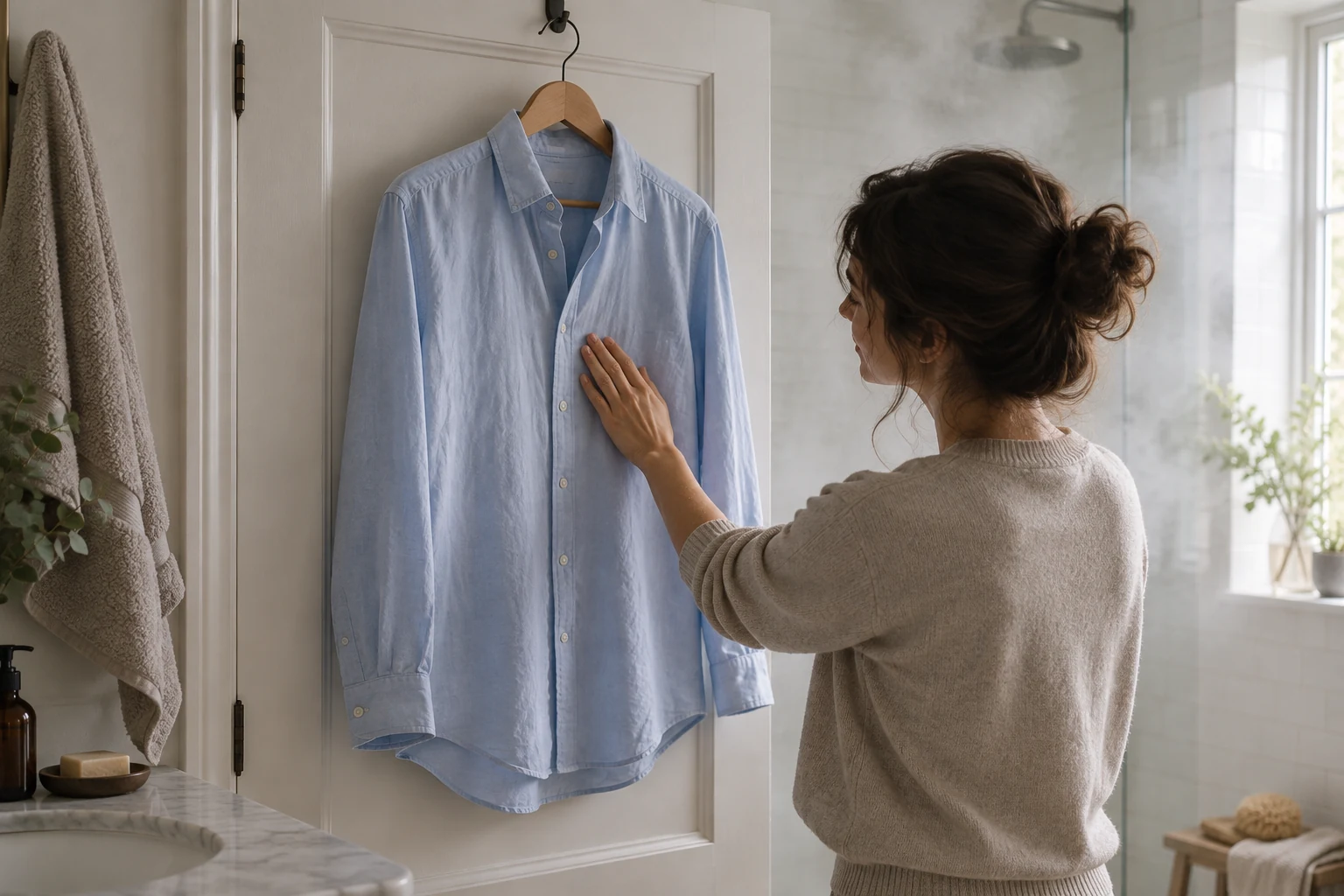
With no steamer, the bathroom becomes one. Hang the garment on a good hanger as far from the spray as you can while still keeping it inside the room, close the door and run the shower hot. Stay out of the way yourself or take your own shower; what you want is a room full of warm, damp air for the length of a normal shower and a few minutes beyond. When you come out, smooth the fabric with flat palms, tug the seams gently straight, and then move it to a dry, airy spot to finish drying.
Shower steam works best on wool, rayon, crepe, knit dresses and anything with soft, rounded creases from folding. It is the method Woolmark suggests for refreshing wool trousers. It will not do much for a sharply folded cotton shirt or a crushed linen jacket, because the air is not hot enough to release deep creases in cellulose. It also makes the whole garment slightly damp, so allow time for it to dry before you put it on.
Use the dryer with a damp towel
If the care label allows tumble drying, the dryer can create its own steam. Put the wrinkled garment in with a clean towel or a couple of washcloths that are damp but not dripping, and run the dryer on medium heat for about 10 to 15 minutes. Many newer dryers have a steam or refresh cycle that does the same thing with a small spray of water. A few ice cubes are a common substitute for the towel; they melt and turn to steam, though the towel gives more even results.
The timing matters more than the heat. Take the garment out the moment the cycle ends and hang it or put it on straight away, because clothes left to cool in a heap in the drum wrinkle all over again. Do not use this method for wool, silk, anything marked do not tumble dry or anything that is not fully preshrunk. Woolmark is clear that tumble drying wool without a label that permits it risks shrinkage, and a hot drum is the fastest way to lose a size in a cotton knit. If you are unsure what the symbols on the tag permit, our guide to reading laundry symbols explains the dryer squares.
Mist, smooth and hang
For light wrinkles, a spray bottle of plain water is often enough. Hang the garment, mist the creased areas until they are just damp to the touch, then smooth them with your palms and give the hem and side seams a gentle downward pull. Gravity finishes the job as the fabric dries, which is why the hanger matters: a shaped one that fills the shoulders does far more than a thin wire one, as our guide to hanging clothes explains. Commercial wrinkle release sprays work on the same idea with a little added softening agent; test one on an inside seam first, and avoid spraying silk, which can water spot, unless you are prepared to mist the whole panel evenly.
Two tools from the bathroom help with the details. A hair dryer on a warm setting, held several inches from lightly misted fabric, speeds the drying and helps set the smoothing. A clean hair straightener on its lowest setting can press a collar point or a placket in a pinch, provided the plates are free of product residue, which would mark the fabric. Keep it moving and never use it on synthetics or anything with a print, which can melt or lift.
Steamer vs iron: match the method to the fabric
The honest comparison of clothes steamer vs iron is that a steamer relaxes fabric while an iron presses it. Steam, in any of its forms, is ideal for knits, dresses, wool, silk and anything with drape. An iron on an ironing board is still the right tool for a crisp dress shirt, pleats, trouser creases and heavy cotton, because those finishes depend on pressure as well as heat. If you have an important shirt and access to an iron later, our guide on how to iron a shirt covers the order that saves the most time.
Linen deserves its own note. You can steam out the worst of it, but linen wrinkles again as soon as you move, and a little softness is part of the fabric's character; our guide to washing linen explains how to dry it so it comes out smoother to begin with. For wool, a steamer or the bathroom is gentler than an iron, and our guide to washing wool covers the rest of its care. For travel, prevention does more than any fix: roll knits, fold shirts around each other, and unpack and hang everything on arrival, as described in our guide to packing a suitcase.
| Method | Works best on | Avoid it for |
|---|---|---|
| Garment steamer | Blouses, knits, dresses, linen, silk | Sharp creases and pleats |
| Steamy bathroom | Wool, rayon, crepe, knit dresses, soft creases | Deep folds in cotton and linen |
| Dryer with a damp towel | Cotton pieces whose label allows tumble drying | Wool, silk, do not tumble dry items |
| Mist and smooth | Light wrinkles on hanging garments | Silk, unless you mist the whole panel |
| Iron | Dress shirts, pleats, trouser creases, heavy cotton | Delicates that dislike direct heat |
Common mistakes
Steaming a garment while wearing it
It feels efficient, but steam and hot water spitting from the head can burn skin, and the fabric cannot be pulled taut against your body anyway. Take the garment off and hang it.
Wetting the fabric too much
Soaked fabric takes a long time to dry and can stretch or water spot. You want it damp to the touch, not dripping; a fine mist or ambient steam is enough to release most wrinkles.
Leaving clothes in the dryer
The dryer method only works if you take the garment out warm and hang it immediately. Left to cool in a pile, it sets new wrinkles in the shape of the heap.
Putting it on while still damp
Damp fabric takes the shape of whatever it is pressed against, including the back of a chair and the crook of your elbow. Give it a few minutes to dry on the hanger first.
Questions people ask
Is a steamer better than an iron?
It depends on the garment. A steamer is faster and gentler for knits, dresses, silk and wool, and it does not risk scorch marks. An iron gives a sharper finish on cotton shirts, pleats and trouser creases because it adds pressure. Many people keep a handheld steamer for daily touch ups and an iron for dress shirts.
Does hanging clothes in the bathroom really work?
Yes, for soft creases in wool, rayon, knits and many dresses. It is much less effective on deep folds in cotton or linen, which need hotter, more direct steam. Hang the piece away from the spray and let it dry before you put it on.
How do I get wrinkles out fast when traveling?
Hang the garment in the bathroom during your shower, then mist any stubborn spots with water and smooth them by hand while it dries. A small travel steamer is worth packing if you regularly wear shirts or dresses on trips. Rolling or careful folding while packing prevents most of the problem.
How do I get wrinkles out overnight?
Mist the garment evenly until it is just damp, smooth the creases flat with your palms, and hang it on a good hanger with the hem and side seams gently pulled straight. Leave it somewhere with moving air, not in a closet. By morning the fabric will have dried in the smoother shape, which works well for cotton shirts, jeans and dresses with soft folding creases.
What is the best handheld steamer for clothes?
We do not recommend specific products, but look for a steamer with a tank large enough for a full garment, a head that heats up quickly and a steady, even flow rather than bursts. A fabric brush attachment helps on heavier cloth, and a stand or hook makes it easier to keep the fabric taut.
Sources and further reading
References used for this guide. Each opens the original page in a new tab.
Keep reading
Washing and ironing
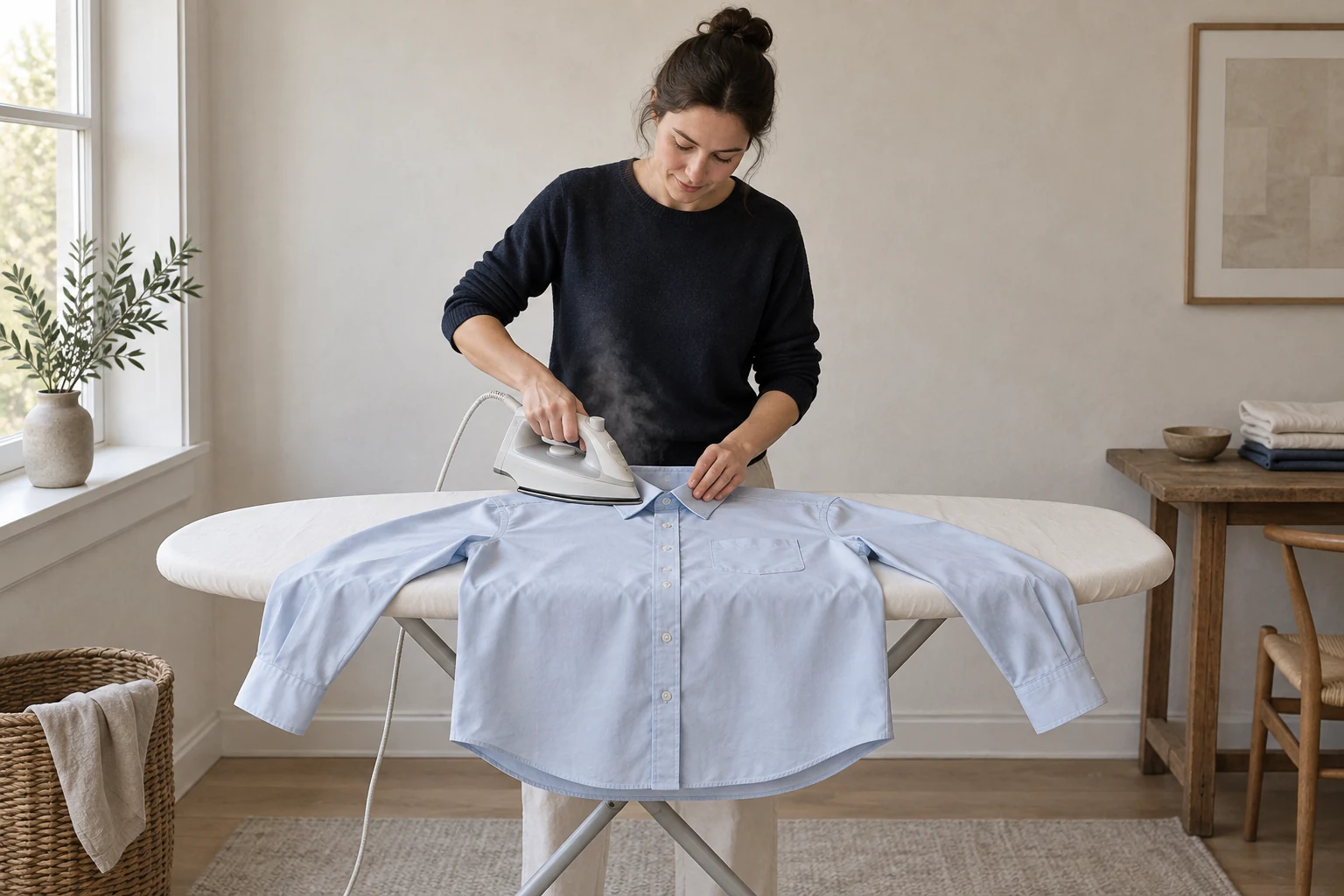
How to iron a shirt in the right order
How to iron a shirt the way shirtmakers do: set the heat for the fabric, start slightly damp, then work collar, cuffs, sleeves, yoke, back and front in order.
Closet and packing
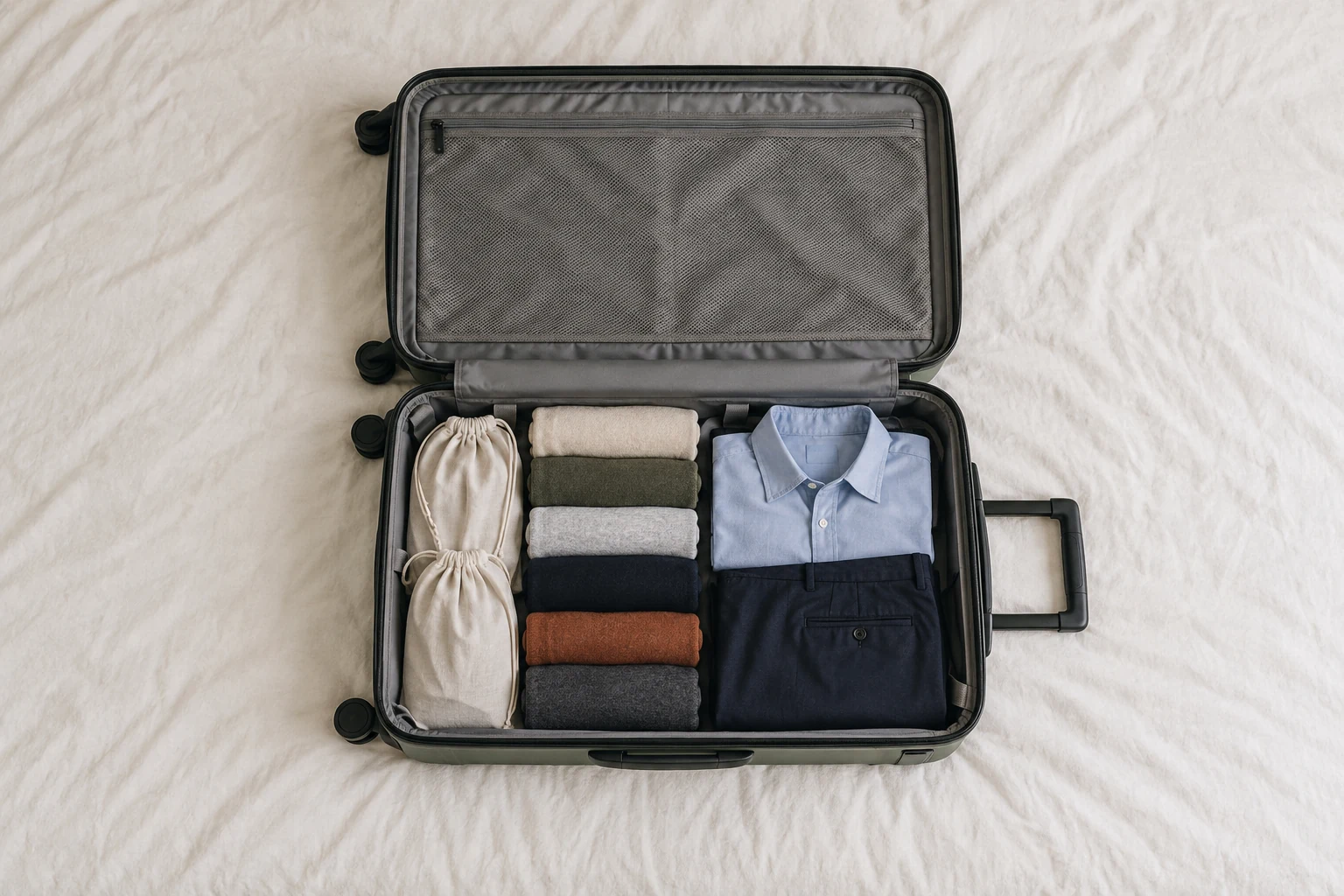
How to pack a suitcase without wrinkles
How to pack a suitcase step by step: plan outfits first, roll or fold each piece, layer the bag, use packing cubes well, and follow carry on rules.
Washing and ironing
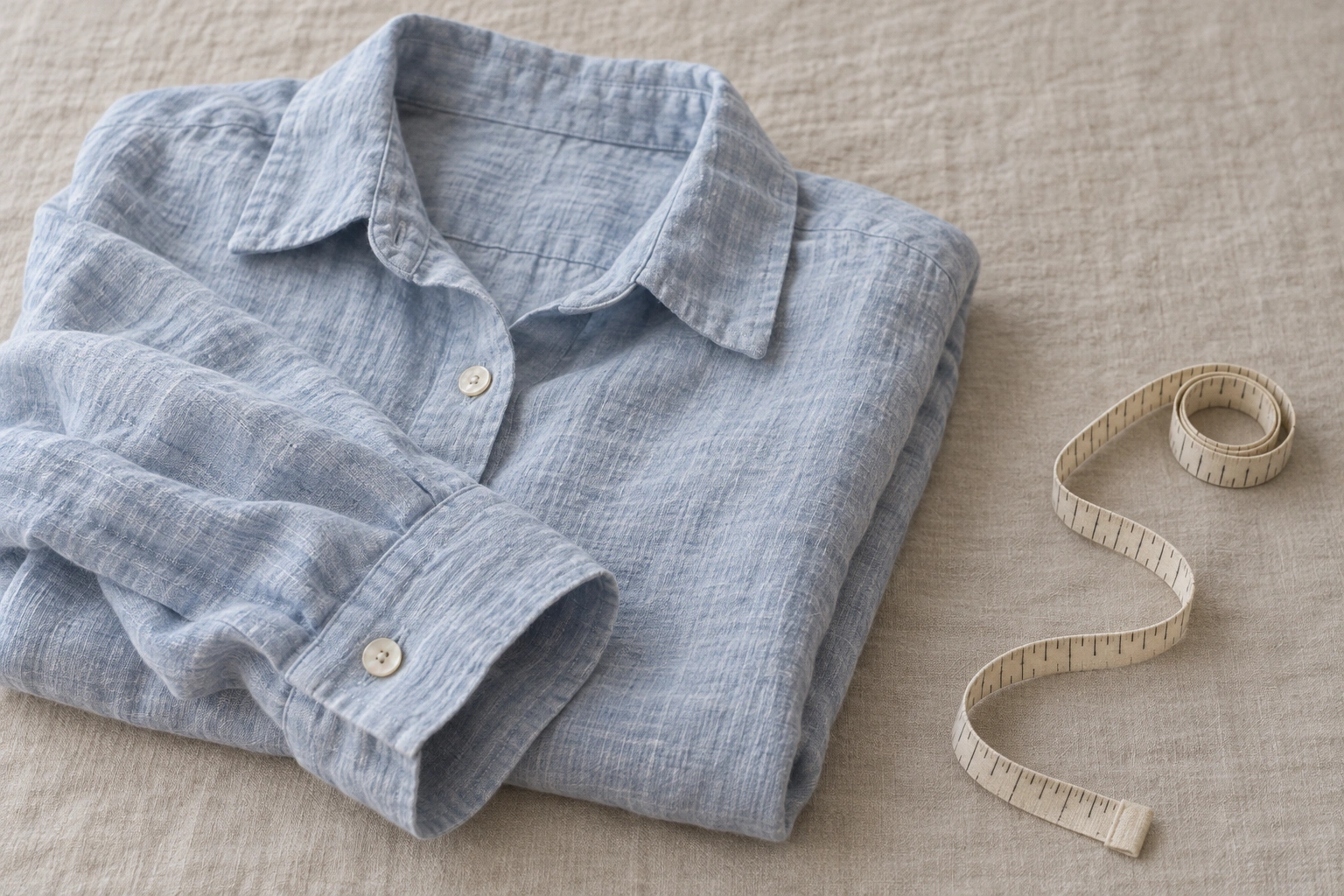
How to wash linen, and does linen shrink?
How to wash linen shirts, pants and sheets: a gentle cycle, cool water and mild detergent, plus when linen shrinks, how to dry it and what to do about wrinkles.
Suits and tailoring
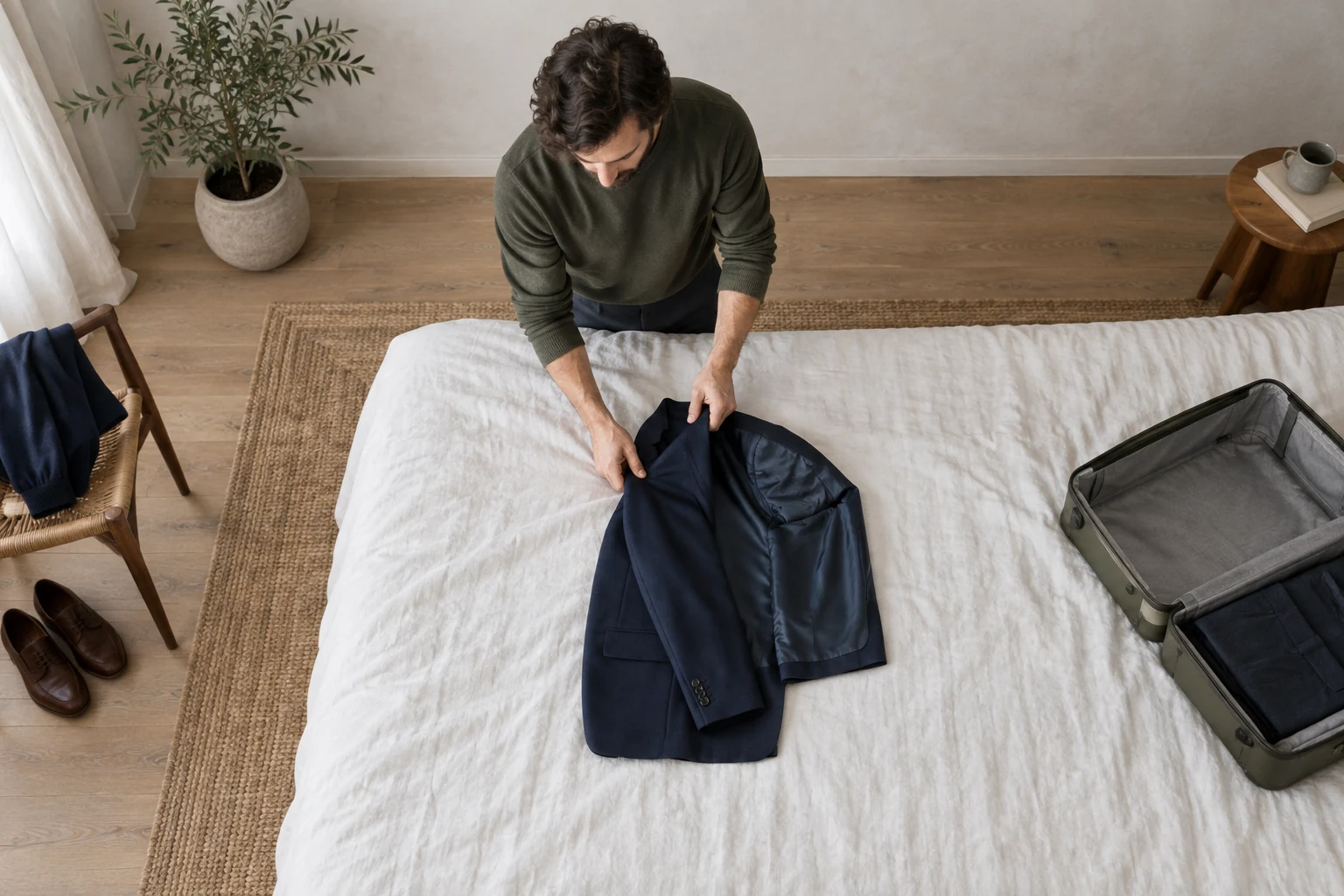
How to fold a suit for travel, jacket and trousers
How to fold a suit for travel: the shoulder inversion fold for the jacket, folding suit trousers, where to pack them, and how to get wrinkles out when you arrive.
Washing and ironing
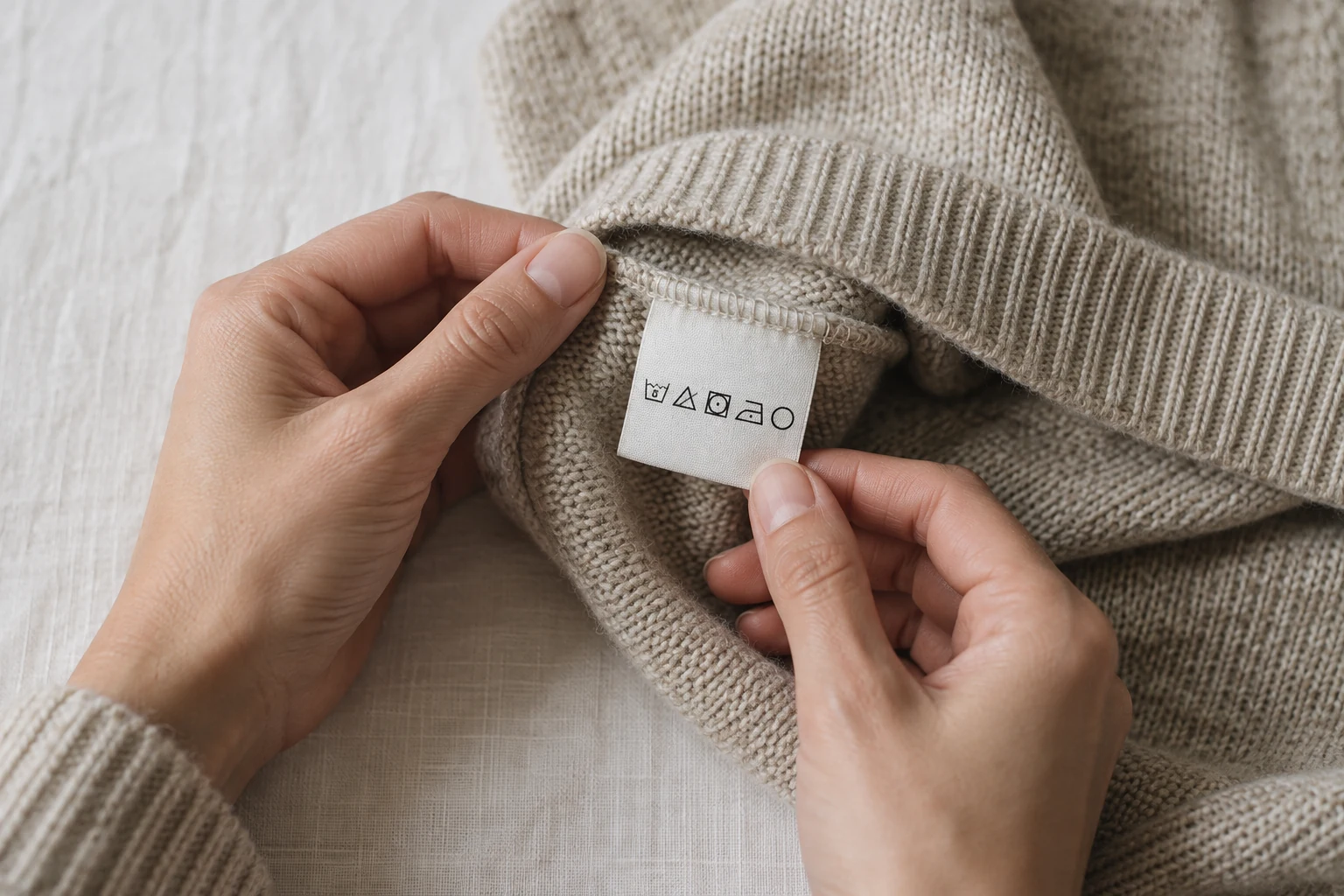
Laundry symbols explained: how to read a care label
What laundry symbols mean, in plain words: the wash tub, triangle, square, iron and circle, plus the dots, bars and crosses that change each instruction.