How much laundry detergent to use per load
In this guide
You unscrew the cap, pour until it looks about right, and tip it in. Almost everyone measures laundry detergent this way, and it is why so many people use far more than they need. Knowing how much detergent to use comes down to three things: the dose printed on your particular bottle or box, the size and dirtiness of the load, and the hardness of your water. The washer model and drum size matter much less than people assume.
Getting the amount right is not only about saving money. Too little detergent leaves body oils and odors behind, but too much is the more common problem, and it has its own symptoms: towels that feel stiff, dark clothes with a pale film, and a front loader that starts to smell. This guide explains how to read the dose, how to adjust it, and how to tell from your laundry whether you have it right.
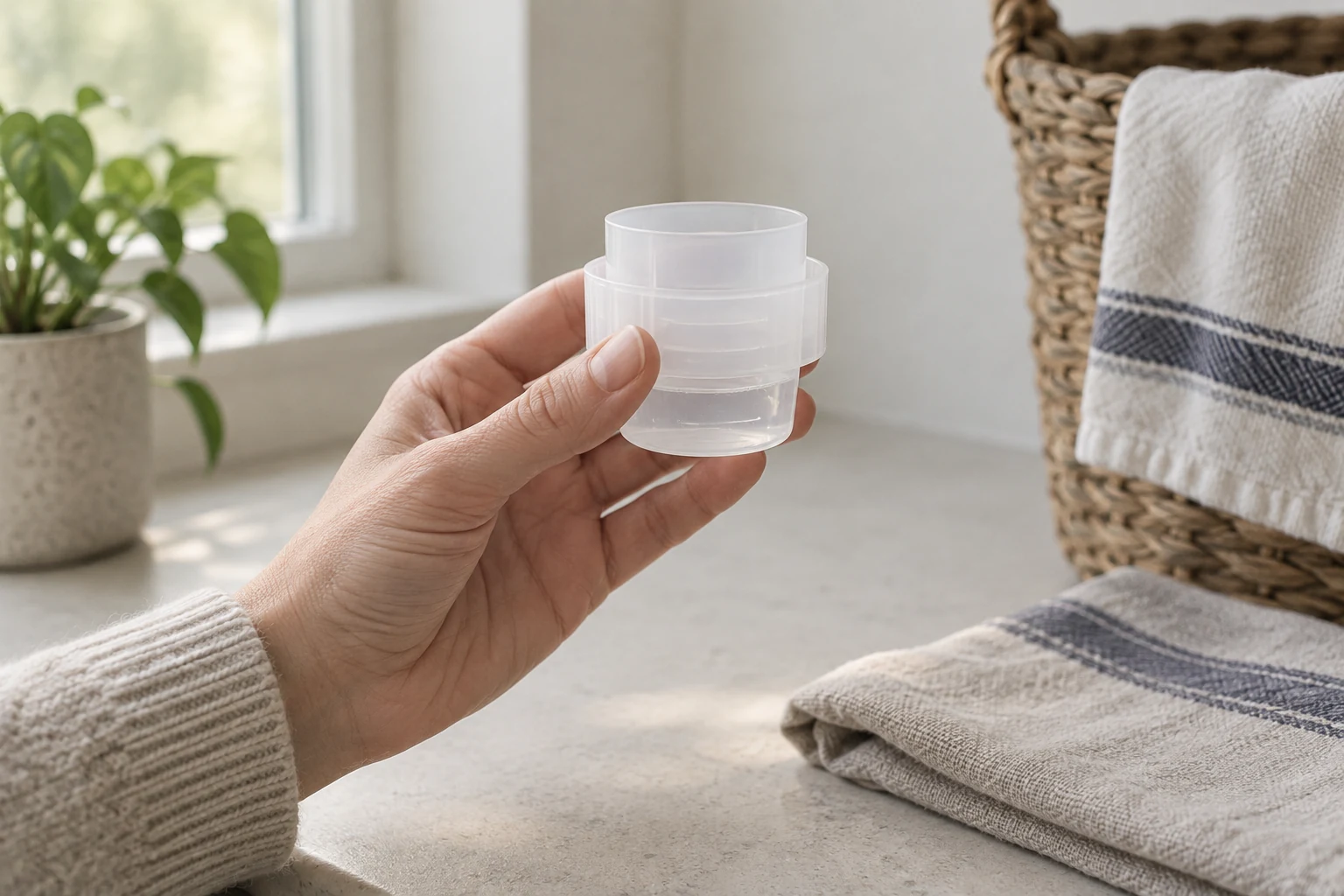
How much detergent to use: start with the label
There is no single correct number of tablespoons, because detergents are sold at very different strengths. Consumer Reports has pointed out that concentration claims such as 2X or 3X have no standard meaning, so a capful of one brand can hold several times the cleaning power of a capful of another. The only reliable guide is the dosing chart on the package you actually own, which is written for that formula. Tide, for example, tells its customers to follow the package instructions and to adjust for load size, soil and water hardness rather than using one fixed pour.
Most liquid caps have faint lines molded inside them, usually numbered. On many bottles, line 1 is the dose for a normal or medium load and sits roughly a third of the way up the cap. The higher lines are for large or heavily soiled loads. A full cap is almost never the intended dose. Consumer Reports found the lines on many caps hard to see, some barely a sixteenth of an inch apart, and suggested tracing the one you use with a permanent marker so you can find it without holding the cap to your nose.
Liquid, powder and pods
For liquid laundry detergent per load, fill the cap to the line the label gives for your load, pour it into the dispenser or drum as your washer manual directs, and rinse the cap in the drum afterward so the residue goes into the wash instead of onto the shelf. For powder, use the scoop that came in the box and the fill line printed inside it. Powder dissolves poorly in very cold water; Maytag notes that water below about 60°F (16°C) can leave white clumps on clothes, so in winter, when tap water runs cold, dissolve powder in a little warm water first or choose a liquid.
Pods take the measuring out of your hands, which is their real advantage. Tide's directions call for one pod for a small or medium load and two or three for large ones, placed at the back or bottom of the empty drum before the clothes go in, never in the dispenser drawer, where they may not dissolve. Handle pods with dry hands, do not cut them open, and keep the container closed and out of reach of children, since the concentrated liquid is dangerous if bitten or swallowed. If a pod leaves a gummy patch on clothes, the load was probably packed too tightly for it to dissolve.
| Type | How to measure | Watch for |
|---|---|---|
| Liquid | Cap to the label line for your load, then rinse the cap in the drum | A full cap is almost never the dose |
| Powder | The scoop from the box, to its printed fill line | White clumps in water below about 60°F (16°C) |
| Pods | One for small or medium loads, two or three for large | Back of the empty drum, never the dispenser drawer |
Adjust for load size, soil and water
The amount depends on what is in the drum, not on how much water the machine uses. A large load of towels or a heap of muddy sports clothes needs the higher line on the cap. A half load of office shirts worn once needs less than the normal line. When you wonder how much laundry detergent to use for a large load, the answer is the large load line on your bottle, not the normal dose doubled on instinct. Bulky items such as a comforter count as a large load even when only one piece is in the drum, and they benefit from an extra rinse more than from extra soap.
Water hardness is the other honest reason to use more. Hard water contains calcium and magnesium that tie up part of the detergent, so Tide advises a larger dose in hard water areas. If you have soft water, from a softener or a naturally soft supply, you can often use less than the label suggests. Your water utility usually publishes a hardness report, and white crust on faucets and shower glass is a good clue that your water is hard.
Front loaders, top loaders and HE detergent
High efficiency washers, which include every front loader and most newer top loaders without a central agitator, use much less water and need detergent labeled HE. Consumer Reports explains that regular detergent makes too many suds in these machines. Maytag adds that non HE detergent can leave undissolved residue on clothes. HE detergent works fine in an older agitator top loader too, so if you have both kinds of machine in your life, one HE bottle covers them.
So how much liquid detergent to use in a front loader? The same label dose you would use in any other machine for that load. A front loader holds less water, but the dirt on the clothes is the same, and the formula is designed for that. The common instinct to pour less into a front loader just because it is smaller is often reasonable for small loads, but a full drum of work clothes still needs the normal line. The drum capacity printed on European style machines, such as 7 kg or 8 kg, describes the maximum dry load, not a detergent dose.
How to tell if you use too much, or too little
Your laundry tells you quickly. Signs of too much detergent include suds still visible in the drum after the rinse, towels that feel stiff or slightly slick, a white or gray film on dark clothes, and a washer that smells musty or has a slimy feel on the door seal. Maytag lists excess detergent among the main causes of white residue on clothing, and Consumer Reports notes that some machines lengthen the rinse when they detect too many suds, costing you time and water.
The fix is simple: rewash the affected load with no detergent at all, or add an extra rinse, then drop to the lower line from now on. A stubborn smell in the machine means residue has built up in the tub; our guide to cleaning a washing machine walks through the monthly cleaning cycle. Too little detergent shows up differently: clothes come out gray or dingy, underarms still smell after washing, and collars keep a greasy line. In that case move up one line, and for sweaty synthetics see washing workout clothes.
Hand washing and laundry additives
For how much detergent to use hand washing, think in teaspoons, not capfuls. A basin or sink of water for a sweater or a few pieces of underwear usually needs about a teaspoon of mild liquid detergent, or whatever hand wash dose the label gives. Anything more is hard to rinse out by hand and leaves fabric feeling tacky. Our guide to hand washing clothes covers the full routine.
Additives are not a substitute for the right dose. A cup of baking soda can help with odors in some loads, and a little white vinegar in the rinse helps clear residue, but never add vinegar, ammonia or any acid to a load or dispenser that contains chlorine bleach, because the combination releases toxic gas. If you use bleach, measure it separately according to its own label and keep everything else simple.
Common mistakes
Filling the cap to the top
The top of the cap is a container, not a measure. Pouring to the brim often gives several times the normal dose, which leaves residue on clothes and inside the machine. Find line 1 and mark it.
Using more detergent to fix odors
Smelly clothes are more often caused by residue, an overloaded drum or clothes left wet in the machine than by too little soap. Try a smaller load and a cleaner washer before reaching for more detergent.
Putting a pod in the dispenser
Pods are designed to dissolve in the drum with the clothes. In a drawer they may only partly dissolve and leave gel stuck in the compartment. Place them at the bottom of the empty drum first.
Overpacking the drum
When clothes are jammed in, water and detergent cannot move through them, so no amount of soap cleans well. Leave about a hand's width of space at the top of the drum.
Questions people ask
Do you really only need 2 tablespoons of laundry detergent?
For some concentrated liquids, the normal load line is in that range, and many people find a small dose cleans perfectly well in soft water. It is not a universal rule, though, because detergents differ in strength. Use the line your label gives and go lower only if your clothes still come out clean and fresh.
Is 1 cup of detergent too much?
For modern concentrated liquid detergent, a full cup is several times the normal dose on most labels and is almost always too much. It will not clean better, and the extra residue can make fabric stiff and the washer smell. Older or diluted detergents may call for more, so check the chart on the package.
How much detergent should I use for a comforter?
Use the large load dose from your label, not more. A comforter is bulky and holds a lot of water, so the risk is that soap stays trapped in the filling. Choose an extra rinse, and make sure the comforter fits the drum with room to move.
Does the drum size of my washer change the dose?
Not directly. The dose depends on the amount and dirtiness of the laundry and on your water hardness. A large drum loaded halfway needs about the same detergent as a smaller drum loaded fully with the same clothes.
Where does detergent go in a front load washer?
Liquid and powder go in the main wash compartment of the dispenser drawer, usually labeled main wash or detergent. Pods go in the drum before the clothes. If your drawer has a removable insert for liquid, follow the washer manual about whether to use it.
Sources and further reading
References used for this guide. Each opens the original page in a new tab.
Keep reading

Washing and ironing
How to do laundry: a complete beginner's guide
How to do laundry from start to finish: reading labels, sorting, choosing the cycle and water temperature, measuring detergent, loading the washer and drying.
Washing and ironing
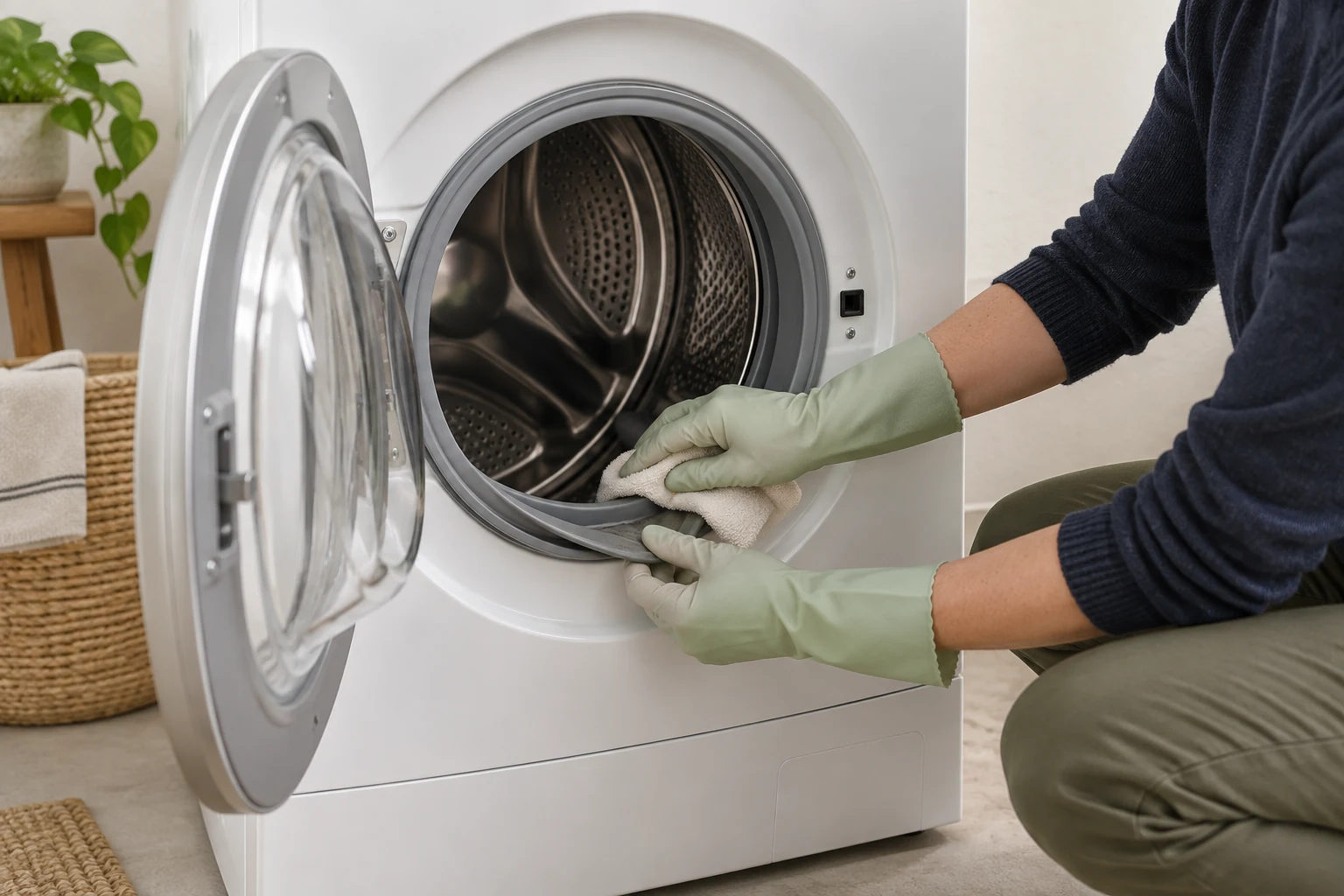
How to clean a washing machine
How to clean a washing machine step by step: the drum, rubber seal, dispenser and filter, with bleach, vinegar or a washer cleaner, for front and top loaders.
Washing and ironing
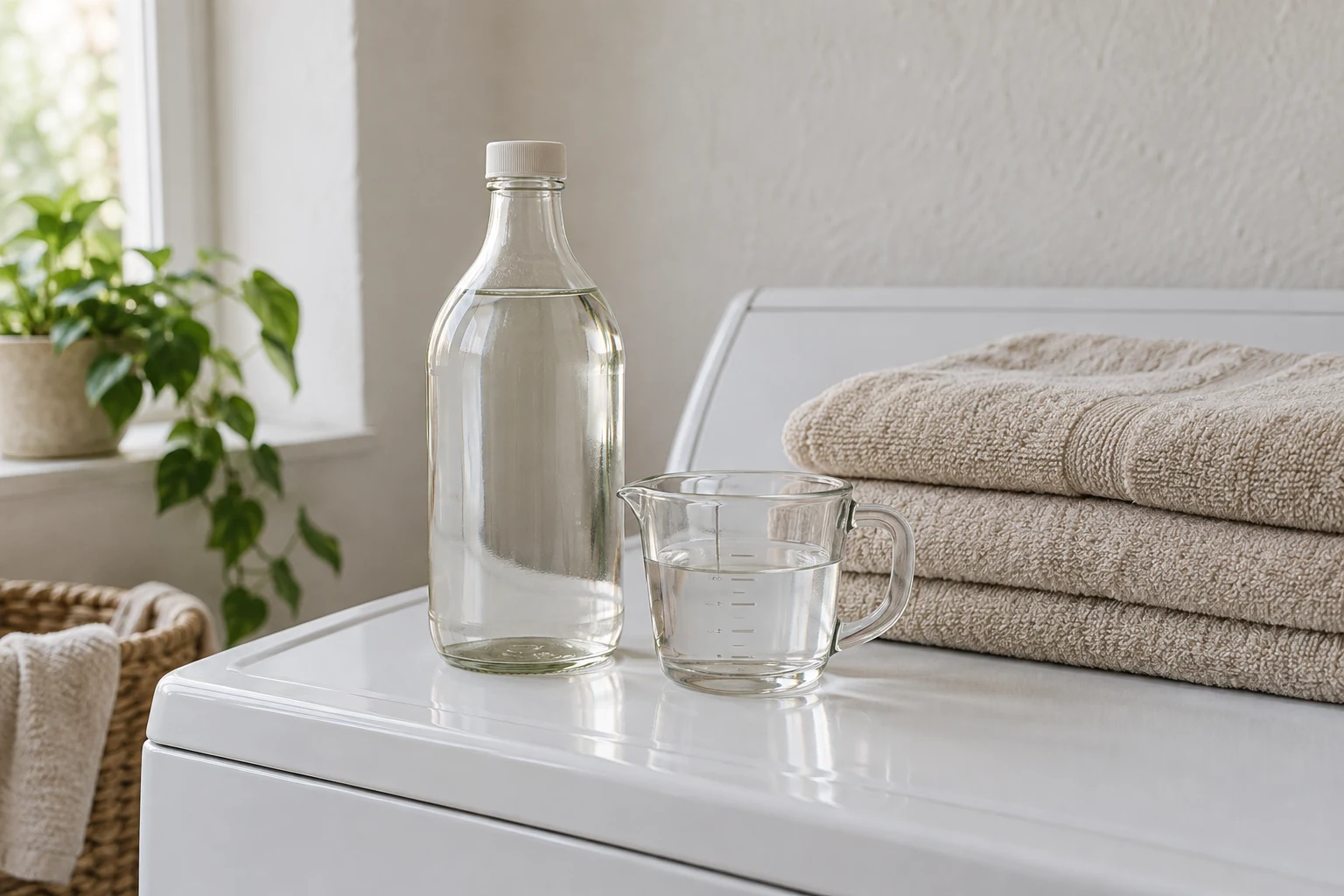
White vinegar in laundry: when it helps and when it doesn't
How to use white vinegar in laundry: how much to add, where it goes in the washer, what it can and cannot do, and the one mixing mistake that is truly dangerous.
Washing and ironing
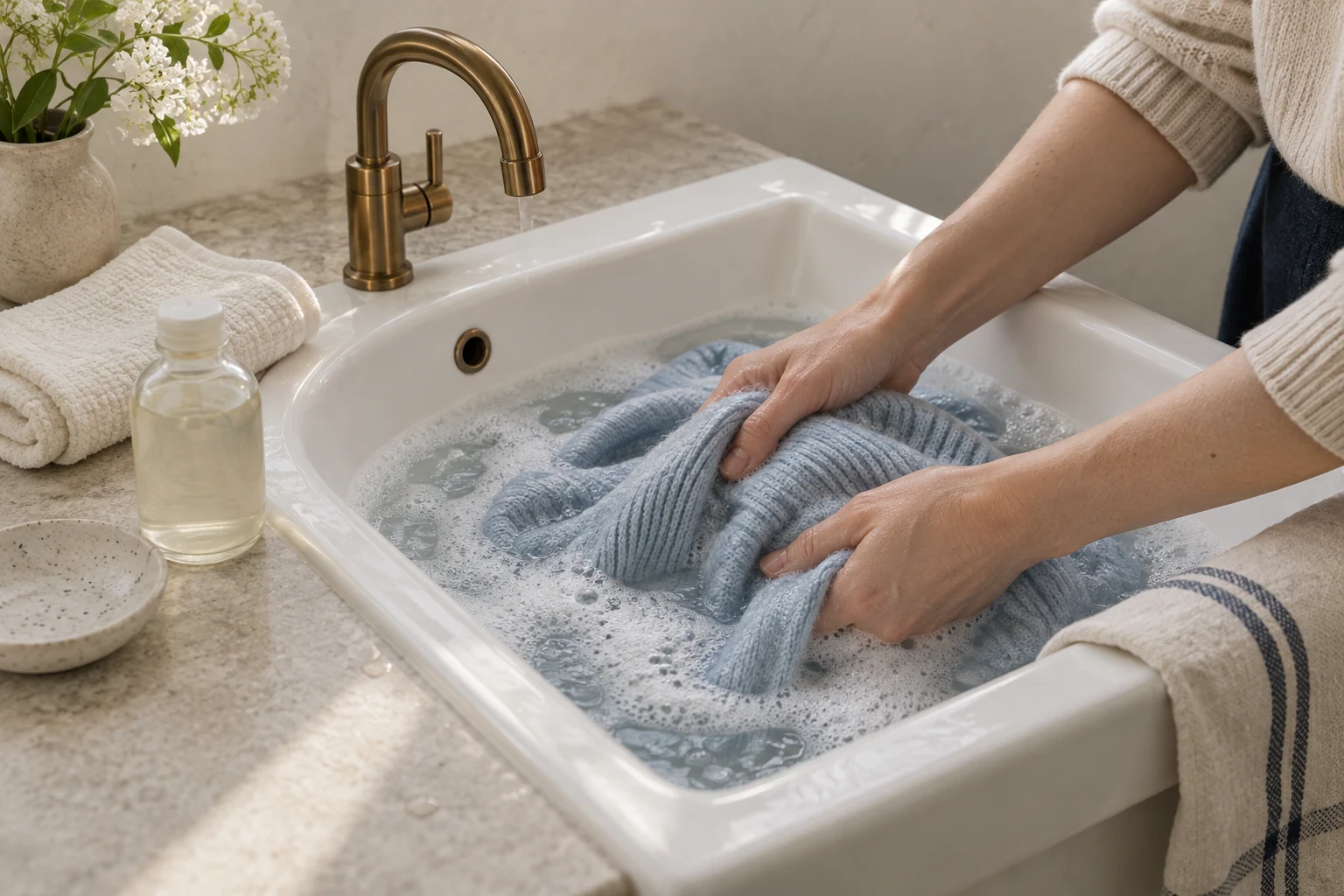
How to hand wash clothes properly
How to hand wash clothes in a sink or basin: which detergent to use, water temperature by fabric, how long to soak, how to rinse and how to dry without stretching.
Washing and ironing
How to wash towels so they stay soft
How to wash towels in a washing machine: the right temperature, less detergent, no softener, when vinegar helps, and how to fix towels that smell or feel stiff.